Be it a daycation or a long weekend away, a break in Bundeena has plenty of diversions to keep everyone – from girls on a long weekend to couples and families – happy, writes Sutherland Shire local Carla Grossetti.
2. Bundeena walks and waterfalls
3. Bundeena’s art trails and markets
How to get to Bundeena
The best time to catch the dinky wooden ferry to Bundeena is early in the morning, when a slate-grey light coats the water, and the sun hasn’t yet crested over the South Cronulla peninsula. Certainly, you can pick the Sutherland Shire locals bound for ‘Bundo’, as they are always decidedly blasé about just how charming it is to arrive in Bundeena onboard the M.V. Curranulla, which was commissioned in 1939 and is the oldest commuter ferry in Australia operating to a timetable.

Although the scenic jaunt across the bay to Bundeena only takes about 40 minutes, the loop around Gunnamatta Bay and across Port Hacking is picturesque. Subsequently, when we arrive, the scene is bucolic, with children hurtling into the water off the wharf, fisherman pootling about in tinnies, and locals walking barefoot along the beach like they have all the time in the world.
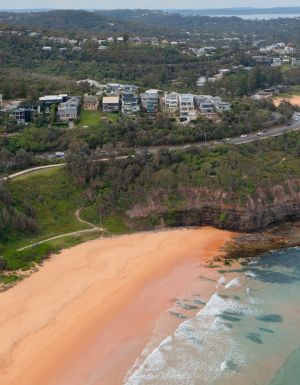
The beachside town has, in recent years, become a popular destination thanks in part to the many off-the-grid activities you can enjoy. You can hike, swim, and snorkel around Bundeena, which has access to four local beaches, or punch past Deeban Spit on stand-up paddleboards and kayaks.

Waterfalls, walks and ancient rock art
There’s so much to see and do in and around Bundeena that it invites visitors to laze and linger. In between exploring the waterways, we make time to hike along some of the trails that wind up to viewpoints that overlook the ocean and surrounding bushland of Royal National Park, Australia’s first official national park.
The hustle and bustle of Sydney feels far away as we squeak across the sand at Jibbon Beach and along the Jibbon Loop Track until we get to the Aboriginal rock art engraved by the local Dharawal people. The light sifts down in shafts through the tall gum trees around the viewing platform to the rock art. It’s like being in Mother Nature’s cathedral.
While in the grey-green bushland, you will likely come across many friendly hikers who ricochet around the park and ply you with enthusiastic recommendations: “Make sure you head to National Falls where you can actually stand behind the large curtain of water." “Wattamolla Falls is the easiest waterfall to get to as it’s just a one-minute walk from the carpark." “You will have to come back another day to walk to Winifred Falls and Karloo Pools."
We also vow to be back in Bundeena between May and November, when whale-watching season is in full swing as the Royal National Park – in Bundeena’s backyard – where you’ll find some of the best vantage points in the country.
Need tips, more detail or itinerary ideas tailored to you? Ask AT.
AI Prompt
Bundeena’s art trail and markets
Arrive in Bundeena on the first Sunday of the month and you can meet artists in their studios along the Bundeena Maianbar Art Trail, which this year celebrates its 20th anniversary. The art trail will leave you with a collage of impressions about the village, which appears to be a haven for travellers, bohemians, artists, hipsters and hippies. Meanwhile, you will find the normally tranquil back streets of Bundeena buzzing with people filing in and out of the artist studios for the art trail, which coincides with the Bundeena Saltwater Market, spruiking everything from ceramics and jewellery, to clothing and soaps.

You can also fill a morning at the historic Audley Dance Hall Café, which was first established in 1949 and is located on the banks of the Port Hacking River, where the deep-green water forms a corridor for birds, ducks and kayakers. Concurrently, find a patch of shade and make like you’re in a painting of an Edwardian picnic in the surrounding ‘pleasure grounds’, built in the early 1900s.

Exploring Bundeena’s waterways
When you plan your visit to Bundeena, factor in a paddle into Cabbage Tree Basin with Marnie Sigal, of Bundeena Kayaks who has been hosting tours on the fringes of Royal National Park for the past 20 years. After a quick coffee at Driftwood Café, where we are met by friendly locals eager to hear about our day’s plans, we head to Bonnie Vale where bright blue skies show further promise for a brilliant day.

“It’s a destination that feels like a sanctuary. I feel like I’m on holiday every day," says Marnie, who operates year-round apart from one month in winter (dates vary depending on weather).
After slipping gently into the water near Bonnie Vale picnic area, we paddle along the shoreline into Cabbage Tree Basin where the still surface of the water mirrors the cliffs and trees and sky. The basin is a mix of saltwater and freshwater and its depth is determined by the currents and tides, says Marnie, who points out a bird of prey looking for fish in the turquoise waters. With the current doing most of the hard work, we have time to stop, pause, and take in the scenery: gum trees with strips of bark that twist like colourful ribbons, cabbage palms that cast shade over the river, mangroves with their bony limbs, and crackles of black cockatoos that explode out of the treetops with their screeches and alien cries.

Sleeping over in Bundeena
While Bundeena is definitely perfect for a daycation, staying overnight at Periscope House, Simpson Cottage, Hilltop Cottage or Bundeena Beachhouse is the best way to settle into a pleasant rhythm. It allows you to get your bearings and to have enough time to join Lost & Found Wellness Adventures at dusk for an 11-kilometre gourmet guided walk to Marley Beach. The tour is as much about food as fitness and we enjoy pressing pause to watch the setting sun honey the cliffs at Marley Head while tucking into artisanal delights.
Where to stay in Bundeena
Periscope House is perched like an eyrie on the cliffs, and cracking views of bush and bay.
Additionally, you’ll find luxury beachfront option Bundeena Beachhouse on the shores of Little Gunyah Beach. It can accommodate up to four people.
Hilltop Cottage hovers over the heart of the Royal National Park, while Simpson Cottage is an historic sandstone house near the Hacking River. Weemalah Cottage is located on the banks of South West Arm Creek, and a top spot for amateur anglers and ornithologists.
Reids Flat Cottage is located at Audley, just one hour south of Sydney, and convenient for cyclists who want to give Lady Carrington Drive a crack.

Read more: 5 best Bundeena beach shacks
Weekly travel news, experiences
insider tips, offers, and more.
Where to eat in Bundeena
Stop and chat over coffee with barefoot locals at Driftwood Café, take the family for gelato at The Gelato Factory and embrace the tradition of eating fish and chips by the sea at Vinegar & Brown Paper
The Bundeena Community & Services Club has opened after a multi-million-dollar refit. Head here when the sun starts to swell molten in the west and watch the ebb and flow of the tide in the bay. Additionally, order a plate of salt and pepper squid and schooey of locally brewed Bundeena Jibbon IPA.
Catch the ferry back to Cronulla to enjoy being in the heart of the action where you can follow up dinner with a few cocktails at some of the neighbourhood’s favourite haunts.
Where to shop in Bundeena
Head to Little French Heart on the main street of Bundeena for beautiful homewares such as candle, children’s clothing and linen. Visit the beachside village on a Saturday and you can pick up a bouquet from Blooms & Beans, a pretty little flower stall. Acclaimed interior designer Kelly Ross has also opened Jean, a funky general store devoted to design objects and vintage furniture.
Find a mix of ceramics, jewellery, clothes and soaps for sale at Bundeena Saltwater Market, on the first Sunday of every month. The market coincides with the monthly Bundeena Maianbar Art Trail when local artists open their studios. Meanwhile, if you’re enjoying a weekend break, catch the ferry back to Cronulla where you can stroll along the pedestrianised mall with its vibrant mix of shops such as The Best Little Bookshop in Town, Roar and Meet that Store
Getting there
By train and ferry: Catch a train from Central to Cronulla and connect with the ferry to Bundeena. The ferry terminal is just a short walk away from the train station.
By car: Take a scenic drive through Royal National Park, the second oldest national park in the world.
Shuttle bus: There is a shuttle bus service that operates in the Royal National Park and offers transfers to popular locations such as Wattamolla and Garie Beach. Pick-up spots include Audley, Bundeena Wharf and Otford Train Station.

Want to see more stories from Australian Traveller in your Google search results?
- Click here to set Australian Traveller as a preferred source.
- Tick the box next to "Australian Traveller". That's it.