hero media

The 21 best places for stargazing in Australia

Our most stellar natural light shows are utterly enchanting – once you know where to find them.

We’re a sun-loving nation, home to some of the world’s most extraordinary daylight attractions. But our starry nights are seriously underrated. Dotted with state-of-the-art observatories, dark sky parks that limit light pollution and spectacular scenic vantage points, Australia is a stargazer’s wonderland. Allow us to shine a light…

1. Uluṟu, NT

For a deeply spiritual experience, it’s hard to beat peering up above Uluṟu-Kata Tjuta National Park towards an infinite blanket of twinkling lights. Free of artificial luminosity and big-city pollution, the sacred land offers magnificent views of the Milky Way, Southern Cross, Magellanic Cloud galaxies and other constellations.
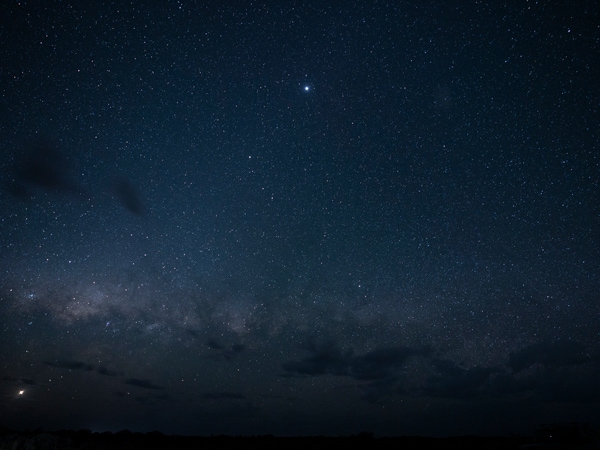
a sky full of stars in Uluru
Book a stargazing trip with Uluru Astro Tours. (Image: Tourism NT/Tourism Australia)

Ayers Rock Resort runs Astro Tours that explore the evolution of our universe using telescopes, so it’s a great pick if you’d like some guidance.
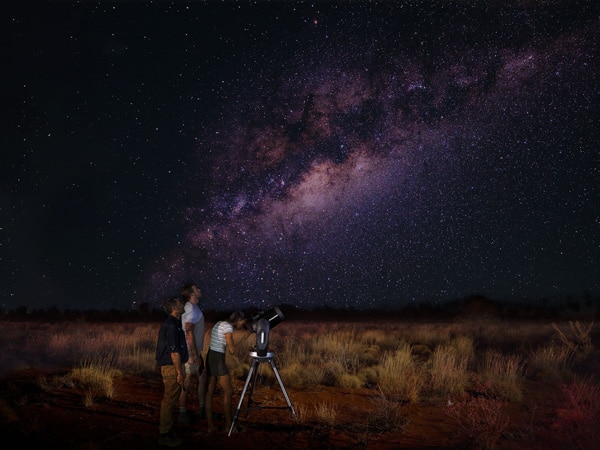
Astro Tour Uluru
Join Astro Tours to explore the evolution of our universe using telescopes. (Image: Voyages Indigenous Tourism Australia)

2. Kunanyi/Mount Wellington, Tas

It’s no secret Tassie is the best place to view the southern hemisphere’s fantastical Aurora Australis, also known as the Southern Lights, but did you know Hobart’s Mount Wellington is an ideal viewing spot?

Wait for a dark, clear night, and climb hard because the higher you get, the more likely you’ll spot the elusive lightshow. For your best bet, bring a camera – a slow shutter will capture it easier than your peepers.
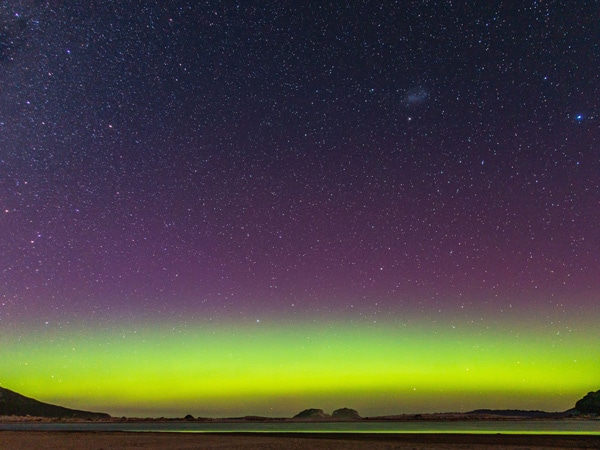
Aurora Australis, South Coast Track
Witness the spectacular Aurora Australis in Tasmania. (Image: Matty Eaton)

3. Sydney Observatory, NSW

Explore the night sky from the depths of one of Sydney’s most colourful corners at the Sydney Observatory in Millers Point. The heritage-listed building, striking in its old sandstone glory, provides a sweeping vantage point plus plenty of fascinating relics to stickybeak in its museum as your astrological enlightenment lingers into the evening. Nightly tours run from Wednesday to Saturday.
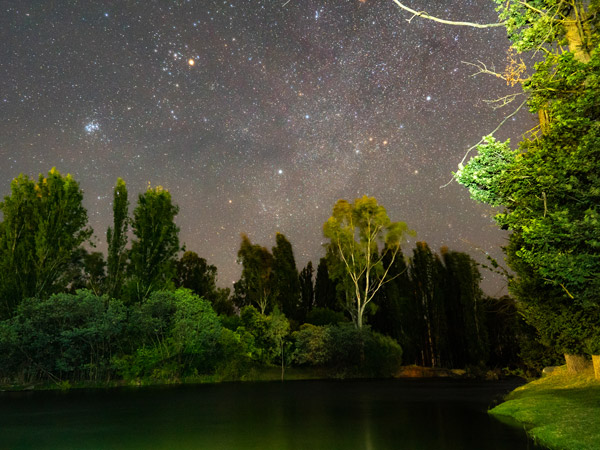
night sky with twinkling stars at the Sydney Observatory in Millers Point
Admire the shimmering night sky. (Image: Courtesy of Powerhouse. Credit: Geoff Wyatt)

4. Mudgee Observatory, NSW

Once you’ve ticked off the very best Mudgee wine tours and experiences, head to the west of the region to experience the Mudgee Observatory . Telescopes and binoculars are on hand to sharpen your vision and there’s also a planetarium and theatre that screens educational films. Tours are also scheduled regularly so check the website for up-to-date session times.
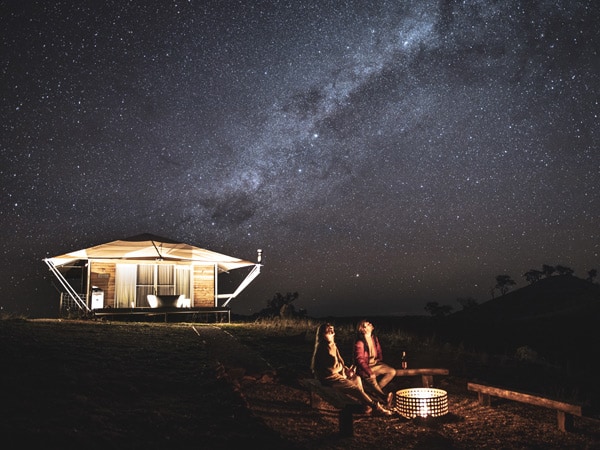
Couple enjoying the firepit while stargazing from the DulliTent at Sierra Escape, Piambong.
Admire the night sky in Mudgee. (Image: Guy Williment)

5. Grampians National Park, Vic

After a day spent wandering through walking trails, waterfalls and sensational bushland, make tracks to Reed Lookout in Victoria’s Grampians National Park for a magical light show. The sky gets extremely dark out there, and there’s nothing but clear yonder to stare into, so the popular lookout spot will throw up sensational stargazing conditions all year round. The Hollow Mountain Lookout provides another amazing vantage point.
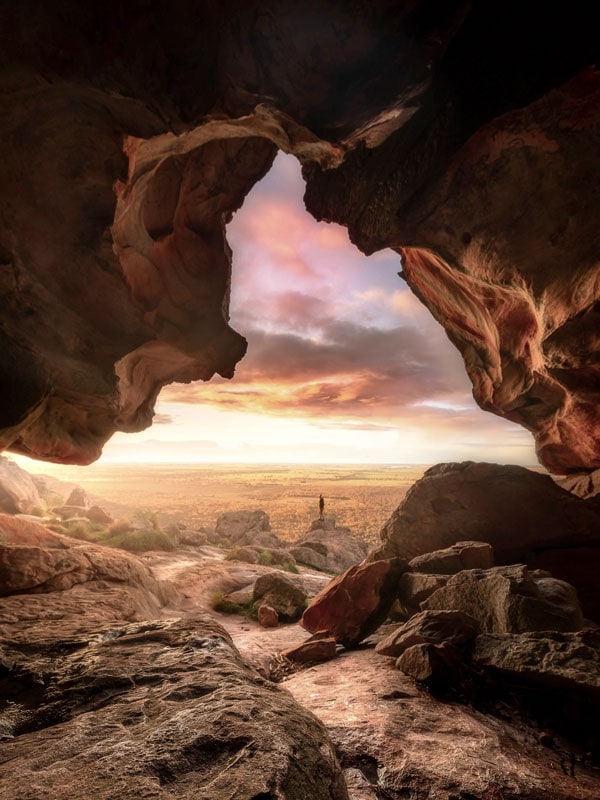
the Hollow Mountain Lookout at Grampians National Park, Vic
Hollow Mountain is great for fantastic star views. (Image: Visit Victoria)

6. Leon Mow Dark Sky Site, Vic

If you’re an avid stargazer, you’ll be all over dark sky parks and just how magnificent they are. The wide-open spaces offer killer clear skies due to the limitation of street lights, lights turning off at a certain hour each night and the removal of upward-facing lights.

Leon Mow Dark Sky Site  is a great example, located near Heathcote in Victoria. You’ve got to become a member of the Astronomical Society of Victoria to access it but once you do, you’ll be spoilt with telescopes, amenities including a kitchen, showers and toilets, and invitations to members’ parties that celebrate the wonders high above.

7. Springbrook Research Observatory, Qld

Fancy spending your Friday or Saturday night under a blanket of stars? The Springbrook Research Observatory  on the Gold Coast opens its doors to the public twice a week and loves turning visitors into avid stargazers. The hinterland hotspot consists of a primary dome with a viewing rooftop, as well as loads of telescopes to help you zoom in on all the magic.

8. Yagurli Tours, Burketown, Qld

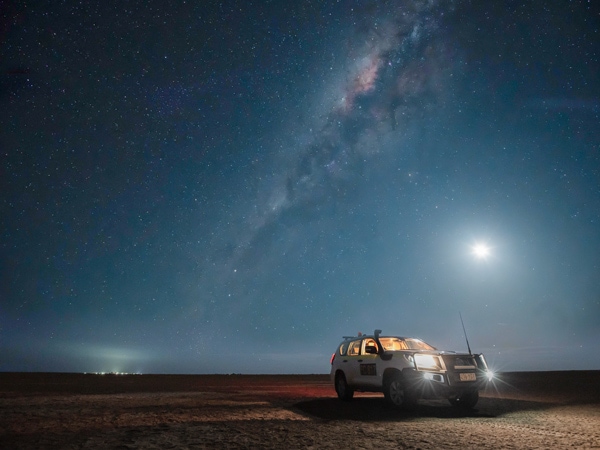
Learn more about the night sky and the Indigenous land it looms over with Yagurli Tours  in Queensland’s Burketown. Local guides are on hand to share Dreamtime stories and tales from Australia’s largest salt pans, located right on site. Telescopes come with every tour as do light snacks and mozzie spray.
Yagurli Tours in Burketown, Qld
Drive to Queensland’s Burketown for the magical Yagurli Tours. (Image: Tourism and Events Queensland)

9. Arkaroola Dark Sky Sanctuary, SA

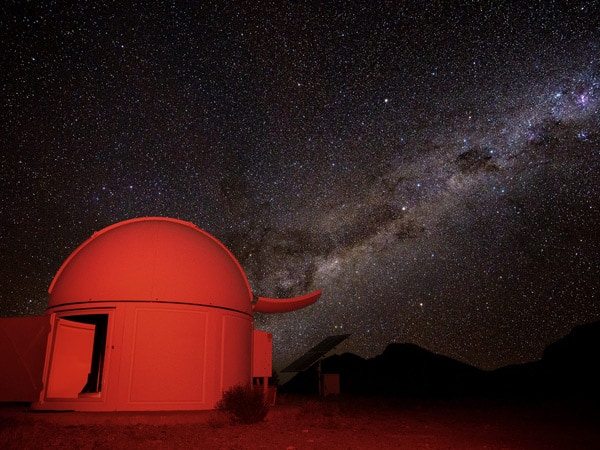
One of the country’s most famous dark sky parks, Arkaroola Dark Sky Sanctuary  in South Australia is a remote gem providing a choose-your-own-adventure stargazing journey.
a night sky filled with stars at Arkaroola Astronomical Observatory
Arkaroola Astronomical Observatory turns into an otherworldly backdrop at night. (Image: Tourism Australia/South Australian Tourism Commission)

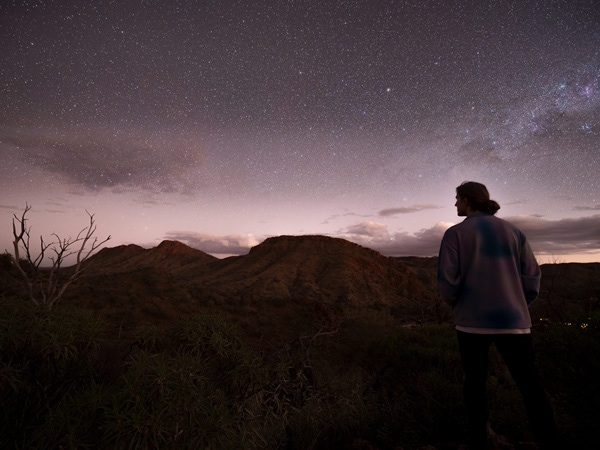
Pick from three Astronomy Experiences spanning telescope use or simply sitting in a camping chair and looking up, as well as the Ridgetop Sleepout, an overnight stay that takes in some of the grounds’ best vantage points.
stargazing at Arkaroola Wilderness Sanctuary, Flinders Ranges, South Australia
Go stargazing in the remote and rugged Arkaroola Wilderness Sanctuary. (Image: Tourism Australia/South Australian Tourism Commission)

10. Wilpena Pound, SA

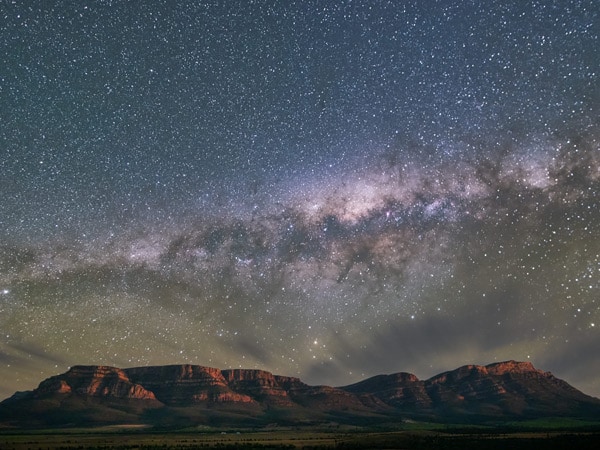
A spectacular amphitheatre of mountains located 429 kilometres from Adelaide, Wilpena Pound is a natural wonder, and its majesty should be seen to be fully comprehended.
a night sky filled with stars at Wilpena Pound
The Milky Way envelops the rugged landscape of Wilpena Pound. (Image: Mathew Storer)

While you’re at it, just look up for crystal clear stargazing. Mountain ranges and gorges on ground level, a moving light show up above, the scene is staggeringly beautiful and deeply enriching.
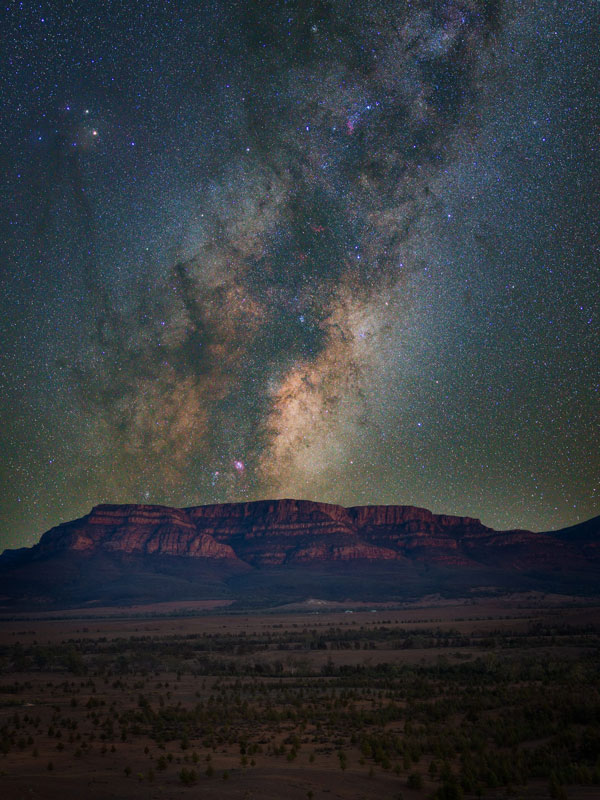
a vibrant night sky at Wilpena Pound
Wilpena Pound is blessed with spectacularly clear skies. (Image: Michael Waterhouse Photography)

11. Lake Ballard, WA

Located in Menzies, Lake Ballard and its 51 steel sculptures produce the most surreal stargazing experience in Western Australia.

All speckled and electric up high as a rugged land dotted with otherworldly artwork mystifies down low, Lake Ballard’s sculpture masterpiece is the result of British artist Sir Antony Gormley getting 51 locals to strip naked and pose for digital scans which were cast into moulds. Weird, wonderful stuff.
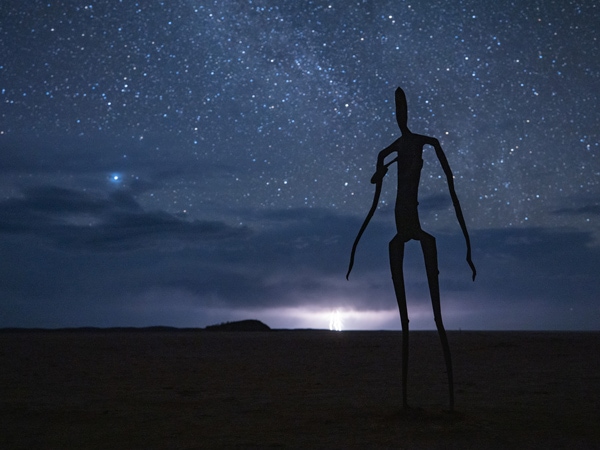
Antony Gormley Sculptures at Lake Ballard
Stare in awe at Antony Gormley’s sculptures at Lake Ballard. (Image: Tourism Western Australia)

12. Lucky Bay, Esperance, WA

Another spot for anybody chasing the Aurora Australis, plus those keen to see kangaroos on a beach, is Lucky Bay in Esperance. The postcard-perfect swimming spot with clear night skies and no light pollution delights star seekers while the Southern Ocean glistens below to create a marvellous medley of pure magic.
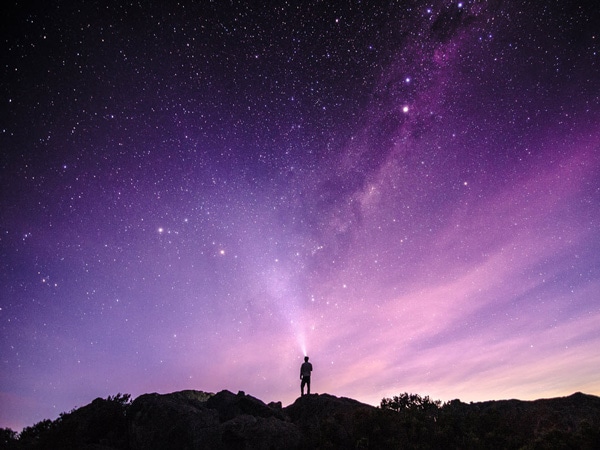
Aurora Australis in Lucky Bay, Esperance WA
Chasing the Aurora Australis in Lucky Bay. (Image: Tourism Western Australia)

13. Earth Sanctuary, NT

A smorgasbord of astrology tours is on offer from Earth Sanctuary  in the Northern Territory, where remote nothingness and little artificial light create stellar conditions for nightly gazing.

Choose to go on a one-and-a-half-hour big group tour or keep things cosy by spending the night with a small group outdoors and keeping watch up from sunset to sunrise.
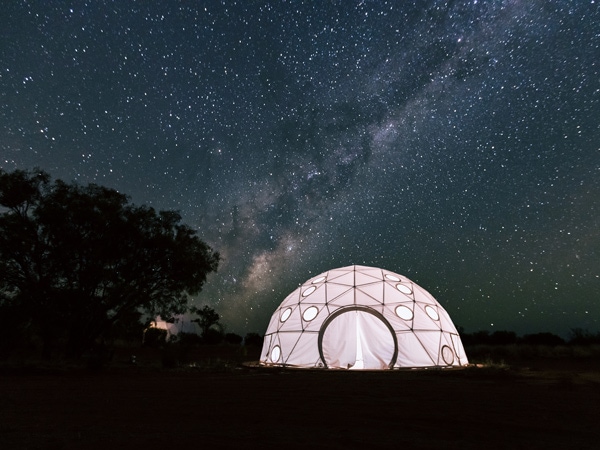
stargazing at Earth Sanctuary, NT
Get the best view of the Milky Way at Earth Sanctuary, NT. (Image: Tourism NT/Plenty of Dust)

14. Franklin, Tas

If you’ve already ticked off Kunanyi/Mount Wellington in Tassie, try the little town of Franklin next. The Aurora Australis flutters its stuff over this way on occasion and if you don’t catch it, you’re almost guaranteed a glimpse of the Milky Way all year round.
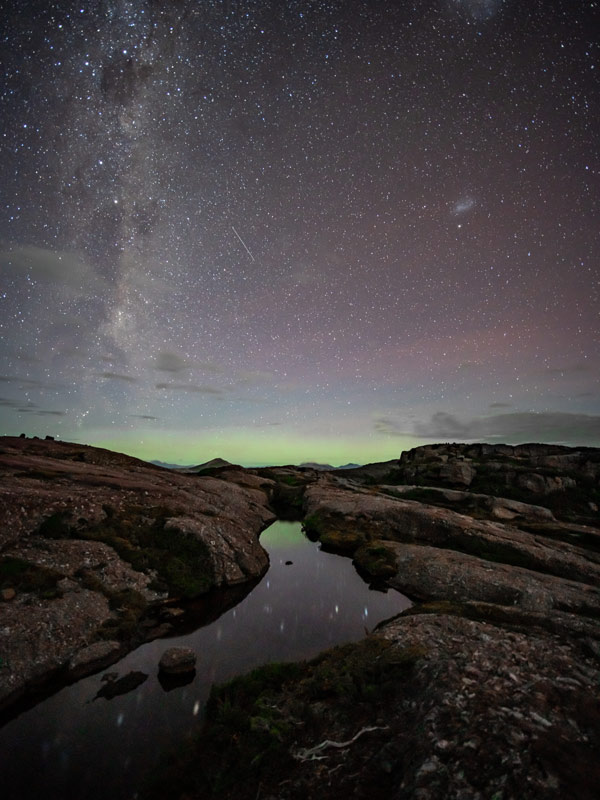
Aurora Australis in The Tyndall Range, commonly called The Tyndalls, is a mountain range that is part of the West Coast Range located in the Western region of Tasmania.
The Aurora Australis flutters its stuff over Franklin on occasion. (Image: allaboutadventure)

15. Warrumbungle National Park, NSW

Another brilliant dark sky park that bans light pollution, Warrumbungle National Park  is a two-hour drive from Dubbo. No artificial light means the Milky Way can radiate down uninterrupted, making for sensational scenes if you’re camping in the park’s rich bushland.
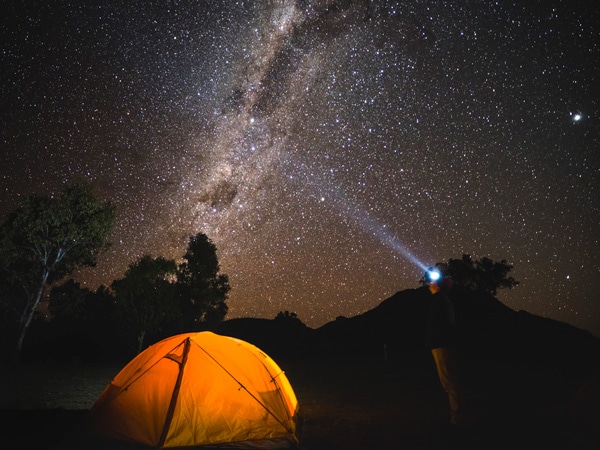
the night sky filled with bright stars over the dark sky parkin the Warrumbungles
Set up your tent at the dark sky park. (Image: Destination NSW)

Walking tracks will keep your days busy but it’s the spectacular volcanic mountain vistas that decorate all the starry goodness at night that really put this place on the map.
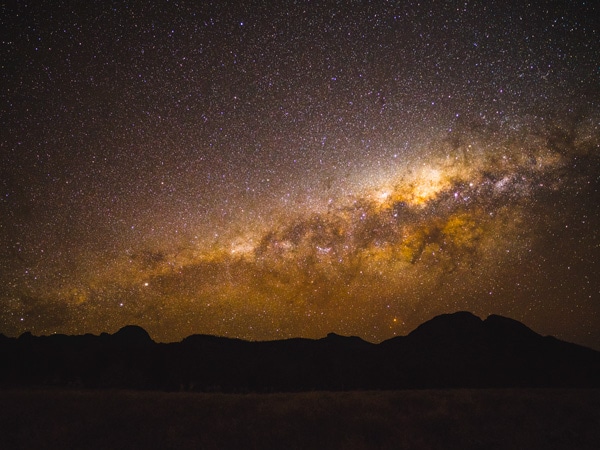
bright stars over the dark sky parkin the Warrumbungles
Admire the exceptionally star-studded skies at Warrumbungle National Park’s dark sky park. (Image: Destination NSW)

16. Broken Hill, NSW

The country’s oldest mining town is isolated from other towns and city lights, helping it produce magnificent conditions for stargazing. Broken Hill is also home to Outback Astronomy , a company that specialises in stargazing and runs its own guided Sky Shows.
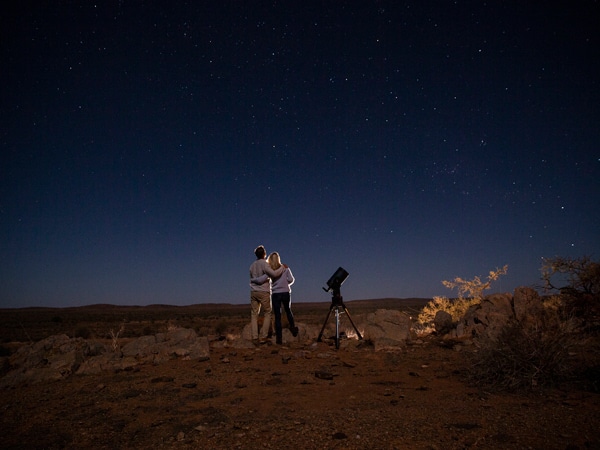
a couple stargazing at Outback Astronomy, Broken Hill, NSW
Cuddle up under the starry sky at Broken Hill. (Image: Destination NSW)

Passionate astrology experts walk you through everything that’s going on up above and show you how to look out for the constellations yourself once you’re back home.
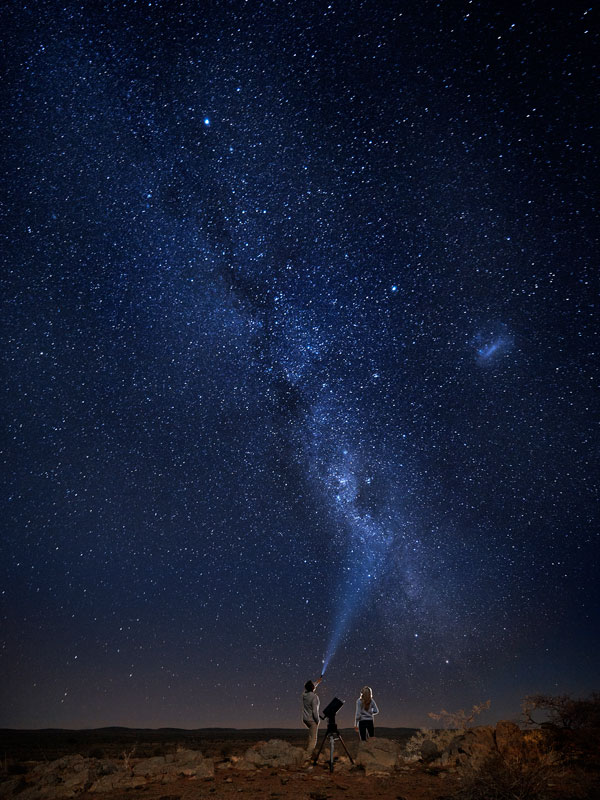
a couple stargazing at Outback Astronomy, Broken Hill, NSW
Bring out your telescope and search for constellations with Outback Astronomy. (Image: Destination NSW)

17. Perth Observatory, WA

Just 25 kilometres east of Perth lies the Perth Observatory  where a team of astronomy buffs will teach you everything you need to know about constellations and the night sky.

Plus, their extensive collection of telescopes offers front-row seats to the likes of dying stars (yep, they’re a thing), nebulas, star clusters, the moon, our surrounding planets and more. If you’re keen to dive deep into the world of astrology, this place is a must.
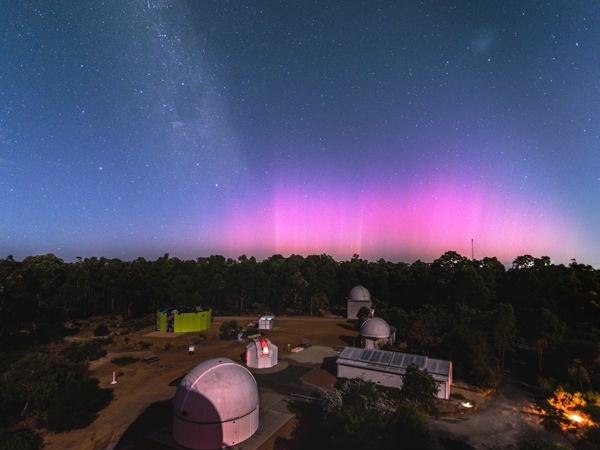
stargazing at Perth Observatory
Get front-row seats to the best views of the night sky at Perth Observatory.

18. Great Ocean Road, Vic

There’s jaw-dropping beauty to be found right along the snaking coastal stretch, but the vast skies above the Great Ocean Road equally delight. Look up to spy the Milky Way on a clear night and even Saturn and Jupiter sometimes.

While any location along the stretch will do, catching a light show directly above The Twelve Apostles never fails as a memorable road trip activity.
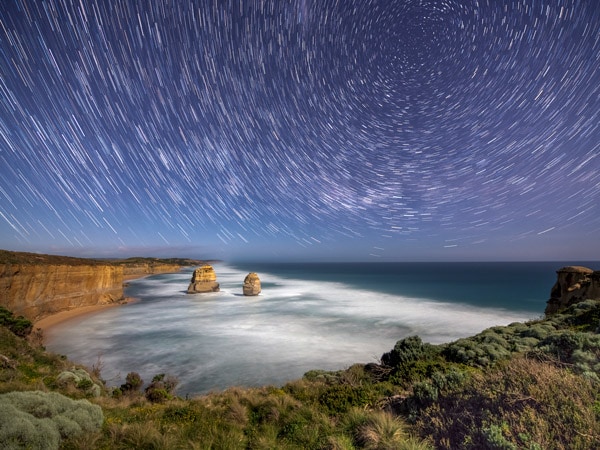
a lightshow at Twelve Apostles, Gibson Steps Beach
Catch the light show off the shore of Port Campbell National Park. (Image: Visit Victoria)

19. Mangrove Mountain, NSW

Journey inland from the Central Coast to find Mangrove Mountain, right near Peats Ridge, and sensational stargazing conditions. Its elevated ground well and truly eliminates potential light pollution, and you’ll likely spot the Milky Way if it’s clear night.

20. Wave Rock, WA

The remote landmark is better known during the daylight hours for its vividly hued granite cliffs but Wave Rock, in the tiny town of Hyden, is also a spectacular spot at night.

Pollution-free conditions make for an unobstructed sky in which to look for scattered constellations. However, it’s the unique streaks that bounce off the rock itself, created when rainwater hits the surface, that make for incredible photographs.
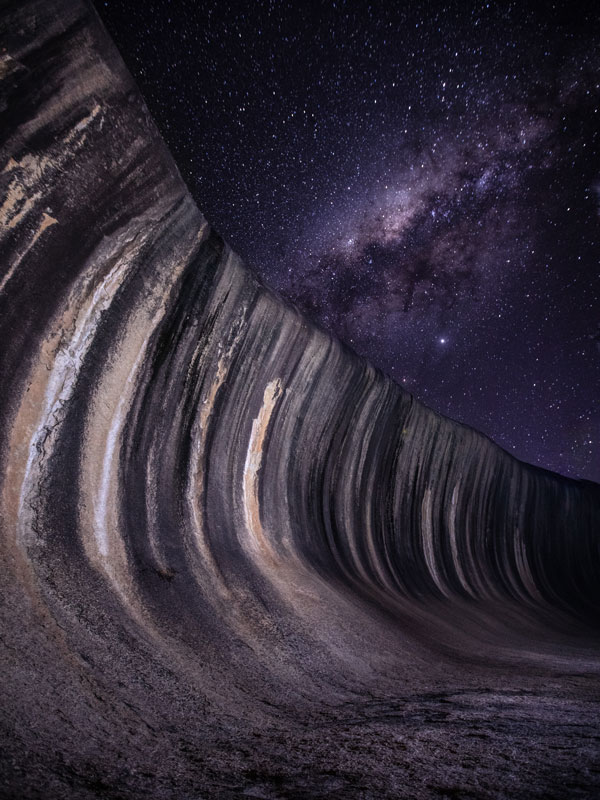
the Wave Rock in Hyden
The curved granite resembles a wave. (Image: Tourism Western Australia)

21. Mount Stromlo Observatory, ACT

Free stargazing nights are regularly staged at Mount Stromlo Observatory , a Canberra hot spot run by the Canberra Astronomical Society. Guests are invited to soak up stargazing tips from its members and marvel at the Observatory’s 188-centimetre dome set amid rich greenery.
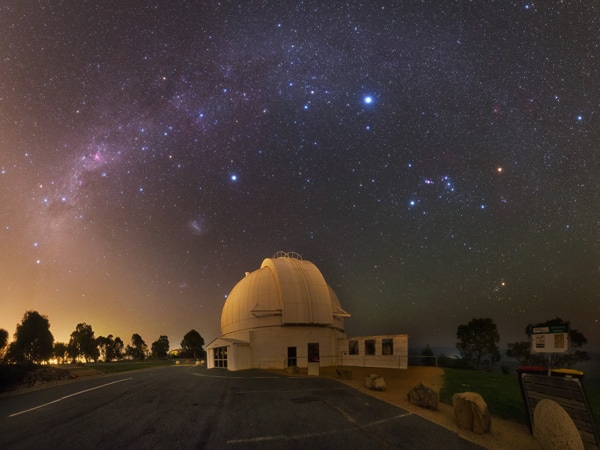
the dome at Mount Stromlo Observatory
Marvel under the stars at Mount Stromlo Observatory. (Image: VisitCanberra)
Kristie Lau-Adams
Kristie Lau-Adams is a Gold Coast-based freelance writer after working as a journalist and editorial director for almost 20 years across Australia's best-known media brands including The Sun-Herald, WHO and Woman's Day. She has spent significant time exploring the world with highlights including trekking Japan’s life-changing Kumano Kodo Pilgrimage and ziplining 140 metres above the vines of Mexico’s Puerto Villarta. She loves exploring her own backyard (quite literally, with her two young children who love bugs), but can also be found stalking remote corners globally for outstanding chilli margaritas and soul-stirring cultural experiences.
See all articles
hero media

6 reasons the best way to experience the Kimberley is by cruise

This remote corner of Australia is one of the world’s last frontiers. This is how to see it properly.

Vast, rugged and deeply spiritual, the Kimberley coast in Australia’s North West feels a world away from everyday Australia – and there are countless ways to explore it. But if you want to reach ancient rock art, hidden gorges and lonely waterfalls, it has to be by boat. Whether you’re aboard a nimble expedition vessel or a luxury yacht with all the trimmings, exploring by the water brings exclusive experiences, shows unique views and makes travel easier than any other mode. And that’s just the beginning of Australia’s North West cruises.

The True North Adventure Cruise in between sandstone cliffs.
Adventure starts where the road ends.

1. Discover Broome, and beyond

Explore your launchpad before you set sail: Broome. Here camels and their riders stride along the 22 kilometres of powdery Cable Beach at sunset. That’s just the start.

At Gantheaume Point, red pindan cliffs plunge into the turquoise sea, whose low tide uncovers fossilised dinosaur footprints. Broome’s pearling history runs deep. Japanese, Chinese, Malay and Aboriginal divers once worked these waters, and their legacy lives on in boutiques where South Sea pearls still shine.

If the moon’s right, you may catch the Staircase to the Moon over Roebuck Bay. Or simply kick back with a cold beverage and a film under the stars at Sun Pictures , screening since 1916.

Ride a camel along Cable Beach as the sun sinks into the Indian Ocean, casting golden light across the sand and sea.
Ride a camel along Cable Beach. (Image: Nick Dunn)

2. Unmatched access to The Kimberley

Once you’re onboard, expect a backstage pass to some of the most isolated places on Earth. No roads. No ports. No phone reception.

At Horizontal Falls/ Garaanngaddim, 10-metre tides surge through twin gorges like a natural waterpark ride that’ll make your palms sweat. Then there’s Montgomery Reef/ Yowjab: a giant living platform of coral and seagrass, where the sea pulls back to reveal waterfalls, sea turtles and ospreys.

Up north, King George Falls/ Oomari rage 80 metres down red cliffs. Zodiac boats often nudge in closer so you can feel the spray on your sun-warmed cheeks. You might even fly in to reach Mitchell Falls/ Punamii-unpuu, a four-tiered cascade where you can swim in freshwater pools above the drop.

Come spring, some itineraries veer west to Rowley Shoals: an atoll chain of white sand and reef walls. Then it’s up the winding Prince Regent River to King Cascade/ Maamboolbadda, tumbling over rock terraces, and into a Zodiac to view the Gwion Gwion rock art, whose slender, ochre-painted figures are older than the pyramids.

A cruise drifts beneath King George Falls, where sheer sandstone cliffs frame the thunderous plunge into turquoise waters.
Get closer to the Kimberley than ever before.

3. Taste the Kimberley with onboard hospitality

You might spend your days clambering over slippery rocks or charging past waterfalls. But when you’re back on the water, it’s a different story. Meals are chef-prepared and regionally inspired: grilled barramundi, pearl meat sashimi, mango tarts, and bush tomato chutney. One night it’s barefoot beach barbecues with your shipmates; the next, alfresco dining on the ship.

Small expedition ships each have their own personality, but many carry just 12 to 36 guests, making being out on the water a whole other experience. You might sink into a spa on the foredeck or sip coffee in a lounge while watching crocodiles cruise by. It’s choose-your-own-relaxation, Kimberley style.

4. Expert-led excursions through the Kimberley

These voyages are led by people who know the Kimberley like the back of their sunburnt hand. Attenborough-esque naturalists might gently tap your shoulder to point out rare birds or tell the story beneath a slab of rock. Historians can explain exactly how that rusted World War II relic came to rest here.

If your ship has a helipad, you might chopper straight to a waterfall-fed swimming hole. If not, you’ll still be hopping ashore for that wet landing at a secret creek.

Then come the evenings: songlines shared by Traditional Owners under the stars, or astronomy sessions that link what’s overhead with what’s underfoot and what’s within.

A small group glides through Kimberley’s rugged coastline by boat, passing ancient cliffs.
Explore with naturalists and historians by your side.

5. Relax in luxurious lodgings

Just because you’re off-grid doesn’t mean you have to rough it. These Kimberley vessels are small in size, but mighty in luxury. True North’s ships come with their own helicopters and a no-sea-days policy, so you’re always in the thick of it. Try the luxurious offerings from Ocean Dream Charters for exploration in style. Kimberley Quest offers a fast boat for easy, off-ship adventures. On the larger end of the scale, Coral Expeditions has open-deck bars and curated wine cellars. And then there’s Ponant’s luxury yachts sleek and incredibly stylish French sailing yachts.

A helicopter soars above the sea, with a sleek cruise ship gliding in the distance.
See the Kimberley from sky to shore.

6. The adventure continues with pre- and post-cruise experiences

You’ve already come this far – so, why not go further? Broome makes it easy to ease in before you board, or wind down when your voyage ends, and there is no reason to stop there.

Head an hour and a half south to Eco Beach to stay off-grid and off the clock. Join a Yawuru guide for a mangrove walk or ocean forage. Dive even deeper into Broome’s pearling past at Willie Creek or Cygnet Bay, where divers and craftspeople still pull the seawater-slicked gems from the deep.

If you’re still craving adventure, it’s time to go further. Soar over the Buccaneer Archipelago, or detour inland with a 4WD trip along the Gibb River Road. Book a scenic flight over the Bungle Bungles. Or – because you never know when you’ll be back – do all three.

aerial of people walking on eco beach in the kimberley western australia
Stay off grid at Eco Beach. (Image: Tourism WA)

Find out more about your trip to Australia’s North West at australiasnorthwest.com .