How has the domestic travel landscape evolved since we launched our first issue in 2005? And what might it look like in another 18 years’ time? From the tip of the Top End to the southernmost state, we speak to industry leaders across the country to find out.
The year 2005. Australia was half a decade into the new millennium. John Howard was still prime minister and the country was basking in the afterglow of the Sydney 2000 Summer Olympic and Paralympic Games, which helped put it on the map as an international tourist hub like never before. The term ‘glamping’ was coined and Airbnb, three years off launching, was still seven years away from Australian shores. A 19-year-old Mark Zuckerberg had only just co-founded Facebook in his Harvard dorm room a year earlier and Instagram, which launched in 2010, was still a twinkle in its founders’ eyes. And Australian Traveller published its first issue on 26 May. In the same month, a small fishing camp opened on Bremer Island in North East Arnhem Land in partnership with the local Yolngu community. At its heart, a rustic Robinson Crusoe-style shack decorated with all manner of flotsam and jetsam washed up from near and far.
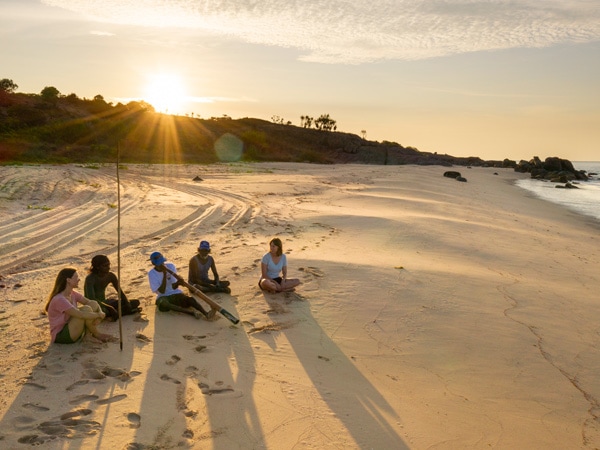
The evolution of First Nations tourism
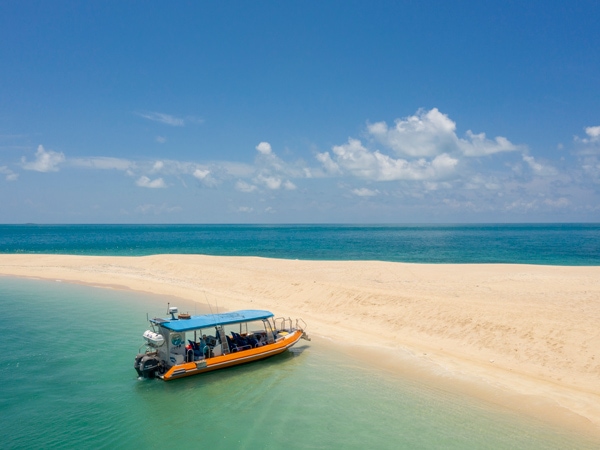
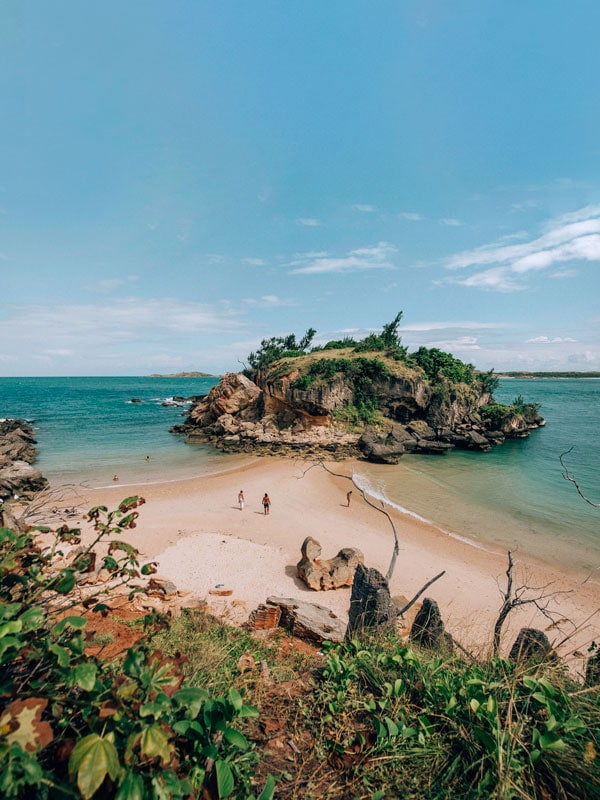
In times past, Macassan traders visited these shores and traded with the Yolngu. Since then, Banubanu Beach Retreat has evolved into a luxury island sanctuary thanks to the vision of its founders Helen Martin and Trevor Hosie, with five beachfront bungalows and a penthouse perched high on the sand dunes to take in the glittering expanse of the Arafura Sea, complemented by a restaurant, bar and pool. The original shack is now staff quarters that serves as a museum to the tides and passage of time – a whale’s backbone, a boat tiller, a life ring bearing the name Jakarta. Banubanu, like so much in Australia, has evolved since 2005.
Martin, an Arrernte woman, has steered the ship over the last 18 years as Banubanu’s managing director. But she is also a director on the Ikara Wilpena Enterprises board and, as chair of the Northern Territory Government Aboriginal Advisory Council for seven years, was instrumental in writing the Northern Territory’s 2030 Aboriginal Tourism Strategy, the first in two decades, which maps out a vision for the sector’s growth.
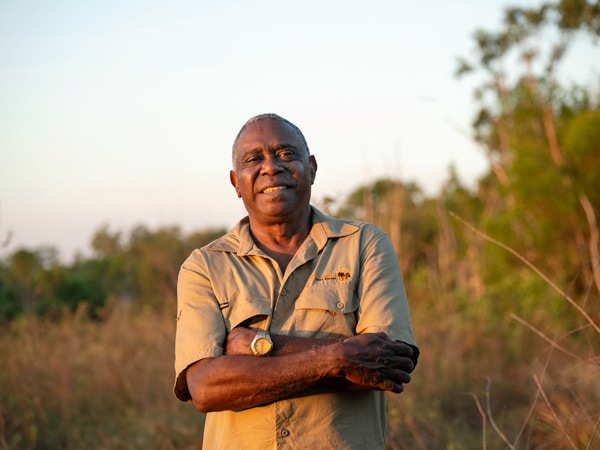
When she and Hosie opened Banubanu, First Nations tourism in the Territory was still emerging. Some of the trailblazers, including Timmy Burarrwaa of Bawaka homeland in East Arnhem Land, Victor Cooper of Ayal Aboriginal Tours Kakadu, Nitmiluk Tours CEO Jane Runyu-Fordimail and Anangu leader Dorethea Randall, formed part of the diverse group that put the 2030 strategy together, “so that we were speaking from all different sectors of the Territory," says Helen, “to help [with the support of government and other tourism products] other Aboriginal tourism operators grow and develop over the next 10 years into sustainable tourism products."
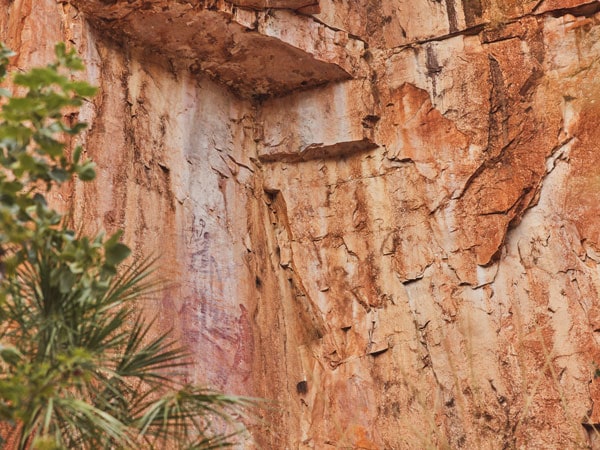
Aboriginal tourism over the last 20 years has evolved, says Martin. And it’s growing not just in the Northern Territory but all across Australia: you just have to browse the website of Welcome to Country, a not-for-profit marketplace for Aboriginal and Torres Strait Islander experiences and products.
These days, the offerings are as disparate as a walking tour of Aboriginal public artworks in the Cultural Precinct of Meeanjin/Brisbane to an outback adventure exploring WA’s Lake Ballard on Wongutha Country to an adventure cruise in South Australia’s Coorong-Kurangk National Park .
“There’s so many diverse experiences and people are now wanting to share their culture and their stories with the greater community and visitors to Australia, which is fantastic and provides a different appreciation of the diversity and richness of Aboriginal culture," says Martin. “We are all different and we’ve all got our own threads and storylines to tell."
Australia’s First Nations tourism offering has evolved in lockstep with changing priorities among travellers, both international and domestic. “There has been a real change in the type of tourism people are interested in over the last 18 years," says Ben Hall, CEO of the century-old guided holiday company AAT Kings . Responsible travel now tops the agenda, encompassing ecotourism and sustainable travel.
Purpose-driven travel
‘Beautiful one day, perfect the next.’ Queensland’s iconic slogan was born in the 1980s and readopted for Brisbane’s 2018 Commonwealth Games. For CEO of Tourism and Events Queensland Patricia O’Callaghan, it also paints a picture of the state’s tourism landscape back in 2005. “It captured the very essence of Queensland," she says.
Sunny days and a relaxed and easygoing community that embraced – from reef and rainforest to hinterland and outback – what it had been blessed with. “It was about our world-class natural and cultural assets, but it was about enjoying the experiences all the way from Coolangatta through to Cairns and the Cape."

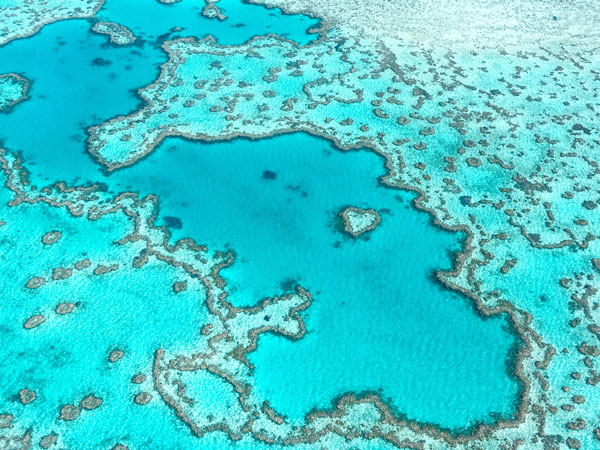
And while this still rings true today, increased environmental awareness has seen the state’s raison d’etre move towards more purpose-driven travel. “Our positioning for Queensland is around that idea of travel for good. It is about immersing ourselves in our natural assets, but also trying to leave our footprints for the better when holiday visitors come through," says O’Callaghan. “Our industry is really prioritising this because we want to make sure these experiences are here for many generations to come."
In 2019 the Port Douglas Daintree region became Ecotourism Australia’s first ECO Destination, a robust and internationally recognised certification that demonstrates a whole-community commitment. And when Queensland declared 2023 The Year of Accessible Tourism, it signalled another move in the right direction towards a truly inclusive tourism industry, not just in the Sunshine State, but all across Australia.
Experiential travel
Today, the essence of travelling lies in the word experience, with travellers no longer settling for surface-level interactions. “We’ve seen a huge expansion in experiential tourism," says Hall. “So whereas historically people might have gone to a destination to see it and hear about it, these days, they actually want to immerse themselves in it, discover it and understand it better." It’s in a similar vein that the concept of luxury travel in Australia has been redefined.
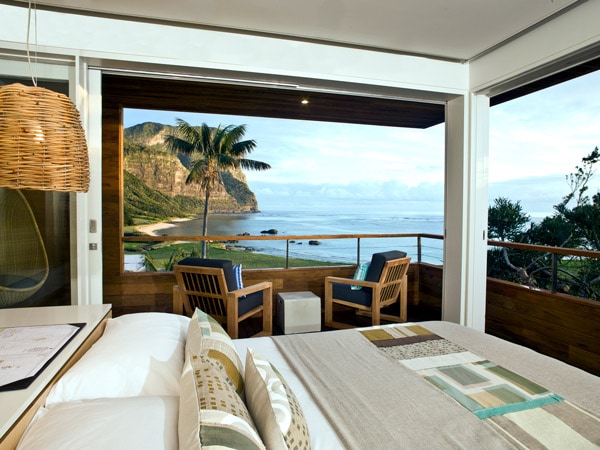
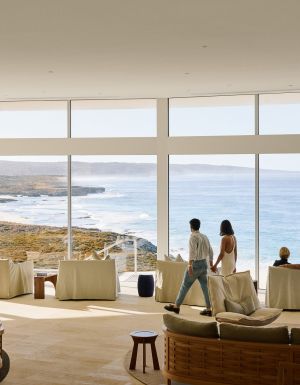
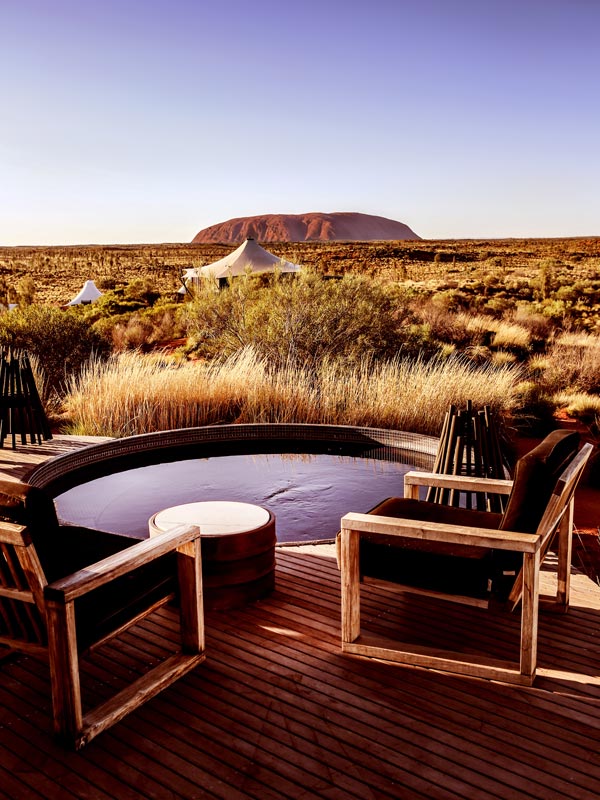
“Luxury travel is not necessarily just five-star. It’s around those unique experiences that money just can’t buy," says Hall. Case in point: Luxury Lodges of Australia was formed in 2010 to promote the uniquely Australian breed of luxury experiential hospitality that had bubbled to the surface, with founding members including Capella on Lord Howe Island , Longitude 131° at Uluru and the soon-to-reopen Southern Ocean Lodge on Kangaroo Island .
“Luxury means something different to everyone," agrees Tourism Tasmania CEO Sarah Clark. “People used to think it was just a five-star type resort experience, but now – and it’s been proven with so many great luxury lodges and even cabins in the wilderness – it’s not a full-service luxury that people are looking for anymore. They want to create their own version of that and be given the environment to do it."
The rise of regional Australia
The growth in regional Australia we have witnessed over the last 18 years has translated to an elevated tourism offering across the whole of the country. “I made a commitment when I started as a CEO that even though I was a born-and-bred Queenslander, it was important to get around to all the regions within the first 100 working days to engage and also experience the products themselves," says O’Callaghan. And those products are astounding, she found: from five-star glamping in the outback on top of a jump-up with your own personal chef to the best steak burger you’ve ever eaten at a country hotel.
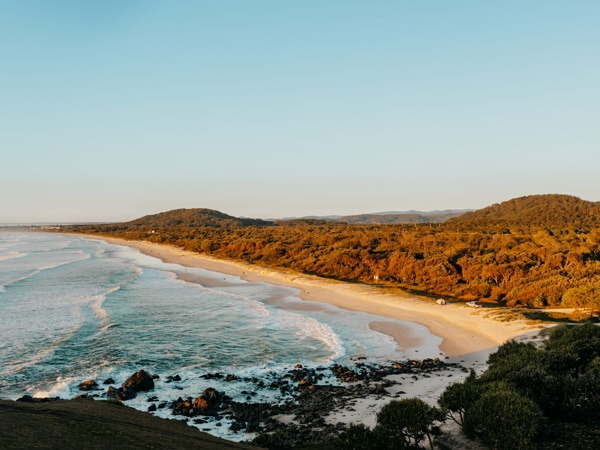
It is this regional growth that has been one of the biggest shifts in NSW, whose visitor economy has undergone significant transformation since 2005, says Destination NSW CEO Steve Cox. “Two decades ago, visitors were attracted mainly to well-established destinations like Sydney and the Blue Mountains, while in 2023 visitors are spread across the state, from Byron Bay to Broken Hill. There has been a strong growth in regional tourism, with once lesser-known towns becoming popular destinations for domestic and international visitors."
In the year ending June 2023, for example, regional NSW welcomed nearly twice as many domestic visitors as compared to Sydney. And we’re only going to see this trend develop deeper and wider: “We’re particularly excited about the potential for further growth in regional destinations such as the Tweed, Broken Hill, Newcastle, Mudgee, Murray River, Merimbula and the Shoalhaven," says Cox. “These areas offer a wealth of unique visitor experiences, from world-class culinary offerings to quirky cultural festivals and breathtaking outdoor adventures."
Aussie cities have grown up
Our capital cities have been growing into themselves, too. “Sydney has evolved into a multifaceted global city and continues to change," says Cox. No longer just about iconic landmarks like the Sydney Opera House and Harbour Bridge, Sydney has embraced its cultural diversity. Everything from Vivid Sydney , which launched in 2009 and this year attracted more than 3.28 million attendees, to events like Sydney WorldPride 2023 and the expansion of the Art Gallery of NSW , which opened its new North Building in 2022, offer more compelling reasons to visit. The fact that in October Sydney became the first-ever host city of an annual South by Southwest (SXSW®) event outside Austin, Texas, reflects this new confidence.
Brisbane’s restaurant and bar scene has also exploded with an injection of new energy thanks to developments like Howard Smith Wharves. The city is looking ahead to the 2032 Games, which O’Callaghan projects will be the most sustainable and inclusive ever, to create a legacy that percolates throughout the whole state.
Perth has embraced its heritage with the revitalisation of its historic State Buildings in the heart of the city into a hub of hospitality, retail and accommodation crowned by Como The Treasury (the biggest hotel opening in Australia when it launched in 2015) and the opening of landmark WA Museum Boola Bardip in 2020.
Darwin continues to embrace its strong, multicultural identity through food and culture: Sri Lankan restaurant Ella by Minoli opened last year and is the hottest ticket in town; and the new $88 million Northern Territory Art Gallery, slated for completion in late 2024, will form an architectural anchor of the Darwin Civic and State Square Masterplan.
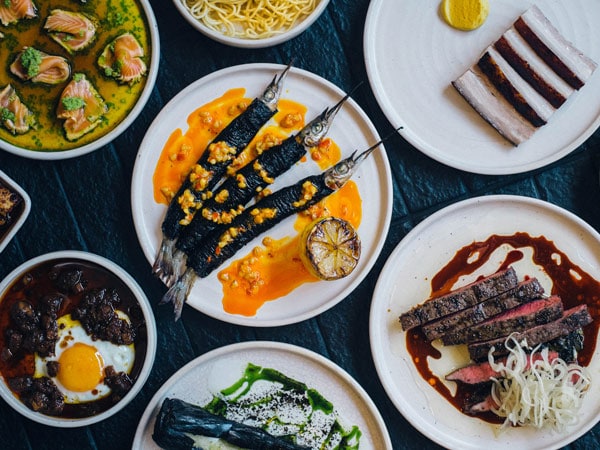
Few would deny Adelaide’s emergence in recent years as a bona fide foodie capital, with a CBD laneway culture emanating out of Leigh and Peel streets the catalyst. And Melbourne continues to build on what Melbourne does best. Research, says Visit Victoria CEO Brendan McClements, shows that visitors have an emotional reaction to the city. “So [people aren’t] necessarily coming to do something, [they’re] coming to feel something," he says. “It’s the vibe in Melbourne. That layered urban experience that people come here for."
Across Australia, we’ve seen a boom in hotels. “[Adelaide’s] skyline has changed so much over the last decade – thanks to new hotels like Eos by SkyCity, Sofitel Adelaide and the still-under-construction Marriott GPO Hotel ," says South Australian Tourism Commission CEO Emma Terry.
Since 2020 alone, Adelaide has seen more than $1.7 billion invested into new hotel construction. Perth, Brisbane and Melbourne, too, have had a hotel boom, with the Victorian capital now Australia’s largest hotel market, boasting luxe new additions from brands such as The Ritz-Carlton, Le Méridien and Dorsett.
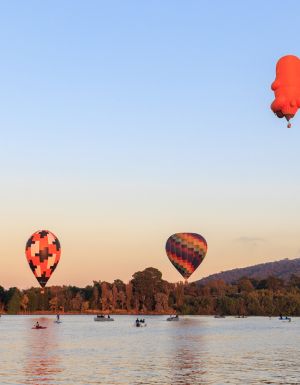
Since 2005, Canberra has undergone a renaissance. Young in the scheme of global cities, it started coming into its own when it celebrated its centenary in 2013. “Across that period the city really evolved to be something where there was a community of people that lived here that started defining and contributing to what the personality and character of the place is, and what makes it truly distinctive," says Visit Canberra director Jonathan Kobus.
“What we found in the last 20 years or so, is that there are increasingly opportunities afforded here that have enabled young people to stay in Canberra and do great things, open great businesses," says Kobus. “And that has really helped define the essence of a Canberra experience and the essence of its brand as a tourism destination."
Key factors that have helped the transformation include improved infrastructure such as the opening of Canberra Airport in 2013, which improved Canberra’s connectivity, and the ongoing investment in facilities and blockbuster exhibitions. The new home of the National Portrait Gallery was the last major attraction to open in the city in 2008, putting Canberra on the trajectory it is on today whereby its cultural cachet and the stories told through its national attractions are the core of the visitor experience.
Another layer of the Canberra story woven in different periods has been the investment in precincts that have transformed the city into a collection of villages: the likes of NewActon, Kingston Foreshore, Braddon and most latterly emerging, Dairy Road, which will eventually include a residential development that will animate it further, says Kobus. “It’s a good example of Canberra-based businesses and families putting a creative mark on the city and really helping define what its personality is all about."
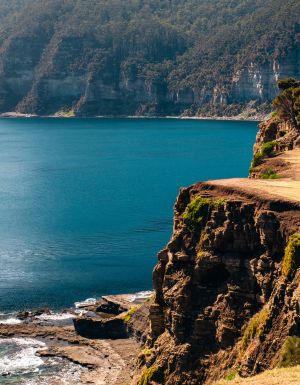
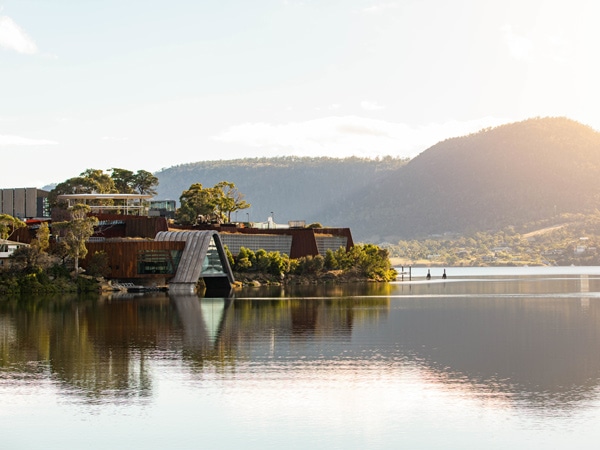
Perhaps no city has been transformed in the cultural stakes as much as Hobart. And on this front, we can’t underestimate the Mona effect. Opened by Tasmanian David Walsh in January 2011, the game-changing Museum of Old and New Art showed other Tasmanians that you can do things differently, says Tourism Tasmania’s Clark. “It inspired a lot of them to really innovate and create some great new products and experiences." Other things fell around this, she notes, to collectively elevate the offering in terms of creativity, food and beverage, and tourism as a whole. And not just in Hobart but throughout the whole island state.
The bar for food and drink across Australia has been raised
One of the most tangible ways to gauge these changes is by sampling today’s culinary landscape. From city to outback and from top luxury lodges to small-town pubs, the bar for food and drink across Australia has been raised – and then again – with menus embracing the country’s multiculturalism, seasons and locality to connect diners and drinkers firmly back to place.
Of course, there are some things we’ve done well all along. “Some of our state’s tourism strengths have been consistent over time, like our wine – which is a major tourism drawcard for South Australia," says Terry. But building on that is an increased maturation and rounding out of offerings, including a whole new emergence of craft distilleries. “We’ve also mastered spirits with some of the best gin distilleries in the country," says Terry by way of example. “From Kangaroo Island Spirits to Ambleside Distillers in the Adelaide Hills, it is a booming industry and one our state is leading in."
Key catalysts: technology, aviation and the pandemic
So what have been the biggest catalysts throughout all this? Technology, says Hall: the variety of, the accessibility of, the connectivity and information that we have and are exposed to, have all helped fundamentally change the way we travel. Whether that’s in ease of travel planning and booking, including to off-the-beaten-track destinations in remote and regional Australia or the way that we use social media to communicate, share imagery and inspire. “All these things that now exist drive people to want to go to places, to experience different things, to try food, drinks and activities. It has amplified everything."
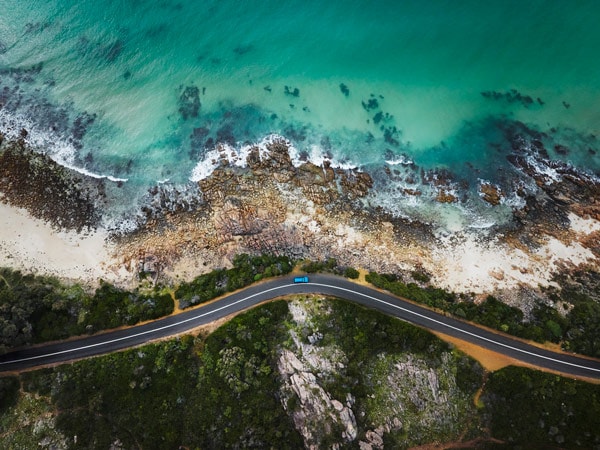
Increased aviation connectivity between regional hubs has also opened up new pathways for exploration: Australia’s newest airlines, Bonza and Nexus Airlines , took to the skies for the first time in January and July 2023 respectively, with the goal of connecting underserviced routes.
And of course, the most recent of paradigm-shifting events: the pandemic. Covid-19, and the boom in domestic travel this created while our international borders were shut, proved the greatest catalyst for increased interest in First Nations tourism experiences, says Helen Martin, co-founder of Banubanu Beach Retreat. “All of a sudden, we had the Australian market on our doorstep trying to come out to regional areas and realising there’s more to Australia, wanting to learn from Aboriginal people. There is an appetite now for more Australians and more international visitors wanting to have that cultural immersion."
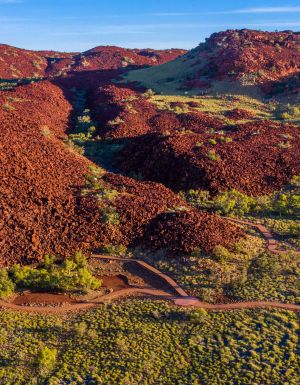
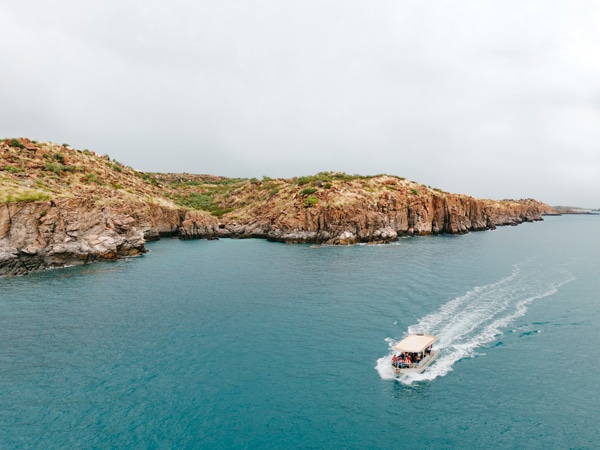
For Tourism Western Australia, the pause induced by the pandemic saw the launch of a whole new brand identity that is bigger and bolder than ever. The Walking on a Dream campaign not only solidified but amplified the state’s place on the map as a bucket-list destination – both for overseas guests and domestic travellers, such as east coast Australians who are almost treating a journey to the Kimberley, for example, as an overseas trip, says Tourism Western Australia’s managing director Carolyn Turnbull.
The creative concept captures the dreamlike qualities of Western Australia and tunes into its 60,000 years of continuous culture. “Elevating Western Australia, but at the same time celebrating our Indigenous heritage, was really important," says Turnbull.
And even with the current cost-of-living crisis and discretionary expenditure being pulled back, people aren’t stinting on their travel. “People trade off a lot of things before they choose to stop their travel," says McClements of Visit Victoria. “They might trade off the type of travel – domestic rather than international or within the state rather than outside the state – but they still find that travel is a need, not a want."
Sustainable growth is key
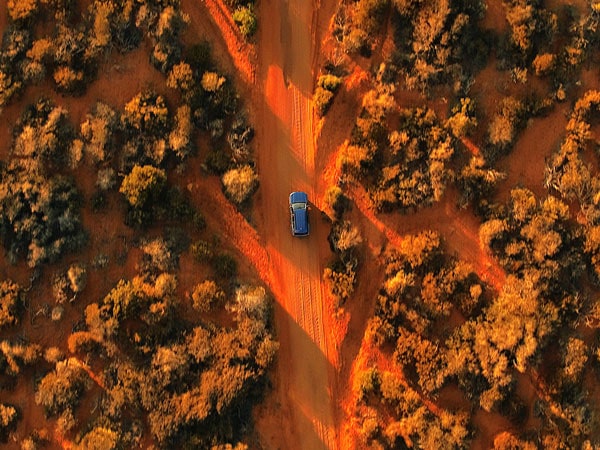
Travel is showing no signs of slowing down. Tourism will continue to evolve with emphasis on sustainability, accessibility and First Nations cultures at its core. But crucially, the industry recognises, it will need to grow in the right way. Whether that’s promoting off-season travel, like Tasmania has with its wildly popular Off Season winter campaign or, on the flipside, Darwin calling on visitors to come for its summer season by creating all-weather experiences that showcase the tropics in the best way possible – spectacular lightning storms rolling in off the Timor Sea and all. Or finding new ways to travel.
Cruising is booming in Australia, whether that’s expedition adventures along the continent’s remote north coast or record-breaking seasons in South Australia, which is seeing more cruise visits scheduled than ever before, including to the regional ports of Port Lincoln and Kangaroo Island (as the rest of the world wakes up to how good South Australians have got it).
“We aim to achieve sustainable growth, ensuring that the visitor economy delivers social and economic benefits to the people of NSW and plays a major role in preserving the environment for future generations of citizens and visitors from interstate and overseas," Cox says.
“What we’ll see is that continuation of people really wanting to travel sustainably and be quite impactful with their travel and want authentic experiences even more," says Clark, with Tassie’s ample natural assets and head start – having achieved 100 per cent renewable energy and net zero emissions – ensuring the southernmost state is well set.
“We need to continue to be a leader in that space. I would love Tassie to be the leader in sustainable travel for the future. The things people come to see here in Tassie are the things we need to protect. There will be more people coming to Tasmania, that’s what our forecasts say. And so we need to make sure that we’re really protecting our island for not only tourists to enjoy, but for our community, for the environment, and for a sustainable industry."
In Australia, it will never be about mass tourism. “While Western Australia is the largest state in Australia, that doesn’t necessarily equate to mass market tourism for us because we have a relatively conservative population size of close to 3 million state-wide… [It’s] not ever going to be a mass-market destination because of its sheer beauty and natural existence."
The strategy is a targeted less-is-more approach aimed at thoughtful travellers who are dispersing further and spending longer. In the Northern Territory, where there is scope for developing more tourism offerings in its remotest reaches, Scott Lovett, the Northern Territory’s deputy CEO for the Department of Industry, Tourism and Trade, emphasises the need to do this sensitively.
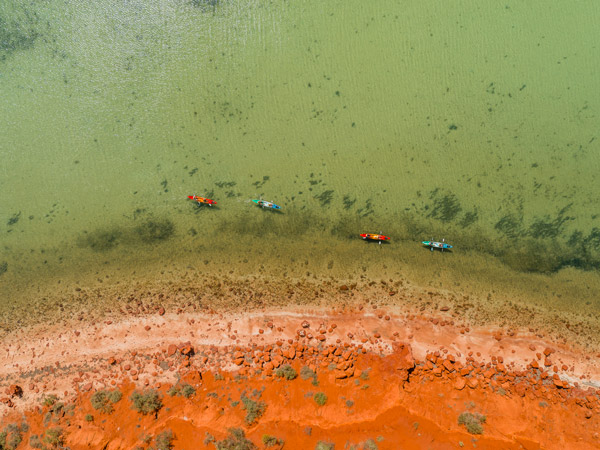
“Development sustainability is a core theme of what we do," he says. “We work with our tourism industry intensively around the sustainability principles of how we do what we do and travelling sustainably is in consumers’ minds much more so now than it ever has been. When we talk about these remote locations, which are quite often spectacular, the infrastructure and the environment simply can’t handle mass-market visitation. So those places will lend themselves very well to small-scale, highly experiential, low-impact development."
Tucked into the sand dunes, Banubanu is a prime example of this and will continue to be as it too evolves; after living and working here in this slice of island paradise for 18 years, Martin and Hosie have sold the eco retreat. Continuing as advisors, they are looking forward to witnessing its next era of sensitive development under new Aboriginal ownership that will continue their legacy.
The future looks like community and the cultural fabric of place
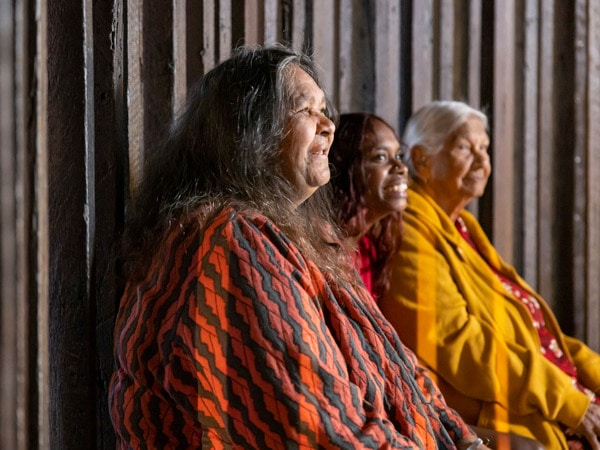
So what will First Nations tourism look like in the future? For Martin, her dream has always been to see a model adopted by WAITOC (Western Australian Indigenous Tourism Operators Council) – the peak representative for Aboriginal tours and experiences in Western Australia – across each state and territory. Celebrating its 20th anniversary last year, WAITOC started with 12 members and today has 180.
One of the keys to this success is the running of an Aboriginal tourism business hub and development program, of which Oolin Sunday Island Cultural Tours ’ Rosanna Angus, recipient of Australia’s Top Tour Guide at the Top Tourism Town Awards 2023, is a graduate.
“It shows the program we’re running in these academies at the moment is working really well," says CEO Robert Taylor. WAITOC has been the blueprint for others to follow. “Our advocacy has always been about having state-based organisations pop up so that we could then bring them together and have a national voice as well," says Taylor.
“That’s what we should be striving to achieve across Australia, all the states and territories," says Martin. And eventually, a national body. “We should have been here 10, 20 years ago, but we weren’t," says Martin. “But we’re here today and I think we’re getting there. I’m proud of it. It’s a way forward for tourism, for First Nations tourism."
At the end of the day, across Australia, it all comes back to people, and the community and cultural fabric of a place. “It’s probably a philosophy that most destinations are adopting now to ensure they’ve got that citizen engagement and citizen buy-in to what they do," says Visit Canberra’s Kobus. “To ensure that travel and tourism do actually contribute to the wellbeing of the citizens and make the place you live a better place to be."