
Brief-but-sweet stickybeaks through spectacular natural playgrounds are found right across the country.
Calendar full of catchups? Countless errands to run? Exploring Australia’s untamed beauty doesn’t have to swallow up your entire weekend. From tiny-but-mighty trails across iconic landmarks to action-packed plunges into ancient rainforests and canyons, the country’s best short walks instantly inspire. Here are our absolute favourites to add to your bucket list.
1. Grand Canyon Track, NSW
Distance and time: 6.3 kilometres return, 3 hours
Difficulty: Grade 3 – steep at times with many steps
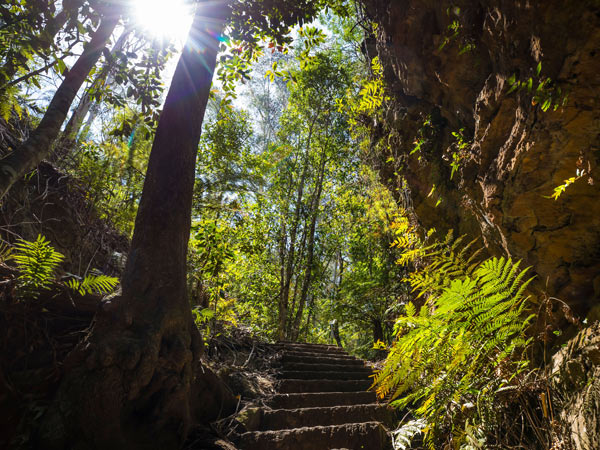
Mossy rocks, cascading waterfalls and one fairytale creek – the interactive play of Blue Mountains National Park’s Grand Canyon Track makes it one of Australia’s best walks. Taking adventurers into the belly of Blackheath’s historical canyon, it’s well defined with handrails, stepping stones and staircases as dramatic sandstone walls and rocky overhangs awe. Bonus: Evans Lookout is visited, offering vistas across lush green Grose Valley. Entry is free, and there are non-flush toilets at the trail’s starting point.
Getting there: Take Evans Lookout Rd in Blue Mountains National Park until you reach the Grand Canyon carpark, where the trek begins.
Accessibility: There are many steps to climb, so visitors with access needs and prams aren’t encouraged. Pets are not allowed.
Good to know: Go counterclockwise to save Evans Lookout’s views for the end. The trail is a loop, so whatever works, but this way feels arguably less rushed as you’re not racing to check out the canyon’s depths.
2. Noosa Hill Walk, Qld
Distance and time: 2.8 kilometres return, 1.5 hours
Difficulty: Grade 4 – a steep track with minimal signage
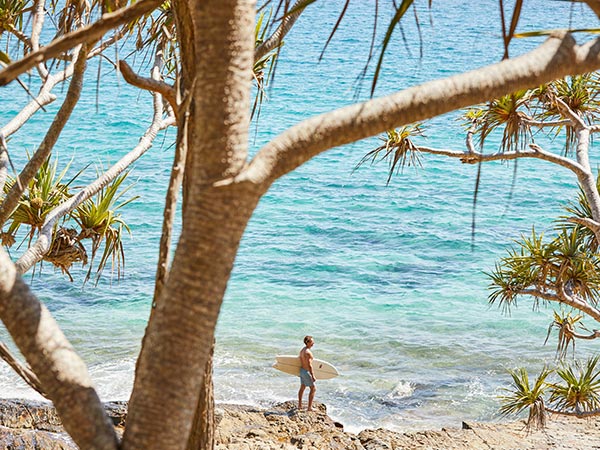
You’ve splashed about Noosa’s golden-sand beaches, but have you explored its ancient blue gum and bloodwood rainforest? The Noosa Hill Walk weaves you through tranquil Noosa National Park, full of slender trees, native wildlife and flashes of coastline to illuminate your meandering.
You can take a 150-metre detour to a lookout where an uninterrupted eyeful of turquoise water also beckons. Entry is free, and there are flushable toilets at the trail’s starting point at the Noosa Headland day-use area.
Getting there: Sealed roads lead to the day-use area at the end of Park Rd, but there are only a few spaces, so you’ll want the parking Gods on your side. Alternatively, consider walking the easy 15 minutes in from Hastings St.
Accessibility: There are steps to climb, so visitors with access needs and prams aren’t encouraged. Pets are not allowed.
Good to know: Spring, particularly September, is Noosa’s driest season, so it’s a great time to plan a rain-free wander.
3. Valley of the Winds Walk to Karingaṉa lookout, NT
Distance and time: 5.4 kilometres return, 2.5 hours
Difficulty: Grade 4 – a steep track with minimal signage
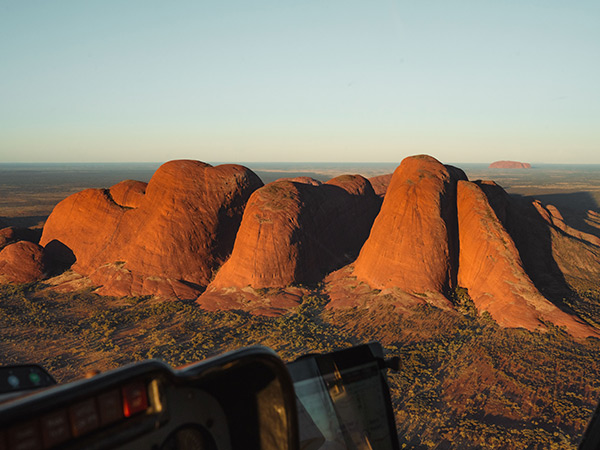
Find an extraordinary view of Kata Tjuṯa along the Valley of the Winds Walk to Karingaṉa lookout. The entire Northern Territory trail takes about four hours to complete, but if you’re up for some serious steepness, getting to the lookout and back is shorter. You’ll dive deep into the culturally significant landmark’s famed domes while exploring its valley and creek beds.
Tickets start from $38 per person and can be purchased via the website . Drinking water is available on the trail, but there are no toilets.
Getting there: Once you drive into Kata Tjuṯa National Park, follow signage for 43 kilometres towards the trail itself. You’ll see a car park at the start of the trek.
Accessibility: There are steps to climb, so visitors with access needs and prams aren’t encouraged. Pets are not allowed.
Good to know: This walk remains a sacred Indigenous men’s area, so taking photos of Kata Tjuṯa is not allowed. You can, however, snap flora and fauna along the way.
4. Dove Lake Circuit Walk, Tas
Distance and time: 6 kilometres return, 2.5 hours
Difficulty: Grade 3 – a track that’s steep at times
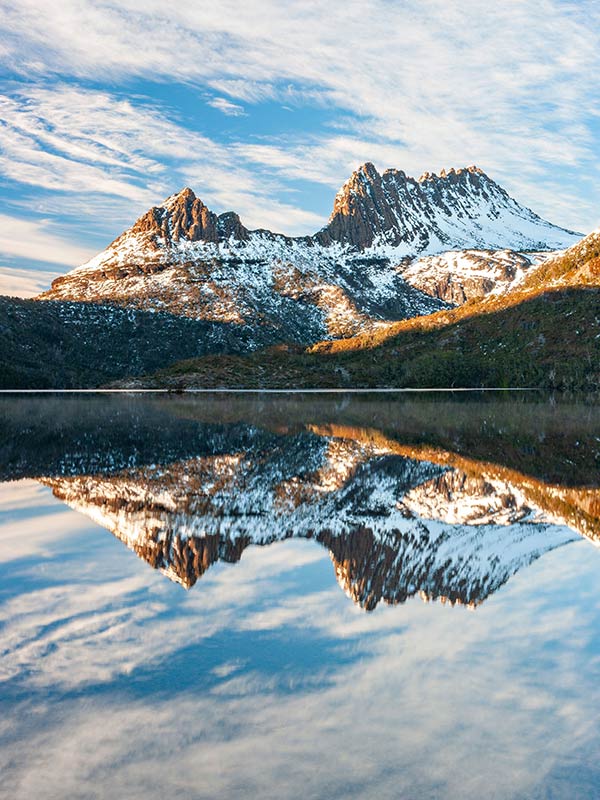
At the foot of stunning Cradle Mountain, Tasmania’s Dove Lake Circuit Walk takes in its elusive peaks while snaking you around a heavenly body of crystal-clear water. One of the region’s unmissable walks, the trail takes in a hauntingly beautiful old boat shed from the 1940s and a forest filled with moss-coated Myrtle-Beech trees, all while those breathtaking peaks loom overhead. National Park entry and the shuttle service cost roughly $30 in total per person, and toilets are found at the Dove Lake carpark.
Getting there: Shuttle buses depart from Cradle Mountain Visitor Centre regularly, and the trip takes about 20 minutes each way.
Accessibility: Visitors with access needs are welcome, but please contact the visitor centre to let the team know in advance. Pets are not allowed.
Good to know: It’s an alpine area, so be prepared for sudden cold snaps. Bring warm gear, even if it feels toasty up at the visitor centre.
5. Pink Lakes Trail’s Kline Loop Nature Walk, Vic
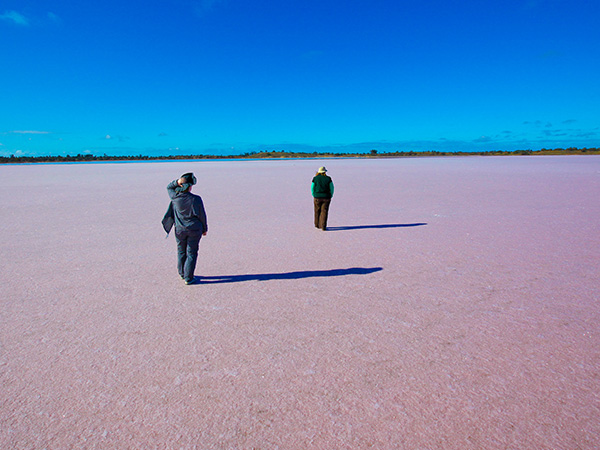
Distance and time: 4.8 kilometres return, 2 hours
Difficulty: Grade 3 – a track that’s steep at times
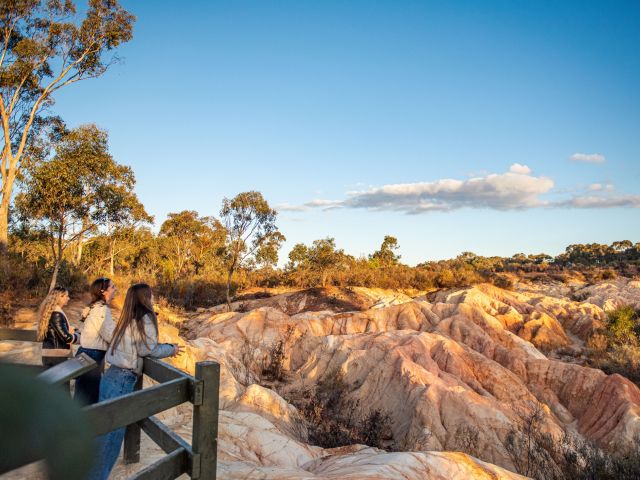
Ready for your Instagram moment? The Pink Lakes Trail near Mildura takes in one of the country’s prettiest phenomena. Gazing over some of Australia’s famed pink lakes, visitors to the Kline Loop Nature Walk within the larger trail will marvel at catching the red pigment carotene, creating an all-natural masterpiece as kangaroos and emus leave tracks about the place. Entry is free, and toilets are found at the Main Campground where the trail starts.
Getting there: The Main Campground is located near Lake Crosbie within Murray-Sunset National Park.
Accessibility: There are steep sections, so visitors with access needs and prams aren’t encouraged. Pets are not allowed.
Good to know: For optimal Barbie shades, visit during winter or spring because the lakes evaporate in the heat.
6. Marion Coastal Walking Trail’s Hallett Cove Boardwalk, SA
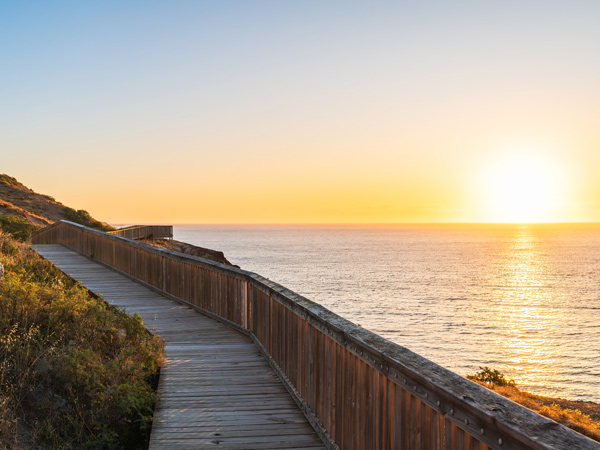
Distance and time: 5.1 kilometres one-way, 2 hours
Difficulty: Grade 3 – steep at times with many steps
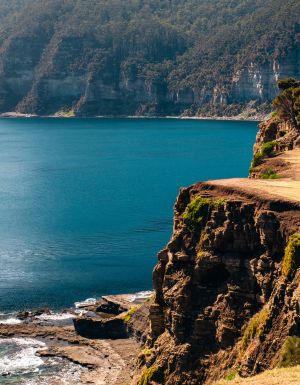
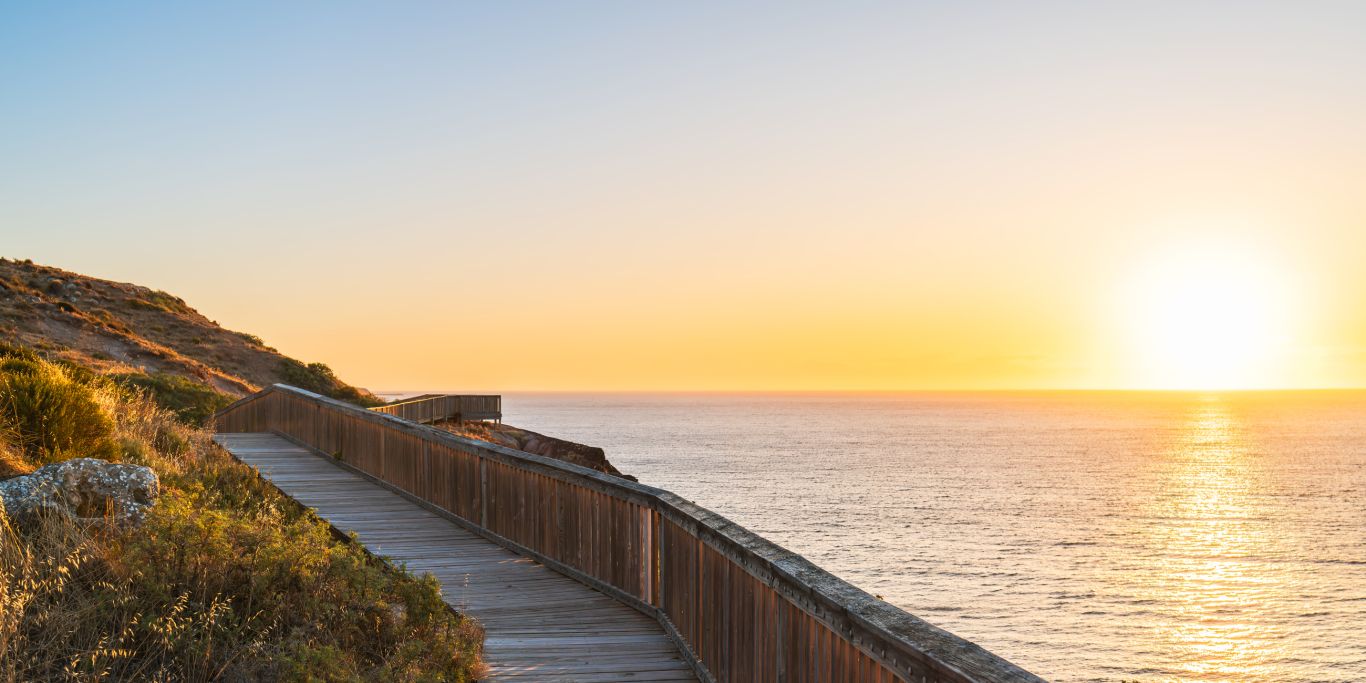
Spy the Adelaide coastline strutting its stuff in style along the Marion Coastal Walking Trail’s Hallett Cove Boardwalk . A section of one of the best walks in Adelaide, the trek wraps rugged cliffs via sturdy pathways and that trusty boardwalk, but please note, there are an extreme number of stairs. Entry is free and there are multiple toilets, drinking fountains and cafes on the journey.
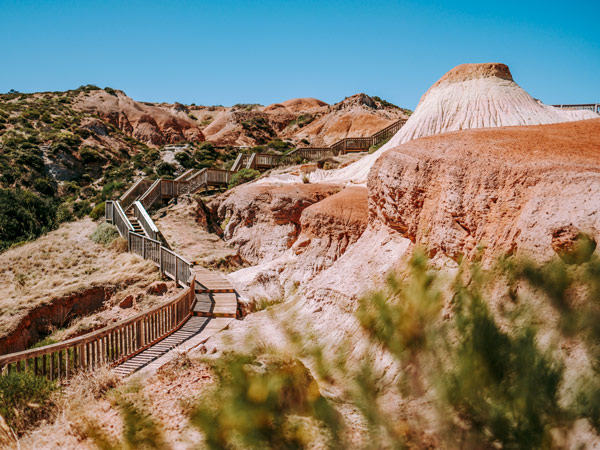
Getting there: There are several access points, but most walkers start at Heron Way in Hallett Cove – just punch it into Maps.
Accessibility: There are steps to climb, so visitors with access needs and prams aren’t encouraged. Dogs are allowed between Clifftop Crescent, Hallett Cove and Kingston Park.
Good to know: There’s a car park just off Heron Way, and if it’s full, there’s street parking at the end of Clifftop Crescent (near house no. 14).
7. Kalbarri National Park Loop Walk, WA
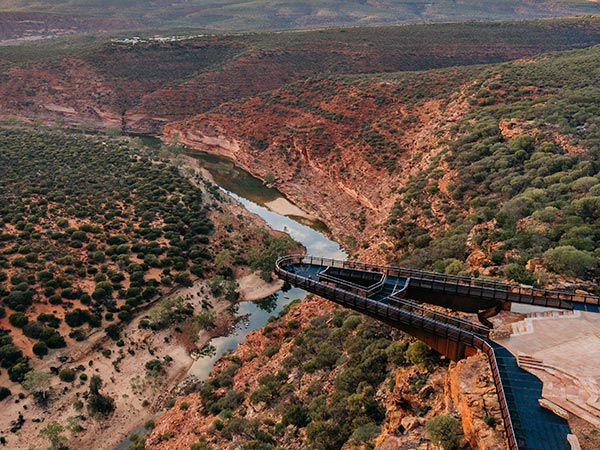
Distance and time: 9 kilometres return, 3 hours
Difficulty: Grade 4 – a steep track with minimal signage
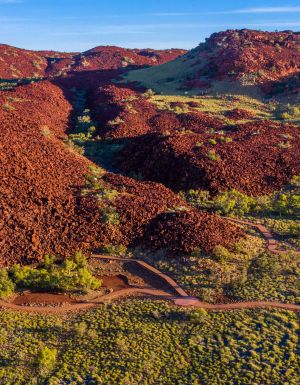
Australia’s most beautiful photo frame, Nature’s Window, is just one of the highlights along the Kalbarri National Park Loop Walk , about six hours north of Perth. Peek through the natural sandstone rock wonder for sweeping views of the Murchison River before discovering pristine beaches and inland gorges. Entry is free and there’s a picnic area, toilets and car park on hand.
Getting there: It starts at the Nature’s Window car park, off Ajana-Kalbarri Rd in the National Park.
Accessibility: There are steps to climb, so visitors with access needs and prams aren’t encouraged. Pets are not allowed.
Good to know: The heat is often too much for hikers between December to April, with park authorities recommending visits between May to October.
8. Canberra Centenary Trail’s One Tree Hill, ACT
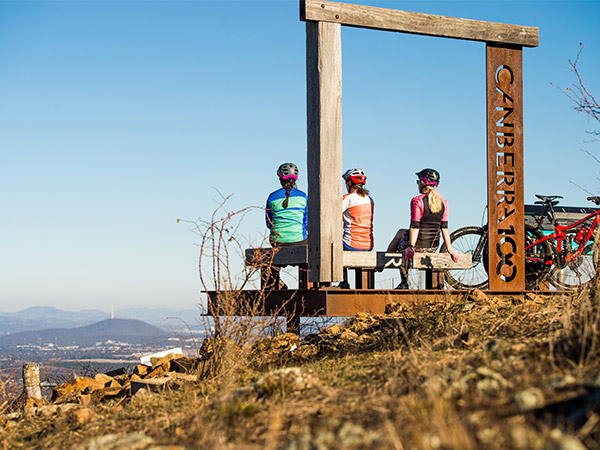
Distance and time: 8.4 kilometres return, 2 hours
Difficulty: Grade 2 – an easy trail that families with older kids can enjoy
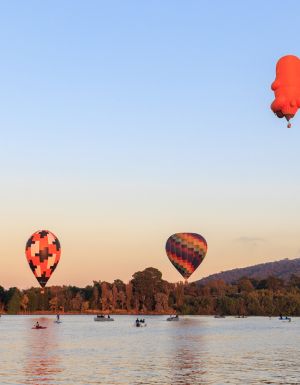
Adored by cyclists, the One Tree Hill portion of Canberra’s Centenary Trail is a fast-track to one of the capital’s prettiest vantage points. Once you smash out the rural journey up to the summit, there’s a seated area to help you lap up those regional views. It’s one of Canberra’s best walks and entry is free. There are no toilets.
Getting there: Jump on board this trail in Hall at the corner of Hall and Hoskin streets. There’s street parking right out front.
Accessibility: The terrain is unpaved and steep at times, so visitors with access needs and prams aren’t encouraged (despite the bikes). Pets are not allowed.
Good to know: Keep to the left as the stream of cyclists tends to travel on the right.
9. Burleigh Heads National Park’s Oceanview Track, Qld
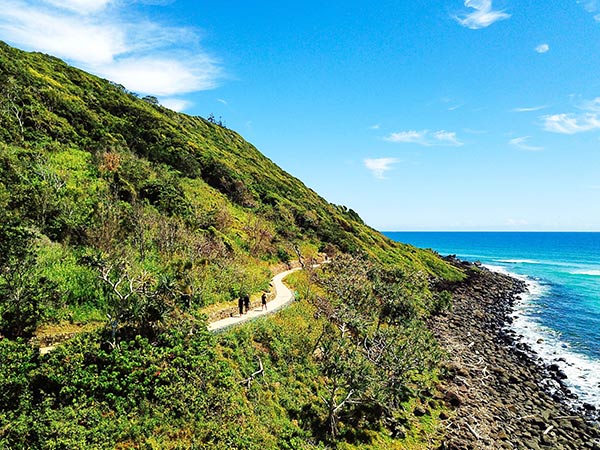
Distance and time: 2.6 kilometres return, 1 hour
Difficulty: Grade 2 – a paved trail with gentle hills
Soak up the Gold Coast coastline along Burleigh Heads National Park’s Oceanview Track . A significant Indigenous landmark within the city’s southern beaches, the trek features ancient midden sites and flourishing ochre, plus views of Surfers Paradise. Entry is free and toilets are found at the beginning of the trail in the car park out the front of the Jellurgal Aboriginal Cultural Centre.
Getting there: Tap Jellurgal Aboriginal Cultural Centre into Maps to find that car park. The trek’s entrance is only a few steps away.
Accessibility: The trail is paved and welcomes visitors with access needs as well as prams. Pets are not allowed.
Good to know: Bring your cozzies as there are multiple entry points to Tallebudgera Creek, where water dazzles, on the way.