This lunar-like national park is hiding in plain sight

hero media
The World Heritage-listed site must be seen to be believed.

I’m sure I speak for many of us when I say I’ve always wondered what it would be like to visit the moon. Seeing it in the evening sky always conjures up feelings of whimsy and wonder in me – a mystic, dreamy place just begging to be explored. Unfortunately, also like the majority of us, I can’t afford to just jump in a rocket and zoom on up there.

But what if I told you there’s a place right here on Earth that effortlessly encapsulates this ethereal atmosphere? I didn’t believe it either, until I visited Mungo National Park myself, one of Australia’s most underrated national parks.

Where is Mungo National Park?

Mungo National Park is in Ouback NSW, just over 200 kilometres from the Victorian border town of Mildura or a 10-hour drive from Sydney. The World Heritage-listed site spans 240,000 hectares across the picturesque Riverina Murray region.

Mungo National Park in NSW
Mungo National Park spans 240,000 hectares. (Image: Destination NSW)

For those in the know, Mungo is definitely worth the road trip, with many people travelling to the region purely to witness its lunar-like landscapes. But this ancient, Ancestral place flies relatively under the radar in the grand scheme of things, often overlooked in favour of its Aussie counterparts.

Don’t believe me? Well, while places like Kakadu National Park, Blue Mountains National Park and Daintree National Park see from 200,000 to 6 million visitors a year, just 37,000 people visit Mungo annually. But for what it lacks in numbers, Mungo more than makes up for in beauty, history and cultural significance.

Why visit Mungo National Park?

While the topography of Mungo National Park alone is reason enough to visit, its history is equally as staggering. This is a place where megafauna once roamed, a land that lays claim to the oldest collection of fossilised human footprints ever uncovered – dating back to the Ice Age.
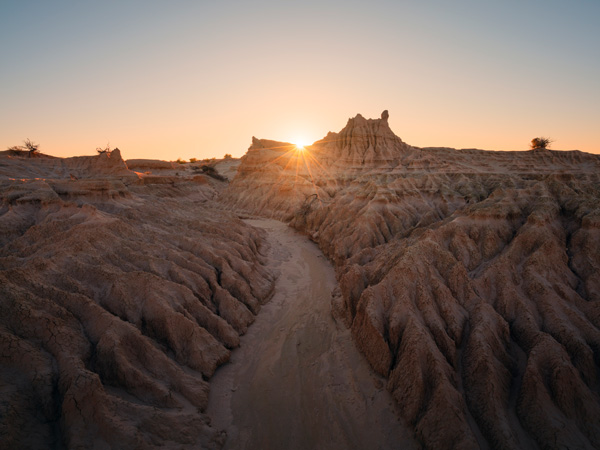
Mungo National Park in NSW
Mungo is a culturally significant site for its Traditional Owners. (Image: Destination NSW)

The archaeological discoveries of Mungo Man and Mungo Lady also rewrote history. Discovered in 1968 and 1974 respectively by geologist Jim Bowler, the remains are the oldest known examples of ritual burials in the world, dating back over 40,000 years.

The findings also scientifically proved that Aboriginal culture has existed here since time immemorial. Mungo National Park is on the Traditional Lands of the Paakantji, Ngiyampaa and Mutthi Mutthi people and remains a culturally and spiritually significant site for Traditional Owners. It is symbolic of Australian history, representing the timeless connection First Nations people have with Country.

Must-see sights in Mungo National Park

Mungo can be experienced in a variety of ways, with many visitors opting to explore the national park on their own. I recommend joining at least one of the Indigenous-led guided tours with NSW National Parks and Wildlife Service . It’s a great way to learn about the land’s history and culture, as well as get the most out of your time at Mungo. Here are a few highlights.

Lake Mungo
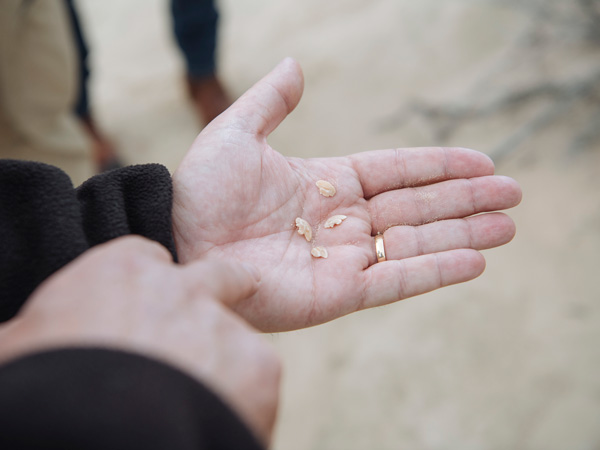
Middens found in Mungo National Park in NSW
Ancient middens can still be found within the sand dunes. (Image: Destination NSW)

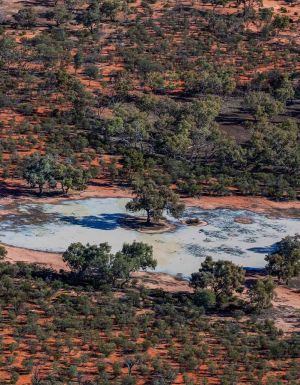
Lake Mungo is one of 17 arid lake beds within the region. It held a vast amount of water and marine life around 50,000 years ago, but has long since dried and fossilised. The now eroded sand dunes that tower around the park’s circumference continuously reveal evidence of an area once thriving with prehistoric life.

Mungo Woolshed

Built in 1869 using an ingenious drop-log cypress pine construction, this historic woolshed harks back to when Gol Gol pastoral station brought thousands of sheep to the region. The farming activity on this dramatic but delicate land helped archaeologists discover the secrets buried beneath its red-ochre surface.

Walls of China
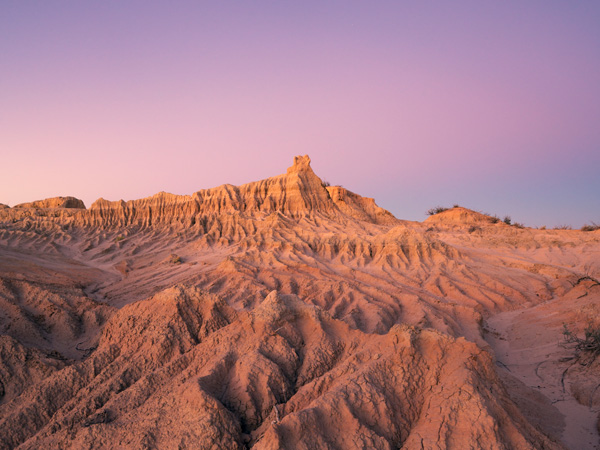
Mungo National Park in NSW
The awe-inspiring Walls of China attract many visitors. (Image: Destination NSW)

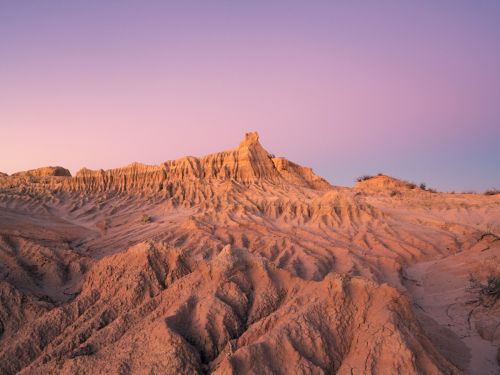
Arcing around the eastern edge of the lake, the Walls of China is Mungo’s star attraction, where visitors most often describe a lunar-like appearance. Its low curve of sandy hills, or lunette, rises up out of the Earth like pinnacles, sculpted by millennia of sand-soaked winds.

Red Top Lookout

Head to Red Top Lookout in time for sunset for unparalleled views over Mungo. The fading light renders its tapestry of deep ravines and rising hills in all shades of orange, pink and purple, mirroring the magic of the moon.

Mungo Loop Track
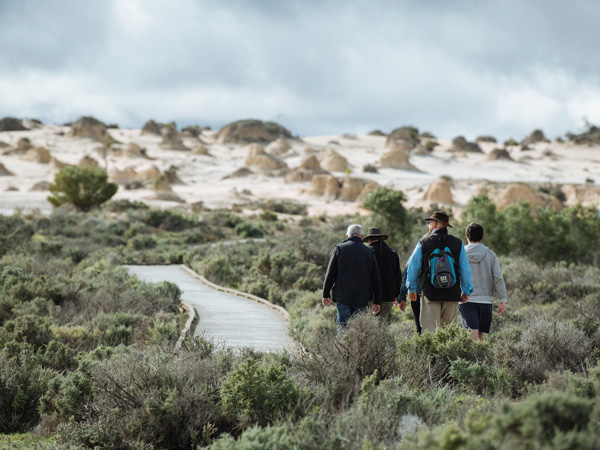
Mungo National Park in NSW
See the highlights along the Mungo Loop Track. (Image: Destination NSW)

Get acquainted with this awe-inspiring desert landscape by driving, or better yet, cycling the 70-kilometre Mungo Loop Track. Cross the ancient lakebed to the Walls of China before tracing its shores, taking in the iconic dunes and mallee trees of Outback NSW.

The Meeting Place

Head to the Meeting Place at Mungo Visitor Centre to learn about Mungo Man and Mungo Lady. While the remains are kept private for cultural reasons, the lunette-shaped viewpoint here commemorates their resting place and that of countless Aboriginal Ancestors. You’ll also see casts of the park’s ancient fossilised human footprints.

Mungo wildlife

Mungo National Park in NSW
Mungo is home to adorable red kangaroos. (Image: Destination NSW)

Many species call Mungo home, and spotting them is like a game of wildlife bingo. There are over 100 species of bird here, from mulga parrots to pink cockatoos. It’s also a prime place to see red kangaroos and emus. If you’re lucky, you may also spot short-beaked echidnas, fat-tailed dunnarts, pygmy possums, carpet pythons, mallee dragons and more.

How to get to Mungo National Park

The closest major city centre to Mungo National Park is Mildura in Victoria, around a 2.5-hour drive away. You will inevitably encounter unsealed roads that are usually in good condition, but always check traffic updates and carry adequate food and water.
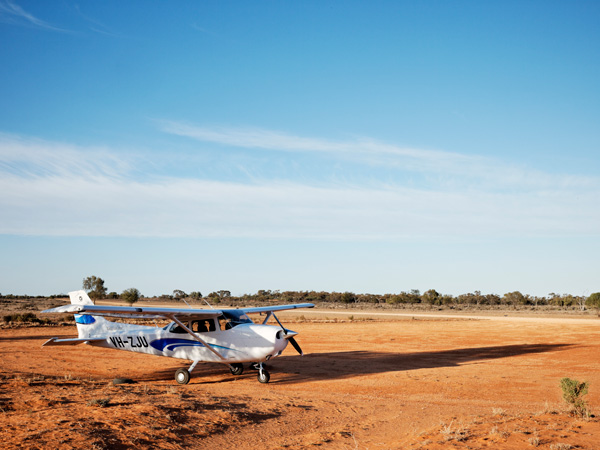
A small plane in Mungo National Park in NSW
Take a scenic flight to see Mungo from above. (Image: Destination NSW)

If you’re coming from Sydney, it’ll take you up to 11 hours to reach Mungo. You can stop in trending detour destinations like Goulburn and Wagga Wagga to rest and refuel. I’d also highly recommend flying with Murray Darling Scenic Flights from either Echuca or Swan Hill. You’ll see Mungo in all its glory from above, as well as nearby natural landmarks like Lake Tyrrell, one of Australia’s most mesmerising pink lakes.

Where to stay at Mungo National Park

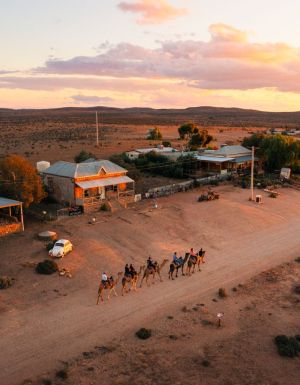
Mungo Lodge is a 10-minute drive from the Mungo Visitor Centre. The sprawling 77-hectare property is well-appointed with large family rooms, deluxe cabins and glamping tents, as well as an onsite restaurant and bar.
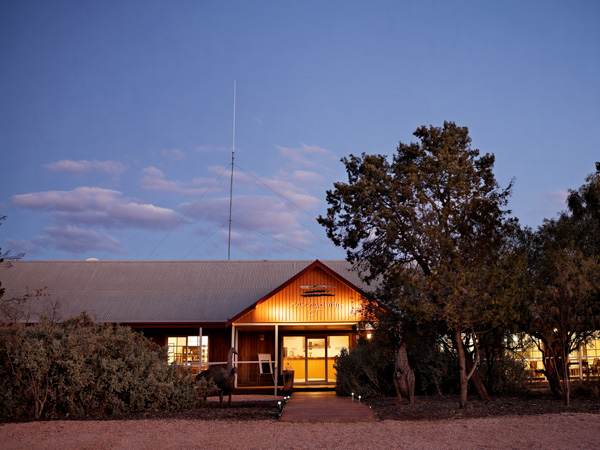
Mungo Lodge in Mungo National Park in NSW
Book a stay in one of Mungo Lodge’s cosy cabins. (Image: Destination NSW)

The Mungo Shearers’ Quarters offer rustic accommodation in the heart of the park. Stay in a cosy cabin with access to communal kitchens and bathrooms. BYO bedding.

Two kilometres out of Mungo National Park is Main Camp . Located off Arumpo Road, the campground boasts plenty of unpowered sites and includes picnic tables, barbecues and non-flush toilets. Pre-booking is not available.

Taylah Darnell
Taylah Darnell is Australian Traveller's Writer & Producer. She has been passionate about writing since she learnt to read, spending many hours either lost in the pages of books or attempting to write her own. This life-long love of words inspired her to study a Bachelor of Communication majoring in Creative Writing at the University of Technology Sydney, where she completed two editorial internships. She began her full-time career in publishing at Ocean Media before scoring her dream job with Australian Traveller. Now as Writer & Producer, Taylah passionately works across both digital platforms and print titles. When she's not wielding a red pen over magazine proofs, you can find Taylah among the aisles of a second-hand bookshop, following a good nature trail or cheering on her EPL team at 3am. While she's keen to visit places like Norway and New Zealand, her favourite place to explore will forever be her homeland.
See all articles
hero media

7 great day trips from your Coffs Coast homebase

Make this dazzling stretch of beaches and natural wonders your home base for a grand adventure

Whether you’re setting out solo, bringing a mate, or packing in the whole family, no road trip along Australia’s East Coast is complete without at least a few days spent exploring the Coffs Coast. A stunning stretch of NSW coastline nestled between ancient high-elevation rainforests and magnificent, undiscovered beaches, Coffs offers amazing biodiversity, stunning natural beauty, and heaps of local charm, without the crowds. Pull up in Coffs Harbour , your perfect home base for these unforgettable day-trips.

1. Southern Beaches

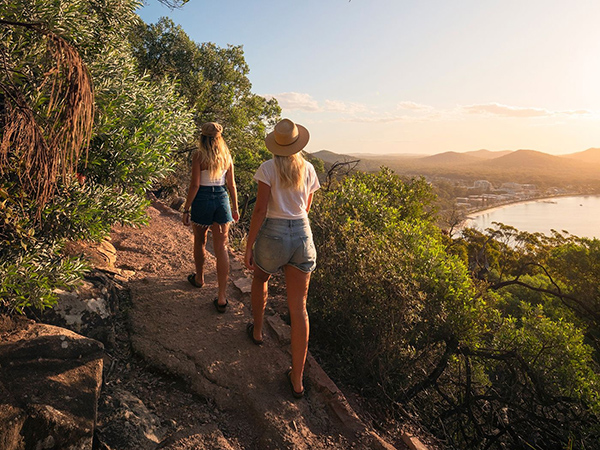
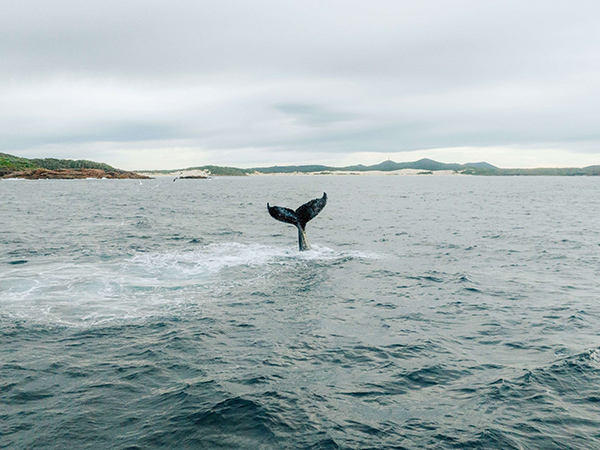
The Coffs region boasts 30 of Australia’s most beautiful, unspoiled beaches, directly abutting a dramatic tableau of mountains and rainforests. Drive South of Coffs Harbour to find up-and-coming surf destinations where it’s still possible to catch an empty wave. First up is the picturesque Sawtell village . Wander the famous fig-tree-lined main street packed with laid-back places to eat and drink. Enjoy panoramic views and seasonal whale sightings at Bonville Headland on the Southern end of the beach.

Nearby Bongil Bongil National Park boasts seven kilometres of empty beach, along with hiking and cycling trails through beachfront rainforests – keep an eye out for koalas living in the trees. Boambee Beach and Boambee Creek Reserve are great for families, with shallow waters perfect for kayaking and SUPing, plus an off-leash dog beach.

family eating lunch in sawtell
Experience small-town charm in Sawtell.

2. Orara Valley Tourist Trail

The Orara Valley Tourist Trail has it all: hinterland bushwalks, birdwatching, horse riding, pristine swimming holes and rolling green pastures dotted with dairy farms and historic villages. And it’s only 15 minutes west of Coffs Harbour.

Sample produce at a roadside stall, stop into Coramba Hotel for a quintessential country pub lunch, or try the Idle in Cafe in Nana Glen for coffee and scones. Then spend the afternoon kayaking the Orara River or mountain biking on Mt Coramba. If you’re feeling adventurous, follow the 4WD touring route along the Orara Escarpment in Bindarri National Park , a rugged landscape with dazzling views that winds through untouched eucalypt rainforests and waterfalls.

A family sitting by the Orara Valley Tourist Trail.
Explore the green heart of Coffs.

3. Dorrigo National Park

Enjoy a classic day trip from Coffs to forest bathe in some of the oldest subtropical rainforests in the world at Dorrigo National Park, part of the World Heritage-listed Gondwana Rainforests. These million-year-old ecosystems promise rare bird sightings, towering strangler figs, and epic walking tracks and picnic spots. Try the 6.6 km Wonga Walk to experience dreamy Crystal Shower Falls (where you can walk behind the falls) and the Skywalk Lookout, which offers spectacular views of the valley and coast. Then stop in Dorrigo town for a homey lunch. It’s worth noting that a section of the road between Ulong and Dorrigo – which dates to the 1880s – is unsealed, adding to the area’s end-of-the-earth allure but making travel difficult in adverse weather conditions. Alternatively, head to Dorrigo via the delightful township of Bellingen .

Three people standing at the SkyWalk lookout.
Wander the Skywalk.

4. Northern Beaches

For another tranquil expanse of sun, sand and surf breaks, head north to Woolgoolga (Tourism Australia’s Best Mainland Beach for 2025. Taste the coffee and local-produce breakfast at one of several cafes, then spot whales during their migration season along the Woolgoolga Whale Trail to the headland. Emerald Beach offers clear blue waters and another headland walk, perfect for taking in views of South Solitary Island, a dramatically rocky-cliffed island with a historic lighthouse. Red Rock, some 40km north of Coffs and named for its striking coastal rock formations, boasts a gorgeous estuary reserve that’s perfect for languorous days spent picnicking, swimming, fishing, and connecting with the relaxed local pace.

Freshly caught seafood by the beach, with sparkling ocean views.
Enjoy fresh seafood overlooking Woolgoolga Beach.

5. Jetty precinct

You could easily spend a whole day exploring the Jetty precinct – from its foreshores to the marina to Muttonbird Island. Start with fresh fish and chips from local institution Coffs Harbour Fisherman’s Co-op , before browsing the popular Harbourside Markets held every Sunday on the foreshores.

Take a scenic walk along the breakwall to Muttonbird Island , a cultural and ecological treasure with panoramic views and rich Gumbaynggirr heritage. The Giidany Miirlarl Education Space shares the island’s ancient stories, or join a guided moonlight tour to see the seasonal return of the muttonbirds.

Back at the Jetty Strip, find a buzzing mix of cafes, bars and restaurants with cuisines from around the world, open from morning until late. Don’t miss The Jetty Pavilion , a favourite for its unique menu blending modern Australian cuisine with vibrant world flavours.

walk to muttonbird island from coffs harbour
Walk the path where land meets sea and sky.

6. Grafton

Head inland from mid-October to early November to catch Grafton’s jacaranda season, when the town’s streets and parks are covered in purple. Even better, time your trip between 24 October and 2 November to attend the famous Jacaranda Festival, with special food items, performances and more. At any time of year, follow the self-guided Grafton Heritage Trail to discover the town’s historic buildings, landmarks and stories. Or get the blood pumping with a trip along the longest mapped white-water trail in Australia – the Clarence Canoe and Kayak Trail. Book a tour with Exodus Adventures .

woman walking through jacaranda trees in grafton
Time your Grafton trip to see the jacarandas in full bloom. (Image: @myclarencevalley)

7. Nambucca

Just south of Coffs Harbour sits Nambucca, the ideal town for a relaxed, coastal day trip. Hire a canoe, kayak or boat to explore over 80 kilometres of waterways stretching from the hinterland to the ocean. For those who prefer to stay on dry land (or double up their adventure for the day), stretch your legs along the V-Wall – a scenic coastal walk along the Nambucca River – dotted with boulders painted by the community, sharing messages, art and local stories. Stop along the way to buy Sydney rock oysters direct from local farmers, or try your own hand at fishing. Before heading back to Coffs, refuel on fresh seafood and wood-fired pizzas at Matilda’s in Nambucca .

a boat zooming through Nambucca Heads
Explore Nambucca’s waterways. (Image: Seen Australia)

Visit coffscoast.com and download the Coffs Coast Explorer App for more daytrips and trails.