Ghost towns may not be the first thing you think of when you think of Tasmania, but look a little beyond the spectacular scenery, ancient rainforests and rugged coastline and you can find the crumbling ruins of the island’s past.
After the British landed in Tasmania more than 200 years ago, it didn’t take long for the island to become a hotbed of industrial activity, first as a penal settlement and then as a mining and shipbuilding hub.
For many of the towns that popped up throughout the country, though, the bust came almost as quickly as the boom. Even before many mines closed their doors for the last time, the once-busy streets were deserted and old clapboard and corrugated iron cottages left to the elements. In a land long shaped by the forces of nature, many towns also became reclaimed by the roots and leaves of towering trees, howling winds, snowstorms, and frenzied bushfires.
These days, only a few of Tasmania’s ghost towns remain, some so far off the beaten path that you must take ferries, tours, or hike for hours to reach them. But in a way, that’s part of the appeal, too. Not only are you visiting the past, but you’re also following in the steps of all the long-gone residents, who had to brave the wilderness and the elements with nothing but the promise of work to keep them going.
Fortunately, the promise of exploring some of Tasmania’s best ghost towns is even more alluring.
1. Lake Margaret, Western Tasmania
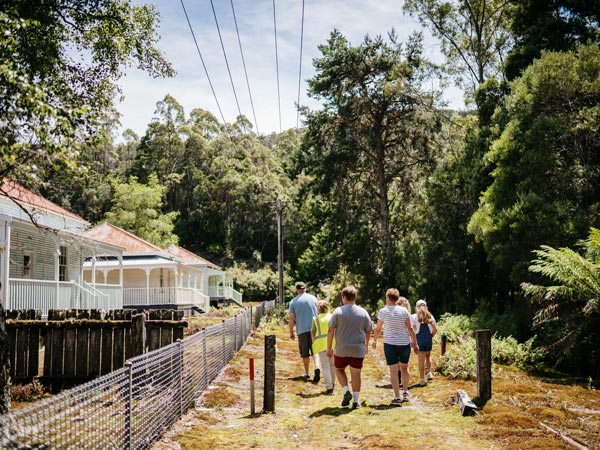
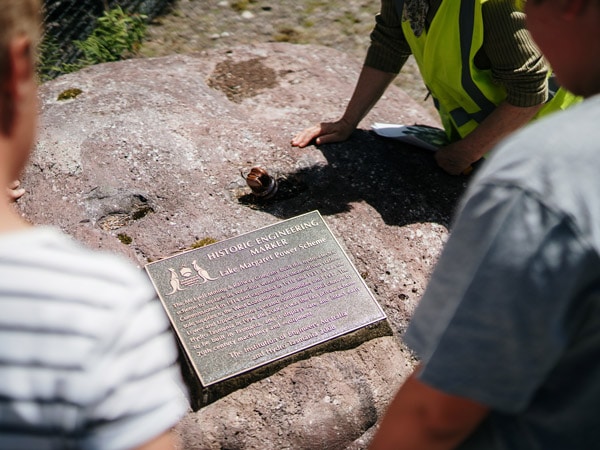
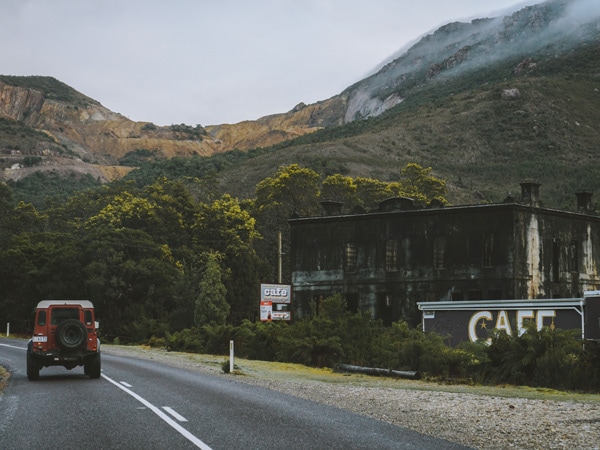
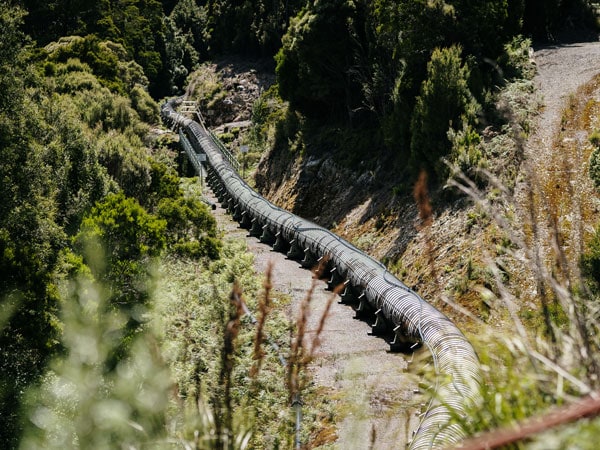
One of the most picturesque ghost towns in Tasmania, the small town of Lake Margaret sprung up to service the Lake Margaret Hydropower Station, which opened in 1914. While the heritage-registered hydropower station is still operational to this day, the residents of the old town are long gone, with just a handful of old houses and the village hall remaining. The ghost town is now only accessible to the public as part of a guided tour.
Highlights
Tours of Lake Margaret Hydropower Station and ghost town include a visit to the power station and a historical presentation in the old village hall. Designed by a local graphic designer, the presentation showcases the story of the people of Lake Margaret, including the 200-odd workers who lived in tent cities surrounding the old town.
While Lake Margaret takes the cake for the best ghost town around Queenstown, if you have time for a quick side quest, the now mostly abandoned town of Gormanston (10 kilometres east) is worth a quick stop-off, as is nearby Linda, which is best known for the skeletal remains of the Royal Hotel.
How to get there
Lake Margaret is located roughly 20 minutes north of Queenstown in Tasmania’s wild west. It’s about 3.5 hours west of Hobart and just over three hours southeast of Launceston. Tours out to the town are run by Roam Wild Tasmania and depart from the Paragon Theatre in Queenstown.
Accommodation
Queenstown has plenty of accommodation options, ranging from heritage cottages and B&Bs to caravan parks. Travellers passing through can also head out to Strahan, Zeehan, or even stay at the adults-only Pumphouse, on an old 1950 hydroelectric pump station on Lake St Clair, which is just under 90 minutes’ drive away.
2. Darlington Probation Station & French’s Farm, Maria Island, Eastern Tasmania
Tasmania may be known for its convict past, but most people don’t realise that in the interim years between the end of transportation of convicts in 1853 and the designation of many of the old convict settlements as World Heritage sites, they also became home to everyday people just trying to eke out a living on the land.
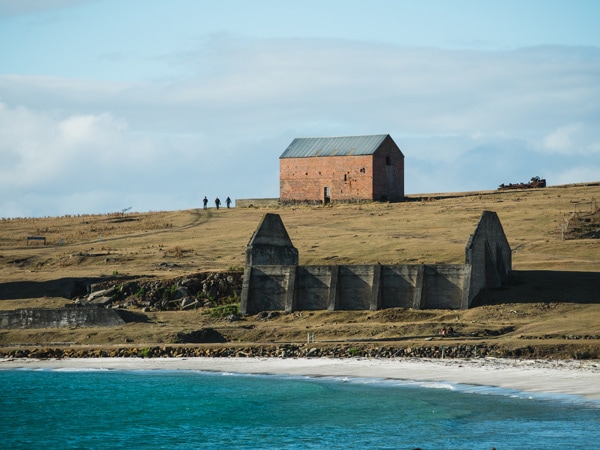
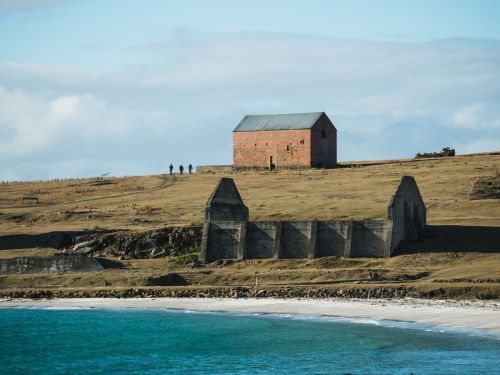
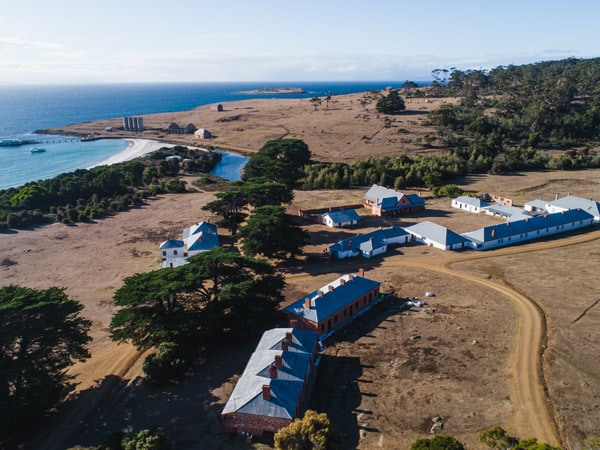
One such place is Darlington Probation Station on Maria Island, which, although you may be stretched to call it a town, is a ruined settlement lover’s dream, especially if you have a bicycle or feel like making the trek down to French’s Farm and/or Robey’s Farm.
Highlights
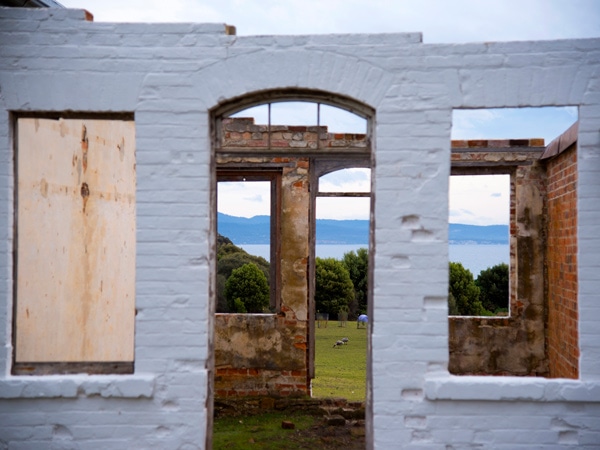
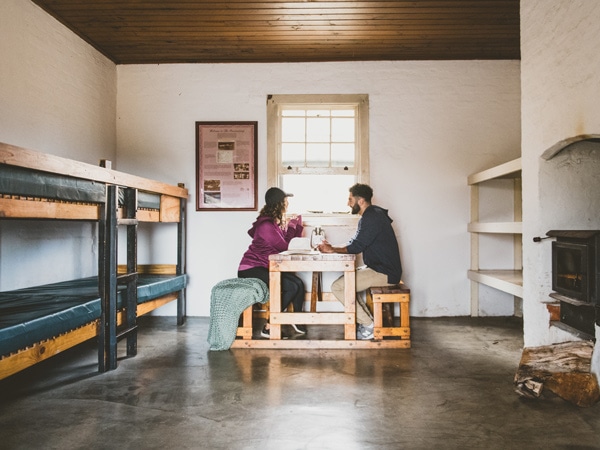
Visitors to Maria Island won’t want to miss Darlington Probation Station, whose highlights include the two-storey Commissariat Store and the Old Penitentiary – where visitors who don’t mind the idea of sleeping in a convict-era prison can stay overnight.
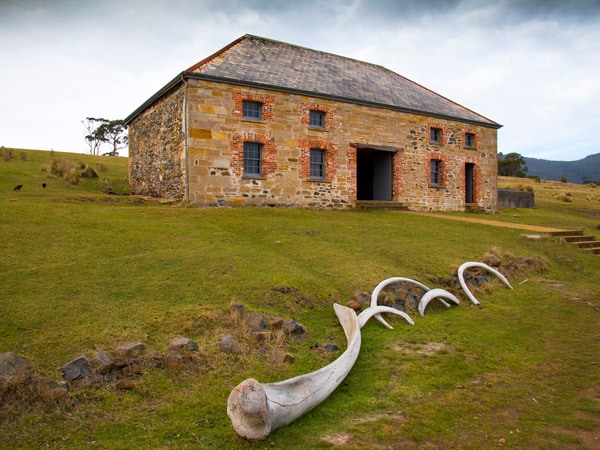
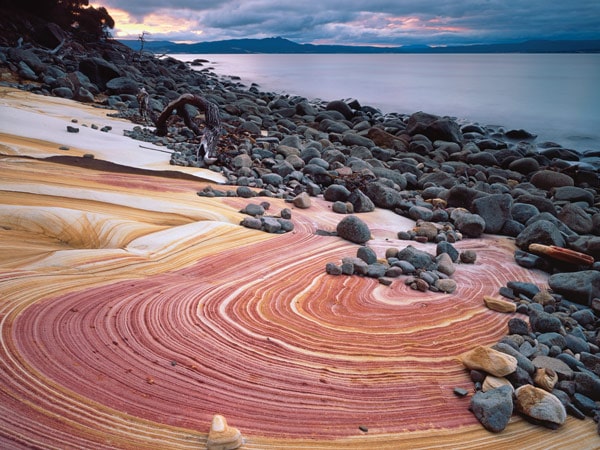
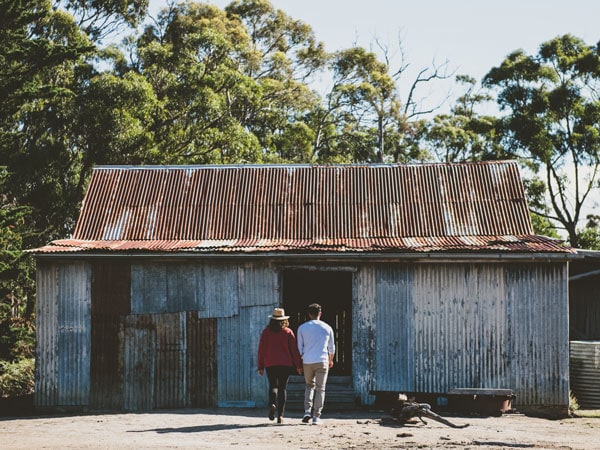
Yet, while the 14 Georgian-style buildings that make up the convict station are well worth visiting, those who brave the long walk down to French’s Farm and Robey’s Farm will be rewarded with the sight of some of the most isolated abandoned farmhouses in Tasmania; complete with rusty sheds and old water tanks. The island is also well known for its natural beauty, with other attractions like the Painted Cliffs well worth checking out.
How to get there
Visitors can only access Darlington Probation Station by passenger ferry from Triabunna, which is just over an hour northeast of Hobart. The ferry itself takes approximately 45 minutes and drops visitors off at Darlington.
From there, it’s a 24-kilometre return trip to French’s Farm or 46 kilometres to Robey Farm. The island itself is vehicle-free, so travellers will need to carry all their camping gear and bring bicycles if desired.
Accommodation
There is only basic accommodation available on Maria Island, with most travellers opting to camp at Darlington or stay in the basic bunkhouse-style accommodation in the old penitentiary. Adventurous travellers who feel like heading down to French’s Farm, Long Point Probation Station, and Robey Farm can also camp there for free.
Need tips, more detail or itinerary ideas tailored to you? Ask AT.
AI Prompt
3. Waddamana, Central Tasmania
Sitting almost in the very centre of Tasmania, Waddamana is a ghost town success story. The old hydroelectric town, which reached its heyday in the 1900s, is now experiencing a new lease of life as a tourist attraction, with visitors coming from miles around to stay overnight in the old art deco-style worker’s cottages.
Named after the local Aboriginal word for “noisy water", the now-privately owned town of Waddamana fell into disrepair in the decades since the power station closed. And, although the town only has a year-round population of four, the lovingly restored 1930s cottages give visitors a glimpse of what it would’ve been like in years gone by.
Highlights
Perhaps unsurprisingly, one of the biggest draws to Waddamana is that you can spend a night in the old town. Even if you’re just stopping by, however, the town still has plenty to offer, from the chance to walk around the ghostly streets to meeting the current owners – who bought half the town sight unseen back in 2021 – or visiting the old power station, which has been converted into a museum.
How to get there
Waddamana is just under two hours north of Hobart and an hour and a half south of Launceston. The nearest town is Bothwell, which is around 40 minutes away. It’s also the middle stop on the Highlands Power Trail, a self-drive trip along the Great Lake Power Scheme, which starts at Bothwell and ends at Penstock Lagoon, which is around a 10-minute drive north of Waddamana.
Accommodation
While travellers can easily visit Waddamana on a day trip from either Hobart or Launceston, visitors hoping to stay can opt for a night in one of the cottages, check out accommodation options in nearby Bothwell, or even drive onto Tarraleah, a similar ex-power-station-settlement-turned-ghost town-turned-holiday-resort just over an hour from Waddamana.
4. Lottah, Northeastern Tasmania
On the cusp of the 19th century, Lottah was a thriving mining town with most of its residents employed at the nearby Anchor tin mine. At its peak, there were around 500 residents, two hotels, a school, a post office, a workingman’s club, butchers, shops, and a bakery, as well as an 18-member Australian rules football team.
However, the slaughterhouse in the middle of town put off a fair few visitors, with one declaring it “the dirtiest town in Tasmania". Although the Anchor Mine didn’t close until 1996, the town was all but abandoned long before that.
Highlights
These days little remains of Lottah. However, it’s still well worth a visit, if only to see old Anchor Stampers – the old rusty remnants of the old tin mine that first opened in 1880. It’s about a 15-minute walk from the signposted car park to the Anchor Stampers, which are slowly becoming swallowed by the surrounding rainforest. Springtime visitors can also see all the old foxgloves planted by the Chinese mine workers.
Lottah can also be visited as part of the Trail of the Tin Dragon, a self-drive road trip route following the stories of the Chinese tin miners who risked life and limb in the rugged Tasmanian wilderness. Beginning at the Queen Victoria Museum in Launceston, the trail passes through Branxholm, Derby, Moorina, and Weldborough, before finishing in St. Helens.
How to get there
Lottah is about two hours east of Launceston. Although it is accessible from both Weldborough and St. Helens side, the old townsite can only be reached by following a gravel track off the Tasman Highway.
Accommodation
Depending on whether you’re arriving from the east or west, visitors may opt to stay in either Weldborough or St. Helens. Alternatively, travellers can check out the accommodation in the Pub in a Paddock in Pyengana historic community, approximately 27 kilometres west of St Helens off the Tasman Highway. Continuously licensed since 1890, the pub has accommodation, a tearoom, hearty meals and open fires and is the perfect spot to recharge after spending the day ghost-town hunting in the Highlands.
5. Pillinger, Western Tasmania
Pillinger, or what’s left of it, is another stark reminder of how nature reclaims all things, eventually. Although you wouldn’t know it now, back in the early days of the colony, Pillinger was a bustling port town on Macquarie Harbour, where trains delivered ore from North Mount Lyell mine to be shipped by sea.
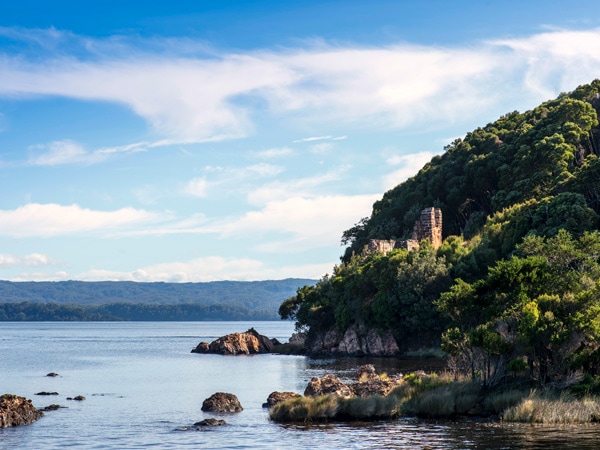
The town itself was split into two: East Pillinger, which had a sawmill, three wharves, an ore crusher and brickworks, and West Pillinger, which had hotels, stores, a post office and a police station. Eventually, the mine rail moved to Strahan, and most of the town fell into disrepair, with the last residents leaving in 1943.
Highlights
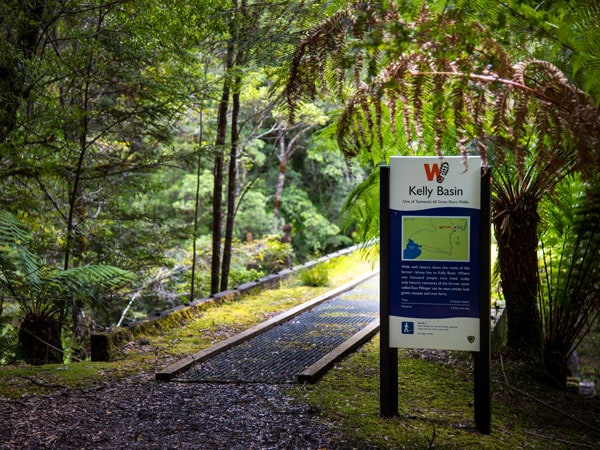
Reaching Pillinger is all part of the adventure, involving at least a 7.5-kilometre trek through the verdant Franklin-Gordon Wild Rivers National Park and across the moss-covered bridge over the Bird River.
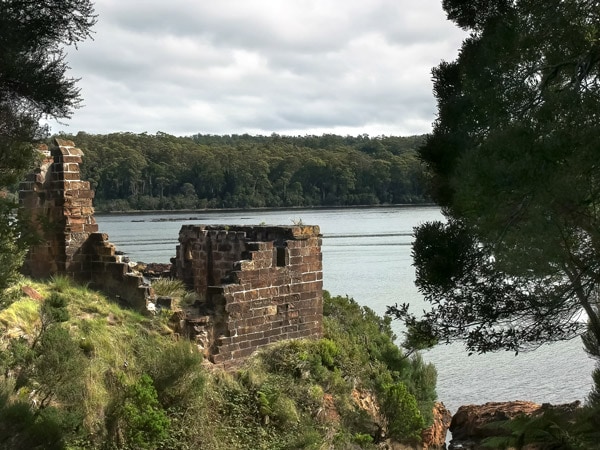
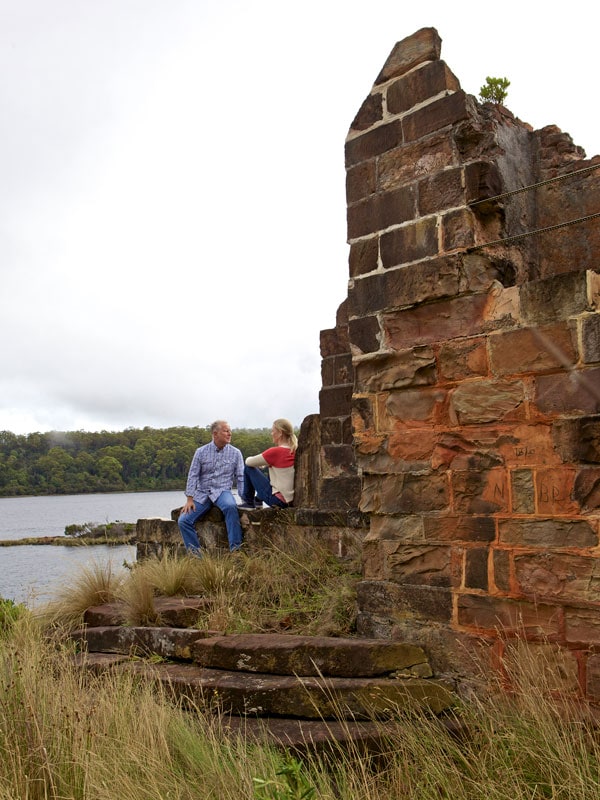
Once you arrive at the old townsites, you’ll find the ruins of the old wharf, rusting railway carriages, and the old brick bakehouse chimney, as well as some old boilers, crumbling brick-work and historic kilns overrun by ferns and creepers.
How to get there
Pillinger is around an hour’s drive south of Queenstown. To get there, follow Mt Jukes Road onto the gravel Kelly Basin Road until the Bird River Bridge turnoff. From there, visitors with 4WD can drive the last five kilometres to the bridge, whereas travellers with 2WD cars will have to park up and walk. From the Bird River Bridge, it’s a 15-kilometre (return) walk to the old townsite. You can also join the Pillinger Explorer Gordon River Cruise to take in the sights with a guide.
Accommodation
While most visitors will probably end up staying in Queenstown, travellers who don’t mind travelling a little extra drive may want to keep going west to Strahan. Despite being referred to as the “edge of the world", Strahan has continued growing in the years since it replaced Pillinger and has a handful of accommodation options. It’s also now the gateway to the old Macquarie Harbour Historic Site, with Gordon River boat trips shuttling visitors into the old waterways.
6. Port Arthur Convict Settlement, Tasman Peninsula
Despite being high on the list of Tasmania’s must-visit attractions, most people don’t know that Port Arthur was actually a fully-fledged township after being abandoned when the last convict left in 1877.
Despite battling some devastating fires, by the 1920s, the township – which was briefly named Carnavon before reverting to Port Arthur to attract more tourists – had a post office, cricket and lawn tennis club as well as three hotels, and two museums to cater to the influx of visitors flocking to the area to see the ex-penal station. In the 1970s, the National Parks and Wildlife Service took control of the site and the community was moved out.
Weekly travel news, experiences
insider tips, offers, and more.
Highlights
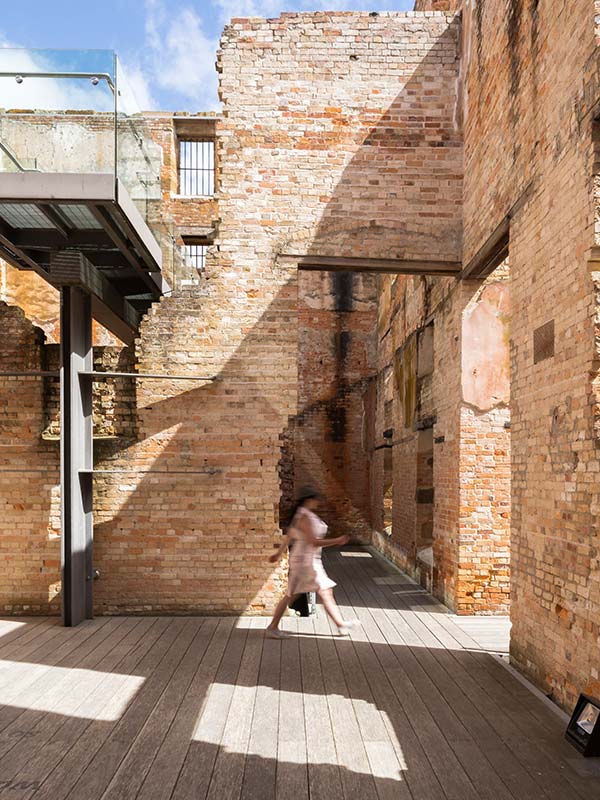
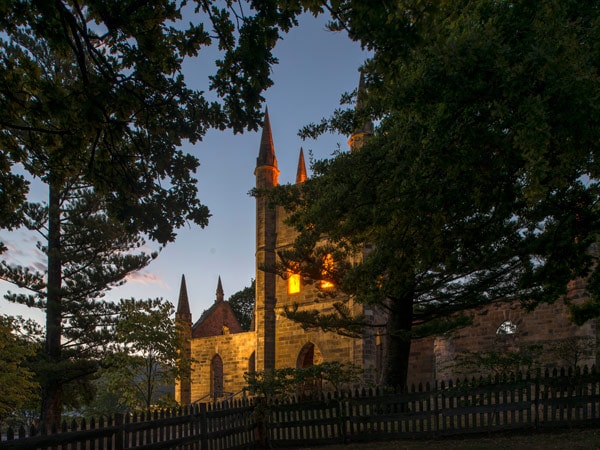
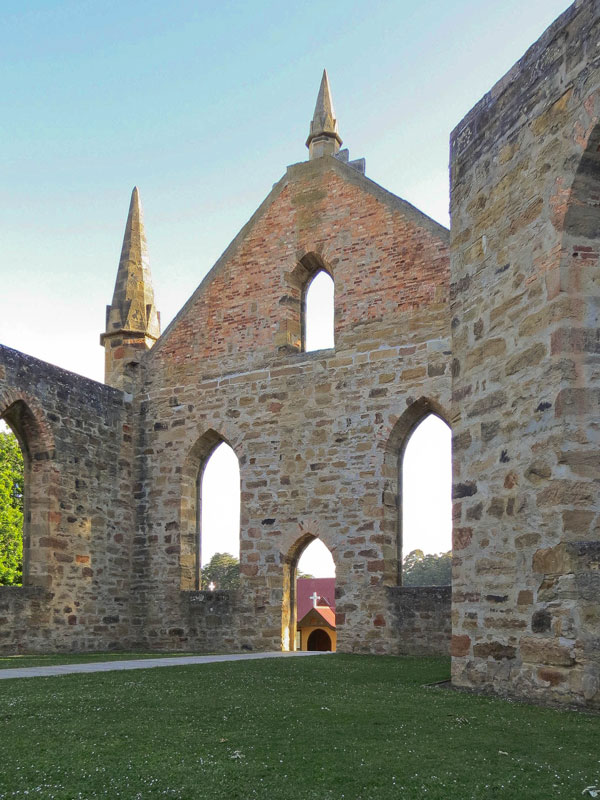
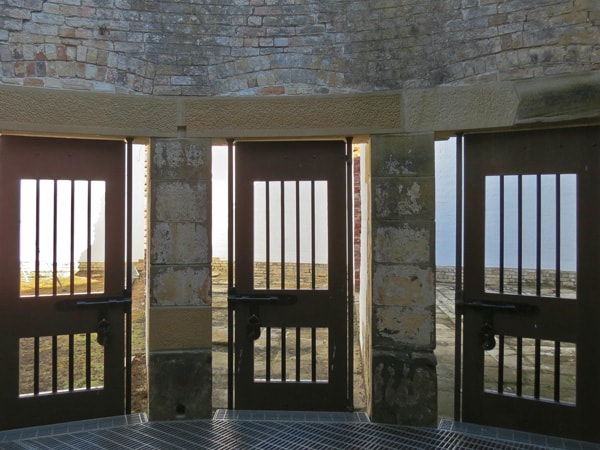
While most visitors to Port Arthur come for a day, with historic sites spread across more than 40 hectares – and most tickets valid for two days – it’s worth staying a little longer just to take it all in. Just like the first tourists to visit the site in the late 19th century, most visitors will want to check out the old Penitentiary. However, there are plenty of other ruins worth checking out too, from the Police Station to the Paupers Depot, the Government Cottage, the Church, and the old hospital. Smith O’Briens Cottage and Trentham are also good examples of life in the post-convict era.
Travellers looking to continue their ghost-town-convict-station explorations can also continue up the coast to Coal Mines, which was even more notorious than Port Arthur, and has even more tumbledown ruins to discover.
How to get there
Port Arthur is located on the Tasman Peninsula, approximately 100 km southeast of Hobart. It’s about a 90-minute drive from the Tasmanian capital along the Arthur Highway. There are plenty of areas of interest along the way, so it’s worth giving yourself lots of time to stop and explore.
Accommodation
Visitors can stay in a range of accommodation near Port Arthur, including convict-era cottages, caravan parks, beach-front cabins, luxurious villas and historic hotels on the Tasman Peninsula.
7. Brickendon Farm Village, Northern Tasmania
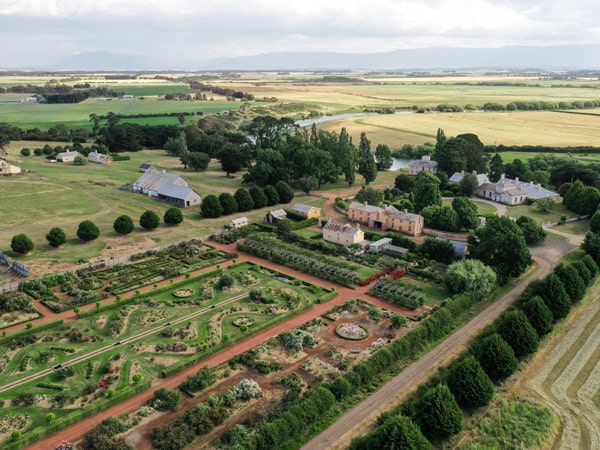
In keeping with the convict history of Tasmania, Brickendon’s Farm Village in Longford is part ghost town, part UNESCO World Heritage Site, and part working farm, and offers an intriguing insight into what life would have been like for the early settlers in Tasmania.
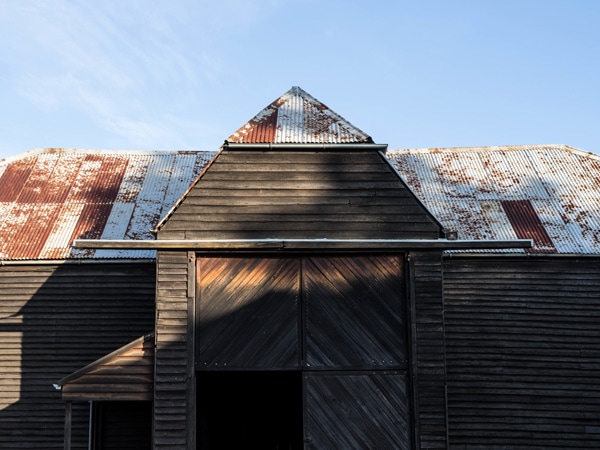
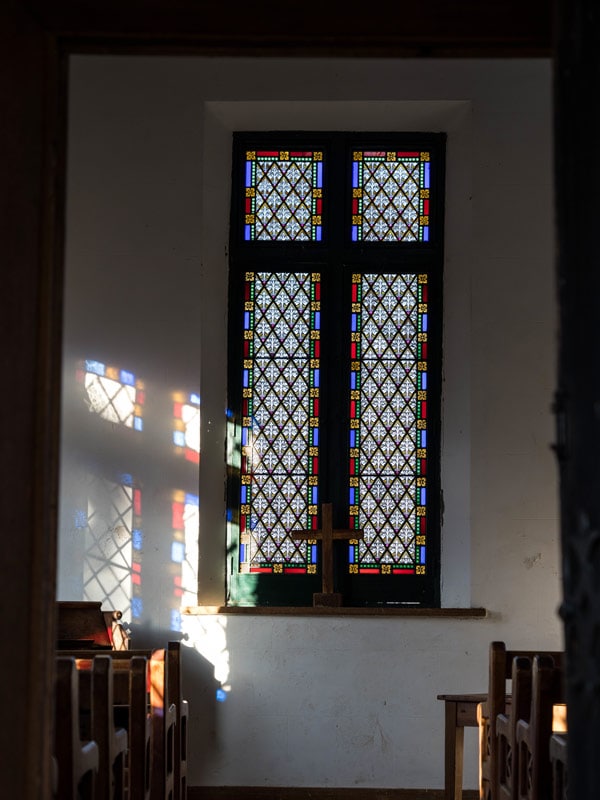
Overseen by William Archer – whose seventh-generation descendants still live in the nearby estate – the village was built by convicts in the early 1820s. While not all of it remains, you can still see an old Gothic chapel, cookhouse, blacksmith shop, shearing shed, barns, and a poultry shop.
Highlights
The chief attraction of Brickendon Farm Village is the well-preserved heritage-listed buildings, which date back to the 1820s and 1830s. While some are left to give visitors a glimpse of what life would’ve been like 200 years ago, others have been converted into holiday accommodation. Unlike other ghost towns in Tasmania, Brickendon also offers travellers a chance to see the 200-year-old settlement still in action, with the animals and workers reminding us how much – and how little – has changed over the years.
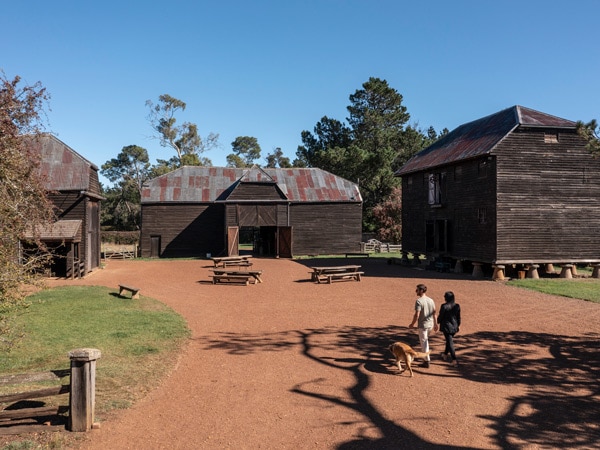
Along with the old farm village, visitors can also explore the estate and its romantic 1830s-style garden. History lovers may also want to check out Brickendon’s sister property, Woolmer’s Estate, which is just up the road.
How to get there
Brickendon is just outside the village of Longford, approximately 20 minutes south of Launceston. Best reached by car, it’s also one of the most easily accessible ghost towns in Tasmania and is close enough to Launceston to go in a taxi for the day (and/or night).
Accommodation
Visitors can stay overnight at the historic farm cottages which retain a lot of their period charm, with some even still including original features like clawfoot bathtubs. Alternatively, there are plenty of accommodation options in nearby Longford or Launceston.
8. Adamsfield, Southwestern Tasmania
Now up there with the most remote ghost towns in Tasmania, it’s hard to believe Adamsfield was once home to up to 2,000 people who flocked to the region after osmiridium – a rare element then worth around seven times more than gold – was discovered there in 1925. Despite the long and arduous journey out to the remote spot, many miners brought their entire families, spending months living in tents while hoping to seek their fortune at this better-than-goldmine.
Highlights
While little remains of Adamsfield, the two ramshackle 1940s-era Clarks huts on the edge of the river are the primary draw for visitors, who can also go searching for relics in the old townsite and swing by the open-cut mine. The huts have been undergoing maintenance in recent years and are not open to the public, but still make for a great photo stop. Visiting Adamsfield also makes for a fun – if somewhat challenging – 4WD trip, as long as you have a permit.
Unfortunately, the heritage-listed Churchill hut – which was once home to Elias Churchill, a local Thylacine (Tasmanian tiger) trapper – was destroyed by bushfires in 2019.
How to get there
The Adamsfield Conservation Area is located in the Tasmanian Wilderness World Heritage Area, around two hours west of Hobart. To reach Adamsfield, visitors must follow the Gordon River Road to the Clear Hill Road. At the junction with the Adamsfield Track, there’s a locked gate where visitors in 2WDs or those without permits and keys will have to park and continue on foot. It’s approximately four kilometres to the township site.
If you have a 4WD and a permit, you can continue on the Adamsfield Track, or take the Saw Back Track – a challenging 4WD route only suitable for experienced 4WD drivers with high-clearance vehicles and recovery gear (closed June-Oct).
Accommodation
The closest accommodation options to Adamsfield are Maydenna and Tyenna, where you can find holiday cabins and cottages. Alternatively, campers can also stay overnight at the Adamsfield townsite, although it’s worth noting that there aren’t any facilities.
Correction: an earlier version of this article said Waddamana only has two residents instead of four.
For those hooked on history, explore the ghost towns of Western Australia.
Want to see more stories from Australian Traveller in your Google search results?
- Click here to set Australian Traveller as a preferred source.
- Tick the box next to "Australian Traveller". That's it.