10 cultural wonders of Australia to discover

hero media
From a legendary music festival to First Nations art fairs, and from food markets that reflect a city’s identity to an outback temple devoted to cinematic history, these institutions reflect a rich cultural tapestry.

This article is part of our 100 Australian Wonders series. Throughout the series, we explore our nation’s wonders across culture, nature, food, islands and many more. We hope it inspires your own exploration of Australia’s many wonders.

1. Tiwi Islands art, NT

Travelling with: Elizabeth Whitehead

Art runs through the heart of the Tiwi Islands, just like the Apsley Strait that cleaves the verdant landmass in two. The strength of culture here is especially apparent when visiting one of the many art centres scattered across the islands.
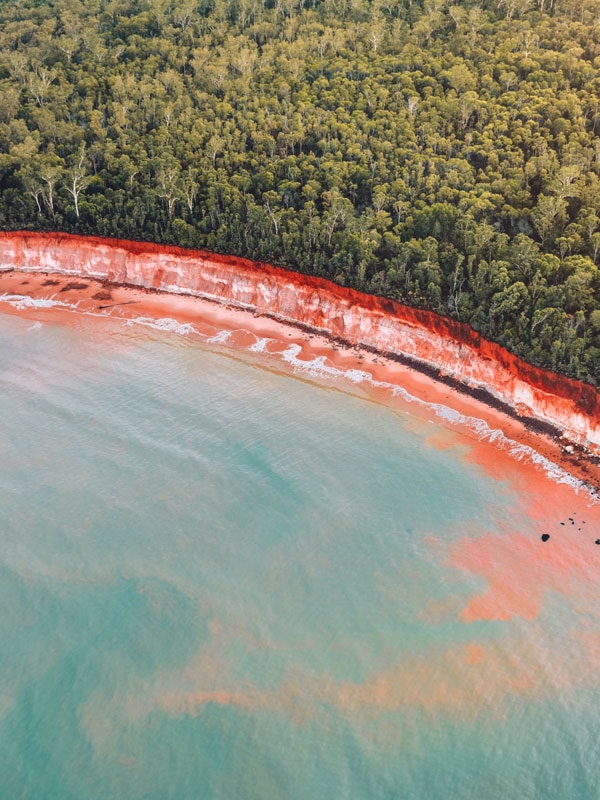
an aerial view of a beach on the Tiwi Islands
The incredible beauty of Rainbow Beach from above. (Image: Tourism NT)

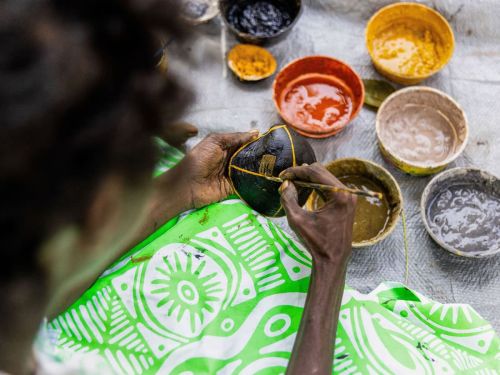
At an art centre (such as Jilamara Aboriginal Arts and Crafts), you’ll see artists carving, painting and creating works in the distinctive Tiwi style, characterised by the mesmerising technique of crosshatched brushstrokes and geometric shapes.
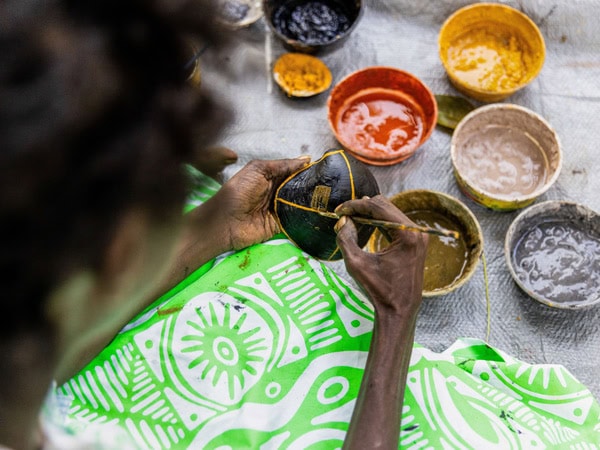
a close-up of a Tiwi artist painting
There are many art centres scattered across Tiwi Islands. (Image: Tourism NT/Helen Orr)

You’ll find walls decorated with art, bark serving as the canvas and natural ochre pigment as the paint. Sculptures are elaborately carved from ironwood, often depicting birds, as are tutuni (funerary totem poles) that adorn burial sites on the islands. Art is a vessel to share Tiwi Creation stories, wisdom and knowledge; an insightful window into the culture of this fascinating place located little more than a footy’s kick north of Darwin.
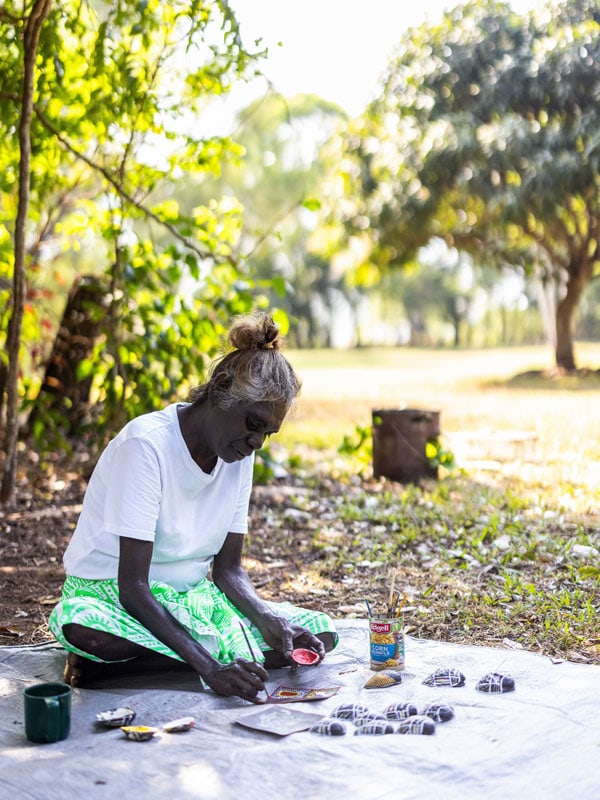
a Tiwi artist painting outdoors
See artists at work during a cultural tour. (Image: Tourism NT)

2. Garma Festival, NT

Travelling with: Steve Madgwick

The only way to truly grasp the significance of Garma is to sit in the red dirt and chat with its Traditional Owners. The annual four-day Indigenous cultural festival is held on the wildly stunning and thriving Yolngu homelands and includes the open-air Gapan Gallery.
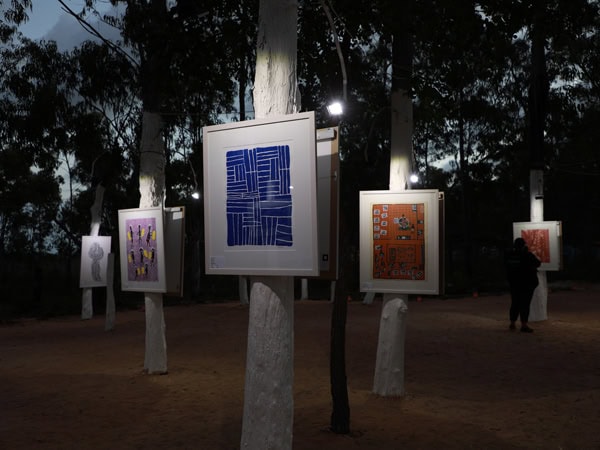
the open-air Gapan Gallery
The Gapan Gallery set amid a grove of gums.

What basically began as a community barbecue for Arnhem Land locals in 1999 has blossomed into a national celebration of 50,000-year-old song, story and dance. Its forum, attended by Australia’s most powerful decision-makers, is a dynamic lesson on the strengths and issues of Aboriginal Australia.

As Garma ambassador and award-winning actor Jack Thompson said: “Every Australian should come; every Australian child should have Garma as part of their curriculum."
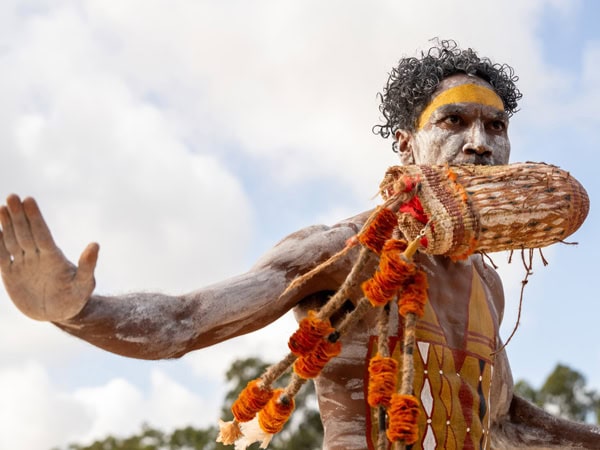
Gumatj man Cedric Marika at Garma Festival
Gumatj man Cedric Marika performing at Garma Festival.

3. Tamworth Country Music Festival, NSW

Travelling with: Megan Arkinstall

For more than half a century, the Tamworth Country Music Festival has been the national stage for country music, culture and heritage. Big-name artists such as Lee Kernaghan, Troy Cassar-Daley and Kasey Chambers are regulars at the iconic event, with performances across outdoor stages and pubs, a street parade, busking competitions and the Golden Guitar Awards. Giddy up for the 2025 fest, which runs for 10 days from 17-26 January.
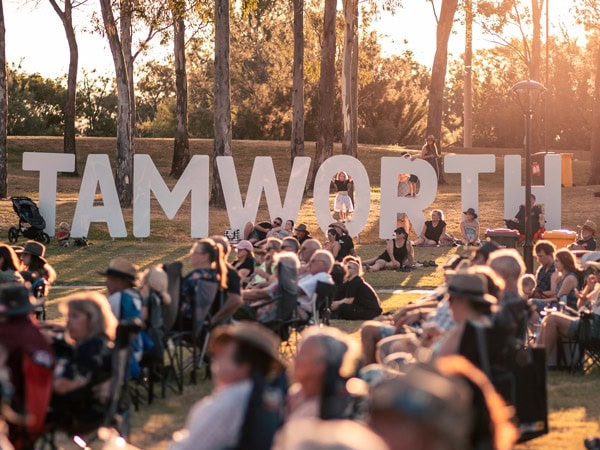
crowd sitting on the grass at Tamworth Country Music Festival
Circle Tamworth Country Music Festival on your calendar.

4. Australian Music Vault, Vic

Travelling with: Jo Stewart

You’ll find a compact celebration of Australian music in a quiet corner of the Arts Centre Melbourne . Home to a well-curated collection of instruments, clothing, posters, props and other ephemera, it’s free to enter this vault dedicated to the Aussie entertainers who have made their mark on the world.
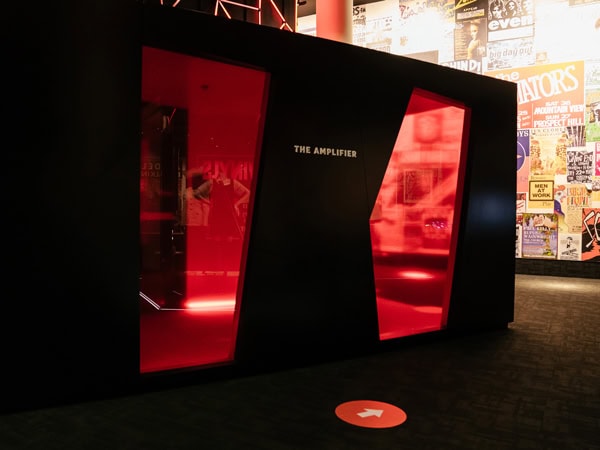
the AustralianMusic Vault in Vic
Amplify your love of music at the Australian Music Vault. (Image: Arts Centre Melbourne)

From Nick Cave’s notebook to outfits worn by Kylie Minogue and a battered, old suitcase (complete with faded Ansett tags) that once belonged to multi-instrumentalist Warren Ellis, this nostalgic walk down memory lane will pull at  your heartstrings whether you’re a fan of grunge, pop, punk or pub rock.

a woman admiring the exhibition dedicated to Mushroom Records
Make some noise for the exhibition dedicated to Mushroom Records. (Image: Georgia Roberts)

5. Mindil Beach Sunset Markets, NT

Travelling with: Lara Picone

With Asia more easily accessible than the next Australian capital city, it hardly raises an eyebrow that Darwin’s food culture is fringed with the culinary vibrancy of the south-east. Sure, you can taste it about town on any given day. But the seasonal Mindil Beach Sunset Markets is the place to deep-dive into the adopted flavours of our northernmost city.
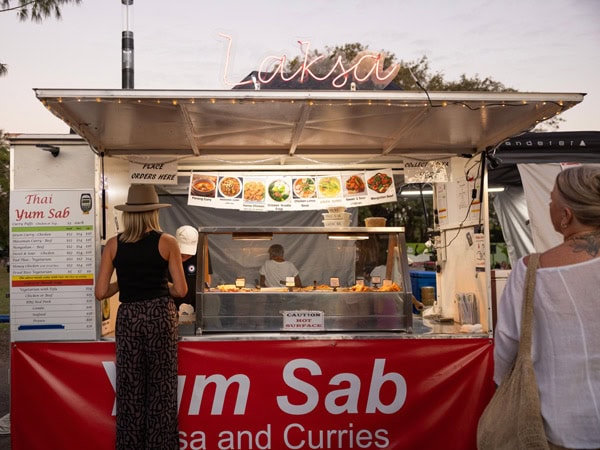
a food stall at Mindil Beach Sunset Markets
Mindil Beach Sunset Markets serves up tastes from Turkey to Timor. (Image: Tourism NT/Sean Scott)

Mindil is more than a market – it’s an iconic attraction. Watch as the tropical sun is slowly swallowed by the shimmering sea and the soft backbeat of bongos mingles with the warm night air thick with aromatic smoke.
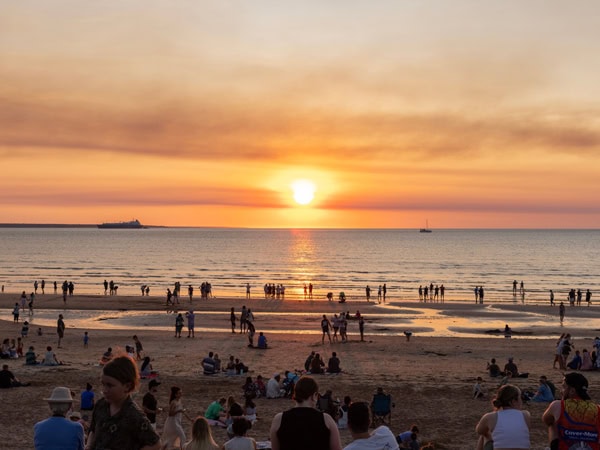
crowds at sunset on Mindil Beach
Watch the sun sink into the ocean from Mindil Beach. (Image: Tourism NT/Sean Scott)

The whole thing wields the power to entrance and the probability of purchasing happy pants or a rainbow crocheted hat becomes dangerously high.
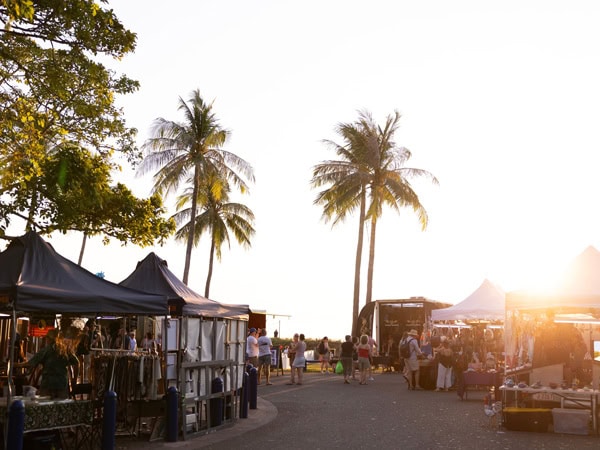
the Mindil Beach Sunset Markets in NT
There are over 200 stalls to browse. (Image: Tourism NT/Sean Scott)

6. Mad Max 2 Museum, NSW

Travelling with: Steve Madgwick

You’ll find the Mad Max 2 Museum, a temple of pure quirk and obsession, inspired by one of Ozploitation’s seminal films in the wee outpost of Silverton, north-west of Broken Hill. This ode to the ‘wasteland’ is the brainchild of Adrian and Linda Bennett, superfans who moved from the UK in 2010, driven by a fixation with Mad Max 2 (circa 1981).
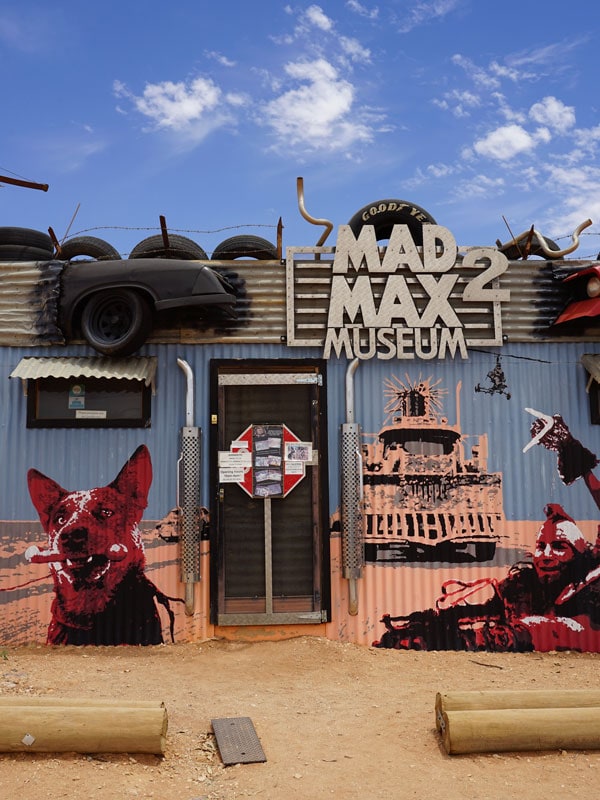
the Mad Max 2 Museum in NSW
Mad Max 2 Museum features life-sized characters as well as original and replica vehicles from the film. (Image: Steve Madgwick)

George Miller’s post-apocalyptic movie was filmed nearby at epic outback locations such as Mundi Mundi Lookout. The intentionally ramshackle corrugated shack is stuffed with props (including the leather suit worn by Mel Gibson), black-and-white production stills and a stable of trademark beasty cars from the franchise.

The pilgrims will flow on, thanks to Mad Max: Fury Road (2015) and this year’s release of spin-off Furiosa: A Mad Max Saga.
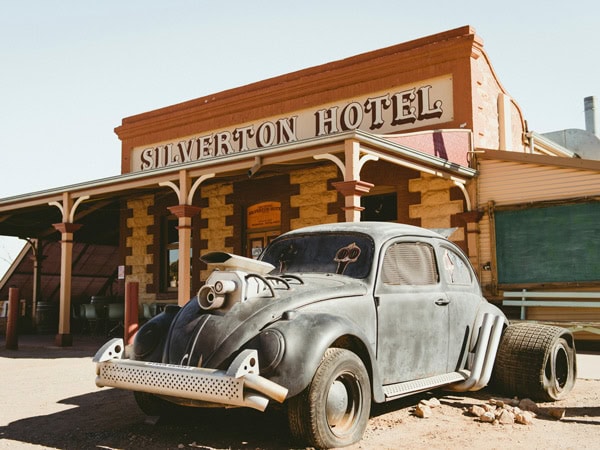
a vintage car in front of Silverton Hotel
Check into the Silverton Hotel. (Image: Destination NSW)

7. Indigenous art fairs

Travelling with: Carla Grossetti

Indigenous art fairs around Australia are designed to foster and nurture Aboriginal and Torres Strait Islander art, design and culture.

Greg Joseph of Burrunju Art Gallery at the National Indigenous Art Fair
Meet Greg Joseph, of Burrunju Art Gallery at the National Indigenous Art Fair. (Image: Destination NSW)

See First Nations culture and creativity take centre stage at the Darwin Aboriginal Art Fair – the largest of its kind – from 9-11 August. Sydney’s National Indigenous Art Fair will bring a stroke of colour to The Rocks 29-30 June and the annual Cairns Indigenous Art Fair will take place 24-28 July.
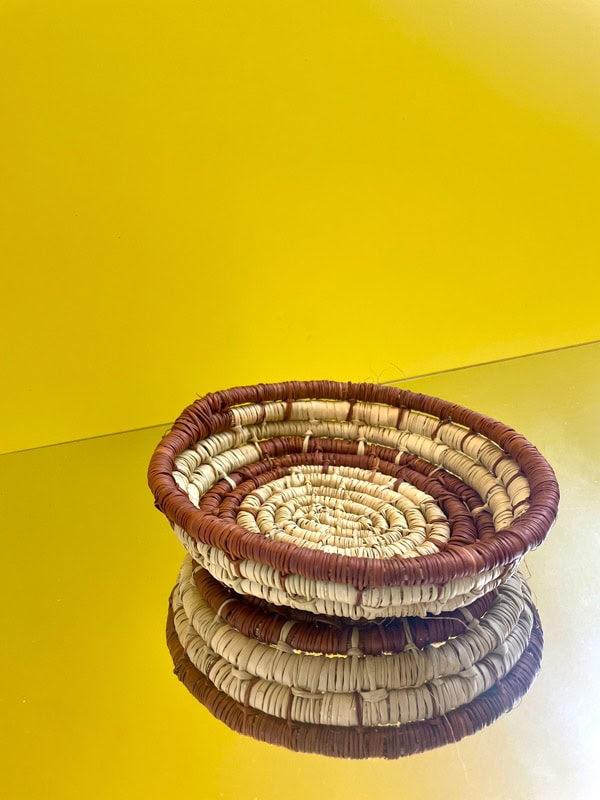
a woven artwork at Darwin Aboriginal Art Fair
A woven artwork by Yulki Nunggumajbarr on show at Darwin Aboriginal Art Fair. (Image: Tamati Smith)

Expect the carefully curated programs to include everything from artist talks to hip-hop performances, weaving workshops, masterclasses and more. Visitors to the various Indigenous art fairs will also be given the opportunity to purchase one-of-a-kind ethically sourced artworks.
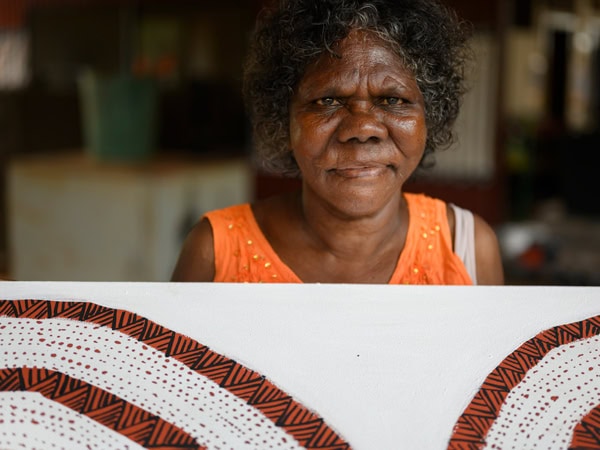
Carol Puruntatameri of Munupi Arts & Crafts Association
Purchase art from Carol Puruntatameri, of Munupi Arts & Crafts Association. (Image: Ben Searcy)

8. Australian Open, Vic

Travelling with: Carla Grossetti

Sporting fans descend on the Victorian capital each year to watch the highest-ranking players of the game thwack the ball back and forth over the net.

But it’s not just about watching the sport’s superstars battle it out in centre court for the title of the Australian Open . There’s the Champagne. The fashion. The people-watching. The unlikely wild cards. The off-court culture. The ball boys kneeling by the net. And of course, the tension felt in the crowd as a hard-fought game reaches break point.

Expect style queen Zendaya’s new steamy rom-com film Challengers (about a prodigy turned pro) to lure even more fans to the annual event.
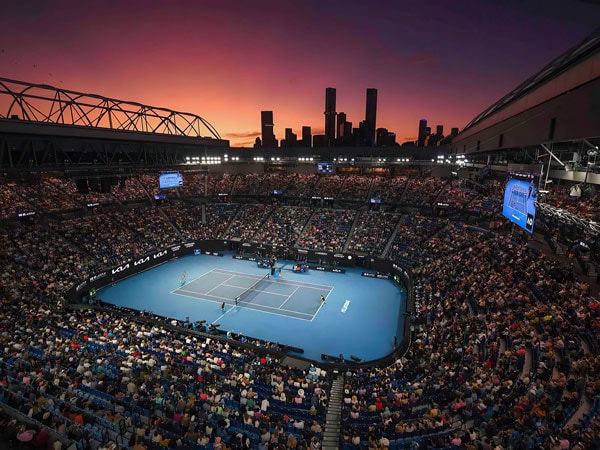
a crowded tennis venue at The Australian Open
The Australian Open is just the ticket for tennis fans. (Image: Morgan Hancock)

9. Budj Bim Cultural Landscape, Vic

Travelling with: Lara Picone

The Gunditjmara people of south-west Victoria could tell you a thing or two, not least about how to catch a kooyang (eel). With a shared cultural knowledge that stretches back for at least 30,000 years (but likely far more), their Country is home to the Budj Bim Cultural Landscape, listed by UNESCO as a World Heritage site that encompasses the areas of the Budj Bim volcano, Tae Rak (Lake Condah) and Tyrendarra and is recognised as one of the largest and oldest aquaculture systems in the world.

To take a misty morning walk through the intricate dams and channels that were devised to trap eels, back to a time when megafauna roamed the continent, is a mind-blowing rewind back to the Pleistocene. Astonishingly, despite centuries of being stomped by cattle, the restored site remains as proof of humanity’s extraordinary continuity.
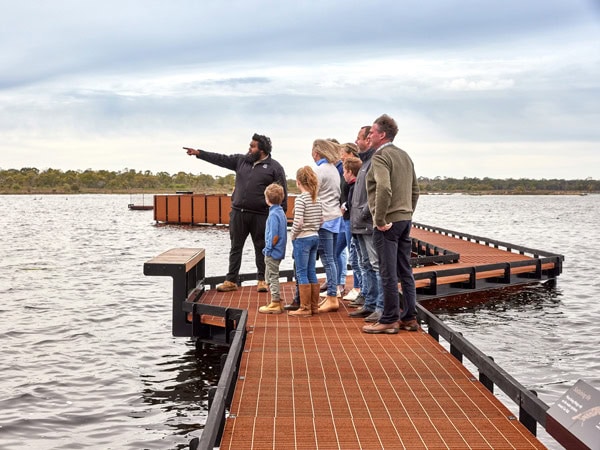
a group of people taking a cultural tour at Budj Bim Cultural Landscape
Take an Indigenous-led cultural tour of Budj Bim Cultural Landscape.

10. Norfolk Island

Travelling with: Steve Madgwick

Subtropical pine trees, obstinate cows and wild roosters. Elderly folks dawdling along serpentine B-roads in micro-cars. Deep-green paddocks next to sinister Georgian-era convict ruins. These images might paint the picture of Norfolk Island if you’ve never visited before. But they barely peel back a single layer of the cultural complexities of this 35-square-kilometre Australian external territory (1412 kilometres east of Evans Head).

Aerial view of Norfolk Island's coastline and pier
Norfolk Island is so much more than it’s breathtaking scenery. (Image: Norfolk Island Tourism)

A place profoundly entwined and defined by a population descending from the English and Tahitian mutineers of the Bounty, Fletcher Christian’s kin, who resettled on Norfolk when they outgrew the Pitcairn Islands. And from Heidi Bigg, who runs The Golden Orb Cafe, to the restaurateurs behind The Homestead, Kurt and Jill Menghetti, and to glass artist Jai Adams, whose work is on display at Norfolk Island Botanic Garden, to know the essence, quirks and jewels of 21st-century Norfolk Island is to know its people.
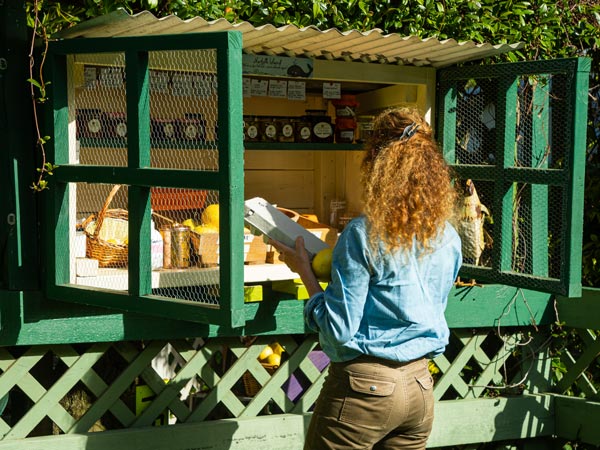
Local on Norfolk Island opens her roadside shop
It’s the people of Norfolk Island who reveal the essence of what makes this place special. (Image: Norfolk Island Tourism)
Keep reading our 100 Australian Wonders series; from road trips, outback and cultural wonders to foodie wonders and many more.

This scenic Victorian region is the perfect antidote to city life

Video credit: Visit Victoria/Tourism Australia

The Grampians just might be the ultimate antidote for the metropolis, writes one returning Aussie ready to disconnect from the modern world and reconnect to the Great outdoors.

There are no kangaroos back in Chicago: they’re all here in the Grampians/Gariwerd . In the heart of the Grampians National Park’s main gateway town, Halls Gap, pods of eastern greys are eating grass beside my parked rental car beneath the stars. Next morning, when I see the backyard of my rented villa on the edge of town for the first time, there are kangaroos feeding beside a slow-moving creek, lined with river red gums.

Five hundred metres up the road, 50 or so of them are eating by the side of the road in a paddock. I pull over to watch and spot three emus. Yellow-tailed black cockatoos fly overhead towards the tall green mountains just beyond town.

‘Kee-ow, keee-oww’… their calls fuse with the maniacal cackle of a kookaburra (or 10). Gawd, how I’ve missed the sound of them. Far above, a wedge-tailed eagle watches, and there you go: the ‘great birds of Australia’ trifecta, all half a kay from the town limits.

Exchanging city chaos for country calm

kangaroos near Halls Gap, Grampians National Park
The park is renowned for its significant diversity of native fauna species. (Image: Visit Victoria/Robert Blackburn)

I’ve come to the Grampians to disconnect, but the bush offers a connection of its own. This isn’t just any bush, mind you. The Grampians National Park is iconic for many reasons, mostly for its striking sandstone mountains – five ridges run north to south, with abrupt, orange slopes which tumble right into Halls Gap – and for the fact there’s 20,000 years of traditional rock art. Across these mountains there are more than 200 recorded sites to see, created by the Djab Wurrung, Jardwadjali and Gunditjmara peoples. It’s just like our outback… but three hours from Melbourne.

I’ve come here for a chance at renewal after the chaos of my life in America’s third-largest city, Chicago, where I live for now, at the whim of a relative’s cancer journey. Flying into Melbourne’s airport, it only takes an hour’s drive to feel far away from any concept of suburbia. When I arrive in Halls Gap two hours later, the restaurant I’m eating at clears out entirely by 7:45pm; Chicago already feels a lifetime ago.

The trails and treasures of the Grampians

sunrise at Grampians National Park /Gariwerd
Grampians National Park /Gariwerd covers almost 2000 square kilometres. (Image: Ben Savage)

Though the national park covers almost 2000 square kilometres, its best-known landmarks are remarkably easy to access. From my carpark here, among the cockatoos and kangaroos on the fringe of Halls Gap, it only takes 60 seconds’ driving time before I’m winding my way up a steep road through rainforest, deep into the mountains.

Then it’s five minutes more to a carpark that serves as a trailhead for a hike to one of the park’s best vantage points, The Pinnacles . I walk for an hour or so, reacquainting myself with the smells and the sounds of the Aussie bush, before I reach it: a sheer cliff’s edge lookout 500 metres up above Halls Gap.

walking through a cave, Hollow Mountain
Overlooking the vast Grampians landscape from Hollow Mountain. (Image: Robert Blackburn)

There are hikes and there are lookouts and waterfalls all across this part of the park near town. Some are a short stroll from a carpark; others involve long, arduous hikes through forest. The longest is the Grampians Peaks Trail , Victoria’s newest and longest iconic walk, which runs 160 kilometres – the entire length of Grampians National Park.

Local activities operator Absolute Outdoors shows me glimpses of the trail. The company’s owner, Adrian Manikas, says it’s the best walk he’s done in Australia. He says he’s worked in national parks across the world, but this was the one he wanted to bring his children up in.

“There’s something about the Grampians,” he says, as he leads me up a path to where there’s wooden platforms for tents, beside a hut looking straight out across western Victoria from a kilometre up in the sky (these are part of the guided hiking options for the trail). “There are things out here that you won’t see anywhere else in Australia.” Last summer, 80 per cent of the park was damaged by bushfire, but Manikas shows me its regrowth, and tells me of the manic effort put in by volunteers from town – with firefighters from all over Australia – to help save Halls Gap.

wildflowers in Grampians National Park
Spot wildflowers. (Image: Visit Victoria)

We drive back down to Halls Gap at dusk to abseil down a mountain under the stars, a few minutes’ walk off the main road into town. We have headlamps, but a full moon is enough to light my way down. It takes blind faith to walk backwards down a mountain into a black void, though the upside is I can’t see the extent of my descent.

Grampians National Park at sunset
Grampians National Park at sunset. (Image: Wine Australian)

The stargazing is ruined by the moon, of course, but you should see how its glow lights up the orange of the sandstone, like in a theme park. When I’m done, I stand on a rocky plateau drinking hot chocolate and listening to the Aussie animals who prefer nighttime. I can see the streets of Halls Gap off in the distance on this Friday night. The restaurants may stay open until 8pm tonight.

What else is on offer in The Grampians?

a boat travelling along the Wimmera River inDimboola
Travelling along the Wimmera River in Dimboola. (Image: Chris McConville)

You’ll find all sorts of adventures out here – from rock climbing to canoeing to hiking – but there’s more to the Grampians than a couple of thousand square kilometres of trees and mountains. Halls Gap may be known to most people, but what of Pomonal, and Dimboola, and Horsham? Here in the shadow of those big sandstone mountains there are towns and communities most of us don’t know to visit.

And who knew that the Grampians is home to Victoria’s most underrated wine region ? My disconnection this morning comes not in a forest, but in the tasting rooms and winery restaurants of the district. Like Pomonal Estate, barely 10 minutes’ drive east of Halls Gap, where UK-born chef Dean Sibthorp prepares a locally caught barramundi with lentil, pumpkin and finger lime in a restaurant beside the vines at the base of the Grampians. Husband-and-wife team Pep and Adam Atchison tell me stories as they pour their prize wines (shiraz is the hero in these parts).

dining at Pomonal Estate
Dine in a restaurant beside vines at Pomonal Estate. (Image: Tourism Australia)

Three minutes’ drive back down the road, long-time mates Hadyn Black and Darcy Naunton run an eclectic cellar door out of a corrugated iron shed, near downtown Pomonal. The Christmas before last, half the houses in Pomonal burnt down in a bushfire, but these locals are a resilient lot.

The fires also didn’t stop the construction of the first art centre in Australia dedicated to environmental art in a nature-based precinct a little further down the road (that’s Wama – the National Centre for Environmental Arts), which opened in July. And some of the world’s oldest and rarest grape vines have survived 160 years at Best’s Wines, outside the heritage town of Great Western. There’s plantings here from the year 1868, and there’s wines stored in century-old barrels within 150-year-old tunnels beneath the tasting room. On the other side of town, Seppelt Wines’ roots go back to 1865. They’re both only a 30-minute drive from Halls Gap.

Salingers of Great Western
Great Western is a charming heritage town. (Image: Griffin Simm)

There’s more to explore yet; I drive through tiny historic towns that barely make the map. Still part of the Grampians, they’re as pretty as the mountains behind them: full of late 19th-century/early 20th-century post offices, government offices and bank buildings, converted now to all manner of bric-a-brac stores and cafes.

The Imaginarium is one, in quirky Dimboola, where I sleep in the manager’s residence of an old National Australia Bank after a gourmet dinner at the local golf club, run by noted chef and teacher, Cat Clarke – a pioneer of modern Indigenous Australian cooking. Just south, I spend an entire afternoon at a winery, Norton Estate Wines, set on rolling calico-coloured hills that make me think of Tuscany, chit-chatting with owners Chris and Sam Spence.

Being here takes me back two decades, when I lived here for a time. It had all seemed as foreign as if I’d driven to another planet back then (from Sydney/Warrane), but there seemed something inherently and immediately good about this place, like I’d lived here before.

And it’s the Australian small-town familiarity of the Grampians that offers me connection back to my own country. Even in the better-known Halls Gap, Liz from Kerrie’s Creations knows I like my lattes with soy milk and one sugar. And while I never do get the name of the lady at the local Ampol station, I sure know a lot about her life.

Kookaburras on a tree
Kookaburras are one of some 230 bird species. (Image: Darren Donlen)

You can be a local here in a day; how good is that? In Chicago, I don’t even know who my neighbour is. Though each day at dusk – when the kangaroos gather outside my villa, and the kookaburras and the black cockatoos shout out loud before settling in to sleep – I prefer the quieter connection I get out there in the bush, beneath these orange mountains.

A traveller’s checklist

Staying there

Sleep beside the wildlife on the edge of Halls Gap at Serenity .

Playing there

abseiling down Hollow Mountain
Hollow Mountain is a popular abseiling site.

Go abseiling under the stars or join a guided hike with Absolute Outdoors . Visit Wama , Australia’s first environmental art centre. Check out Dimboola’s eccentric Imaginarium .

Eating there

steak, naan bread and beer at Paper Scissors Rock in Halls Gap
Paper Scissors Rock in Halls Gap serves a great steak on naan bread.

Eat world-class cuisine at Pomonal Estate . Dine and stay at much-revered icon Royal Mail Hotel in Dunkeld. The ‘steak on naan’ at Halls Gap brewhouse Paper Scissors Rock , can’t be beat.

Dunkeld Arboretum in Grampians National Park
The serene Dunkeld Arboretum.

For Halls Gap’s best breakfasts head to Livefast Cafe . Sip local wines at Great Western’s historic wineries, Best’s Wines , Seppelt Wines and Norton Estate Wines .

two glasses of beer at Paper Scissors Rock in Halls Gap
Sink a cold one at Paper Scissors Rock.