
From wondrous wildflowers to monsoon-charged skies, the outback transforms with the seasons, rewarding travellers who know not just where to go but when.
If you were to capture shots taken over the course of a year in the Australian outback, you’d be left reeling from the barrage of images. It spans multiple climates, cultures and traditional seasonal calendars, encompassing a mesmerising expanse of landscapes – from arid deserts to tropical savannahs.
The high season draws travellers with cooler temperatures and heightened wildlife activity, while the low season brings sweltering heat, dramatic weather and a quieter, more introspective mood. In northern sub-tropical and tropical regions of Australia, such as the Kimberley in Western Australia, the Top End in the Northern Territory and Cape York in Queensland, these two seasons are defined as dry and wet. And although the Australian outback is commonly described through the lens of these two broad seasons, Indigenous calendars paint a more nuanced portrait of the land.
This seasonal outback guide follows the region through the year, mapping its moments – the journeys best tackled in the dry or cooler season and the experiences that come alive in the wet.
What to expect in high season
Spanning May to October, high (or dry) season is the outback at its most accessible. Cooler temperatures, low humidity and open roads make the dry months ideal for tackling big distances and iconic journeys. Wildlife gathers around shrinking water sources and landscapes sharpen into focus. It’s the season for long walks, expedition cruises and remote stays that rely on terra firma and reliable access.
It’s also peak travel time. Prices rise, popular experiences book out early and some places feel far busier than their vastness suggests. But for travellers wanting clarity, comfort and the freedom to roam, this is when the outback rolls out the welcome mat.
When: May to October
Best for: Icons, long-distance travel, cruising
Expect: Cooler nights, premium pricing, more travellers
Best things to do in the outback during high season
Cruise the Kimberley’s wild coast
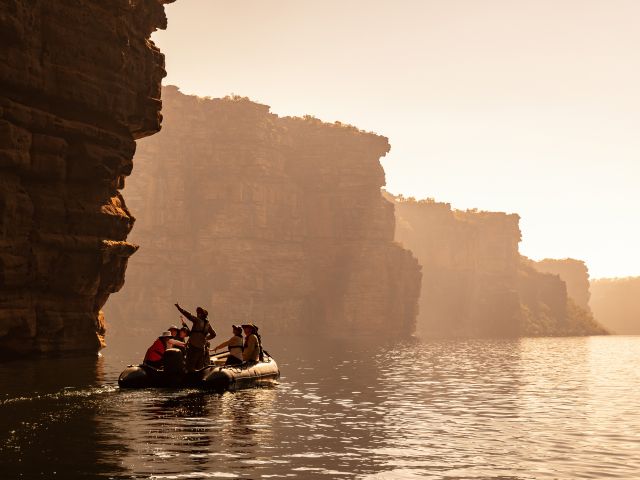
Luxe expedition ships from the likes of PONANT Explorations and Silversea bring a polished edge to the bucket-list experience of cruising the Kimberley. It’s about access as much as indulgence, landing at mind-blowing places like King George Falls, Horizontal Falls and Montgomery Reef. Australian-owned operators Coral Expeditions and True North Adventure Cruises , the latter part of the Luxury Lodges of Australia portfolio, also use the ocean as a gateway to reach WA’s most remote corners.
Discover goldmining history in Clermont
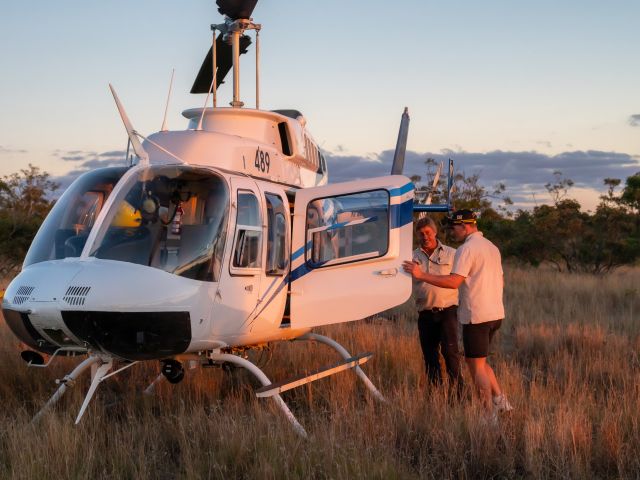
The outback doesn’t have to be a Big Lap–style commitment. In many regions, it’s closer than you think. For road trippers following the Pacific Coast Way, a few hours’ detour inland from Mackay delivers you to Clermont and the surrounding Isaac towns in the heart of Queensland’s gold country. Here, rugged landscapes invite hands-on adventure: fossick for gold with Golden prospecting tours, camp beneath the Milky Way or take to the skies on a scenic flight with Bush Heli-services to see golden plains and hidden waterways from a perspective few experience.
Go hiking
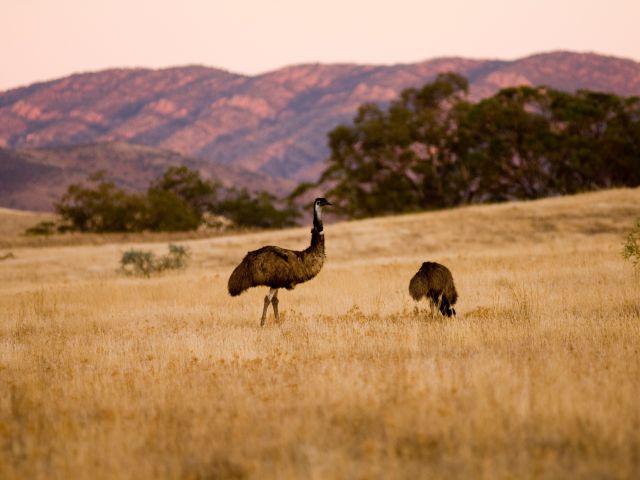
There’s nothing like using your own two feet to connect with the soul of the outback. Part of Great Walks of Australia, the Arkaba Walk is one of the country’s most coveted hiking holidays and traverses the ancient landscapes of South Australia’s Ikara-Flinders Ranges. Days are spent on guided hikes in and around Wilpena Pound, with nights split between swag-camping under the stars and the refined comforts of historic Arkaba Homestead .
Alternatively, the five-day Signature Kimberley Walk with Walk into Luxury , will see you heli-hiking the Bungle Bungle Range and bedding down at El Questro .
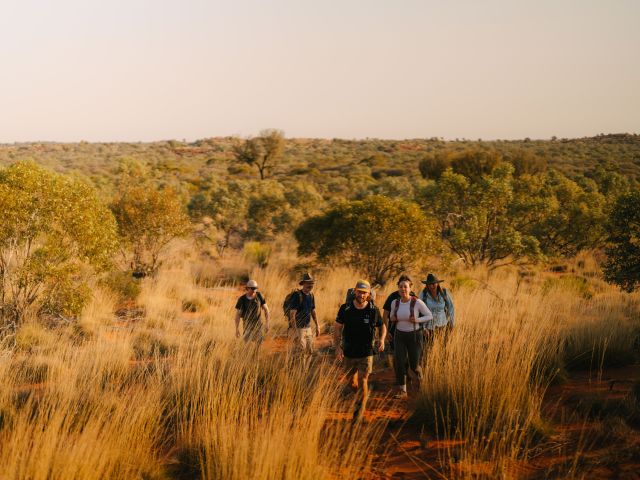
Or be among the first to walk Tasmanian Walking Company’s new Uluṟu-Kata Tjuṯa Signature Walk in the Red Centre, opening to the public in April 2026. The exclusive hike will span 54 kilometres over five days and four nights, and has been developed in consultation with Yankunytjatjara and Pitjantjatjara peoples (Aṉangu), the Country’s Traditional Owners.
Experience a seasonal stay
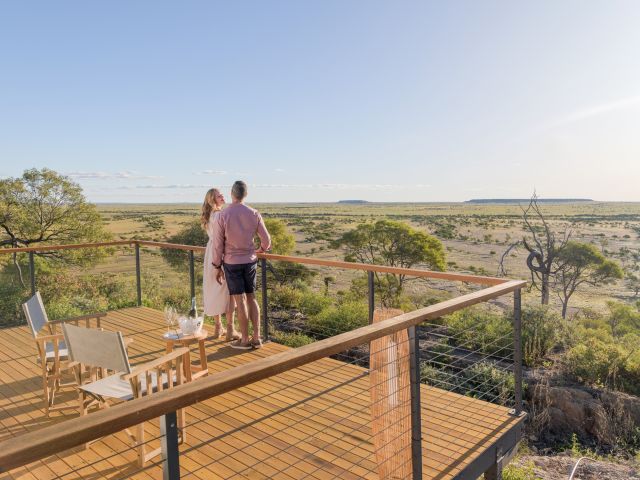
From Rangelands Outback Camp near Winton in Queensland’s Dinosaur Country and Bullara Station on a sprawling cattle farm south of Exmouth to the off-grid luxury of Bamurru Plains on the fringes of Kakadu National Park, many of the outback’s best station stays and lodges are open seasonally – making a stay here an even more unique outback experience.
Get a bird’s-eye view on an air safari
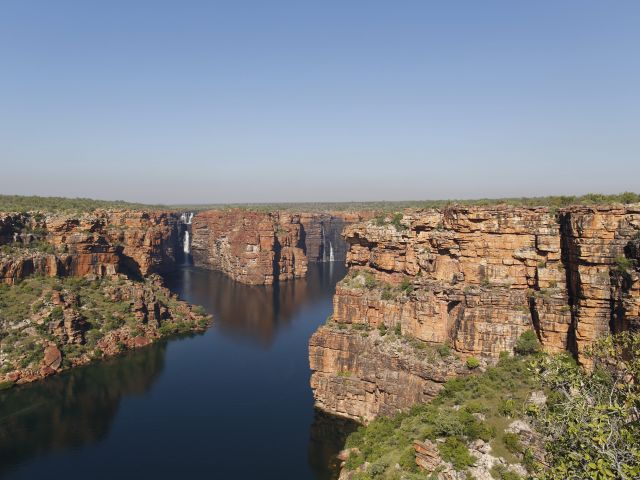
For high-flyers, an air safari is one of the most incredible Australian outback experiences. Take to the skies for Kimberley Experiences’ six-day Luxury Kimberley Coast Helisafari adventure with HeliSpirit to be immersed in the majesty of the region from the comfort of a chopper, soaring over magical landscapes such as King George Falls and the Berkeley River. The tour, which leaves from Kununurra, also includes stays in remote (yet luxe) accommodations including the Kimberley Coastal Camp .
BFC Air Safaris ventures everywhere from Uluṟu to the vast salt pan of Kati Thanda-Lake Eyre in South Australia – which experienced a once-in-a-generation flooding event in 2025. Seeing it at sunrise or sunset is not to be missed, according to Brisbane Flight Charter founder James McIlvenny. “Lake Eyre when dry is an amazing white salt landscape against the red dirt of the desert," he says, “while wet provides the most amazing photos of cloud reflections on the water – and, if you are lucky, can be pink in colour from the effects of algae."
Attend an outback event

From dust-kicking rodeos to rich cultural festivals, the best events in the outback bring the buzz with a whole lot of community energy. Expect traditional Indigenous dance, spear throwing and cooking at Barunga Festival (NT) in June, snag tickets to the Birdsville Big Red Bash (Qld) to see musical stars onstage in July, or cheer on the bull riders at Mount Isa Mines Rodeo (Qld) in August.
Take an iconic train journey
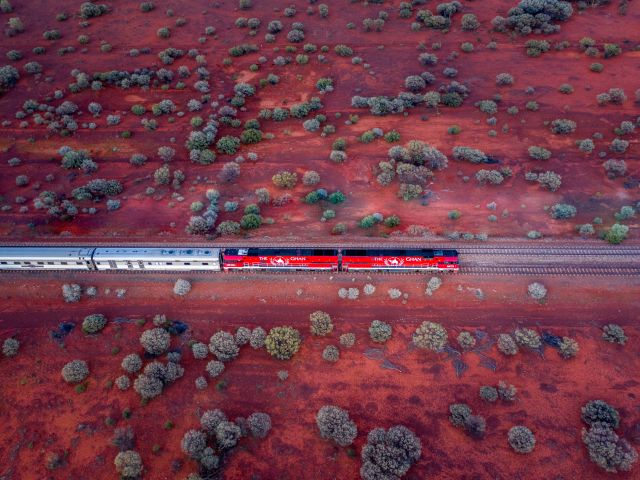
Cutting a swift path through the country’s interior by train is a rite of passage for many Aussies. Journey Beyond Rail’s 2027 season marks a significant shift for The Ghan, with the northbound journey from Adelaide/Tarntanya to Darwin/Garramilla extended to three nights and four days. With departures between March and November, the all-new Legendary Ghan route is a slower passage north that allows more time for additional off-train experiences everywhere from Ikara-Flinders Ranges to Alice Springs/Mparntwe.
Meanwhile, APT Luxury Travel’s eight-day Spirit of Outback Queensland 2026 tour ventures from Brisbane/Meanjin to the heart of Queensland’s interior, with highlights along the way including a stop in Longreach to explore the Qantas Founders Museum before embarking on a farmstay at Toogunna Plains and a craft distillery tour in Roma.
Go on a road trip
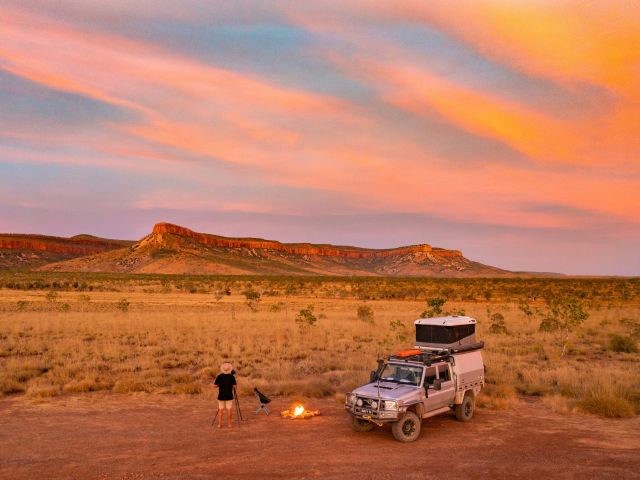
High season offers the consistency and access that outback road trips rely on, allowing travellers to focus on the journey rather than the conditions: in northern Australia, the dry season brings open roads and firm tracks as rivers recede – making it the perfect time to hit the Gibb River Road or Savannah Way; in the Red Centre, the cooler months make long distances and outdoor stops far more manageable.
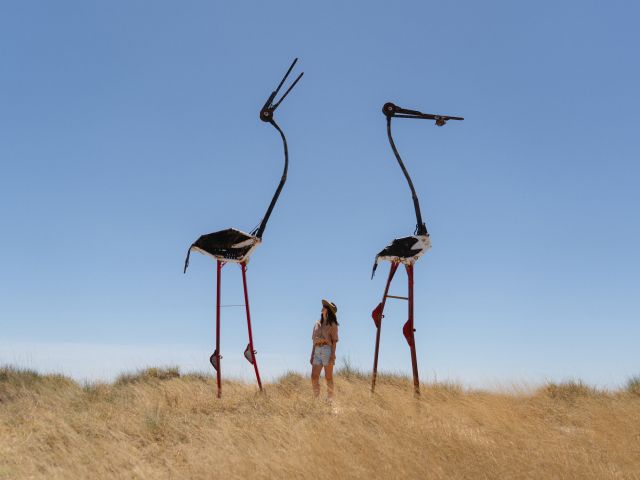
Qld Music Trails – The Outback is a self-drive adventure from Charleville to Mount Isa blending red dirt horizons with live music and local encounters, culminating in the Outback Sounds festival headlined by Kaylee Bell and The Wolfe Brothers. Or explore outback art along the Lake Dunn Sculpture Trail near Barcaldine, featuring pieces made from recycled materials by local artist Milynda Rogers.
Join a trusted tour
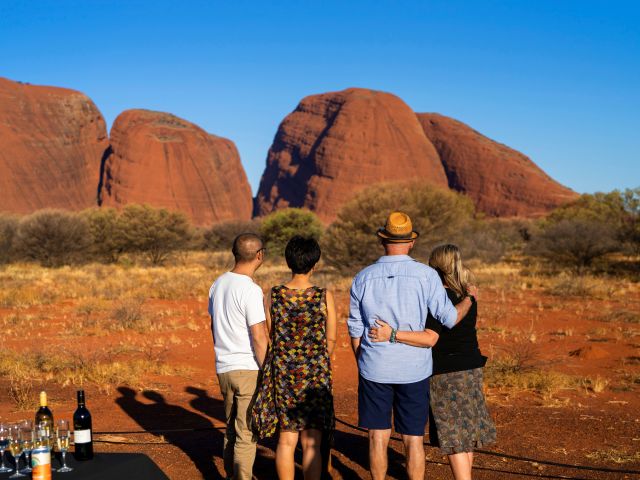
Sometimes, it’s best to call in the experts who know the outback like the back of their hand. Outback Spirit’s immersive small-group 4WD tours access places many tour operators can’t reach across Arnhem Land, the Kimberley, Central Australia, Cape York and beyond.
Meanwhile, AAT Kings has been fine-tuning coach travel in Australia for more than 100 years. Short on time but big on ambition? Its 15-day Outback Adventure traces the ribbon of bitumen that is the Stuart Highway as it cuts its way through a vast swathe of the country from Adelaide to Darwin/Garramilla. Guests experience everything from South Australia’s saw-toothed Ikara-Flinders Ranges through to the Northern Territory and highlights of the Red Centre, before continuing further north, where the heat thickens and your journey ends in the Top End capital.
What to expect in spring
The Northern Territory’s Red Centre – including Alice Springs/Mparntwe, Kings Canyon/Watarrka and Uluṟu-Kata Tjuṯa National Park – follows a semi-arid climate, where temperature matters more than rainfall. While summer brings extreme heat and winter nights can be cold, spring sits comfortably in between.
For Outback Cycling director Allison Bitar, spring is the best window for visiting Uluṟu-Kata Tjuṯa National Park. “[It] is truly the sweet spot for visiting Uluṟu," she says. “Days are beautifully warm without the intense summer heat, making it ideal for cycling, walking and exploring the base of this iconic landmark in comfort. Cool mornings, clear skies and mild afternoons create perfect outdoor adventure conditions. Even better, spring brings fewer crowds, giving you more space to soak up the serenity, take photos without the rush and enjoy a more personal connection with this extraordinary landscape."
When: September to November
Best for: Wildflowers, outdoor adventures, local connection
Expect: Vibrant landscapes, mild temperatures, room to roam
Where to see wildflowers in the outback
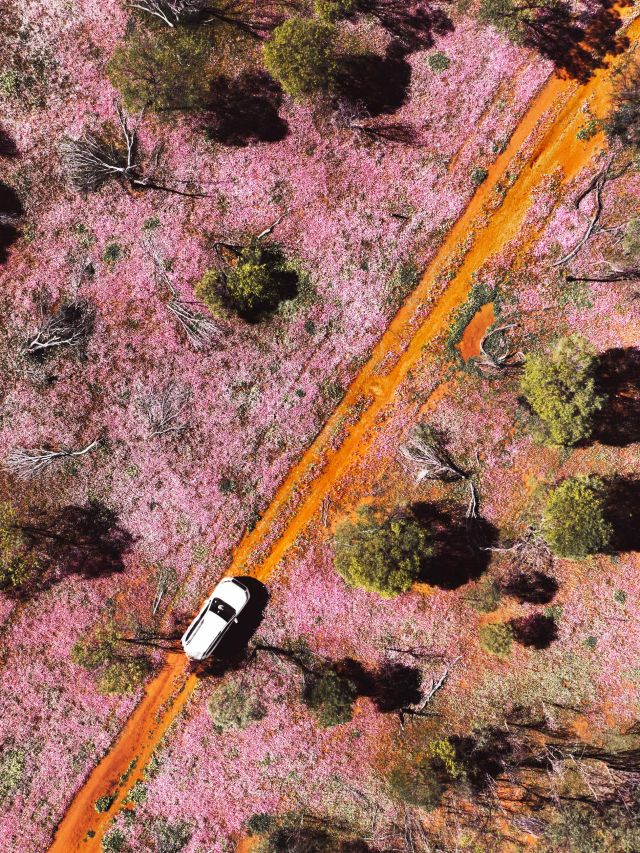
Each spring, Australia’s outback shakes off its dusty hues and bursts to life, with more than 12,000 species of wildflowers transforming the arid landscapes into kaleidoscopes of colour. The blooms typically appear from late winter through spring (July–November), though their scale and timing depend strongly on winter rainfall.
If there’s a global capital of wildflowers, Western Australia’s Golden Outback makes a convincing claim. With about 60 per cent of its wildflower species found nowhere else on Earth, the state’s displays are outrageously impressive; expect native cornflower, eremophila, flannel bush, acacias and bachelor buttons. Coalseam Conservation Park is famous for its fields of everlastings, while Mt Augustus treats visitors to fluffy pink mulla mulla. The season starts up north from July and gradually sweeps south, with a network of Wildflower Trails guiding travellers to the top spots. And, if you time it right, the Bloom Festival (usually held mid-September through October) by Great Southern Treasures adds an extra special layer of celebration.
But you don’t need to head west to get your floral fix. The mauve, hibiscus-like Sturt’s desert rose is the Northern Territory’s floral emblem and can be seen for much of the year, peaking in July and August.
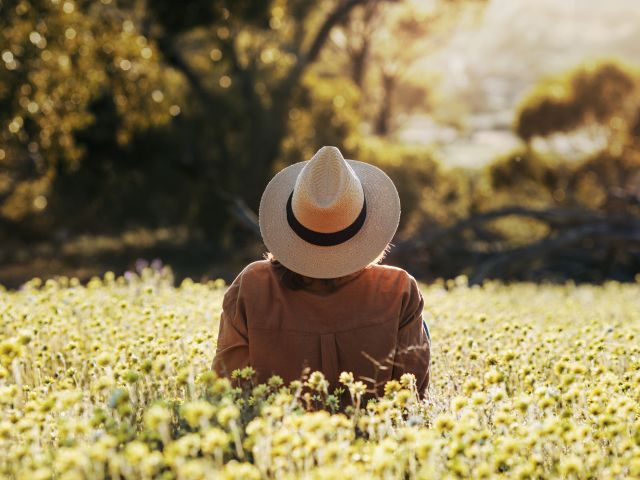
“After winter rains, the desert around Uluṟu bursts into colour as native wildflowers bloom across the dunes and spinifex plains. On your ride around the base of Uluru, keep an eye out for delicate desert daisies, vibrant purple mulla mulla and tiny yellow blooms dotting the red earth," says Outback Cycling director Allison Bitar.
The outback NSW town of Tibooburra is another springtime hotspot. In nearby Sturt National Park, a drive along Gorge Loop Road or stroll on the Jump-Up Walking Track may reward you with sightings of Sturt’s desert pea, which thrives in red sandy soil and flaunts red leaf-shaped petals dotted with a black centre.
What to expect in low season
Between November and April, the warmer months transform the outback into something more dramatic altogether. This is the season many travellers avoid – and the one that rewards those willing to lean into its rhythms. Waterfalls thunder back to life, landscapes turn improbably green and the skies deliver daily theatrics as heat builds and rain sweeps across the lands. With fewer visitors around, experiences feel more intimate and the land more alive.
Travelling in the wet requires flexibility. Some roads close, itineraries shift and mother nature is in charge. But for those drawn to water, wildlife and the raw power of the natural world, the outback in summer offers a deeper, more immersive encounter.
When: November to April
Best for: Surging waterfalls and rivers, storm watching, unique experiences
Expect: Heat and humidity, fewer travellers, shifting weather conditions
Best things to do in the outback during low season
Go chasing waterfalls
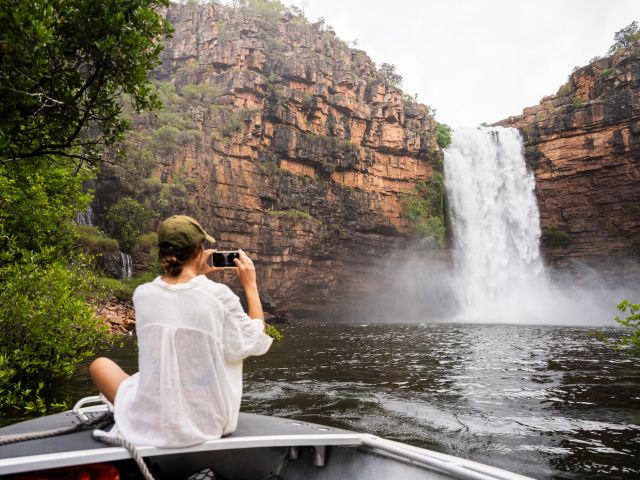
There’s no better time to seek out the Kimberley’s waterfalls than during wet season, when monsoonal rains bring the wild land and waterways to life with roaring torrents and spellbinding summer storms.
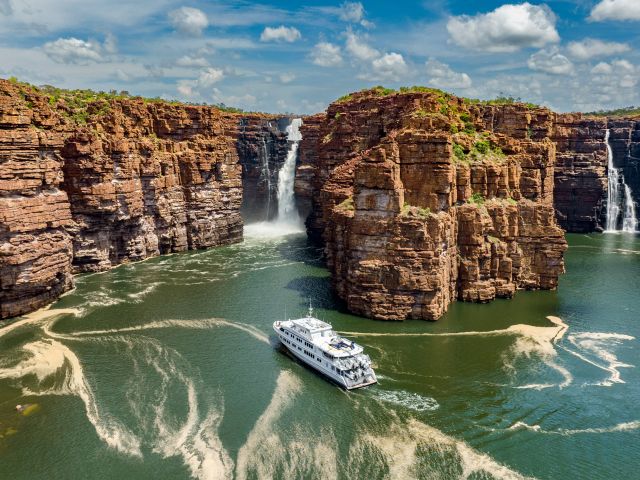
Waterfall chasers can jump onboard expedition company True North’s Kimberley Waterfall cruises , operating at the end of the wet season in March and April. Discover iconic natural wonders, such as the gripping Horizontal Falls and King George Falls, along with abundant wildlife and ancient rock art – all attesting to nature’s overwhelming power, as well as offering a glimpse into one of the oldest living civilisations on Earth.
Visit billabongs and national parks in the Top End
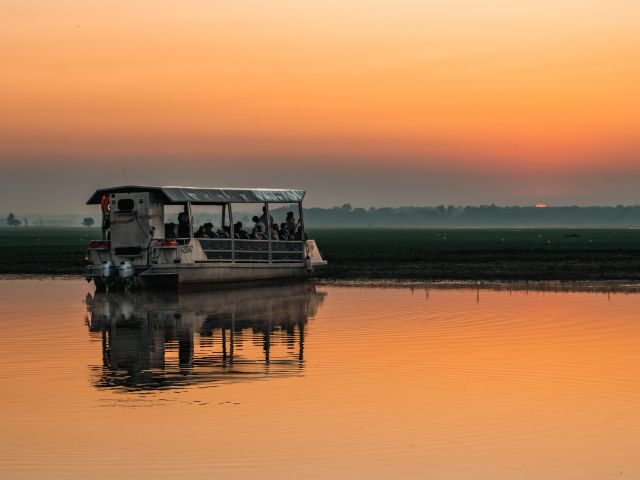
Come wet season in the Northern Territory’s Top End, wetlands flood, ecosystems thrive and rainbows stretch across the sky. Drift over the ethereal Yellow Water (Ngurrungurrudjba) billabong at sunrise with Yellow Water Cruises . Witness giant termite mounds.
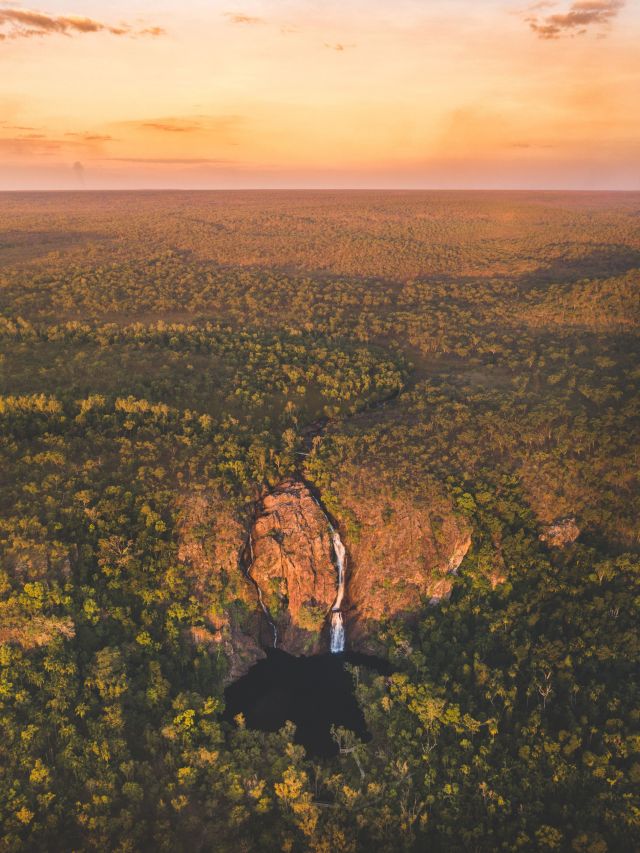
Visit Litchfield National Park’s stunning falls. Encounter living dinosaurs (crocs) and discover Indigenous stories that track back more than 65,000 years. Travellers can experience it all with Ethical Adventures on its two-day Litchfield and Kakadu tour , where you’ll join a maximum of 10 guests and relax in climate-controlled Cooinda Lodge.
Visit famous attractions without the crowds
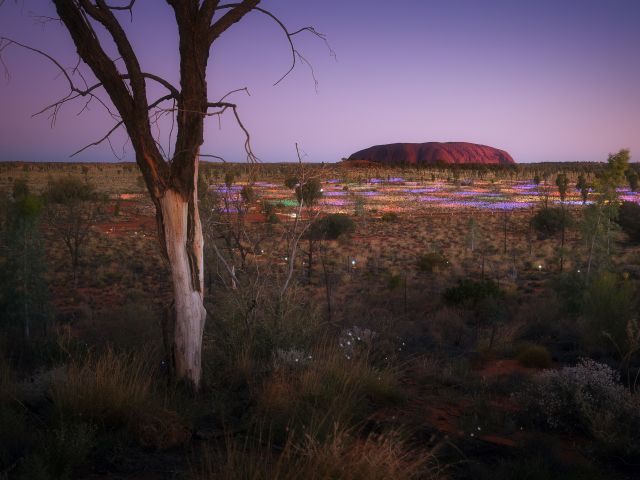
One of the strongest draws of the low season is the opportunity to experience legendary sites sans the crowds and steep prices. Of course, Uluṟu is a given. The monolith’s ancient wisdom, cultural significance and colour-changing majesty come sunrise and sundown are all the more splendid when you’re not sharing the moment with busloads of visitors. While in the Red Centre, don’t miss Kings Canyon/Watarrka’s sculptural gorges and Field of Light in the desert near Uluṟu – an astounding art installation comprising 50,000 spindles of light that’s celebrating its 10th anniversary this year.
See constellations and celestial events
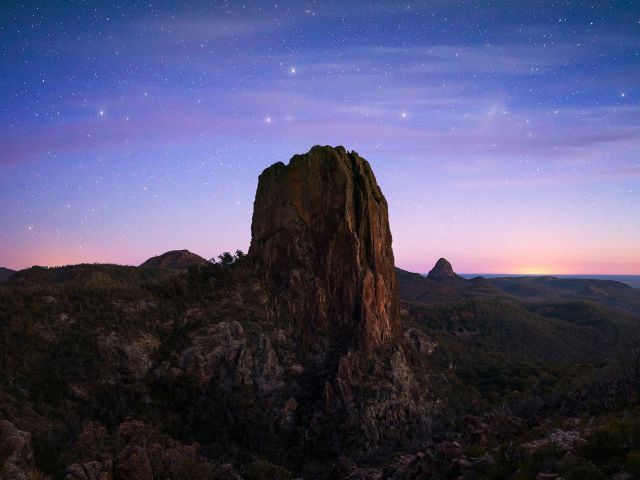
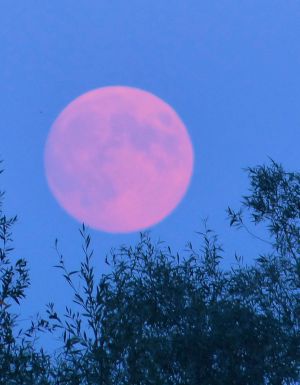
In the summer months through to March, keep an eye out in the outback skies for the Orion the Hunter constellation – we recommend catching it from NSW’s Warrumbungle National Park, Australia’s first Dark Sky Park. In the NT, Ayers Rock Resort runs one-hour Outback Sky Journeys (April–March) that explore the vast southern night sky through telescopes and ancient Indigenous stories. And don’t miss the total lunar eclipse on 3 March in 2026 (it won’t happen again until 2028), when the Earth’s shadow will turn the moon a brilliant rusty-red hue. Plus, look out for the annual equinox around 20–21 March, when the sun crosses the equator from south to north.
Take a wet season air safari
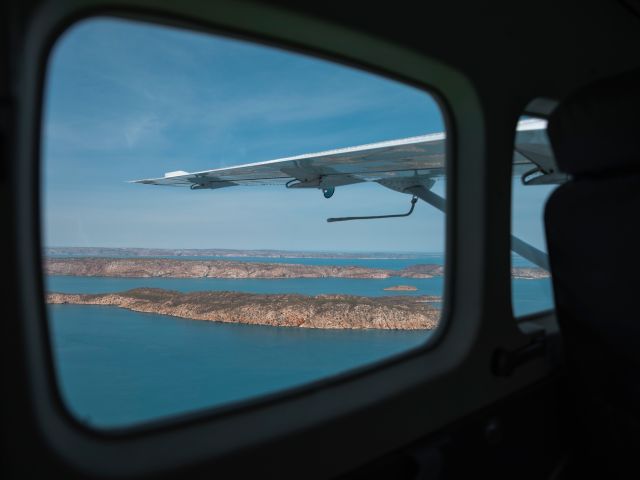
The outback has no bad angles – but experiencing the wet season from above is another level of breathtaking. Take to the skies with Air Adventure and discover Arnhem Land and the Top End from a bird’s-eye perspective on the multi-day Wet Season Spectacular tour , marvelling at swollen flood plains and thundering falls after the season has reached its peak. The tour also includes stays at Cicada Lodge and Mt Borradaile. Or head to the Kimberley, where you’ll find equally mesmerising gem-hued waterways carving trails through rocky ochre contours.
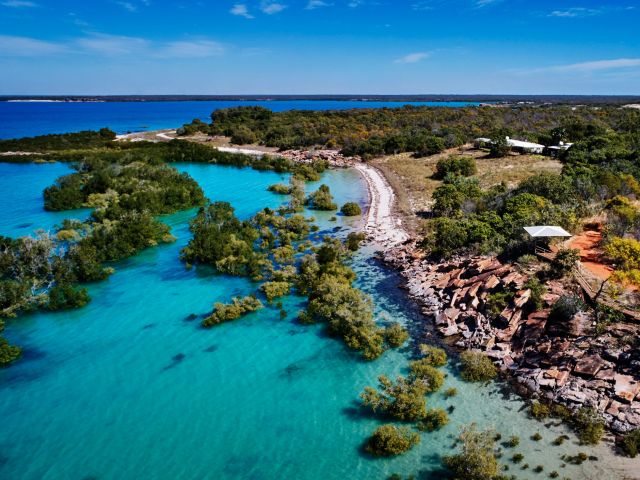
Onboard the Buccaneer Explorer – Wet Season scenic flight with Air Kimberley, you’ll witness King Sound, home to Australia’s largest tidal movements and the Buccaneer Archipelago’s maze of 2-billion-year-old sandstone islands, before touching down at Cygnet Bay Pearl Farm for insights into Australia’s world-enviable pearling heritage.
Traverse the outback by rail
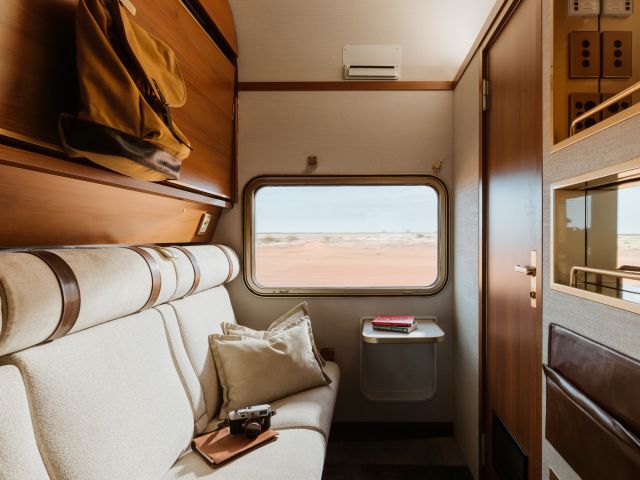
From tiger-orange sunsets and escaping the heat to dining on regionally inspired meals while traversing vast rugged landscapes, exploring the outback by rail in the summer months promises myriad forms of magic. Plus, it’s when you’ll typically score lower prices on iconic voyages.
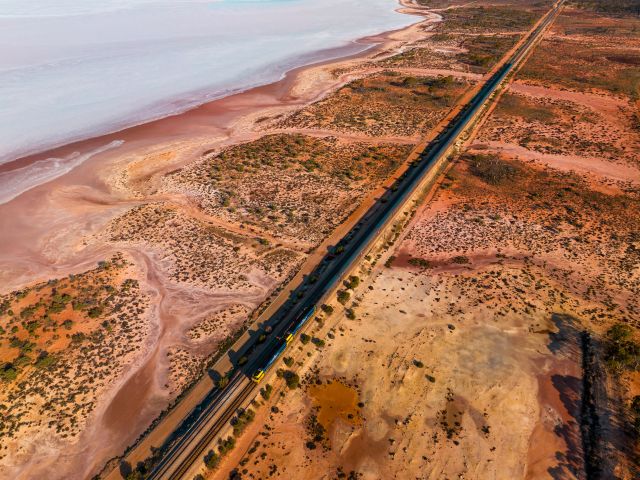
Cross the Nullarbor Plain on the Indian Pacific by Journey Beyond Rail, which offers itineraries year-round between Sydney/Warrane and Perth/Boorloo, and you’ll be travelling along the longest stretch of straight railway track in the world. The all-inclusive journeys follow in the footsteps of bush pioneers and legendary adventurers, passing arid deserts, rocky valleys and historic goldfields.
Best time for stargazing in the outback
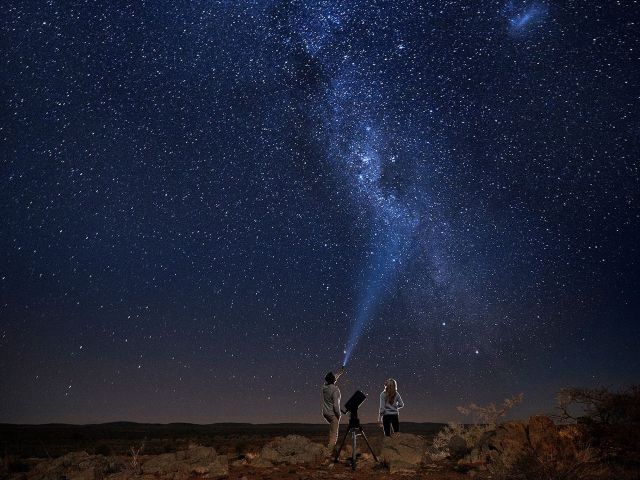
The dark, vast and uninterrupted night sky of Australia’s outback is one of the best places in the world for admiring celestial spectacles. While late autumn and winter (May – August) is generally seen as the best time for outback stargazing due to cool, crisp nights and clear viewing conditions, the outback offers incredible stargazing opportunities year-round.
As cooler temperatures settle in, so does the Milky Way. It shimmers prominently overhead alongside annual meteor showers such as the Eta Aquariids (5–6 May) and Southern Delta Aquariids (predicted to peak around 29–31 July). We recommend catching it from NSW’s Warrumbungle National Park, Australia’s first Dark Sky Park. Or, for stellar South Australian nightscapes over the Ikara-Flinders Ranges National Park, join the stargazing experience at Arkaroola Wilderness Sanctuary or base yourself at Rawnsley Park Station overlooking striking Wilpena Pound.
For year-round skygazing, Outback Astronomy in NSW’s Broken Hill offers guided Sky Shows; Earth Sanctuary in Alice Springs/ Mparntwe runs astronomy tours; Uluru Astro Tours lets you soak in the sky with Australia’s most iconic monolith as your backdrop; and Winton in Outback Queensland is home to Australia’s first internationally certified Dark Sky Sanctuary.
Best time for birdwatching in the outback
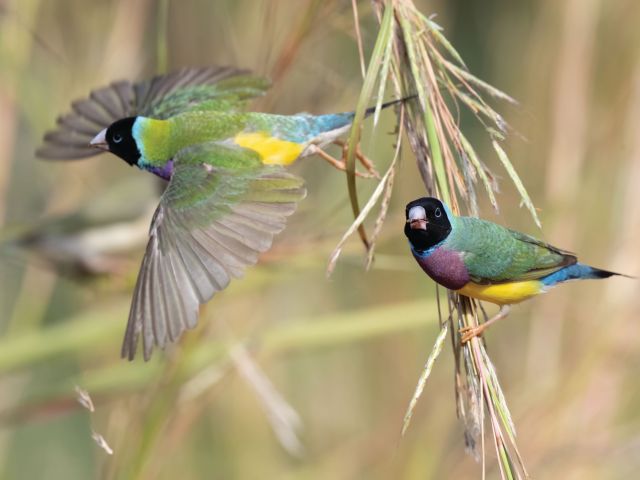
The best time to go birdwatching in the Australian outback is in the cooler drier months from May to September, when birds congregate around water sources. In summer, rainfall can make some regions difficult to access.
Become a twitcher, grab your binoculars and look to the skies, treetops and billabongs for an array of rare birdlife during Kakadu Bird Week (23–27 September). Kakadu is home to one-third of Australia’s bird species, with more than 280 including colourful kingfishers and gouldian finches.
Discover South Australia’s biodiverse wetlands, desert ranges and eucalyptus groves on the Premium South Australia Outback birding expedition (March–November), part of Australian Wildlife journeys. Or join the experts on Australian Geographic Travel’s eight-day Mallee and Outback Birds of Victoria and Mungo tour , keeping your eyes peeled for the turquoise flashes of Mulga parrots and elusive emu-wrens.
Indigenous seasons in the outback
Based on thousands of years of local knowledge, Traditional Owners recognise multiple different seasons defined by variations in the skies, rainfall, plants and animals.
There are many calendars across Australia, such as the three major seasons of the Miriwoong in Kununurra, including the wet season of nyinggiyi-mageny, rich in plant and animal life; and the five seasons of the Jawoyn calendar in the Katherine region, including hot and dry Jungalk (September – November), when thunderclouds build and the nitmi (cicadas) that lend their name to Nitmiluk Gorge sing to herald coming rains.

The six seasons of Kakadu include humid Kudjewk (monsoon season, December – March) which sees an explosion of animal and plant life; Bangkerreng (windy storm season, April); Yekke (beginning of cooler season, May – mid-June) when water lilies carpet billabongs and flowering Darwin woollybutt appear; Wurrkeng (cold season, mid-June – mid-August) when floodplains dry out and birds crowd shrinking water sources; Kurrung (hot and dry season, mid-August – mid-October) when local Aboriginal people hunt file snakes and long-neck turtles; and Kunumeleng (pre-monsoon season, mid-October – late December) when thunderstorms build and humidity increases. These seasons of Kakadu are set to be celebrated through the dry season at Cooinda Lodge’s Dird Full moon feasts. Or time your trip around Karrimanjbekkan An-me Kakadu: Taste of Kakadu festiva l in May.
Travellers can also learn about the seasonality of native bush foods and plants on a tour of the Gwoonwardu Mia Aboriginal heritage and cultural centre in WA’s Gascoyne region.