Journeys of epic proportions through wilderness that will shift your perceptions and stay with you forever.
Here are 11 of Australia’s iconic road trips to inspire you from our special 100 Amazing Road Trips around Australia series.
Iconic road trips
- Gibb River Road, WA
- Sydney to Melbourne
- Darwin to Kakadu, NT
- Kosciuszko Alpine Way, NSW
- Hobart to Cradle Mountain, Tas
- The Nullarbor
- Murray River Drive
- Great Barrier Reef Drive, Qld
- Adelaide to Ikara/Flinders Ranges National Park, SA
- Great Ocean Road, Vic
- The Big Lap
12. Gibb River Road, WA
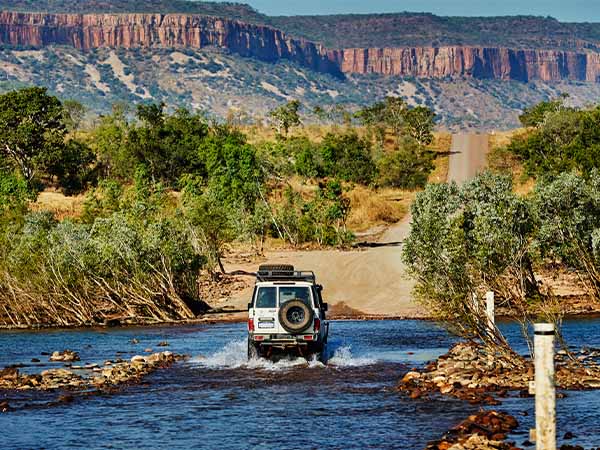
Storied in outback folklore, ‘The Gibb’ is both emphatically terrestrial but entirely otherworldly. As far as journeys go, this intrepid drive quietly tattoos an everlasting ownership across your heart with its penetrating beauty and consuming remoteness. Yet it’s not for the timid of heart.
Corrugated roads rearrange the marrow of your bones, toothy reptiles lurk in dark waters, seemingly fatalistic bovines lurch into the path of your 4WD, and backpackers (overwhelmingly German and stalking profound isolation) populate campgrounds.
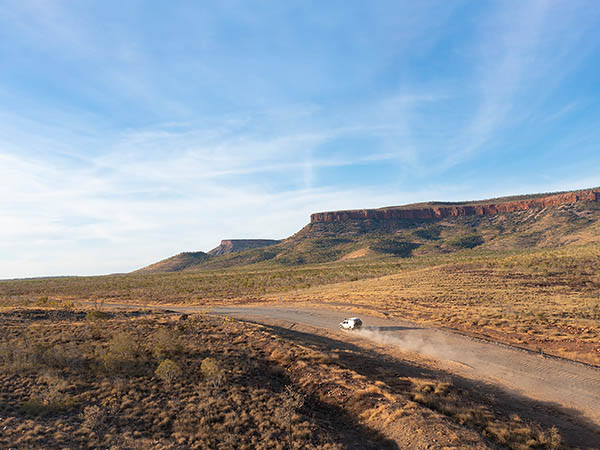
The 660-kilometre road trip from Derby to Kununurra, minus detours, was laid in the 1960s as a means of shuttling cattle from station to station. But today, it’s better loved as a roughly two-week-long adventure drive that lures everyone from senior explorers to the aforementioned backpackers, and naively ambitious families.
Departing from Broome
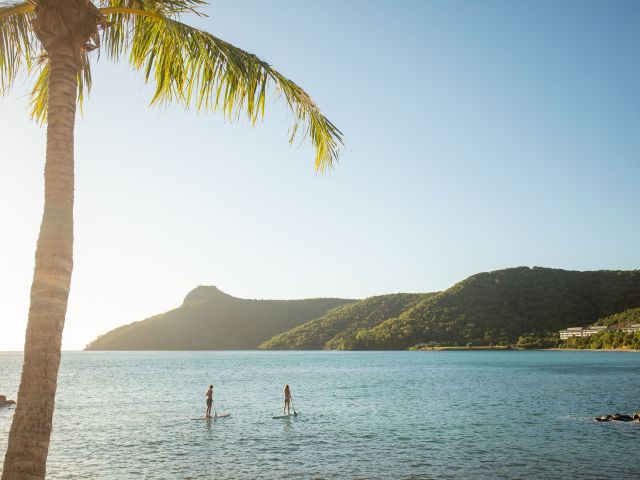
In Australia’s North West, the first sensory bafflement comes at Broome, where most people launch their Gibb River Road exploration. Here, the contrasting collision of iridescent blue ocean and the ochre cliffs of the Kimberley resets your parameters for appropriate coastal colour palettes.
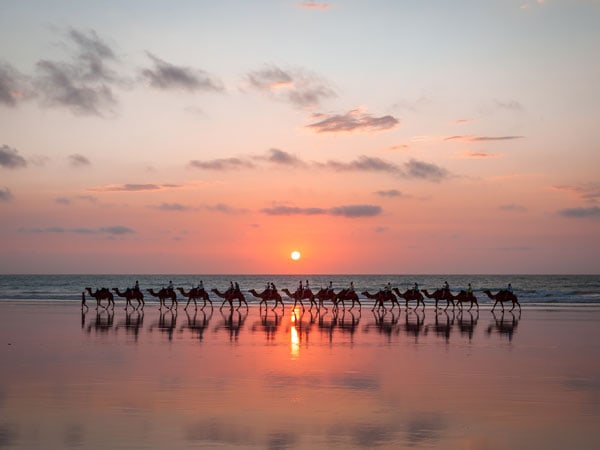
But as you drive from the revitalising blue of crystalline waves, you find yourself following an endless spectrum of warm tones. Red pindan is displaced by tyres and, in turn, displaces many a tyre.
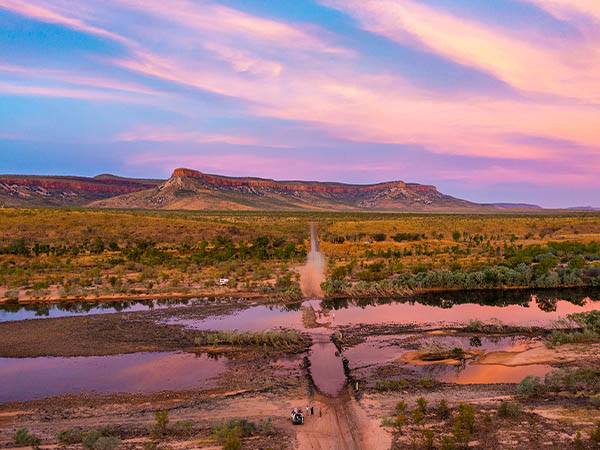
Cream-coloured dust seeps into every seam of every item. And the King Leopold Ranges bathed with the highlighter-pink of sunset are set ablaze until the deep mauves of dusk descend to cool everything down.
Stargazing opportunities
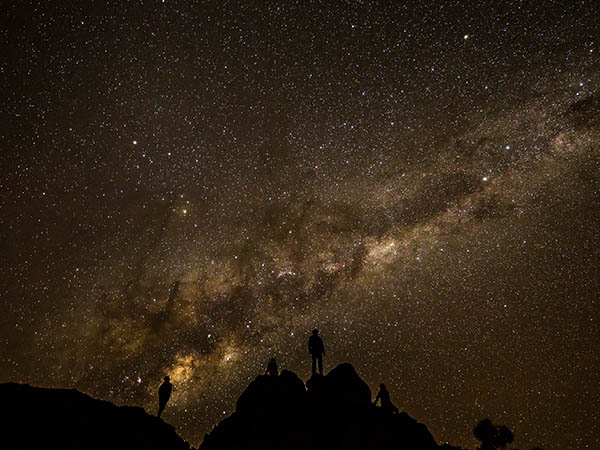
Then, there are the night skies. They deliver a transformative surprise on your first night free from light pollution. You might just glance up as you make your way to the Windjana Gorge Campsite toilet block and – bam! – you’re anchored mid-step as the Milky Way unfurls in all its glittery loveliness above. This moment reveals a supreme awareness of your miniscule part in the universe, alongside envy for astrophysicists and their vocational stargazing.
Windjana Gorge
As you wiggle your way along, there are unmissable detours that make this journey exceptional. In the Napier Ranges, Windjana Gorge has an almost-unfathomable history as a reef system circa some 350 million years ago. Let your hand brush over the ancient limestone walls that were once home to Paleozoic fish and keep a lookout for their reptilian descendants lounging in pools. Don’t worry, they’re just freshies.
Tunnel Creek
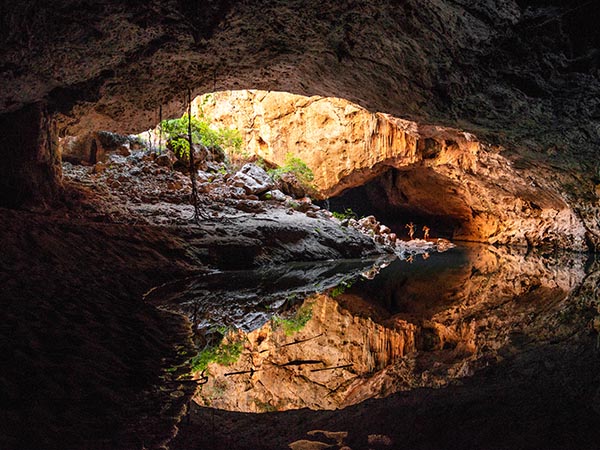
Just 33 clicks up the road, enjoy the opportunity to get knee-deep in freshwater croc territory at Tunnel Creek. A locale of acute significance, this was the Waterloo of famous Indigenous leader Jandamarra, who stood his ground against exploitation but was ultimately fatally wounded here at his hideout.
These days, it’s more chillout than hideout, as lazy freshies loll in the cave’s shallow waters, watching with vague contempt as trepidatious tourists slosh by, guided through the darkness by a thin beam of torchlight.
Wild swimming spots
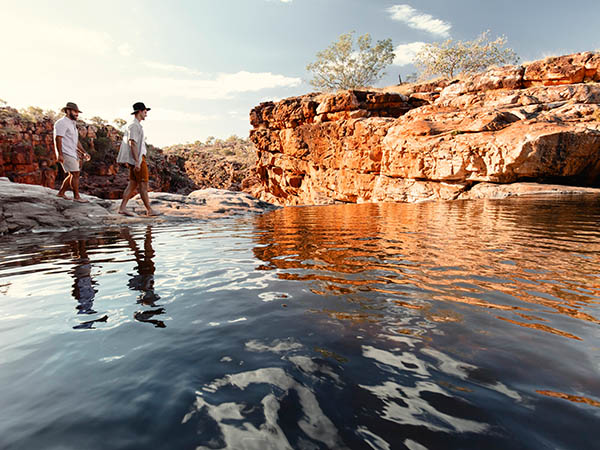
There are also gorges pitted with transcendent pools for plunging. Wild swimming in this way is an inimitable experience. Paddling out in surrounds as dreamily unpolished as the Australian outback has a way of storming new frontiers of relaxation.
Take your pick of gorges along, or just off, The Gibb. There’s Adcock Gorge, only five minutes off-route, which makes a quick dip irresistible.
Horseshoe-shaped Galvans Gorge is stirred by a seasonal waterfall and is accessed easily by an achievable trail.
Manning Gorge is shouldered by cooling cliffs; it takes a bit of work to hike the three-kilometre track for the pleasure of a dip, but this stunning waterhole pays big dividends for your efforts.
But Dalmanyi (or Bell Gorge) is perhaps the watery emerald in the tiara. You’ll need to allocate the heft of the day here and, at 30 kilometres from The Gibb, it’s a significant side-step. But you can spend the night at Silent Grove Campsite to make it worthwhile. Scramble over a rocky creek, then up to descend into the tiered gorge into which waterfalls cascade in silvery ribbons.
El Questro Homestead
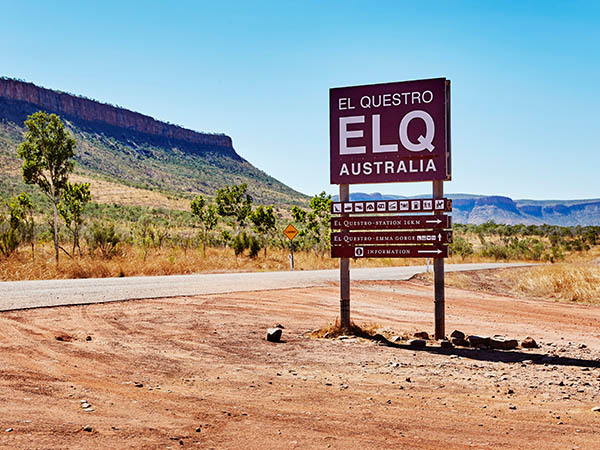
Roughing it in campgrounds, such as Silent Grove, which is accessed exclusively by 4WD vehicles via a rib-rattling road, is undeniably a huge drawcard of this road trip. But you’re not letting anyone down if you leave your swag stowed for a few days in favour of a downy pillow at the El Questro Homestead.
From here you can lap up the luxury of chef-made meals, take incredible guided tours, such as fishing, cultural and scenic flights, and generally absorb the surrounding environment with a crisp glass of wine from your suite.
Purnululu National Park
Don’t hurry from El Questro, but when you do return to the dusty road, you’re only an hour-and-a-half from The Gibb’s full-stop of Kununurra.
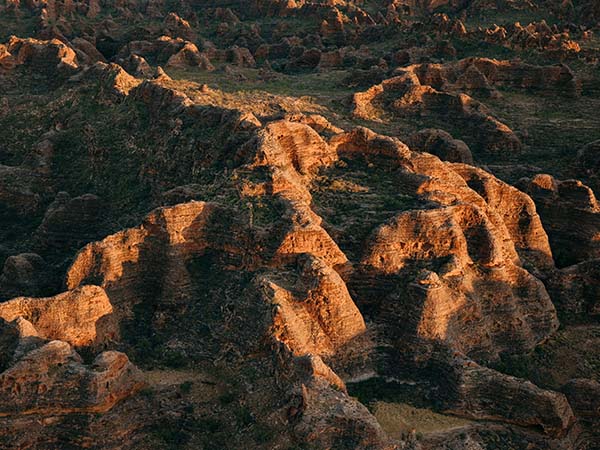
Lake Argyle and the Bungle Bungle Range await to jostle for your attention. With eyes magnetised to Purnululu National Park’s banded domes, the journey hovers ethereally in the near-past.
But you’ll find, while the memory may erode a little at the edges, your wandering heart will remain sworn to this journey ever after.
Distance:
660 kilometres
Words by Lara Picone
13. Inland from Sydney to Melbourne, NSW
The flight from Sydney to Melbourne is one of the world’s top 10 busiest air routes (according to flight data analyst OAG), all the better for making the 845-kilometre inland drive, mostly along the Hume Motorway, a delightfully uncrowded option.
This is one of those drives that most bookmark as something they will do ‘one day’. But it really is worth prioritising for its lovely outlook to rolling hills and flat plains seemingly bleached by the sunshine into a perfect palette of taupe, beige and earthy greens, and its big-name country and regional towns on both sides of the border.
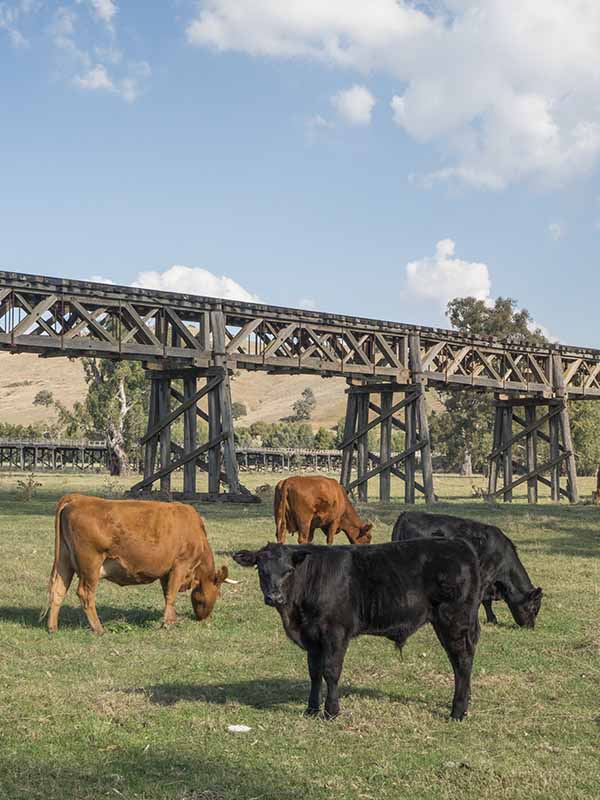
While limited stops will get you to the outskirts of the Victorian capital in about 8.5 hours, taking a few days transforms the journey into an experience in its own right rather than just a means of getting from A to B.
The best towns to visit
In NSW, towns like Goulburn, Collector, Jugiong, Gundagai, Wagga Wagga and Albury are all an easy side trip from the highway, and offer up delights as divergent as canine statues to regional art galleries to award-winning accommodation options.
Plan to spend your first night at either the stylishly revamped heritage pub The Sir George in Jugiong or in one of Kimo Estate’s architecturally designed eco huts just outside of Gundagai.
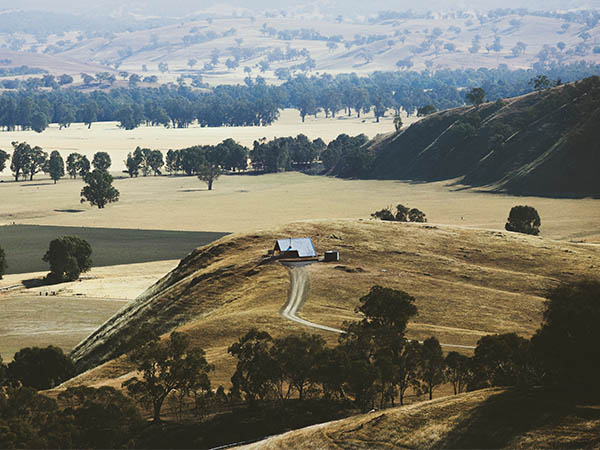
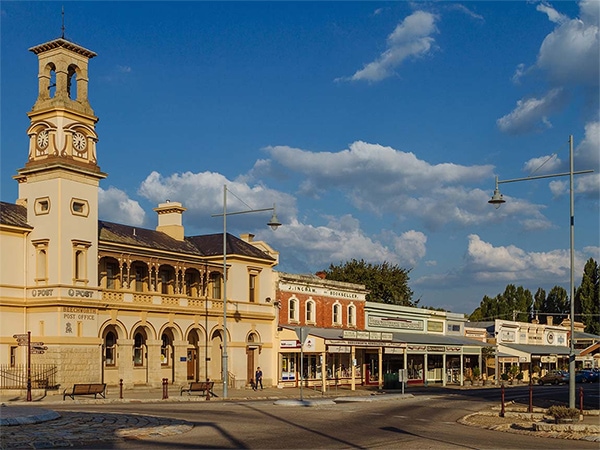
Over the border in Victoria, signs to Beechworth, considered to be one of the prettiest towns in the country, Rutherglen, with its wineries and seasonal local produce menus at the likes of Jones Winery & Vineyard, and Glenrowan, the site of Ned Kelly’s last stand, are equally tempting to follow.
Add another night to the journey with a stay in Rutherglen at one of Mt Ophir Estate’s six luxury accommodation options including The Residence, the original heritage homestead of the estate, or the cosy Winemakers Cottage.
14. Darwin to Kakadu, NT
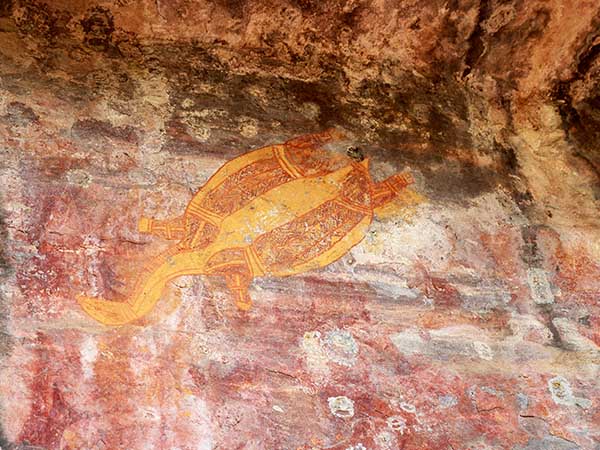
Barrelling down red dirt roads that lead to the next cache of jaw-dropping rock art and secret swimming spots, and crossing rivers by driving right through them: a Kakadu road trip might be easily ticked off the bucket list from Darwin but feels like an unforgettable adventure into uncharted territory.
Need tips, more detail or itinerary ideas tailored to you? Ask AT.
AI Prompt
Distance:
256 kilometres
Stay:
Glamp in one of Cooinda Lodge’s Outback Retreats.
15. Kosciuszko Alpine Way, NSW
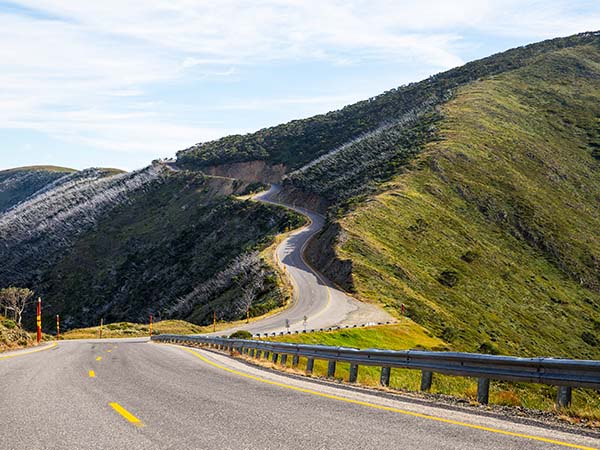
The twists and turns of the Kosciuszko Alpine Way, which carves a course up and over NSW’s Snowy Mountains through landscapes of mountain forests mythologised by Banjo Paterson, can be driven in under three hours. But we choose to slow right down and savour what this classic winter destination has to offer us in summer.
Cooma
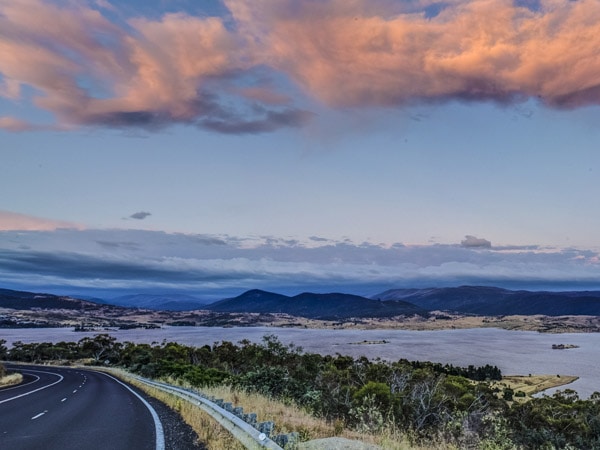
Setting out from Cooma and cruising past the huge glassy expanse of Lake Jindabyne, we roll into Kosciuszko National Park with its pine-clad ridges immortalised in The Man from Snowy River.
Thredbo
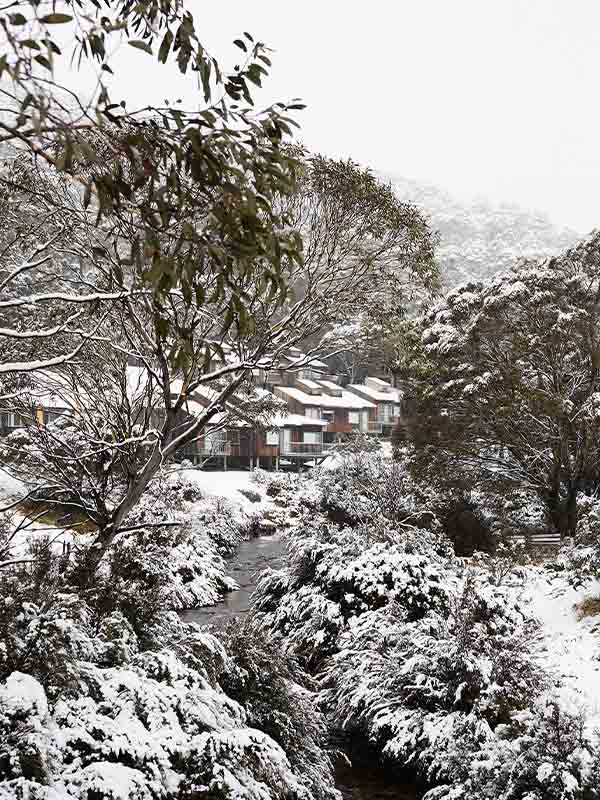
We stopover in Thredbo to stretch our legs on Australia’s highest peak, hiking through alpine meadows strewn with granite outcrops and wildflowers. And we amble through snow gum forests that hug the Thredbo River on a track that starts right outside our digs.
With its loft bedroom kitted out with In Bed linens, a Japanese-inspired onsen and an uninterrupted view of Mt Kosciuszko, The Eastern Thredbo Village’s Cedar Cabin is heaven for connoisseurs of both design and the outdoors, rivalled only in style by its sister Oak Apartment. Its balcony is the perfect place to perch and contemplate our surrounds over a cup of coffee before continuing.
Khancoban
The Alpine Way winds for 90 more scenic minutes to Khancoban in the foothills of the Snowy Mountains, where we can choose to explore further: the Snowy Valleys Way forks from here – west to Beechworth in Victoria’s High Country and north to Gundagai in NSW’s Riverina.
Distance:
175 kilometres.
Words by Imogen Eveson
16. Hobart to Cradle Mountain, Tas
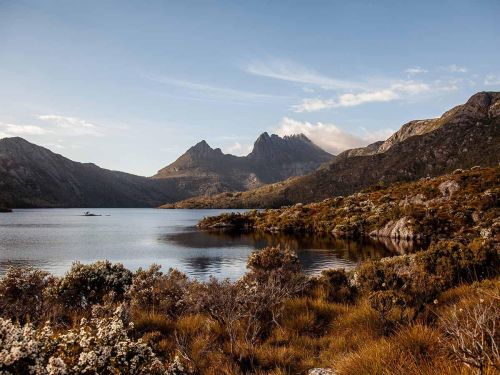
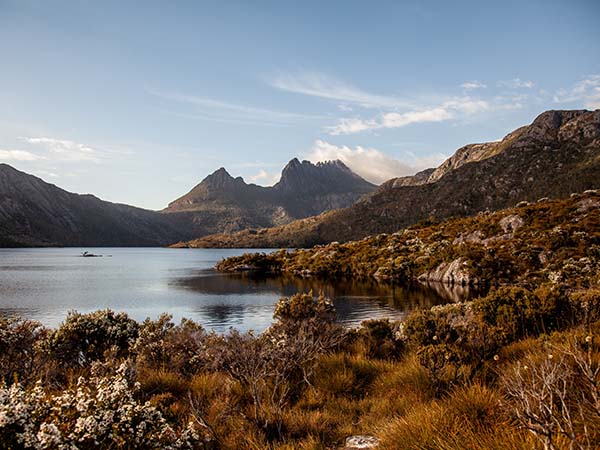
Synonymous with Tasmania’s great outdoors, Cradle Mountain – Lake St Clair National Park is on many nature lovers’ lists. It’s on mine and my eldest son’s as we depart Hobart, hiking boots packed, the GPS set for Sheffield.
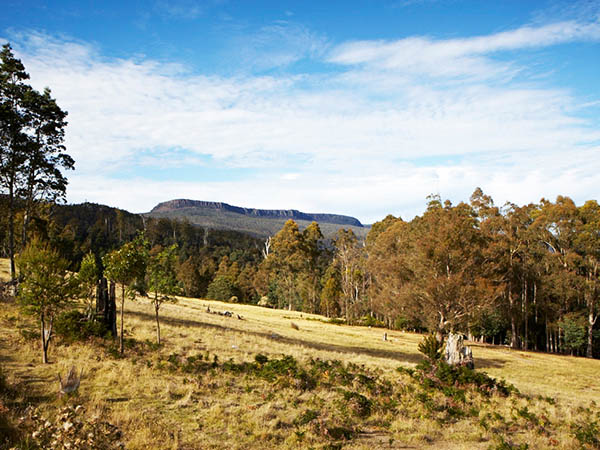
We take the slow and scenic route through the Central Highlands and arrive at the gateway town, which doubles as an outdoor gallery with over 140 murals.
The impressive craggy face of Mt Roland is our silent neighbour as we explore the region and make day trips to Cradle Mountain, an easy 45 minutes’ drive away.
Distance:
321 kilometres
Stay:
On the slopes of Mt Roland near Sheffield, Silver Ridge Retreat has nine self-contained cottages surrounded by wilderness.
Words by Jennifer Johnston
17. The Nullarbor
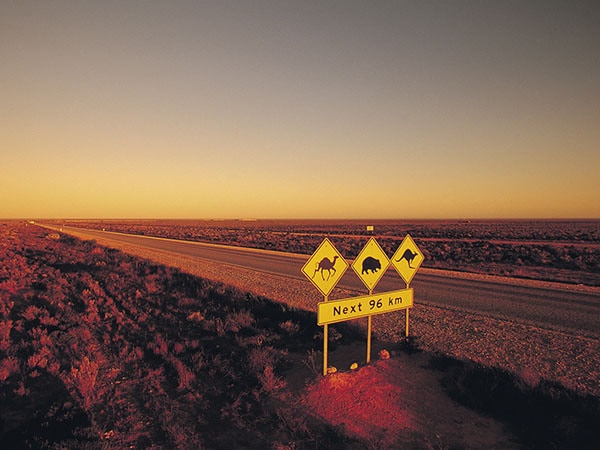
When I decided I wanted to cross the Nullarbor a friend gave me the best advice. What they said changed everything about the way I planned and performed the journey. It was, quite simply, “stop and see everything".
First up, I eliminated time constraints. Also, I went solo. I knew that, chances were, this was a once-in-a-lifetime road trip and I didn’t want anything or anyone pressuring me to pick up the pace.
Ceduna to Point Sinclair
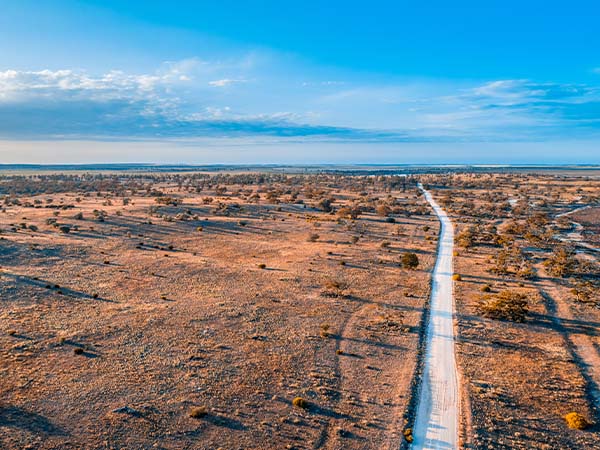
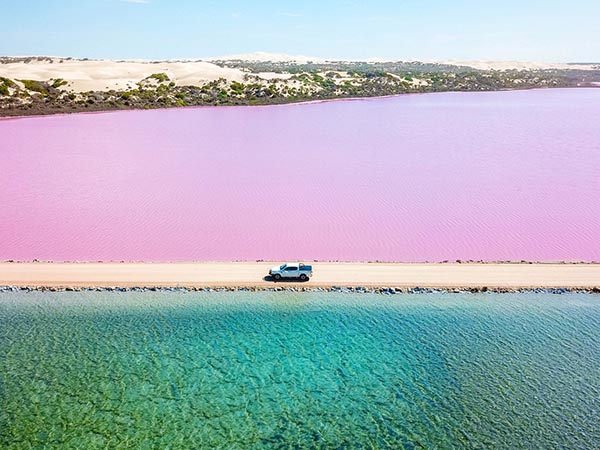
Ceduna, on Wirangu Country, is the Nullarbor’s most eastern town. After oysters and chilled wine at a roadside bar, I headed south down an unsealed road towards Point Sinclair and Cactus Beach. Along the way, I passed between a grey and a pink lake and wondered if I was tripping.
Head of Bight
An hour’s drive west of Yalata community is Head of Bight. Southern right whales can seasonally be seen there but I spied a white pointer at sunrise.
Eucla
From there it took me eight hours to travel the 200-kilometre stretch to Eucla. Stopping at all six lookouts on the world’s largest limestone karst where the Bunda Cliffs drop into the pounding Southern Ocean was my kind of way to spend a whole day.
That afternoon I crossed into Western Australia and camped on Mirning Country under the biggest, starriest sky. To me, there’s no better accommodation on the Nullarbor.
Still ahead lay adventures to Weebubbie Cave, sand-logged Eucla Telegraph Station and a 20-rung ladder descent into Cocklebiddy Cave. I can’t even tell you how many more days that took and it doesn’t matter anyway. It was never about that.
Distance:
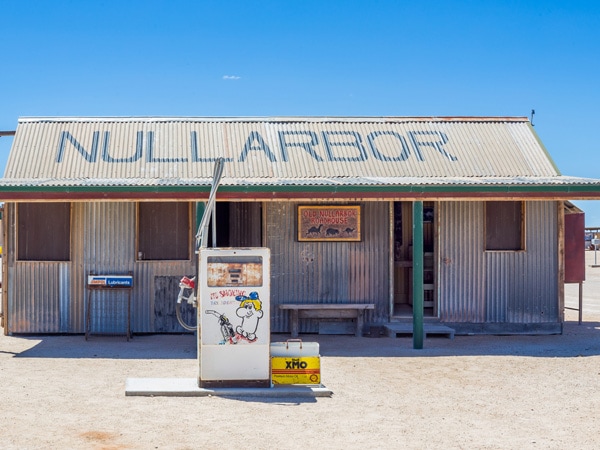
Eyre Highway (A1) from Ceduna SA to Norseman WA is 1200 kilometres.
Words by Elspeth Callender
18. Mighty Murray River Drive
Weaving its way through three states – NSW, Victoria and South Australia – the mighty Murray River can be navigated by water, of course, but the journey along and over it by road offers up the chance to really understand the significance of its presence on the landscape and to those who dwell close to it.
Albury
Aim to start the journey in the twin towns of Albury on the NSW side of the border or Wodonga on the Victorian side, and make sure to build in at least a day to explore them; Albury is a wonderfully cosmopolitan spot with art galleries, fine-dining restaurants like Bistro Selle and boutique accommodation such as Circa 1928, housed in a former Art Deco bank.
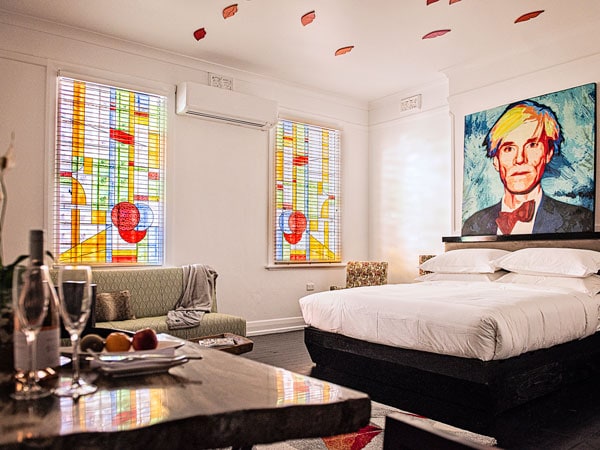
Moama & Echuca
Setting off, it is a 227-kilometre drive to the border town of Moama (twinned with Echuca on the opposite side of the river in Victoria), but there are ample diversions along the way to stretch this leg out to a two-day itinerary.
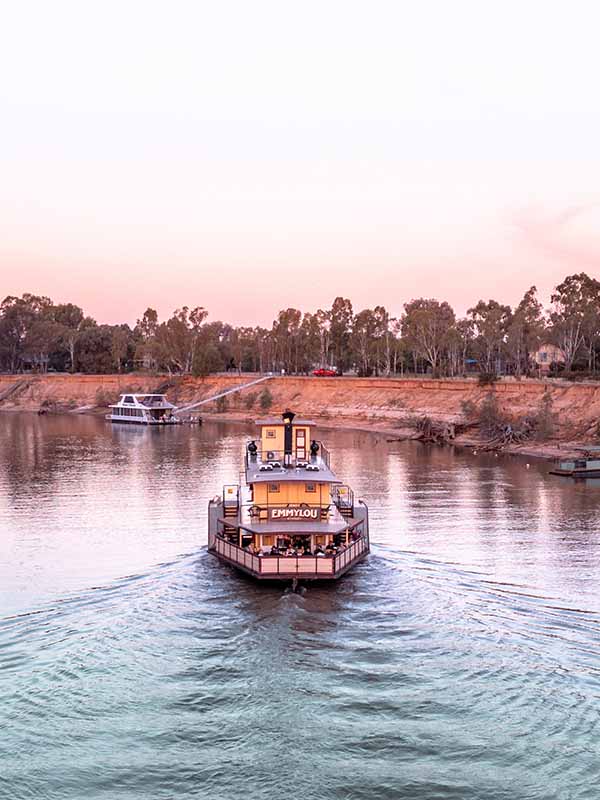
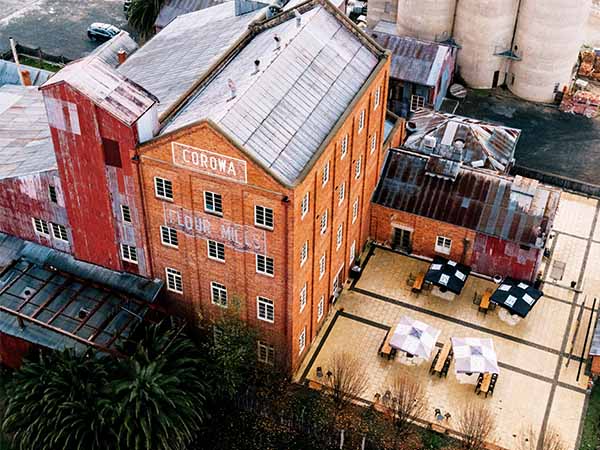
Corowa, Yarrawonga & Lake Mulwala
Corowa, with its modest streetscape dominated by the heritage-listed Corowa Flour Mill (it’s now a whisky distillery and chocolate shop, so well worth the stop for takeaway); Yarrawonga, where Rich Glen Olive Estate produces its award-winning olive oils; and the laid-back holiday town of Lake Mulwala are all worth the time.
Driving the unrelentingly flat landscape, with its golden fields of lucerne and long-dead river red gum trunks forming eerily beautiful sculptures, it’s impossible to know when you are in one state or the other as the road traces the river, which has no inclination to be restricted to being just a line on a map.
Mildura to Goolwa
Beyond Moama/Echuca, the road continues to the Victorian fruit bowl of Mildura, and then over yet another border into South Australia towards Renmark and coming to a conclusion at the mouth of the Murray in Goolwa.
Weekly travel news, experiences
insider tips, offers, and more.
Distance:
1045 kilometres, give or take a few clicks.
Words by Celeste Mitchell
19. The Great Barrier Reef Drive
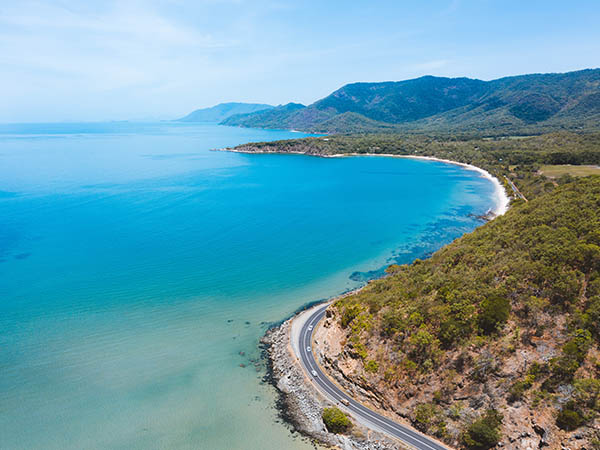
Playlist choice is important for this one, because you’re never going to forget this road trip. With mountains to your left plunging into the Coral Sea to your right, the ocean-hugging tarmac between Palm Cove and the eco-certified Port Douglas is unforgettable road real estate.
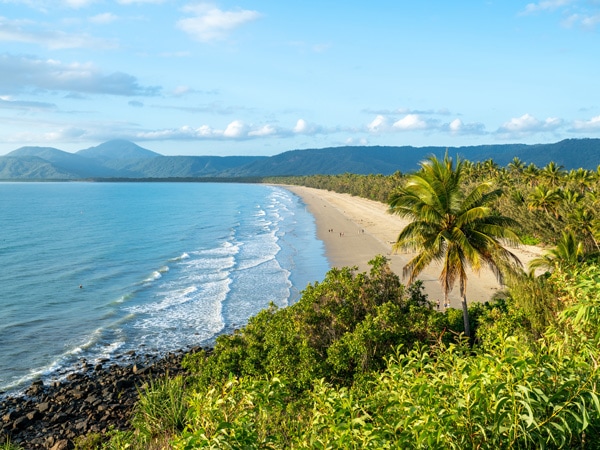
It’ll only take you about an hour, end to end, but factor in detours to connect with Kuku Yalanji Traditional Owners and plunge into a pool at Mossman Gorge, or sail to Low Isles from Port Douglas to snorkel over coral gardens.
Spot crocodiles as you cross the Daintree River on the car ferry and drive the seam between two World Heritage-listed sites to reach the pinnacle.
Distance:
140 kilometres
Stay:
At the stunning new-look Silky Oaks Lodge.
Words by Celeste Mitchell
20. Adelaide to Ikara/Flinders Ranges
Outback drives don’t come more elemental than the one to and through South Australia’s majestic Ikara/Flinders Ranges National Park.
From Adelaide it is a 5.5-hour drive ever northwards to reach the park and the magnificence that is Wilpena Pound.
Known as Ikara in the language of the Adnyamathanha people, and meaning ‘meeting place’, the name hints at the deep cultural significance that this awe-inspiring natural wonder offers to those who have dwelt here for thousands of years.
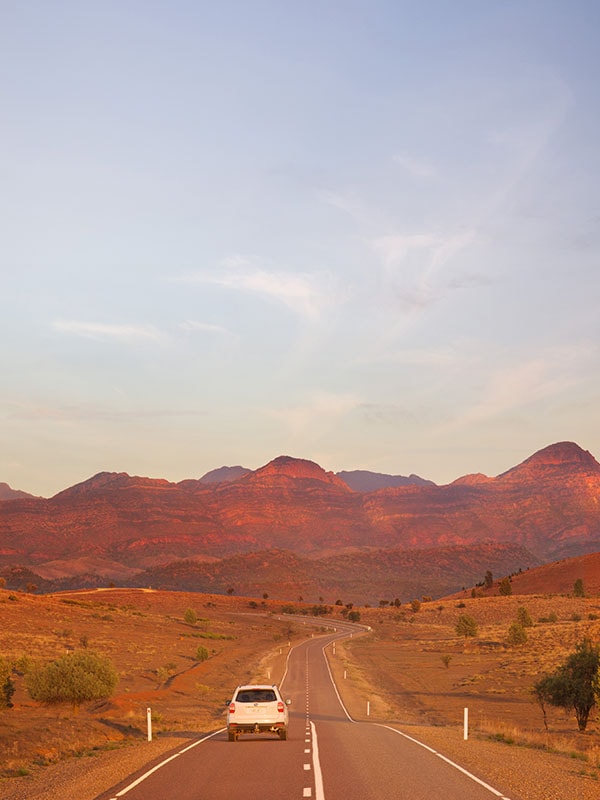
Exploring this lunar landscape can involve everything from hikes to scenic flights to tracing Aboriginal Dreaming seams, and should be suitably indulged in over numerous days.
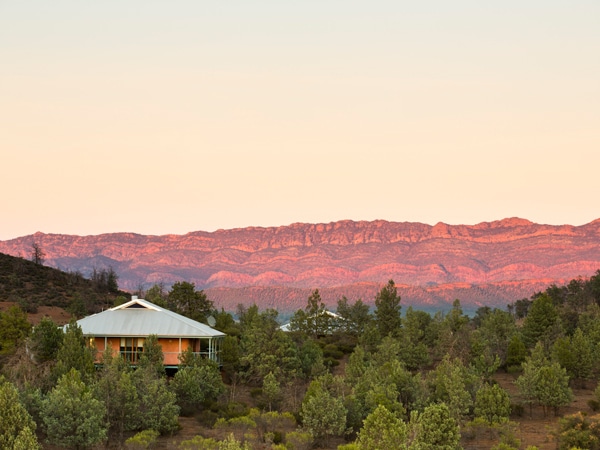
Luckily there are plentiful accommodation options that not only provide a comfortable (even luxurious) base, but also show due respect to the beauty and history of this truly unique landscape, from Wilpena Pound Resort to Rawnsley Homestead to Arkaba.
Distance:
Roughly 450 kilometres from Adelaide to Ikara/Flinders Ranges National Park.
21. Great Ocean Road, Vic
Download our beautifully illustrated map of the Great Ocean Road and Geelong.
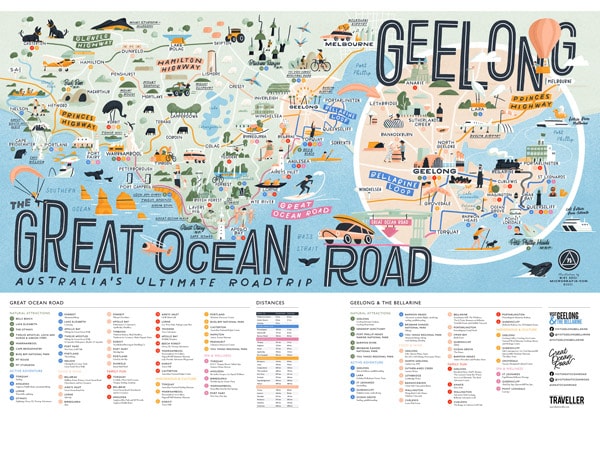
Illustration: Mike Rossi @micro.grafik
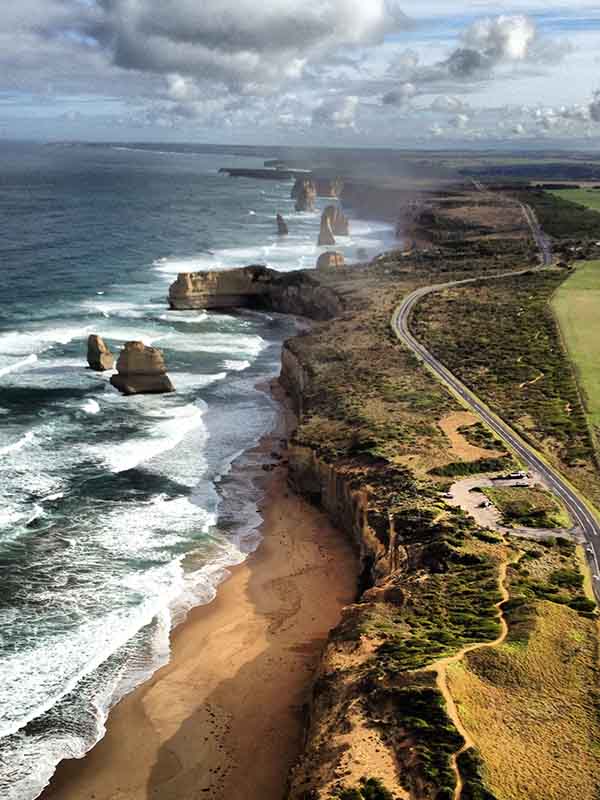
With such icons of nature as the 12 Apostles, the Otways and not to mention the sheer undulating splendour of Victoria’s rugged coastline as it wends its way west of Melbourne to prioritise on your Great Ocean Road itinerary, you might forget that one of Australia’s most famous road trips also makes for a pretty great culinary journey. And it doesn’t take long to get going.
Lorne
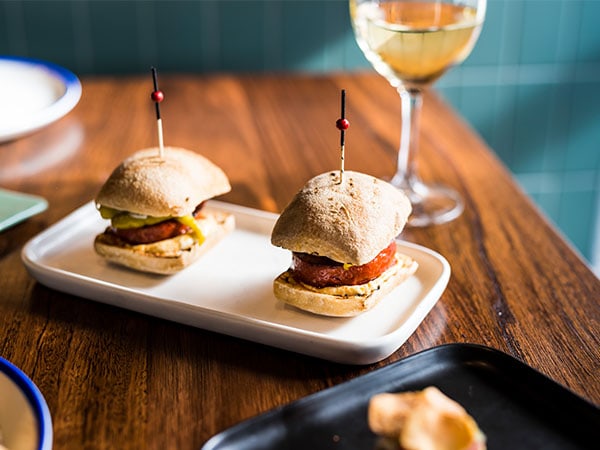
Make a date with MoVida Lorne, where Spanish flavours are brought to life with local produce that befits this seaside town with a hint of the Mediterranean about it.
Wye River
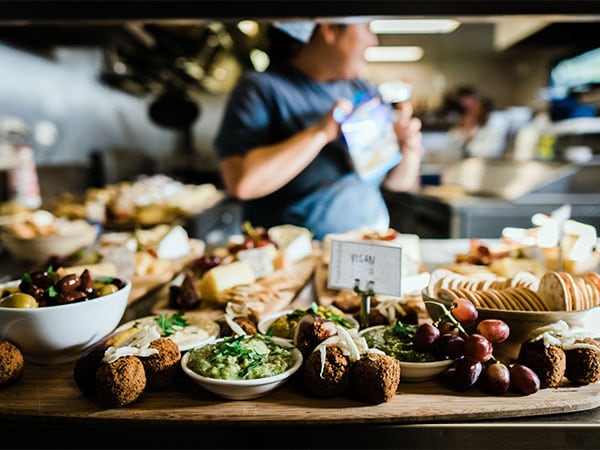
Or meander a further half hour to Wye River, where Wye General Store serves as a dynamic hub for locals and a destination, rather than a pit stop, for road-trippers in itself with its on-trend all-day brunch menu and geographically blessed location.
Port Campbell
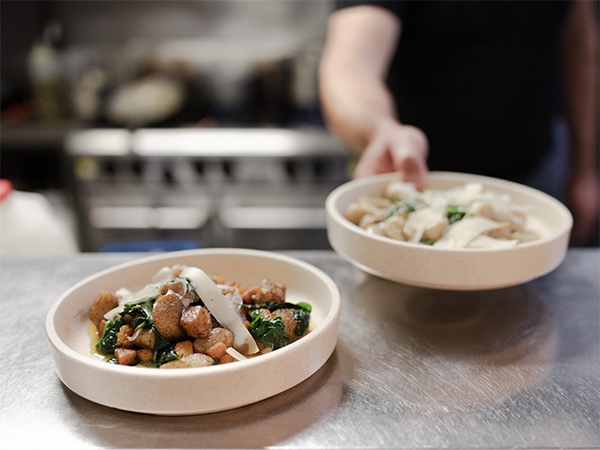
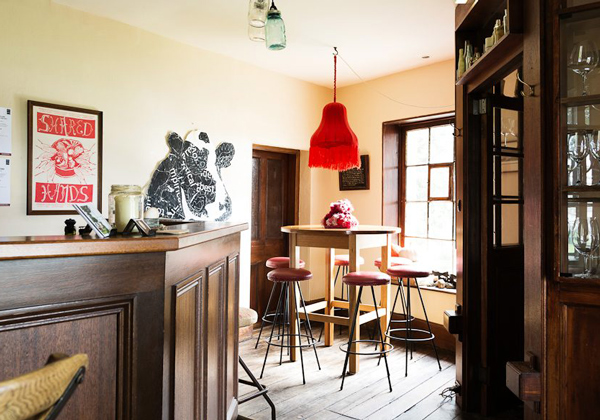
In colourful Port Campbell, you’ll find Forage on the Foreshore, a heartfelt family-run restaurant that does exactly what it says on the tin; its all-day menu hinges on ingredients that are grown, produced or foraged locally on the Great Ocean Road and surrounding hinterland.
Warrnambool
Further west in Warrnambool, Pavilion Café & Bar encapsulates Aussie beach life from its lofty waterfront position in an architectural building: deck poised to soak in the sunshine and sea air, great coffee and an ocean- and paddock-to-plate menu.
Port Fairy
Then drop anchor in the historic fishing village of Port Fairy, imbued with the creative spirit of its community: Merrijig is Victoria’s oldest inn, serving up fresh, seasonal fare from its kitchen and quaint accommodation, while the old bluestone Oak & Anchor Hotel has been recently reimagined as boutique accommodation with a bar and restaurant to boot.
Distance:
Lorne to Port Fairy is 232 kilometres.
22. The Big Lap
The iconic Big Lap is the journey taken to circumnavigate the country at its edge, travelling mainly on Highway 1, which clocks in at about 14,500 kilometres and links almost every mainland state and territory capital.
The route
Considered the longest national highway on Earth, it includes the Princes Highway, Eyre Highway, Great Northern Highway, Stuart Highway, Bruce Highway and Pacific Highway, among others.
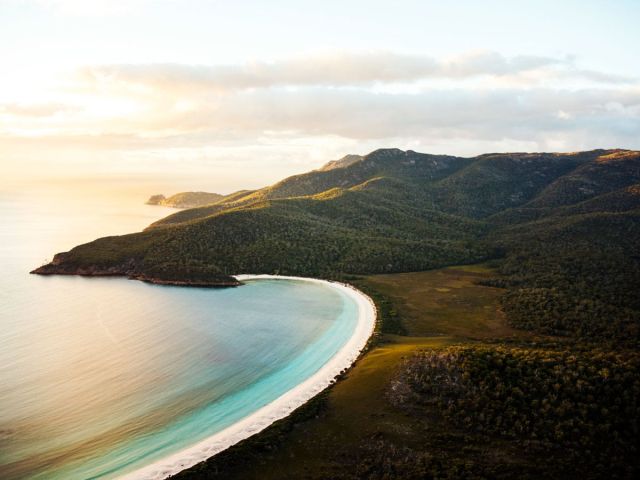
Tasmania is an added extra; start in Launceston, take the A10 from Strahan to Hobart, then the Great Eastern Drive up to Freycinet, before looping back in to where you started (adding 890 kilometres to your total).
How long will it take?
As for how long the whole thing will take, you should allow 10 to 12 months to really get the most out of the experience, and even then you probably won’t see everything. Maybe it should be refashioned as the Big Laps.
Stay:
How to pick one location in a year-long odyssey of amazingness? Let’s just say sleeping under the canopy of the southern skies in a tent, van or swag is probably the most uniquely Australian accommodation you can find.
Keep reading our special Top 100 Road Trips in Australia editorial series.
Want to see more stories from Australian Traveller in your Google search results?
- Click here to set Australian Traveller as a preferred source.
- Tick the box next to "Australian Traveller". That's it.

Australian Traveller
View profile and articles