The top places you should stop along the Nullarbor

hero media
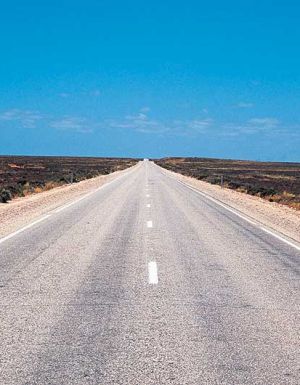
The Nullarbor crossing is infamous among road trippers, with legends of how monotonous the 1256-kilometre route across southern Australia can be.  But there is plenty to surprise travellers embarking on the journey.

From cool ‘outback’ pubs and awesome ranch-style campsites to eerie horror-movie-style motels you should drive straight past, the Nullarbor is an iconic Aussie road trip that cements itself in your subconscious. Dismiss the rumours of mind-numbing boredom, get the music cranking and prepare yourself for a sometimes beautiful but often quirky journey.

Don’t miss: Driving the Nullarbor in summer: what you need to know

Your first stop in the east: Ceduna

There’s not much in Ceduna, South Australia, except a pretty foreshore, jetty and basic services, but it’s the last big-ish town you’ll come across before you head west and, therefore, the eastern launching point for any adventure across the Nullarbor. This is where you fill up on fuel (it’s worth comparing prices at the few service stations), stock up on groceries and ensure you have plenty of water for the journey.
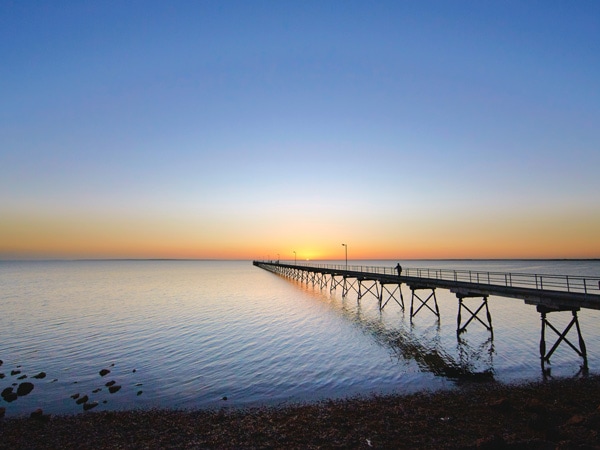
Ceduna Jetty, SA
Ceduna in SA is the last big-ish town you’ll come across. (Image: South Australia Tourism Commission)

It’s also wise to pop into the Visitor Information Centre, as the staff members are a wealth of knowledge and you can pick up a detailed paper map to help you plot your route and number of travel days (four is a good amount).

Surfers’ secret: Cactus Beach

You’d be forgiven for thinking you’d stepped onto the set of a 1980s surf doco when arriving at Cactus Beach, officially called Point Sinclair Camping Ground. It’s a half-hour detour (21km) off the Eyre Highway at Penong but it’s worth it. Cactus is one of the first accommodation options after Ceduna and a highlight for any ocean-loving road-tripper.
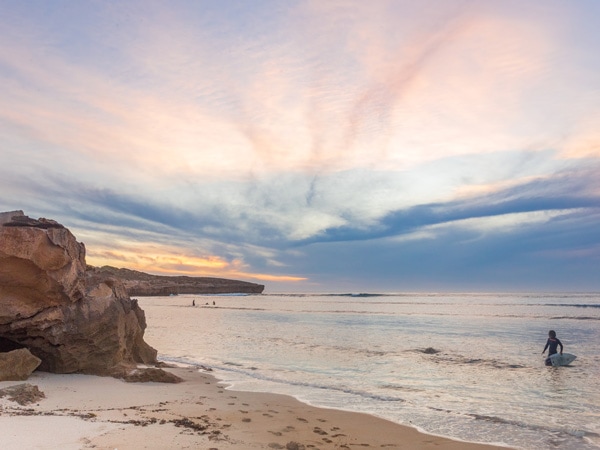
Cactus Beach SA
Cactus Beach is a half-hour detour but worth it for the surf and camping spot. (Image: Michael Waterhouse Photography

Picture vintage caravans and 4WDs protruding from coastal scrub just metres from roaring waves that have attracted surfers for decades. Of course, you don’t have to camp here – you could just come for the surf – but the campsite is cool, with firewood topped up daily, a rudimentary camp kitchen where wetsuits and garlands of shells hang side by side, and two cold showers, including a “little old ladies’ shower" where privacy is guaranteed and wetsuits prohibited. Around the corner from the campground is Port Le Hunte, a wharf and shark-netted swimming area.
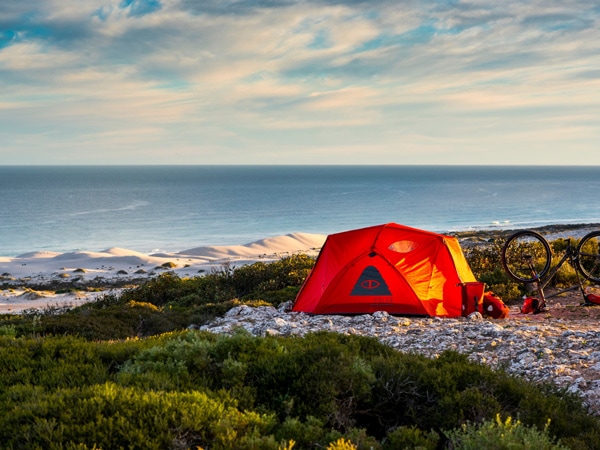
Camping at Eyre Peninsula
There are plenty of good camping spots by water during this part of the journey. (Image: Che Chorley)

Don’t miss: Crossing the Nullarbor: your top questions answered

Need tips, more detail or itinerary ideas tailored to you? Ask AT.

AI Prompt

Sand dunes & history: Fowlers Bay

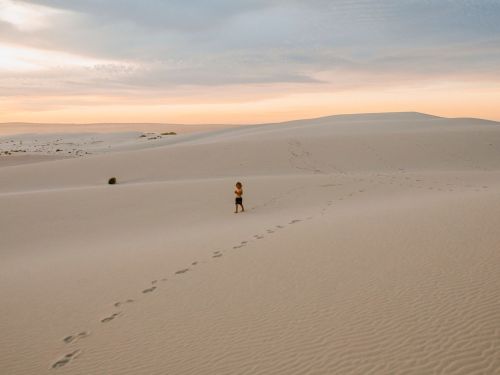
If you’re fascinated with small Aussie towns then you’ll find Fowlers Bay one of the most curious stops along the Nullarbor. Odd in appearance due to the towering sand dunes encroaching on the buildings and the empty streets, this little-known town offers a peaceful respite from the bitumen. Named by English navigator Matthew Flinders in 1802, Fowlers Bay consists of a mix of historical stone houses and ramshackle fishing shacks, with a quiet beach, wharf and general store where you’ll be able to grab a cuppa and bite to eat.
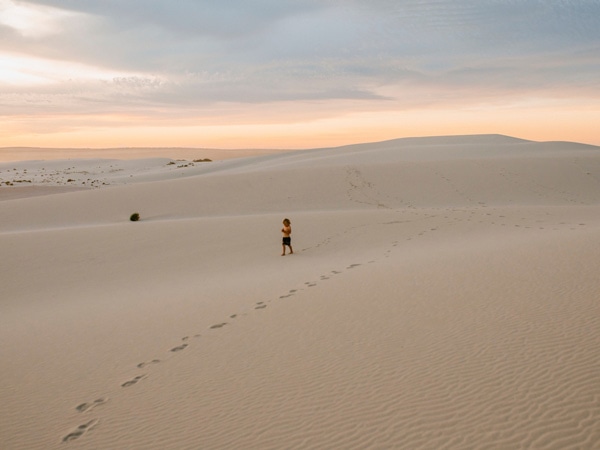
Sand dunes at Fowlers Bay Conservation Park SA
Visit the towering sand dunes of Fowlers Bay Conservation Park. (Image: Naomi Mackie/@boys_run_free)

There are few people about the day I visit, meaning we share the foreshore with only a handful of other road-trippers and enjoy a bayside lunch before scaling the nearby dunes. From the top of the dunes, there are great 360-degree views, so make sure you take your camera. This once active port remains a good place to cast a fishing line off the wharf or beach, and has a reputation for great whale watching between May and October. The dirt road in can be heavily corrugated so take it slow and give yourself plenty of time to get there.
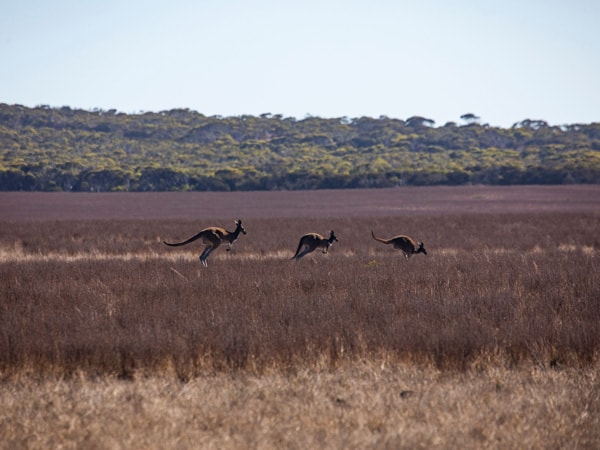
Kangaroos in Fowlers Bay SA
Spot the wildlife along the road as you pass through Fowlers Bay. (Image: Kane Overall)

After Fowlers Bay, you’ll pass through the long stretch known as Yalata. Keep an eye out for the great native animal road sign that’s worth a selfie.

Roadhouse stops: Nullarbor Roadhouse & more

There are plenty of roadhouses along the Nullarbor where you can top up your fuel, stretch your legs and fill your belly. One of the best is Nullarbor Roadhouse, where the manager is friendly and you can grab a coffee and slice of cake. It’s also a good spot to stay the night (there’s a motel and campground) as there’s a tidy little bar with a pool table and pinball machine. Be sure to wander over to the still-standing original roadhouse from the 1950s before moving on. Another great roadhouse full of character is Cocklebiddy Motel, over the border in WA. Again, there’s a quirky little bar and diner.
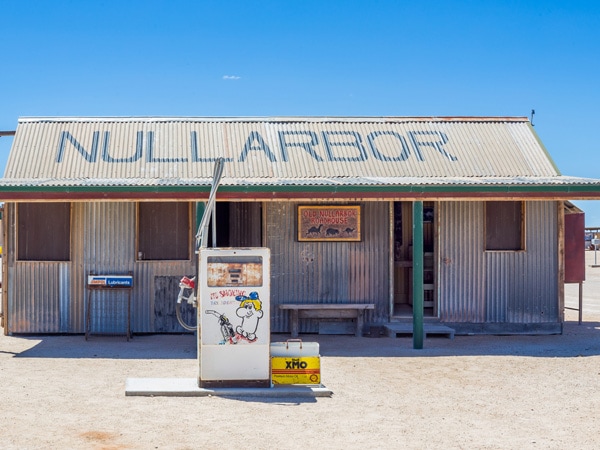
Nullarbor Roadhouse is one of the best places to stay or stop for food when crossing the Nullarbor. (Image: Michael Waterhouse Photography)

Caiguna is a somewhat weird stop and reminiscent of the roadside motels you see in American horror films – though, I’m sure they’re not like that inside – and besides, some might find that concept thrilling. Although the roadhouse itself is large and clean, the playground in front is a little dilapidated and looks somewhat unsafe; best not to linger.

Weekly travel news, experiences
insider tips, offers, and more.

The end of the line: Norseman

Norseman marks the end of the Nullarbor but it’s no oasis. This town is tiny and travellers still have a couple of hours’ driving before reaching the worthy stops of Kalgoorlie to the north or Esperance to the south. What Norseman is good for is more fuel, grabbing essential groceries and letting the kids run amok in the large public playground. And, of course, celebrating the official end of the Nullarbor crossing.
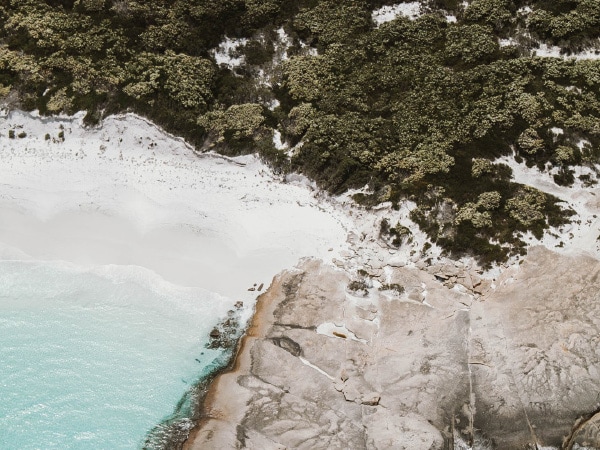
The Esperance landscape
Continue on from Norseman to Esperance in WA.
More: 10 Greatest Road Trips in Australia
Jennifer Ennion
Jennifer Ennion is a freelance travel and ski journalist who loves encouraging people to spend more time outdoors. From snorkelling with belugas in sub-Arctic Canada to hiking the Himalayas, Jennifer is constantly searching for stories that inspire readers to push their boundaries.
View profile and articles

From coast to bush: these are Gippsland’s best hikes

    Michael Turtle Michael Turtle

    Video credit: Tourism Australia

    From coast to mountains, hiking in Gippsland offers a stunning array of landscapes, with trails that take you deep into the region’s heritage.

    I step out onto the sand and it cries out underfoot. Kweek! I take another step and there’s another little yelp. Screet! Picking up the pace, the sounds follow me like my shadow, all the way down to the water. It’s obvious how this spot got its name – Squeaky Beach – from the rounded grains of quartz that make the distinctive sounds under pressure.

    For many, Wilsons Promontory National Park is the gateway to Gippsland, and the best way to explore it is by walking its network of hiking trails, from coastal gems such as Squeaky Beach through to the bushland, among the wildlife. But it’s still just a taste of what you’ll find on foot in the region.

    Venture a bit further into Gippsland and you’ll discover the lakes, the rainforest, and the alpine peaks, each changing with the season and offering summer strolls or winter walks. Just like that squeaky sand, each step along these trails has something to tell you: perhaps a story about an ancient spirit or a pioneering search for fortune.

    The best coastal hikes in Gippsland

    sunset at Wilsons Promontory National Park
    Wilsons Promontory National Park is a sprawling wilderness with many coastal bushland trails. (Image: Mark Watson)

    Wilsons Promontory National Park (or ‘The Prom’, as you’ll end up calling it) is an easy three-hour drive from Melbourne, but you might ditch the car when you arrive, with much of the park’s 50,000 hectares accessible only by foot. From the inky water of Tidal River (dyed dark purple by abundant tea trees), I like the easy walks along the coast, among lichen-laden granite boulders, to golden beaches and bays.

    a couple on Mount Oberon
    Panoramic views from the summit of Mount Oberon. (Image: Everyday Nicky)

    The trail to the panoramic views at the summit of Mount Oberon is a bit harder, up steep timber and granite steps, but it’s a popular 6.8-kilometre return. The more remote hikes are found through the open banksia and stringybark woodland of the park’s north, or along the multi-day Southern Circuit, which ranges from about 35 to 52 kilometres, with sunrises and sunsets, kangaroos and cockatoos, and maybe even whales.

    a golden sand beach at Wilsons Promontory National Park
    Walk ‘The Prom’s’ golden sand beaches. (Image: Tourism Australia/Time Out Australia)

    You might also see whales on the George Bass Coastal Walk, even closer to Melbourne on the western edge of Gippsland. This dramatic seven-kilometre trail along the clifftops takes in sweeping views of the wild ocean, occasionally dipping down from grassy green hills to coastal gullies and a secluded beach. It also now links into the Bass Coast Rail Trail for an extra 14 kilometres.

    the George Bass Coastal Walk
    George Bass Coastal Walk trails for seven kilometres along clifftops. (Image: Visit Victoria/Time Out Australia)

    Over at the eastern edge of Gippsland, in Croajingolong National Park, you can wander along the lakeshores beneath koalas and around goannas (I keep my distance since one chased me here!). For those who are even more adventurous, the park is also the starting point for the 100-kilometre Wilderness Coast Walk, usually done over seven days.

    the Croajingolong National Park, Gippsland
    Wander along the lakeshores in Croajingolong National Park. (Image: Tourism Australia)

    The best bush hikes in Gippsland

    the Baw Baw National Park
    The alpine heath of Baw Baw National Park. (Image: Everyday Nicky)

    Deep in the Long Tunnel Extended Gold Mine at Walhalla, mining guide Richard tells me how this small town in the mountains east of Melbourne boomed when prospectors found gold here in 1862. These days, you’ll find most of the town’s treasure – its heritage – above ground, with the Walhalla Tramline Walk a wonderful way to explore it.

    Just seven kilometres long, the walk takes you through decades of Gold Rush history, following the original rail trail from lush bushland to the mining sites, and through the charming village of just 20 residents with its wooden cottages and old shopfronts adorned with turn-of-the-century advertising posters. Blazing a trail where trailblazers once opened up the region, this is also the starting point for the 650-kilometre Australian Alps Walking Track.

    Nearby, Baw Baw National Park has walks through gnarled snow gums and alpine heaths that show off the colourful wildflowers in summer and the pristine carpet of white in winter. Several trails are perfect for snowshoes, including a 45-minute route from St Gwinear up to vast views across the Latrobe Valley.

    Further up into the mountains, the Toorongo and Amphitheatre Falls Loop Walk is an easy 2.2-kilometre path that serenades you with the sound of flowing water as you pass mossy rocks and tree ferns en route to two sets of waterfalls cascading over boulders in the remote wilderness.

    The best cultural hikes in Gippsland

    the Mitchell River National Park, Gippsland
    Hike the Mitchell River National Park. (Image: Parks Victoria/Grace Lewis)

    Across a pool in a natural sandstone amphitheatre, deep within a cave behind a waterfall, it’s said the Nargun has its lair. A fierce creature, half human and half stone, that abducts children and can’t be harmed by boomerangs or spears, the story of the Nargun has been told around the campfires of the local Gunaikurnai people for generations.

    As a culturally significant place for women, hikers are asked not to go into the Den of Nargun, but a 3.4-kilometre loop walk leads you through a rainforest gully to the entrance where you can feel the powerful atmosphere here in Mitchell River National Park, along Victoria’s largest remaining wild and free-flowing waterway.

    the bee-eaters at Mitchell River National Park
    Bee-eaters at Mitchell River National Park. (Image: Parks Victoria/Grace Lewis)

    The Den of Nargun is part of the Bataluk Cultural Trail, a series of important traditional Gunaikurnai sites through central Gippsland. Another location is Victoria’s largest cave system, Buchan Caves Reserve, with trails to important archaeological sites of human artefacts up to 18,000 years old. The FJ Wilson Interpreted Walk includes the naturally sculpted white limestone steps of the 400-metre-long Federal Cave, while the Granite Pools Walk goes among tall timber and moss-covered gullies.

    the ancient rainforest of Tarra-Bulga National Park
    The ancient rainforest of Tarra-Bulga National Park. (Image: Josie Withers)

    Also important to the Gunaikurnai people is Tarra-Bulga National Park, known for its ancient myrtle beeches and enormous mountain ash trees. Just 40 minutes return, the Tarra Valley Rainforest Walk offers a taste of this verdant landscape, while the Grand Strzelecki Track takes you deep into the lost world of forest giants on an epic 100-kilometre trail rich with tradition.

    A traveller’s checklist

    Staying there

    the WildernessRetreats in The Prom
    Wilderness Retreats in The Prom. (Image: Christian Pearson)

    Wilderness Retreats in Wilsons Promontory offers glamping-style tents with luxurious queen beds. Star Hotel is a reconstruction of a Gold Rush-era hotel from 1863 in the heart of heritage Walhalla. Caves House is a historic three-bedroom house with views over the Buchan River.

    Eating there

    the Carrajung Estate, Gippsland
    Enjoy a post-hike lunch at Carrajung Estate. (Image: Everyday Nicky)

    Kilcunda General Store serves great coffee and meals of local produce at the George Bass Coastal Walk. Alpine Trout Farm is located near Toorongo Falls in Noojee. Fish for your own lunch and barbecue it with the provided cookware.

    Carrajung Estate is a short drive from Tarra-Bulga National Park. The winery’s restaurant offers a seasonal menu of regional ingredients and you can stay at The Lodge.

    a seafood feast at Carrajung Estate, Gippsland
    The table is set for a seafood feast at the estate.

    Video credit: Tourism Australia