All across the country in regional cities and towns beyond the state capitals, art galleries are thriving – providing travellers with the perfect starting point for exploring a new region.
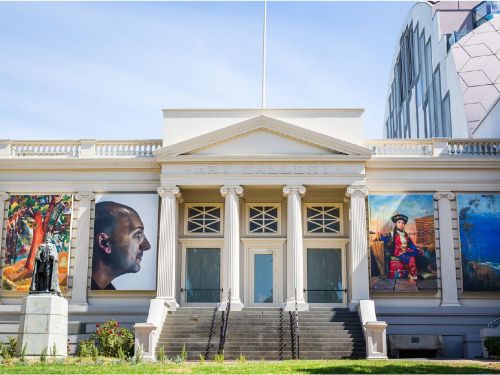
The $60.5 million HOTA Gallery is Australia’s largest public gallery outside a capital city, spanning six levels and more than 2000 square metres of exhibition space. Housed in Queensland’s sun-soaked Gold Coast, it is home to the $32 million City Collection, composed of more than 4400 artworks including those by Australian art royalty like Ben Quilty and Tracey Moffatt and one of the largest collections of Aboriginal and Torres Strait Islander art in regional Australia.
We can find similar stories all across Australia as knockout art galleries in cities and towns outside the state capitals are becoming increasingly dynamic destinations in and of themselves. And despite the enormous challenges posed by the pandemic, momentum is only building in the regional arts space with a suite of major renovations and openings planned for 2021 and beyond. Also in Queensland is the $31.5 million reimagining of Rockhampton Art Gallery within a vibrant new cultural precinct. Meanwhile, in NSW, state-of-the-art Ngunungulla, the first regional art gallery in the Southern Highlands, takes shape on a historic dairy site. In Victoria, the Shepparton Art Museum (SAM) is housed in a bold new building and galleries the country over are getting sleek multimillion dollar makeovers: from Grafton Regional Gallery, in NSW’s famous jacaranda town, to Orange Regional Gallery in the state’s Central West. Plans are afoot, too, for major expansions at Newcastle Art Gallery – Australia’s first purpose-built regional gallery.
Another great drawcard of regional galleries is that they put their First Nations communities at the heart of what they do. “We are part of the oldest living civilisation in the world; this makes it imperative to support and learn about culture and country," says Dr Joanne Baitz, director of Bunbury Regional Art Gallery (BRAG) in Western Australia’s South West. Housed in an iconic pink convent building dating back to 1897, fundamental to its work is its everyday engagement with Noongar curators, artists and arts professionals to educate and to promote Indigenous art in order to fully represent all voices in the region. “We live on this land, we need to know its stories, to understand how to live and work together for the benefit of all," Baitz says. “Art is empowering and educational and a means of addressing difficult issues. It is a great way of unearthing hidden histories."
Keen for more? Plot your course around Australia’s thriving regional cities and centres using their art galleries as your most cultured of guides.
Bendigo Art Gallery, Vic
Bendigo Art Gallery is one of the country’s best regional galleries, and has carved a niche for itself with blockbuster fashion and design exhibitions including Marilyn Monroe and Marimekko: Design Icon 1951-2018.
Established in 1887, Bendigo Art Gallery is also one of the oldest and largest regional galleries in the country and its extensive and varied collection holds work that ranges from the 19th century to the present day, including an impressive array of contemporary art by names such as Patricia Piccinini, Bill Henson and Dale Frank.
While in town, explore the many layers the Victorian Goldfields city has to offer by way of art, history and food (in 2019 Bendigo was designated a UNESCO City of Gastronomy).
Broken Hill Regional Art Gallery, NSW
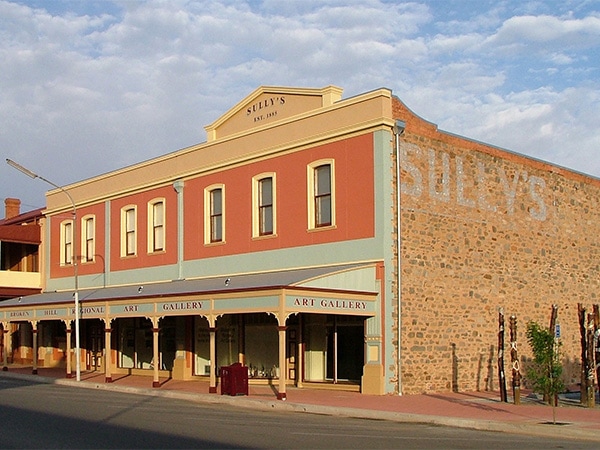
Founded in 1904, the Broken Hill Regional Art Gallery (BHRAG) is the oldest regional gallery in NSW. And just as compelling as the artwork it displays is the building it’s housed in: “Operating from 1885 to 1985, Sully’s Emporium was the longest surviving commercial business in Broken Hill providing much of the heavy machinery and equipment for the development and exploration of Broken Hill’s mineral fields," says gallery and museum manager Tara Callaghan. Today the gallery has a permanent collection worth close to $10 million including works by modern masters like Margaret Preston and Arthur Streeton, contemporary artists such as Elisabeth Cummings and Abdul-Rahman Abdullah, and a fantastic collection of works by leading Indigenous artists including Clifford Possum Tjapaltjarri.
Its annual program includes exhibitions by local artists, touring shows like the Archibald and two prestigious prizes: the Pro Hart Outback Art Prize and the Maari Ma Indigenous Art Awards (MMIAA).
Tweed Regional Gallery & Margaret Olley Art Centre, Murwillumbah, NSW
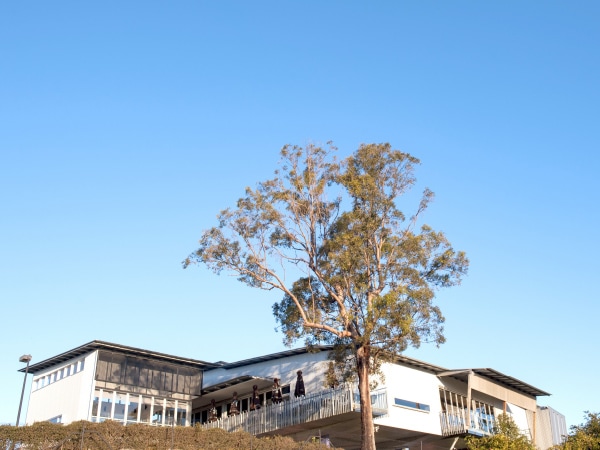
Murwillumbah, located in a green caldera in North Coast NSW’s creative Tweed area, is home to one of the country’s best regional galleries. The architecturally award-winning Tweed Regional Gallery & Margaret Olley Art Centre is set scenically on a hillside outside of town overlooking Wollumbin (Mt Warning). “We’ve got a beautiful building – the setting is extraordinary, the landscape really is amazing," says director Susi Muddiman OAM on one of the many reasons this spot is such a hot destination. Added to that, the diversity of programming across several distinct spaces, including the Margaret Olley Art Centre in tribute to the celebrated painter who attended primary school in Murwillumbah, which includes areas that have been recreated from her famous Paddington (Sydney) home studio.
Need tips, more detail or itinerary ideas tailored to you? Ask AT.
AI Prompt
Griffith Regional Art Gallery, NSW
Another stop on the Archibald Prize 2020 regional tour, Griffith Regional Art Gallery is housed in a distinctive pink Art Deco building, the refurbished Griffith Soldiers Memorial Hall Complex, built in the 1930s in a city designed by Walter Burley Griffin as part of the ambitious Murrumbidgee Irrigation scheme and renowned for its Italian heritage. A small but lovely space with 4.2-metre-high ceilings and natural timber floors of cypress and tallowwood, the gallery is home to two permanent collections, the National Contemporary Jewellery Award Collection and a Couture Collection representing the life’s work of fashion designers Ross Weymouth and John Claringbold. Its ‘Small Goods’ gift shop offers a range of handcrafted and artisan products, made by artists and craftspeople from the region and beyond.
Geelong Gallery, Vic
In 2021, one of Australia’s oldest regional galleries, Geelong Gallery presented the first comprehensive survey of the career to date of one of its homegrown talents – internationally renowned and Melbourne-based street artist RONE. As well as charting his practice from early stencil works through to the complete transformation of abandoned spaces, RONE in Geelong saw the artist transform a room within Geelong Gallery in response to the architecture and history of the building, and the gallery’s collection. “Throughout its 125-year history Geelong Gallery has always supported the art and artists of its time.
There is an enormous sense of pride in celebrating Tyrone (RONE) and his achievements over the past 20 years," says gallery director Jason Smith of this milestone. “Artists inspire their peers and the generations of artists who come after them." And it’s a source of great pride for RONE himself: “It’s still surreal for me that I’m working with Geelong Gallery. Growing up in Geelong and studying across the park at the Gordon TAFE and walking past [it] almost every day… It was always this institutional icon, a level of art that seemed at such a distance from myself even as a creative person," he says. “I just didn’t imagine I would be accepted into such a space at such a level. It still feels like I’m intruding. It’s a huge honour that my work has been accepted into the collection of the Geelong Gallery. And further, that the Gallery has given me the opportunity to reimagine and interpret the pristine space for my show. I hope this inspires and encourages other artists, Geelong artists, to create beyond the traditional gallery offering."
Shepparton Art Museum (SAM), Vic
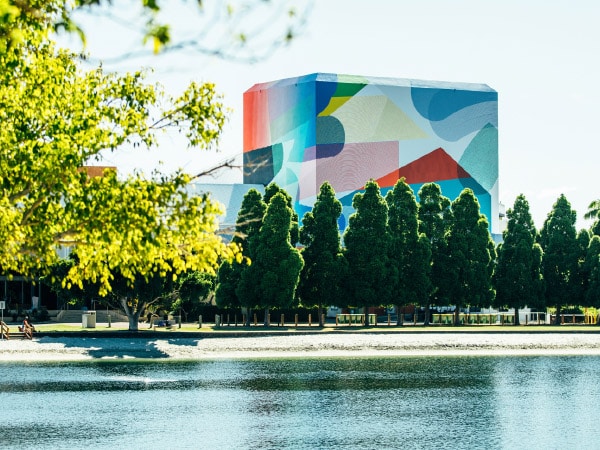
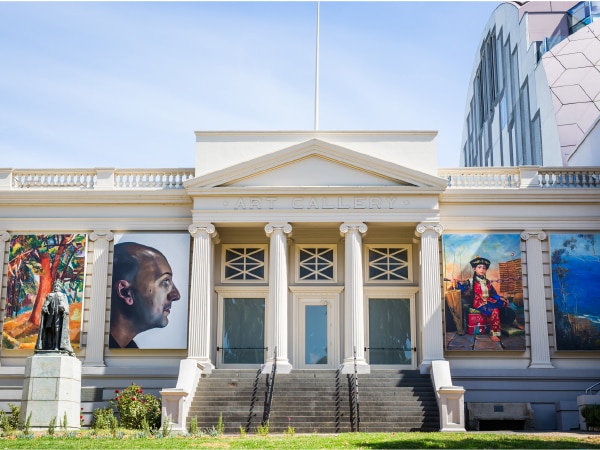
Set on the picturesque Victoria Park Lake, the new $50 million SAM building by Melbourne-based, world-leading design practice Denton Corker Marshall is a striking cube-like form rendered in different metallic finishes that will feature five storeys complete with a rooftop viewing deck. It has become the home of the most significant collection of historic and contemporary Australian ceramics in regional Australia, which includes objects made by the first convict potters and ceramics by Merric Boyd, one of Australia’s earliest studio potters.
Bundaberg Regional Art Gallery (BRAG), Qld
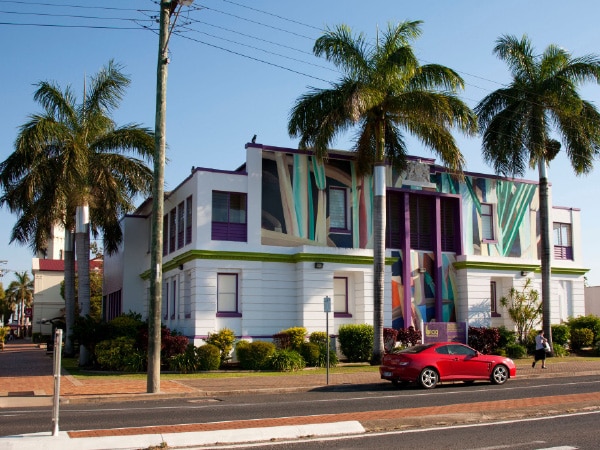
Quite the eye-catcher in the centre of this elegant regional city in the heart of Queensland’s sugar-growing country, Bundaberg Regional Art Gallery is another building with a storied history. It started life as Customs House in 1902 before serving as a bank for 57 years; today one of its concrete bank vaults is used as an installation space.
Benalla Art Gallery, Vic
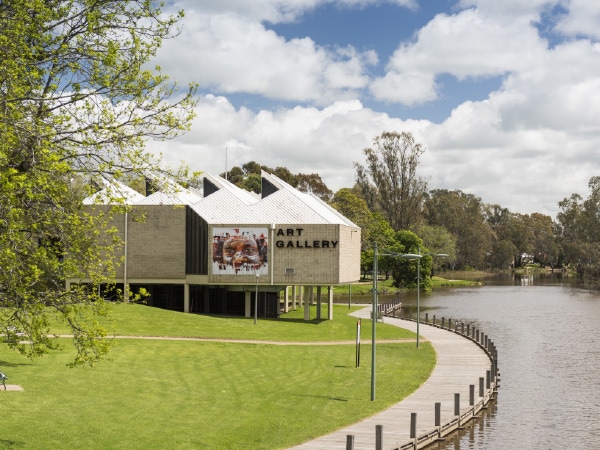
Right in the mix of Victoria’s bushranger country sits Benalla Art Gallery: a striking modernist building overlooking the small city’s lake and botanical gardens. Its permanent collection is an impressive mix of Australian art including a strong representation of the Heidelberg School with works by Arthur Streeton and Frederick McCubbin, and a range of traditional and contemporary Indigenous art including works by leading artists such as Emily Kame Kngwarreye and Long Jack Phillipus Tjakamarra. The gallery also has a great café, Munro and Sargeant – named for the building’s architects – and is a creative hub in the area with its artist talks, workshops and dynamic exhibition program.
Queen Victoria Museum and Art Gallery (QVMAG), Launceston, Tas
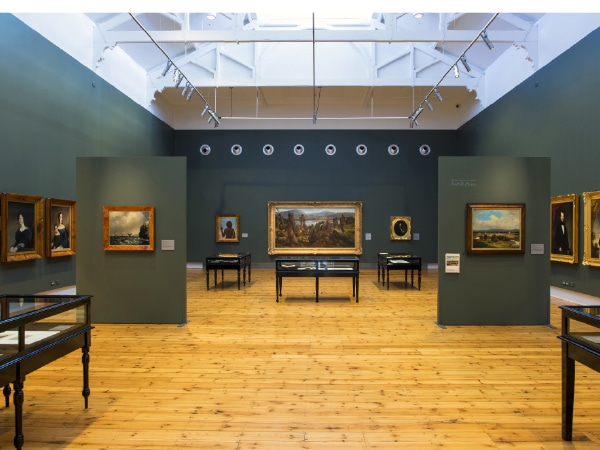
Launceston’s QVMAG is set across two sites: the 1870s-era railway workshop at Inveresk and the 1891 Royal Park Art Gallery building on Wellington Street. Serving as both the city’s creative pulse and gateway to its local history and character, it’s renowned for its collections of Australian colonial art, decorative arts, Tasmanian history and natural science – as well as an excellent gift shop featuring plenty of covetable Tassie design.
Geraldton Regional Art Gallery (GRAG), WA
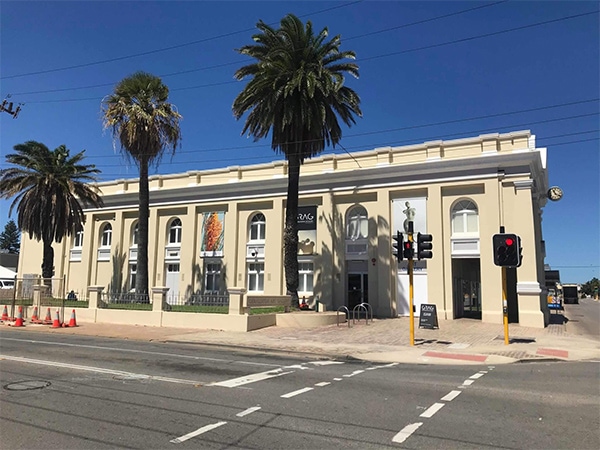
Geraldton Regional Art Gallery serves up arts and culture to WA’s Mid West in a turn-of-the-century Town Hall building. Its stellar collection contains works by the likes of renowned contemporary artist Tracey Moffatt and Badimaya artist Julie Dowling, and sketches of local life by Western Australian artist Elizabeth Durack. The seaside city of Geraldton itself is fast becoming a trendy beach escape so wander the galleries, street art and cafes of the centre before hitting nearby Champion Beach.
Weekly travel news, experiences
insider tips, offers, and more.
Cairns Art Gallery, Qld
Set in a beautiful restored 1936 government building, one of Cairns’ few remaining heritage buildings complete with original terrazzo floor and stained-glass windows, Cairns Art Gallery is one of the largest public galleries in regional Queensland. It presents a contemporary range of exhibitions and interprets the unique history and living cultures of Far North Queensland, and its place in the world’s tropic zone.
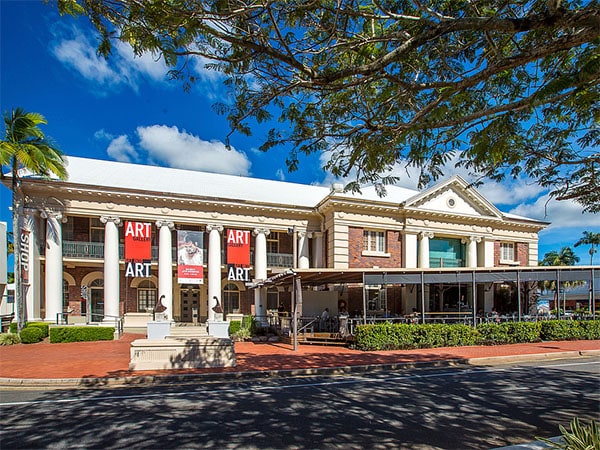
Araluen Arts Centre, Alice Springs, NT
One of Australia’s most remote regional galleries, surrounded on all sides by deserts, the Araluen is the visual art and performance hub of Central Australia and somewhere that is truly of its place. Its vast collection reflects the vitality and diversity of works from the region, including pieces by renowned watercolourist Albert Namatjira. At the heart of Alice Springs’ cultural scene, the centre also hosts the nationally significant Desert Mob exhibition, which presents contemporary Indigenous art from around 30 remote arts centres throughout the NT, SA and WA; as well as the quirky Alice Springs Beanie Festival, held in June.
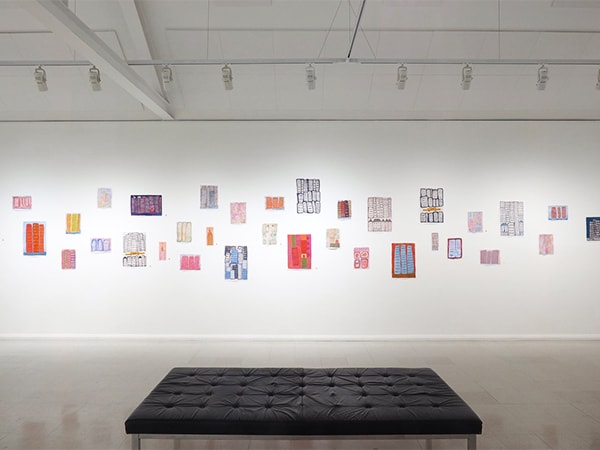
Port Pirie Regional Art Gallery, SA
The old seaport town of Port Pirie, on the shores of the Spencer Gulf, is the gateway to the Flinders Ranges and South Australia’s outback. Its regional gallery, which began life in the old baggage room of the closed local railway station before moving into its dedicated gallery home in 1994, sits within sight of the Southern Flinders Ranges. And so it follows that its collection centres on artists – local, state and national – who have been inspired by the landscape here including Hans Heysen and Lawrence Daws.
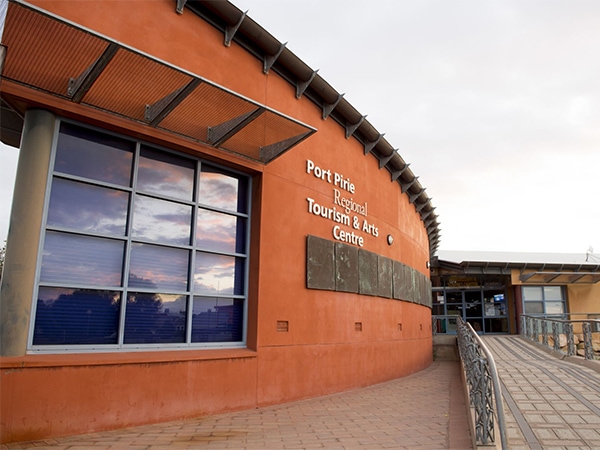
Art Gallery of Ballarat, Vic
Established in 1884, the Art Gallery of Ballarat is one of the oldest purpose-built galleries in Australia. Today its heritage bones are complemented by contemporary extensions, creating a dynamic platform to curate its staggering collection made up of over 11,000 artworks. The gallery’s fabulous shop stocks items by some of Ballarat’s many makers. While in town, explore the creative eateries, such as modern Asian Moon & Mountain, that have opened in the past few years.
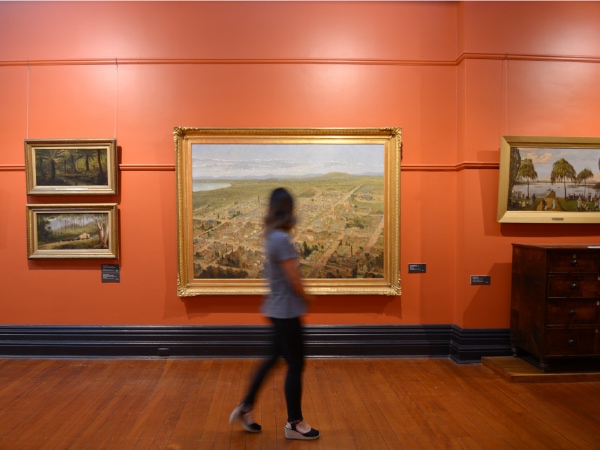
Bank Art Museum Moree (BAMM), NSW
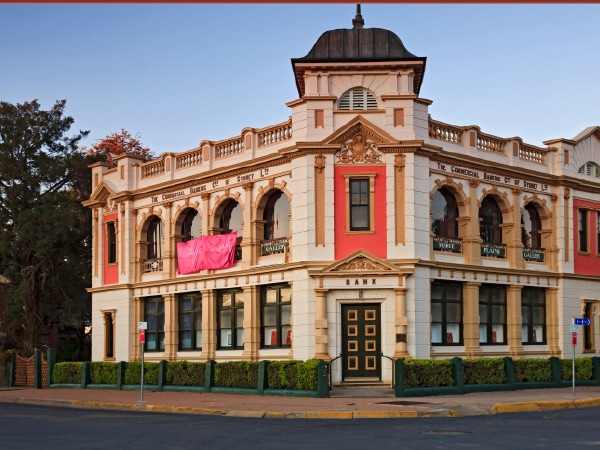
Operating in a beautiful old candy-coloured bank building dating back to 1911, BAMM is a regional art institution with a distinctly contemporary edge; it currently holds the most significant collection of Aboriginal paintings in regional NSW. While in Moree, a progressive town in the state’s northern wheatbelt, don’t miss a dip in its famous artesian waters.
New England Regional Art Museum (NERAM), Armidale, NSW
The excellent NERAM boasts what could just be the most comprehensive overview of Australian art history in regional Australia. At the core of this is the Howard Hinton Collection, which NERAM was purpose-built to house in 1983, with more than 1000 significant works by artists including Arthur Streeton, Margaret Preston and Brett Whiteley. After your visit, sample New England hospitality at craft beer bar The Welder’s Dog or cocktail bar with a twist Charlie’s Last Stand.
Want to see more stories from Australian Traveller in your Google search results?
- Click here to set Australian Traveller as a preferred source.
- Tick the box next to "Australian Traveller". That's it.