10 dreamy summer holidays you can go on in winter

hero media
Switch falling mercury for idyllic warm weather with our favourite year-round sunny escapes.

Step away from the knitwear – summer isn’t done with you yet. While the chill has certainly set in across Tasmania, Victoria, NSW and South Australia, three adventure-charged states remain flooded with sunshine. From Queensland’s dazzling coastline and the Northern Territory’s notoriously rich tapestry to Western Australia’s ancient desert and countless capers in between, an endless summer rolls right through the thick of winter. Let’s look at the highlights to get those short shorts back in rotation.

1. Sunshine Coast, Qld
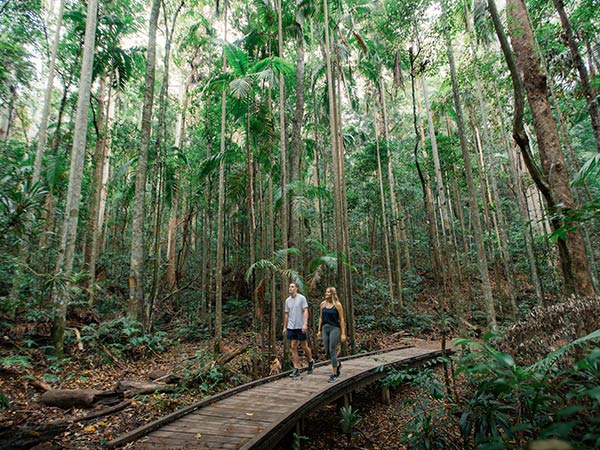
Kondalilla National Park walk
Stroll through Kondalilla National Park. (Image: Visit Sunshine Coast)

The name doesn’t lie. The Sunshine Coast boasts 300-odd rain-free days every year, and winter’s reprieve from summer’s humidity means comfortable exploration from the bush to the beach.

Tourist magnet Noosa is an easy choice, full of trendy boutiques and chic bars, but there’s also hinterland high jinks like national park walks to be had at Mapleton, Maleny and Montville. Meanwhile, acclaimed bush tucker cruises and water sports run rife most days in Mooloolaba, and Caloundra is a serious up-and-comer with great beachside eateries.

2. Broome, WA
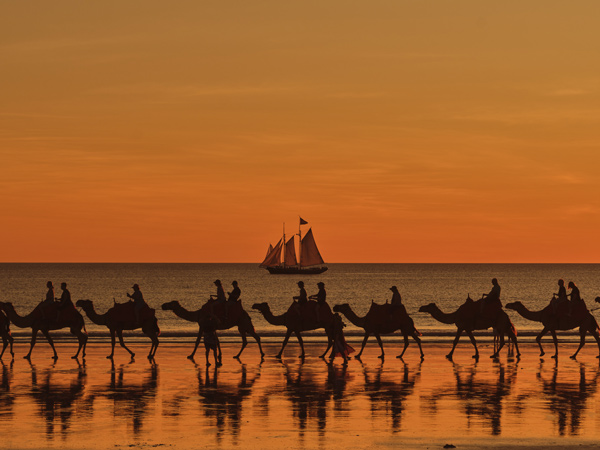
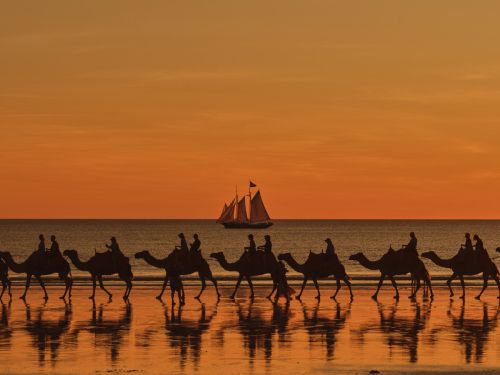
Willie Cruises, Broome, camels on Cable Beach at sunset
Visit Cable Beach during golden hour. (Image: Tourism Western Australia)

Can you believe Broome maintains temps in the low 30s while the rest of us crank up our heaters? Winter brings dry season to the sand dune haven, which means little chance of rain and plenty of opportunity to look for dinosaur fossils by the shore.

If you’re a first timer, you’ve got to do Cable Beach, the star of Broome’s beautiful beach bounty and renowned for its technicolour sunsets over infinite soft waves – best gawked at on the back of a camel. There’s also the literal illumination of the Staircase to the Moon, a natural phenomenon that only occurs two or three days each month from March to October, meaning now is your only chance to catch it.

3. Darwin, NT
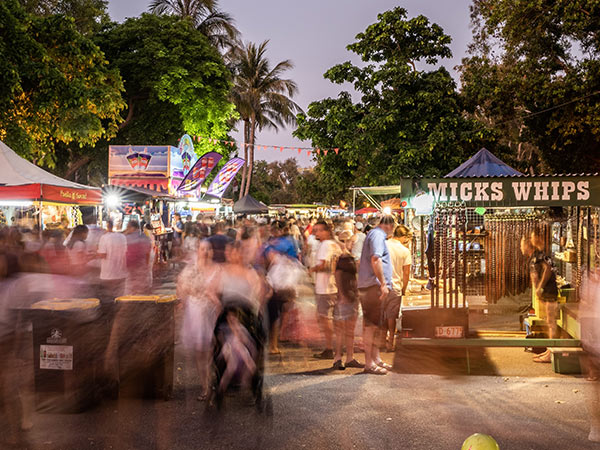
people at Mintil Beach sunset markets
Wander the Mindil Beach Sunset Markets. (Image: Helen Orr/Tourism NT)

Another golden dry season opportunity lies in the otherwise sticky Darwin, a family-friendly action playground renowned for its laidback lifestyle and profound Indigenous roots. Stroll the Darwin Waterfront, in the heart of the city’s CBD, to dip your toes into the manmade, palm-fringed Wave Lagoon, before seizing the chance to wander the Mindil Beach Sunset Markets, which only run from April to October.

Your other obligatory to-do while in town? Embarking on one of Darwin’s best-loved tours to take you to incredible traditional rock art, national parks littered with waterfalls, croc-infested waters and more.

4. The Daintree Rainforest, Qld
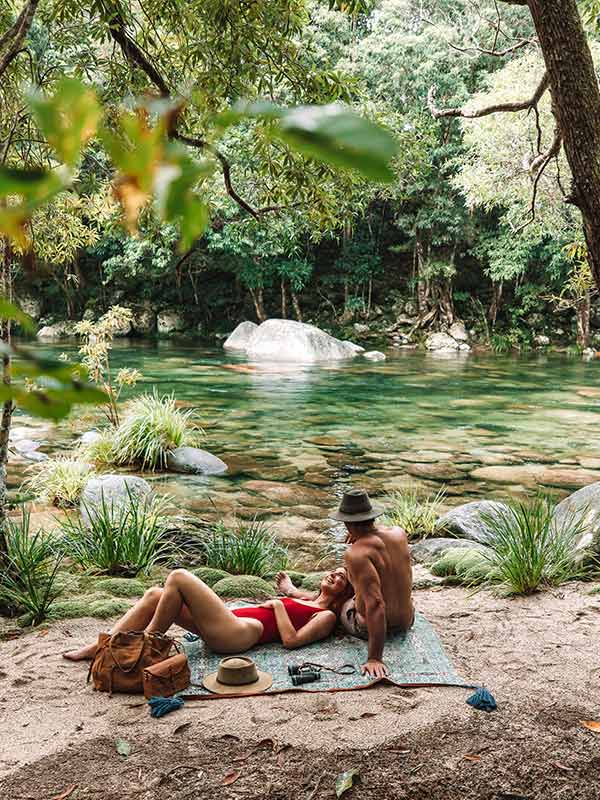
Mossman River
The Daintree Rainforest thrives in winter. (Image: Tourism and Events Queensland)

Believed to be more than 180 million years old, the Daintree Rainforest thrives in winter as the temperature drops and humidity dissipates. The world’s oldest living rainforest offers otherworldly adventure, just under a two-hour journey from Cairns if you’re road tripping.

There, you’ll take in the almighty Daintree River, where more of those snappy reptiles bask in the beauty of it all. Walking along the forest floor should sit high on your hit list, as should a visit to Cape Tribulation, where the Great Barrier Reef beckons and further nature trails routinely drop jaws.

5. Kununurra, WA
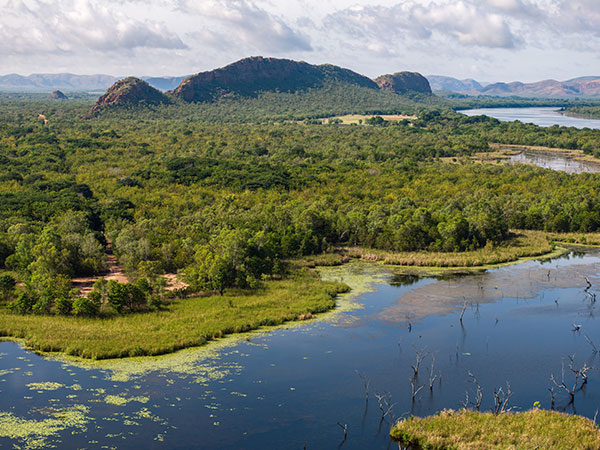
Kununurra's landscape
Kununurra’s landscape is characterised by its rugged features. (Image: Tourism Western Australia)

Haven’t tackled Western Australia’s astonishing outback yet? Kununurra is the perfect place to venture in while keeping a foot in village life. Additionally, the dry season provides easy drifting conditions for a tranquil cruise of Lake Argyle, which is so massive that it equates to 19 Sydney Harbours.

Kununurra accommodation goes from basic to luxe, while staggering waterfalls, dramatic colossal rock formations and the UNESCO World Heritage-listed Purnululu National Park are all within reach. The town itself rocks in winter when the Kununurra Markets come to life and a drive-in cinema enchants annually.

6. Katherine, NT
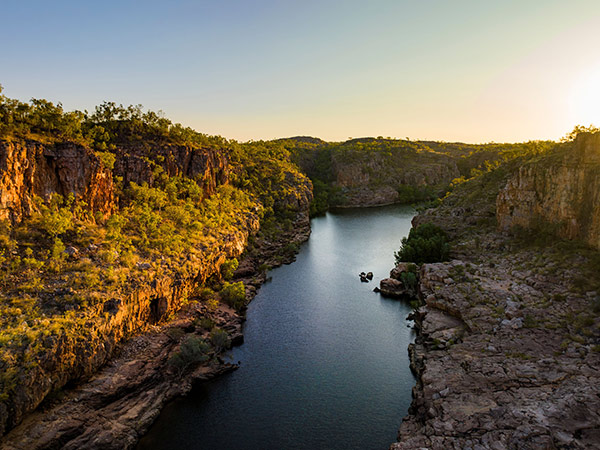
nitmiluk gorge
Nitmiluk Gorge is a stunning place to visit. (Image: Lachlan Gardiner/Tourism NT)

While Darwin’s potent buzz offers sure-fire winter rejuvenation, the Northern Territory’s Katherine is where to go to spread your wings. The undeniable star of the show is Nitmiluk Gorge, also known as Katherine Gorge, which provides 12 kilometres of staggering rocky cliffs synonymous with this corner of the country.

Don’t leave without stepping into the magical Katherine Hot Springs, one of the most luxurious natural spa baths in Australia, which stays utterly toasty at an average of 32 degrees during our coldest months.

7. Cassowary Coast, Qld
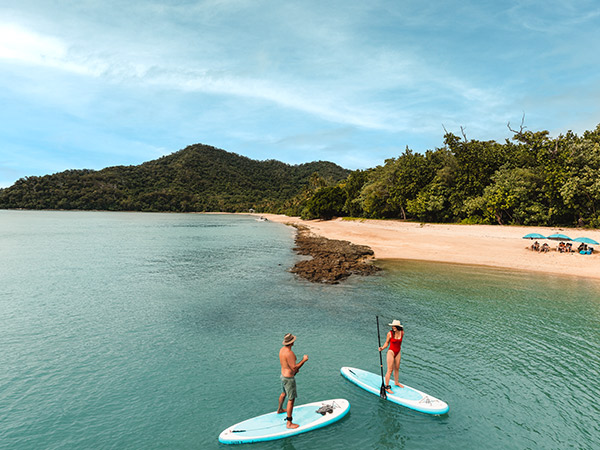
Dunk Island
Dunk Island is a tropical paradise off the Cassowary Coast. (Image: Tourism and Events Queensland)

Located within great proximity to the Great Barrier Reef lies the Cassowary Coast, the closest mainland point to the reef itself. In winter, high temps linger in the mid-twenties, providing prime conditions to explore far-flung Mission Beach.

Crowd-free snorkelling and diving out to the reef from this heavenly patch of sand is the real winter drawcard, while a trip to Dunk Island (less than 10 kilometres from Mission Beach) will soon invite campers to soak up white sand paradise under a blanket of stars. Its new camping site, due to open in the second half of 2025, will even include glamping tents, an eatery and bar.

8. Kakadu National Park, NT
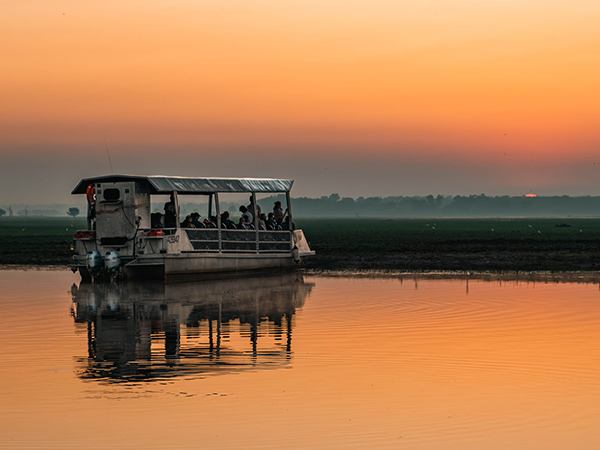
Cooinda Lodge
Kakadu National Park is Australia’s largest national park. (Image: Kakadu Tourism Cooinda Lodge/Tourism NT)

Keen to lose yourself in some of Mother Nature’s most extraordinary craftwork? Kakadu National Park, Australia’s largest national park and a dual-listed UNESCO World Heritage site due to its cultural and natural splendour, offers breathtaking mid-year exploration.

Featuring more than 5000 Indigenous rock art sites (which ranks as one of the highest concentrations on the globe), cascading waterfalls including Jim Jim Falls and Twin Fall Gorge, and epic 4WD terrain, the endlessly overwhelming spot offers a broad sweep of quintessentially Australian things to-do, reconnecting visitors with our spectacular land no matter how it sucks you in.

9. The Pilbara, WA
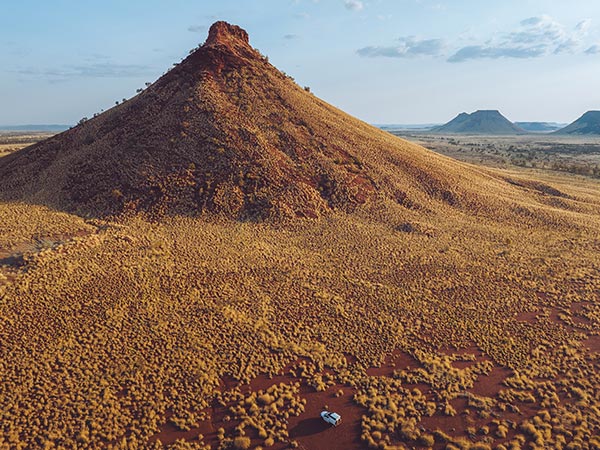
Pyramid Hill
Pyramid Hill is a significant landmark in WA. (Image: Tourism Western Australia)

Speaking of our most significant Indigenous geology, the Pilbara in WA is also worthy of serious consideration over winter. The region’s famed wildflowers begin blooming in June, with more than 12,000 species creating hypnotic technicolour flushes, while traditional Aboriginal songlines invite visitors to trail rock art engravings and sacred Indigenous meeting places while taking in striking ancient landscapes.

Port Hedland, one of the Pilbara’s main towns, will also appeal to foodies as Ray’s contemporary dining provides awesome Palm Springs-inspired Instagram fodder.

10. Magnetic Island, Qld
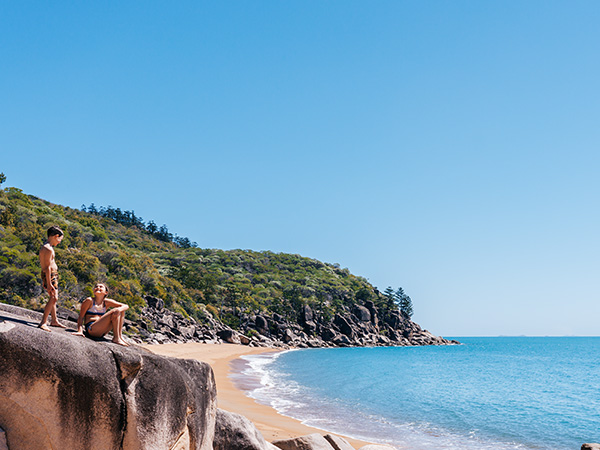
Magnetic Island
Magnetic Island is a slice of heaven. (Image: Tourism and Events Queensland)

While the Whitsundays’ powder-white beaches typically pull the masses, living the island life is also a breeze just off Townsville.

Catch a ferry from the mainland to discover Magnetic Island, a slice of heaven dotted with scenic national park walks, including Forts Walk which combines Second World War relics and water vistas, whale watching (only applicable during the winter months, so perfect timing), native wildlife encounters and top dining and entertainment, like the beloved Maggie Island Brewery.

Fancy a winter getaway that leans into the cold instead? Explore our list of getaways for every weekend in winter.

Kristie Lau-Adams
Kristie Lau-Adams is a Gold Coast-based freelance writer after working as a journalist and editorial director for almost 20 years across Australia's best-known media brands including The Sun-Herald, WHO and Woman's Day. She has spent significant time exploring the world with highlights including trekking Japan’s life-changing Kumano Kodo Pilgrimage and ziplining 140 metres above the vines of Mexico’s Puerto Villarta. She loves exploring her own backyard (quite literally, with her two young children who love bugs), but can also be found stalking remote corners globally for outstanding chilli margaritas and soul-stirring cultural experiences.
See all articles

This luxe trawler tour is redefining Victoria’s seafood experience

Victoria’s ‘mussel capital’ is the source of exceptional shellfish used by top chefs far and wide. Step aboard a beautifully refurbished trawler to see how these plump and juicy bivalves are sustainably cultivated.

A curtain is slowly winched from the placid, teal waters just off Portarlington , like a floating garland beside our boat. The ropes heave with blue mussels, the star attraction of our tour. But as we reach to pluck our own, it’s quickly clear they’re not alone; a mass of weird and wonderful creatures has colonised the ropes, turning them into a living tapestry. ‘Fairy’ oysters, jelly-like sea squirts, and tiny, wriggling skeleton shrimp all inhabit this underwater ecosystem.

We prize our bivalve bounty from the ropes, and minutes later the mussels arrive split on a platter. The plump orange morsels are served raw, ready to be spritzed with wedges of lemon and a lick of chilli as we gaze out over the bay. They’re briny, tender and faintly sweet. “This wasn’t originally part of the tour,” explains Connie Trathen, who doubles as the boat’s cook, deckhand and guide. “But a chef [who came onboard] wanted to taste the mussels raw first, and it’s now become one of the key features.”

A humble trawler turned Hamptons-style dreamboat

inspecting bivalve bounty from the ropes
Inspecting the bounty. (Image: Visit Victoria/Hannyn Shiggins)

It’s a crisp, calm winter’s day, and the sun is pouring down upon Valerie, a restored Huon pine workhorse that was first launched in January 1980. In a previous life she trawled the turbulent Bass Strait. These days she takes jaunts into Port Phillip Bay under the helm of Lance Wiffen, a fourth-generation Bellarine farmer, and the owner of Portarlington Mussel Tours . While Lance has been involved in the fishing industry for 30-plus years, the company’s tour boat only debuted in 2023.

holding Portarlington mussels
See how these plump and juicy bivalves are sustainably cultivated.

It took more than three years to transform the former shark trawler into a dreamy, Hamptons-esque vessel, with little expense spared. Think muted green suede banquettes, white-washed walls, Breton-striped bench cushions, hardwood tables, bouquets of homegrown dahlias, and woollen blankets sourced from Waverley Mills, Australia’s oldest working textile mill. It’s intimate, too, welcoming 12 guests at most. And yet there’s nothing pretentious about the experience – just warm, down-to-earth Aussie hospitality.

As we cruise out, we crack open a bottle of local bubbles and nibble on the most beautifully curated cheese platter, adorned with seashells and grey saltbush picked from the water’s edge that very morning. Australasian gannets soar overhead, and I’m told it’s not uncommon for guests to spot the odd seal, pod of dolphins, or even the occasional little penguin.

The sustainable secret behind Victoria’s best mussels

blue mussels off Portarlington
Blue mussels sourced just off Portarlington.

Connie and Lance both extol the virtues of mussels. They’re delicious. A lean source of protein and packed with omega-3 fatty acids, vitamin B12, iron, selenium, and zinc. They’re cooked in a flash (Connie steams our fresh harvest with cider and onion jam). And they’re also widely regarded as one of the most sustainable foods in the world.

Portarlington mussels with lemon and chilli
Mussels served with lemon and chilli.

“Aquaculture is [often] seen as destructive, so a lot of our guests are really surprised about how environmentally friendly and sustainable our industry is,” Lance says. “[Our mussels] would filter 1.4 billion litres of water a day,” he adds, explaining how mussels remove excess nitrogen and phosphorus from the water. “And through biomineralisation, we lock carbon into mussel shells.”

a hand holding a Portarlington mussel
Mussels are a sustainable food.

Despite their glowing list of accolades, these molluscs have long been seen as the oysters’ poorer cousins. “It was a really slow start,” explains Lance, who says that in the early days of his career, “you could not sell mussels in Victoria”.

But word has slowly caught on. Chefs as globally acclaimed as Attica’s Ben Shewry and even René Redzepi of Noma, Denmark, have travelled to these very waters just to try the shellfish at the source, sharing only the highest praise, and using Lance’s mussels in their restaurants.

guests sampling Portarlington mussels onboard
Sampling the goods onboard. (Image: Visit Victoria/Hannyn Shiggins)

According to Lance there’s one obvious reason why the cool depths of Portarlington outshine other locations for mussel farming. “The water quality is second to none,” he says, noting how other regions are frequently rocked by harvest closures due to poor water quality. “We grow, without a doubt, some of the best shellfish in the world.” And with Lance’s bold claims backed up by some of the industry’s greatest names, perhaps it won’t be much longer until more Aussies uncover the appeal of Portarlington’s mussels.