Your go-to guide for family-friendly fun in the Top End.
Darwin is an open-air playground where kids can swim, climb, ride and roam free. With oodles of water parks, hands-on wildlife encounters and plenty of space to run, it’s a top-notch place for families. From biking through bush trails to feeding fish by hand, there’s plenty to keep kids busy. Here’s your go-to guide for the best things to do with kids in Darwin.
1. Catch a wave at the lagoon
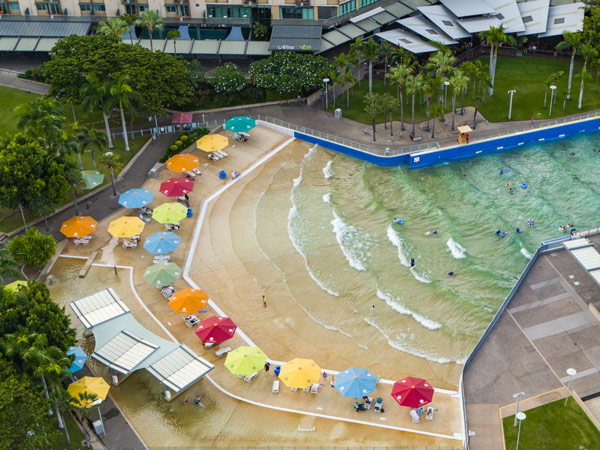
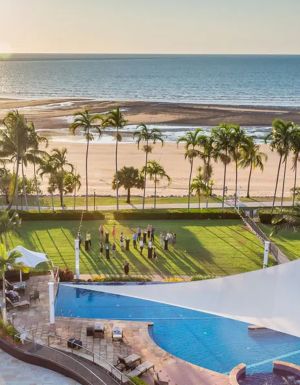
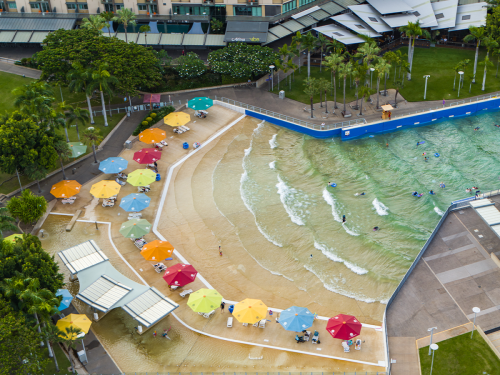
Darwin’s Waterfront Lagoon is where kids can boogie board, swim and splash without worrying about crocodiles or jellyfish. The wave pool delivers rolling swells every 20 minutes, perfect for both thrill-seekers and little paddlers. Parents can lounge on the grass while the kids ride the waves and when everyone’s waterlogged, there’s a bunch of family-friendly cafes and an ice creamery just a short stroll away.
2. Mountain bike at Charles Darwin National Park
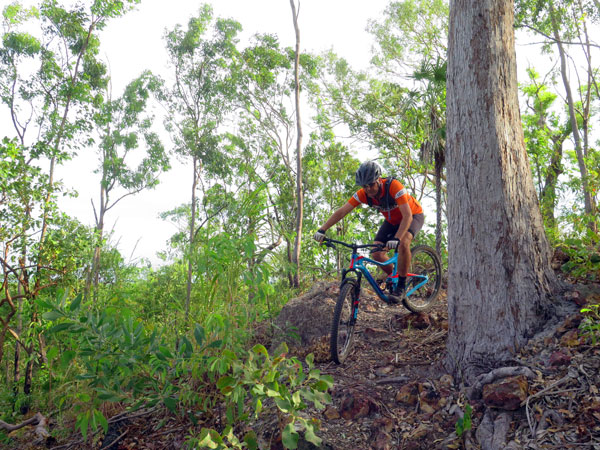
Swap the city streets and pools for dirt trails and tropical bushland with a mountain biking adventure at Charles Darwin National Park. Hire a bike from Cycle Zone and take on tracks winding through WWII bunkers and lush forests. There are routes for all skill levels, from easy family-friendly loops to more technical trails for the adventurous.
3. Bounce around the Aqua Park
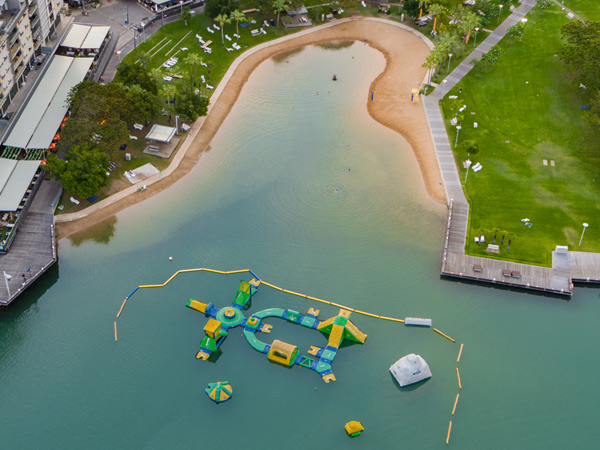
If your kids love Ninja Warrior-style challenges, they’ll go wild for the inflatable Aqua Park at the Darwin Waterfront. This floating obstacle course has slides, climbing walls and trampolines, all set on the water. Life jackets are provided, so even less confident swimmers can get in on the action. It’s the perfect way to burn energy before grabbing a post-bounce bubble tea or ice cream.
4. Feed the fish at Aquascene
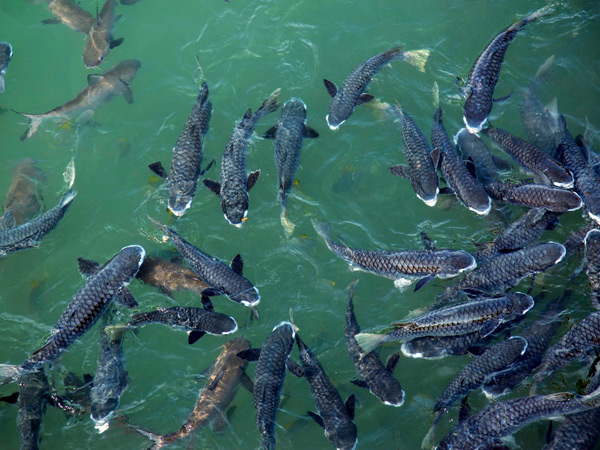
For over 70 years, Aquascene has been one of Darwin’s favourite attractions, where hundreds of wild fish swim right up to the shore to be fed by hand. The fish – mostly milkfish, mullet, and catfish – appear like clockwork with the tide, ready for a snack. Kids will love wading into the shallow water as fish nibble food straight from their fingers. It’s a sensory overload – splashing water, excited squeals, and the occasional slippery fish brushing against little toes.
5. Take a slide at Leanyer Recreation Park
A free water park? Yes, please. Leanyer Recreation Park has three huge water slides, a massive splash zone and a lagoon-sized pool. The giant tipping bucket is a crowd favourite, soaking anyone in its path every few minutes. There’s also a dry playground, skate park, canteen and BBQ areas, making it an easy outing for families.
Need tips, more detail or itinerary ideas tailored to you? Ask AT.
AI Prompt
6. Climb high at SWELL Palmerston
About 30 minutes from the CBD, Palmerston is home to not one but two free water parks that are well worth the drive. Palmerston Water Park boasts Darwin’s biggest waterslide – a six-lane racer that’s just as much fun for adults as it is for kids (yes, it’s a challenge). And if they’re more into climbing than sliding, SWELL Palmerston delivers the goods with a 50-metre pool and a three-storey high ropes course that’ll keep them busy for hours.
7. Swim with crocs at Crocosaurus Cove
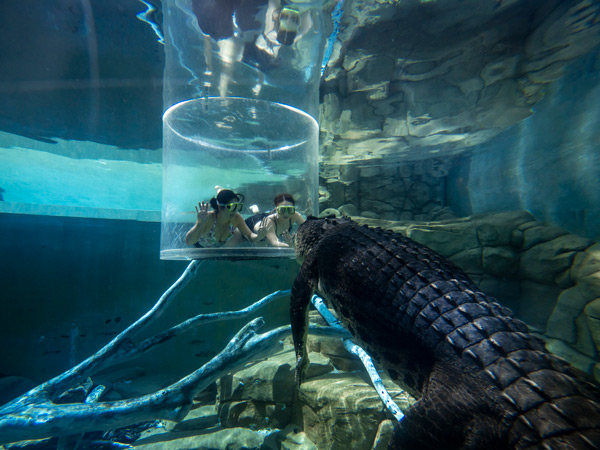
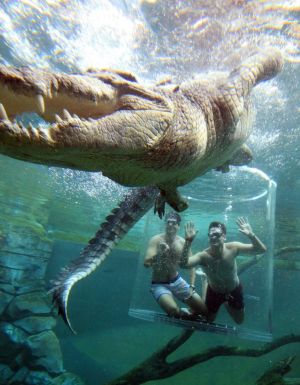
Ever wanted to swim with a saltwater crocodile? Crocosaurus Cove lets you do just that – safely, of course. Older kids (and brave parents) can hop into the Cage of Death for a face-to-face encounter with one of the world’s largest crocs. Younger ones can feed baby crocodiles, hold a reptile, or watch feeding time from the safety of dry land.
8. Visit the Territory Wildlife Park
A short drive from Darwin, the Territory Wildlife Park is a great place to get up close with the Northern Territory’s unique wildlife. Stroll through treetop aviaries, spot nocturnal animals in the nighttime house, and catch wildlife presentations throughout the day. The Flight Deck show is a highlight, where eagles and owls glide just overhead. Getting around is easy with the free shuttle train or, for something more fun, hire a pedal cart.
9. Browse the markets
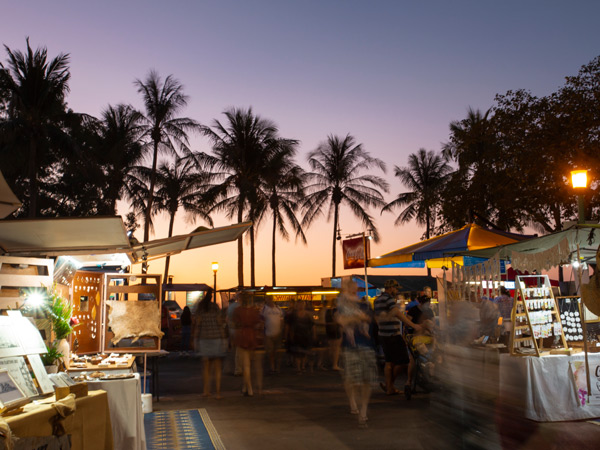
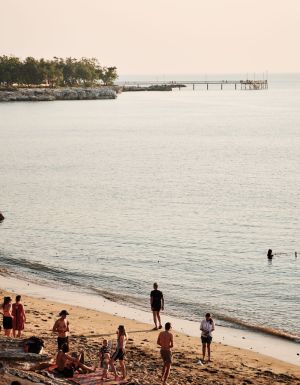
Darwin’s markets are loud, lively, and full of things kids will actually enjoy – from food to music to wide-open spaces. Start with Parap Village Markets on Saturdays, where Darwin’s most talked-about laksa is worth the wait (ask for mild for younger tastebuds). On Thursday and Sunday evenings, Mindil Beach Markets serve up sunset views, street performers, and endless dinner options, while the kids roam free on the sand. Sunday mornings are for breakfast – head to Nightcliff Markets for smoothie bowls and pastries or Rapid Creek for tropical fruit and veg that’ll blow their minds (and maybe yours, too).
10. Fish at Stokes Hill Wharf
Drop a line off Stokes Hill Wharf and you might just reel in a trevally, queenfish, or even a barra if luck’s on your side. It’s a relaxed spot for a fish, with salty sea breezes and plenty of action to watch – from cruise ships pulling in to cheeky seagulls angling for scraps. When hunger hits, head to The Jetty Restaurant nearby, where there’s a crowd-pleasing buffet, water views and – the clincher – a chocolate fountain.
11. Food truck time at Nightcliff Foreshore
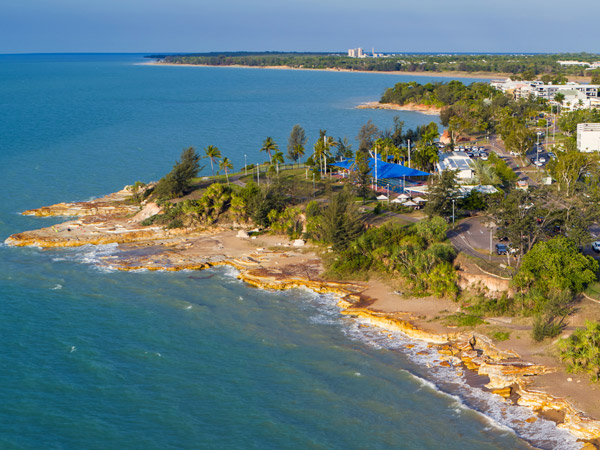
Curled ice cream, loaded jacket potatoes, wood-fired pizza and Asian street food – Nightcliff Foreshore is a go-to spot for families who love a casual bite. Grab something delicious and spread out on the grass while the kids climb trees, ride scooters or watch the sun sink into the ocean. Hot tip: check the City of Darwin’s street food schedule before you head out to make sure your top pick is parked and cooking.
12. Dinner and a swim
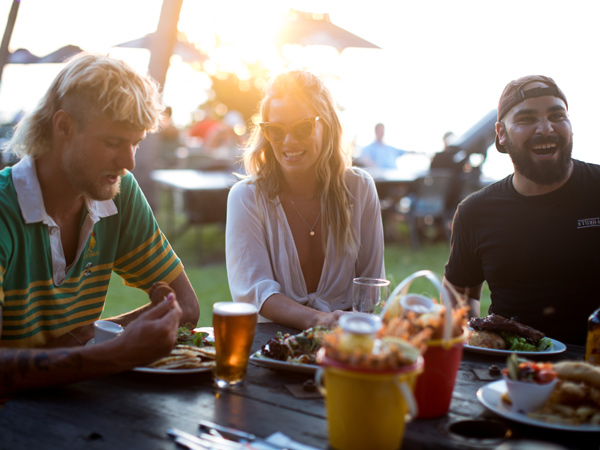
Darwin nails the combo of good food and happy kids. At the Darwin Ski Club and the nearby Trailer Boat Club, you can kick back with a cold drink and a decent meal while the kids go wild in the pool. Just down the road, the Sailing Club skips the pool but makes up for it with swings right next to the tables – ideal for little ones who need to stay in sight but not in their seats. Add a killer sunset view at all three, and you’ve got dinner plans sorted.
Weekly travel news, experiences
insider tips, offers, and more.
13. Watch a flick at Deckchair Cinema
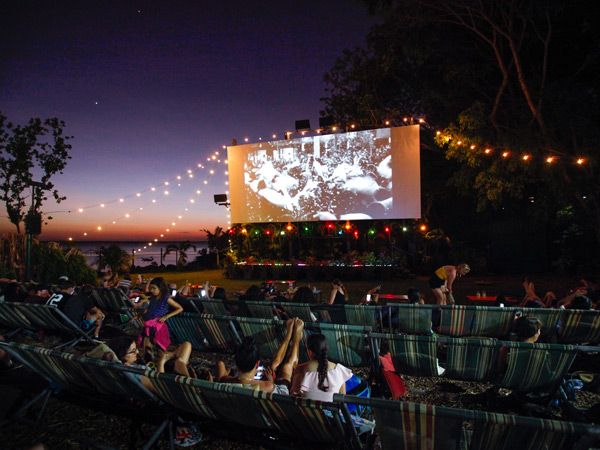
A movie under the stars? Absolutely. Deckchair Cinema is Darwin’s open-air movie spot where families can settle into deck chairs, grab some popcorn and enjoy a film in the balmy night air. Hot food is on offer from 5.45pm when the gates open, so come hungry. Local tip: claim your spot early by popping one of the supplied cushions on your seat – it’s the way to reserve it for the night.
14. Feed the creatures at Crocodylus Park
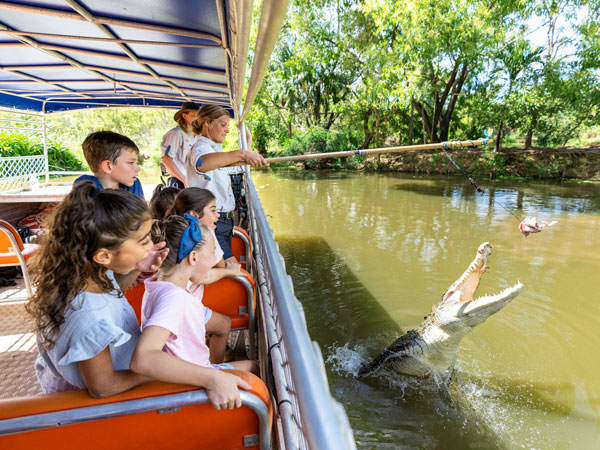
Lions, meerkats, spider monkeys, cassowaries – Crocodylus Park is home to way more than just crocs. Not to be confused with Crocosaurus Cove in the city, this sprawling wildlife park is about 15 minutes from Darwin’s CBD and packs in crocodiles (heaps of them), exotic animals and even a jumping croc cruise. Kids can get up close with creatures big and small – including the chance to meet mobs of meerkats.
15. Explore MAGNT
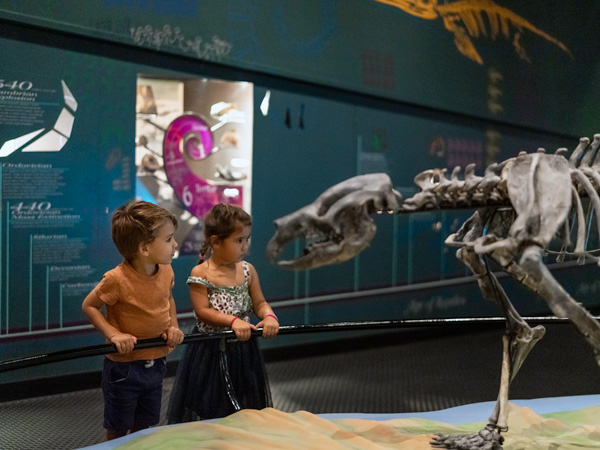
The Museum and Art Gallery of the Northern Territory (MAGNT) is where Darwin keeps its most famous croc – Sweetheart, a massive saltie preserved in all his toothy glory. There’s plenty here to keep kids curious, from marine life displays to new hands-on exhibits about Cyclone Tracy and vibrant showcases of Indigenous art and culture. Keen for more than a wander? Check online before you go – there are often kids’ workshops running, and spots can fill fast.
16. Explore Darwin Street Art
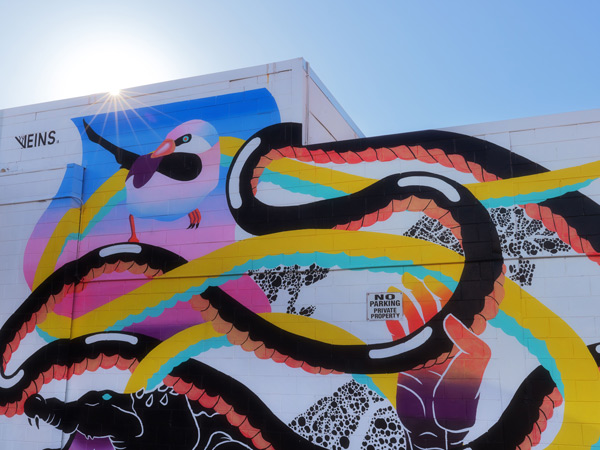
Darwin’s streets are splashed with colour, thanks to towering murals that turn laneways and buildings into an open-air gallery. Download the Darwin Street Art Festival (DSAF) app and take the kids on a mural-hunting adventure using the interactive map. Thirteen of the artworks have a high-tech twist – hold your phone up, follow the prompts, and watch the murals come alive with augmented reality.
17. Take an ice cream odyssey
When the heat kicks in, there’s only one solution – an ice cream crawl. In the CBD, Cold Rock lets kids go wild mixing in their favourite sweets. Down at the Waterfront, Trampoline scoops creative flavours like lamington and pistachio. For something a bit extra, head to Nightcliff Jetty (every night except Monday and Tuesday) where Curled ice cream is made right before your eyes on frozen plates. Flavours like Mango Madness, Mint Condition and Nutta Butta are crowd-pleasers.
Want to see more stories from Australian Traveller in your Google search results?
- Click here to set Australian Traveller as a preferred source.
- Tick the box next to "Australian Traveller". That's it.