Berowra Waters Inn Review

hero media
Perched on the banks of the Hawkesbury river north of Sydney, AT wines and dines along the waterline at Berowra Waters Inn for a dining experience that, if possible, seems overshadowed by the surrounds. By Lisa Perkovic who, like all AT reviewers,  paid her own way and visited anonymously.

Degustation is all about tasting. You want to be wowed and left wanting more – anticipating the next dish, ruminating over the last and, at the end, left supremely satisfied. It’s about appreciation and perfection.


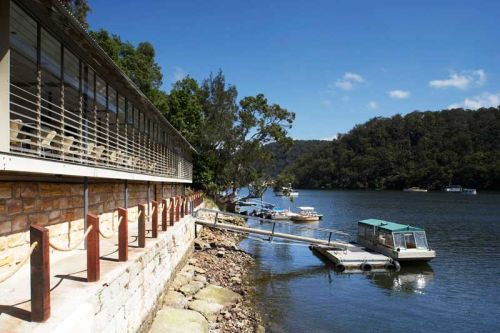
At Berowra Waters Inn, perched against a cliff face along the Hawkesbury River in Ku-ring-gai National Park, a new style of degustation is being experienced.


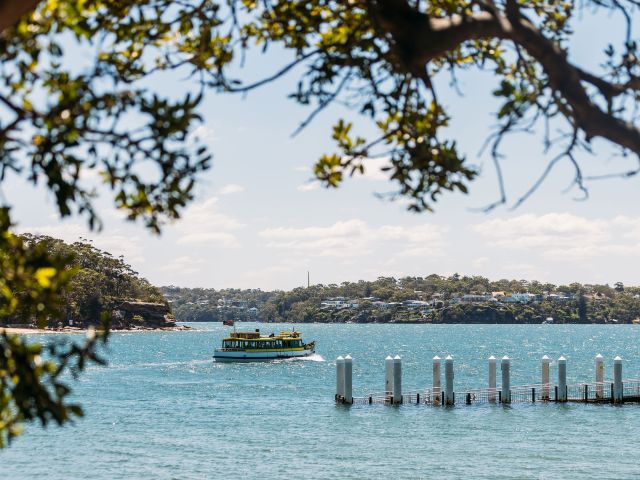
Having reopened in November 2007 after a ten-year hiatus, the Inn’s culinary history reads like an honour roll of Australia’s best and brightest – Judy McMahon, Neil Perry, Sean Moran and Tony Bilson, to name a few. It’s accessible only by water or air; the Inn’s private ferry picks up diners from the Berowra Waters jetty, a 40min drive from Sydney’s CBD.

BEROWRA WATERS INN

Where // Via East or West Public Wharves, Berowra Waters, around 40min drive north of Sydney CBD. (02) 9456 1027, www.berowrawatersinn.com


Notes // Open Fri-Sat for lunch, Thurs-Sat for dinner. Four, five, six courses $125, $135, $150. With matched wines $175, $200, $220.

AT‘s MENU @ BEROWRA WATERS INN

SPINACH AND BUFFALO RICOTTA RAVIOLI with sautéed chanterelle mushrooms


Wine: Baroli ‘Madonna di Como’ Dolcetto D’Alba 2006, Piedmont, Italy


ROAST SQUAB PIGEON, spaghettini, pencil leeks and truffle veloute


Wine: 2006 Bass Phillip Gamay, Gippsland, Victoria


ROAST CUTLET OF CASTRICUM LAMB with spring peas and black trompette mushrooms


Wine: 2004 Parker Estate Terra Rossa Cabarnet Sauvignon, Coonawarra, SA


SLICED ROAST WAGYU SCOTCH FILLET, spinach and fennel


Wine: 2007 Gemtree Vineyards Uncut Shiraz, Mclaren Vale, SA


CHEESE PLATE Including Jannei Bûche Noir ash goats cheese VARIATION ON A THEME Dessert selection for two


TOTAL COST // $220


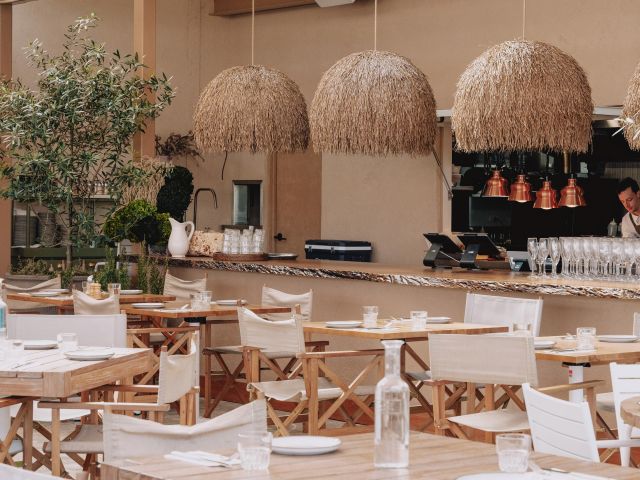
Escaping the city is what dining here is all about. The Glenn Murcutt-designed glass gallery gives the European seating an Australian twist. We sit bistro style, gazing through wall-to-ceiling windows at the water traffic drifting by. Blackbutt timber floors, sandstone fireplaces and white leather chairs create an understated elegance. Although the bucket-like wicker lampshades are hazardous when sliding into your couch, they’re an element of the décor that reminds us we’re in the bush – and that it’s the view, not the venue, that’s supposed to take your breath away.


The menu appears to follow a similar principle. The 15 or so dishes that change weekly have nothing to prove. Instead, they reflect the self-assurance of a sublimely successful chef. Swiss-born Dietmar Sawyere, who cut his teeth at the Savoy in London, saves culinary flourishes for his high-rise masterpiece, Forty One, in Sydney’s Chifley Tower. Out here in the National Park, the flair is found in fresh, organic produce that’s allowed to speak for itself.


A standard degustation involves selecting four, five or six plates. I opt for six, which begin with the arrival of three plump spinach and buffalo ricotta ravioli. The fresh pasta is stretched thin over chubby packages, giving the filling’s delicate flavour space to shine. Divine sautéed Chanterelle mushrooms add kick to the buffalo milk. Each is devoured and savoured – but expectation of what’s to come sees one little ravioli left on the plate.


Not so for my lunch companion. He spends the break between courses raving about grilled sea scallops perched on herb risotto cooked to perfection; three little golden gems given sparkle by cubes of chorizo. There’s not a skerrick left on his plate for me to sample.


We leave the wine matching to able sommelier Laiana Ryan and I’m grateful for the savoury undertones of the Bass Phillip Gamay 2006 from Gippsland that accompanies my next dish. The roasted squab pigeon is dense and gamey, with a swirl of spaghettini that’s a little too reminiscent of the ravioli. That’s followed by a roast lamb cutlet, the highlight of which is, again, the fungi. I’ve never sampled so many varieties of mushroom in a single sitting; these last are black trompette, and make the ideal woody partner for the lean Castricum lamb.


A 2007 Uncut Shiraz from SA’s Gemtree Vineyards pairs perfectly with the meal’s crowning glory: two slices of roasted wagyu that are melt-in-your-mouth, fight-off-your-dinner-partner morsels. Luckily we’ve both ordered the same dish – and it is fantastic. Lightly battered onion rings and microscopic cubed potatoes lend crunch to the tender fillet.


The cheese plate’s most memorable piece is an of the moment, ash-covered goat cheese from award-winning Jannei Goat Dairy’s Bûche Noir – a clean, citric sliver that clears the deck. Our dessert plate is an interesting assemblage of adventurous pairings and traditional dishes. No surprises with a white chocolate panna cotta, but lemon and lime tart is given a new lease of life with sweet basil sorbet. Before I’ve worked out whether I like an unusual tang with my tart, I’m nudged over to a hazelnut-ricotta cake that’s outdone by an accompanying espresso granita. The frosty caffeine clout wakens the tastebuds; a good thing as you’ll want to savour the vacherin of raspberries and vanilla bean ice cream that’s an ode to a long and happy summer.


Berowra Waters Inn is without question a “special occasion" destination. While we’re oblivious to anything but dessert, the staff are on the ball when the table adjacent develops a sudden and urgent need for bubbles. No sooner has the ring been slipped onto our neighbour’s shaking finger than the champagne is on the table with a congratulatory plate of petit fours.


The relaxed demeanour of staff and the casual dining set-up is refreshing, if a little at odds with the demands of degustation. It’s as though Chef Sawyere knows he’s been outshone; the scenery steals the show and gives the degustation a place in the chorus.


The highlight of the day comes when the food is cleared away. My stomach is full, the crowds are gone and we linger over shortbread and chocolate nibbles as dusk settles in the valley. It’s taken a four-hour lunch to wash the rush of city life away, but once it has, we’re well and truly wowed.

hero media

Inside a stay at Island House, Lord Howe’s most luxurious eco-retreat

With a foundation centred in craftsmanship and human experience, Island House distils a family’s connection to place into a timeless design-led stay on Lord Howe Island.

“I’ve got my grandfather’s Super 8 footage of landing on the lagoon, with the water slapping up against the windows.” Timmy Maxwell’s parents visited Lord Howe as children, when flying boats serviced the island from Sydney’s Rose Bay. Today, I skim over the same glassy lagoon to touch down beside it on the short airstrip built in 1974 – but the view must look unchanged: a crescent-shaped island of volcanic peaks fringed with golden sand and a shock of turquoise.

The story behind Island House

Timmy himself began holidaying here in 2000, after his parents jumped at the chance to buy their own parcel of paradise 600 kilometres off Australia’s east coast. Fast-forward 25 years and we meet at Island House , the meticulous result of a five-year build he completed with his father, Michael Maxwell. Opening in 2020, they transformed what was once a cluster of holiday apartments into a luxury eight-guest hideaway.

The lodge comprises two distinct properties – North House and South House – designed by the father-and-son duo in collaboration with Newcastle-based Derive Architecture & Design. Their sleek and understated exteriors are crafted from hardwood and copper, and set on elevated platforms to preserve the natural landscape.

Hidden within a grove of endemic Kentia palms and centuries-old banyan trees, the two houses are connected by an al fresco area that serves as a central gathering point and, each sleeping four, can be booked separately or together.

The design honours the landscape

True to its setting on Lord Howe Island, a UNESCO World Heritage site since 1982 where visitor numbers are capped at 400 at any one time, Island House treads lightly, capturing rainfall, drawing on solar power and treating sewage onsite to protect the island’s fragile ecosystem. It’s a place of careful consideration, where everything – from customised daily adventures to meals prepared by a private chef – feels intuitive.

coastal views from Island House, Lord Howe
Island House is a launchpad for exploring Lord Howe’s wild coastline. (Image: Jonny Fuhri)

The experience unfolds from a grounding in design, with a visual language shaped by the layering of Michael and Timmy’s shared history. “We really wanted to do something that reflected our passions and spoke to our personal experiences and inspirations,” says Timmy. Michael’s career in finance and property ran parallel to cultural pursuits such as restoring wooden boats and architectural homes and serving as chairman of Sculpture by the Sea.

While Timmy’s path blends adventure (a sense of which, from fishing to trail running, was first fostered here on the island) with hospitality; by the age of 24 in 2013 he had opened his own Sydney wine bar, Kubrick’s, before turning his sights back to Lord Howe. With touchpoints to draw on such as sound, art, sculpture, furniture, food, architecture and adventure, “this language of celebrating what’s really timeless started to come through,” Timmy tells me.

Danish design, books and First Nations art inside the South House at Island House, Lord Howe
South House, a medley of mid-century Danish design, books and First Nations art. (Image: Anson Smart)

That ethos finds form in mid-century Danish furniture, sourced in Copenhagen – with original pieces from leading proponents of the movement including Poul Kjærholm, Hans Wegner and Finn Juhl – alongside Italian marble, American oak floorboards and stainless steel. There are botanical sculptures by Alison Coates. A whole wall of books. Ceramics from Kyoto, copper bathtubs and a significant collection of Indigenous Australian art, including pieces by celebrated Ngan’gikurrungurr woman Regina Pilawuk Wilson and the late Pintupi man Mick Namarari Tjapaltjarri, a founder of the Western Desert art movement.

an outdoor copper tub at Island House
An outdoor copper tub at Island House. (Image: Anson Smart)

The Maxwells’ love of music is expressed through each house’s sound system; Timmy admits to having “nerded out” over the statement Wilson Audio speakers that anchor the North House lounge. Fanta-orange sculptural forms that look not unlike robots. “They’re both high-spec and forgiving,” he says. Fuzzy round the edges – like the evenings my partner and I spend curled up here, drinking wine and listening to music in a way we haven’t for ages.

the outdoor lounge at Island House, Lord Howe
Outdoor lounging at Island House. (Image: Anson Smart)

Every design choice reflects an investment in craftsmanship and an instinct for what feels right to humans – not least the proportions, with North House seemingly hitting a golden ratio with its four-metre ceilings. Strategically placed skylights keep us connected to the outdoors; when the sun shines, shafts of light illuminate curated corners while palm shadows dance across the walls. It’s a place to cocoon in after a day spent in the elements.

The role of food and hospitality at Island House

chef Kimie Uemeto preparing Japanese dishes, Island House, Lord Howe
In-house chef Kimie Uemeto prepares fresh food, often with Japanese flavours. (Image: Anson Smart)

The human aspect is at play in every moment our hosts anticipate for us. When our snorkelling trip in the lagoon ends abruptly in a torrential downpour, general manager Anna Klein is already waiting at the shore with towels and the car to whisk us back to warmth. With our beach barbecue plans pivoted, chef Kimie Uemeto has prepared a hearty pumpkin soup to enjoy in-house – exactly what we need.

picnic on Lord Howe Island
Private picnics are par for the course while staying at Island House. (Image: Anson Smart)

The next morning, we head out on a walk, waving g’day to the omnipresent Lord Howe woodhen, the island’s endemic flightless bird, and follow a trail through bushland to 360-degree views from Transit Hill. The weather has turned fine and on our return to the house, plans for our ‘we curate, you cook’ lunch have been switched for a beach picnic. Anna has laid out a rug under the shade of two palms, and all that remains is to cycle down to Ned’s Beach and raid a hamper packed with whipped feta to slather on soft rolls, with juicy tomatoes and fresh salad greens. “Pack your snorkels,” Anna had advised – and soon enough we wade into the bath-like sea, snorkelling the coral just offshore in gin-clear water.

Chef Kimie Uemeto with a fresh catch at Island House, Lord Howe
Chef Kimie Uemeto with a fresh catch. (Image: Anson Smart)

Dinners, too, are intuitive affairs, with Kimie working with whatever produce is available on the island, from freshly caught fish to daily finds at the Nursery down the road. “It’s very different from what I used to cook in Japan, because I used to cook very traditional cuisine,” she says. Moving here from Sydney five years ago with her young family, she has learned to be flexible. “Here on the island, you don’t know what’s available tomorrow,” she says. “I like cooking with my feeling. And this place allows me to do that.”

Exploring other Lord Howe Island highlights

Timmy Maxwell and head brewer Alastair Gillespie at Lord Howe Island Brewery
Timmy Maxwell and head brewer Alastair Gillespie at Lord Howe Island Brewery. (Image: Anson Smart)

We visit the Nursery the next day, a greenhouse project the Maxwells oversee that grows fresh produce as well as cultivating Kentia palms for export (a tradition that goes back to Victorian times; the world’s most popular endemic plant is native to Lord Howe). It’s on the same site as the Lord Howe Island Brewery , which father and son also founded, and which serves as a community hub. It’s open Thursday and Saturday for woodfired pizzas and drinks in the convivial beer garden and offers weekly tours for those keen to go behind the scenes of one of the world’s most remote breweries.

Our own visit in April coincides with the inaugural Dark Sky Festival and we join a Science Talk hosted at the brewery one evening. Among topics ranging from the transit of Venus to black holes and moon illusion, we learn about light pollution and the importance of dark sky conservation. How the planet would benefit if we all turned our lights down.

By design, not much has changed on Lord Howe Island since the days the flying boats splashed down on the lagoon. There’s still no mobile reception on the island, and being totally out of range as we are out and about exploring feels like a rare liberty. An apparent luxury in a too-connected world. Some guests looking forward to a digital detox, says Timmy, are disappointed to learn that Island House has Starlink and ask for it to be turned off.

Mt Lidgbird and Mt Gower, Lord How Island
The island’s famed peaks, Mt Lidgbird and Mt Gower. (Image: Destination NSW/Tom Archer)

Lord Howe Island is an otherworldly place. The afternoon we freewheeled down to the base of Mt Lidgbird and Mt Gower confirmed this: a fierce burst of post-rain sunshine sent rainbows shooting across the famous peaks, while providence petrels – which nest nowhere else on Earth – swirled overhead. Lord Howe evolved out of step with the rest of the planet and in its gloriously lo-fi way it retrains you to be human. True enough, when we head back to Island House after our dark sky talk, we stoke the fire, dim the lights and watch nothing but the flickering flames.

A traveller’s checklist

Getting there

SmartLynx Australia operates daily flights from Sydney, with a flight time of under two hours. Eastern Air Services offers weekly flights and charters from Port Macquarie, the Gold Coast and Newcastle.

Staying there

Nightly rates at Island House start from $4260 for a single house and $8660 for a full-site buyout and include: custom island adventures such as guided hikes, snorkelling and diving;  dedicated equipment room for guided and self-directed exploration; in-house dining by chef Kimie Uemeto, who pairs freshly sourced local ingredients with Japanese culinary techniques; fully stocked pantry and bar; private picnics with mountain views or beach settings; complimentary hotel car transfers and airport pick-up and drop-off.

On the horizon

Lord Howe Island’s next Dark Sky Festival is planned for 16–23 May 2026. And stay tuned for news of Michael and Timmy Maxwell’s next accommodation project, set to launch in southern Tasmania.

view from the palms, Lord Howe
Peeking through the palms. (Image: Anson Smart)