hero media

10 things you probably didn’t know about the Sydney Harbour Bridge

(Credit: Destination NSW)

It’s been photographed a billion times and crossed by millions – but Australia’s most iconic steel arch still holds a few surprises.

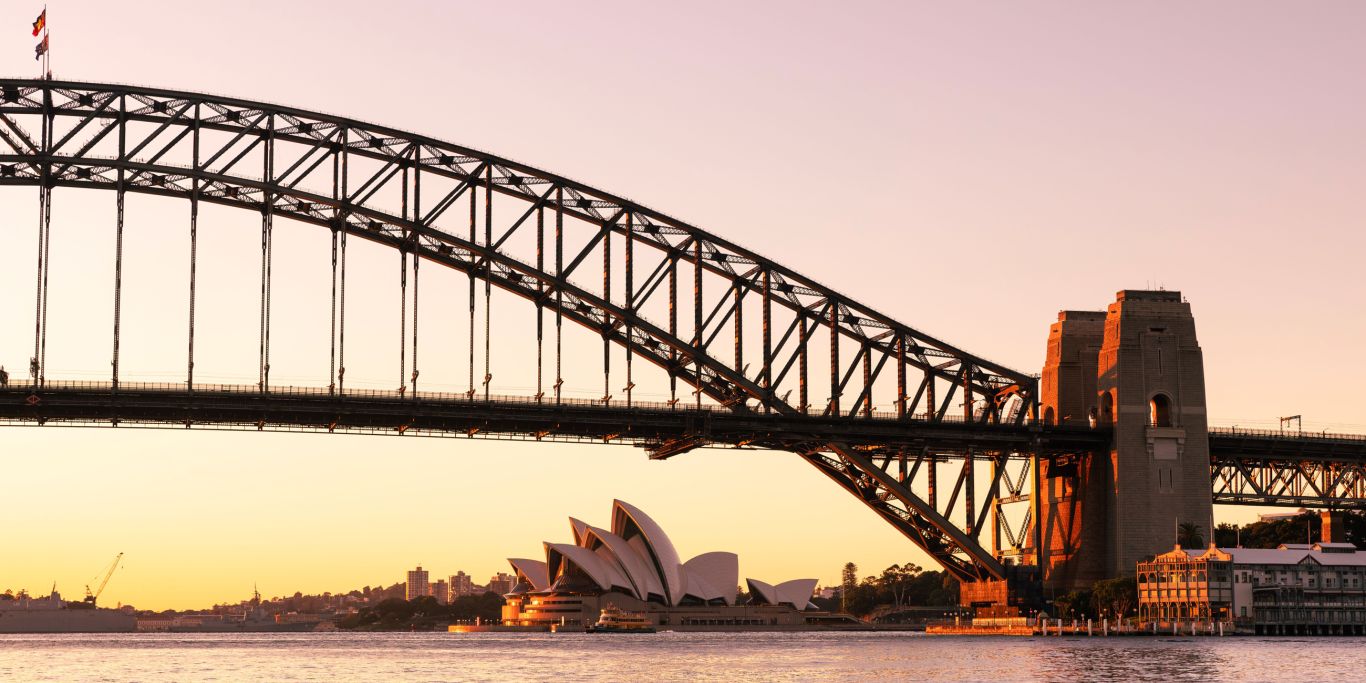
On 19 March 1932, the Sydney Harbour Bridge opened to a fanfare that included, rather unexpectedly, a sword. More than nine decades on, the ‘Coathanger’ remains one of the world’s great feats of engineering – and one of Australia’s most-loved landmarks. You know the silhouette. You’ve seen the New Year’s Eve fireworks. But how well do you really know the bridge?

1. The sword that stole a premiere’s moment

NSW Premier Jack Lang never quite got his ribbon-cutting moment. Just as the official opening ceremony was about to begin on 19 March 1932, Francis De Groot – a member of the right-wing paramilitary New Guard – barged through on horseback and slashed the ribbon with a sword, declaring the bridge open “in the name of the decent and respectable people of New South Wales." He was arrested on the spot, fined £5 after a psychiatric assessment confirmed he was sane, and later successfully sued the Commissioner of Police for wrongful arrest. The ribbon was hastily retied, and Lang performed the official ceremony.

2. The longest bridge that never was
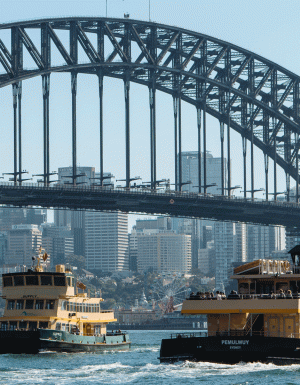
Drone shot of Sydney Harbour Bridge and the Opera House
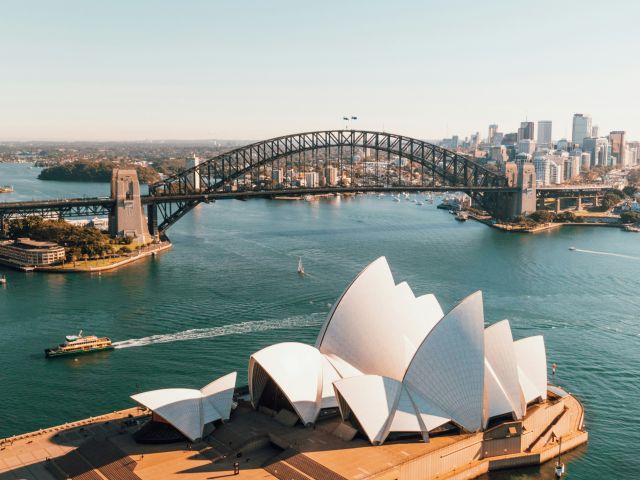
The Sydney Harbour Bridge is 94 years old. (Credit: Caleb)

For decades, Australian schoolchildren were taught that the Sydney Harbour Bridge was the world’s longest single-arch bridge. It was never true – the Bayonne Bridge in New Jersey pipped it at the time of construction – and the myth has aged further: the record now belongs to the Port Mann Bridge in Canada. The Coathanger is, however, the world’s largest steel arch bridge by total weight and width of road deck. A consolation prize, but not a small one.

3. Six million reasons to respect a rivet

The bridge is held together by almost six million hand-driven rivets. Every single one was driven in by hand – a team of four workers per rivet: one to heat it, one to catch it, one to hold it, and one to drive it home. In an era before automation, it was gruelling, skilled work performed hundreds of metres above Sydney Harbour.

Need tips, more detail or itinerary ideas tailored to you? Ask AT.

AI Prompt

4. The arch that came apart on its big night

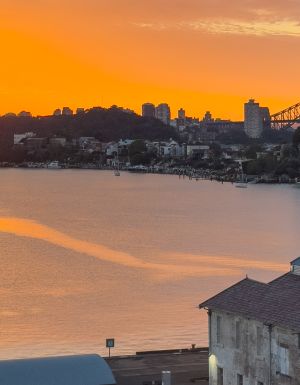
Sydney Harbour Bridge at sunrise or sunset
The bridge is held together by almost six million hand-driven rivets. (Credit: Destination NSW)

The joining of the two halves of the arch on 19 August 1930 was cause for celebration – briefly. The two sides met in the afternoon to great fanfare, but as the temperature dropped that evening, the steel contracted and the halves separated again. Workers had to rejoin the arch later the same night, under lights, before the milestone could be properly declared.

5. The fall that shouldn’t have been survivable

Only two people are known to have survived falling from the Harbour Bridge. The first was Vincent Kelly, an Irish-born worker who plunged from the road level during construction. According to legend, he survived by dropping his toolbelt into the water just before impact, breaking the surface tension and slightly softening his entry. 16 workers died during the bridge’s construction overall; their names are recorded at the Pylon Lookout.

6. Four pylons that do absolutely nothing
Sydney Harbour Bridge
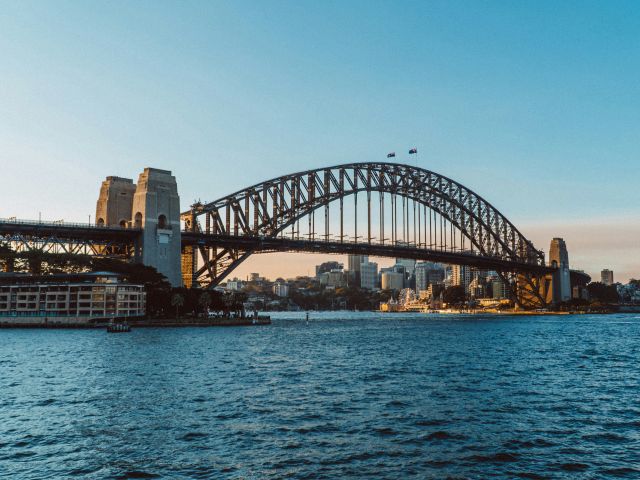
The four pylons are entirely decorative. (Credit: Henrique Felix)

Those four imposing granite pylons at each corner of the bridge? Entirely decorative. They support nothing structural whatsoever – the arch does all the work. They were added purely for visual effect, to give the bridge the monumental gravitas its designers felt the occasion demanded. The granite itself was quarried near Moruya on the NSW South Coast.

Weekly travel news, experiences
insider tips, offers, and more.

7. The 28 volumes of maths behind the steel

The engineering calculations required to design the bridge filled 28 volumes. Chief engineer John Bradfield and his team worked for years on the maths before a single rivet was driven – all done by hand, long before computers existed. The detailed design work was ultimately carried out by British engineer Ralph Freeman, whose contribution to the project was disputed by Bradfield but is now widely recognised.

8. Why the bridge is grey (it’s not glamorous)
Sydney Harbour Bridge at sunrise or sunset
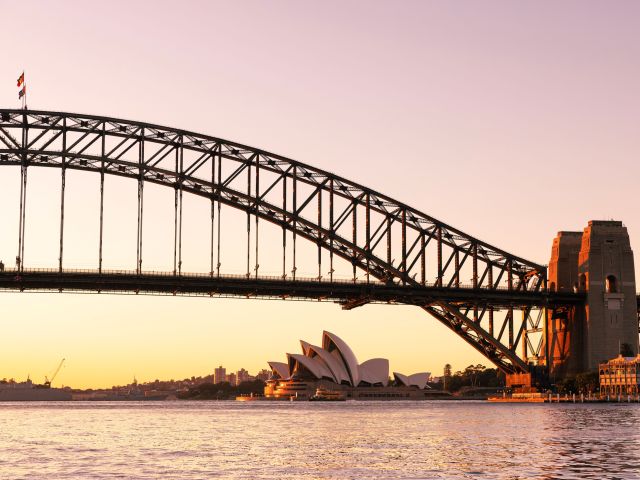
The initial three coats required 272,000 litres of paint. (Credit: Destination NSW)

The bridge is grey because, at the time of construction, grey was the only paint colour available in sufficient quantities to coat the entire structure. The initial three coats alone required 272,000 litres of paint – enough to fill an Olympic-sized swimming pool. The bridge is repainted continuously; there is never a point at which the job is truly finished.

9. Four million climbers and counting

Since BridgeClimb opened in October 1998, more than four million people have made the journey to the summit – 134 metres above Sydney Harbour. Famous climbers include Oprah Winfrey, Nicole Kidman, Prince Harry, Will Smith, Matt Damon, Cate Blanchett and Robert De Niro. Over 5000 couples have gotten engaged at the top. The oldest person to complete the climb was 100 years old.

10. What to know before you make the trip

If you decide to climb, set aside around three hours for the full Summit Climb experience – including preparation, a breathalyser test, and getting kitted out in a regulation climber’s suit (no loose items, no phones). For those who prefer to stay earthbound, a new step-free cycleway ramp has opened, finally making it possible to ride across the bridge without navigating a steep staircase – a small but significant upgrade to one of the world’s great commutes.

Emily Murphy
Emily Murphy is Australian Traveller's Email & Social Editor, and in her time at the company she has been instrumental in shaping its social media and email presence, and crafting compelling narratives that inspire others to explore Australia's vast landscapes. Her previous role was a journalist at Prime Creative Media and before that she was freelancing in publishing, content creation and digital marketing. When she's not creating scroll-stopping travel content, Em is a devoted 'bun mum' and enjoys spending her spare time by the sea, reading, binge-watching a good TV show and exploring Sydney's vibrant dining scene. Next on her Aussie travel wish list? Tasmania and The Kimberley.
View profile and articles
hero media

8 Thredbo hiking experiences you can only have in summer

    Kassia Byrnes Kassia Byrnes
    Thredbo in summer is a nature lover’s dream of show-stopping alpine beauty, cool mountain air and magical moonlit adventure.

    For many of us, Thredbo calls to mind shimmering slopes and snow-dusted gums, but come summer, this Alpine resort transforms into a playground of an entirely different kind. A cool mountain retreat despite the season, Thredbo summer hikes are astonishingly beautiful, criss-crossing over dramatic peaks, pristine glacial lakes and abundant flora and fauna.

    From approachable tracks for novice walkers to more challenging hikes across the Main Range and even journeys under moonlight, Thredbo puts on an unforgettable show of natural splendour all summer. Lace up your walking boots and take the chairlift from Thredbo village to embark on a self-guided exploration or a tour of the Snowy Mountains’ most compelling landscapes.

    These eight unforgettable hiking experiences are only available in summer and offer an alpine adventure like you’ve never experienced before.

    1. Full Moon Hike to Mt Kosciuszko

    Full Moon Hike to Mt Kosciuszko
    Stand atop Mt Kosciuszko at full moon.

    There’s something almost mystical about hiking by the light of a full moon. This guided experience begins with a 15-minute chairlift ride, where you’ll admire the Thredbo Valley below, bathed in the fading sun.

    Once at the top, you’ll pass rivers, alpine lakes and spot nocturnal wildlife on your way to the Kosciuszko Lookout and Lake Cootapatamba. By the time you reach the summit, sunset is well underway as you watch day give way to night and the alpine landscape magically illuminated by the lunar glow. Enjoy a hot chocolate here before following the path back to Eagles Nest, brightened by the night sky.

    This 13-kilometre hike will take place on 3 January, 2 February, and 2 April in 2026.

    2. Super Full Moon Hike

    Super Full Moon Hike in thredbo
    Take in the might of a super full moon.

    The only thing that could level up the celestial beauty of a full moon hike would be a super full moon hike. Following the same route, you’ll meet the moon when it is largest and closest to Earth by ascending to the summit of Mount Kosciuszko at an elevation of 2228 metres. From such a height, it almost feels as though you could reach out and touch its glowing surface.

    Given the rarity and splendour of the super full moon, limited spots fill up fast for this awe-inspiring hike, so be sure to book the 5 December in advance.

    3. Lunar Eclipse Hike

    Thredbo Lunar Eclipse Hike
    See dazzling celestial displays.

    What could be more extraordinary than witnessing a lunar eclipse from Australia’s highest peak? Whether you’re a keen astronomer or simply revel in nature’s beauty, this guided 13-kilometre hike will place you on top of Mount Kosciuszko just as Earth passes between the sun and moon, throwing shade over the lunar surface before transforming it with a deep-red hue.

    It’s an epic place to witness one of our galaxy’s most spectacular and rare light shows. Apart from the dazzling celestial display, you’ll also enjoy walking through the moon-bathed landscape, an evening chairlift ride, and a hot chocolate at the summit.

    Book now for 3 March.

    4. New Moon Hike

    New Moon Hike Mt Kosciuszko
    Catch the changing skies of a new moon.

    A stargazer’s delight, the darkness of a new moon gives the Milky Way full permission to dazzle with its shimmering display. Both astronomers and photographers will relish this opportunity to observe and capture the starry skyscape from the lofty height of Australia’s highest peak, Mount Kosciuszko. Departing Thredbo Village at dusk and leaving its twinkling lights far below, you’ll arrive at the summit in time to see the sun slip away and the stars appear.

    Catch this hike during the new moon lunar phase on 20 December, 19 January, 17 February, 19 March or 17 April.

    5. Thredbo River Track

    Thredbo River Track
    Take yourself along the Thredbo River Track.

    Embark on a gentle entry into the Snowy Mountain scenery with an amble along the Thredbo River. This self-guided hike hugs the river and wanders along the valley floor, revealing snow gum forests, swimming holes and little waterfalls that make for revitalising cold plunges in the summer heat.

    6. Merritts Nature Track

    Merritts Nature Track thredbo summer hikes
    Stop at swimming holes along the way.

    On warm summer days, venturing into the cooler air of Thredbo’s alpine tracks offers relief from the heat. Particularly if you set course for the four-kilometre Merritts Nature Track, where there are opportunities to take a refreshing dip in swimming holes along the way.

    The two-to-three-hour self-guided hike meanders through towering ancient trees (dubbed the ‘Pixie Forest’ by locals), takes in stunning mountain vistas and is soundtracked by the melody of birdsong. Stop for a picnic and discover a hidden natural infinity pool, the location of which is given away by the roar of a cascading waterfall.

    7. Mt Kosciuszko Summit Tour

    Follow a guide along Mt Kosciuszko's summit.
    Follow a guide along Mt Kosciuszko’s summit.

    While you can easily steer yourself to Australia’s most iconic peak without a guide, following an expert guide to the summit of Mount Kosciuszko will colour your experience with a deeper knowledge of the landscape and its wild inhabitants. The 13-kilometre return trail puts the alpine scenery on display with 360-degree views from the highest spot in the country.

    The walk begins at the top of the Kosciuszko Chairlift and takes around four to six hours to complete, but is gentle enough to be embarked upon by all ages.

    8. Snowies Alpine Walk Experience

    Snowies Alpine Walk Experience
    Join a two- or three-day experience along Snowies Alpine Walk.

    If you’re looking to truly untether from daily life and embark on a real immersion in Thredbo’s stunning alpine scenery, pack your hiking boots for the newest multi-day walk in the mountains. The Snowies Alpine Walk can be tackled over two or three days and includes nightly accommodation in the iconic Thredbo Alpine Hotel, daily buffet breakfast, packed lunch and dinner vouchers, plus daily transfers to and from trail heads in a brand-new Defender.

    The two-day experience covers 24 kilometres, while the three-day experience almost doubles that at 44 kilometres. Along the way, explore barely trod landscapes, vast high-country plains and uplifting mountain horizons.

    Discover the full offering of summer hikes in Thredbo at thredbo.com.au.