5 new-school distilleries that are redefining gin

hero media
Travel, food and drink blogger Kirsty Le Juge uses her olfactory flare to follow the scent of Australia’s new breed of gin producers. These 5 regional distilleries are taking Aussie gin to a whole other level.

There’s an indisputable truth that few things go together as well as gin, vermouth and Campari to create something as perfectly delicious as a Negroni.


Perhaps this versatility is partly to blame for gin’s reputation as a spirit often exclusively reserved for mixing in cocktails.


Nowadays, the rules are changing. Here are five Australian distilleries taking their gin game to the next level and proving that the only thing you need to enjoy this tipple is a glass. And even that part’s optional!

1. Loch Brewery and Distillery, Loch, South Gippsland

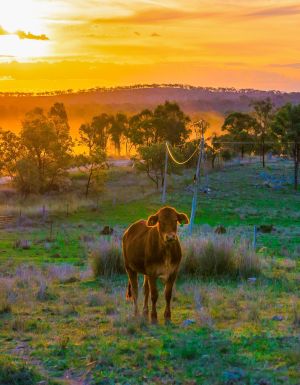
Tucked away in the quaint town of Loch, amongst rolling hills peppered with grazing cows in beautiful South Gippsland, you’ll find Loch Brewery and Distillery .


Housed on the main street, Victoria Road, inside a former bank built in the 1800s, owners Craig and Mel Davies are busily taking advantage of local botanicals to produce high quality, small-batch gin.


Craig had a superlative teacher – Bill Lark from Lark Distillery, to be specific – and he and Mel now produce three varieties themselves.


As much as possible, ingredients are sourced from a farm just up the road. A quick poke around in the botanicals room reveals a host of poetically named ingredients – strawberry gum and lemon myrtle, to name a couple.


Add some juniper to the mix and you’ve got, from weakest to strongest, a Gin Liqueur, a Classic Dry Gin and The Weaver (50 per cent).


Drop by for a tasting and a chat up at the bar, and learn about the beer they brew and the whisky that’s on the way too. The beautiful setting, combined with two friendly hosts and, of course, the high quality gin, make this the perfect day trip from Melbourne.


Better yet, make a weekend of it; the Kernot Food and Wine Store is the place to be on a Saturday night, but that’s a whole other story…

2. Four Pillars Gin, Healesville, Yarra Valley

In keeping with the theme of ideal getaways from Melbourne, may we suggest Healesville in the Yarra Valley? If you do heed this advice, and find yourself in Healesville, then you should promptly make tracks to Four Pillars distillery


Cam Mackenzie heads up operations here; he’s quite a superstar in the world of gin. With 10 trademark botanicals, including cardamom, lavender and star anise, you can’t go past favourites like Navy Strength and Rare Dry Gin.


But Four Pillars is as renowned for its limited-edition bottles as it is its standard range, and this experimental nature is a big part of the success.


For example, the Australian Christmas Gin was created by adding actual Christmas puddings during the distillation process, which took place in Rutherglen Muscat aged barrels. Apparently you can have your gin cake and eat it, too.


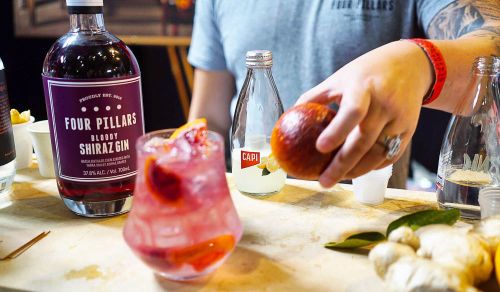
Or perhaps you fancy the deep purple colour and sweet flavour of the Bloody Shiraz Gin, made by steeping Yarra Valley shiraz grapes with gin.


An afternoon well spent includes dropping by the distillery for a glance at Wilma, the copper still named after Cam’s mum, while sampling the fruits of her labour.

3. The West Winds Gin, Margaret River

It’s hard to imagine anything less than amazing coming out of Margaret River, and Australia’s most awarded gin is no exception.


The tipple in question is none other than The West Wind’s The Cutlass, just one of the uniquely Aussie offerings in this family of five gins, including The Barrel Expedition Gin. Aged in vermouth barrels in collaboration with Australian vermouth producers Maidenii, this is the first of a series of barrel-aged expressions.


Mixing juniper alongside flavours like Australian bush tomato and lemon myrtle, it’s these unique elements that have seen the company do our humble island proud.


It all started in 2010, in the style of ‘four guys walk into a bar…’ the punch line being that they left with a goal of producing “damn fine gin".


The very next year West Winds went on to win double gold and gold awards with its first two (damn fine) offerings at the 2011 San Francisco International Spirits Competition.


It didn’t stop there, either: these guys haven’t really stopped kicking award goals since then.

4. Distillery Botanica, Erina, NSW Central Coast

Here’s one for Google dictionary: enfleurage. This fancy French word describes the NSW Central Coast-based Distillery Botanica’s process of extracting the purest fragrances from its ‘hero botanical,’ Murraya (a flowering citrus plant with white flowers, it smells like orange blossom).


The process involves using a fat-based medium, in this case coconut oil, to absorb the citrus aroma of the white flower without heat. The aim is to capture the garden-grown ingredients as purely as possible, so that the jasmine, honeysuckle and orange blossom speak for themselves.


Distillery Botanica’s Garden Grown Gin is what you get when a horticulturist/herbalist turns his green thumb to distilling.


After growing and sourcing the botanicals, Philip Moore hand blends each of the distillations to create a couple of different gin varieties along with liqueurs and even candles. So pure it’s basically like doing yoga, right?

5. Shene Estate & Distillery, Pontville, Tasmania

We’re well aware that Tassie’s at the forefront of all things food and drink, including the swelling gin scene at Shene Estate & Distillery .


At the ripe old age of 197, the estate’s well and truly still got it. Steeped in all the culture and stories of a life well-lived, this grand and iconic building originally served as early colonialist Gamaliel Butler’s country residence and even has links with King George III.


Owners (since 2007) the Kernke family, are painstakingly passionate about the preservation and sharing of the estate’s heritage and began producing gin within its walls in 2015


If atmosphere alone isn’t enough for you, then rest assured that the San Francisco World Spirits Competition made no mistakes in 2016 when they awarded gold and silver medals to both entries from Shene.


Master distiller Damian Mackey, of Mackey Whisky fame, brought his unique brand of knowledge and experience gained under the wing of Bill Lark to the old hayshed at Shene. The result is two varieties of Poltergeist Gin: A True Spirit and Unfiltered.


Your best bet is to heed the advice of Shene and enjoy it with fine company, gossip and in the dead of night.


Why stop now? 

> Follow Kirsty Le Juge and Denver Cramer in their search for the “cool shiz" in food and drink at Whisky & Peanuts

> Let’s meet Sydney’s Gin King


hero media

Taking the route less travelled along the Great Ocean Road

The Great Ocean Road has captured the hearts of Australians with its astounding scenery since 1932, but going off-course can enrich your experience with untouched nature, foodie delights and charming towns. 

It’s a chilly 16 degrees. My husband pulls on a steamer and jogs – as all seasoned surfers do – into the water. We’re at Bells Beach , the legendary break on Victoria’s Surf Coast that’s home to the Rip Curl Pro, the world’s longest-running event in competitive surfing. Each year, over the Easter long weekend, up to 40,000 people descend on the region for the event. Today, though, we have the beach almost to ourselves, and the less-than-favourable temperature doesn’t deter my husband from surfing this famous break.  

Bells Beach
Bells Beach is known for its epic surf break and is at the start of the Great Ocean Road. (Image: Tourism Australia)

Torquay to Anglesea and Aireys Inlet 

Split Point Lighthouse
The red dome of Split Point Lighthouse in Aireys Inlet. (Image: Tourism Australia)

The nearby surf town of Torquay marks the starting point for the Great Ocean Road . Unfolding our map, which we have marked out with a highlighted route for our children to follow, we set off for lesser-known Anglesea, a chilled-out town 20 minutes south of here. Its wide, sandy beach is a gentler swimming option for our young family. Groms can learn to surf here with Go Ride a Wave, which also runs stand-up paddle boarding on the Anglesea River.  

Split point lookout
The lighthouse overlooks the Shipwreck Coast. (Image: Tourism Australia)

After a couple of nights in Anglesea, we hit the road again, first stopping at Aireys Inlet. Here we stretch our legs at Split Point Lighthouse, which was made famous by the 1990s television series Round the Twist, before driving under the Memorial Arch that welcomes us, officially, to the Great Ocean Road.  

This 243-kilometre coastal road was built by returned First World War servicemen and serves as a permanent memorial to those who fought and died during the war. Carved into rock using hand tools and horse-drawn carts, it was a huge engineering feat and provided much-needed access to isolated coastal communities. 

Lorne to Birregurra 

Lorne is a delightful beachside stop for lunch and browsing boutique stores. It’s also the gateway to Great Otway National Park , which comprises a varied landscape of old-growth forests, cool-temperate rainforests, heathy woodlands and rugged coast. With the highest rainfall in Victoria, the region is home to many waterfalls – 10 of which are within 10 kilometres of Lorne.  

Turning slightly off the main drag, we wind along a gum-shaded road to Erskine Falls. Here, our son leads the way through the hyper-green rainforest and down 200-plus stairs to the cascade that drops 30 metres into a lush fern gully. We hop over large boulders to get closer to the falls, enjoying the entire place to ourselves; it’s worth the return climb.  

From Sheoak Falls Picnic Area, there are walking trails to Henderson Falls, Phantom Falls, Won Wondah Falls and Kalimna Falls, some of which follow an old timber tramway from forest-logging days, which only came to an end in 2008.  

Erskine Falls
Erskine Falls is one of many falls within a day trip of Lorne. (Image: Visit Victoria)

You can follow your appetite north to the town of Birregurra, which is part of the Otway Harvest Trail that connects farm gates, markets, wineries, breweries and distilleries. It’s home to three-hatted modern Australian restaurant Brae , helmed by celebrated chef Dan Hunter, set among native gardens and an organic farm, and Otways Distillery, which produces small-batch spirits using local produce and botanicals.  

Brae restaurant
Brae is a three-hatted restaurant in Birregurra. (Image: Tourism Australia)

Apollo Bay to The Otways 

Back on track, the cliff-hugging stretch between Lorne and Apollo Bay is breathtaking. At Teddys Lookout, we overlook the winding road ahead and St George River spilling into the ocean. We spend languid days in Apollo Bay, a buzzy seaside town that boasts a three-kilometre-long, crescent-shaped beach with a backdrop of rolling green hills. One evening, as the sun sets, we take the steep 10-minute walk to Marriners Lookout, which affords panoramic views of the ocean, hinterland and town.  

A 15-minute drive along the road, Maits Rest is a lush rainforest gully that has been protected since the early 20th century. Wandering along the 800-metre boardwalk, we inspect the delicate moss-covered forest floor and the gnarled roots of 300-year-old myrtle beech trees, then crane our necks to see their canopies, some 50 metres above us. It’s therapy in nature.  

Cape Otway to the Twelve Apostles 

Twelve Apostles
One of the famous Twelve Apostles, limestone sea stacks that rise from the Southern Ocean. (Image: Ben Savage)

The southernmost tip of Cape Otway is a delightful detour, home to the 1848-built Cape Otway Lightstation, the oldest surviving lighthouse on mainland Australia. We climb the narrow winding staircase to the gallery deck, explore the keepers’ quarters and telegraph station, and enjoy a coffee and some ‘famous’ scones at the charming onsite cafe.    

It’s a pinch-me moment to finally see the Twelve Apostles in person. This unmistakable cluster of limestone stacks rising abruptly from the sea were never 12, however. When coined this in the 1890s as a marketing ploy, there were only nine; today, only seven remain after two collapsed in 2005 and 2009. We admire these Aussie icons from the viewing platform, in awe of Mother Nature’s ever-evolving artwork.  

The Grotto
The Grotto is another natural attraction within Port Campbell National Park. (Image: Carmen Zammit)

Edging the wild Southern Ocean, this part of the coast – dubbed Shipwreck Coast – is made up of many sea-carved natural wonders including London Bridge, The Grotto and Gibson Steps. After exploring the lookout trails of Loch Ard Gorge/Poombeeyt Kontapool – its English name taken from the site of the 1878 shipwreck – we nestle into the sandy beach encircled by towering sandstone cliffs, as our children splash about on the water’s edge, and soak it all in.  

Port Campbell to Timboon 

Timboon Fine Ice Cream
Timboon Fine Ice Cream is part of a regional foodie trail. (Image: C McConville)

Just north of Port Campbell National Park, the region of Timboon is part of the 12 Apostles Food Artisans Trail, filled with purveyors of delicious foodstuffs such as Timboon Fine Ice Cream , Timboon Railway Shed Distillery and Apostle Whey Cheese. As an antidote to the indulgence, the 20-kilometre Poorpa Yanyeen Meerreeng Trail is a self-guided ride or walk between Port Campbell and Timboon through tall forests, over historic bridges and past sparkling lakes and farmland with grazing cattle.  

Warrnambool to Port Fairy 

Warrnambool building
A 19th-century building in Warrnambool. (Image: Peter Foster)

In Warrnambool, a town rich in maritime history, we take the four-kilometre Thunder Point Walk that traces the coast. The kids squeal when an echidna shuffles out from beneath the wooden boardwalk, and we stop to admire a seal lazing on a rock at the port.  

Further along, the streets of quaint fishing village Port Fairy are lined with 19th-century cottages, old stone churches and Norfolk pines. Follow the historic walking trail to see some of the 60-plus National Trust buildings. Port Fairy is also home to Port Fairy Folk Festival (6-9 March), one of the country’s longest-running music and cultural festivals. You could time your road trip with the event for a fittingly celebratory end to any journey.  

The Great Ocean Road can easily be done in three days, but we’ve spent a week on the road. The highlighted line on our now creased and well-worn map doesn’t follow the famous route precisely. It has sprouted branches in many directions, leading us to untouched rainforest and charming rural towns filled with culinary delights, and where we experienced some of our most memorable moments on the Great Ocean Road.    

A traveller’s checklist 

Staying there

Oak & Anchor
The Oak & Anchor in Port Fairy.

The Monty is a highly anticipated, newly refurbished motel with a chic Palm Springs-inspired aesthetic set across the road from the Anglesea River. Basalt Winery in Port Fairy grows cool-climate wines such as pinot noir and Riesling in rich volcanic soil. Stay among the vines in its tiny home, complete with a kitchen, lounge area and outdoor firepit. 

The Oak & Anchor Hotel has been a Port Fairy institution since 1857. Cosy up by the bar in winter or bask in the sunshine of the Lawn Bar in summer. The rooms are beautifully boutique with considered details, such as luxe baths for sinking into post-road trip. 

Eating there

The Coast in Anglesea is a modern Australian restaurant focused on local ingredients. Grand Pacific Hotel has been a local landmark in Lorne since 1879 and recently underwent a restoration. It serves a mix of traditional pub and Italian fare alongside ocean views.  

Graze is a cosy 40-seat dining room in Apollo Bay with a modern Australian menu complemented by regional wines. Apollo Bay Distillery offers tasting flights, a gin blending masterclass and serves woodfired pizzas.