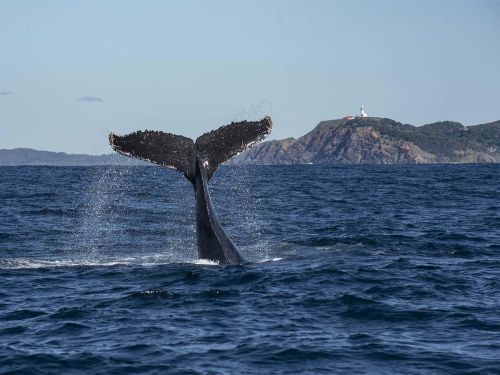
Find out how you can make your whale watching experience extra special in Byron Bay.
The whale migration season is one of nature’s most spectacular sights and NSW coastal national parks are the ideal place to catch the action. Plan your next coastal adventure to Byron Bay to experience the whales enjoying their natural playground.
When can you see whales in Byron Bay?
You can observe the yearly migration of humpback whales passing by Byron Bay from May to November. And while it is possible to spot the whales as early as May, the tours don’t generally start up until June when the whales are travelling north from their Antarctic summer feeding grounds past Cape Byron and onto their breeding and birthing grounds.
As real estate prices indicate, Byron Bay is a beautiful part of the world to be. In addition to dedicated whale watching tours, there are a vast array of activities in the area such as bushwalking, bird watching, photography and guided discovery activities where you might see whales by default.
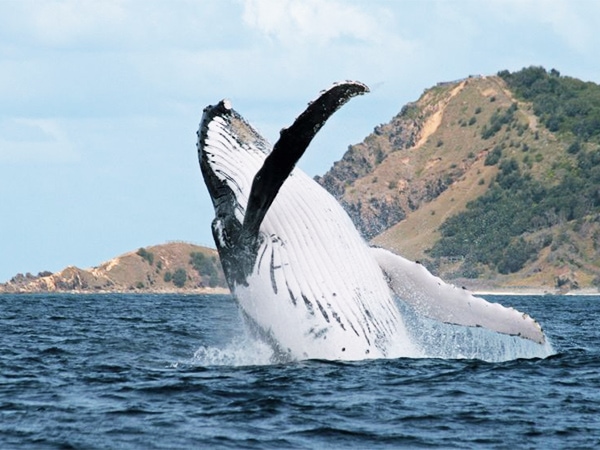
What whales are you likely to see off the coast of Byron Bay?
According to a spokesperson from Byron Bay Whale Watching, 99.9 per cent of whales spotted on a tour off the coast of Byron Bay are humpback whales. To increase the likelihood of seeing whales while in the Northern Rivers region of NSW, book a tour from late June to late September as this is peak time for traffic along the humpback highway.
Can you spot whales in Byron Bay from the land?
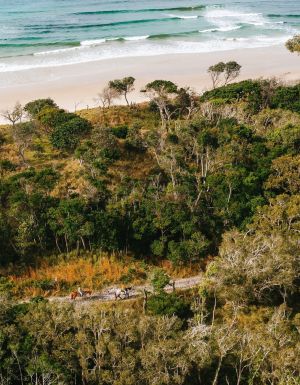
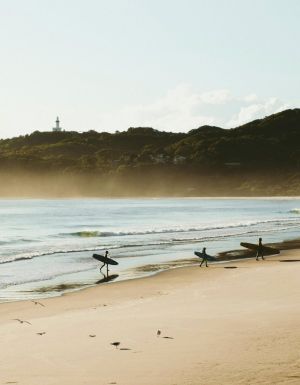
Home to some of the most enviable whale watching in the country, NSW coastal national parks are the perfect location to see the annual migration. Wander along the Cape Byron walking track to see breaching humpbacks along the way, rated as one of the top 10 things to do in Byron Bay. It’s little wonder Cape Byron State Conservation Area is a popular whale-sighting spot as there are top spots to stare out to sea at Captain Cook Lookout, the lighthouse and the surrounding cliffs.
Need tips, more detail or itinerary ideas tailored to you? Ask AT.
AI Prompt
What are some of the best vantage points?
During the whale season, it is also easy to spot whales from the beaches and headlands in the Cape Byron State Conservation Area. BYO binoculars. There are also vantage points at the viewing platform at the end of the Three Sisters walking track in Broken Head Nature Reserve, which is a few minutes’ drive south. According to local yoga instructor Marie Baker, whales have also been spotted mid-warrior pose during a First Light Beachfront Yoga class at Elements of Byron. It’s oh-so-Byron.
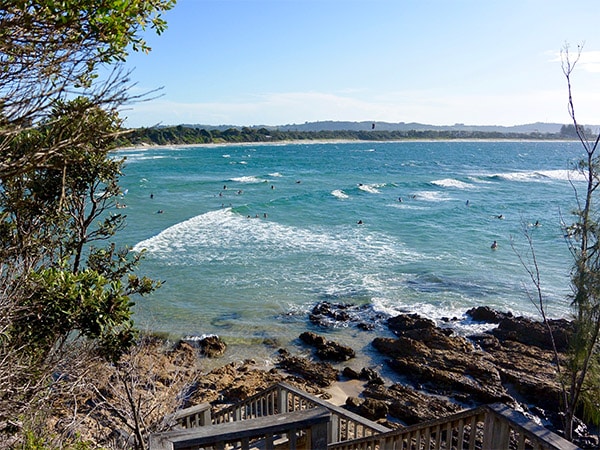
Was Byron Bay a whaling station?
Byron Bay was known as a whaling town between 1954 and 1962. During that time, a total of 1146 humpbacks and two Sei whales were slaughtered. Whalers hunted whales for their oil, which was used in lamp fuel, lubricants, candles and as a base for perfumes and soaps. The largest whale caught at Byron Bay was a female that was 15.9 metres long. During the time the whaling station operated in Byron Bay, a whopping 10,000 tonnes of oil was produced from the slaughter of these majestic creatures. Although Australia ceased whaling in 1978, humpbacks, bowhead, blue and right whales are some of the most endangered species on earth.
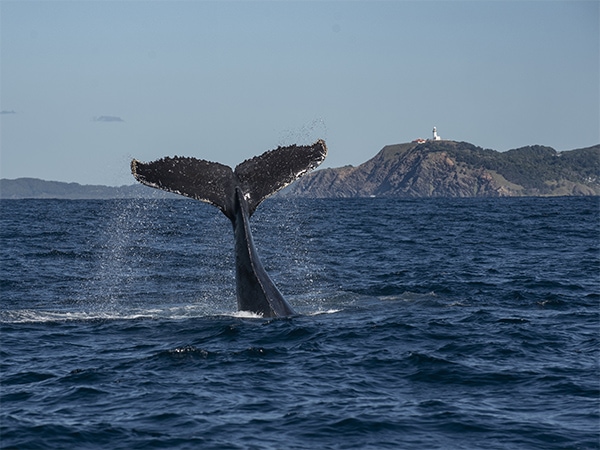
How has the whale population recovered since then?
A research paper published in the international scientific journal Marine Mammal Science, indicates the number of migrating humpback whales travelling up and down the coast has increased by an average of 10 per cent since 1997. The study, entitled A citizen science approach to long-term monitoring of humpback whales (Megaptera novaeangliae) off Sydney, Australia, was led by researcher Vanessa Pirotta, of the Marine Predator Research Group, Macquarie University. And according to an article published in The Lighthouse the study used long-term data to demonstrate that northward-migrating humpback whales (Megaptera novaeangliae) had “shown signs of recovering post-exploitation". The article states that a whale observation program has also run in Byron Bay since the 1980s but only records data for two weeks of the year, compared to two months a year at Cape Solander, located near to the southern entrance to Botany Bay.
What are the best whale watching tours in Byron Bay?
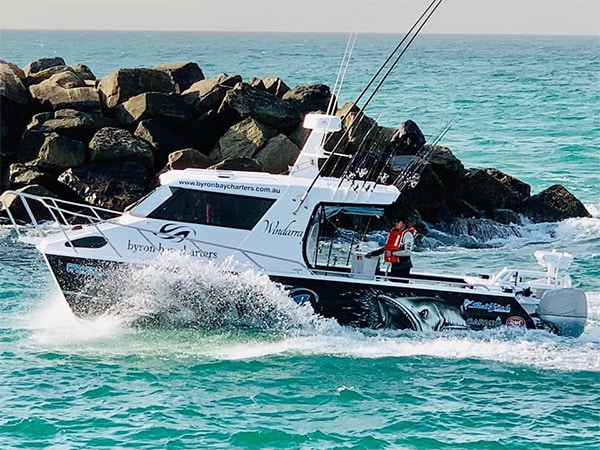
Byron Bay Whale Watching, Byron Bay Charters and Blue Bay Whale Watching all slice out to sea from the Northern Rivers’ town to try and spot the gentle giants in their native marine habitat. There are trained expert eco guides onboard all of the custom-built vessels during the intimate tours to answer any questions they might have about the whales. And those who book a tour with Byron Bay Whale Watching can also listen through a hydrophone to hear live humpback whale song as they hump and bow all around. In addition to spotting whales, passengers are likely to encounter dolphins, sea turtles and migratory sea birds.
Weekly travel news, experiences
insider tips, offers, and more.
Where to stay in Byron Bay with ocean views?
The Lighthouse Keeper’s Cottages
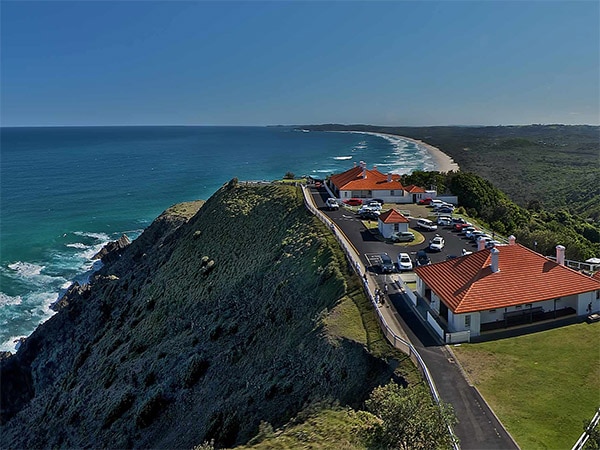
Stay a few days at one of the accommodation options in the national parks, such as The Lighthouse Keeper’s Cottages. The cottages offer sweeping views of white-sand beaches, coastline and the iconic Cape Byron Lighthouse from the summit of Cape Byron State Conservation Area. The cottages have been lovingly restored to retain their heritage charm, with the addition of modern conveniences to ensure you holiday in style. There are two lighthouse cottages, each with three bedrooms, sleeping up to six.
Mildenhall Cottage
With spectacular coastal vistas and direct access to one of Byron’s best beaches, award-winning Mildenhall Cottage is the ideal holiday accommodation for those who love nature and the beach. The cottage is one of four 1920s-1950s beach shacks that have been carefully restored to offer modern convenience with eco-tourism accreditation, while still retaining its original character, heritage and charm.
Luxury places to stay in and around Byron Bay
Visitors to Byron are spoilt for choice when it comes to accommodation. You can book a boho-chic Airbnb so you can stare out at the watery landscape where whales are regularly spotted during the season or dial things up by staying at one of the region’s best beach houses or apartments.
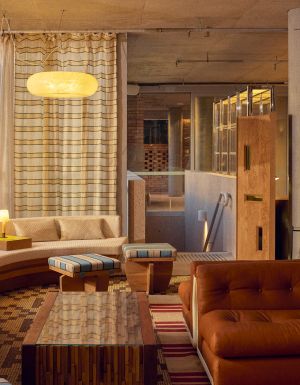
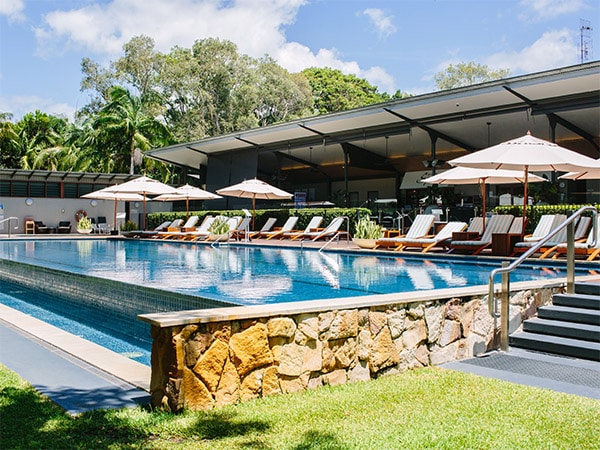
You can also turn your back on the sea and enjoy the region’s subtropical rainforest at the newly minted Crystalbrook Byron (formerly known as Byron at Byron). Embrace Byron’s lifestyle at the resort, which has 92 guest suites, an infinity pool, daily yoga classes and an Eleme Day Spa. Meet your new friends from the whale-watching tour at Forest, the on-site restaurant, which only uses sustainably sourced seafood.
Belle Escapes has expanded its offerings beyond NSW’s Central Coast with Alcorn Cottage at Knockrow, which is paradise for those seeking to avoid the paparazzi as it’s located on a 40-hectare farm that is completely private and separate to the caretaker’s residence. The faithfully restored farmhouse is the embodiment of a tree change done well. It’s warm, liveable and stylish while combining the past with the present. Want lunch at Harvest Newrybar? It’s five minutes away. Want to see the sunrise? Walk to the top of the hill and look out over Byron Bay hinterland down to Lennox Head.
Want to see more stories from Australian Traveller in your Google search results?
- Click here to set Australian Traveller as a preferred source.
- Tick the box next to "Australian Traveller". That's it.

Editor
View profile and articles