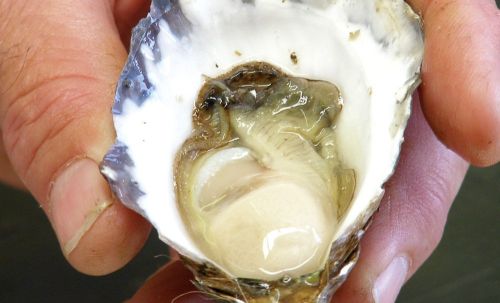
In search of that slippery, suckery, erotic delicacy? Here is how to gets well and truly shucked at Port Macquarie on the NSW mid-north coast.
Let’s not beat about the bush. Oysters are one of the world’s ugliest foods. Despite their decidedly icky looks, however, they have long been the stuff of legend, myth and desire.
Aphrodite herself, Greek goddess of love, emerged from the sea on an oyster shell, giving birth to the word “aphrodisiac" – which has been closely linked with the briny bivalve ever since. Roman emperors apparently liked them so much they paid for them by their weight in gold, sending thousands of slaves to the shores of the English Channel to gather the marvellous molluscs. Casanova was rumoured to have eaten at least 50 off the breasts of his mistress every morning.
You either love them or hate them. If you love them, head to Port Macquarie on the NSW mid-north coast, where a string of oyster farmers have opened up their doors to oyster lovers who know that fresh from the farm is best.
Wallis Lake
Barclays Oyster Farm, the southern hemisphere’s largest producer of Sydney rock oysters, is at Forster, around 300km north of Sydney.
With a dozen freshly shucked oysters going for a song, stock up, find yourself a shady spot beside the water and gorge yourself with platefuls of briny molluscs doused in fresh lemon as you spend an hour or two paddling in the shallows of the Great Lakes – which are actually three great lakes – Myall, Smiths and Wallis – with a series of interconnecting waterways.
Barclay Oysters // Corner Mark & Little St, Forster. Open Mon-Fri 6.30-5pm; Sat 10-5pm.
Lansdowne River
Stones Oyster Farm is an hour up the road at Coopernook, on the banks of the Lansdowne River, which in turn feeds into the Manning River, the only river in Australia to have two entrances to the sea.
Entrance No.1 is at Old Bar, just one of a string of close-to-deserted beaches that stretch along the coast near Taree. Life here is pretty laidback, particularly during the Old Bar Festival each October long weekend when the seaside hamlet becomes the venue for the world record attempt for the largest gathering of kombi vans.
Entrance No.2 is at Manning Point about 10km north as the crow flies, but 40km by road. Strung out along the riverbank is the seaside village of Harrington, home to a fabulous waterfront pub bistro that gets packed on weekends, and a breakwall that’s perennially lined with hopeful anglers of all ages.
Take a walk along the river’s edge and check out the colourfully painted bollards that depict local figures from the village’s past, then drive out to Crowdy Head for endless views of the coastline from the lookout near the blue and white lighthouse.
Stone’s Oysters & Seafoods // 479 Harrington Rd, Coopernook. Open daily 8am-5pm.
Need tips, more detail or itinerary ideas tailored to you? Ask AT.
AI Prompt
Camden Haven River
The next big river to spill into the sea is the wide and sluggish Camden Haven, an easy 30min drive north. Here, half-hidden by mangroves beneath the North Haven Bridge at Laurieton, you’ll find Armstrongs Oyster Shed.
Brandon Armstrong, whose Dad’s been growing oysters here for more than 40 years, explains that they’ve only opened up the farm to the public in the past 12 months. While there are plans for a fancy tasting room, at the moment it’s a rough and ready experience as you pick your way among the litter of oyster shells, dodging big burly blokes in gumboots wielding short sharp knives.
You can, like most people, slurp your freshly shucked oysters straight from the shell while standing at the tiny counter in amongst the machinery, or take a tray and a handful or two of fresh prawns up to the lookout at nearby North Brother Mountain, or down to the picnic tables under the casuarinas at Dunbogan Beach, or eat while you wander along the river walk that leads to North Haven Beach.
Armstrong Oysters // Lot 1 Short St, Laurieton. Open Mon-Fri 7am-4pm, weekends 9am-3pm.
Hastings River
Follow the coast road for 30km to Port Macquarie, stopping along the way to pick up a bottle of local wine at one of the area’s five local wineries (tip: the 2005 Semillon from Innes Lake Vineyard on the outskirts of Port Macquarie is perfect with oysters) and snag yourself a table on the floating pontoon beside the “big oyster" shed on the Hastings River. Thankfully, the only big oyster you’ll see is on your plate – the “real" fibreglass and concrete big oyster is back down the highway at Taree.
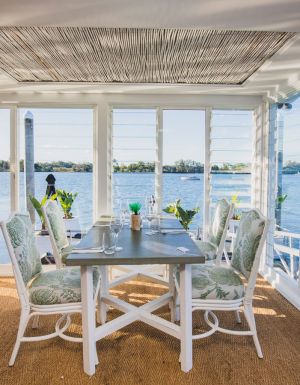
They’ve been growing oysters in Hastings since the 1870s, and there are currently around 30 farmers on the river, although the only place you can buy direct from the farmer is here at the Big Oyster. It’s a magic spot for sitting out over the water and watching the pelicans glide by.
The Big Oyster // Hastings River Drive, Port Macquarie. Mon-Fri 10-5pm, w/ends 10-4pm.
Weekly travel news, experiences
insider tips, offers, and more.
Macleay River
It’s a bumpy, dusty drive beside the Macleay River just south of South West Rocks (home to Smoky Cape Lighthouse and a prison with a killer view, Trial Bay Gaol) to get to the big blue shed at Rainbow Reach, with potholes so deep you could fish in them – but the drive is worth it. John Elford’s oysters explode in your mouth, salty and creamy, with a lingering mineral aftertaste.
He’s been oyster farming here for a dozen years, is passionate about his product and the river he works and lives by, and reckons he wouldn’t want to do anything else. “I get up early in the morning and take the boat out on the river when it’s as flat as a tack," he says. “That’s my office. How can you beat that?"
Rainbow Reach Oysters // Rainbow Reach Rd, South West Rocks. Mon-Fri 8-4pm, Sat 8-12pm.
Want to see more stories from Australian Traveller in your Google search results?
- Click here to set Australian Traveller as a preferred source.
- Tick the box next to "Australian Traveller". That's it.

Australian Traveller
View profile and articles