Exploring Alice Springs in a hot air balloon

hero media
A serene ride in a hot air balloon is the perfect way to see the outback in all its glory, a bleary-eyed Jennifer Pinkerton finds.


The alarm clock screams like a ghost from The Exorcist at 4:49am. Outside, the air is black. It heaves with fog and chill. This is madness; fun things do not begin before 6am.

I clamber into a woollen jumper and long pants, tug on a beanie and sleepwalk a path to the hotel driveway. Ballooning over the outback seemed like a dreamy idea 12 hours ago, but right now, the notion feels thin on romance.

I’m contemplating a coward’s crawl back to bed when a mini bus pulls up. Carrying 10 other sleepy souls, the Outback Ballooning vehicle heads through Alice Springs’s famous gap in the MacDonnell Ranges and makes a beeline for the bush. Through foggy windows it’s hard to see much, but red dust plumes all around, forming a curtain that closes out the township and, 20 minutes later, re-opens upon the desert.

After a stop or two to check the wind speed and direction, our guide Byron Hall announces we’ve arrived, adding that if we choose to stay in the bus while the balloon inflates we won’t be judged.
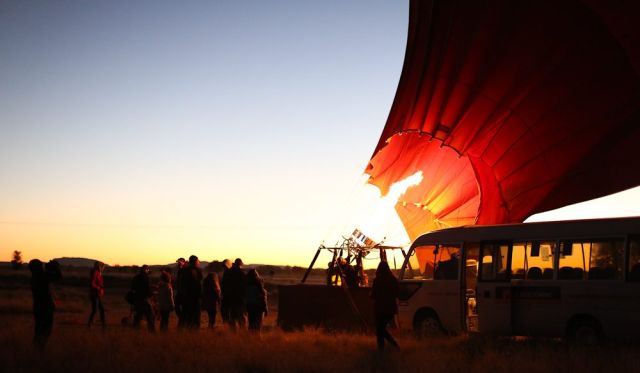
Firing up the balloon at dawn Alice Springs
Firing up the balloon at dawn (photo: Jennifer Pinkerton).

Pre-flight turtle impressions

A couple of passengers take up the offer and perform turtle impressions by reversing their necks deep into scarves and puffer jackets. The rest of us find a spot standing amid the darkened field. We’ve anchored at Owen Springs Cattle Station, 15 kilometres south of Alice.

I grew up in Canberra, a place where the morning sky is often awash with hot air balloons, (including the 34-metre high ‘Skywhale’: a controversial balloon that resembles a bouquet of breasts, designed by artist Patricia Piccinini). Despite all this, I’ve never taken a flight myself.

I expect to feel uneasy. After all, I’m an anxious plane passenger. And flying in a wicker basket minus the safety of an aeroplane cabin? Dead-set shaky.

Our pilot, Jason Livingstone, pulls up in a second car and hauls the basket from his trailer. He and Byron breathe life, otherwise known as propane, into a sea of silky, orange fabric unfurled on the ground. Jason, we discover, reckons piloting “isn’t a real job".

Need tips, more detail or itinerary ideas tailored to you? Ask AT.

AI Prompt

Years above Africa’s game parks

“It’s just one of those things that started as a hobby, and grew into something more." ‘More’ is quite the understatement. He’s flown in Canada, New Zealand and the Gold Coast, and, most recently, spent three years drifting above game parks in Tanzania, where he spotted lions circling carcasses for breakfast, as well as the mass migration of wildebeest and zebras. In comparison, “the outback is full of a beautiful emptiness," he says.

One-by-one, our party straddles the basket edges to claim a space inside the mothership. The basket lips reach collective neck height, making our beanie-wearing group resemble
a dozen Easter eggs. Jason tugs on a bar within a tangle of engine work overhead.

Up shoots a flame. We begin our journey skywards. Unexpectedly, our rise and eventual float couldn’t be smoother. Nor could it be quieter. The silence takes me by surprise.

The ochre and green canvas

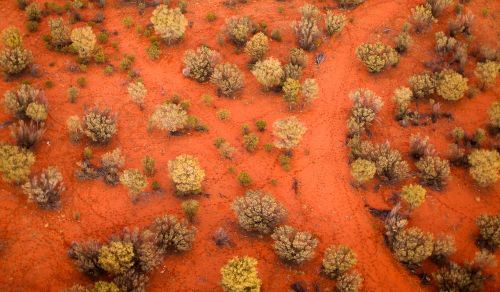
I slip into a meditative open-eyed trance, and as five-metre trees turn into linden-hued dots and roads morph into brush strokes, the land below becomes a canvas – each frame mixed with ochre and green.
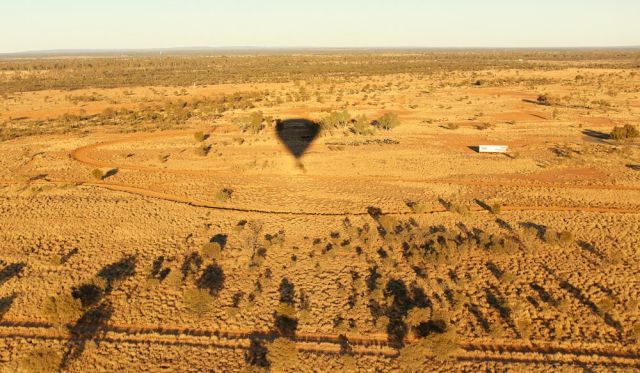
Shadows in the outback Hot air ballooning over Alice Springs
Shadows in the outback: Ballooning over the Alice (photo: Jennifer Pinkerton).

“Here comes the sun," says Jason. A flirty golden glow seeps over the MacDonnell Ranges, until eventually the sun appears full monty. We gaze at the long, thin shadows stretching across the plains like pencil lines.

“The impressive thing about ballooning over the desert is the sheer sense of vastness," Jason says. “Most passengers don’t know what to expect from the flight. They think it’ll be like an aeroplane and that the landing will be rough and tumble. They’re surprised by how calm and relaxed things actually are."

I’m struck that no one feels the urge to talk. Instead we watch the ground move below us. Camels and emus can sometimes be seen, Jason tells us, and closer up, budgies, galahs and red-tailed black cockatoos.

Weekly travel news, experiences
insider tips, offers, and more.

Red ‘roos in the sunrise

For our group, red kangaroos are the species of the day. Three leap through spinifex and mulga scrub, conjuring an aerial scene from a classic outback flick. Our Easter-egg basket buzzes with delight.
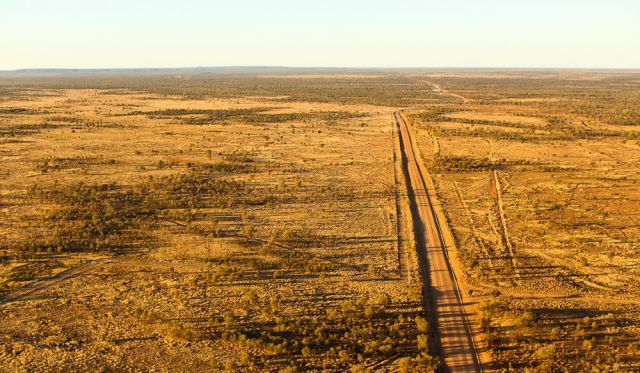
hot air balloon near Alice Springs
Chasing the horizon in a hot air balloon near Alice Springs (photo: Jennifer Pinkerton).

Drifting downwards, a bunny hop or two is all that marks the descent. With 11 passengers now on solid ground, Jason and Byron pop a bottle of bubbly and explain that it’s “tradition to drink champagne after a flight".

The French, who invented ballooning, carried bottles of the stuff as a peace offering for farmers should their paddocks happen to host surprise landings.

It’s when yellow grass flicks at my shins, a champagne flute meets my lips and orange fabric pools in the warmth behind me that I feel a mental back-flip rise. Scratch that alarm clock recalling screams from The Exorcist.

Maybe the 4:49am wake up came from a friendly ghost instead – one who knows, intuitively, fun things start in the dark before dawn.
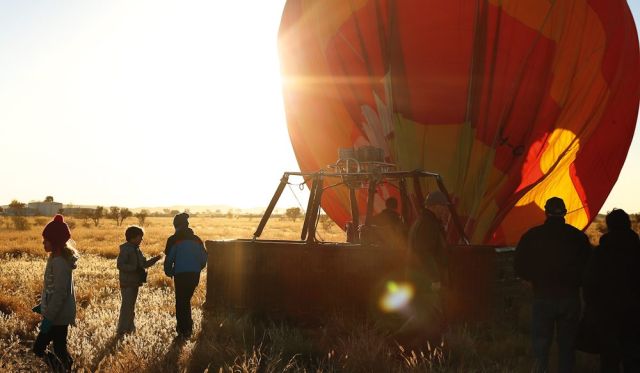
Outback touch down: Exiting the balloon basket
Outback touch down: Exiting the balloon basket (photo: Jennifer Pinkerton).

The details: Outback hot air ballooning

Getting there: Alice Springs is 2700 kilometres west of Sydney via the Stuart Highway. Fly there with Qantas or Virgin Australia.
Staying there: We stayed at Lasseters Hotel Casino, which has views of the MacDonnell Ranges and is a 10-minute walk from the town’s main shopping district.
Playing there: Outback Ballooning runs early morning flights for 30 and 60 minutes, with champagne and snacks served upon landing. Prices from $295.

Want to see more stories from Australian Traveller in your Google search results?

  1. Click here to set Australian Traveller as a preferred source.
  2. Tick the box next to "Australian Traveller". That's it.
hero media

8 reasons why the low season is the best time to explore the Northern Territory

Credit: Tourism and Events NT

September to April in the Northern Territory rewards those who seek adventure.

Sure, the Northern Territory shines during the high season, but did you know it transforms into lush magnificence in the summer low season? From September to April, hundreds of waterfalls roar into action, vegetation flourishes and natural pools swell, all thanks to spectacular storms. This is when some of the country’s best arts and cultural events hit the calendar, too.

Travelling at this time of year means you’ll also be rewarded with off-peak travel pricing on accommodation, tours and experiences, and can even enjoy many of the top sites all to yourself.

1. Kings Canyon is transformed

Kings Canyon Rim Walk Garden Of Eden in the rain
Kings Canyon transforms in the low season. (Image: Kassia Byrnes)

Kings Canyon’s towering sandstone domes and crevasses are a sight to behold year-round, but during the low season you can witness a rare phenomenon. This ancient outback wonder’s arid landscape bursts to life when it rains, temporarily transforming it with waterfalls that thunder down the cliffs. At the base of the canyon is the verdant Garden of Eden and its permanent watering hole.

2. John Hayes Rockhole is a natural wonder

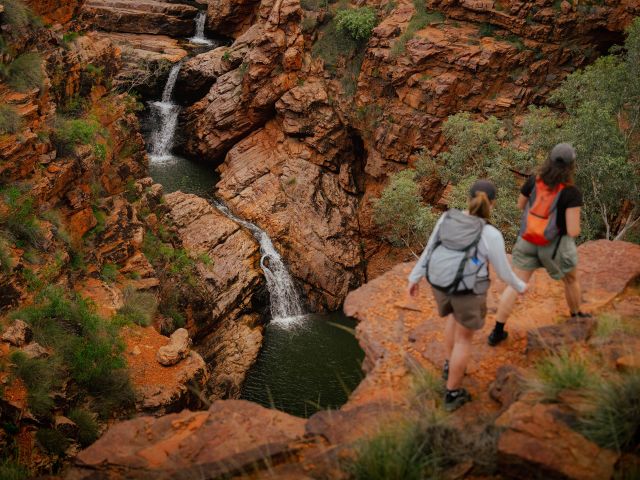
Two women hiking to John Hayes Rockhole, one of the unforgettable experiences during the best time to explore the NT.
Hike to a desert oasis. (Credit: Tourism and Events NT)

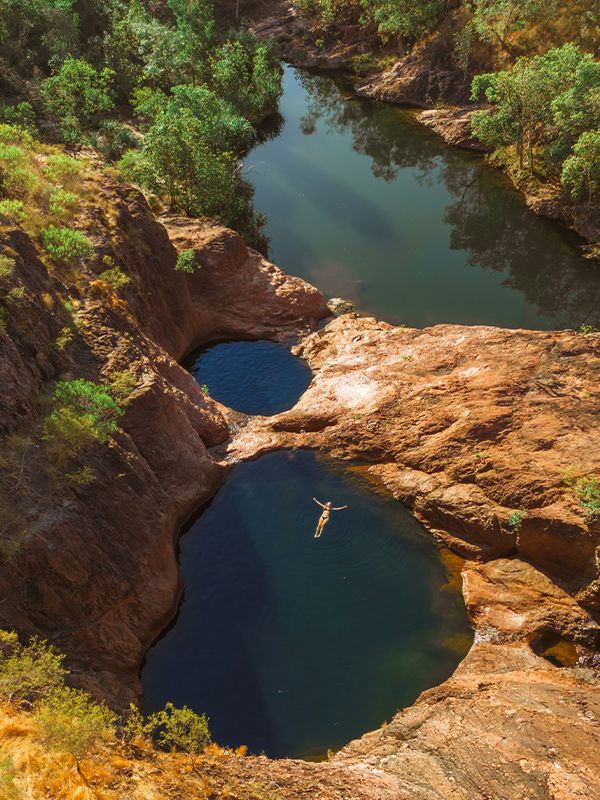
Hidden in the Trephina Gorge Nature Park in the East MacDonnell Ranges, John Hayes Rockhole is an oasis waiting to be discovered. Visit the narrow canyon during the high season, and you may see only a sandy creekbed, but after rain in the low season the pool is full of cool water. It’s accessible via a 4WD-only track off the Ross Highway, or you can set out early and join the nine-kilometre Trephina Ridgetop Walk. The reward for undertaking the hike is worth every step, and there’s a dedicated, tent-only campground for those who’d like to soak up the serenity overnight.

3. The Red Centre Light Trail shines bright

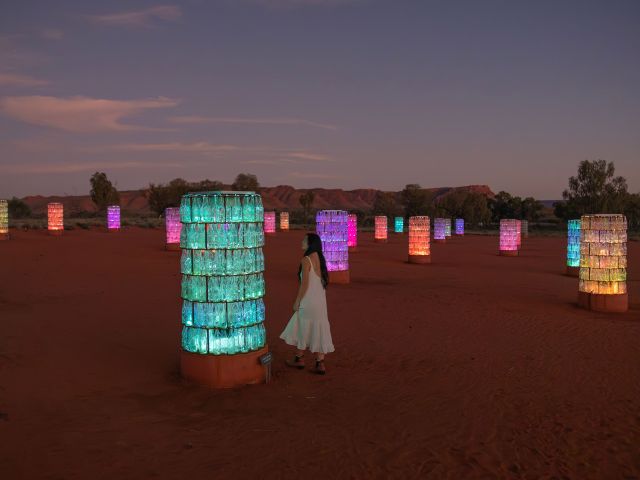
A woman admiring The Light Towers, one of the must-see attractions during the best time to explore the NT.
Watch the Outback light up after sunset. (Credit: Tourism and Events NT)

The Red Centre’s rich cultural heritage and lack of light pollution make it the ideal setting for immersive light shows, and you can experience the most iconic ones on an epic six-day road trip in April. Witness the Parrtjima cultural festival in Mparntwe (Alice Springs) before heading to Kings Canyon for Bruce Munro’s Light-Towers, where 69 glowing towers shine to a celestial soundscape. At Uluṟu, Munro’s Field of Light blankets the red soil with glowing frosted-glass stems, and the Wintijiri Wiru drone show lights up the sky in front of the sacred cultural site. Along the way you’ll witness the changing landscapes of the desert from the West MacDonnell Ranges to the Valley of the Winds.

4. The Parrtjima festival lights up the Red Centre

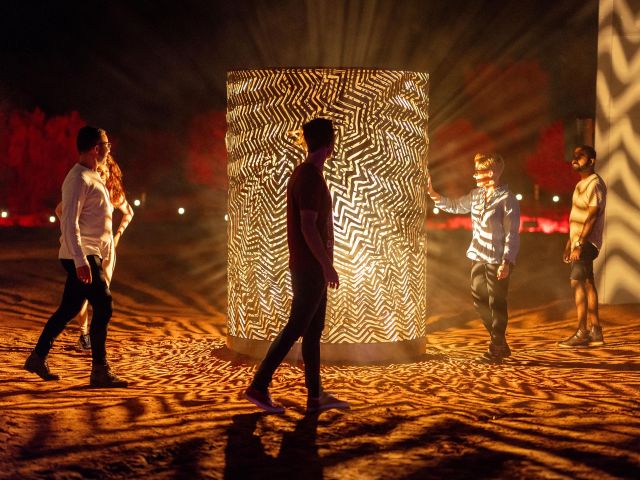
Festival lights illuminating the Northern Territory, showing why the best time to explore the NT is during festival season.
Witness the magic of Parrtjima. (Credit: Tourism and Events NT)

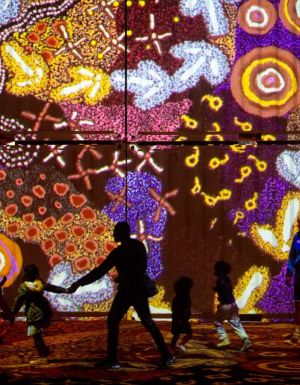
For 10 days every April, the Red Centre turns into a dazzling display of colour for the Parrtjima festival. Held at Alice Springs Desert Park, the unmissable celebration shines a spotlight on the world’s oldest living culture using modern technology. Artworks by local Aboriginal artists are transformed into large-scale illuminated installations with accompanying soundscapes, offering a unique opportunity to see the spectacular sunburnt landscapes, night skies and 300-million-year-old West MacDonnell Ranges in a new light. The jam-packed line-up of art and cultural events also includes workshops, markets, short films, talks and live music.

5. Cruising along Nitmiluk Gorge is breathtaking

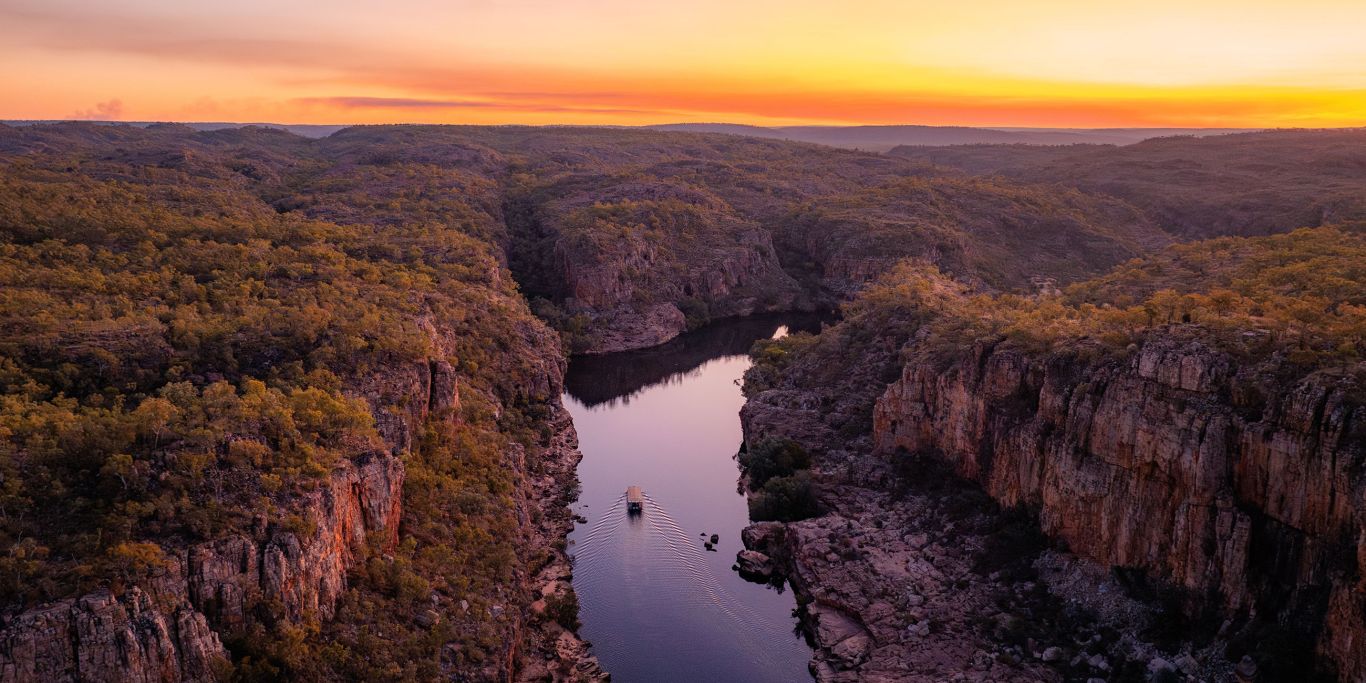
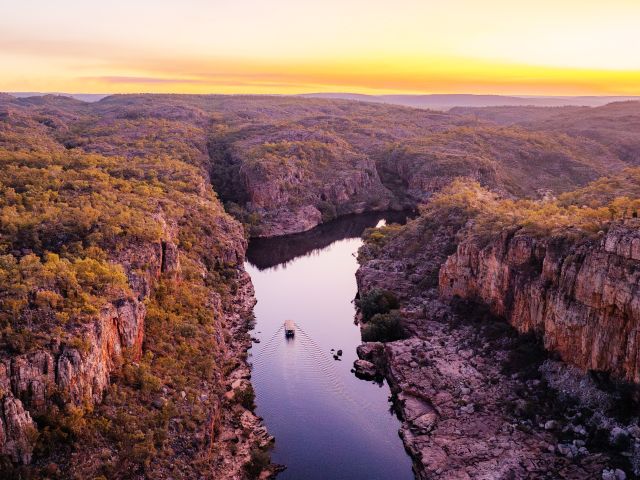
Aerial view of Nitmiluk Gorge, showcasing its dramatic cliffs and waterways.
Sail between towering sandstone cliffs. (Credit: Tourism and Events NT/Nic Morley)

Drifting down the emerald waters of Nitmiluk (Katherine) Gorge between towering red sandstone cliffs carved over millions of years, all while waterfalls stream down around you, is an experience like none other. Nitmiluk Katherine’s two-hour NitNit Dreaming Two Gorge Tour sails through gorges past ancient rock art while a local guide imparts knowledge about the Jawoyn culture and significance of the landscape.

6. You can explore local culture on the Tiwi Islands

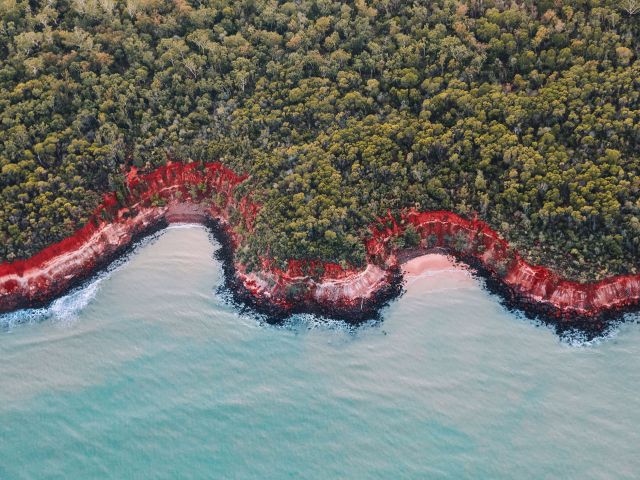
A quick boat ride from Darwin lies the peculiarly pink shores of Melville Island, Tiwi Islands. Populated by the hilariously cheeky Indigenous Tiwis, stepping onto the Islands is like stepping back in time. Sweeping rusty dirt roads meander through the eucalypt forest and are interspersed only by small communities and freshwater springs.
Immerse yourself in Tiwi culture. (Credit: Tourism and Events NT/Elise Cook)

Take an 80-kilometre ferry ride from Darwin to arrive at the Tiwi Islands, an archipelago of 11 picturesque islands and a haven for art lovers and anglers. On the Tiwi By Design walking tour you’ll be guided to the Tiwi Design Art Centre, one of Australia’s oldest art centres, to observe local artists in action and join a screen printing workshop.

If you’re more partial to sinking a line, book a stay at Tiwi Island Retreat in April. It’s one of the best months to fish for barramundi, and their world-class fishing adventures are your best chance at reeling in a prized catch.

7. Scenic flights over Kakadu’s waterfalls are jaw-dropping

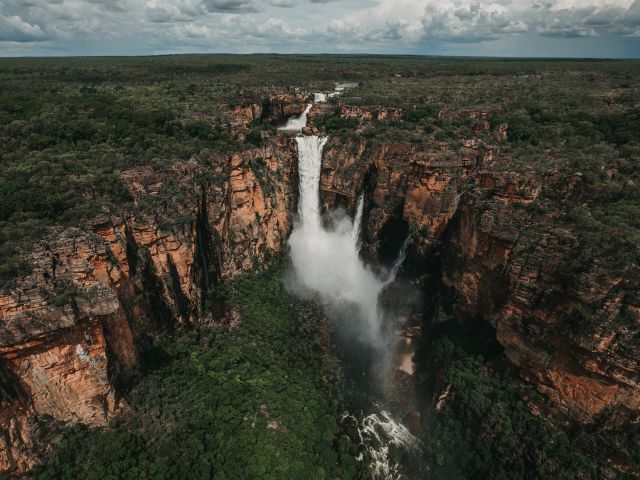
Jim Jim Falls from above during a wet season helicopter tour. Covering nearly 20,000 square kilometres, Kakadu National Park is teeming with wildlife, home to important Aboriginal rock art sites, and takes in diverse and exotic landscape.
Soar above Jim Jim Falls. (Credit: Tourism and Events NT/Jarrad Seng)

Seeing Kakadu National Park’s gushing waterfalls and dramatic escarpments from above offers a dose of unparalleled beauty – and it’s all best witnessed in the low season.

Taking flight from Darwin, Kakadu Air Services offers an unforgettable experience, with doorless helicopters revealing unobstructed views of the 1.8-billion-year-old landscape. Soar above the untouched savannah that turns into a tropical green paradise, marvel at the thunderous Jim Jim Falls and Twin Falls, and whiz through ancient sandstone canyons. If you’re lucky, the scenery will look all the more dramatic with rolling tropical storm clouds in the distance.

8. Litchfield National Park is an amazing place to cool off

Litchfield National Park
Dive into natural swimming holes. (Image: Tourism NT/Joshua Griffen)

Litchfield National Park is peppered with stunning natural swimming pools for you to beat the heat in. Take a refreshing dip in pristine, crocodile-free spots such as Buley Rockhole, a series of spring-fed cascading pools, and the nearby Florence Falls, which is enveloped by monsoon rainforest and features a crystal-clear plunge pool fed by a 15-metre-high waterfall. Be sure to check the Northern Territory Parks & Reserves website for closures before you go.

Start planning your low season adventure of a lifetime at northernterritory.com.

Explore Alice Springs from above in a hot air balloon