Does the Field of Light outshine Uluṟu?

hero media
Field of Light, one of the largest art installations in Australia’s history, sits in the shadows of Uluru’s ancient wonder. Does Bruce Munro’s creation shine brighter than the Red Centre, asks Steve Madgwick?

Bruce Munro has every right to be “bloody petrified". Sure, the logistical riddle of amassing 50,000 lights in the Central Australian desert is reputation-threateningly perplexing. But add to this the multicultural complexity of placing one of this continent’s largest ever art installations smack bang near Uluru, the sacred heart of a culture that has been there “since the first sunset".

This self-effacing “Pom" is fully aware that his choice of canvas is a sensitive one, with a well-documented history of white men trampling willy-nilly over its sacred sites.

“I couldn’t just be a Westerner coming here to impose ideas on this landscape – this is the Anangu’s [the traditional owners’] landscape," says Munro.

Munro describes his negotiations with Anangu elders as a “gentle, four-year discourse", where he tried to convey the spirit and scope of the project. But try explaining to anyone why you want to dump four football fields’ worth (49,000 square metres) of changing-hued frosted lights in the outback.

“It’s hard to visualize and abstract – you really have to see it to understand," he says.

Bruce Munro
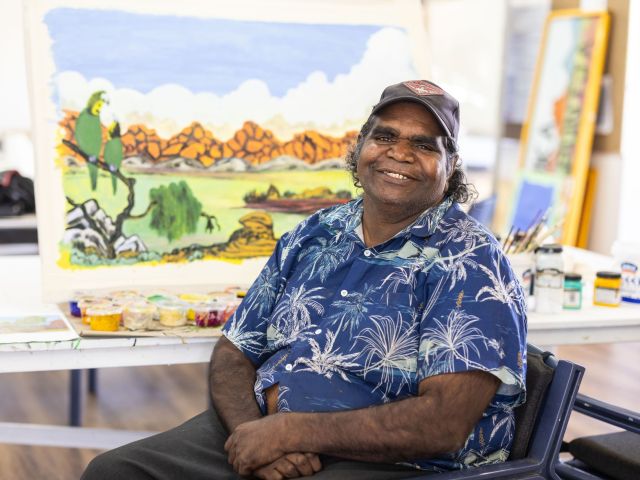
Bruce Munro, the man of light: Creator and artist behind Field of Light, Uluru (photo: Mark Pickthall).

The Anangu community seem to have embraced the installation, helping to clear the land using traditional fire-stick farming techniques, and translating the name into their language, Pitjantjatjara. Tellingly, elders also asked Munro if they could do their own interpretation of the lights down the track.

As of its opening night back in April 2016, the Field of Light is the largest iteration of Munro’s immersive light displays that have graced various landscapes including a field behind his house in southwest England and various sites in the US. He insists, however, that Uluru is something of a homecoming for him as an artist. Back in 1992, on his farewell trip after living in Australia for eight years, Munro and his partner finally made it to the Red Centre (only just) in a “banger" of an old Toyota Corona.

He couldn’t have predicted as he sketched the idea into his notebook, while camping in Uluru, the unprecedented demand his ‘swan song’ would create.

“It sounds like a cliché, but seeing Uluru actually changed my life," he says. “That inspiration gave me a chance to work full-time as an artist.

“And I think that the Anangu understand that I have no ulterior motive – I just want to express how this place has changed my life."
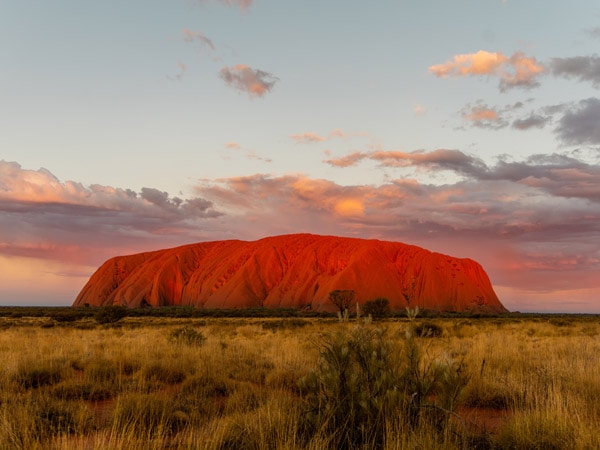
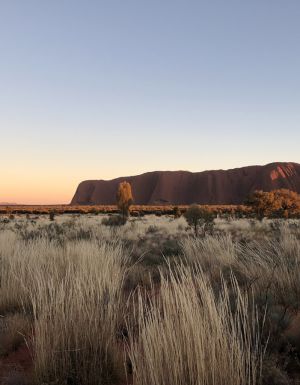
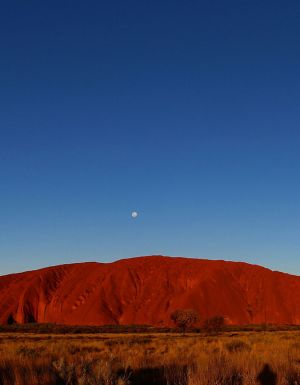
Uluru at sunset
The impact of seeing Uluru inspired Bruce Munro’s Field of Light. (Image: Tourism-NT/ Bronte Stephens)

Seeing the Field of Light at sunrise or sunset

To appreciate art that defines itself only in relation to darkness, you’ll have to prepare to become one of the nocturnal desert mammals; immerse yourself in the desert before the sun kisses the outback horizon and wander through it well after sunset.

From the dune-top viewing area in daylight, the Field of Light merely resembles an incongruous, glistening patch of wild dandelions among the spinifex-rich deep red earth. Stubborn desert oaks spectate in wonder.
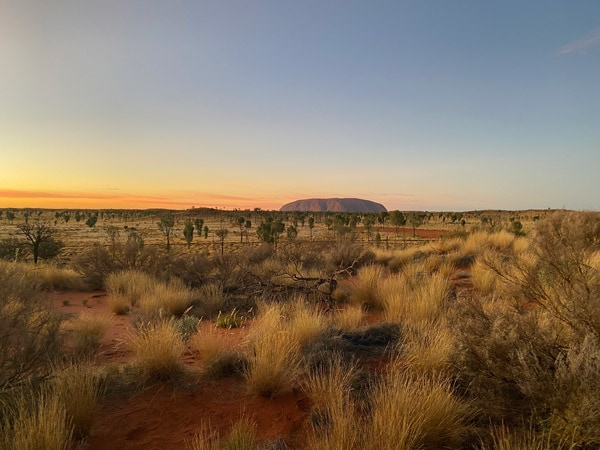
The Field of Light in daylight
The Field of Light disappears in daylight. (Image: Katie Carlin)

At dusk, glass of Champagne in hand, the installation barely draws your eye from The Rock’s awesome presence (it’s located just outside the national park, a respectable distance from Uluru).

Then at twilight, the splendour of the outback stars are intent on pilfering the show. For the Field of Light, it must be like coming on stage after The Beatles have warmed up the crowd for you.

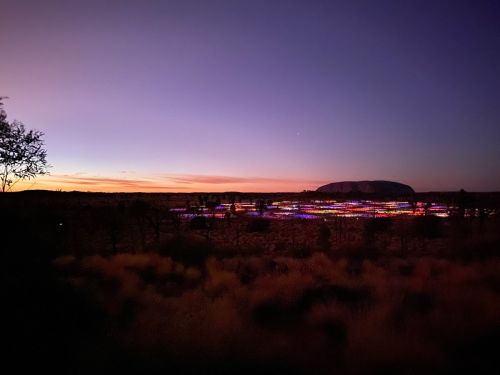
Immersed at eye level is where you want to be after dark. Wander out of the blackness into the impromptu avenues that dissect rhythmic waves of mutable hues, to a chorus of chirping crickets, and accompanied by a tender desert breeze.

It feels like you’ve landed in a psychedelic Netherlands bulb field – subtle violets, soft electric blues and limes, gentle ochres, spectral whites.
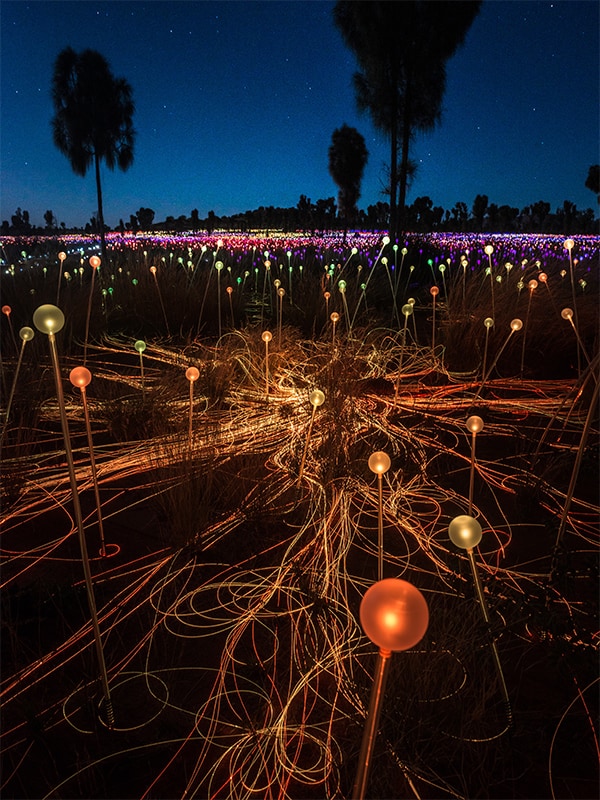
Field of light
The Field of Light has become one of the most popular Uluru attractions.

Field of Light vs Uluṟu

Local artist-in-residence Heather Dunn underlines the futility of comparing the lights with the “natural atmospherics" of the desert.

“The Field of Light is only a complement to a grand space; to the transitory things that happen to Uluru, the colour and change," she says.

“It’s only when Uluru goes to sleep, that this thing takes over on the ground while the stars do above. At first, you think, ‘oh, yeah, there it is; it’s not doing much’, but it starts to build, like an orchestra. Then you get among it!"
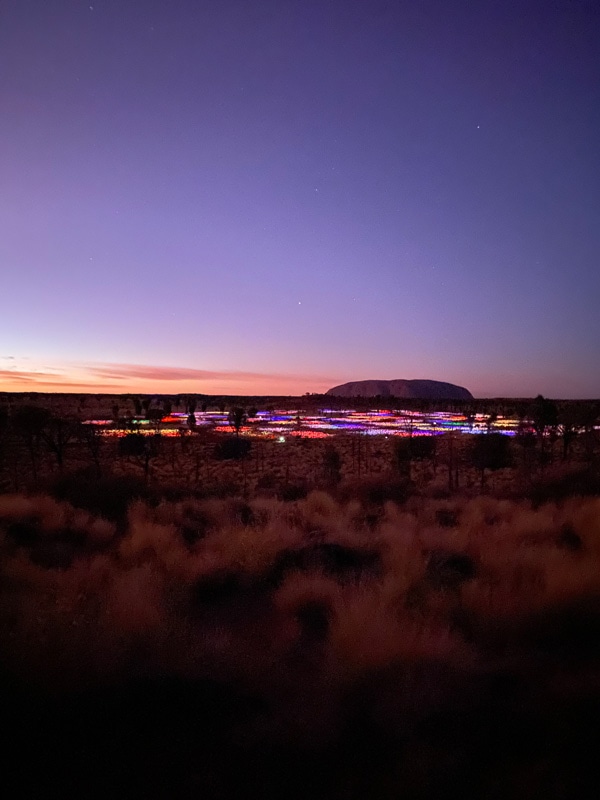
Field of Lights at sunrise at Uluru
It is futile to compare the Field of Light with the wonder of Uluru. (Image: Katie Carlin)

The concept behind the Field of Lights

Around 380 kilometres of crisscrossed fibre-optic cables creep along the ground; tendrils of silvery light, a confusion of trippy snail trails.

Munro chose a colour palette sympathetic to the desert, omitting deep greens because he saw none way back in 1992. Instead, the spindly stems breathe and sway through a sympathetic desert spectrum of ochre, deep violet, blue and white.

Not only is this his first solar-powered work (well, there are not many power outlets in the desert), but it’s also “a lot less designed" and geometric than its forerunners; a concession to the untamable desert scape.
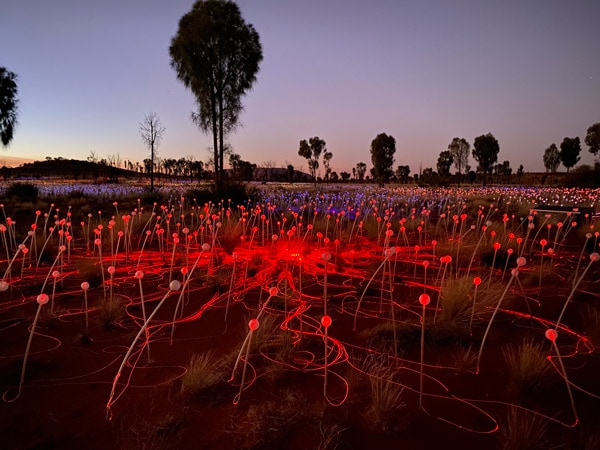
Close up of Field of Lights at Uluru
The Field of Light is coloured a desert spectrum of ochre, deep violet, blue and white. (Image: Katie Carlin)

Aṉangu art and culture

But back in daylight, with some truly local knowledge, you realise that this most modern of art installations is not just sitting alone on a barren desert, but actually on the cusp of a monumental outdoor gallery.

Literally, hundreds of Aṉangu rock paintings and etchings perch among the crags and nooks of Uluru and nearby Kata Tjuta (the Olgas), embedded physically and metaphysically into the landscape and lore.

Each on its own seems sparse and simple, surely no match for the lights, but collectively they weave an immensely bigger picture.
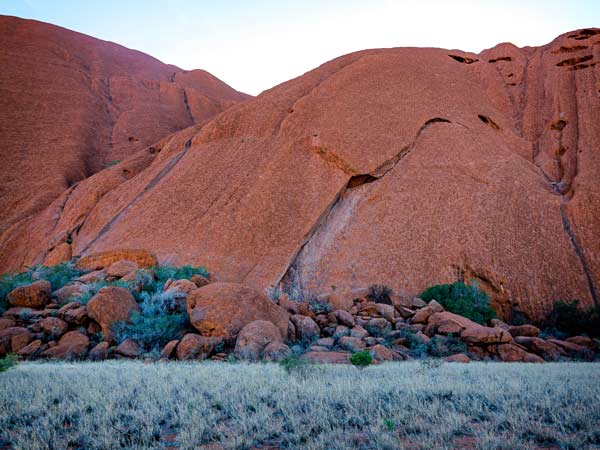
Close up of Uluru
For Anangu art is about survival in the desert landscape. (Tourism NT/ Kate Flowers)

“Art is about survival out here," says Anangu man Leroy Lester, from Wintjiri Arts & Museum. “In places like Kakadu, they’ve got plenty of food so they had lots of time to paint things like big barramundis with all the organs. We had no time for that.

“Out here, especially when it’s dry, you’d rather drink the water than mix ochre with it. The main art was body paint and ceremonies – but even ceremonies were cancelled in times of drought."

According to Leroy, art out here acts like a billboard spruiking Tjukurpa (creation stories). The Rock is a physical embodiment of it and the Anangu read them both like a scripture and as a daily life roadmap.

“The paintings might show a big lizard, so everyone who’s looking for a big lizard to eat can find one. Or so you can find a waterhole."

The Field of Light is a grain of sand in Uluru’s grand narrative

While Uluṟu is primarily just a powerful muse for Munro, he does relate to one principle of Anangu art and culture; a sense that the past informs the present.

“It intrigues me that the Anangu have an interwoven concept of time that reflects mine: of time past, when I first saw Uluru; of time present, the exhibition now; and time future, how once this has been swept away, the living memory that goes into people’s hearts and minds."

The living memory is enough to sate Munro, aware that the Field of Light is barely a grain of sand in Uluru’s grand narrative. “I actually like the fact it’s ephemeral – you can flick it on and off."

He’s not the kind of artist to scribble his name on a tree trunk or cast a bronze statue (and much of the installation will be recycled, too). “Ultimately, I think we’re all just pushing ideas through time."
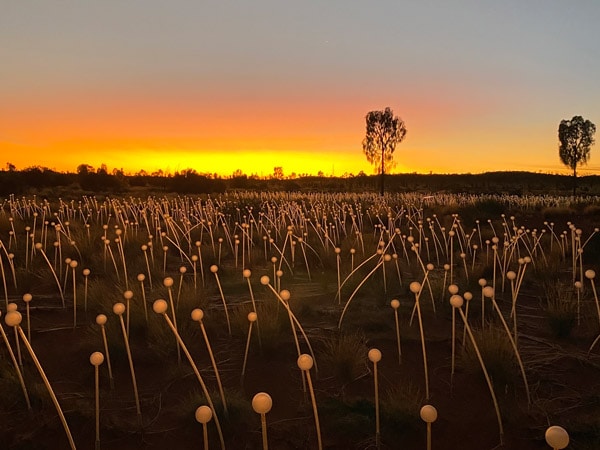
Field of Light in sun
The last glow of the Field of Light before it disappears with the sun. (Image: Katie Carlin)

Field of Light, Uluru details

Playing there

The Field of Light (also named Tili Wiru Tjuta Nyakutjaku or ‘looking at lots of beautiful lights’ in the local language) is now showing indefinitely.

It is currently open for tours with a Field of Light pass ($45). The four-and-a-half-hour, three-course A Night at Field of Light Dinner inspired by bush tucker costs $280 per person (with Australian wines and beers as well). Other options include a Field of Light Star Pass with viewings of the work and outback canapes with sparkling wine or beer.

Staying there

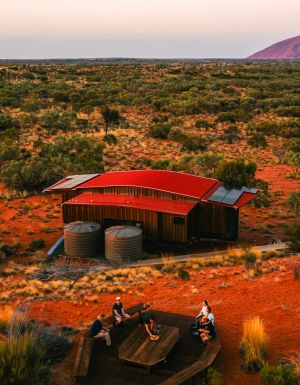
Ayers Rock Resort offers an array of family-friendly accommodation options including the five-star Sails in the Desert. Book ahead to go glamping at Longitude 131.
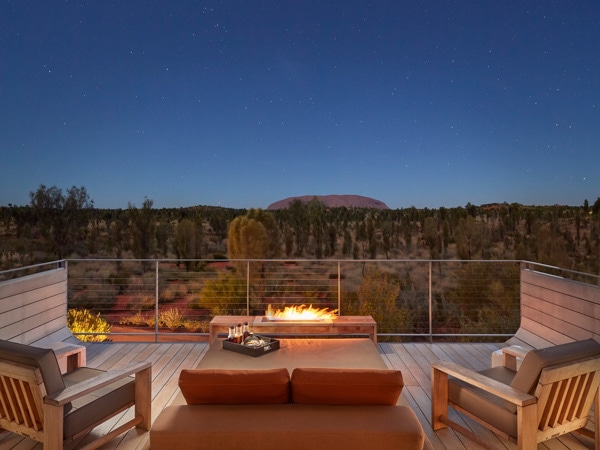
Longitude 131's collection of pavilions provide jaw-dropping views of Uluru and Kata Tjuta. (Image: Tourism NT and George Apostolidis)
Longitude 131’s collection of pavilions provides jaw-dropping views of Uluru and Kata Tjuta. (Image: Tourism NT and George Apostolidis)

Getting there

Jetstar, Qantas and Virgin fly regularly to Ayers Rock Airport, Uluru.

hero media

8 Northern Territory secrets the locals don’t want you to know

Summer transforms the Northern Territory into a lush paradise of colour and life, as a visit during the ‘low-season’ reveals secrets the locals willingly share.

Waterlilies bloom, floodplains are alive with birdlife, waterfalls are gushing, and everywhere the green is dazzling. Summer in the Top End and the Red Centre is a kaleidoscope of unexpected wonders that delight and surprise visitors. Of course, the locals know only too well that the Northern Territory low season is often the best time to see and experience this amazing part of Australia.

Here are some of the reasons why savvy travellers – avoiding the crowds – are discovering a new dimension to the Territory. Remember that you’ll need a Parks Pass to visit national parks.

1. Take a dip in the Florence Falls waterhole

Wander through savanna woodland and monsoon forest to discover the perfect place to cool off – the waterhole at the base of spectacular Florence Falls in the magnificent Litchfield National Park , just 90 minutes’ drive from Darwin. The falls flow year-round but are most spectacular during the summer. Camping is available nearby but bookings are essential and must be made online before you visit.

Surrounded by lush forest, a woman cools off in Florence Falls, just one of many incredible things to do in the Northern Territory.
Cool off beneath the cascading waters of Florence Falls. (Image: Joshua Griffin)

2. Wind down at Buley Rock Hole

Another popular local swimming spot in Litchfield National Park is Buley Rock Hole , open year-round. This is a great place to wind down after exploring everything the park has to offer, including towering termite mounds. Wade through the rock pools, soak up the scenic bush or just lie back and relax as the cool water rolls over you.

Buley Rockhole, Litchfield National Park
Let the cool water wash over you. (Image: Tourism Australia)

3. Tour the Tiwi Islands

The Tiwi Islands , a scenic 80km flight from Darwin across the narrow Clarence and Dundas Straits, reveal a different side to the Territory, with their own distinctive culture. Take a day tour with Tiwi by Design to visit Bathurst Island and learn about creation stories, the Mission days, World War II history and the islanders’ obsession with AFL!

Take a ‘behind-the-scenes’ tour of Tiwi Design’s screen-printing workshop and pick up a great souvenir in the form of art. Choose from contemporary or traditional Tiwi designs and a wide range of work including carvings, paintings, pottery, printmaking, bark paintings and tunga (bark baskets).

A creative moment shared inside Tiwi Design’s screen-printing space.
Take a peek inside Tiwi Design’s screen-printing studio. (Image: Tourism NT)

4. Dine in Darwin

Foodies are spoilt for choice in multi-cultural Darwin. Try Sri Lankan flavours at Ella by Minoli, where Masterchef contestant Minoli De Silva creates delectable dishes, or head to Charlie’s of Darwin for gin-tasting, cocktails and more. Bowls of fragrant laksa, excellent coffee, fresh vegetables and authentic crafts are all part of a weekend visit to Darwin’s Parap Markets , Rapid Creek Markets and the Nightcliff Markets .

Prefer to catch your own dinner? Book a Top End fishing charter to bag a barramundi – and from October register for the annual Million Dollar Fish competition. Hooking one of the tagged barra released each year in waterways across the Territory could win you up to $1 million.

A bowl of Laksa.
Eat your way through multicultural Darwin. (Image: Tourism NT)

5. Up close with Uluṟu

The magnificent monolith Uluṟu is even more magical when the summer rains fall. When it rains on The Rock, the locals come out to watch – consider yourself lucky if that happens when you visit. Waterfalls cascading off the sides of Uluṟu is a sight that relatively few tourists see.

There’s so much to do at Uluṟu, from guided walks to learn the stories of the Aṉangu people and the ancient landscape they live in to scenic flights for a bird’s-eye view or a leisurely walk around the base of Uluṟu. Book ahead to spend the evening wandering through the Field of Light installation by Bruce Munro.

A closer look at Uluru and uncover its ancient stories, sacred sites, and striking natural beauty – one of the most iconic things to do in the Northern Territory.
Discover the details that make Uluṟu truly sacred. (Image: Tourism NT)

6. Drive the Red Centre Way

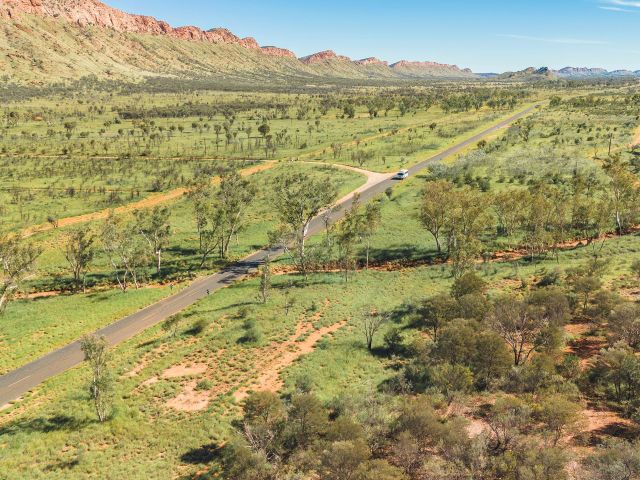
From Alice Springs, take an epic road trip along the Red Centre Way, taking in Uluru and Watarrka National Park, home to the magnificent Kings Canyon. Allow at least a week to drive through the red heart of Australia by 4WD, a little longer on the sealed road by 2WD vehicle, travelling through ochre deserts, palm-lined valleys and dramatic gorges. Stop off at waterholes for a refreshing dip along the way.

Kings Canyon offers hiking options for all levels of fitness, from the three-hour Rim Walk atop soaring sandstone walls to the gentler Kings Creek Walk. Either way, you’ll have breathtaking views.

SEIT Outback Australia is a small group touring specialist offering exciting, adventurous, exclusive and specialised iconic, pioneering and cultural touring in the Red Centre of Australia, giving you the time to learn, absorb and relax in the heart of Australia.<br /><br />This innovative tour company focuses on providing clients with the ultimate interpretive touring experiences with a range of products and customised touring itineraries for small groups and bespoke private charters.<br /><br />The company bases its philosophies from the key words of Spirit, Emotion, Intellect and Task (SEIT).
Drive through Australia’s heart. (Image: Outback Australia Tours)

7. Take a walk at Kata Tjuṯa

Head out early to tackle the Valley of the Winds Walk at Kata Tjuṯa . This natural wonder, also known as The Olgas, is a labyrinth of soaring ochre domes that glow golden at sunrise and sunset (the walk may be closed during the middle of the day as temperatures rise).

Walking trails range from easy to longer, more difficult tracks. At the Kata Tjuṯa dune viewing area, take in the panoramic view of the domes. The longest of the trails is the Valley of the Winds Walk, a 7.4km circuit that winds between the domes and through creek beds. It’s moderately difficult and steep in places, but offers stunning views – and occasional encounters with kangaroos.

The Valley of the Winds Walk at Kata Tjuta is one of the most awe-inspiring things to do in the Northern Territory, especially at sunrise when the domes glow golden.
Step into the golden light of Kata Tjuṯa. (Image: Tourism NT)

8. Explore Tjoritja/West MacDonnell Ranges

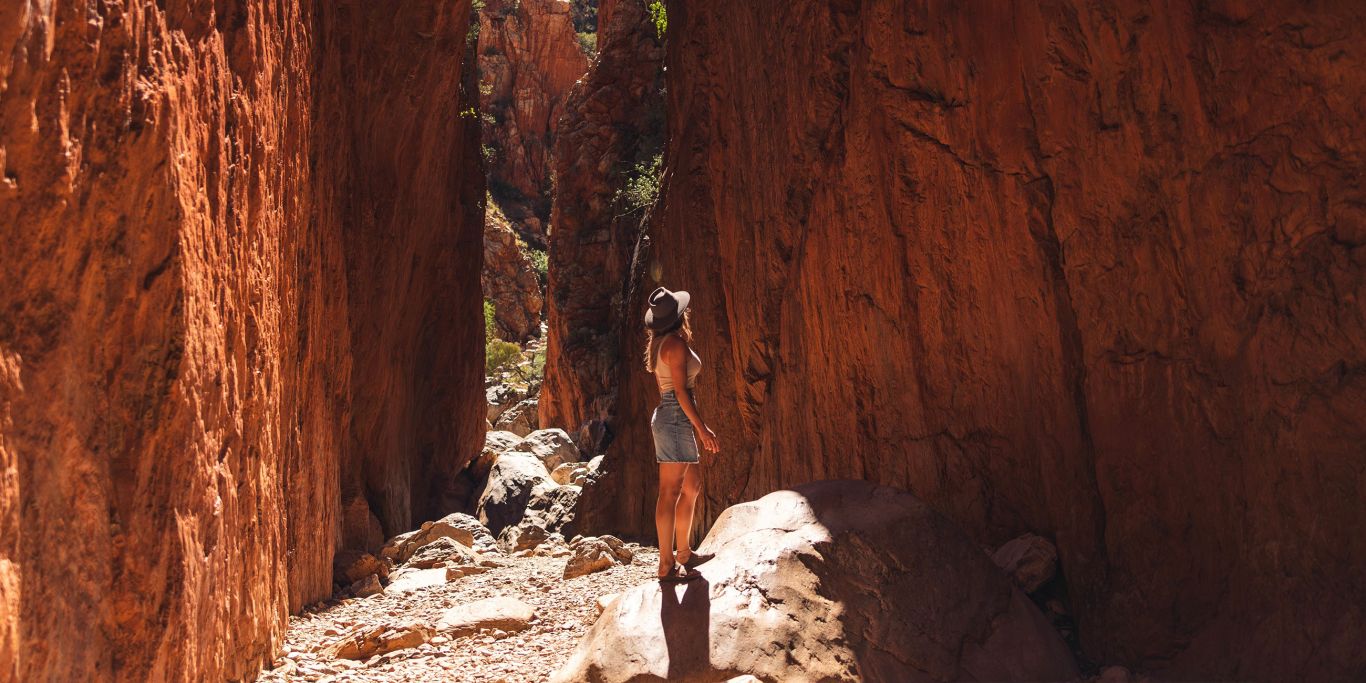
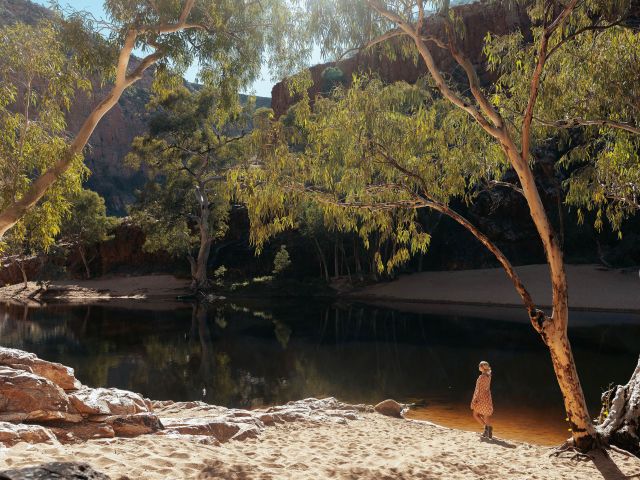
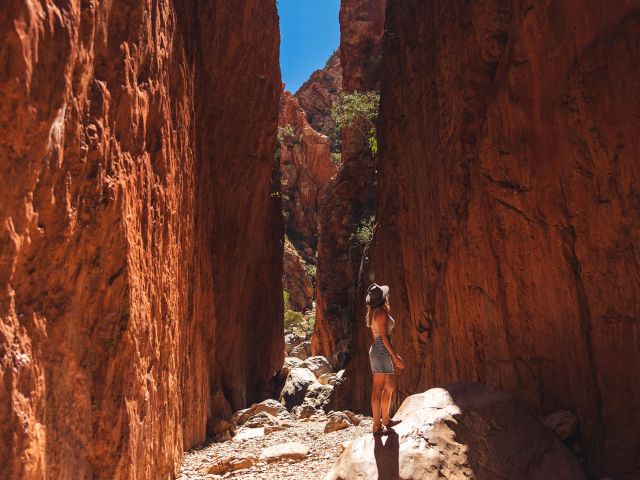
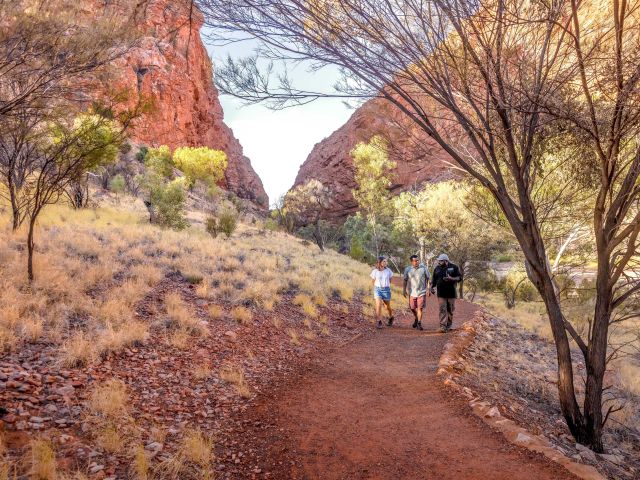
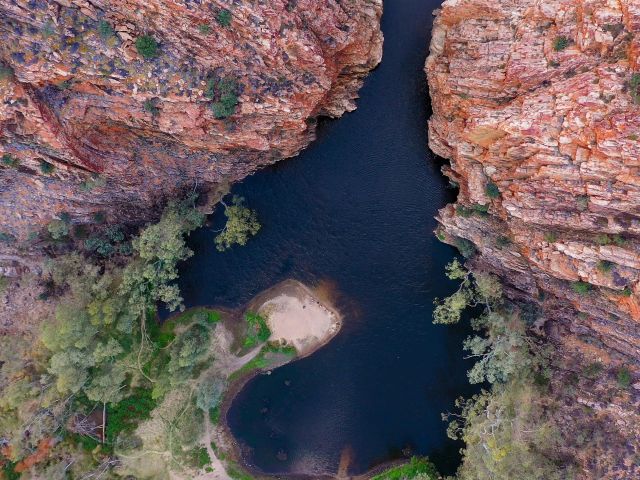
Tjoritja/West MacDonnell National Park lies 135km west of Alice Springs, with many fascinating natural features to beguile visitors. The ‘West Macs’ formations include chasms, gorges and waterholes – take your swimsuit for a dip at Ormiston Gorge waterhole, open year-round. The Ormiston Pound Walk is a three to four-hour circuit that leaves from the visitor centre and loops back along the gorge via the main waterhole. Other places of interest in the park include Simpsons Gap , Standley Chasm , Ellery Creek Big Hole and Glen Helen .

Soaking in the serenity of Ormiston Gorge, these two travellers enjoy one of the most scenic things to do in the Northern Territory.
Take the plunge at Ormiston Gorge waterhole. (Image: Joshua Griffin Litchfield)

Start planning the NT road trip of a lifetime at northernterritory.com