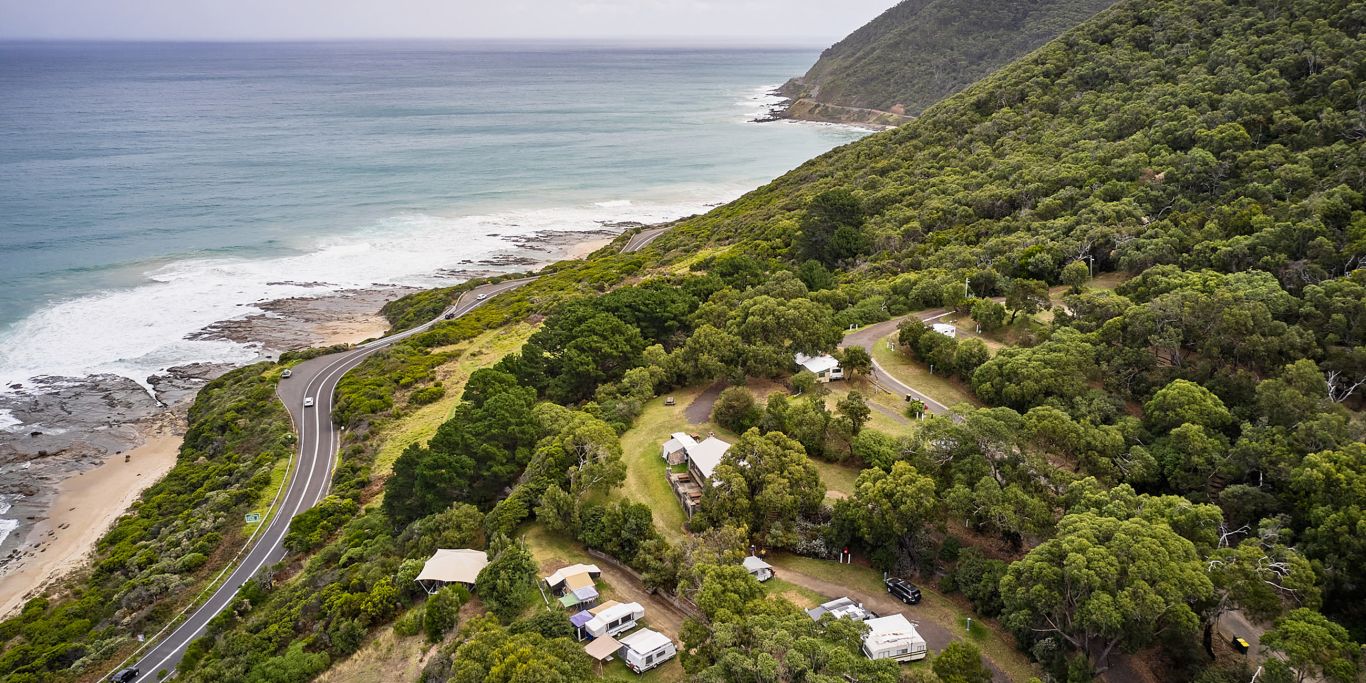

Where the bush meets the sea, take your pick of Lorne’s diverse accommodation.
Situated about halfway between Geelong and the Twelve Apostles, Lorne is one of the most popular stops along the Great Ocean Road. Stay anywhere from one night to one week, with your choice of holiday rentals, cottages, hotels or caravan parks. We’ve hand-picked some of our favourite accommodation to make your trip planning easier – so come on, the road is calling.
In short
If you only stay at one accommodation in Lorne, make it Perch Lorne. This smartly designed studio provides the perfect balance of value, location and charm.
Hotels
Lorne Hotel
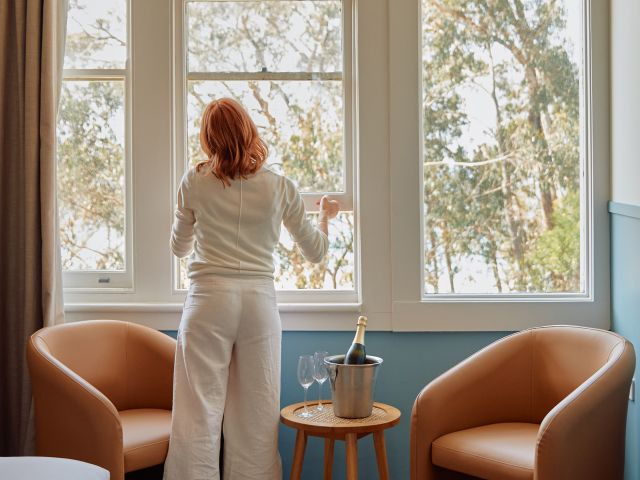
For an unbeatable location in the centre of town, just a stone’s throw from the main beach, look no further than the Lorne Hotel. Yes, it can be noisy – but for a short stay its convenience is unmatched. Come dinnertime, just head downstairs to the coastal Italian vibes at the trattoria-style Totti’s Lorne (book ahead), or to the sunny beer garden for a classic pint and parma.
There’s also something nostalgic about staying at the home of the annual Pier to Pub ocean swim (yes, this is said pub). The light and bright rooms host up to four guests, including conveniences such as a minibar fridge, kettle, and coffee maker; access is stairs only and parking is included.
Address: 176 Mountjoy Parade, Lorne VIC 3232
La Perouse
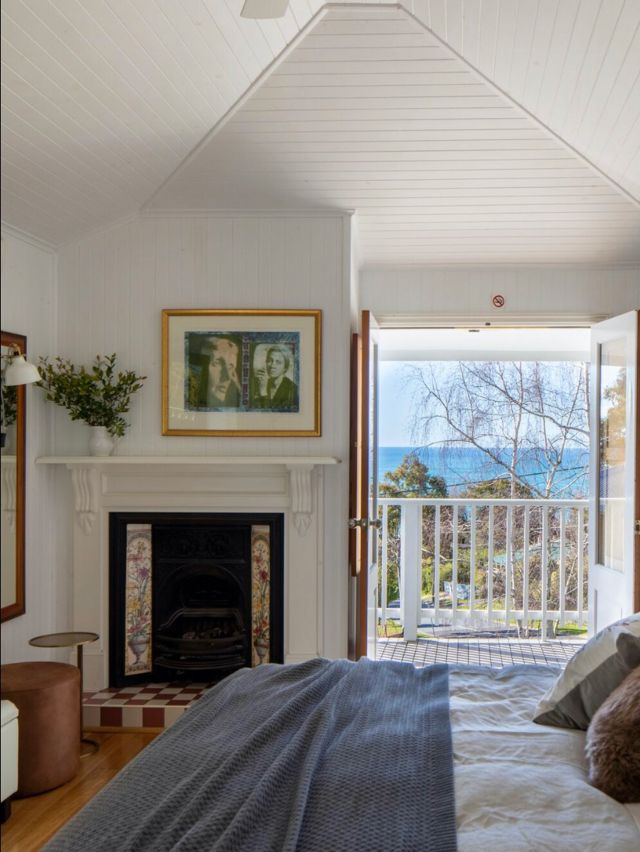
Just a ten-minute walk from Lorne’s main strip, this charming boutique hotel is one for the romantics. The four stylish rooms at La Perouse have been lovingly decorated in a timeless Provincial style that will have you thinking you’ve stepped into the French countryside. It’s the little touches of luxury from owners Sue and Laurel we love, from the pottery and paintings by Australian artists to the Aesop products, linen bathrobes and 100% cotton beach towels (handy if you’ve forgotten to bring your own).
Each room has its own private balcony or verandah (hello ocean views), but our favourite is the downstairs Deluxe Room with its outdoor clawfoot bath… heaven. There’s parking onsite and the warm hospitality includes a standout breakfast, served Parisian style in the kitchen or terrace with ingredients sourced locally and from their own garden.
Address: 26 William St, Lorne VIC 3232
Qdos Treehouses
There’s something soothing about being surrounded by nature – and where better to do it than in a treehouse? Qdos Treehouses is a tranquil eco retreat on the site of an arts venue, home to a gallery, garden and cafe (where you’ll enjoy a daily breakfast, with eggs from their own chooks). The five Japanese-style retreats ooze zen vibes, and we don’t know what we love more: the private sundeck or that there’s no TV. And while the beach feels far, it’s only a few minutes’ drive away.
Address: 35 Allenvale Rd, Lorne VIC 3232
Need tips, more detail or itinerary ideas tailored to you? Ask AT.
AI Prompt
Airbnbs and holiday homes
Kalimna
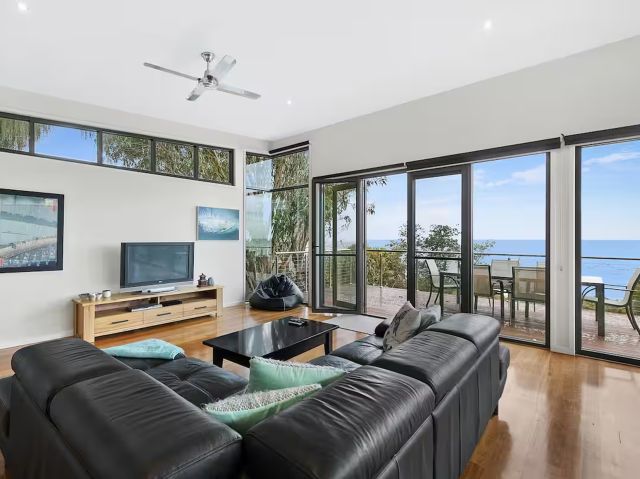
If you’re travelling with a group of friends or family, Kalimna is the 5-bedroom-2.5-bathroom stunner everyone will love (and fit). Spread over three levels, this modern home-away-from-home is primed for memorable moments: think breakfasts on the patio with uninterrupted sea views, walks to the beach, feeding the friendly cockatoos and waking up to the sound of the ocean.
It’s just a short drive to the centre of town, but with a full kitchen, pool table, and main living area that begs you to sit back and soak in the sight of that big blue ocean, we think you may not want to leave. Host Robyn is noted for being an excellent communicator, so if you do decide to venture out, she’ll have recommendations ready for you. Oh, and there’s no wi-fi – but with views like these who needs it.
Address: Provided after booking
Perch Lorne
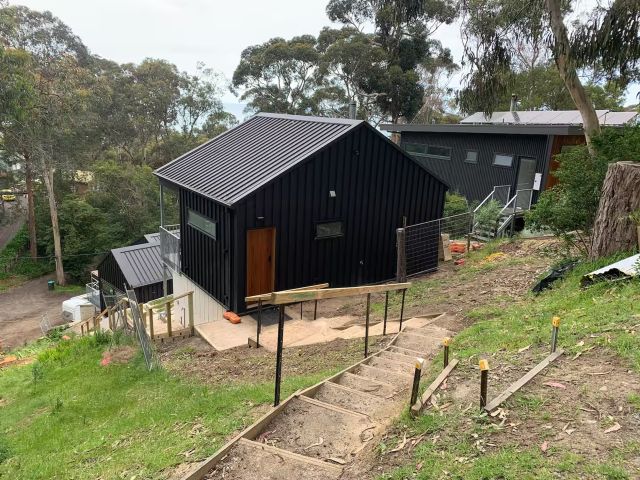
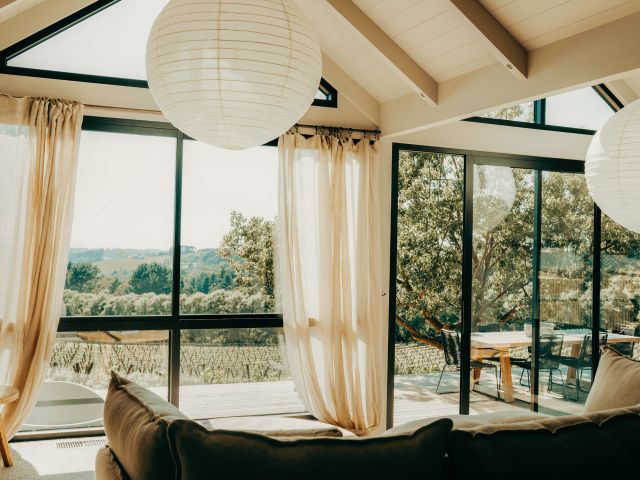
Once you climb the 25 steps to Perch Lorne, all that’s left to do is relax. The one-bed architectural studio pulls off the balance between sleek and cosy, and its picture window, framing an outlook through the trees to the ocean, has us swooning. Switch between the balcony and snug window seat (our ideal book nook), and for cooler nights, the log fireplace creates a warm and comfy ambience.
As the name suggests, the studio is positioned high on a hill, but it’s within central Lorne, making it easy to explore the local restaurants and cafes; while the modern kitchenette has just enough for lazy breakfasts and nibbles with wine. Wi-fi, on-site parking, a smart lock and electric blinds complete this chic and stress-free stay.
Address: 71 Polwarth Rd, Lorne VIC 3232
Front Row Apartment in Lorne
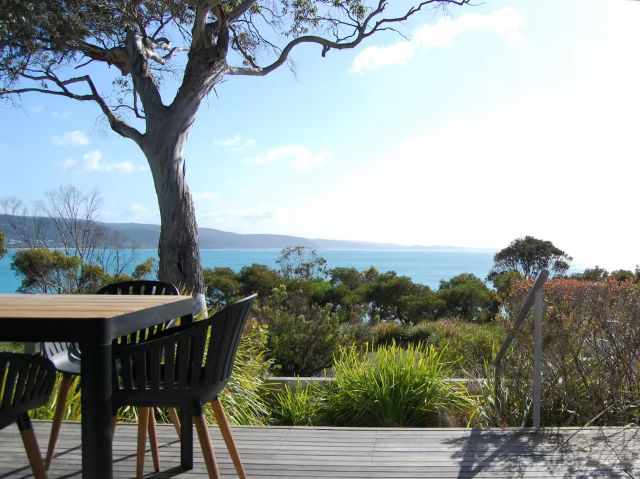
The bewitching sea views from this Airbnb make its name clear. Whether you’re eating breakfast at the dining table or enjoying drinks on the deck, the ocean will be a constant backdrop to your stay. This spacious two-bedder is bright and airy, with a full kitchen and on-site parking – but you may not need much of either, as the renovated Grand Pacific Hotel is next door. It’s a 20-minute stroll into town, but we think the serenity of the location is part of its charm.
Address: Provided after booking
Weekly travel news, experiences
insider tips, offers, and more.
Camping and caravan parks
Erskine River Park
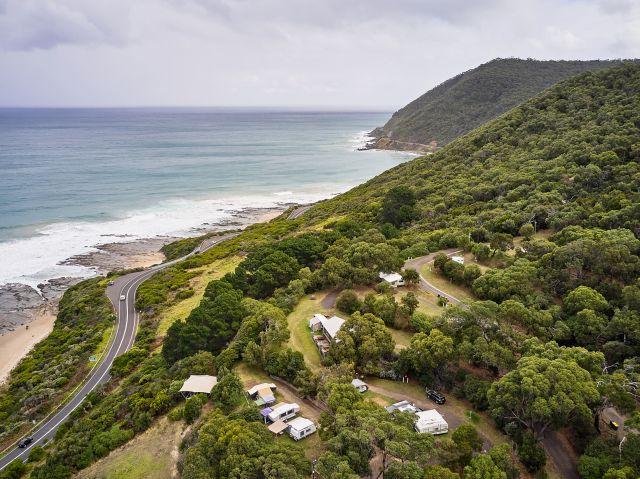
This park (part of the Lorne Foreshore Caravan Park) boasts a prime location alongside the beautiful Erskine River, and is just a short stroll to the shops and beach. Love fishing? You’ll have access to three fishing platforms plus amenities aplenty, from a camp kitchen and BBQ area to a playground, laundry and shower block (including accessible toilet).
Powered sites sleep six; campfires are restricted to off-peak times, and dogs aren’t allowed. If you’re not the camping or caravanning type, never fear – you can still relish the riverside lifestyle with cabins featuring creature comforts like a kitchenette, ensuite and heating/cooling. We can’t get enough of afternoon drinks on the deck.
Address: 2 Great Ocean Rd, Lorne VIC 3232
Queens Park
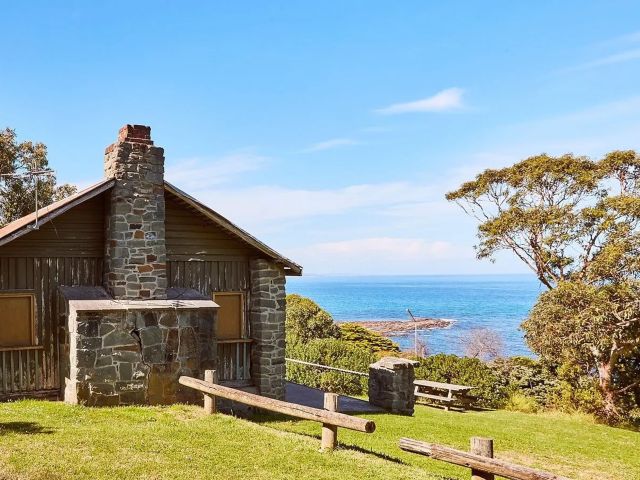
Also part of the Lorne Foreshore Caravan Park, Queens Park is tucked into the bushy hillside above the Lorne Pier, offering the ideal vantage point for dreamy sea views. Being built on a hill, the park is terraced with narrow, steep roads, so it’s best suited to tents, camper trailers and small camper vans rather than caravans. It’s a bit of a walk to the updated facilities if you’re in one of the top sites, but when you arrive you’ll find a shiny new camp kitchen, laundry and shower/toilet block, plus a playground and BBQ area (view included, of course).
For even better vistas, head to the nearby Teddy’s Lookout just a half hour hike away. If you’re after a more luxurious camping experience – and romantic – check out the eco safari tent for two. No campfires, charcoal BBQs or dogs allowed; note this park is seasonal, and often closed in winter.
Address: 18 Armytage St, Lorne VIC 3232
Allenvale Mill Campground
This tent-only campground is ideal for those who want to immerse themselves in a natural bush setting (and who don’t mind living without life’s luxuries for a little while). There are 20 unpowered sites, non-flush toilets and low tables and seating; fires aren’t allowed, so bring your own fuel stove or gas barbecue.
There’s no direct vehicle access here; the car park is about 230 metres away, and bring a hammer for setup, as the surface can be hard. Once you’ve settled in, however, all that’s left to do is relax. Enjoy the peaceful sounds of nature, look out for wildlife, or explore one of the many walking trails in the area.
Address: Allenvale Rd, Lorne (look for Allenvale Road Carpark in Google Maps)
Want to see more stories from Australian Traveller in your Google search results?
- Click here to set Australian Traveller as a preferred source.
- Tick the box next to "Australian Traveller". That's it.