10 ways to explore Australia on foot

hero media
From coastal walks and nature hikes to tree climbs and cave explorations, we went high and low to see where your two feet can take you (oh, and we borrowed some hooves, too).

1. Walk ancient clifftops just 45 minutes from the city

Where: Royal National Park, NSW

It’s hard to imagine city life and all its stressors are just 45 minutes north when you’re standing atop the white cliffs of new south wales’ Royal National Park.


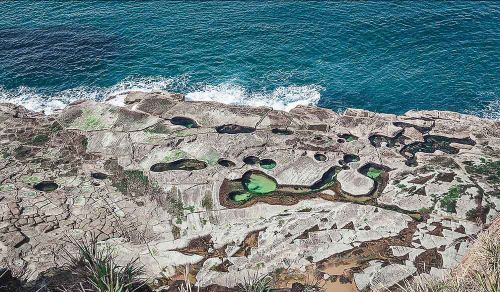
There are incredible Easter eggs along the coast track way to find, such as the Figure Eight Pools (great for photos, not so great for swimming due to dangerous freak waves), Little Marley Beach and Wattamolla’s lagoon and beach.

2. Try bush food in the City

Where: Royal Botanic Garden, Sydney, NSW ROYAL BOTANIC GARDEN

Try black apples straight from the tree and wash your hands with foaming wattle leaves on an Aboriginal Heritage Tour of Sydney’s Royal Botanic Garden.
Education co-ordinator for aboriginal programs, Jody Orcher, has made sure the tours are in-depth and honour indigenous heritage.

3. Visit an octopus’s garden beneath the sea

Where: Green Island, Great Barrier Reef, QLD

We felt we had to include this activity this year, because it is such a memorable adventure for the whole family.


With no diving experience required, you can actually walk on the sea floor, foot-to-sand and face-to-face with sea life off Green Island.


An underwater helmet is all that keeps you from planting a kiss on passing fish.


Seawalker Green Island is the ultimate underwater experience.

4. Four ways to get high and go low: see the country from the trees and from the caves

Where: Valley of the Giants Tree Top Walk, Walpole Wilderness, WA

Explore towering red tingle trees from 40 metres above ground.


Adrenaline upgrade: drive two-and-a-half-hours to Pemberton and scramble your way 61 metres up the pegs of the Gloucester Tree, or the 51-metre Diamond Tree, or complete the Valley of the Giants Tree Top Walk for a heart-pounding view.

Where: Tahune Airwalk, Huon Valley, Tasmania

At the highest point on this walk you’ll be suspended 50 metres above the Huon River.


Adrenaline upgrade: If that’s not enough to raise your heart-rate, take the Tahune Airwalk hang-glider across the rushing river.

Where: Mole Creek Caves, Mayberry, Tasmania

Tasmania has some of the deepest caves in Australia, so if you enjoy a sojourn in the underworld, Tassie is a good bet.


Marvel at crystals, reflective pools and glow worms.


Adrenaline upgrade: Kubla Khan is one of the more spectacular caves at Mole Creek, but you’ll need a permit; only 72 people are granted access each year.

Where: Tunnel Creek National Park, WA

One-time hideout for indigenous legend Jandamarra, who was eventually killed here in 1897 after a siege, Tunnel Creek is part of the ancient Devonian Reef.


The walk is 750 metres of pitch-black excitement, and you have a good chance of meeting a freshwater croc.


Adrenaline upgrade: A croc encounter is enough adrenaline, we feel.

Need tips, more detail or itinerary ideas tailored to you? Ask AT.

AI Prompt

5. Because sometimes four feet are better than two…

Where: Bogong Horseback Adventures, High Country, Victoria

Take a load off and swing into the saddle for these trails with a difference:


Lovely horses, incredible scenery and restorative mountain air, we loved this Bogong trail ride when we experienced it last year, and still think it’s one of the best in the country.


Take a five-day ride to really feel like a pioneer, or if you’re still getting familiar with our equine friends, you can enjoy a day tour – our favourite is the half-day with a long table lunch.

Where: The Flinders Ranges, South Australia

And if horses are just a bit tame for you, why not clamber onto a humped and hairy hoofed steed instead?


Camels played a huge part in opening up the country, and the Beltana Station Camel Experience in the Flinders Ranges is a wonderful way to explore the unforgettable terrain.


Or take a photography-themed trek with Camel Trek Australia.

6. Follow an ancient song line in the Northern Territory

Where: Nitmiluk National Park, NT

Walk 62 kilometres over six days following the ancient Jawoyn song line through Nitmiluk National Park.


The wild, uncurbed beauty of the Jatbula Trail will stay with you for the remainder of your days.


Swim in crystal pools, fall asleep to the sound of teeming birdlife and have an all-round life-altering experience.


You can trek guided or unguided.

7. Connect with the custodians of the land…

Where: Narlijia Cultural Tours, Broome, WA

Born and bred in Broome, with the blood of both the Yawuru people of the west Kimberley and the town’s historic pearlers running through his veins, Bart Pigram is uniquely qualified to lead tours of the area.


Taking keen visitors and locals alike on a walkabout through the town or the mangroves, a tour with Bart is to immerse yourself in one of the country’s most fascinating multicultural and indigenous histories.


What does it mean to be a Yawuru man today?


For me, it has to be the acceptance of responsibility as an indigenous man.


It’s definitely a challenge to balance our cultural responsibilities with the demands of mainstream employment and community commitments.


We have responsibilities to care for the land, our people and our culture and language, which can be done while educating and sharing with curious visitors and open-minded locals.


It’s our responsibility to initiate and make this cultural exchange accessible.


How does your Mangrove Tour tell the story of Broome?


The Mangrove Tour is presented in Roebuck Bay and along the foreshore of Broome’s first boat passage cut through the mangroves by the early settlers.


Here, I can weave in the pearling history as this was also the highway for hundreds of pearling vessels either unloading pearl shell at Streeter’s Jetty or beached at lay-up time.


The older stories that fit this location are the Bugarrigarra Ngan-ga, or what’s generally called Dreamtime stories, that I have had the privilege of learning from the older people of our community.


What’s one fact about broome we wouldn’t know?


There are probably a few, but I have found several references to what is likely the first waterhole that was used by Broome’s first settlers, and was called Jirrgin-ngan by the Djugun/Yawuru people.


Now built over, it was on the corner of Napier and Dampier Terraces, near Roebuck Bay Hotel, and was a vital part of Broome’s history.


It’s a shame that it’s not commonly known.


You can walk in the footsteps of the first settlers, as well as explore the rich heritage of the aboriginal people, visit Narlijia Cultural Tours Broome for more.

Weekly travel news, experiences
insider tips, offers, and more.

8. Understand what it feels like to stand on the edge of the world

Where: Three Capes Track, Tasmania

Wild, remote and raw, Tasmania’s Three Capes Track walk opened last year and has since become one of the must-do hiking experiences in the country.


Taking in Port Arthur, Cape Hauy and Cape Pillar over four days, it’s you, a pack, and a lot of time to be alone with your own thoughts.

9. The city can still surprise you

Where: Melbourne, Victoria

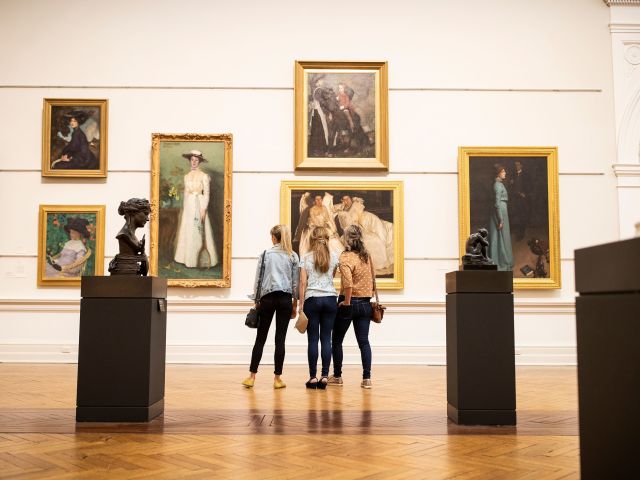
Walk to Art is a walking tour with a difference.


Experienced visual arts professional Bernadette Alibrando will walk you through Melbourne, visiting local artists, designers, milliners and textile artists on the way, while experiencing and learning about the city’s diverse architecture.

10. From the most easterly point in the country

Where: Cape Byron Walking Track, Byron Bay, NSW

Be it sunset, sunrise or moonrise, the Cape Byron Lighthouse walk is a truly spectacular way to stretch your legs.


Don’t bail out once you get to the lighthouse; the pay-off comes when you keep walking to the most easterly point in the country.

Want to see more stories from Australian Traveller in your Google search results?

  1. Click here to set Australian Traveller as a preferred source.
  2. Tick the box next to "Australian Traveller". That's it.
Lara Picone
Working for many of Australia’s top publications, Lara Picone has had the distinct pleasure of writing, editing and curating content about the finer things in life for more than 15 years. Graduating from Macquarie University with a Bachelor of Arts in Communication, her editorial foundation began at Qantas: The Australian Way magazine, before moving on to learn the fast-paced ropes of a weekly magazine at Sunday Magazine and picking up the art of brand curation at donna hay magazine. Pivoting a near-problematic travel lust into a career move by combining it with storytelling and a curious appetite, her next role was as Deputy Editor of SBS Feast magazine and later Online Editor of SBS Food online. She then stepped into her dream job as Editor of Australian Traveller before becoming Online Editor for both International Traveller and Australian Traveller. Now as a freelancer, Lara always has her passport at-the-ready to take flight on assignment for the Australian Traveller team, as well as for publications such as Qantas Magazine, Escape and The Weekend Australian. As ever, her appetite is the first thing she packs.
View profile and articles
hero media

Good food, beautiful nature & history: your guide to a long weekend in West Gippsland

(Credit: Rob Blackburn)

    Carla Grossetti Carla Grossetti
    From rainforest walks and scenic drives to historic gold-rush towns and standout regional dining experiences, you can find it all in West Gippsland.

    Hover over West Gippsland on Google Earth and you’ll see vast tracts of land spread out like green velveteen around the Toorongo Falls Reserve. It’s a landscape that feels almost impossibly lush for a region sitting little more than an hour from Melbourne.

    Track southeast in late autumn and early winter and you’ll see pockets of the Mt Baw Baw Plateau dusted in snow. In addition to the forests of mountain ash veined with creeks and rivers, there are pastures and farmland cross-stitched together to form pretty patchworks.

    But West Gippsland isn’t defined by scenery alone: in addition to its awe-inspiring nature, a Venn diagram of the region includes gold-rush history and great culinary experiences.  Spend a long weekend here and it quickly becomes clear how often these three overlap.

    Getting there

    Messmates Dining west gippsland
    Spend the weekend eating and exploring in West Gippsland. (Credit: Messmates Dining)

    Getting to West Gippsland involves as easy drive – it’s just over an hour out of Melbourne along the Monash Freeway.

    Not driving? Catch the train from Melbourne on the Gippsland line, terminating at either Traralgon or Bairnsdale, and hop off at Warragul or Drouin.

    Visit historic villages

    Walhalla historic township
    Wander into Australia’s Gold Rush history at Walhalla. (Credit: Rob Blackburn)

    The West Gippsland region is on the Traditional Lands of the Kulin and Kurnai nations, specifically linked to the Bunurong, Gunaikurnai and Wurundjeri Peoples, whose connection to Country stretches back thousands of years.

    European settlement occurred in the 19th century as timber cutters, farmers and gold seekers pushed into the region’s dense forests. Small towns grew around sawmills and railway lines, and many of those gold rush settlements, timber towns and railway villages still shape the character of the region today.

    The most evocative of these is Walhalla Historic Township, a remarkably preserved gold-rush township tucked deep in the mountains. In the late 1800s, it was one of Victoria’s richest goldfields. Today visitors can step inside that history at the Long Tunnel Extended Gold Mine, where underground tours reveal the scale of the mining operation that once powered the town’s prosperity. Nearby, the Walhalla Goldfields Railway retraces part of the original narrow-gauge line through the valley, offering a slow journey past forest and river scenery.

    Further west, Noojee is a classic mountain village. It’s surrounded by dense forest and waterfalls and has become a natural base for exploring the Baw Baw region. Just outside town, Noojee Trestle Bridge stands as one of West Gippsland’s most striking relics of the rail era. The towering wooden structure is the tallest surviving trestle bridge in Victoria and today forms the centrepiece of an easy scenic walk with wide views across the valley.

    Alpine Trout Farm west gippsland
    Catch your own lunch at Alpine Trout Farm. (Credit: Nicky Cawood)

    At Alpine Trout Farm near Noojee, visitors can fish for trout in mountain-fed ponds before enjoying the catch prepared fresh onsite. It’s a simple experience that reflects the area’s long connection to the surrounding waterways.

    Back in Warragul, the region’s main service town, the story shifts from heritage to modern regional life. With galleries, restaurants and sweeping views across the rolling farmland of Gippsland, the town has become a lively hub linking the district’s past with its evolving food and cultural scene. Drive through the town and you’ll find heritage buildings, old pubs and weatherboard cottages that hint at the area’s early days as a frontier landscape.

    In other towns the past survives in quieter ways – a historic hall here, a century-old bakery there.

    Walks, waterfalls and wild places

    Toorongo Falls in west gippsland
    Stroll Toorongo Falls Reserve. (Credit: Nicky Cawood)

    Even simple roadside stops can feel cinematic in West Gippsland. The region also delivers plenty of opportunities to lace up your walking shoes.

    One of the region’s most rewarding nature escapes lies just outside Noojee at Toorongo Falls Reserve. A network of walking tracks winds through the cool-temperate rainforest where towering mountain ash trees filter the light and the air smells of rich, damp earth. The 2.2-kilometre trail to the viewing platform overlooking Toorongo Falls is short, but spectacular, as the water cascades down over moss-covered rock faces into a cool, green gully in Little Toorongo River.

    Further north, the Mount Baw Baw Alpine Resort offers year-round adventures. In winter, the mountain attracts skiers and snowboarders. The warmer months are just as compelling, with scenic drives to see alpine wildflowers, mountain bike trails and panoramic hiking routes that open across the plateau.

    Cyclists and walkers looking for a more relaxed pace can follow the Rokeby Neerim Rail Trail, which traces a former railway line through farmland and small Gippsland villages. The mostly flat trail passes rolling paddocks, creeks and historic bridges, making it an easy way to drop it down a gear when exploring the countryside.

    Taste the best eats of West Gippsland

    Hogget Kitchen west gippsland
    Taste the best of the region at Hogget Kitchen.

    For many travellers, the real drawcards of West Gippsland are the food and wine. The region sits in the heart of Victoria’s fertile dairy country, and that agricultural backdrop has helped shape a dining scene where seasonal produce and local provenance take centre stage.

    Hogget Kitchen has helped put Warragul firmly on the radar for serious regional dining in West Gippsland. Here, head chef and owner Trevor Perkins runs the kitchen alongside well-known winemakers William (Bill) Downie and Pat Sullivan. Hogget Kitchen lives up to its promise of exceptional destination dining; what lands on the table depends largely on what nearby farms have harvested that week as well as a wine list from Wild Dog Winery and other Gippsland producers.

    Warragul is also where you’ll find Messmates Dining where the kitchen team is led by Michelin-trained chefs. The Euro-leaning bistro and wine bar brings a polished edge to the local dining scene using produce sourced from across West Gippsland.

    For something more casual, the century-old Noojee Hotel is the kind of hub that every traveller dreams of finding after a long drive. Expect generous pub classics served on the sunny deck in summer or beside the crackle of a log fire in winter.  Nearby, rustic Toolshed Bar, Bistro & Cabins is the place to go for a wood-fired pizza topped with smoked local trout paired with Gippsland wine, making it a rewarding stop for lunch or an overnight stay.

    Time your visit with the Truffle Festival

    Food lovers visiting in winter should consider timing their trip to coincide with Noojee Truffle Festival, running from 10 July to 2 August 2026. The inaugural event celebrates the region’s emerging truffle industry with tastings, special menus and events built around one of winter’s most prized ingredients.

    Start planning your long weekend in West Gippsland at visitgippsland.com.au.