The Australian Outback’s best myths and legends

hero media

The Australian outback is home to as many tall stories and fallacies as it is feral camels (more than a million, at last count). But which are true, and which are merely folklore? AT rates these as its top five from the myths and legends vault. By Craig Roberts

1. The Bunyip: Don’t stray too close to the billabong

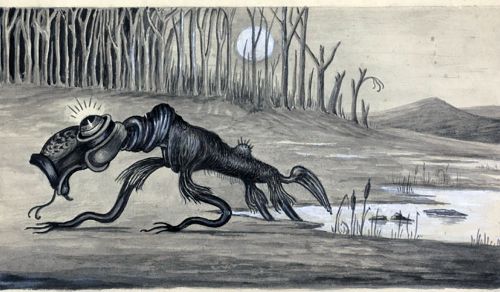
Unfamiliar to the sights an alien environment, early European settlers quickly took to the idea of a Bunyip being a new creature waiting to be discovered, and set out on foolish attempts to find one in the hope of fame and riches. To various local Aboriginal tribes, this wasn’t the case; the Bunyip was a malevolent force that lurked at the bottom of creeks and billabongs, ready to devour anyone silly enough to wander down at the wrong time. (At least this was the line used on wayward children.)


Like any good folkloric tale, the Bunyip legend has been fuelled by unsubstantiated sightings and incompatible facts. Bunyips have been reported to have horse’s manes, dog faces, flippers, fangs, tusks, one eye, two eyes, shaggy fur, short hair, horns, and to be variously as big as a horse and as small as a dog. All very confusing. What we know for certain is that this is one myth that has been embraced by Indigenous and non-Indigenous Australians alike.

Did you know?

Some say the legend of the Bunyip stems from Aboriginal ancestral memories of the Diprotodon australis, a three-tonne, bear-like creature that was the biggest marsupial in existence – before it became extinct around 40,000 years ago.

2. Drop Bears: If attacked, take two Panadol and prepare for certain death

We all know the joke; we’ve all pulled the punch line. Usually on some newly arrived tourist, terrified of a country filled with man-eating sharks, killer crocs and venomous snakes. So what’s the harm to add one more? Even better, why not take our fluffiest, and thus cutest, creature, the snuggleriffic koala, and turn him into a remorseless widow-maker with a taste for the sweet, sweet tang of human flesh?


For those who don’t know the details, get up to speed here and remember a few basics, in case anyone with an accent asks: Drop Bears are related to koalas, although they’re slightly darker with blood-dripping fangs, and they hunt at night.

Did you know?

Here at AT we have no ethical qualms whatsoever in suggesting to British backpackers that vegemite smeared liberally on the face is the only effective deterrent for Drop Bears.

Need tips, more detail or itinerary ideas tailored to you? Ask AT.

AI Prompt

3. The Great Inland Sea: BYO rowboat

Given that every other continent worth its salt has a huge and intricate internal river system, early European settlers theorised thatAustraliamust surely have one too. And since Australian rivers flowed inland, the question rang out: where was all this water being stored? There must be a giant Mediterranean-sized sea in the deep, dark interior.


This presumption was so great that it gave birth to dozens of failed expeditions intoAustralia’s red centre on fruitless searches for water – none more foolhardy than that mounted by Charles Sturt, who departed civilisation with 15 men and a boat.


Sturt became trapped for six months near Milparinka, NSW, and got as far the Simpson Desert before giving up, broken, in temperatures so hot that the party’s lead fell from their pencils, and scurvy blackened skin fell from their mouths.


Not to worry, though. The search continues to this day, but far underground. Speculators are eternally drilling in the hope of finding anotherGreatArtesianBasinthat could allow the desert to flourish with flowing water for generations to come.

Did you know?

The Great Inland Sea inspired several books on the subject, none more ridiculous than Thomas J Maslen’s The Friend of Australia, which managed to contain maps, detailed advice on navigating the sea and rivers and local knowledge of the interior, despite the fact that the author never, EVER set foot on Australian soil.

4. Jandamarra: Che of the outback?

In the 1890s, while working for police in the southern Kimberleys, Jandamarra, an Aboriginal from the Bunuba tribe, helped capture a large group of his own people. But, upon seeing their suffering, Jandamarra rebelled, shot a trooper, freed the captives and stole some guns. The story of an Aboriginal bounty hunter gunning down a white trooper raised local fevers, and soon Jandamarra became the most wanted man in theKimberley.


For nearly three years, Jandamarra lead police and outraged posses of bounty hunters on wild goose chases throughout theKimberley. His hit and run guerrilla raids were the first time European tactics and guns were used against whites, and it was signal that he and his people would not go quietly; they would defend themselves and their lands. His extensive knowledge of the local landscape allowed him to “disappear" at will and helped fuel rumours that he may not have been human at all.


When Jandamarra couldn’t be caught, the police brought in Micki, an Indigenous tracker from an opposing tribe. With skills equal to Jandamarra’s, Micki did what was seemingly impossible for white troopers: he unravelled Jandamarra’s bush tricks, tracked him down and shot him dead at his Tunnel Creek hideout. Micki, the Indigenous tracker, had killed the Indigenous resistance.

Weekly travel news, experiences
insider tips, offers, and more.

Did you know?

In the end, Jandamarra’s body was decapitated and the head sent toEnglandto be displayed as a trophy.

5. Lasseter’s Reef: the Holy Grail of lost gold mines

Just before the turn of the 20th Century, 17-year-old Harold Lasseter set out on foot fromAlice Springsto the WA goldfields to make his fortune. And somewhere along the way he claims to have done so. Only problem was he couldn’t remember where he left it. Thus began the legend of Lasseter’s Reef, a supposed 14-mile long, gold-rich Quartz-Ironstone outcrop somewhere west ofAlice.


Since then, many have wandered into the desert with visions of uncovering its vast riches. Lasseter himself died some 30 years later on just such a journey, in 1931. Many have wasted countless hours, their own fortunes and their sanity on the basis of a kid’s tale. Some have claimed to have already found it – Lutz Frankenfeld, founder of the Alice Springs Beer Can Regatta, reckons he did so back in 1994 and is just waiting to form a joint venture with the right mining company.


More recently, in Nov ‘08, a Mutijulu Elder – who recalls caring for Lasseter out in the desert before he perished – also passed away, severing what could be the final link to the lost reef of gold.

Did you know?

Facing bankruptcy, the South Australian Government funded Lasseter’s last expedition, not because they thought he was right, but in hopes that the subsequent gold fever would see many of the unemployed leave Adelaide.

Australian Traveller

Australian Traveller

View profile and articles
hero media

6 nature-based experiences to prove the Bendigo region comes alive in autumn

    Dilvin Yasa Dilvin Yasa
    A change is as good as a holiday, but never more so than in the Bendigo region when it’s the seasons putting in the transformative work.

    With its gold rush history, opulent architecture and booming food and wine industry, there’s no denying that the Bendigo region is beautiful to visit at any time of year. Visit between March and May, however, and you’ll find the Bendigo in autumn really comes alive. Foliage erupts in a canvas of golden colours and the cooling air makes immersing yourself in nature all the more enticing.

    Need a few ideas to get you started? We’re so glad you asked.

    1. Tackle the bike trails

    Pink Cliffs Reserve
    Pink Cliffs Reserve in Heathcote can be seen on the O’Keefe Rail Trail. (Image: Visit Victoria/Emily Godfrey)

    Welcome to a region that punches well above its weight when it comes to cycling. This is where hammies are tested on multi-day rides, and first-timers fall in love with the sport on short (and ridiculously pretty) trails.

    The 49-kilometre O’Keefe Rail Trail is the headline act, following the old railway line between Bendigo and Heathcote. Cross the Campaspe River at Axedale Recreation Reserve and pause at the Platypus Compass Sculpture and the First Nations mural marking the connection between Djaara and Taungurung Country, with Axedale acting as the perfect halfway stop to refuel at a pub or cafe.

    Pedal a little further Heathcote’s Pink Cliffs Geological Reserve to be rewarded with views of sculpted pink clay cliffs and narrow gorges that are perfect for a photo stop. Searching for a different type of reward? The Heatchote Wine Region is full of inviting cellar doors.

    There are plenty of other options in the Bendigo region, from the 210-kilometre Goldfields Track, to the Bendigo Creek Trail and Back Creek Trail – both ideal for riders of all abilities. The 3.7 kilometre Little Lake Boort loop is a great family-friendly option.

    Prefer something more adventurous? Spring Gully Mountain Bike Park has been keeping BMX Bandits’ dreams alive for years.

    2. Enjoy the crunch of autumn leaves

    two people having a picnic at Valley of Liquidambers heathcote
    Pack a picnic and head to the Valley of Liquidambers.

    Blinding clusters of crimson, burnt orange and brilliant yellow; here, autumn leaves are crisp confetti of fire and gold. See the magic up close with a slew of parks seemingly dedicated to showcasing Mother Nature’s colour wheel, especially from mid April to early June.

    Pack a picnic for an afternoon at Valley of Liquidambers in Heathcote, where Liquidamber trees transform into a wonderworld of magical foliage. Don’t miss taking a leisurely stroll across the swinging bridge back towards the main street.

    Rosalind Park might be celebrated for its annual tulip display come springtime, but it’s hard to compete with the theatre of autumn. Here, many trees date back to the 1800s, and there’s no better place for a romantic stroll than along the elms, oak and Queensland Kauri that dominate this park.

    Head straight to Lake Weeroona, where an ornamental lake begs for a leisurely lap around its edges, either on foot, or with pedal power.

    3. Immerse yourself in First Nations culture

    woman exploring Kooyoora State Park with guides
    Explore Kooyoora State Park on a cultural tour.

    Its ‘Mountain of Light’ (Guyura in the Dja Dja Wurrung language) title is impressive, but so too is Kooyoora State Park’s rugged landscape of granite outcrops, rocky ridgelines and wide-open skies.

    While there’s nothing to suggest you couldn’t explore Kooyoora’s walking tracks on your own, the best way to understand the 40,000 years of history behind its natural wonders is to book a 2.5-hour Kooyoora Cultural Tour with Dumawul Tours.

    Led by Djaara cultural guides, expect a traditional Welcome to Country smoking ceremony, before engaging storytelling rewinds the clock to reveal the deep cultural significance of the land, its flora, fauna and its continuing connection to Country.

    Keen to stay a little longer? Consider staying overnight at the campground and committing to the park’s wealth of walking trails, such as the 5.3-kilometre hike from the camping ground to the lookout on the Long Rock Walking Track.

    4. Splash in the region’s waterways

    Serpentine Creek Canoe Trail
    Paddle through Serpentine Creek Canoe Trail. (Image: Visit Vic)

    Water babies rejoice: the Bendigo region offers a wealth of waterways to explore.

    Flowing 392-kilometres from the Great Dividing Range to the Murray River, the best way to enjoy Loddon River is with a stop at Bridgewater. Here you can swim in the natural infinity pool or tackle the all-abilities, five-kilometre Serpentine Creek Canoe Trail before browsing the cute stores in town. Hungry? Grab a bite at Bridgewater Hotel.

    Lake Eppalock is popular for water activities, but don’t miss a visit to Little Lake Boort and Big Lake Boort. Birders, in particular, will love the former, thanks to the large variety of bird species that nest in the boardwalk area surrounding the lake.

    Meanwhile, Big Lake Boort is celebrated for its significant Indigenous history and over 400 scarred trees, and offers an opportunity to spot birds and go canoing.

    Meanwhile, watersports and recreational activities at Crusoe Reservoir, located on the outskirts of Bendigo, are the order of the day. Take a walk to the picnic spots of No. 7 Park nearby, and maybe even camp there for the night.

    5. View epic lookouts

    customers at Peregrine Ridge
    Spend time at Peregrine Ridge.

    Sometimes a holiday requires a phenomenal spot on which to perch as you survey your temporary kingdom below. The Bendigo region, happily, doesn’t do anything by halves.

    Located in Heathcote-Graytown National Park, Viewing Rock Lookout – a rocky outcrop offering spectacular views over Heathcote and surrounds – remains a popular choice. Take the hour-long Viewing Rock Circuit Walk and try your hand at gold prospecting nearby.

    Prefer the romance of sunrise or sunset? Pyramid Hill, a stunning granite hill rising 187-metres above sea level, is the place to be (preferably with a coffee and a bagel)

    Over in Terrick Terrick National Park, a walk to the summit delivers a full 360-degree panorama of woodlands, farms and open-sky plains. Pack lunch and perhaps a tent as picnic tables and camping are available.

    Carve out time for Peregrine Ridge, a vineyard situated at the eastern side of Mt Camel Range with an elevation ranging from 250-290 metres. Be rewarded with delicious wine and a cellar door which offers floor-to-ceiling views.

    6. Enjoy the Bendigo region’s parks and gardens

    Rosalind Park in bendigo
    Stroll through Bendigo’s best gardens. (Image: Visit Vic)

    Rosalind Park, located right in the centre of town, is considered Bendigo’s backyard and rightly so. Home to the Bendigo Easter Festival, it’s just as popular year-round for its sixty acres of rolling lawns, towering elms, fernery and winding paths not to mention the playground which has plenty of little fans of its own. A short drive away, Bendigo Botanic Gardens established in 1857 offers a more tranquil space for deep-level nature immersion.

    Those who favour something a little more formal, cottage-style Canterbury Park Gardens famous for its dahlias in autumn delivers.  Stroll through its meticulously maintained ornamental gardens before checking out Lake Tom Thumb and Lake Neangar nearby.

    Time to start planning your adventure to the Bendigo Region, visit bendigoregion.com.au.