Plane bad behaviour – a flight attendant’s confessions

hero media
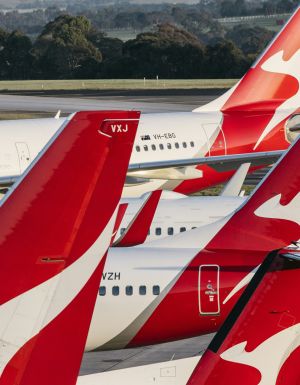
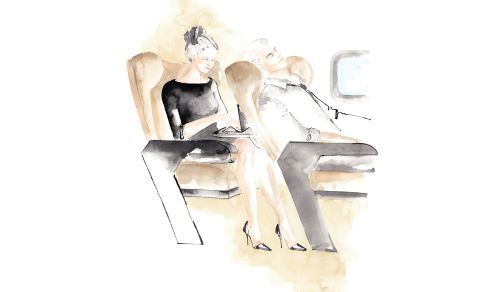
Manners can often disappear above the clouds. We chat to a flight attendant on the frontline of bad behaviour to find out what causes mile-high anxiety.

What is it about soaring above the clouds in a metal bullet that has the capacity to turn a normally rational individual into an unhinged rage monster?


Flying used to be a civilised affair, complete with cocktails and pleasantries. But these days it seems more and more flights teeter on the edge of grudging courtesies and all-out-brawl.


If you’ve been paying attention, you will have noticed an increase in passenger-related disputes popping up in your news feeds.


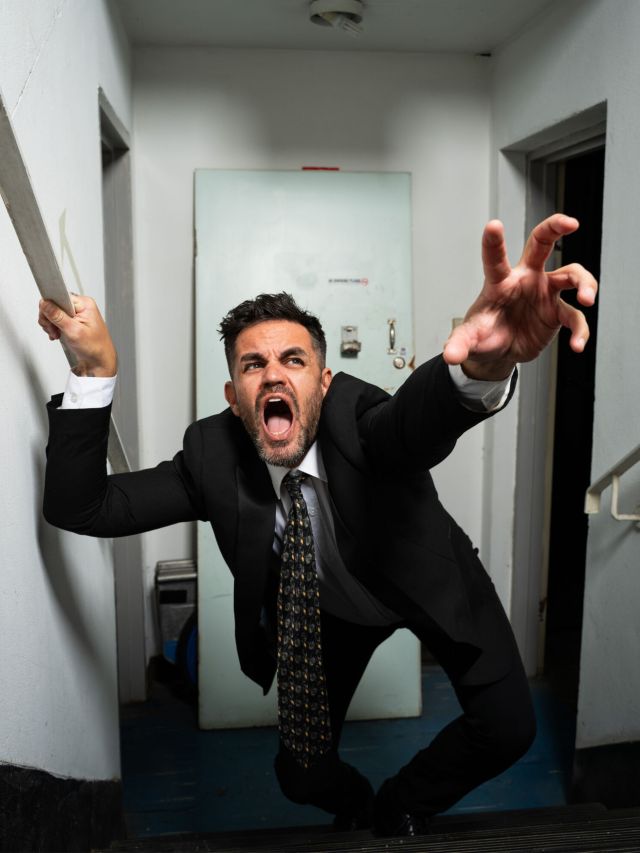
Most recently, we heard of Grant Hackett and the Nipple-gate fiasco, whereby our great Olympic hope, furious that the (male) passenger in front of him dared to recline, lurched forward to administer a nipple cripple on the unsuspecting recipient.


Hackett has since apologised and admitted being inebriated at the time, but really, does that excuse a mid-flight teat-tweak?


There has also been a proliferation in the US of bad manners en route, including a situation whereby a ‘knee-blocker’ device was employed by a passenger, preventing the person in front from reclining.


The situation escalated to a point where the victim threw a cup of water at the perp and the flight had to be diverted.


What is going on up there? Surely travelling at great speed some 38,000 feet above the ground should engender a we’re-all-in-it-together kind of spirit? Yet it seems tensions increase with altitude.


It used to be that bad behaviour on board was reserved for the Mile High Club and pinching a few extra miniatures from the drinks trolley, but now we’re having hissy fits over where we sit, hogging the overhead compartment, and waging passive-aggressive wars for the armrest.


The need for airlines to effectively keep costs down while not making huge losses has seen an increase in seats on planes.


Thus, the trade-off for low airfares is slightly more cramped conditions, but surely given the choice, most of us would happily sacrifice a few centimetres to save a few dollars.


The sad truth is the glamour of flying is now as lifeless as the in-flight meal and while we expect to scuttle here and there, we don’t seem prepared to acknowledge flying is just another mode of public transport.


Daily commuters learn a certain level of resigned tolerance for the excessive invasion of personal space, but in the air our fuse is shorter.


While the vast majority of flights do hum along to their destination without any animosities, there’s little denying air travel can be a crucible of malcontent, so we wanted to chat to someone who sees it all, from the good to the bad and the earth-shatteringly ugly.


We chat to a real-life Virgin Australia flight attendant, who we’ll call Karen Singleton for the purpose of this article, about what actually happens up there and how we can all be better passengers.

How long have you been a flight attendant with Virgin?

KS: Twelve years. Ten flying domestically and two internationally.

What’s with all the bad behaviour?

KS: There’s a lot of passenger shaming going on at the moment, with people taking videos and photos and sharing them on social media. It’s always difficult to contain that.

Do people generally behave on flights?

KS: The majority do but there’s always one who’s a bit needy. There always seems to be one person that you have to take care of.

What’s the most common cause of bad behaviour between passengers?

KS: It’d have to be anything to do with personal space invasion, such as hogging the arm rest or when people put their feet into the space next to them. Or sometimes a passenger will come up to us and say they can’t sit next to someone because they smell.

Whoa, how do you handle that?

KS: It’s a difficult one, it puts us in an awkward position. I can’t go up to someone and say, “Hey, you smell!" and hurt their feelings. It’s hard when we don’t have an extra seat to move people to.


We can use sprays, or there is an old trick of putting coffee on as it draws out the odour, but you have to be discreet about it. The last thing we want is an altercation.

Are there any hygiene issues from travellers that surprise you?

KS: When people go to the toilet with bare feet. You don’t want to be doing that.

At what point do the cabin crew intervene in a dispute between passengers?

KS: If I see two passengers having a heated conversation I ask if I can help, give them suggestions or offer amenities. We’re there to help, we want everybody to get along.


People think they are there by themselves, but we’re 200 or 300 people crammed in and we all have to get along harmoniously.

When is it OK to recline?

KS: Don’t recline during meal service, that’s a courtesy to everyone so they can enjoy the meal. At other times, turn around and see if there is anyone there and if they are working on a laptop or using the tray table.


If they are, ask if it’s OK to put your seat back. Everyone has a right to recline.

Who gets the arm rest?

KS: I’d say the middle person, because there has to be some kind of compensation for that seat. The window seat can lean on the window, and the aisle seat has toilet access.

What do you think makes people intolerant in the air?

KS: It must be that we’re closed in, you can’t open the windows and there is that claustrophobic feeling. Also, people travel for different reasons, someone could be travelling for a funeral and the person next to them for a wedding or holiday. There’s also stress with holidays and getting everyone ready for a trip.

What are your tips for containing the rage when in air?

KS: Just breathe and put yourself in the shoes of the person annoying you. Mental health is a big issue we have on planes, because it’s hard to see.


It’s not visible until people are stressed about things. There are also people who will drink alcohol excessively because they are nervous flyers and all sorts of things.

What’s the best thing passengers can do if a fellow passenger is being aggressive?

KS: Definitely get the attention of the cabin crew, because they have the training, experience and skills to deal with situations.

How can people help the cabin crew?

KS: ‘Please’ and ‘thank you’ go a long way. About 95 per cent of people just say, ‘I’ll have chicken’, instead of saying ‘thank you’. Manners stand out so much for us. It’s crazy, but no one says it.

Anything else we should know?

KS: Treat the crew and the plane with respect; it’s our little home. We’ve had people cut their toenails or peel their sunburn and flick it on the ground. I don’t go to your workplace and do that, so don’t do it in mine.

8 secret places in Western Australia you need to know about

    Kate BettesBy Kate Bettes
    hero media
    WA might be enormous, but the right insider knowledge brings its mysteries a whole lot closer.

    “Western Australia is a land of record-breakers,” says Carolyn Tipper, a Travel Director working on AAT Kings Western Australia tours. “It has the second-longest fault line, the second-largest meteorite crater, the second-fastest flowing river—it just keeps surprising you. And every area has its charm.”

    From tropics to deserts, Australia’s largest state is a land of extremes. You can’t see all of Western Australia in a lifetime, but with the right guide, you can discover its hidden pockets of magic.

    Carolyn wishes to reach her guests’ hearts. “I want them to enjoy and be in awe,” she says. “I want them to have the holiday of a lifetime.”

    1. Mimbi Caves

    You wouldn’t expect a Great Barrier Reef in the outback – but that’s what you’ll find at Mimbi Caves. Once part of a 350-million-year-old reef, these caves hold marine fossils, ancient Indigenous rock art, and Dreamtime stories shared by a Gooniyandi guide.

    “That’s when the real connection happens,” says Carolyn, who has taken guests through on the AAT Kings Wonders of the West Coast and Kimberley tour . “When guests connect, not just with the land, but with the people who have called it home for tens of thousands of years.”

    Eye-level view of traveller exploring Mimbi Caves.
    Walk through ancient limestone passages. (Image: Tourism Western Australia)

    2. Kalbarri National Park

    Nothing prepares you for the Kalbarri Skywalk: a 25-metre platform jutting over Murchison Gorge, 100 metres above the red cliffs and river below. From July to October, join the AAT Kings Untamed Pilbara and West Coast tour to see over 1000 wildflower species paint the park, and listen as an Indigenous guide shares their uses, bush foods and medicine plants.

    “I want our guests to have an emotional experience,” says Carolyn. “It’s not just about seeing the land, it’s about stepping into the stories.”

    An aerial view of the Kalbarri Skywalk, one of the secret places in Western Australia, with visitors on the edge.
    Stand on the Kalbarri Skywalk in Western Australia. (Image: Tourism Western Australia)

    3. Hamelin Bay Wines

    Margaret River isn’t just a top wine region – it’s a winner in every category. Where the Indian and Southern Oceans collide, granite cliffs rise, limestone caves sprawl and Karri forests tower. It almost distracts from the world-class Cabernet Sauvignon and Chardonnay.

    Almost.

    Out of over 100 cellar doors, AAT Kings pick Hamelin Bay Wines as a favourite. Hosted tastings of small-batch wines on the Western Wonderland tour end with a group meal. The menu shifting with the seasons.

    “Get off the beaten track to one of WA’s most relaxed venues for some amazing red and white signature wines,” explains Carolyn, “accompanied with upmarket pub food.”

    Spectacular views.

    A person raising a glass of Chardonnay against a glowing Western Australia sunset.
    Sip world-class wines at Hamelin Bay in Western Australia. (Image: Getty)

    4. Wildflower Guided Walk, Kings Park

    Western Australia is home to 12,000 native plant species – 3000 bloom in Kings Park’s Botanic Garden. Stroll past Kangaroo Paw, Banksia and blooms from the Goldfields, Stirling Ranges and Kimberley. “The diversity of Western Australia is immense,” says Carolyn, who leads guests through on the South Western Escape tour .

    Couple enjoying the view from the Lotterywest Federation walkway at Kings Park and Botanical Garden.
    Wander among thousands of native plant species. (Image: Tourism Western Australia)

    5. Hoochery Distillery

    Did you know that between Kununurra and Emma Gorge lies the state’s oldest continuously operating distillery? Well, the oldest legal one. Set on a family farm, Hoochery Distillery was hand-built using materials found on the property, conjuring up award-winning rum from local sugarcane, wet season rainwater and yeast.

    Today, visitors can sample a hearty nip of rum, along with whiskies and gins – all crafted using traditional, labour-intensive methods. It’s the ideal way to soak up the ‘spirit’ of the Kimberley on the AAT Kings’ Untamed Kimberley tour .

    People enjoying a rum tasting at one of the secret places in Western Australia.
    Sample award-winning rum. (Image: Tourism Western Australia)

    6. Geraldton

    The wildflowers of the Midwest will make your heart blossom. In Geraldton, the Helen Ansell Art Gallery brings the region’s botanicals to life in vivid colour and intricate detail. In nearby Mullewa, wander bushland trails lined with everlastings and native blooms. Further afield, Coalseam Conservation Park bursts into carpets of pink, white, and yellow each spring. Do it all on the Wildflower Wanderer tour with AAT Kings.

    woman walking through Wildflowers, Coalseam Conservation Park
    Chase vibrant wildflower trails. (Image: Tourism Western Australia)

    7. El Questro

    Wake up after a night under the stars at Emma Gorge Resort, ready to explore the mighty beauty of the El Questro Wilderness Park. With deep gorges, thermal springs, and cascading waterfalls, time slows here.

    Join the AAT Kings’ Wonders of the West Coast and Kimberley tour to drift through Chamberlain Gorge, where sheer sandstone walls glow burnt orange in the sun, archer fish flick at the surface, and rock wallabies peer down from ledges above. Then, step into Zebedee Springs, a secret oasis of warm, crystal-clear pools among prehistoric Livistona palms – a moment of pure, wild stillness.

    Emma Gorge Resort at El Questro.
    Wake to adventure at Emma Gorge Resort. (Image: Tourism Western Australia)

    8. Lake Argyle

    Once vast cattle country, Lake Argyle now sprawls like an inland sea – Western Australia’s largest freshwater lake, created by the damming of the Ord River. Scattered with over 70 islands, its glassy waters teem with life, like freshwater crocodiles, barramundi, bony bream, sleepy cod and over 240 bird species. That’s nearly a third of Australia’s avian population.

    Glide across the lake’s surface on a cruise as part of AAT Kings’ Untamed Kimberley tour , where the silence is only broken by the splash of fish and the call of birds. For Carolyn, this place is a perfect example of how WA’s landscapes surprise visitors. “Lake Argyle is a big puddle of water that became a game-changer,” she says. “Seeing it from a boat, coach, and plane is mind-blowing. It puts time, isolation and the sheer scale into perspective.”

    Aerial View of Triple J Tours on the Ord River, near Kununurra.
    Glide past islands on Western Australia’s largest freshwater lake. (Image: Western Australia)

    Discover more of Western Australia’s hidden gems and book your tour at aatkings.com.