Trips and excursions within 3, 2 and 1 hours of travel from Australia’s capital cities.
Sydney
Three hours: LORD HOWE
Inscribed on the World Heritage list is an island paradise teeming with rare bird life and natural beauty. The island, only 11km long, is easy to explore – visit the towering Lidgbird and Gower mountains in the south or try your hand at fishing one of the 500 species of fish gracing the islands waters. Your hour at the airport and two hour flight is well worth the trip. AT says, “It isn’t affectionately named, ’The last paradise’ for nothing." Send us a postcard from the island; we’d love to hear from you.
Although the atoll might lack in island culture, partly because of its small population, its natural beauty makes up. If you’re approaching the island from sea, you’ll spot the monstrous mountains of Lord Howe from 100 km away – the impressive sight spurs on excitement, an amazing welcome for the yachties.
Outdoor entertainment is very much a part of life on Lord Howe – the beautiful beaches will entertain the little kids, just as excitable fathers’ charter their fishing boats, and mums’ snorkel the sheltered lagoon.
Take a ride in a glass bottom boat, a picture perfect experience as you hover above the world’s most southern coral reef which boasts 90 species of coral. Many visitors travel to the atoll for its rainforest bushwalking. The island offers a great network of tracks, leading to various vantage points dotted around the island. Mt Eliza on the island’s north western tip – has views that won’t let you down – the uphill hike might be steep but the rooftop views are worth it. Cycle the island and stop, wherever you please, for picnics or kick back, island-style, and watch the surf on Blinky beach.
Contact Qantas for flight schedules, you’ll reach the sapphire coloured seas, in two hours.
Two hours: LEURA, Blue Mountains
If you avoid Sydney’s Friday night traffic, Leura can be reached in just less than two hours. The Blue Mountains retreat has vistas covering the roof of Australia, manicured gardens for public appreciation and “never-never land" entertainment for the kids. Visit one of Australia’s top toy and railway museums, with collectable teddies, and timeless toys – admire the countries widest collection.
AT says, “Even adults will relive their childhood memory."
Leura laced with gorges, gum trees, and steep gradient rock faces is a scenic explosion for someone visiting the Great Dividing Range for the first time. Leura is a perfect little “hill-station" almost 1000m above sea level, not dissimilar to the mountainous retreat you read of in books from the Edwardian era.
The tree-lined treasure is appropriately named the “Jewel in the mountains crown" with its immaculately groomed gardens and sweeping views from Sublime Point Lookout. The picturesque retreat is renowned for its flower shows, where private gardens open up for public appreciation, every October. The prize property is Everglades Garden, on Everglades Avenue – originally created by Paul Sorenson, acclaimed as Australia’s master gardener.
This elegant little township is supposedly the most sophisticated of all the Blue Mountain villages, with chic eateries and coffee bars – catering to the Hawkesbury Heights hostel visitors and Victorian style bed and breakfast goers.
The Hawkesbury Valley is home to native forests, fertile plains, the Hawkesbury River, rustic settlements and notable towns, such as Richmond.
One hour: HAWKESBURY Valley
The historic little towns of Windsor, Richmond and St Albans are must see settlements not far from Sydney’s surrounds – with bygone sandstone buildings, antique shops and serene national parks. Lap up the day water-skiing, meandering the river on cruise boats or exploring secret Hawkesbury hideaways. If you time your trip for the Hawkesbury Wine, Food and Music festivals – you’ve done well.
The lovely “chocolate box" looking region is dotted with lush farms and fruit orchards, lying at the foothills of the impressive Blue Mountains. Gear up to splurge – whether marinated feta cheese or chocolate milkshakes tantalize your taste buds, the region presents some of the best on offer.
Local farmers have joined forces, creating a self-drive gastronomic tour “The farmgate trail" which includes a map of the area, enticing visitors to sample their local produce. Try up to eight different cheeses at Willowbrae Chevre Cheese Farm – just outside Windsor. Pick oranges to your hearts content from the Penrith Valley Orchards and savour-smoked seafood at Windsor Smokehouse; try the marinated salmon or eel. Only 15 minutes from Windsor, set in the Hawkesbury Valley rests Tizzana Winery, with five acres of vineyards – tastings are available on weekends.
Looking for the lazy “lunchathon" location? AT suggest you look no further, move towards the food basket of Sydney, escaping the cities swirling tempo. And bring home organic produce and an overflowing fruit basket with Aussie apples.
Tasting the Hawkesbury honey left me begging for more, sigh… it can’t possibly get better.
Need tips, more detail or itinerary ideas tailored to you? Ask AT.
AI Prompt
Hobart
Three hours: FREYCINET NATIONAL PARK
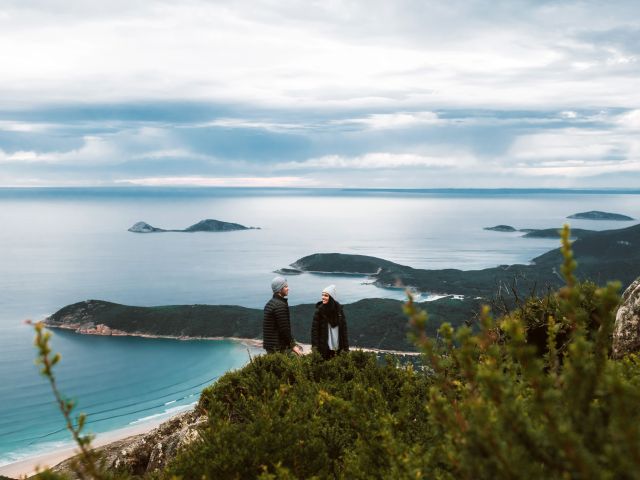
Famous for its pink-toned granite outcrops, orchids, migrating whales and of course Wineglass Bay. Kayak around the coastal kinks or ramble up the rock faces – just don’t forget to respect the native Tasmanian environment. AT recommends the three-hour return walk to Wineglass Bay – the iconic bay rates in the world’s top ten beaches.
Spending time amongst the rugged region of the Freycinet Peninsula will promise wildflowers and wildlife – try and make your way to Moulting Lagoon Game Reserve – the internationally renowned wetland holds great importance in the world of conservation. The number and significance of the various species of birds in the area is valuable – Black Swans are plentiful year round and in summer the Australian Shelduck frequents the region.
The park is packed with trails, one AT recommend is the Hazard Beach / Wineglass Bay, this iconic walk might take as long as 6 hours return. The national park supplies maps and walking booklets, contact the visitor reception on arrival or call in advance on [(08) 6256 7000].
The park can be reached from Hobart, within three hours, head out along the Tasman Highway in a northbound direction, turning off at the (C302) junction.
Two hours: LAUNCESTON
Buzzing with sophisticated eateries, Tassie’s second largest city, is worth a trip – the “garden city" has a smorgasbord of nibbles at every corner. Local fisheries and farms are supported by the newly improved restaurateur industry, creating a homegrown heaven. Prepare for a burgeoning art scene, peak hour lasting no longer than eight minutes and Tamar Valley vintage reds. Who wouldn’t spend a day sampling bush pepper cheese, quince paste and fresh berries?
To soak up the fine food fantasy – we recommend you find the perfect spot to eat at, drink at or be seen at. For a trusty Tasmanian advisory we suggest you browse through the eating out in Launceston recommendations. From the good old B.Y.O’s to the slinky sidewalk cafe, from deli nibbles to luscious luncheons – you’ll possibly linger longer in Launceston than imagined.
The gastronomic journey doesn’t end here, 20 minutes further a field is the Tamar wine region – with an ample array of popular eateries and wine routes -Valley of the senses is a great starting point. Zip through the countryside, the sweeping vineyard views and bygone era homes provide a memorable meander.
One hour: PORT ARTHUR
And now, the infamous settlement of Port Arthur creepily calls – the historic Tasmanian site is an eerie wonder. The former penal settlement houses well-preserved sandstone buildings that provide a marvellous and frightening picture of how life was for the 12,500 imprisoned convicts in the 1800s. Guided tours are available, but be warned – the haunted “ghost tour" could unnerve you for a while. Do your time at Port Arthur and get a true sense of just how hardy the early Australian “settlers" were.
Day trips are a great way to see and be moved by the historical settlement’s highlights, check out full day and half day Port Arthur tours – conveniently beginning and ending in Hobart. It’s believed that even the greatest cynic will be moved by the lantern-lit ghost tour.
Another fascinating excursion is the “haunted" Isle of The Dead – on this island many convicts and civilians were buried. AT says, “Leave this outing to those marginally moved by the notion of spirits." To embark on this trip you need to make arrangements to go ashore prior to travel.
The convict trail is yet another journey worth consideration – laced with natural beauty and a convict packed history, you’ll find a story behind every attraction. Port Arthur is one of the itinerary stops on the trail and when arriving at beautiful setting, which belies its troubled past – just try and imagine the hardships of the 1800s despite the tranquil setting of the site. If you do sections of the convict trail in and around the Port Arthur region, a must-see attraction is the ruins of the underground cells at the Coal Mines on Saltwater River – 20 km north of the site.
“The convicts may have landed themselves in a lucky country, but everyone needs the shock of discovering just how unpleasant life was." – David Whitley
For more information, visit – Discover Tasmania
Perth
Three hours: MARGARET RIVER
Mingling with winemakers, chefs, foodies and restaurateurs – is an experience not to be missed, AT gives it the big thumbs up. Honour Australia’s food and wine way of life and then on the whim, we suggest you catch a surf at surfer’s point, or at least check out one of Australia’s rousing surf spots.
This coastal corner presents a healthy blend of wholesome living and nature, with ancient forests and world-class wineries. The Margaret River, also known as the gourmet centre, lures locals and visitors to this eclectic escape time after time. And with beer breweries, chocolate factories and massive surf – no wonder no one bypasses this rolling hilled hinterland.
As your southbound journey from Perth unfolds look out for Capel Vale, the gateway to the Margaret River, with vineyards producing excellent reds and whites. What’s not to love? Check out their website, www.capelvale.com. On arrival in Margaret River, the visitors’ centre should be your first port of call. Gather tips on favoured wineries and restaurants, trails and tours.
Additionally take a look the regions official website at www.margaretriver.com
AT’s advise is to mix with locals, they frequent the local hideaways and can provide hot tips, without bias.
Besides the wine land’s wining and dining hype, jump in your car and meander the country roads – visiting galleries and photographing the coastline or countryside.
Weekly travel news, experiences
insider tips, offers, and more.
Two hours: NEW NORCIA
Drive north of Perth to see Australia’s only monastic town, known as the architectual jewel of Western Australia. This Spanish influenced settlement will provide a sense of Mediterranean style in the Australian bush.
In 1846 monks, a bishop and an Irish catechist set off for a farmhouse, 130km out of Perth. It was here they established their first mission just 8km north of today’s New Norcia positioning.
New Norcia is not dissimilar to a living museum as it’s barely changed since its beginnings. Sitting amongst Australian bush, the out-of-place town has stately Spanish buildings dating back to 1876, adding to the town’s incongruity.
Visit the tourist information centre in New Norcia and check out www.newnorcia.wa.edu.au for upcoming events in the town. AT recommend exploring the town on foot, the short heritage trails should take two to three hours.
One hour: ROTTNEST ISLAND
Cruise to Rottnest Island, a 60 minute ferry crossing from the city – 63 beaches await your arrival. With colonial streetscapes to see, an island to explore and glass bottom watercrafts to navigate; who wouldn’t kick up their heels and head to the island?
The simply life will lure you as you casually ride round rotto or lazily bask on the island, in the sun. Escape to Rottnest with AT and read our travel related features.
For further details check out www.rottnestisland.com and when you’re there, look out for the curious little quokka.
Adelaide
Three hours: QUORN, Flinders Ranges
Take a trip to the timeless town of Quorn, the gateway to the Flinders Ranges. Or, if you’re up for venturing a little further afield, travel all the way to magnificent Wilpena Pound, through SA’s mighty Pichi Richi Pass. Remember to throw on your hiking shoes and carry a trusty map.
Two hours: FLEURIEU PENINSULA
Explore the Fleureu Peninsula and take a boat cruise up river to the Murray River mouth. Alternatively, a slow-paced drive to the McLaren Vale wine region is a winner.
The lure of vineyards is hard to avoid and when pleasure is “promised" — why wouldn’t one explore the McLaren Vale wine region? With olive, almond and wine sampling en route, this excursion is bound to evoke the gourmet traveller spirit in you.
Here’s a swag of McLaren stops that we consider worth visiting: if you’re looking for a top breakfast spot, drop in at the BBlessed Cheese Cafe; for a lunchtime stop, visit The Olive Grove; and for an afternoon spoil, don’t miss Robern Menz Chocolates.
Make your way towards Australia’s Mississippi, the might Murray River, and discover the riverboating and pioneering histories of the Murray region as you meander along the waterways. Whether you opt for the overnight cruise or the pleasurable daylight paddle steamers, we highly recommend the trip. More info at www.murrayriver.com.au
One hour: KANGAROO ISLAND
Bound over to play with penguins and platypi. Kangaroo Island, only 45 minutes from Adelaide, is serviced by daily flights and ferries. With turquoise water and white beaches, AT gives it a BIG thumbs up.
Located 13km off the coast of Adelaide, Kangaroo Island is a haven for wildlife, and home to a number of plant and animal species unique to Australia. Birdlife also thrives there, so keep an eye out for black swans and cockatoos.
There’s no public transport on KI, so we recommend you sign up for a hassle-free island tour. However, if you’re more of an adventurous type, bring or hire your own transport and get roaming.
The convenient yet pricey way to get to KI is to fly from Adelaide to Kingscote — expect to pay around $120. For those on a budget: board a ferry from the mainland at Adelaide and alight at the island in under an hour.
Contact the islands visitor information centre on (08) 8553 1185 or visit www.tourkangarooisland.com.au
Want to see more stories from Australian Traveller in your Google search results?
- Click here to set Australian Traveller as a preferred source.
- Tick the box next to "Australian Traveller". That's it.

Australian Traveller
View profile and articles