Australian Traveller draws ever closer to solving one of its greatest myths: are Hoop Snakes real?
Forget the ubiquitous and highly nefarious Drop Bear. The dreaded Hoop Snake is the real scourge of the Australian outback.
The hoop snake began life as an American myth. Native to hilly or mountainous areas, when disturbed it’s said to form a rigid hoop by clasping tail in mouth and pursuing you silently and swiftly, using the slope to gain terrifying speed. Sightings in the US are still reported, with one naturalist offering $10,000 to the first confirmed evidence of a hoop snake. That money remains unclaimed.
Most online blogs or forums advising overseas visitors of the dangers of spiders and reptiles within Australia have at least one reference to hoop snakes and how best to evade attacks (usually something like “jump through the hoop to confuse it, then make your escape"). AT even discovered one lengthy exchange between a potential buyer and seller of a captive hoop snake. As the hapless purchaser drew nearer to making a decision, all kinds of advice from online onlookers poured in: be careful to build a big enclosure so it can hoop properly; make sure one end is higher than the other; perhaps use a small paddock on a hillside. Eventually the penny dropped and the sale aborted.
Three-toed skink.
In terms of the real thing, the nearest AT could find is the three-toed skink (Saiphos equalis) pictured above, a similar shot had been captured by Chris Rehberg who manages the excellent local action and conservation website www.wherelightmeetsdark.com.
Chris came across the rare skink in the southern Sydney suburb of Peakhurst (interestingly, among Chris’ stated missions in life is to “slowly but surely capture all Sydney skink species in photographs.")
Has he stumbled upon the real life Aussie hoop snake? Or at least a possible source of the legend here on our shores? When frightened, this skink shows off its reddened underbelly by curling into a tight hoop, but there’s certainly never been evidence of the tiny creatures (they only measure a few centimetres in length) attacking in full hoop formation. So it would appear the outback remains safe.
For now.
Want to see more stories from Australian Traveller in your Google search results?
A great night out doesn’t need a road trip, just the right bar. Swap the long drive for an evening at these standout Sydney venues.
If you’re thinking of a staycation or a long weekend (with foodie benefits), you can’t get much better than the bright lights and beautiful vistas of Sydney. From tucked-away bars to late-night hidden hangs, Australia’s (unofficial) favourite city is packed full of venues that make staying local feel like an adventure.
1. El Vista, Circular Quay
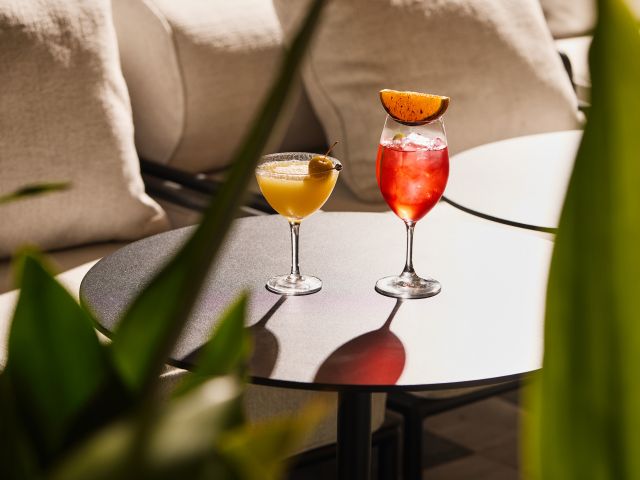
Enjoy tasty cocktails and gorgeous Sydney views. (Credit: Mario Francisco)
This welcoming bar by the Maybe Sammy team offers a fun buzz and jaw-dropping harbour views. Part of the Pullman Quay Grand Sydney Harbour, this lounge bar sits above Circular Quay with the harbour on one side and the Botanical Gardens on the other. You may start here for pre-dinner drinks, but you won’t want to leave before the early hours. If the 1960s Acapulco vibe isn’t enough, the views will be – the Sydney Harbour Bridge is so close it hardly fits in the window, while ferries glide by all night.
2. Bar Allora, CBD
Settle in for a taste of Italy.
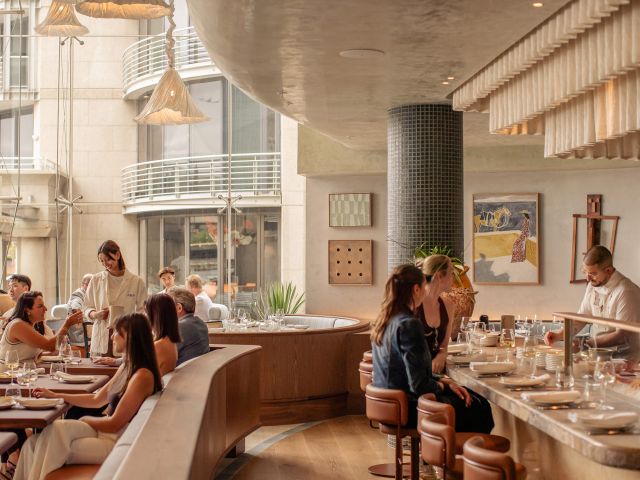
Inspired by Milan in the 1980s, Bar Allora brings Italian style and culture to the CBD. Although it’s officially part of the Mantra 2 Bond Street hotel, it’s designed to look and feel like you’ve travelled to Italy for all-day dining. Think espresso in the morning, aperitivo in the afternoon and Negronis late into the night. Accompany your liquid diet with Italian-style small plates and pastas with a modern twist.
3. Percy, Pyrmont
Spanish-style tapas and wine is the name of the game. (Credit: Steven Woodburn)
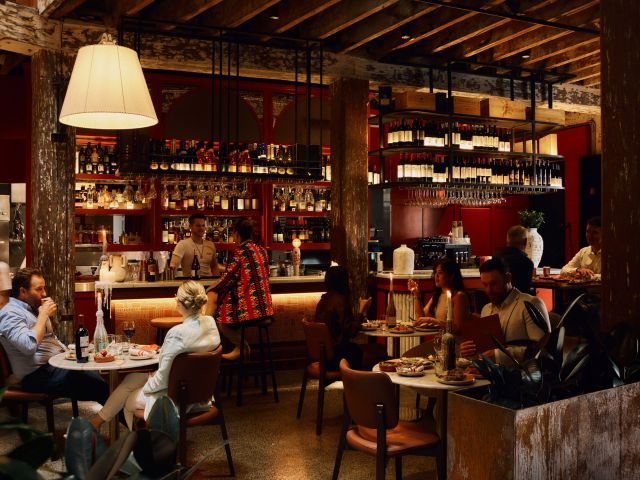
Taking centre stage in the luxe foyer of the Woolstore 1888 Hotel in Pyrmont, Percy is a popular Spanish-style tapas and wine bar serving food that makes you want to linger. The restored 138-year-old wool store creates an atmospheric backdrop to your glass of merlot with exposed timber beams, brick and the echoes of Sydney’s past. With an air of Barcelona, expect low conversations, creative dining and the city moments away.
4. The Crudo Bar at Flaminia, CBD
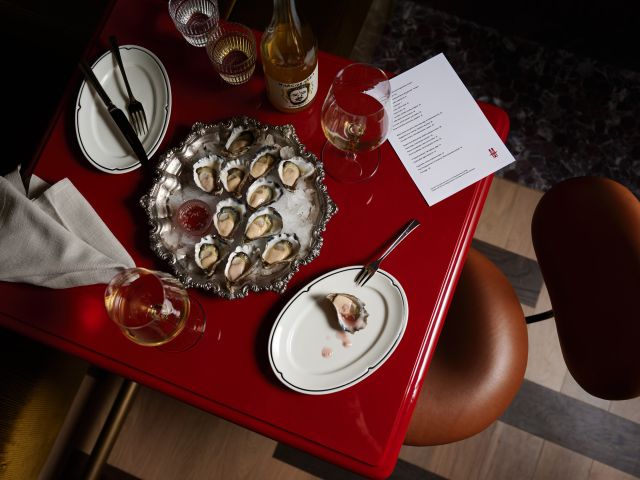
Seafood lovers should head to The Crudo Bar. (Credit: Nikki To)
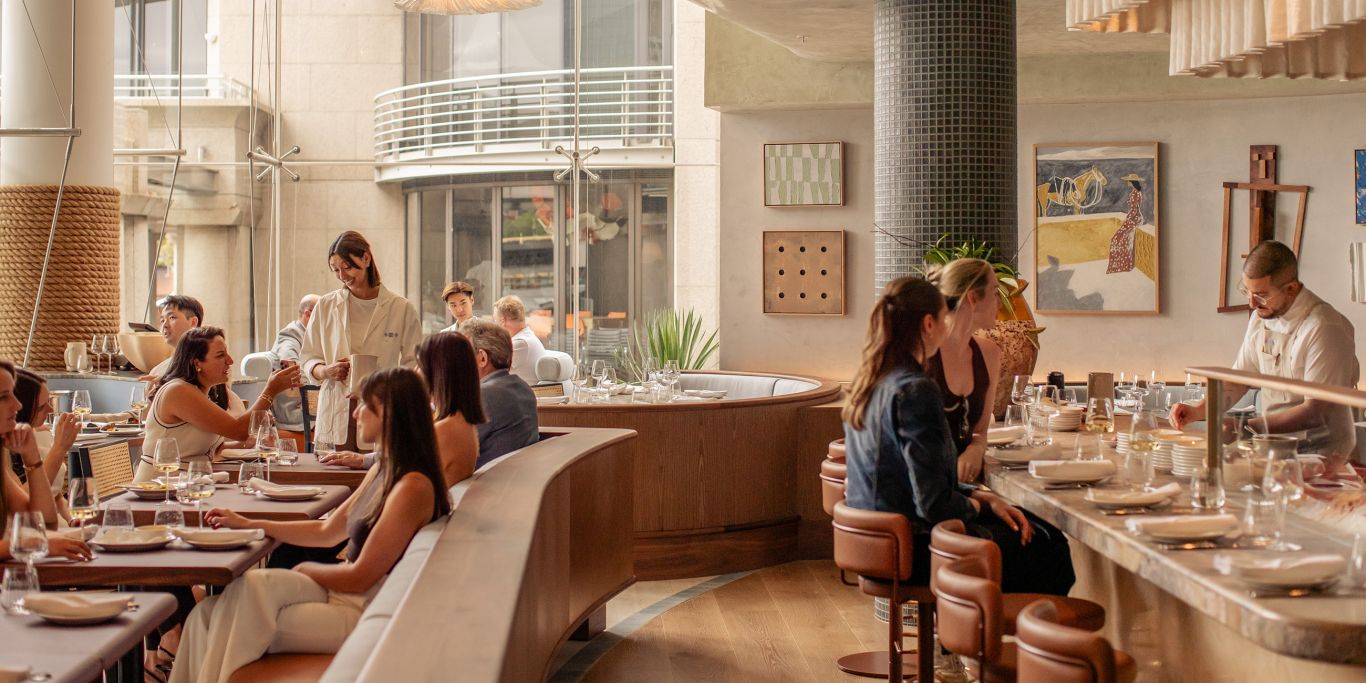
Grab a seat at the beautifully designed crudo bar, taking centre stage in Giovanni Pilu’s latest CBD restaurant, Flaminia. Enjoy a glass of chilled Vermentino from Sardinia or prosecco from the hills of Treviso, matched with freshly shucked oysters. Complement your seafood with a range of special dressings, influenced by iconic Italian port cities. It’s the perfect spot for a pre- or post- glass of wine before visiting the Sydney Opera House.
5. Mee So, Sydney Central
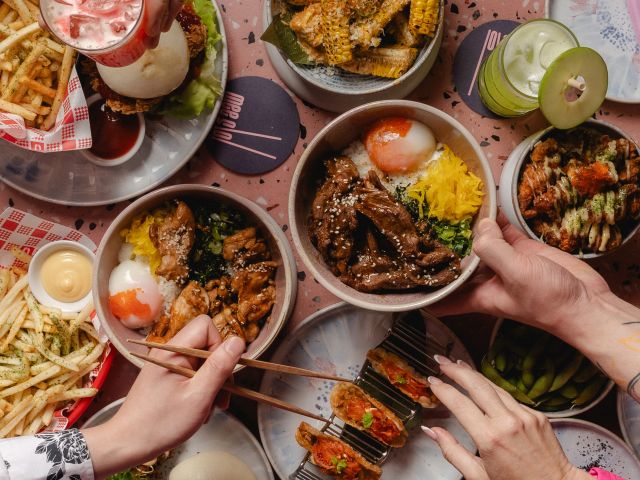
Enjoy Japanese-influenced food and drinks.
For something a little different, Mee So is a modern, neon-lit Japanese-influenced bar in the Ibis Sydney Central. Serving bold flavours and umami-heavy dishes alongside sake and yuzu-infused cocktails, this Tokyo-esque venue offers an escape from the busy streets outside. Order steaming ramen, a Japanese whisky, and make a corner of Mee So yours for the night.
6. Bar Morris, Haymarket
Settle into old-world European glamour.
Housed in a 1929 heritage-listed building, Bar Morris brings old-world European glamour to the Hotel Morris Sydney, part of Accor’s Handwritten Collection. More of a destination than a pitstop, this bar leans into its Art Deco past with velvet features, intimate lighting and bold brass finishes. Here you can order smaller plates like burrata, cured meats, and seasonal seafood to match your martini.
7. Pumphouse, Darling Harbour
Enjoy a tipple inside a building from the 1880s.
When you first walk into Pumphouse, you’ll quickly notice the high ceilings, exposed brick and industrial-style decor. Officially part of the busy Novotel Darling Square, this busy local hang doesn’t feel like it; it’s housed inside a former hydraulic pumping station from the 1880s – hence the name – and is a local institution. Grab a seat if you can and order off the classic modern Australian menu, before trying one of the many craft beers on tap to wash it down.
8. Wentworth Bar, CBD
Drink where the celebrities once did.
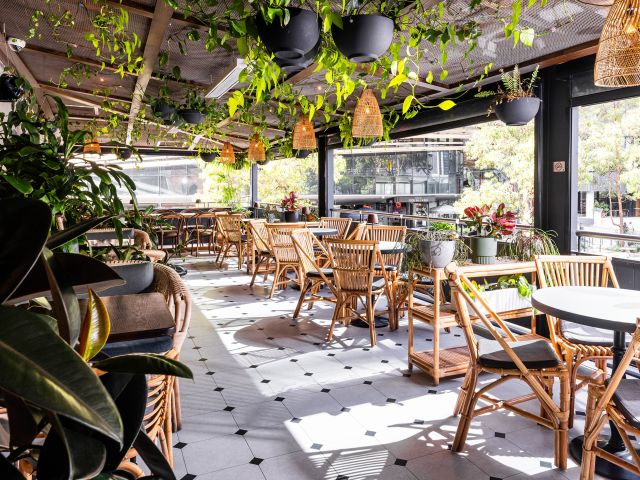
Designed for big groups and late-night cocktails, this open-air terrace bar is part of the Sydney Sofitel Wentworth – one of Sydney’s most iconic hotels. Once the watering hole of royals and celebrities, this mid-century building has recently been refurbished to be sleek, modern and inviting. The stunning rooftop bar attracts Sydneysiders who love to watch the sunset with a table full of Vietnamese and French-inspired dishes.
9. Monica Rooftop Bar, Paddington
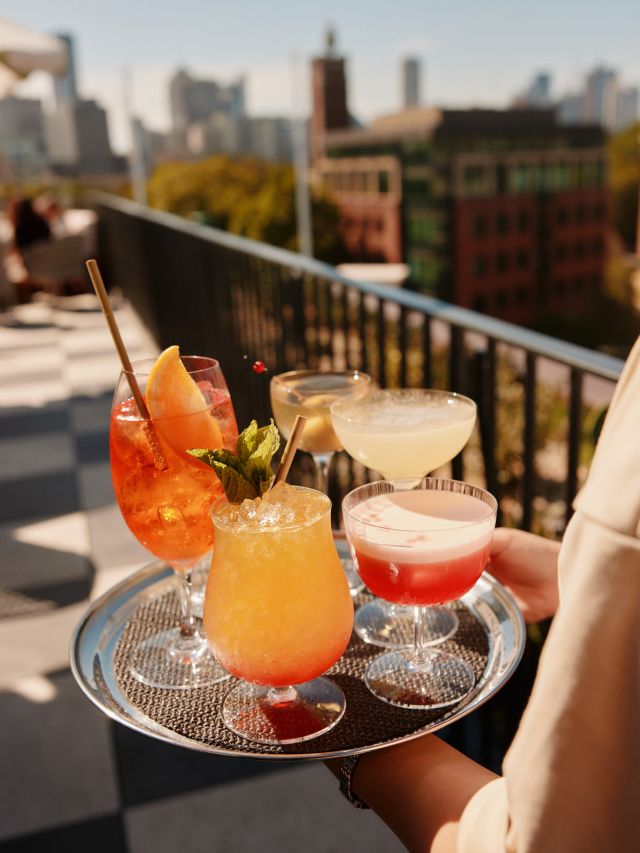
See the city skyline, drink in hand.
Sitting pretty on top of a restored 110-year-old theatre, Monica is a Hollywood-style rooftop bar with views across Paddington and the city skyline. Part of the 25hrs The Olympia hotel, this isn’t a quick drink kind of place; it’s a ‘let’s stay all night’ kind of venue. Weekend DJs will take you from sunset to late-night conversations, while you graze on ceviche, grilled meats or sharing plates.