5 ways we can support Aussie farmers in their time of need

hero media
From donating funds for animal feeds to volunteering your time and skillset, here’s how we can help out.

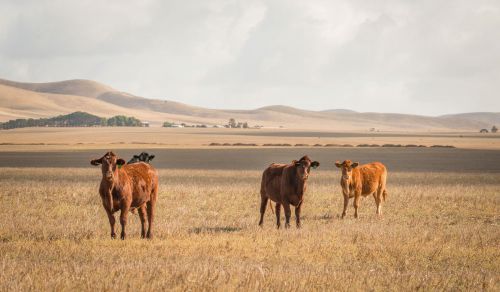
We’re all well aware of the current and distressing state of affairs for farmers across the country. The entire state of New South Wales has been declared officially in drought, while large regions of other states are also seriously affected by the lack of rainfall, especially in north-west Victoria, eastern South Australia and parts of Queensland.


And here are some examples of how this plays out: farmers are being forced to cart water onto their property to keep both their family and animals alive. In some cases there is not enough coverage in their paddocks, necessitating the spending of more than $20,000 a week on animal feed alone. Extreme cases call for farmers to make the heartbreaking decision to sell the bulk of their livestock, many of which have bloodlines that have been within the family for generations.


All donation methods listed below are registered charities and tax deductible, and not every way to help is monetary.

Provide animal feed

The easiest way to help is providing respite in the form of animal feed, $20 will cover a farmer with a small bale of hay, including transportation costs. Companies such as Rural Aid Australia – Buy a Bale and Lions – Need for Feed allow you to make one-off donations or set up continuous contributions.

Provide human feed

Drought Angels and Rural Aid Australia provide support for Aussie farmers in the form of food packages, vouchers and prepaid Visa cards to assist with household purchases.

Need tips, more detail or itinerary ideas tailored to you? Ask AT.

AI Prompt

Collect signatures

Assistance need not cost you a thing. Farmers and community groups are collecting signatures to send a message to the government and encourage them on to do more. Maitland Mercury is heading up a petition with the aim of receiving 10,000 signatures to start a parliamentary debate on drought support.

Individual help

Some farmers have taken matters into their own hands. The Fairley family behind Country Valley Milk in Picton has started an ‘Adopt a Cow’ program, whereby you can donate a nominal amount and in return receive a photo and profile of the dairy cow you have taken under your wing.


Other individual live campaigns for drought relief can be found on Go Fund Me pages. It is worth noting campaigns such as Adopt a Cow and Go Fund Me pages are not tax deductible.

Volunteer

If you are living in an area where you are in a position to volunteer your time and skillset, head on over to Aussie Helpers. These guys connect tradies willing to donate their time to farmers who have jobs needing completion but are lacking the necessary funds.


Alternatively, should you live in an area with a higher rainfall count and have suitable acreage for agistment (grazing livestock), offering your land free of charge will assist farmers greatly with fresh feed for their animals.


Want to see more stories from Australian Traveller in your Google search results?

  1. Click here to set Australian Traveller as a preferred source.
  2. Tick the box next to "Australian Traveller". That's it.
hero media

Film lovers need to add these Victorian theatres to their bucket list

    Ricky French Ricky French
    Theatres have always been a cornerstone of regional Victoria, reflecting the character and history of their local communities.

    From grand, gold rush-era masterpieces to Art Deco wonders to repurposed prisons, we’ve rounded up four of Victoria’s best regional theatres to catch a show at next time you’re travelling through.

    Her Majesty’s Theatre, Ballarat

    Her Majesty’s Theatre, Ballarat 
    Her Majesty’s Theatre in Ballarat has been standing for 150 years. (Image: Michael Pham)

    A monument to the immense gold rush wealth flooding through Ballarat in the second half of the 19th century, Her Majesty’s Theatre (‘Her Maj’ to locals) celebrates its 150th anniversary as the city’s premier performing arts venue this year.

    Built in a classical style and immaculately preserved (thanks largely to a recent $16-million restoration), this Lydiard Street landmark is the oldest continuously operating theatre in mainland Australia, notable for its double balcony and a stage that slopes towards the front, making it one of the most audience-friendly venues in the country to see a show.

    The Capital, Bendigo

    The Capital Theatre, Bendigo
    The Capital in Bendigo was built in 1873 as a Masonic Hall. (Image: Michael Pham)

    Denoted by its distinctive Corinthian columns, more reminiscent of ancient Greece than regional Victoria, The Capital theatre in Bendigo has been through several iterations since the first stone was laid in 1873.

    Originally a Masonic hall, the renaissance revival-style building became a theatre in the 1890s, falling into disrepair for a time during the 1970s, before being restored and reopened (as the Bendigo Regional Arts Centre) in 1991. Today, the 480-seat venue hosts everything from comedy to cabaret to traditional theatre, dance, opera and live music.

     Ulumbarra Theatre, Bendigo

    a look insideBendigo’s Ulumbarra Theatre
    Inside Bendigo’s Ulumbarra Theatre, a former prison. (Image: Michael Pham)

    Bendigo has busted out as a regional performing arts hotspot, so it’s fitting that one of its newest venues is housed within a former prison. Meaning ‘meeting place’ or ‘gather together’ in the language of the local Dja Dja Wurrung people, the $26-million, 950-seat auditorium rose from within the red brick walls of the historic Sandhurst Gaol in 2015.

    It’s an eerie feeling as you approach the imposing granite facade, pass beneath the old gallows and pick up your ticket from the box office occupying a repurposed cell block. With the building playing a main character in the show, this is performative architecture at its finest.

    Rex Theatre, Charlton

    the Rex Theatre in Charlton
    The 1938-built Rex Theatre in Charlton is an Art Deco gem. (Image: Jenny Pollard)

    Regional theatres don’t come more romantic than this Art Deco gem in the river town of Charlton, in north-central Victoria. Built in 1938, the 350-seat community-owned theatre provides an essential entertainment outlet for residents in the Wimmera Mallee region, as well as visitors making the trip up the Calder Highway from Melbourne.

    The volunteer-run venue is the last remaining purpose-built cinema in regional Victoria, and hosts the Charlton Film Festival every February, plus three weekly film screenings (Tuesday, Saturday and Sunday).