5 animals you need to see in the wild at least once

hero media
How many of these cuties have you seen?

Australia’s top five animals might not be ‘big’ but they are mighty. And seeing these iconic animals in the wild on beautiful beaches or bush walks is as awe-inspiring as it gets.

1. Koala, Magnetic Island, Qld

Spot wild koalas high in the veil of branches against a blue sky in the gum trees lining the picturesque Forts Walk. Magnetic Island (Yunbenun) is home to northern Australia’s largest colony of wild koalas.

You can see them here curled up like rolls of carpet, asleep in the crooks of trees. Or moving slowly in single-minded grace to graze on gum leaves. While local star Rod the Cod is a draw for divers visiting Magnetic Island, fans of the Netflix series Izzy’s Koala World will be hoping it’s the herbivorous marsupials making cameos.
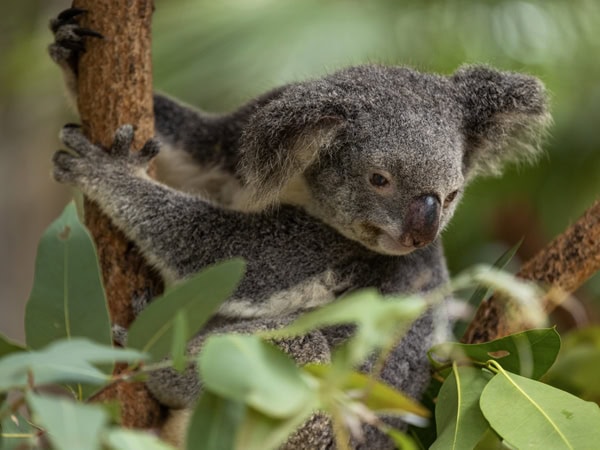
Koala in gum tree on Magnetic Island
Spot wild koalas high in the veil of gum tree branches. (Image: Tourism Australia)

2. Quokka, Rottnest Island, WA

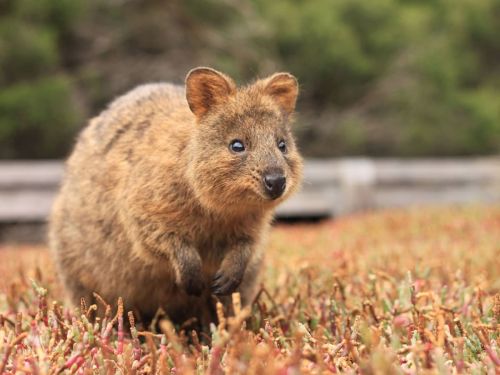
It’s simply not possible to reach peak quokka. The world’s happiest animal remains a beacon for visitors to Wadjemup (Rottnest Island) who come for the cute marsupials and stay for the carefree (and car-free) Rotto vibes.

These adorable animals are only found off the coast of Perth and are best known for becoming a social media sensation, posing with a cute grin for the camera.

The ultimate main character move in 2024 is to go to Rotto and clock a quokka without posting it to your Insta feed. Go on, we dare ya.
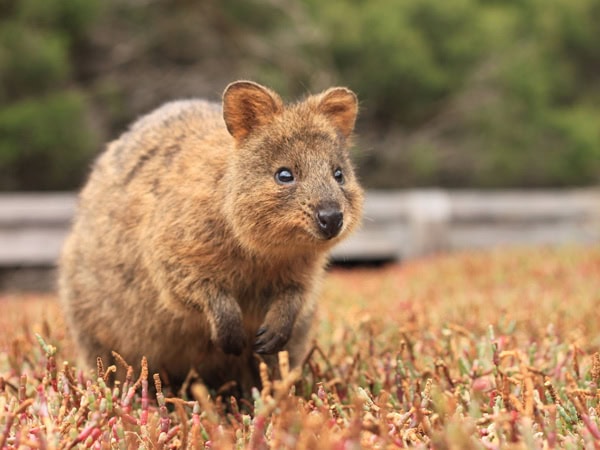
Quokka on Rottnest Island
Meet the world’s happiest animal on Rottnest Island. (Image: Tourism Australia)

Need tips, more detail or itinerary ideas tailored to you? Ask AT.

AI Prompt

3. Wombat, Maria Island, Tas

Did you know that wombats can sprint up to 40 kilometres an hour? Or that they produce cube-shaped poo?

You will feel like you’re in an episode of BBC’s Planet Earth when wandering around Maria Island’s chiselled landscape looking for the endemic Tasmanian wombat. This species is smaller than its mainland mates and has a diverse habitat that stretches from the coast to the alpine areas of Australia’s most southern state.
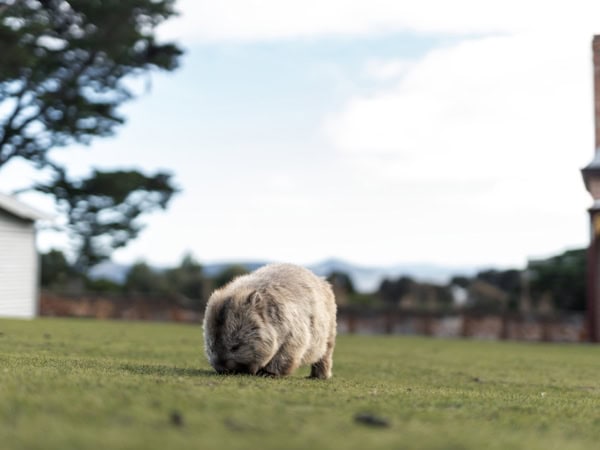
Wombat eating grass on Maria Island in Tasmania
Wombat’s are faster than you think… (Image: Tourism Australia)

4. Kangaroo, Pebbly Beach, NSW

Spotting roos through the canvas mesh of your tent at Pebbly Beach Campground is as iconic as it gets. It’s easy to spot the resident herbivores hunched over the grass that encircles the beach in Murramarang National Park.

The best time to see kangaroos on NSW’s Pebbly Beach is at dawn and dusk when the sea and the sky become one. Sometimes you will see the macropods using their long muscular tails and hind legs to bound across the sand. Other times you will see a baby Joey cradled in a mother’s pouch.
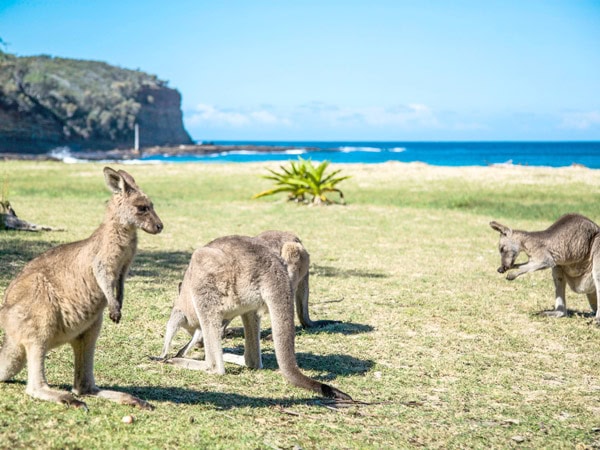
Kangaroos on Pebbly Beach in NSW
It’s easy to spot the resident herbivores on Pebbly Beach. (Image: Destination NSW)

5. Platypus, Great Otway National Park, Vic

When British scientists first saw the platypus in the late 18th century, some of them were said to have thought the specimen was a hoax. Yes, this native Australian monotreme appears most extraordinary, with the beak of a duck seemingly grafted onto the head of a four-legged animal.

It’s one of many reasons why spotting these endangered creatures in Victoria’s Great Otway National Park is such a thrill. While your ecologist guide at Otway Eco Tours can’t guarantee you will see platypuses in the wild on a canoeing tour, they have a 95 per cent success rate.

Platypus swimming in water
This native Australian monotreme appears most extraordinary. (Image: Getty Images/phototrip)

Want to see more stories from Australian Traveller in your Google search results?

  1. Click here to set Australian Traveller as a preferred source.
  2. Tick the box next to "Australian Traveller". That's it.
Carla Grossetti
Carla Grossetti has written across print and digital for Australian Traveller and International Traveller for more than a decade and has spent more than two decades finding excuses to eat well and travel far. A prestigious News Corp cadetship launched her career at The Cairns Post, before a stint at The Canberra Times and The Sydney Morning Herald gave way to extended wanders through Canada, the US, Mexico, Central America, Asia and Europe. Carla was chief sub editor at delicious and has contributed to Good Food, Travel & Luxury, Explore Travel, Escape. While living in London, Carla was on staff at Condé Nast Traveller and The Sunday Times Travel desk and was part of the pioneering digital team at The Guardian UK.
View profile and articles

This luxe trawler tour is redefining Victoria’s seafood experience

    Chloe Cann Chloe Cann
    Victoria’s ‘mussel capital’ is the source of exceptional shellfish used by top chefs far and wide. Step aboard a beautifully refurbished trawler to see how these plump and juicy bivalves are sustainably cultivated.

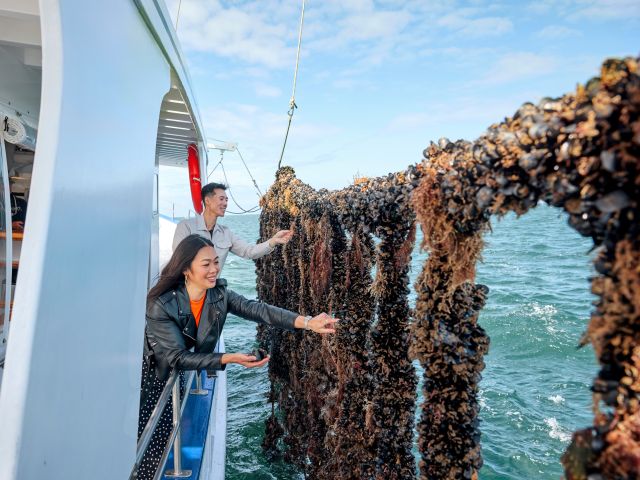
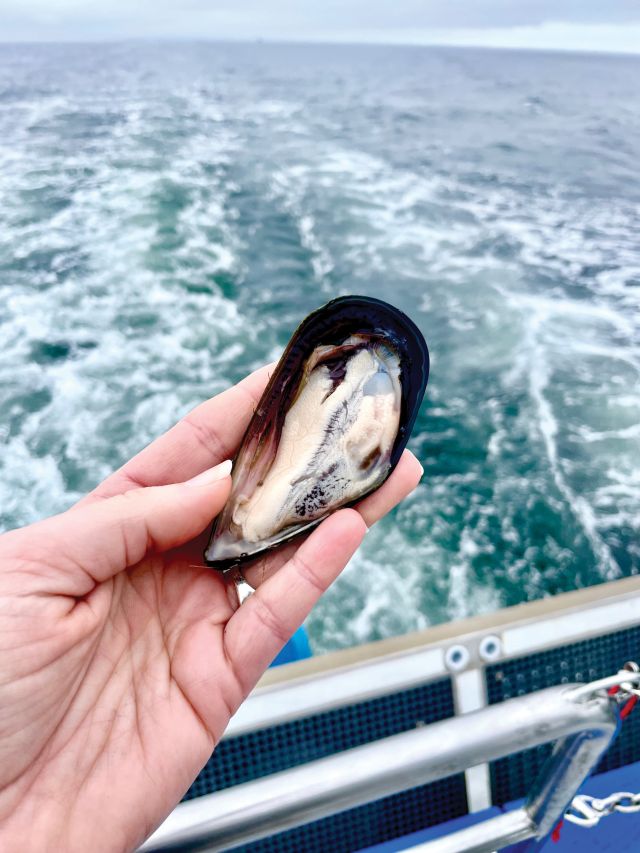
    A curtain is slowly winched from the placid, teal waters just off Portarlington, like a floating garland beside our boat. The ropes heave with blue mussels, the star attraction of our tour. But as we reach to pluck our own, it’s quickly clear they’re not alone; a mass of weird and wonderful creatures has colonised the ropes, turning them into a living tapestry. ‘Fairy’ oysters, jelly-like sea squirts, and tiny, wriggling skeleton shrimp all inhabit this underwater ecosystem.

    We prize our bivalve bounty from the ropes, and minutes later the mussels arrive split on a platter. The plump orange morsels are served raw, ready to be spritzed with wedges of lemon and a lick of chilli as we gaze out over the bay. They’re briny, tender and faintly sweet. “This wasn’t originally part of the tour,” explains Connie Trathen, who doubles as the boat’s cook, deckhand and guide. “But a chef [who came onboard] wanted to taste the mussels raw first, and it’s now become one of the key features.”

    A humble trawler turned Hamptons-style dreamboat

    inspecting bivalve bounty from the ropes
    Inspecting the bounty. (Image: Visit Victoria/Hannyn Shiggins)

    It’s a crisp, calm winter’s day, and the sun is pouring down upon Valerie, a restored Huon pine workhorse that was first launched in January 1980. In a previous life she trawled the turbulent Bass Strait. These days she takes jaunts into Port Phillip Bay under the helm of Lance Wiffen, a fourth-generation Bellarine farmer, and the owner of Portarlington Mussel Tours. While Lance has been involved in the fishing industry for 30-plus years, the company’s tour boat only debuted in 2023.

    holding Portarlington mussels
    See how these plump and juicy bivalves are sustainably cultivated.

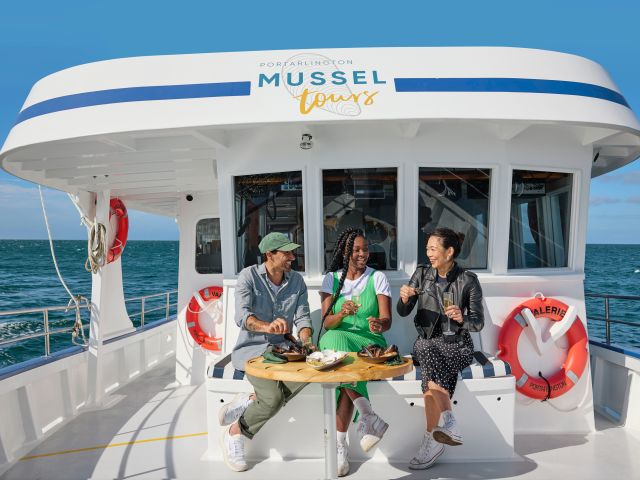
    It took more than three years to transform the former shark trawler into a dreamy, Hamptons-esque vessel, with little expense spared. Think muted green suede banquettes, white-washed walls, Breton-striped bench cushions, hardwood tables, bouquets of homegrown dahlias, and woollen blankets sourced from Waverley Mills, Australia’s oldest working textile mill. It’s intimate, too, welcoming 12 guests at most. And yet there’s nothing pretentious about the experience – just warm, down-to-earth Aussie hospitality.

    As we cruise out, we crack open a bottle of local bubbles and nibble on the most beautifully curated cheese platter, adorned with seashells and grey saltbush picked from the water’s edge that very morning. Australasian gannets soar overhead, and I’m told it’s not uncommon for guests to spot the odd seal, pod of dolphins, or even the occasional little penguin.

    The sustainable secret behind Victoria’s best mussels

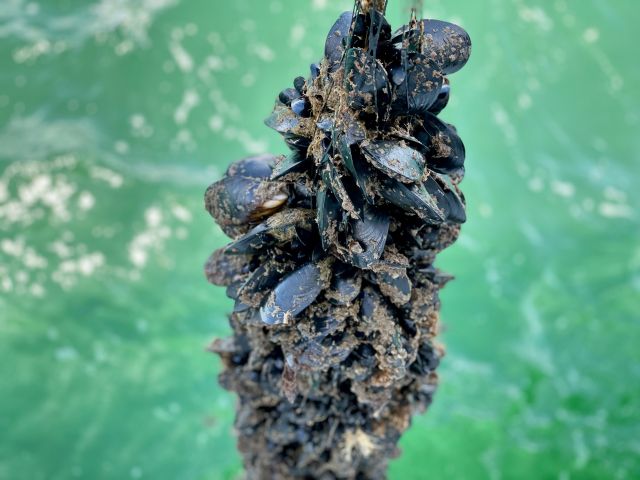
    blue mussels off Portarlington
    Blue mussels sourced just off Portarlington.

    Connie and Lance both extol the virtues of mussels. They’re delicious. A lean source of protein and packed with omega-3 fatty acids, vitamin B12, iron, selenium, and zinc. They’re cooked in a flash (Connie steams our fresh harvest with cider and onion jam). And they’re also widely regarded as one of the most sustainable foods in the world.

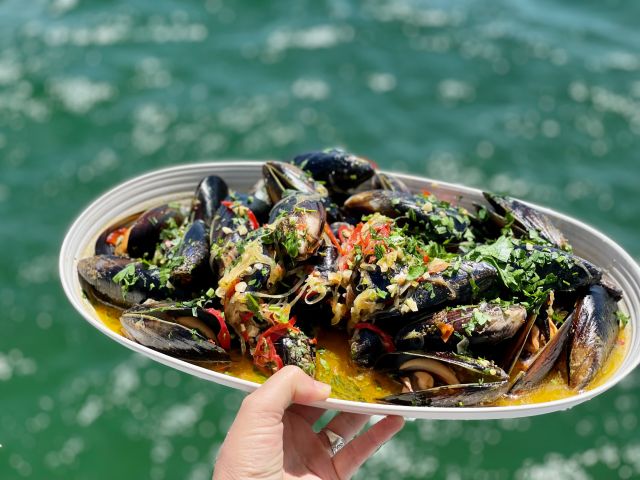
    Portarlington mussels with lemon and chilli
    Mussels served with lemon and chilli.

    “Aquaculture is [often] seen as destructive, so a lot of our guests are really surprised about how environmentally friendly and sustainable our industry is,” Lance says. “[Our mussels] would filter 1.4 billion litres of water a day,” he adds, explaining how mussels remove excess nitrogen and phosphorus from the water. “And through biomineralisation, we lock carbon into mussel shells.”

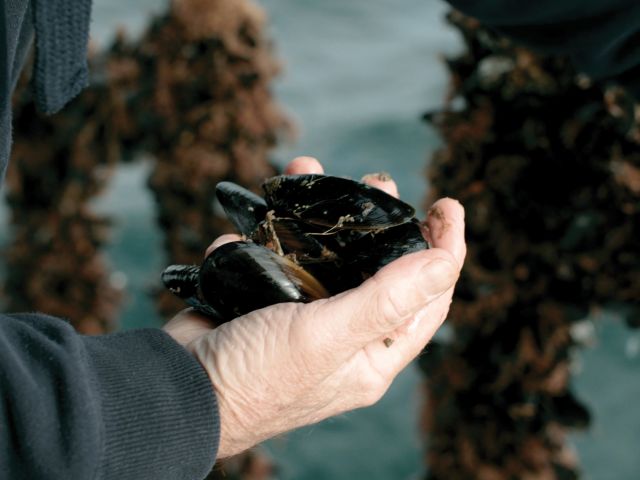
    a hand holding a Portarlington mussel
    Mussels are a sustainable food.

    Despite their glowing list of accolades, these molluscs have long been seen as the oysters’ poorer cousins. “It was a really slow start,” explains Lance, who says that in the early days of his career, “you could not sell mussels in Victoria”.

    But word has slowly caught on. Chefs as globally acclaimed as Attica’s Ben Shewry and even René Redzepi of Noma, Denmark, have travelled to these very waters just to try the shellfish at the source, sharing only the highest praise, and using Lance’s mussels in their restaurants.

    guests sampling Portarlington mussels onboard
    Sampling the goods onboard. (Image: Visit Victoria/Hannyn Shiggins)

    According to Lance there’s one obvious reason why the cool depths of Portarlington outshine other locations for mussel farming. “The water quality is second to none,” he says, noting how other regions are frequently rocked by harvest closures due to poor water quality. “We grow, without a doubt, some of the best shellfish in the world.” And with Lance’s bold claims backed up by some of the industry’s greatest names, perhaps it won’t be much longer until more Aussies uncover the appeal of Portarlington’s mussels.