Gather around the crackling fire as Australian Traveller and former parks and wildlife officer Steve Robertson reveal our nation’s absolute camping gems.
An old photographer friend once told me the secret of taking great pictures: “F11 and be there." Well, these days your camera will choose the exposure, so all you need to do to experience the incredible diversity of Australia is show up.
And camping, caravanning, motorhome-ing – however you do it – is the ideal way to “be there" for the full range of outdoor experiences. Here, in no particular order, are some highly selective choices for getting up close and personal with the natural wonders our land has to offer.
Henrietta Creek, Wooroonooran National Park, Qld
A lovely lowland rainforest, the North Johnstone River gorge and several roaring waterfalls all make this one of the most scenic and photographable sites in the Wet Tropics World Heritage Area.
The best falls are less than half an hour walk from the campground. Enjoy the view over the gorge from Crawford’s Lookout.
Ideal for: Flora and fauna junkies, with more than 500 rainforest trees (blackbean, milky pine, water gum, red tulip oak), and tiny musky rat-kangaroos, platypi, freshwater turtles and double-eyed fig-parrots.
Facilities: Quite good. Wheelchair-access toilet, a shelter and picnic tables provided. Boil creek water before drinking.
Drive Time: Palmerston is 33km west of Innisfail, an hour south of Cairns.
Email: cic@epa.qld.gov.au
South Cape Bay, Southwest National Park, TAS
It’s as far south as you can trek in Australia (next landmass: Antarctica). Where South Cape Rivulet emerges from the forest and flows into the cold Southern Ocean is a campsite of extraordinary beauty and serenity.
Choose between the larger more open site on the eastern side or the smaller and more sheltered western edge. Get up just before dawn to witness a glorious, colour-splashed sunrise.
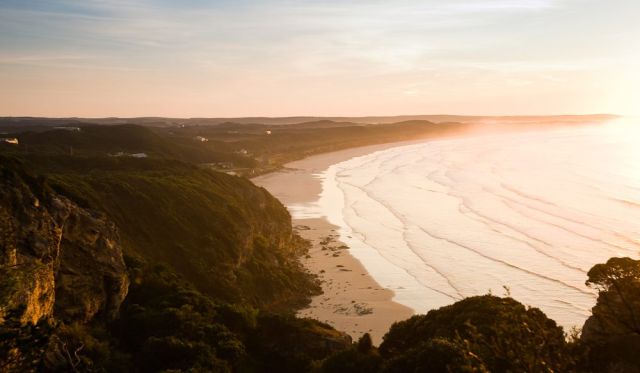
Ideal for: Walking fanatics. You can’t drive here. The road ends at Cockle Creek, then you walk three hours, crossing Blowhole Valley to South Cape and on to the rivulet.
Facilities: Very basic – bring a stove and fuel. Water from the rivulet is safe to drink.
Drive Time: Cockle Creek 2hr (123km) south of Hobart
Website: www.parks.tas.gov.au
Mt Eccles National Park, VIC
Go ahead, I dare you. Camp right next to that volcano. Yes, it was a real volcano once, but no, it hasn’t erupted in a few thousand years, so your chances of instant annihilation are slender.
What the old eruption did leave, though, was a charming crater lake and several quite spooky lava tunnels you can explore, including the extensive (right) Byaduk Caves (bring a torch; it gets pitch black in there really fast).
It takes around 90min to walk around Lake Surprise, enjoying the dense forest, the wildflowers and the odd koala fast asleep in the branches.
Ideal for: Geology buffs. Mt Eccles is one of the country’s more recently active volcanic areas.
Facilities: Good: fireplaces, tables, hot showers and toilets.
Drive Time: Three hours (300km) southwest of Melbourne.
Website: www.parkweb.vic.gov.au
Lake Catani, Mt Buffalo National Park, VIC
High in Victoria’s picturesque alpine country, Mt Buffalo’s beautiful Lake Catani is the setting for more than 50 sites catering to every style of camping from single tents to caravans and campervans.
Several are walk-in sites for maximum peace and quiet. At Lake Catani you can light a BBQ near the shoreline and watch the youngsters glide past in canoes. Mt Buffalo NP was badly scorched by bushfires a couple of years back, but the lakeside is looking good now, plus it serves as a great base for exploring park features like The Horn and masses of alpine daisies on the walk to Dicksons Falls.
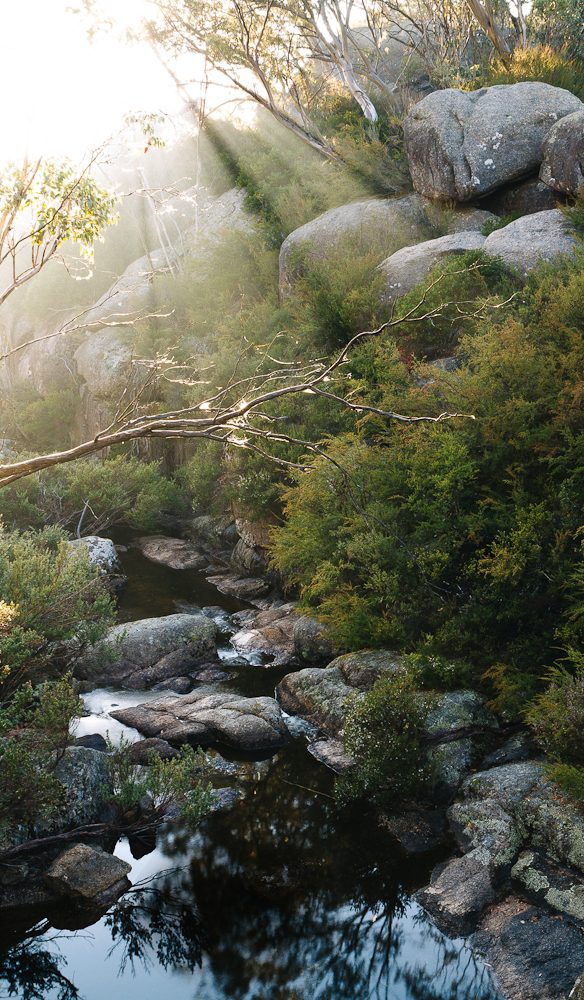
Ideal for: Photographers. It’s hard to resist the imposing rock feature called The Monolith with the sparkling waters of the lake as the perfect foreground.
Facilities: Good. Toilets and showers provided. A communal stone shelter with tables, water and fireplaces is near the amenities block.
Drive Time: Around 4hr (340km) northeast of Melbourne.
Website: www.parkweb.vic.gov.au
Mandu Mandu Gorge, Cape Range National Park, WA
Imagine being able to camp so close to a teeming, vibrant reef that at dawn you could hop out of your tent, snorkel out a 100m or so, check out the coral and the fish and be back at camp for breakfast.
And it’s not just coral you come to Ningaloo to enjoy. The park boasts tranquil and deserted beaches, rugged ranges and magnificent canyons. The Cape Range, backbone of the cape, is a huge upward fold of limestone originally formed below the sea.
Erosion has gouged vast canyons in the sides of the range, which for some reason provide a perfect habitat for WA’s famed wildflowers in massive profusion. Pick up a map and do a couple of the short and easy canyon walks.
You can drive to your campsite from Exmouth, around 40km away, depending on how far down the coast you choose to camp. With 112 sites available, it’s unlikely you’ll need to book.
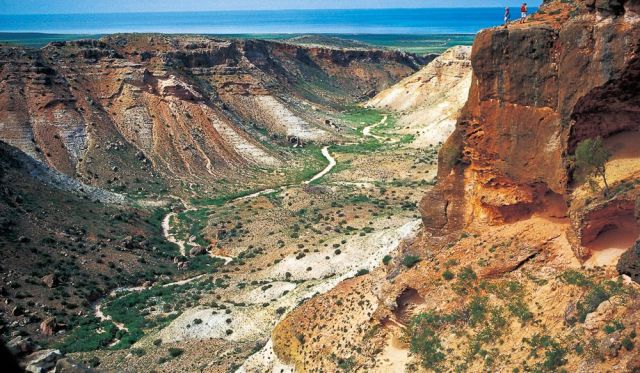
Ideal for: Snorkel fans, with a reef you can walk to from shore.
Facilities: Few. No power, showers or places to cook. Some toilets and picnic tables, but be self-sufficient and bring your own water.
Drive Time: Exmouth, 40km away, is the closest large town, which is 15hr (1261km) north of Perth.
Website: www.australiascoralcoast.com
Arkaroola, SA
Camping here means stars (not the movie variety, the real thing).
Emerge from your tent after midnight, look up and witness the heavens strewn with light. It’s a land of rugged mountains, towering granite peaks and attractive little waterholes with plenty of desert wildlife (like the yellow-footed rock wallaby and around 150 species of birds).
But you also come here for an almost mystical experience of the ancient centre of our nation. An award-winning private wilderness sanctuary, parts of Arkaroola were once a uranium mine. Today you can explore it in your own 4WD or take a tour, with champagne and chicken on a mountaintop just after sunrise.
The sanctuary is 130km east of Leigh Creek and, besides 300ha of bush campsites, they also provide motel-style lodgings, a restaurant, lounge bar and shop. Not far away is a delightful alternative: the campsite at Weetootla Gorge in Gammon Ranges National Park. Much of what you’ll like about Arkaroola is there, too, but without the extras.
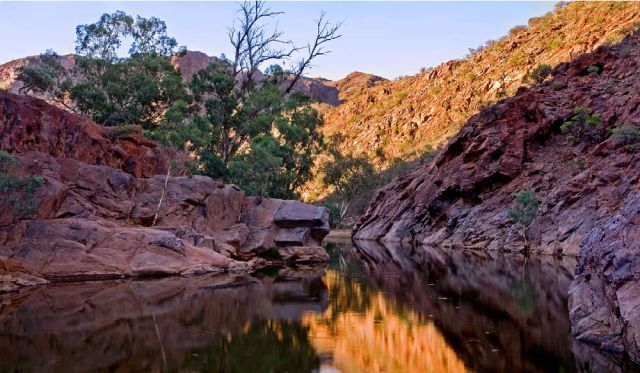
Ideal for: Astronomy buffs, under a night sky to remember.
Facilities: Basic at the bush campsites. Bring everything, especially water.
Drive Time: Six hours (600km) north of Adelaide.
Email: admin@arkaroola.com.au
Need tips, more detail or itinerary ideas tailored to you? Ask AT.
AI Prompt
Rocky River, Flinders Chase NP, Kangaroo Island, SA
If it’s ’roos you’re after, when you camp here you’re going to have to deal with Five O’Clock Charlie. He’s a whopping big ’roo that shows up at your campsite at the appointed hour, either looking for a handout or just company.
Sometimes the family comes along, too. Charlie is just one of the species wandering around this park on the western tip of KI, a list that also includes wombats and Cape Barren geese. A short walk from the campsite takes you through heathlands to an almost unimaginably lovely blue/green cove. November, with its profusion of wildflowers, might just be this park’s most colour-drenched month.
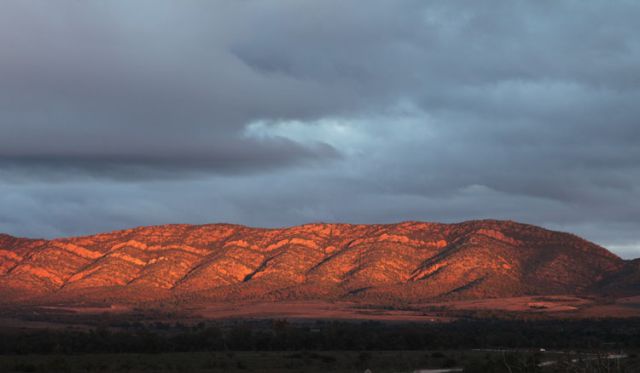
Ideal for: Flora buffs; Flinders Chase is home to several species of endemic plants.
Facilities: Good. There’s access to water, showers, gas BBQs and a public phone.
Drive Time: Around 1.5hr (100km) southwest of KI capital Kingscote, which is 186km southwest of Adelaide.
Website: www.parks.sa.gov.au/flinderschase
Cosy Corner, Bay Of Fires NP, TAS
News alert! Tassie actually has a warm bit. It’s that corner in the upper right, which by comparison to the rest of the state is almost tropical. You’ve got several sites along the bay to choose from, Cosy Corner just has the cutest name.
Intelligently, the campground is split: tents on one side, campervans the other. Close by is a fairly easy three-day track through nearby Mt William NP to the northeast tip of the state. Along the way, spot mobs of Forester Kangaroos, Tasmania’s only native ’roo.
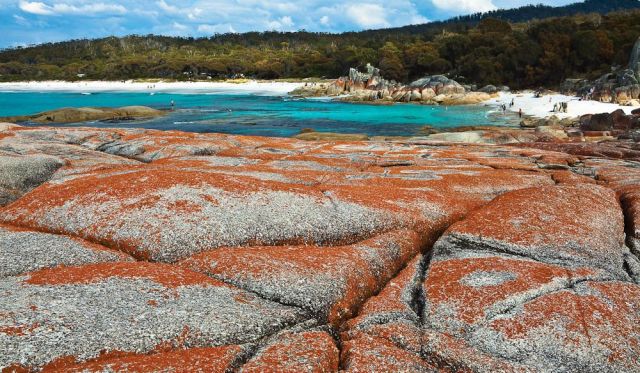
Ideal for: Tassie sun-seekers. The area is generally peaceful, pristine and sheltered from the state’s notorious breezes.
Facilities: Basic. Pit toilets, no water or firewood, no rubbish collection.
Drive Time: Around 3.5hr (280km) northeast of Hobart.
Website: www.parks.tas.gov.au
Forgotten Lake, Cradle Mountain, Lake St Clair National Park, TAS
Great name for a place you really don’t want other campers to know about. This one, and nearby Shadow Lake, were glacially carved a zillion years ago and today provide a quiet and blissful retreat from the rest of the world.
The lake is ringed by shady eucalypts and in the late afternoons you’ll hear the cries of myriad parrots and currawongs. It’s an easy walk from the lakes to Mt Rufus’ summit, the track to which includes delights like tall stands of pandanus, gurgling underground streams and blazing red waratahs.
From the summit, gaze south to the peaks of the wild southwest wilderness, or north to the splendour of Mt Ossa and the Cradle massif.
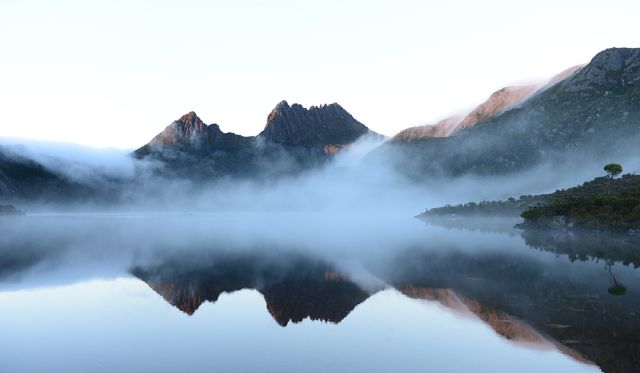
Ideal for: Hikers – it’s about 2hr on foot from Lake St Clair, easily accessed from Lyell Hwy.
Facilities: Very basic; bring everything. Lake water is safe to drink.
Drive Time: Lake St Clair is around 2hr (160km) northwest of Hobart.
Website: www.parks.tas.gov.au
Barambah Bush Caravan Park, Murgon, QLD
The folks at Barambah Bush have been raising a channel-billed cuckoo and in the next cage a female king parrot is feeding its adopted young red wing parrot.
The ugliest baby in the park is a young wedge-tailed eagle, which thankfully is starting to look more attractive.
Give him another year and he’ll be majestic . . . and released back to the wild. All in a day’s work at this caravan park-slash-wildlife rescue centre that also boasts a large goanna, a bearded dragon and some kookaburras. Small and secluded, quiet and friendly, the park is set in natural bush.
Wildlife come just to visit, too, with more than 100 different species of birds, koalas, wallabies, possums and kangaroos stopping by. If you tire of critter viewing, check out the wineries, or the dramatic scenery of the Glasshouse Mountains less than two hours away.
Ideal for: Budding young Steve Irwins.
Facilities: Powered sites from $16 per night. Campers get shady tent sites.
Drive Time: About 3.5hr (230km) northwest of Brisbane.
Phone: (07) 4168 1085
Website: www.barambahbush.com.au
Point Anne, Fitzgerald River NP, WA
Jurassic Park, Aussie-style. If a triceratops were to suddenly confront you just around the next bend, well, hey, why not? With its weird and wonderful vegetation (check out the massive and garishly coloured royal hakea), it’s no wonder this place looks like a relic from ten thousand centuries ago.
It’s one of the last great wilderness areas of the south, home to nearly 20 percent of WA’s native plant species (oh, and 209 bird types and some migrating and breeding whales from June to October).
Beaches here are deserted and blindingly white, but the water is seriously chilly. You can climb three mountains, too. For ease of recollection, they’re all called Mt Barren and are quite effortless to conquer.
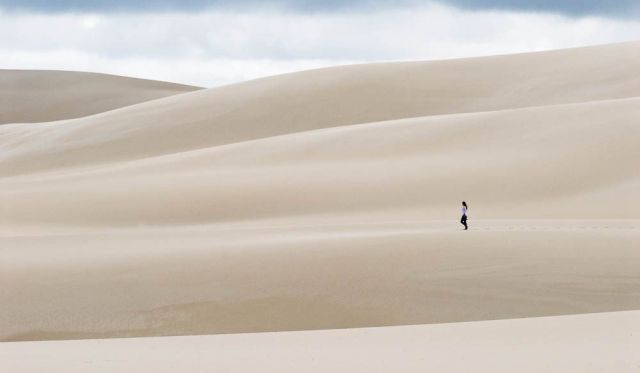
Ideal for: Water babies, with a sheltered swimming and snorkelling beach, a purpose-built whale-watching platform, great fishing, and a chance to spot fur seals.
Facilities: Very limited. Basic toilets. Bring your own water and cooking gear.
Drive Time: 65km east of Bremer Bay, around 6hr southeast of Perth.
Website: www.australiassouthwest.com
Gillards or Middle Beach Campgrounds, Mimosa Rocks NP, NSW
Both Gillards and Middle Beach are just off the Tathra-Bermagui road in a delectable chunk of the NSW south coast. Imagine a natural sculpture park, with volcanic-created shapes appearing everywhere among the rugged coastal headlands, cliffs and rock stacks.
We spent a camping weekend here exploring the rockpools for squishy critters, then rented a couple of kayaks on a calm day and paddled from cove to cove. There’s even a bit of rainforest if you get tired of the coastal stuff.
Ideal for: Choose Gillards if you’ve a campervan or motorhome, Middle Beach if you don’t mind a short walk from car to tent. Middle Beach has a sheltered tidal pool that’s ideal for the kiddies.
Facilities: Surprisingly good. Pit/composting toilets, electric/gas BBQs, firewood supplied, BYO water.
Drive Time: About 3hr (230km) southeast of Canberra.
Website: www.environment.nsw.gov.au
Weekly travel news, experiences
insider tips, offers, and more.
Sawpit Creek, Kosciuszko National Park, NSW
Wake up on the roof of Australia nestled in a secluded snow gum forest just below the snowline. Most of the winter the park is green, but the occasional dusting of snow transforms it into an icy fairyland.
Sawpit Creek is halfway between Perisher Valley and Jindabyne at the doorstep of Australia’s magnificent alpine wilderness. We used the site as a base for three late January walks along the high ridgelines, past glacial lakes, little flowing streams and weathered boulders, accompanied by about four trillion flies, each of which attempted a landing in my nose.
If you’re the skiing type, use this privately run retreat as a cheap alternative to the ritzy lodges of Thredbo and Perisher.
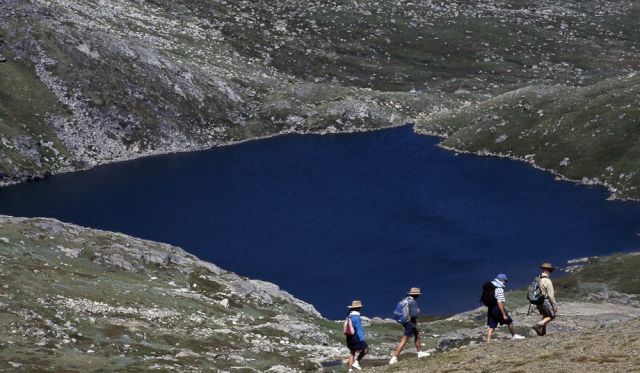
Ideal for: Ski bunnies, as a perfect gateway to the slopes.
Facilities: It’s all here. Powered van sites are spread apart and set in natural tree cover and shelter. Campsites are rated 3.5 star and there’s an amenities block and lots of cooking spots available.
Drive Time: About 2.5hr (175km) southwest of Canberra.
Wallace Rockhole, NT
For campers and caravanners, there are three things about Wallace Rockhole that are especially delightful: it has what may well be the neatest campground in the Territory; it’s ideally located to tour the Western MacDonnell Ranges; and it positively welcomes visitors.
The 140 or so residents enjoy sharing their heritage during cultural and tucker tours that often include witchetty grubs, kangaroo tail and damper. You’re also not far from Ellery Creek Big Hole, Serpentine Gorge, Standley Chasm, Ochre Pits and Ormiston Gorge and Pound.
You can also have a traditional owners’ guided tour, see their famous rock art and enjoy the life of an Aboriginal community in the bush, a place so clean it’s been a repeat Tidy Town winner.
Ideal for: Campervans, caravans and motorhomes.
Facilities: Pleasant shaded area for tents. There’s even a shop and an art gallery.
Drive Time: Just over an hour (117km) west of Alice Springs.
Email: info@wallacerockholetours.com.au
Thurra River Campground, Croajingalong NP, VIC
It’s an enduring mystery why this park isn’t totally overrun with visitors, especially campers.
Consider its myriad attractions: a long, gorgeous beach with dozens of little rocky coves, a dark, wet coastal forest perfect for dreamy walks, productive fishing spots and safe river swimming.
All four major campgrounds within the park are fine – but Thurra River, with 46 sites, is the biggest and best. And you’ve got the river right there for summer splashing.
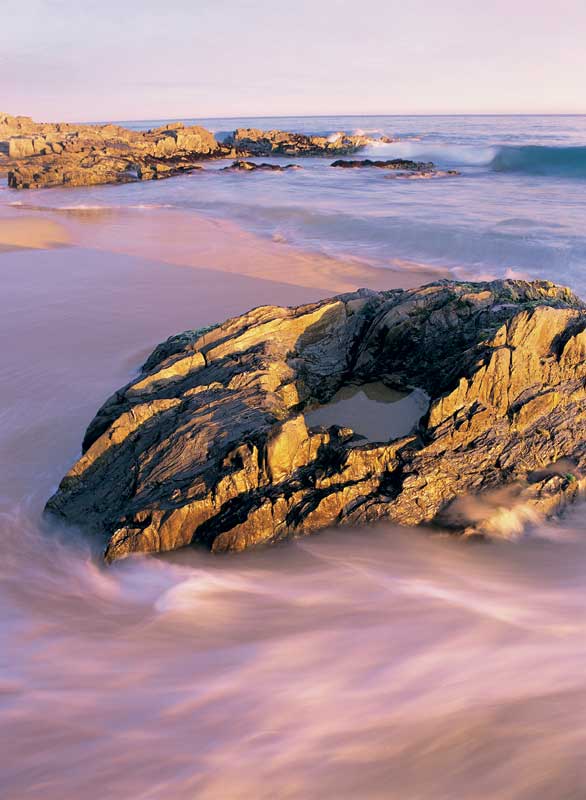
Ideal for: Bird watchers. Nearby wetlands attract 40 species of migratory seabirds and waders while coastal heathlands and woodlands are home to hawks, sea eagles and falcons. Six owl species live in the forests and I met three of them on just one dusk walk.
Facilities: Pretty good: toilets, fireplaces and drinking water. Bookings essential for Christmas and Easter.
Drive Time: 5hr (450km) east of Melbourne.
Website: www.parkweb.vic.gov.au
Phone: Parks Victoria on 13 19 63
Camping Contenders
Ten more delightful camping spots that very nearly made our best-of-the-best list.
1. Lake Mournpall, Hattah-Kulkyne NP, Murray River, Vic: South of Mildura is the land of the mighty river red gum, and a lakeside campground with delightful nature walks nearby.
2. Bright Holiday Park, Vic: April’s the month for dazzling leaf colours. Bright’s a great base for exploring the Alps in the peaceful shoulder season.
3. Cumberland River Holiday Park, Vic: The Great Ocean Road at its best, coastal splendour next to mysterious forest gullies. Just avoid the busy summer period.
4. Walardi or Kurrajong Camp, Purnululu National Park, WA: Once called Bungle Bungle, here’s our nominee Australia’s eeriest and most singular landscape. Spend hours exploring the palm-fringed gorges to your heart’s content.
5. Lucky Bay, Cape Le Grand NP, WA: Jagged rocky outcrops, magnificent white sand, blue water and lots of little islands make this possibly our loveliest coastline anywhere.
6. Black Point, Warren NP, WA: Little waterfalls, a swift-flowing river and the majestic karri forests surround you. Yeagerup Dunes are immense and fun to slide down.
7. Muirella Park, Kakadu NP, NT: An Aussie icon, Kakadu is a world of rich Aboriginal art, astonishing waterfalls and that huge escarpment. A nice wetlands walk starts here, but watch out for crocs.
8. Myall Beach, Cape Tribulation, Qld: Reef snorkelling, an untouched white beach, and gentle rainforest walks, all within metres of each other. Bliss.
9. Arthur River, Tas: Wild and stormy ocean on one side, dense rainforest on the other, plus canoeing and a terrific river cruise.
10. Cloudy Bay, South Bruny NP, Tas: Often windy but strangely alluring, this aptly named campsite is truly bottom-end-of-the-world stuff.
Want to see more stories from Australian Traveller in your Google search results?
- Click here to set Australian Traveller as a preferred source.
- Tick the box next to "Australian Traveller". That's it.

Australian Traveller
View profile and articles