How to travel the Australian Outback

hero media
How far do you have to travel into Australia’s outback, before you’re actually heading back in? Peter Robinson ventures passed Broken Hill through Uluru and Alice Springs to the Kimberley and back to find out exactly where the Great Australian Outback begins . . . .

There’s been a 4WD sitting in my driveway for the past 20 years. Not fulltime, you understand; it gets driven often, being the only vehicle I own.


And, yep, it gets driven around town a fair bit, which means I get my fair share of grief from doubting do-gooders who view any large-base vehicle in a metro setting as the ultimate in environmental terrorism.


But the fact is, I’ve chalked up tens of thousands of kilometres in the outback. And that’s where a big, capable 4WD comes into its own.


In 1813, when Gregory Blaxland struck out eastward from Sydney to forge a track through the Blue Mountains, it was a great adventure into the unknown.


Not that he probably thought that at the time, given the hardship involved. It must have been much the same for any of the other pioneering Europeans who made first forays east to west, south to north, edge to baking centre – the likes of Charles Sturt, John McDouall Stuart, Burke and Wills.


“It’s not actually delineated on any map, although many books refer to the outback nonchalantly as if the reader knows just where it is."


Now, in air-conditioned luxury, we can take a smooth, black ribbon towards the vast interior of Australia and find places where Google Earth and GPS units give way to good old-fashioned map reading. But first, it’s a huge country out there, and most of it’s outback – so let’s have a look at exactly where you’re going.


It’s not actually delineated on any map, although many books refer to the outback nonchalantly as if the reader knows just where it is. International tourists have heard of it and come to visit only to find a week in a hire car doesn’t cut it.


“…draw an imaginary line 200km inland starting from Adelaide, all the way around the east coast to Cairns, and call anything north and west of that line The Outback."


It’s been defined by various authoritarian tomes as “remote, sparsely inhabited back country", and “remote inland districts or back country of Australia." But these are no help at all.


Neither is the old saying that the outback consists of “anything out the back o’ Bourke." Beyond the Black Stump? Perhaps. But no two people can agree on which stump near what town is the real deal.


As a rough guide, here’s what AT reckons: draw an imaginary line 200km inland starting from Adelaide, all the way around the east coast to Cairns, and call anything north and west of that line The Outback.


Apart from a few larger towns, that’s a pretty good stretch of country to call outback (with apologies to Perth and Darwin) and there’s hardly anyone there (more apologies to Perth and Darwin and anyone stuck in-between).


For a final word on the matter, we asked long-time AT supporter and former Deputy PM the Honourable Tim Fischer to give us his first impressions of exactly where the outback might be.


“…once you’ve exhausted two tanks of fuel you’re in back country, where the population is sparse and mobile phone coverage is even worse. You’ll be allocated a batch of flies, which will enjoy your company and your food."


“Everything 50km or more north of the Sydney to Perth Transcontinental Railway Line," he asserts, “that’s also 100km or more west of the Newell Highway and 100km west of the NSW and Queensland east Pacific Coast. Alternatively, excluding all of Victoria and Tasmania, the ‘Great Outback’ is, by rule of thumb, everything north of a line from Sydney to Spalding, Port Lincoln to Esperance via the coastline of the Bight, and thence to Perth, but more than 100km inland from the Queensland east coast, 200km inland from the NSW east coast, and Cervantes on the northwest coast of WA. And I prefer that first one." Glad we got that settled.


On the practical side, once you’ve exhausted two tanks of fuel you’re in back country, where the population is sparse and mobile phone coverage is even worse.


You’ll be allocated a batch of flies, which will enjoy your company and your food. Locusts will hitch a free ride in your radiator, and corrugations will rattle your fillings loose.


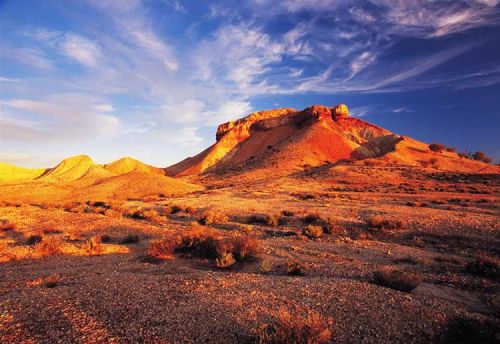
Stand just about anywhere in the outback, wave away the flies and look down at your feet. Discard any notions that this is the “dead" heart of Australia; though it’s a harsh environment amid the spinifex and saltbush, a surprisingly dynamic and resilient microcosm of life survives.
A downpour in the outback can produce – literally overnight – an ephemeral carpet of colourful wildflowers midst stone and red sand. In the same timeframe, it also produces impassable roads.


And, if Cooper Creek floods into Lake Eyre, another miracle occurs: vast saltpans become an inland sea teeming with myriad aquatic and bird life until the cycle begins all over again. With luck you might get a once-in-a-lifetime sight – a waterfall on Uluru, or snow on St Mary’s peak in the Flinders Ranges. Or simply a cold beer in a remote country pub.

hero media

7 features of a quintessential Aussie road trip

    Kassia ByrnesBy Kassia Byrnes
    No one does road trips like Australians. Make your journey perfect.

    The humble road trip is a way of life in Australia, and it’s not the same here as it is anywhere else. Sure, you could fly, but then you’re missing out on the bonding time and priceless memories that get made along the way (good or bad, you’ll be sharing them for years to come). Not to mention, some of Australia’s most worthwhile and untouched places can only be accessed by road .

    But how to ensure your road trip is quintessentially perfect? Why use this checklist, of course.

    1. Start with the perfect vehicle

    A woman sitting while reading inside Star RV Motorhomes spacious Polaris 6.
    Relax with stunning views in a spacious motorhome. (Image: Demi Gavin)

    I can tell you from experience, nothing will push even the most tight-knit group to devolve into chaos and fighting faster than a vehicle that isn’t up to the task of a proper road trip. Enter the premium options of Star RV Motorhomes.

    They have a range of sizes to suit any group, from solo travellers and couples to families. And they’re designed to be easy to drive.

    Take the Polaris 6 , for example. This light-filled sanctuary of comfort has plenty of space for bigger groups. Three double beds, a shower and toilet, and an extendable awning (with room to move between them all) make it perfect for exploring Australia.

    Couples might prefer the Polaris 2 with a fully self-contained bathroom, kitchen and a bed for two that transforms into comfortable seating during the day. Both models are pet-friendly.

    2. Pack the tastiest snacks

    A couple having a picnic beside Star RV Motorhomes.
    Make use of the spacious storage in your Star RV.

    Road trip snacks are an Australian art. Some, you’ll need to pick up along the way. We’re talking the iconic Chico Roll, choccie milk and maybe a sneaky potato scallop (or several).

    Others, you can pack ahead of time to save on time and, usually, money. Thankfully, Star RV Motorhomes all come with plenty of storage space, so your snacks can last as long as your road trip. Think fresh fruit and other supplies to cook lunch and dinner along the way. Plenty of lollies and maybe even some soft drinks and Red Bulls for the road.

    Not to mention, many Star RV motorhomes have a kitchen onboard, complete with a full-size kitchen, so you won’t need to lug an esky around.

    3. Bring your pet for the ride

    A child and its pet inside Star RV Motorhomes.
    Travel Australia with your four-legged co-pilot. (Image: Erin Bacchi)

    Man’s best friend is essential for a truly Aussie road trip. Pet-friendly Star RV Motorhomes not only mean your dog (or cat, if they enjoy the open road more than mine do) can experience Australia with you, but that you save a small fortune on pet sitters or dog hotels.

    4. Prepare the perfect soundtrack

    Two people having coffee with a view.
    Chase the journey and the destination.

    No ifs, ands or buts, the perfect soundtrack can make or break a road trip. It’s really up to you, but we recommend plenty of Australian classics. Cold Chisel never hits quite the same as when you’re listening to it with only gumtrees and kangaroos for company.

    Of course, this means you’ll also need a good sound system to listen to your carefully curated tunes on. Star RV motorhome sound systems allow you to connect your device and play your own music. Goodbye, spotty radio reception.

    5. A spacious tent and camping gear

    A woman sitting inside Star RV Motorhomes with a view of the lake in the background.
    Enjoy soft linens and space to stretch. (Image: Cariund Hannes)

    If there’s one thing that a road trip can guarantee, it’s a campsite or several. So you’d better source a good sturdy tent, sleeping back, and a camping mattress that probably won’t help much – but it’s better than the ground.

    Or, just hire a motorhome so your vehicle is also your bed, and comfort is a priority (goodbye foam camp mattresses) with linens provided. And you’ll have room to unpack and move around. Heaven.

    6. Plan your toilet breaks

    Typically, an Aussie road trip means pulling over at a good bushy area or finding a horrific pit toilet on the side of the road – the smell of which will stay with you forevermore. If you’re planning to camp, better pack that handy shovel and find a good, bug-free place to dig your own loo hole.

    To avoid that hassle (and smell), forgo the shovel and hire a motorhome with an onboard toilet. When the toilet comes with you, there are no emergency roadside stops. Plus, it’s a whole lot fresher.

    7. Pick the ultimate destination

    Aerial view of the Polaris 6 cruising along a coastal road with sweeping beach views.
    Hit the road, Aussie-style. (Image: Matt Finch)

    Of course, the journey is half the fun. But the other half is an incredible destination. With accommodation and transportation sorted out with one motorhome, you have the flexibility to choose a gorgeous view for the night (or several).

    There are endless views to choose from, like the rugged cliff faces of Queensland’s Carnarvon Gorge National Park. Carnarvon Gorge camping area (near the visitor area) and the Big Bend walkers’ camp both have bushy surrounds and a trail to the gorge itself.

    Or Lake Argyle, Western Australia‘s largest man-made freshwater reservoir. Find the only dedicated camping and caravan park at Lake Argyle Resort.

    Meanwhile, Mount Buffalo National Park in Victoria is prolific for its wildlife. Wander through snow gum forests and keep an eye out for wombats, Australian kestrels and more. There are several camp options here.

    Start planning your Australian road trip adventure (and get 15 per cent off on any Star RV motorhome rental in Australia) at starrv.com/au .