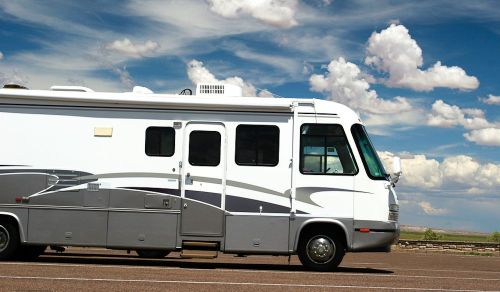
When most people look to get away for their holidays they opt for a car or a plane to get to their desired locations, instead of choosing an RV, and there are plenty of objective reasons for this. Some people simply like to unwind and get to a destination as soon as possible and thus opt for a plane, while others like to explore the sites along the way and thus travel with a car, but others are simply afraid of trying out RV travel because of myths that surround it.
Of course, the quality of RV (Recreational Vehicle, a self contained camper van) travel depends on the type of vehicle that you are driving. Models differ greatly, ranging from the always popular Winnebago Adventurer ($120,000-$180,000 new) to the ultra-luxurious Newell Coach ($1,700,000), but the myths are universal. Here the five most common RV myths – and why they are not true:
RV travel is more expensive than other types of holidays
The big upfront cost of buying or renting an RV can seem steep, but in reality it can be one of the more cost-effective ways to travel. What many people forget to consider is the hefty price of things such as airfare, car rental, accommodation and eating, which can result in a bigger sum than the cost of travelling with an RV. According to research by US travel consulting agency PKF, “typical RV family vacations are on average 27 to 61 per cent less expensive than other types of vacations studied."
RVs are difficult to drive and park
Many people fear that they will not be able to safely manoeuvre an RV, even though when you try it, there’s no reason to be overly worried. You actually get used to the size of the vehicle quite quickly and, if you only drive as fast as you feel comfortable with, there’s really no extra danger on the road. Here are a few tips to make your RV driving experience easier:
Always monitor your surroundings through windows and mirrors.
Know how many cars are following you, if you have anyone driving beside you, and what potential obstacles are ahead.
Decelerate slowly and steadily.
Cornering with a larger vehicle requires more turning radius so always watch the back of your vehicle.
Always plan your routes in advance, even in seemingly familiar areas – your RV might not be able to pass where your car can.
Need tips, more detail or itinerary ideas tailored to you? Ask AT.
AI Prompt
RVs are gas guzzlers
Well, this one actually used to be at least somewhat true – a few decades ago RVs were often quite the gas-guzzlers, but luckily the newer models are actually quite fuel efficient. Of course, travel conditions vary greatly, but some models get terrific mileage; a 10-metre Winnebago Rialta reportedly uses 12.8 litres/100km and the 6-metre Roadtrek Sprinter uses around 14.1 litres/100km, compared with a relatively fuel efficient car, such as the Toyota Camry, which uses about 9.4 litres/100km. The lighter the RV, generally the more efficient it will be.
You need a special RV licence
Another common myth that has to be debunked: no, you do not need any additional driver’s licence besides the one you have for your car.
RVs can’t be as comfortable as a home
Many people see RV travel as a big step-down from what they are used to at home and are hesitant to live this way for extended periods on the road. Luckily, it couldn’t be further from the truth. You can cook any food you would at home in the RV’s kitchen, relax in the lounge area and find privacy for work just as easily as at home – nowadays it’s common to even have internet and satellite TV. Of course, the space is somewhat smaller, but everything is laid out in a way to make the difference minimal. In some of the most luxurious RVs, you can even find features such as home theatre systems, roof top hot tubs, in-room baths or even retractable sky decks, which might make living even more extravagant than in most ordinary homes.
By Jeremy Fenwick who writes for RV Pages, part of Intermedia Group. RV Pages is an online resource for the recreational vehicle industry.
MORE
The ultimate test: Winnebago versus Maserati
Want to see more stories from Australian Traveller in your Google search results?
- Click here to set Australian Traveller as a preferred source.
- Tick the box next to "Australian Traveller". That's it.

Editor
View profile and articles