Few Australians realise the vast extent of tangible WWII history still visible today. AT sets out to separate fact from fiction, while providing you with your own key to the living remnants of this global conflict on Australian soil.
Like so many late Baby Boomers, I grew up with the tales and furphies of my parents’ generation who were convinced a Japanese invasion of Australia was averted at the last minute. We were saved by the stoic nationalism of Prime Minister John Curtin and our heroic boys, who stopped the Japs in their tracks at Kokoda. Or so I was told.
I’ve lost count of the many older folks I’ve upset by echoing the official, well-researched Australian War Memorial line – that no formal plan to invade Australia ever existed and that even the Imperial Japanese Army described the notion as “gibberish".
One vehement old darling even insisted to me that the “Nips" had landed and chased everyone out of Darwin almost as far as Katherine, such has been the fertility of these myths.
Sure, some mid-ranking Japanese officers may well have floated the idea in the halcyon days of 1942, but it was quickly decried as logistically impossible. Japan could spare neither the men nor the ships for such a massive undertaking and instead satisfied themselves with the more workable scheme of isolating and neutralising us by occupying the surrounding territories like New Guinea, the Solomon Islands and New Caledonia.
“This idea of a Battle for Australia is both attractive and superficially plausible," says Professor Peter Stanley, the Australia War Memorial’s then Principal Historian (Stanley is now Professor of History at UNSW Canberra). “It is dramatic. It seems to explain a series of campaigns to Australia’s north. It seems to give purpose to the bombing of Darwin, the submarine raid on Sydney and the submarine offensives off the east coast. Even the Papuan campaign can be stretched to fit the rubric of the ‘Battle that saved Australia’."
And do you reckon he’s copped some flak?
“When I’ve spoken or written in this vein over the past few years I’ve been abused as unpatriotic or even ‘un-Australian’. My citizenship [dating from 1971] has been called into question. One persistent critic habitually referred to me as ‘English-born’ – and the Memorial’s Director was urged to sack me."
So great was the determination of the war generation to cling to these tales that the obviously very effective propaganda has morphed into folklore.
Now, don’t mistake my apparently traitorous views as sedition. There’s no mistaking the fact that Australia was under direct attack. Folks had good reason to fear the “yellow peril" because in early ’42 they were on a roll and looking unstoppable, especially after the ignominious collapse of ‘Fortress’ Singapore.
Beginning in February of that year, Darwin would be bombed a total of 64 times, as well as Townsville, Katherine, Wyndham, Derby, Broome and Port Hedland before the end of 1943, further strengthening the myth. Massive aircraft-carrying Type B1, super long-range submarines launched their two-man midget subs into Sydney Harbour and later proceeded to lob shells into the suburbs of Sydney and Newcastle, while their tiny ‘Glen’ spotter planes went on to overfly Auckland, Wellington, Melbourne and Hobart seeking out new targets.
Despite the hysteria of the attack on Sydney Harbour on May 31, 1942, the single most devastating attack on Australian soil occurred on February 19 of that year, when more than 200 Japanese aircraft comprehensively bombed Darwin, sinking eight ships, destroying 23 aircraft and killing at least 250 people, including nine civilians in the post office.
Fearing panic, the official death toll was listed at just 17. Even then, many eyewitnesses maintain the revised fatality figure of 243 is still nowhere near the mark. “They can dispute that with me if they want to," says veteran Harry Macredie, who was just 19 as he watched the bombs rain down. “I couldn’t care less. But we definitely reckon over a thousand."
Acclaimed Australian filmmaker, Baz Luhrmann, believes him. “The government [disguised] the truth: 2000 whites were killed and non-whites were not counted, so the toll was far greater
The two raids that day triggered waves of frenzied evacuations, looting and general mayhem as the remaining populace and many of the disorientated servicemen fled south in an event since dubbed “The Adelaide River Stakes". Rumours of an imminent Japanese invasion circulated. Military orders were confused and haphazard. Days later, hundreds of servicemen remained unaccounted for.
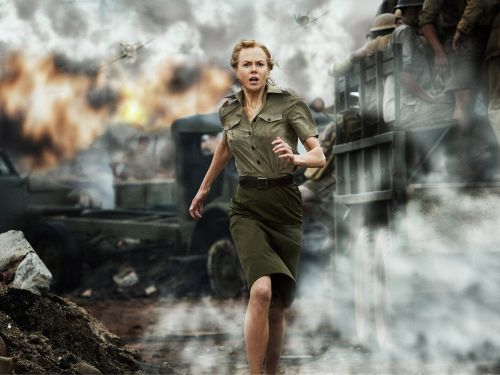
Luhrmann’s 2008 epic movie Australia concludes with this major set-piece as its climax when the heroes find themselves in the middle of the carnage. The movie rekindled our fascination with wartime history and some of the wild tales resurfaced.
Need tips, more detail or itinerary ideas tailored to you? Ask AT.
AI Prompt
The Brisbane Line
A supposed defeatist plan, now widely discredited, intended to sacrifice the entire northern portion of Australia across a rough line north of Brisbane to an invading Japanese force. Now discounted as alarmist wartime scaremongering, this mega-furphy was spawned by maverick ALP politician Eddie Ward, who claimed to have privileged information. Then in opposition, Ward waged a campaign against the Anglophile Liberal Menzies, harassing him as a loser and traitor. This may have had some strategic effect, because Labor won a landslide in October 1941, installing John Curtin as the country’s leader. Proponents of the ‘Brisbane Line’ theory point to remnants of what are believed to be tank traps in the bush 13km north of Tenterfield along Mt Lindsay Road.
The Battle of Brisbane
This was basically just a piss-up that got way out of control. Tensions between US and AIF servicemen boiled over onto the streets of Brisbane and wild brawls ensued on Nov 26 and 27, 1942. The deprecating phrase “overpaid, over-sexed and over here" summed up the Aussie sentiment. Scores were injured, several seriously, and one Aussie, Gunner Edward S. Webster, was shot dead trying to disarm an American MP who had a shotgun. (So, if you’re scoring at home, that probably counts as a victory to the US – but an overwhelming moral victory to Australia.)
Did the Japanese land on Australia soil?
Without doubt. Several spy missions and reconnaissance parties were reported during the course of the war. One sighting turned out to be brolgas in the heat haze. Another in the Gulf of Carpentaria had a RAAF radar crew up all night trying to find a mystery surface blip near Mornington Island. Lieutenant Susuhiko Mizuno, of the intelligence unit Matsu Kikan (“Pine Tree"), led a spy mission to the Kimberley in January 1944. He and nine others with Timorese decoys sailed a tiny fishing boat, the Hiyoshi Maru, and made several landings – one alarmingly close to the soon to be secret Truscott (Mungalalu) Air Base.
What about submarines?
You bet. Some 28 Japanese and German submarines operated in Australian waters between 1942 and 1945, sinking a total of 30 ships. Most notable was the infamous AHS Centaur event, a hospital ship torpedoed off North Stradbroke Island, Queensland, with the loss of 268 lives.
I heard that loads of war surplus was dumped around Australia
True. There are numerous confirmed dumps and at least as many fantasy stashes of intact aircraft and material. The old flooded quarry at Brisbane’s Archerfield aerodrome was drained in the early ’90s by a crackpot in search of loot. He did turn up loads of stuff like whole aircraft and parts, guns of various types and sundry items but his operation was shut down suddenly when the whole thing got out of hand. Pity.
Immediately after the war, hundreds of perfectly good aircraft and sundry material was dumped at sea. These events are well documented and during the ’90s (again!) a company was formed to attempt the recovery of the many aircraft known to have been dumped off Noosa. They hauled in a few rusty parts and went broke.
Where can I see stuff?
Australia has dozens of war museums and many more memorial sites, with new ones popping up too. Some are little more than private collections on display and others, like the fabulous Australian War Memorial in Canberra, are chock-a-block with stuff. There’s even a huge warehouse there for all the bits they don’t have room to display. Plans are afoot to greatly expand the AWM and display that massive stash.
Some of the more interesting and educational locations are the old wartime installations, bases and airfields, particularly those inside the NT and QLD war zones. It would be impossible to list everything, so here are a few things you probably haven’t heard about:
The Australian Armour & Artillery Museum, Cairns
Opened in 2014, the enormous – and growing – private collection of former fisherman and military enthusiast, Rob Lowden, is now housed in sparkling premises at Smithfield, just outside of Cairns. A truly staggering display, it is billed as ‘the largest museum of its kind in the southern hemisphere’ and contains almost 200 armoured vehicles and artillery pieces, many you won’t find anywhere else in Australia, like the genuine German WWII Panther recently unveiled. Lowden also has his restoration facility working overtime on new exhibits.
Jezzine Barracks Military Museum, Townsville
The former 1890s fort at Kissing Point once operated as a military museum but closed in August 2008. The North Queensland Military museum was renamed the Army Museum of North Queensland and relocated to its current premises in 2009 at the Jezzine Barracks on Mitchell Street. Three galleries display artefacts and historical items ranging from the late 1800s, right through until present day.
Northern Territory “Battle" Sites
Driving up the Stuart Highway to Darwin you start to see many sign-posted historic WWII sites. Airfields, hospitals, supply bases and encampments dot the landscape all the way. Not much is left at many of these sites except for orphaned concrete foundations and some unclaimed scrap metal, but they stand testament to the urgency of the time.
Larrimah was the end of the railway line to Darwin and war material was transferred from trucks of the 121 Australian General Transport Company (AIF) ferrying cargo from the other railhead at Alice Springs. Wander into the nearby bush and you’ll find lots of old vehicle wrecks and even some aircraft engines.
With Darwin under constant threat of attack at that time, airfields were moved south out of the range of Japanese aircraft and what’s left can be seen today at locations like Coomalie Creek, Gorrie, Batchelor, Daly Waters, Pine Creek and others like Sattler, right next to the highway.
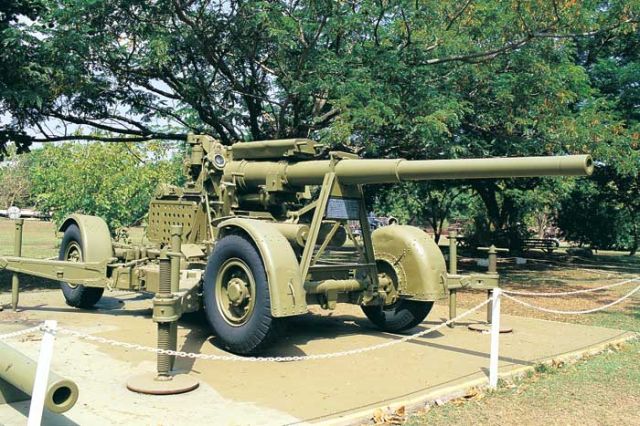
In Darwin, you can visit the East Point Reserve (along Alec Fong Lim Drive towards Fannie Bay), where the huge gun emplacement still sits forlorn and exhausted after the frantic activity of the war. A comprehensive museum is housed in the old command post. In a wonderfully ironic twist, the 9.2-inch gun was sold for scrap in 1959 to the Japanese Fujita Salvage Company. A replica now sits in its place.
The Australian Aviation Heritage Centre at Winnellie was once a naval facility that miraculously survived both the war and the cyclone and now houses an impressive display of both modern and vintage aircraft, including a massive B-52 and what’s left of Sgt Hajime Toyoshima’s Zero fighter that crashed on Melville Island. Captured and disarmed by a local Aboriginal patrol, Toyoshima was the first Japanese POW and later died in the Cowra breakout in August 1944.
Directly beneath Darwin city are the fascinating Oil Storage Tunnels, built during WWII to preserve oil supplies against aerial attack, but never used due to inadequate sealing problems. The two tunnels open for guided tours are in Charles Darwin National Park and contain old WWII era photos.
On Casuarina Beach just north of Nightcliff, on especially rare occasions when the tide is right out, you might be lucky enough to find the odd carving made in the sandstone cliffs by WWII soldiers.
The Katherine Museum has a top-notch WWII history display including their pride and joy, which predates the conflict: one of Clyde Fenton’s perfectly restored Gypsy Moths (Fenton as in “Fenton Airfield", which was bombed repeatedly from June to September 1943).
Nearby, still clearly visible from the road is a bomb crater caused during a Japanese raid on Katherine in March 1942. It’s actually on private property – as is the old Gallon Licence Store, which still bears shrapnel scars from anti-personnel daisy cutters in its corrugated iron doors – but the owners don’t mind curious, respectful visitors having a look round.
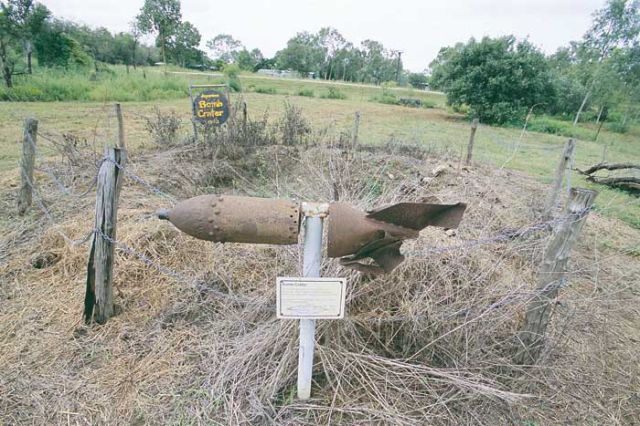
And it would be more than fitting to visit the Adelaide River War Cemetery, just over 100km south of Darwin, where 434 graves are situated – including those of the brave postal workers who died in that first horrific raid.
Weekly travel news, experiences
insider tips, offers, and more.
Other lesser known spots
Fort Scratchley in Newcastle holds a special place in history as the only Australian shore battery ever to fire in anger when its two 6-inch guns let loose at the Japanese I-21 on June 8, 1942. The giant submarine had launched its midget suicide subs against Sydney Harbour and was heading north, making a nuisance of itself by lobbing shells from a deck gun en route. We missed and they left. The guns are reinstalled in their original mountings and fired on ceremonial occasions. In late news, an antique Barbette 80pdr. RML (Rifled Muzzle Loaded) 6-inch gun was dedicated in January 2020 and is also occasionally fired.
Commuters on Sydney Harbour will be familiar with the numerous concrete lookouts and pillboxes dotted around the foreshore, but the North Fort on the southern tip of the Sydney Harbour National Park (near Manly) is one of the few authentic sites Sydneysiders can see on a day trip. Once the home of the now-closed National Artillery Museum, the North Fort is still preserved and is administered by the Harbour Trust.
Not forgetting our friends in Melbourne, the RAAF Museum at Point Cook is a cracker, full of mouth-watering warbirds like the Australian-built CA-18 Mustang – one of the few not chopped up or dropped overboard. Every Tuesday, Thursday and Sunday at 1pm one of the aircraft will go flying. Melbourne’s only “close call" came when Warrant Flying Officer Nobuo Fujita enjoyed a completely untroubled reconnaissance flight over Port Phillip Bay in his submarine-launched floatplane on February 26, 1942. AA Gunners at Williamstown spotted Fujita, but instead of firing, called HQ to ask permission. (Duh!)
Quickies
Wrecks of crashed Bristol Beaufort bombers and a DC-3 can be seen adjacent to Bamaga (Higgins) Airstrip near the tip of Cape York.
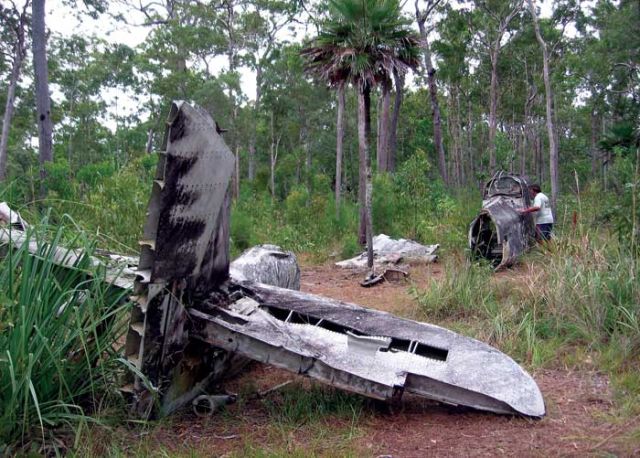
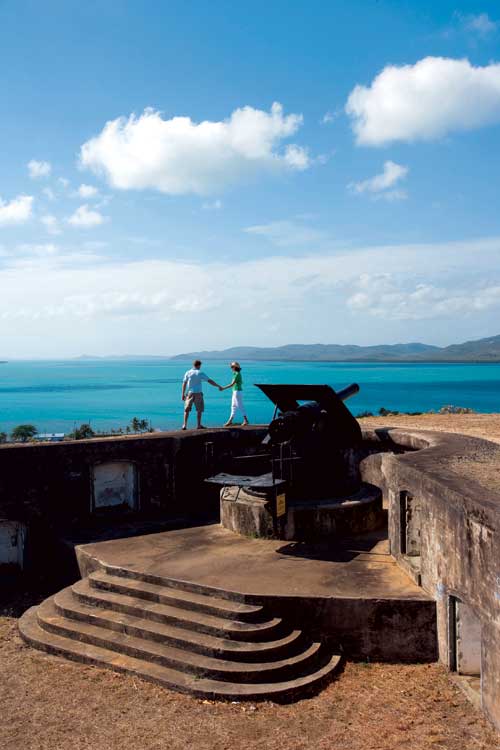
Milman Hill and Green Hill fortifications on Thursday Island and the old airstrip on neighbouring Horn Island contain a museum and relics of crashed B-17s.
The new Truscott airstrip was once a secret staging base for attacks on Java. The remote Kimberley strip is littered with wrecks of B-24 Liberators, Spitfires and even a Japanese reconnaissance aircraft that came too close. Access is tricky, but possible if you have a proper 4WD.
Rottnest Island off Fremantle, near Perth, was built for WWI, but served again as a shore battery between 1940-45 when the Oliver Hill 9.2-inch guns were installed.
The imposing Rocky Hill War Memorial at Goulburn recently unveiled a refurbished WWI museum. Small, but beautifully done.
In Adelaide, the Army Museum of South Australia at Keswick houses some interesting stuff, but is only open rarely. There are still some interesting items, like the tanks in the yard, you can see anytime. Also, out at Edinburgh, near the RAAF base, is the Military Vehicle Preservation Society of South Australia’s museum. Be sure to say ‘hi’ to Miss Stuart, a beautifully restored M3 Stuart light tank.
You can read more of Rod’s war stories on his blog.
Want to see more stories from Australian Traveller in your Google search results?
- Click here to set Australian Traveller as a preferred source.
- Tick the box next to "Australian Traveller". That's it.

Australian Traveller
View profile and articles