The Ghan versus Indian Pacific – which train to choo-choose?

hero media
The Ghan or Indian Pacific? It’s a tough choice between Australia’s two most epic rail holidays. No fear, Megan Arkinstall (The Ghan) and Steve Madgwick (Indian Pacific) will help you decide which train journey is best for you.

Which route is best for you?

The 2979-kilometre, 54-hour Ghan journey heads straight up the Red Centre from Adelaide to Darwin (and vice versa). It takes three days and two nights north-bound (four days and three nights south-bound).


The 65-hour Indian Pacific trip traverses the continent, from Sydney to Perth (via Adelaide), covering cross sections of many and varied regions including the famed Nullarbor Plain crossing. The 4352-kilometre journey takes three nights and four days.

What’s the physical difference between the two trains?

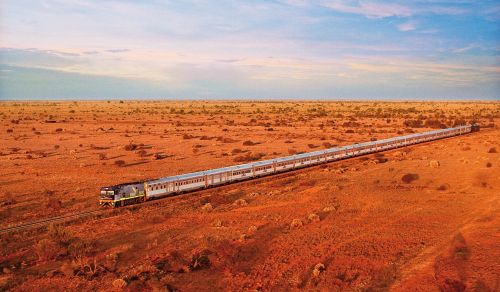
Besides the signage and livery, very little actually. Adelaide-based Great Southern Rail operates both The Ghan and Indian Pacific so the carriage and restaurant car interiors are identical (a carriage on The Ghan route may be on the Indian Pacific the following week).


The locomotives are different colours – Red for The Ghan, blue and yellow for the Indian Pacific – and external carriage signage is interchangeable.

The question of price – how much?

There are two classes on the trains: Gold and Platinum services. Indian Pacific fares (Sydney-Perth)  start at $2269 (Gold) and $3919 (Platinum). Adelaide to Darwin on The Ghan starts at $1789 (Gold) and $3319 (Platinum) – see Great Southern Rail for fares in the opposite direction.


These are one-way fares so you will need to allow for a return airfare and at least a night’s accommodation at the other end too.


Book six months in advance to get a 20 per cent discount off Gold class.

Where do they stop?

The Indian Pacific stops at Broken Hill in outback NSW (where you have the chance to travel out to the sandstone sculptures of the Living Desert Reserve) and includes either an evening’s side trip to the Barossa Valley (or a walking tour of Adelaide). There are two stops along the Nullarbor; a whistle-stop rest at the tiny town of Cook and a trackside feast at Rawlinna, an expansive and remote sheep station.


A stop-off at the quirky South Australian town of Coober Pedy (south-bound only) has recently been added to The Ghan’s classic Red Centre stop at Alice Springs (where you can go for a camel ride and experience some local indigenous culture) and Katherine, where there is an option for a boat cruise through Katherine Gorge.

The view: Which scenery will I prefer?

The Indian Pacific warms up through the windy, dramatic bush-scape of Sydney’s Blue Mountains and then flashes past tiny towns into the NSW outback. The view turns a little more fecund as the train heads past Adelaide (and near to the Barossa Valley) before the Nullarbor pancake begins. Greenery returns as you coast into Western Australia’s verdant Avon Valley, followed by the ’burbs of Perth.


On The Ghan (from Adelaide) rolling green hills flatten into wine country and farmland, then dry rugged terrain and the jagged peaks on the Flinders Ranges. The rural landscape out this way is marked by abandonment: farming apparatus, crumbling buildings.


Keep an eye out for the small Iron Man monument between Tarcoola and Alice Springs – which marks the one millionth concrete sleeper laid in the track – and Finke River, which depending on season can be just a dry sandy river bed lined by red river gums. By the time the train enters Katherine, lush green foliage intersperses the arid land and then you know you have arrived in the tropics.

Who are your fellow passengers?

Obviously every trip is different, but as a rule there will be more of an Australian contingent aboard the Indian Pacific whereas The Ghan attracts more foreign tourists attracted to the Red Centre outback experience and a taste of indigenous culture.

Gold versus platinum class

Besides cost, the biggest difference between the classes is space (a Platinum cabin is about twice the size of the Gold) – and size can matter over a several-day train journey. The bed in Platinum class can fold into a double whereas in Gold class you get two single fold-downs.


The extra premium of Platinum gets you a larger en-suite (the Gold class one is little snug), bigger windows, free transfers (within 50 kilometres of the terminal), more luggage allowance and access to the Platinum Club Car where there are more comprehensive wine and food options.

The bottom line – Battle of the Highlights

Megan: Alice Springs, a town of extraordinary character and intrinsically Australian landscapes of deep-red dirt and sage-green scrub. Here we enjoyed a trek at Pyndan Camel Tracks with the majestic MacDonnell Ranges as our backdrop.


Steve: Crossing the Nullarbor, indeed the whole country is a highlight in itself. A traditional trackside outback lamb roast dinner under the stars at Rawlinna, a seriously remote sheep station on the Nullarbor, will blow your senses – especially the tastebuds.


More details: For more information on The Ghan or the Indian Pacific see Great Southern Rail
hero media

8 experiences to get the most out of Victoria’s Great Ocean Road

Beyond the winding bitumen and coastal views lies another side to Victoria’s most famous route.

There’s something hypnotic about this stretch of Victoria’s coast. Maybe it’s the way the road hugs the ocean so tightly, or how the cliffs catch the sun in colours you can’t name. Or, for local Victorians who drove this route as kids, maybe it’s the memories of winding through the impossibly tall trees as they seemingly guide you on your journey like wooden guardian angels. Most travellers know it for the 12 Apostles, but there are plenty of alternate experiences on the Great Ocean Road equally as worthy of your time.

So, next time you’re in that neck of the woods, park that car, stretch those legs and try these experiences.

1. Discover living culture at Budj Bim

Budj Bim Cultural Landscape Tourism
Walk across the world’s oldest known aquaculture system. (Image: Visit Victoria)

Breakaway Creek’s Budj Bim Cultural Landscape is a masterclass in educational storytelling. Join a guided tour with Budj Bim Cultural Landscape Tourism to walk across the world’s oldest known aquaculture system, where the Gunditjmara people built sophisticated eel traps and stone channels more than 6,000 years ago.

Budj Bim’s aquaculture system predates Egypt’s pyramids by roughly 2,000 years, making it one of the oldest examples of human engineering on Earth. If that’s not enough to get your history-loving family members involved in this road trip, we’re out of ideas.

2. Unwind in the hot springs at Warnambool

woman relaxing at Deep Blue Hot Springs
Let mineral-rich water heal you.

If your legs need a break after a long drive, Deep Blue Hot Springs is your remedy. The geothermal pools sit just metres from the coastline, filled with mineral-rich water that bubbles up from deep underground. Move between open-air baths, waterfall pools and quiet zones made for meditation.

The water in Deep Blue’s geothermal pools comes from an ancient aquifer nearly 850 metres below the Earth’s surface, which, in non-scientific terms, means it’s far more likely to have healing properties than the mineral water you’d find at the supermarket.

3. Take to the air at Princetown

12 Apostles Helicopters flight alternate experiences on the Great Ocean Road
See an icon from a different view.

You may have seen the Twelve Apostles from the trusty viewing platform, but a helicopter flight with 12 Apostles Helicopters shows you just how sprawling and rugged this coastline really is.

The trip covers everything from Port Campbell to London Bridge (not to be confused with the UK’s own), giving you a rare chance to watch waves carving the limestone cliffs from above. It’s worth noting that the limestone stacks of the Twelve Apostles are said to erode by roughly two centimetres each year, so the longer you leave it, the less of the Apostles you’ll see.

4. Step into the past at Flagstaff Hill

Flagstaff Hill Maritime Village and Museum
Visit a time of yore.

Continue the tour through Warnambool at Flagstaff Hill Maritime Village and Museum , a recreated 19th-century port town. Hear stories from the days when shipwrecks were as common as seagulls, with an astounding 180 ships believed to have sunk along the Shipwreck Coast in less than five years.

The night show, complete with lights, sound, and sea spray, brings the coastline’s most dramatic stories to life.

If you’re staying the night, Simon’s Waterfront offers relaxed dining with fresh local seafood and oceanfront views. Order the catch of the day and toast to the sailors who never made it ashore.

5. Learn to surf in Torquay, Lorne, or Anglesea

kid having a lesson with Go Ride A Wave
Learn how to hang 10. (Image: Visit Victoria)

Whether you’ve surfed before or can barely stand on a board, Go Ride A Wave will have you upright in no time. Torquay’s calm beaches are ideal for first-timers, while Lorne and Anglesea bring a bit more energy for those unafraid to get dunked.

Bells Beach, just down the road from Torquay, has even hosted the world’s longest-running professional surfing competition since 1962. So, for those eager to have a gander at pros using surfboards like they’re an additional appendage, the competition usually runs sometime in autumn.

6. Tackle the trails in Forrest

Barwon Flow Trails Otways Flow MTB
Hire a bike and explore MTB trails through the Otways.

Forrest is a haven for mountain bikers thanks to an expansive network of trails through stunning natural scenery. The Forrest trail network has almost 100 kilometres of singletrack across 36 trails, so there’s something for every level of rider. That’s including more than 60 kilometres of purpose-built mountain bike trails winding through the Otways’ dense forest. Cycle through ancient myrtle beech trees and towering tree ferns, with smaller ferns and soft mosses forming a carpet at your feet.

Hire a bike from Forrest MTB Hire and take your pick from easy, scenic rides to more challenging singletracks, such as Red Carpet or Rollercoaster.

7. See wildlife up close in Apollo Bay

bush rat on Wildlife Wonders tour
Get help spotting the locals. (Image: Doug Gimsey)

If spotting koalas and kangaroos in the wild feels like winning the lottery, Wildlife Wonders gives you guaranteed sightings without cages or crowds. Every visit to the sanctuary helps fund the Conservation Ecology Centre which supports endangered species across the Otways, so your business is appreciated by humans and animals alike.

The guided walk takes you through protected Otways habitat where you might spot potoroos (or joey lookalikes for those unfamiliar with a potoroo), wallabies, and sleepy koalas lounging in the trees.

8. Visit the Cape Otway Lightstation

Cape Otway Lightstation
Delve into the tales of Cape Otway Lightstation.

Towering over the sea on a cliff above the Southern Ocean, Cape Otway Lightstation has been guiding ships since 1848. Before the lighthouse was built, Cape Otway was one of the most treacherous points on the Victorian coast, with dozens of shipwrecks occurring in its surrounding waters. Pick the right day, and you may bump into a local willing to tell you about the wreck of Eric the Red .

While at the Cape Otway Lightstation, explore the keeper’s quarters, walk the coastal trails, and take in views that only stop short at the horizon.

And no, contrary to popular belief, the Round the Twist lighthouse is actually located in Split Point, just shy of two hours in the direction of Melbourne. Nothing’s stopping you from embarking on a lighthouse crawl, though.

Plan your next no-stone-unturned journey along this iconic Aussie road at visitgreatoceanroad.org.au.