


The Great Eastern Ranges Revealed

hero media
 A pictorial look at one of the largest-scale conservations initiatives ever undertaken within Australia.

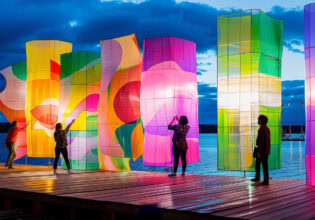
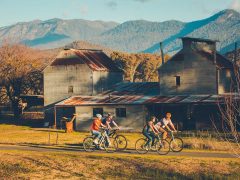
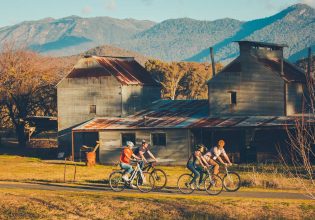
For the past four months, Australian Traveller has been running a competition inviting photographers of all levels to submit images taken within the confines of the Great Eastern Ranges, which runs the length of the eastern seaboard from the Atherton Tablelands in Qld, all the way down to the Victorian Alps.
 
With $22,000 in prizes up for grabs, images were being considered across the categories of: My Community (people who live and work in the Great Eastern Ranges); My Escape (landscapes, places and activities in the Great Eastern Ranges); and My Habitat (Flora and Fauna of the Great Eastern Ranges).
 
Along with being published in the magazine, on our website and on the Great Eastern Ranges website, all of the winning and highly commended images will soon be part of a travelling exhibition throughout the Great Eastern Ranges themselves.
 
Thank you to everyone who entered the Great Eastern Ranges Photography Competition, congratulations to all the winners and runners up, and a big thank you to our judging panellists – Grenville Turner, George Suresh and Inger Van Dyke – and to all of our supporting sponsors.
 
For more information, check out www.greateasternranges.org.au 
hero media

Look up: The Aurora Australis might be visible tonight

The most severe solar storm of the year is underway.

A powerful solar storm is happening right now, and if you’re in southern Australia, tonight might be your chance to see the colourful display.

According to the Australian Space Weather Forecasting Centre (ASWFC) at the Bureau of Meteorology , a severe geomagnetic storm is underway. They have issued an Aurora Alert, meaning space weather activity is favourable for viewing the spectacle: “Severe geomagnetic storm in progress. Aurora may be observed during local nighttime hours in good observing conditions at regions as far equatorward as middle latitudes.”

According to the ASWFC’s website, Aurora Alerts are issued “when space weather activity favourable for viewing aurora is in progress. When an alert is current, the alert information indicates the latitudinal range in terms of high, middle, low and equatorial regions where aurora may be visible under good observing conditions.”

What is the Aurora Australis?

A man with a head torch looking at the Aurora Australis
Tasmania is the best place in Australia to see the spectacle. (Image: Tourism Tasmania)

The Aurora Australis – also known as the Southern Lights – is one of the most dazzling natural displays visible to the human eye. Put simply, the phenomenon occurs when the sun releases a massive burst of charged particles and magnetic fields into space.  These particles are captured and funnelled toward the southern poles by Earth’s magnetic field, colliding with gases in the Earth’s atmosphere. The collisions result in light being emitted and a spectacular natural dancing rainbow ensuing. 

The past two years have been particularly good years for viewing the phenomenon. 

How to see the Aurora Australis

An Aurora Australis display at night along the coastline
A Southern Lights display can last minutes to hours. (Image: Unsplash/Graham Holtshausen)

Tasmania has historically been the best spot to see the Aurora Australis due to low light pollution and its position closer to the South Pole than mainland Australia. South Arm Peninsula, Bruny Island and Cockle Creek are popular viewing locations on the island.

But the good news is the ASWFC has shared that it’s possible the Aurora Australis could be seen further north, in mid to southern parts of Australia.  

In Victoria, Wilsons Promontory National Park, Point Lonsdale and Phillip Island are favourable locations; in New South Wales, Jervis Bay, Kiama or the Blue Mountains might offer you the glowing display; and in South Australia, the Fleurieu Peninsula, Kangaroo Island and Eyre Peninsula offer excellent southern exposure. 

A Southern Lights display can last minutes to hours, with the best active window typically being between 10pm and 2am.

You can read more about the natural light display in our Southern Lights guide and stay up to date via the Bureau of Meteorology website