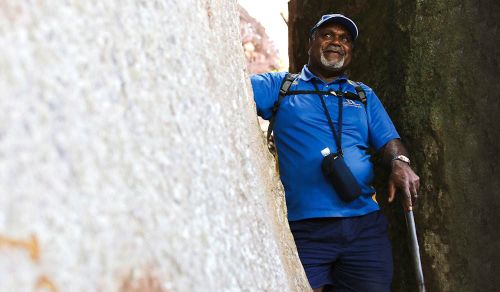
Willie Gordon, Nugal-warra elder and Cape York story-keeper, shares ideas for a hope-filled Australia Day with Jennifer Pinkerton
If you were born in this country then I classify you as an Australian. And one of the beautiful things about Australia is that we have all these different cultural values in our mix, values we can learn from. Sometimes these cultural boundaries impose comfort zones on us; we’re afraid to move out of our comfort zone because we think other cultures might pose a threat.
When we travel, we extend our comfort zone and challenge our preconceptions. Before I went overseas – and I’m embarrassed to admit this – I thought that everyone in England was white! But I saw that they came from all over. I was 40 years old; I felt so stupid. I was amazed at my misunderstanding. I had to travel that far to realise that multiculturalism is everywhere.
I was also surprised that, when in Hong Kong, I couldn’t see the sun because of smog. It was foggy every day. I couldn’t believe that it didn’t go away. I couldn’t fathom it. I found myself thinking: “At home, we have nice air, we have rain, we have sun and we can see the stars."
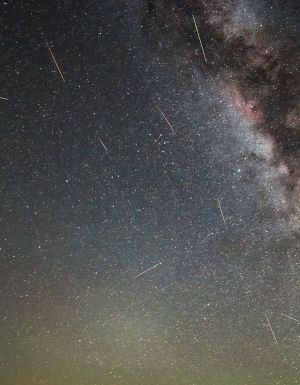
In Australia, we’re pretty lucky. In fact, I am looking at the stars right now! Travel helps free up our ideas, and see the things we take for granted. It challenges fixed views and makes us realise what we have.
Sometimes we wait for a disaster to happen in order for us to be united, you know, like a fire or flood. Why don’t we be united anyway – before disasters hit? The only fence that we build is the one that exists in our own minds. And we’re the only ones who can pull it down. I want my grandchildren to say, “Well OK, there is no barrier". And we should teach them that there isn’t a barrier. There is no ‘black’ and ‘white’. We’re just people. We’re Australian people. We are on the same boat.
If we keep going back to history trying to fix it, then we won’t be moving forward as a united people. We need to draw on our strengths to do this. The past is what we learn from, but education helps us move confidently into the future. And by education, I mean gaining knowledge and understanding. Reconciliation is about accepting people. It starts with you. Not with the government.
Each ANZAC Day I salute the people who have died for our country. I don’t think any of my people, the Guugu Yimithirr, went and laid down their lives, but I try and go and appreciate the people who did. For Australia Day, I believe we should broaden things out and salute the people who have worked hard to build our country. I think it should be a remembrance day for the hard yakka we’ve been through, you know? My father, for example, cut sugar cane in the burning sun. Cutting cane was really hard work. His sweat, and that of many others, forms part of the patchwork that makes our country what it is.
What does it mean to be a good Australian? First of all you need to find out who you are. We tell our children about other people, so they’re busy looking over there and not looking at themselves. We lose sight of ourselves.
In today’s society, we drive cars, live in houses, have vaccines against illnesses, watch television, and all these need dollars. But we still need our spirituality and cultural values to make us strong – that’s the thing that’s going to get you through. Then the practical will follow. That’s what I believe. And you don’t need to be religious for that. It’s about saying, “I want to strive to do good". And when you’re strong, you encourage other people to think about who they are and what they need to do to strengthen their own spirits. You have to want it. Once you’re strong, then you can share it.
A general practical thing you can do is make sure your little patch of land is OK. And one of the simple things I think should happen is that every Australian plants a tree on Australia Day – it could just be in your garden; a fruit tree. We’d have 25 million more trees! Something simple like that doesn’t need any political argument or debate.
Another thing: be part of your community. Get involved. Some people wander off on their own… We see ourselves as individuals. But we’re all connected in one way or another. It’s time to stop this black and white thing, and just get on with looking after our garden. We have to make sure our country and environment are protected, because it’s the only garden we have. And we’re fortunate.
Australia has a pretty good garden. It’s our birth place and with the right care it can give us strength – the strength we need to journey through life, and to survive for many more thousands of years.
Need tips, more detail or itinerary ideas tailored to you? Ask AT.
AI Prompt

Editor
View profile and articles