You Will Decide the New 7 Wonders of Nature

hero media
Uluru and the Great Barrier Reef: Wonders of the nation, or great natural wonders of the world? You decide. Words by Flora King

By mid 2011, a predicted one billion members of the population will have cast a vote and participated in an epic global poll to determine the new seven wonders of the natural world. The New7Wonders of Nature campaign was launched in 2007 and is a contemporary effort to recognise our planet’s most phenomenal natural sites and landscapes, as seen through the eyes of its public. With the announcement of these new wonders scheduled for two years from now, and with two of our national icons in the running against 26 other finalists, it is time for Australia to mark her ballot.


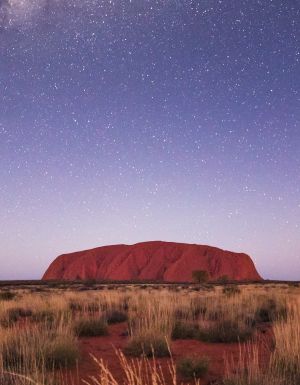
Breathtaking to behold and rich in cultural significance, it is without doubt the quintessential image of the Australian outback.

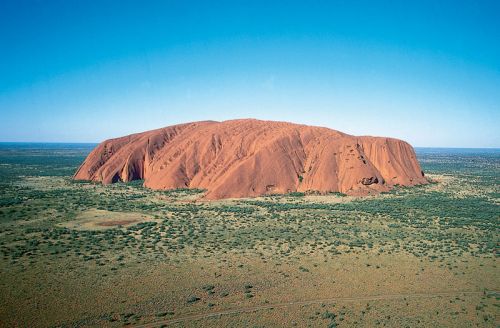
Uluru

Uluru, or Ayers Rock as it is also known, is the world’s largest monolith and an isolated remnant of what was once a full mountain range in the Kata Tjuta National Park. Grandly rising 340m above the surrounding plains it is perhaps Australia’s most recognisable natural site. Anyone who has stood before the huge rock formation at sunset and watched its smooth sandstone surface blaze a million shades of red in the changing evening light would wish to argue that it’s up there with the world’s best in terms of awe-inspiring natural beauty. Uluru is to the Aboriginal people and traditional Anangu owners of the land a scared place, emanating energy and containing the spirits of the ‘Dreamtime’ legend. Breathtaking to behold and rich in cultural significance, it is without doubt the quintessential image of the Australian outback.

The Great Barrier Reef

Australia is the only continent that can boast of having 340,000km2 of intricate live coral cays scattered across its warm, turquoise northeastern shores, and the stunning Great Barrier Reef is the world’s largest coral reef system. Made up of a myriad of over 3000 individual reefs and 900 sun-soaked golden islands, it is the only living organic collective visible from outer space. It is also one of the world’s richest areas in terms of biological diversity and home to a vast variety of sea life, including 30 species of whales and porpoises, 125 species of sharks and stingrays and over 15,000 species of fish. While the reef has been an important part of indigenous culture and spirituality for thousands of years, and parts are believed to be as much as 18 million years old, this ancient natural gift remains a dazzling jewel in Australia’s crown.

A brief look at some of the potential wonders we are up against;

The Amazon

Covering an area of 2.5 million miles, shared by nine different countries, home to a third of the world’s species, and provider of more than 20 percent of the oxygen we breathe, the sprawling, majestic Amazon represents half of our planet’s remaining rainforest and is often described as the “lungs of the world".

Puerto Princessa Underground River

Around 50km north of the city of Puerto Princesa in Palawan, Philippines is the Puerto Princesa Subterranean River National Park. Beneath the park’s spectacular limestone karst landscape flows an extraordinary underground river, which winds through 8.2km of underground caves and dark, cavernous chambers before it spills dramatically in to the South China Sea.

The Dead Sea

Landlocked between Jordan, Israel and the West Bank, the Dead Sea – at 400m below sea level – is the lowest body of water on Earth. A 30 percent salinity content means it is nearly nine times saltier than the ocean, and with little plant or animal life able to flourish in the immediate area, the sea possesses its own sparse and haunting kind of beauty.

The Grand Canyon

The Grand Canyon in northern Arizona has for many years been a world-renowned symbol of nature’s tremendous power, and almost two billion years of natural history are revealed in its layers of beautifully preserved rocks. From the top of the mile-high gorge are vistas stretching for hundreds of miles over the multicoloured, arid and strikingly inhuman landscape.

Kilimanjaro

At 5895 metres high, Tanzania’s Mount Kilimanjaro is the highest mountain in Africa, and the highest free-standing, snow-covered equatorial mountain in the world. Once a live volcano, and with a summit crater measuring 1.5 miles across, the isolated snowy peak rises spectacularly from the fertile green savannah, and is a potent motif of the country’s geographical extremes.

The Black Forest

The Black Forest is an area of mountain ranges, highland plateaus and dense fir and pine woods spread in a distinguishable rectangular shape across the Baden-Württemberg region of southwestern Germany. Once believed to be inhabited by werewolves, witches and dwarves, but perhaps now more renowned for the cuckoo clock and black forest cake, the forest remains rooted in traditional culture and mythology.

hero media

8 experiences to get the most out of Victoria’s Great Ocean Road

Beyond the winding bitumen and coastal views lies another side to Victoria’s most famous route.

There’s something hypnotic about this stretch of Victoria’s coast. Maybe it’s the way the road hugs the ocean so tightly, or how the cliffs catch the sun in colours you can’t name. Or, for local Victorians who drove this route as kids, maybe it’s the memories of winding through the impossibly tall trees as they seemingly guide you on your journey like wooden guardian angels. Most travellers know it for the 12 Apostles, but there are plenty of alternate experiences on the Great Ocean Road equally as worthy of your time.

So, next time you’re in that neck of the woods, park that car, stretch those legs and try these experiences.

1. Discover living culture at Budj Bim

Budj Bim Cultural Landscape Tourism
Walk across the world’s oldest known aquaculture system. (Image: Visit Victoria)

Breakaway Creek’s Budj Bim Cultural Landscape is a masterclass in educational storytelling. Join a guided tour with Budj Bim Cultural Landscape Tourism to walk across the world’s oldest known aquaculture system, where the Gunditjmara people built sophisticated eel traps and stone channels more than 6,000 years ago.

Budj Bim’s aquaculture system predates Egypt’s pyramids by roughly 2,000 years, making it one of the oldest examples of human engineering on Earth. If that’s not enough to get your history-loving family members involved in this road trip, we’re out of ideas.

2. Unwind in the hot springs at Warnambool

woman relaxing at Deep Blue Hot Springs
Let mineral-rich water heal you.

If your legs need a break after a long drive, Deep Blue Hot Springs is your remedy. The geothermal pools sit just metres from the coastline, filled with mineral-rich water that bubbles up from deep underground. Move between open-air baths, waterfall pools and quiet zones made for meditation.

The water in Deep Blue’s geothermal pools comes from an ancient aquifer nearly 850 metres below the Earth’s surface, which, in non-scientific terms, means it’s far more likely to have healing properties than the mineral water you’d find at the supermarket.

3. Take to the air at Princetown

12 Apostles Helicopters flight alternate experiences on the Great Ocean Road
See an icon from a different view.

You may have seen the Twelve Apostles from the trusty viewing platform, but a helicopter flight with 12 Apostles Helicopters shows you just how sprawling and rugged this coastline really is.

The trip covers everything from Port Campbell to London Bridge (not to be confused with the UK’s own), giving you a rare chance to watch waves carving the limestone cliffs from above. It’s worth noting that the limestone stacks of the Twelve Apostles are said to erode by roughly two centimetres each year, so the longer you leave it, the less of the Apostles you’ll see.

4. Step into the past at Flagstaff Hill

Flagstaff Hill Maritime Village and Museum
Visit a time of yore.

Continue the tour through Warnambool at Flagstaff Hill Maritime Village and Museum , a recreated 19th-century port town. Hear stories from the days when shipwrecks were as common as seagulls, with an astounding 180 ships believed to have sunk along the Shipwreck Coast in less than five years.

The night show, complete with lights, sound, and sea spray, brings the coastline’s most dramatic stories to life.

If you’re staying the night, Simon’s Waterfront offers relaxed dining with fresh local seafood and oceanfront views. Order the catch of the day and toast to the sailors who never made it ashore.

5. Learn to surf in Torquay, Lorne, or Anglesea

kid having a lesson with Go Ride A Wave
Learn how to hang 10. (Image: Visit Victoria)

Whether you’ve surfed before or can barely stand on a board, Go Ride A Wave will have you upright in no time. Torquay’s calm beaches are ideal for first-timers, while Lorne and Anglesea bring a bit more energy for those unafraid to get dunked.

Bells Beach, just down the road from Torquay, has even hosted the world’s longest-running professional surfing competition since 1962. So, for those eager to have a gander at pros using surfboards like they’re an additional appendage, the competition usually runs sometime in autumn.

6. Tackle the trails in Forrest

Barwon Flow Trails Otways Flow MTB
Hire a bike and explore MTB trails through the Otways.

Forrest is a haven for mountain bikers thanks to an expansive network of trails through stunning natural scenery. The Forrest trail network has almost 100 kilometres of singletrack across 36 trails, so there’s something for every level of rider. That’s including more than 60 kilometres of purpose-built mountain bike trails winding through the Otways’ dense forest. Cycle through ancient myrtle beech trees and towering tree ferns, with smaller ferns and soft mosses forming a carpet at your feet.

Hire a bike from Forrest MTB Hire and take your pick from easy, scenic rides to more challenging singletracks, such as Red Carpet or Rollercoaster.

7. See wildlife up close in Apollo Bay

bush rat on Wildlife Wonders tour
Get help spotting the locals. (Image: Doug Gimsey)

If spotting koalas and kangaroos in the wild feels like winning the lottery, Wildlife Wonders gives you guaranteed sightings without cages or crowds. Every visit to the sanctuary helps fund the Conservation Ecology Centre which supports endangered species across the Otways, so your business is appreciated by humans and animals alike.

The guided walk takes you through protected Otways habitat where you might spot potoroos (or joey lookalikes for those unfamiliar with a potoroo), wallabies, and sleepy koalas lounging in the trees.

8. Visit the Cape Otway Lightstation

Cape Otway Lightstation
Delve into the tales of Cape Otway Lightstation.

Towering over the sea on a cliff above the Southern Ocean, Cape Otway Lightstation has been guiding ships since 1848. Before the lighthouse was built, Cape Otway was one of the most treacherous points on the Victorian coast, with dozens of shipwrecks occurring in its surrounding waters. Pick the right day, and you may bump into a local willing to tell you about the wreck of Eric the Red .

While at the Cape Otway Lightstation, explore the keeper’s quarters, walk the coastal trails, and take in views that only stop short at the horizon.

And no, contrary to popular belief, the Round the Twist lighthouse is actually located in Split Point, just shy of two hours in the direction of Melbourne. Nothing’s stopping you from embarking on a lighthouse crawl, though.

Plan your next no-stone-unturned journey along this iconic Aussie road at visitgreatoceanroad.org.au.