Welcome to Hotel Addict, a monthly column where I check into Australia’s best hotels and share what makes them worthy of your wishlist.
Hotel stays have become my niche. Long before I became a travel journalist, I was booking staycations just for a change of scenery. Some were charming and full of character, while others left much to be desired. Once, I even stayed in a hotel directly opposite my own apartment – partly for the novelty, partly because I wanted to see my life from a different angle.
Hotels have a certain allure to them and whenever I see one I find myself wanting to know what lies within. The best ones, to me, are designed with thoughtful elements that reflect the city they sit in, and at their heart, passionate staff who go above and beyond to foster an unforgettable experience. Time seems to pause in these spaces which have increasingly become a destination in their own right.
It only felt fitting for the first hotel in this series to be in my home city and at the hotel that’s been at the top of my list: Capella Sydney.
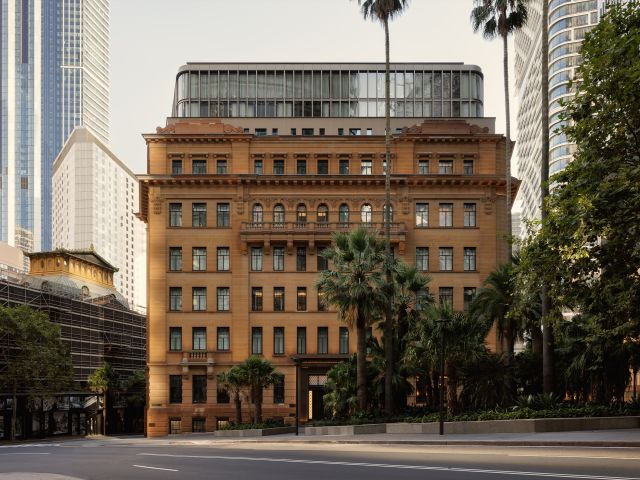
Capella sits within an Edwardian Baroque‑style sandstone building.
An email with a hotel program from the “Culturist Team" lets me know this will be a luxurious stay. There’s a guided walk around the Botanic Gardens, a weaving workshop and a Sydney contemporary art tour – the kind of addition that signals a hotel that’s tuned into the more refined details and one that’s not surprising given Capella’s ethos centres on delivering personalised, immersive experiences.
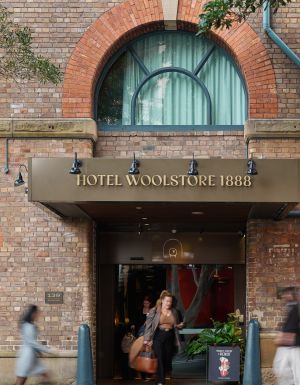
Capella opened in 2023 within a transformed Edwardian Baroque‑style sandstone building in Sydney’s CBD that was originally designed by renowned Scottish-Australian architect George McRae. I often walk past this building and once attended an event inside – I distinctly remember being surprised by how beautiful it was. Bar Studio, Make Architects, and stylist Simone Haag were engaged to sensitively adapt the building for contemporary luxury while honouring its past, in collaboration with Heritage NSW and the City of Sydney.
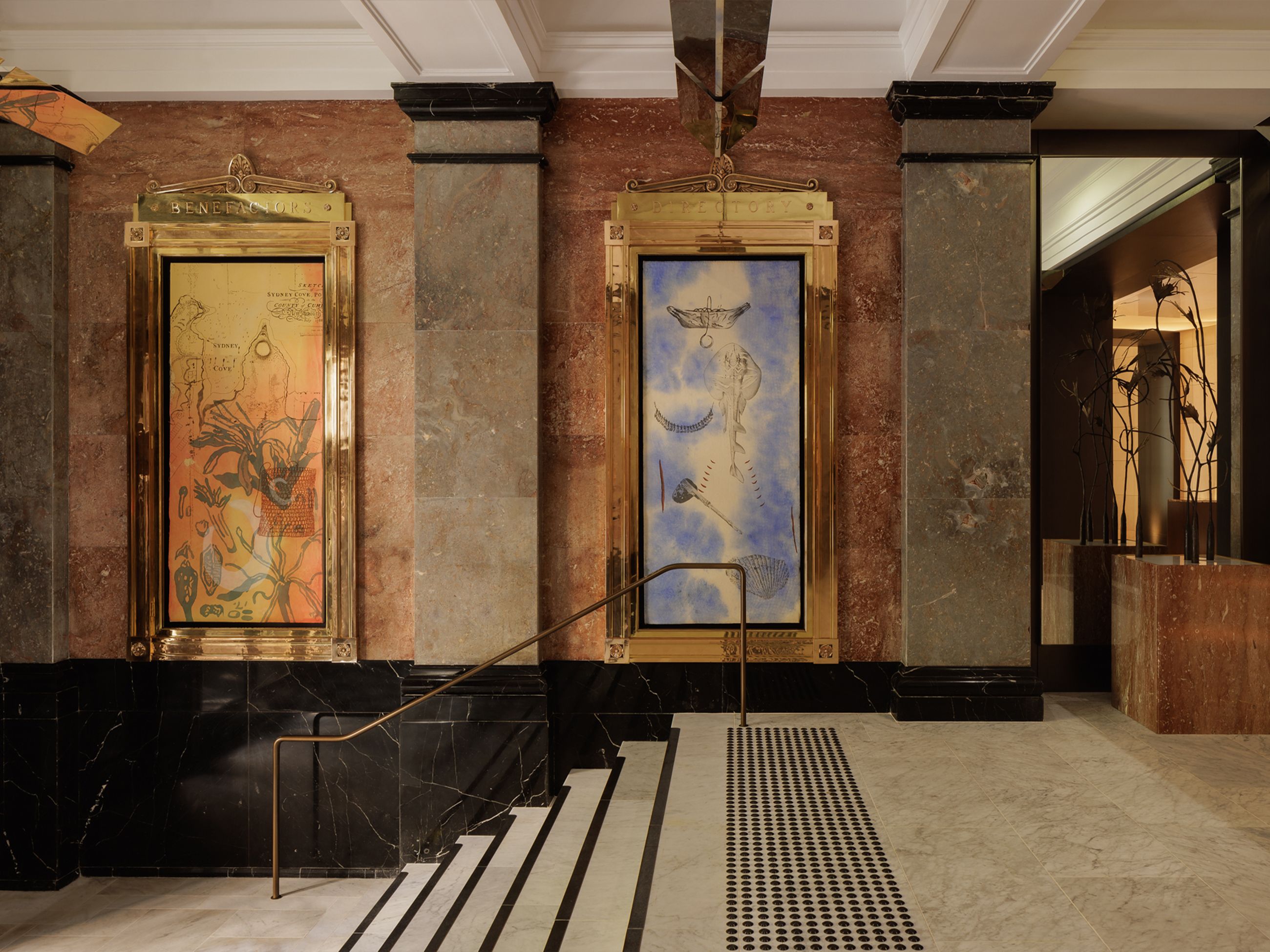
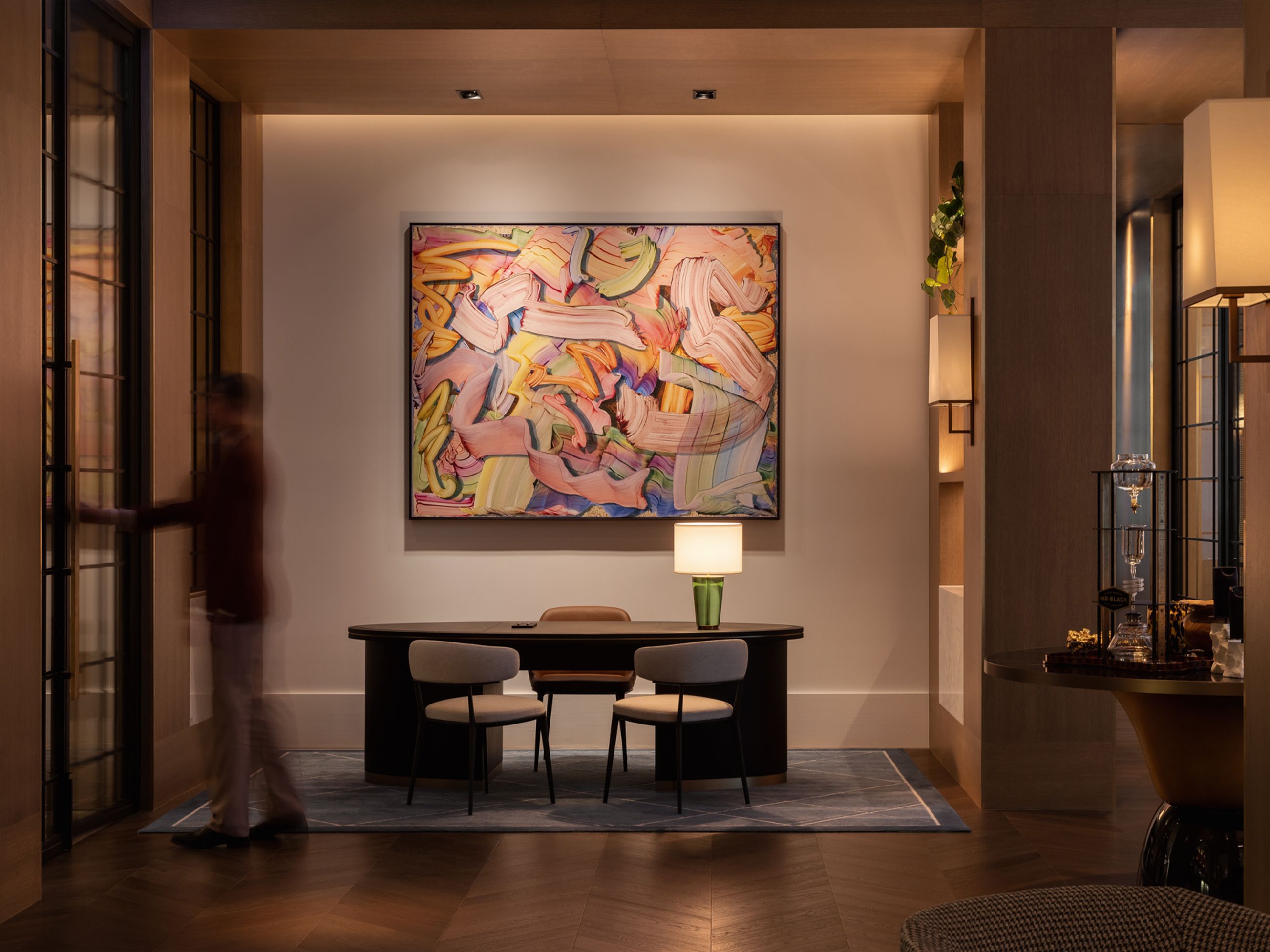
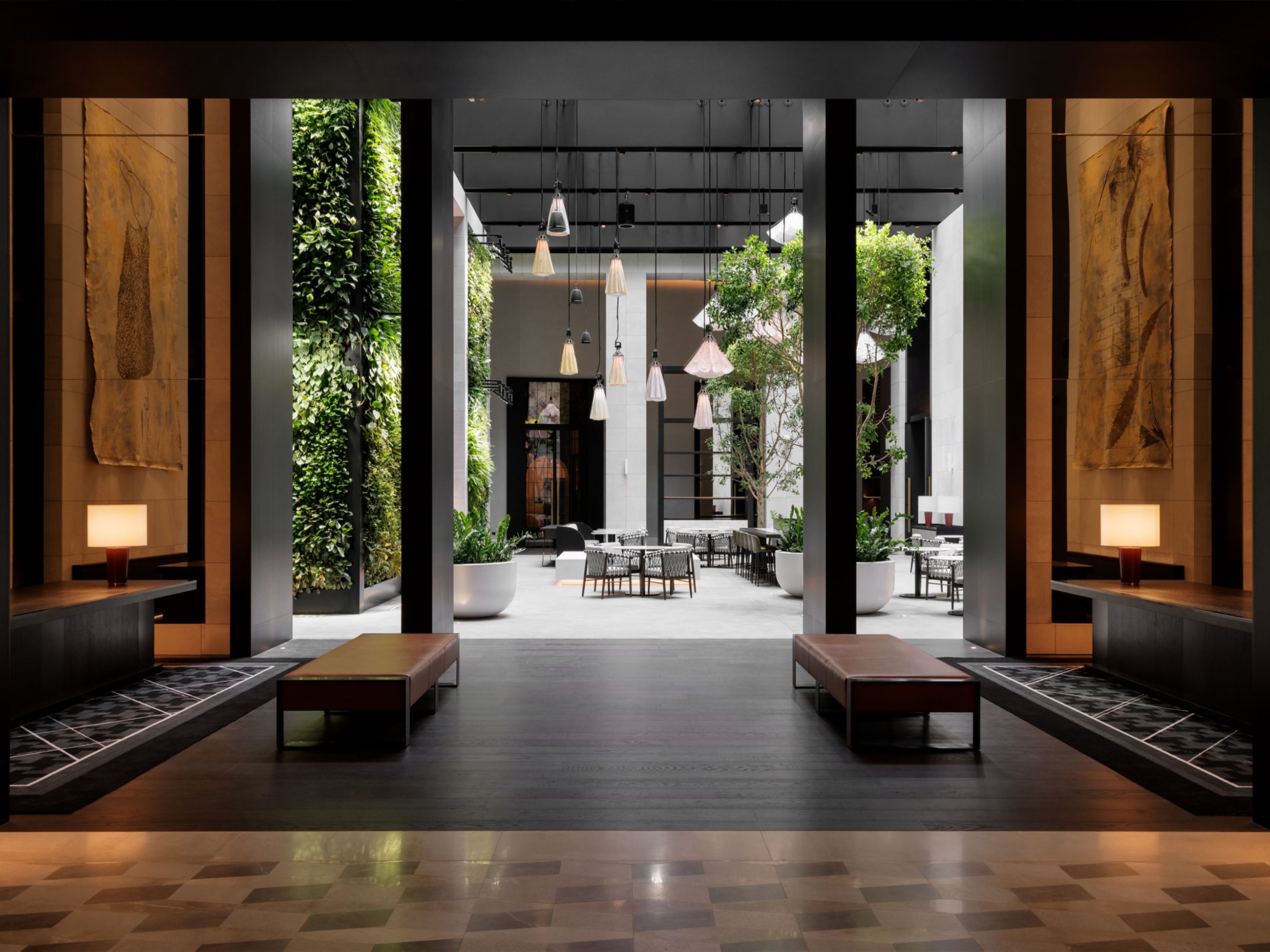
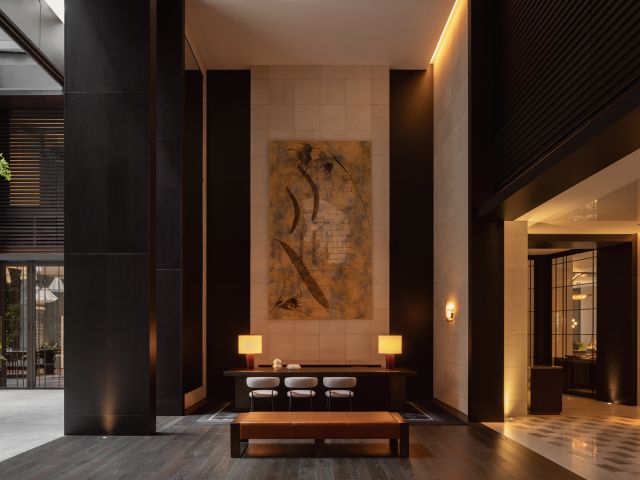
The grand entry is beautifully enhanced by striking contemporary artworks.
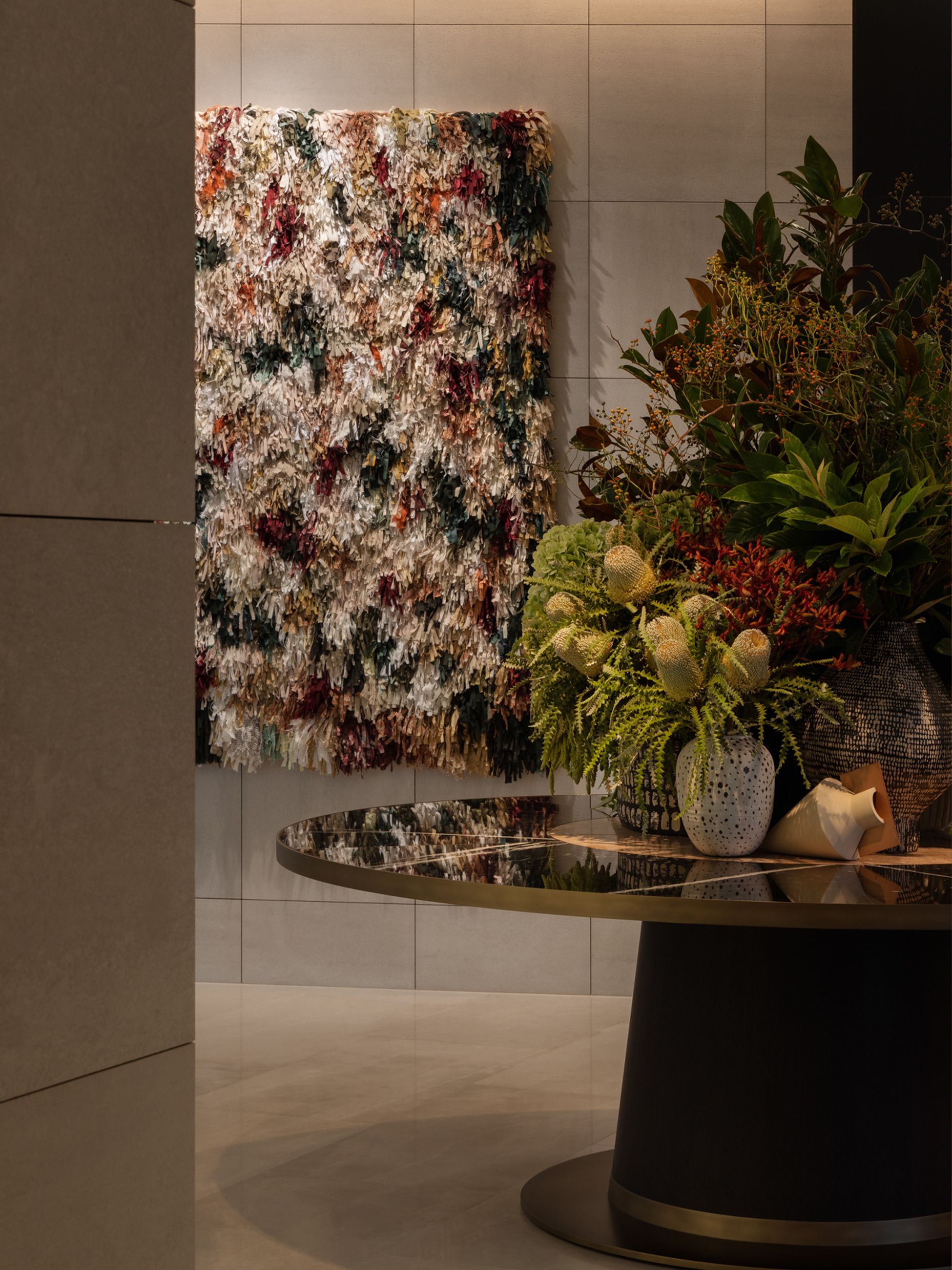
Large bouquets of Australian natives elevate the public spaces.
The design strikes the perfect balance between grandness and intimacy.
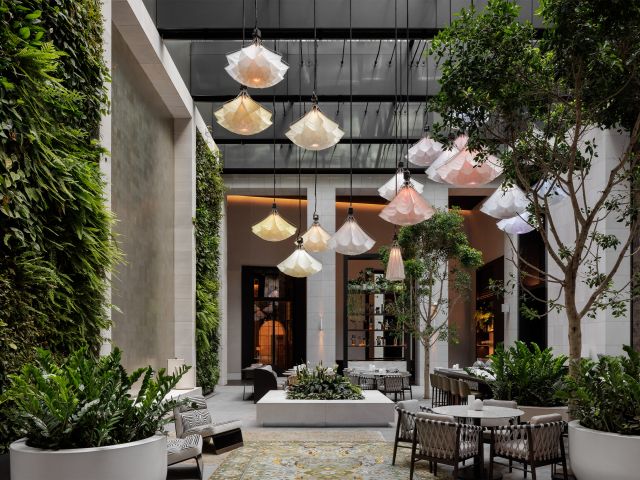
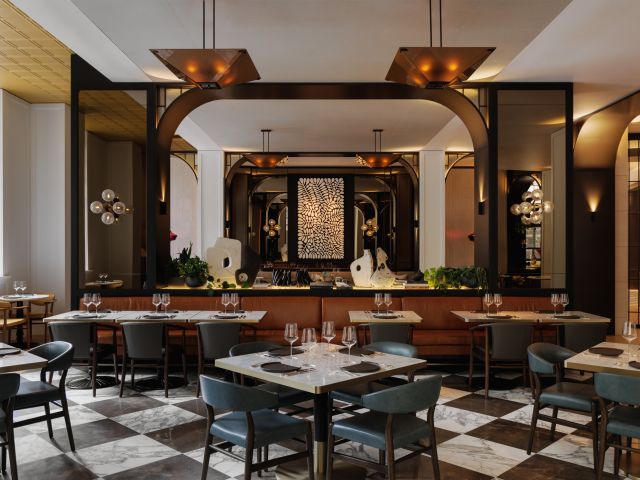
The expansive foyer and Aperture dining area.
Each space is layered to perfection.
When I arrive, I’m greeted by three different staff members along the way to reception. There’s a lovely subtle scent, which I later learn combines notes of bergamot, green tea leaves, peony, freesia, vetiver and cedarwood. This hotel strikes such a beautiful balance between grandness and intimacy, with large floral bouquets, contemporary artworks, impressively high ceilings that give it an international feel and quieter nooks to unwind in. Each space is unique, but they’re all unified by a warm, textural and layered design.
Sydney has been deserving of a hotel of this calibre for quite some time, with many of the accommodations in the city looking and feeling dated.
The design strikes the perfect balance between grandness and intimacy.
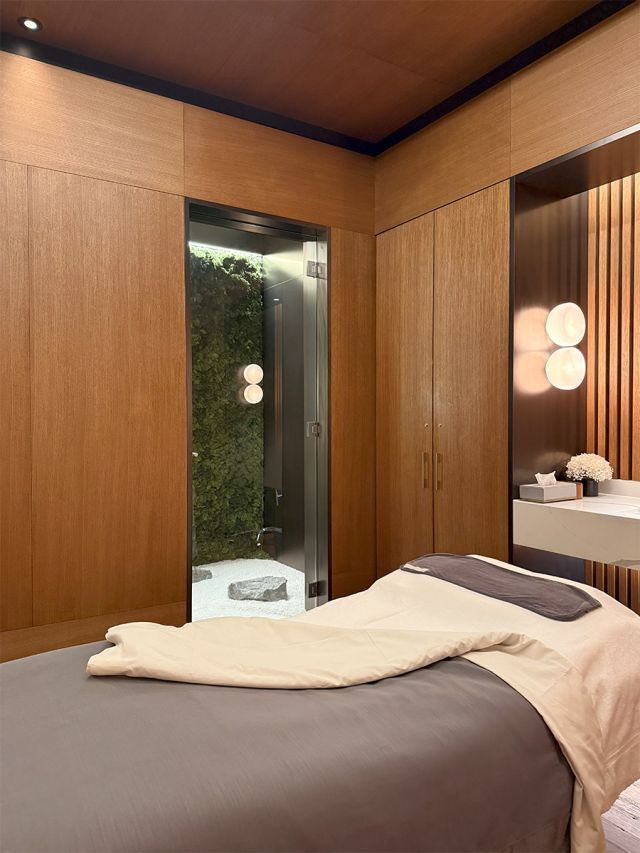
I have a treatment booked at the hotel’s Auriga Spa prior to check-in. The space is ultra-luxe, moodily lit and intimate, featuring timber joinery, green walls and a sleek design that’s so perfect it almost transports me to Japan. I opt for the Replenish Beauty and LED Facial – a strategic choice with a TV segment on the horizon, and a hopeful bid to look extra fresh for the camera.
The treatment begins with me sitting in the softest robe of my life, wearing slippers and sipping chamomile tea. I’m then whisked away to my private treatment room, which has its own bathroom, a large skylight and a small Japanese-style garden. The treatment is extremely relaxing and moves through cleansing, exfoliating, massaging (arm, head, neck and face) and LED Light Therapy. There’s so much attention to detail – even at the end, the facialist puts my slippers back on me, while I’m still lying down.
A treatment at Auriga Spa might be the best way I’ve ever started a hotel stay. (Image: Rachael Thompson)
While this treatment certainly hasn’t had a Benjamin Button effect, my sister seems to think I’m glowing, so I walk away happy, or at the very least, zen.
Auriga Spa has a sauna, steam room, ice fountain and a beautiful indoor heated swimming pool. There’s also “experiential showers" – new to me, but essentially it combines water flowing from different places, changing temperatures, mood lighting, gentle sounds, and a subtle lemongrass scent.
You could easily spend the better part of a day at the spa and pool, even if you’re not a guest.
Guests outside the hotel can use the spa and swimming pool. (Image: Rachael Thompson)
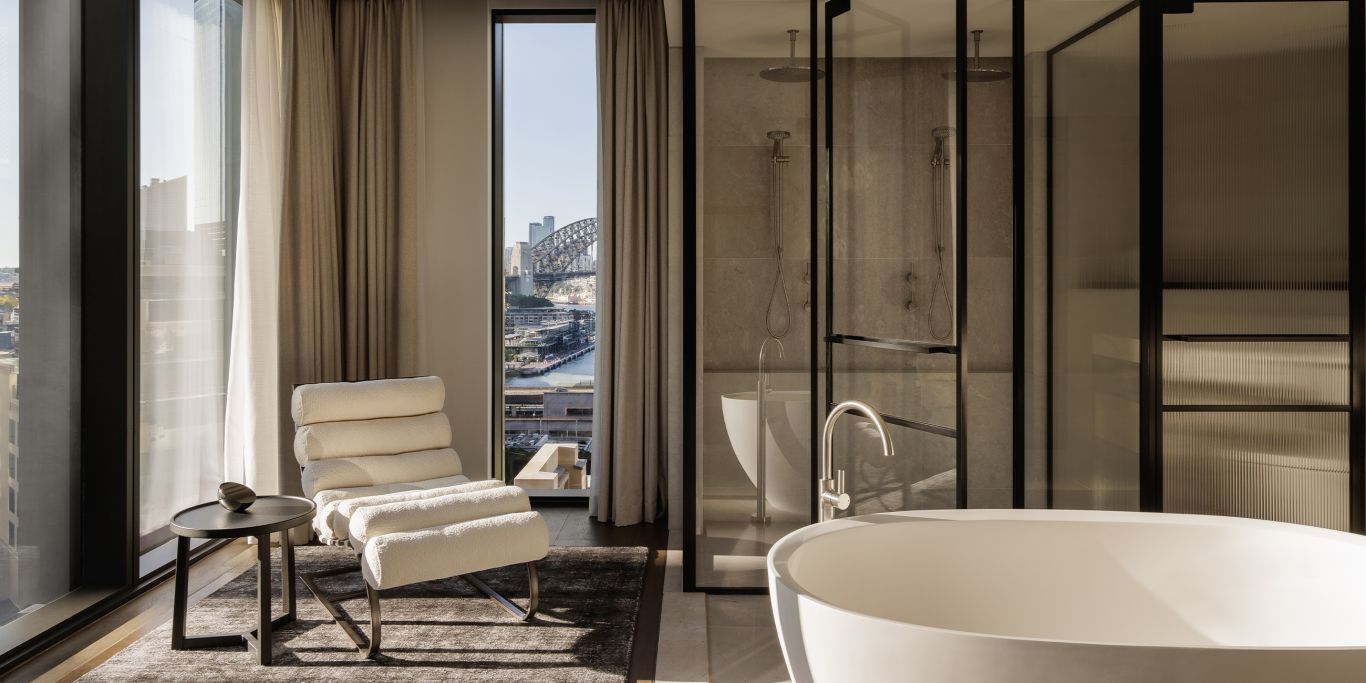
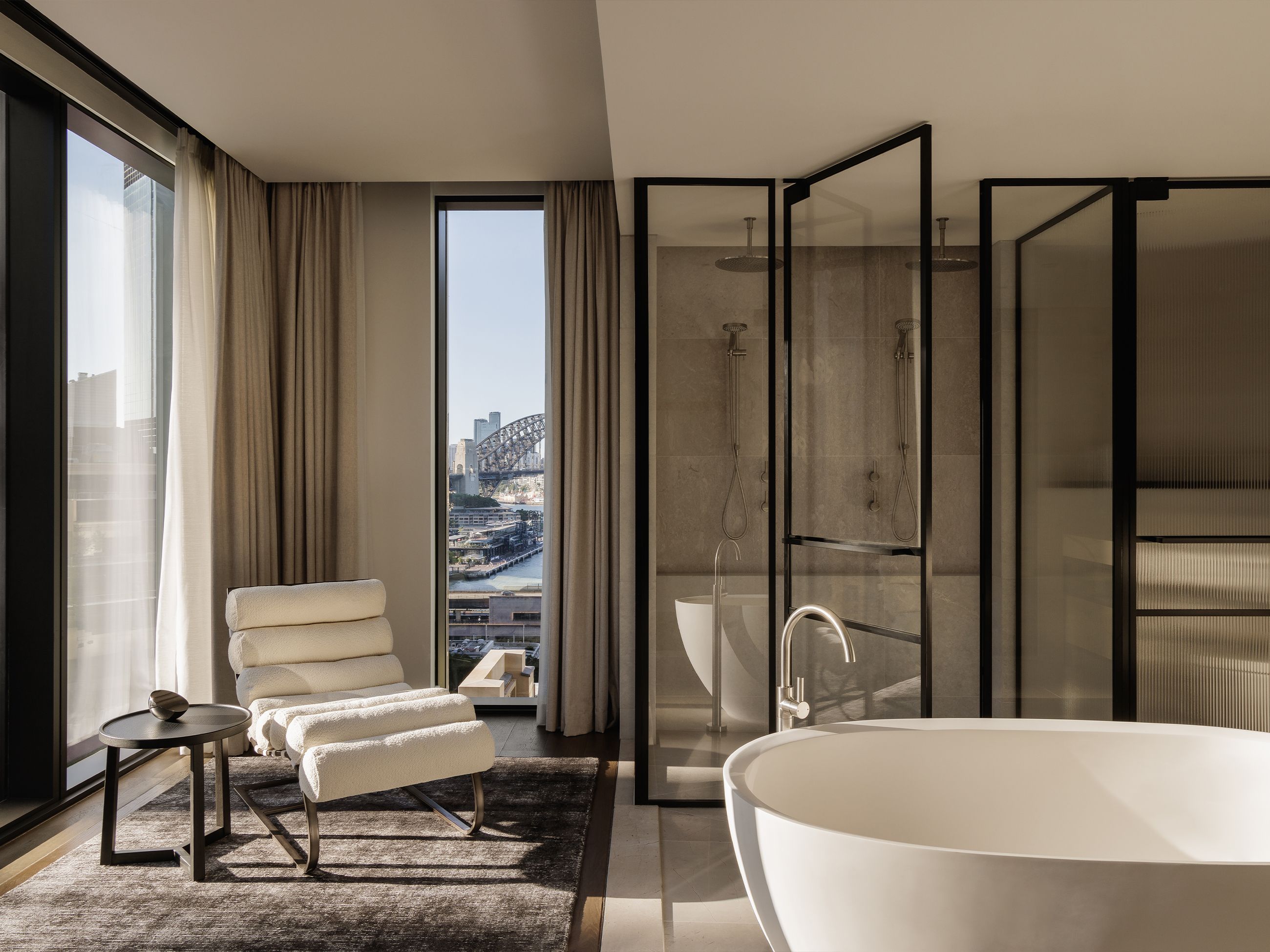
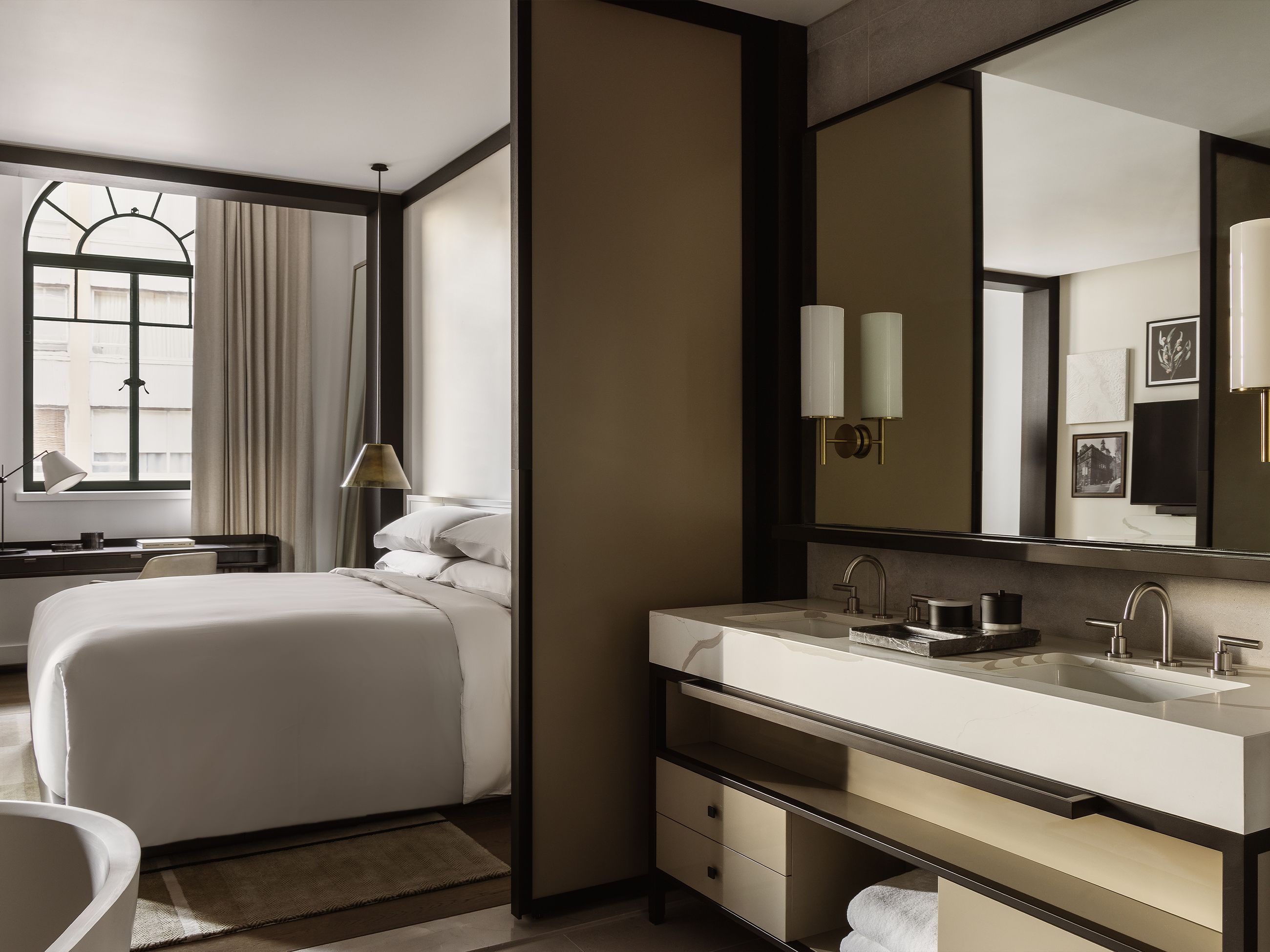
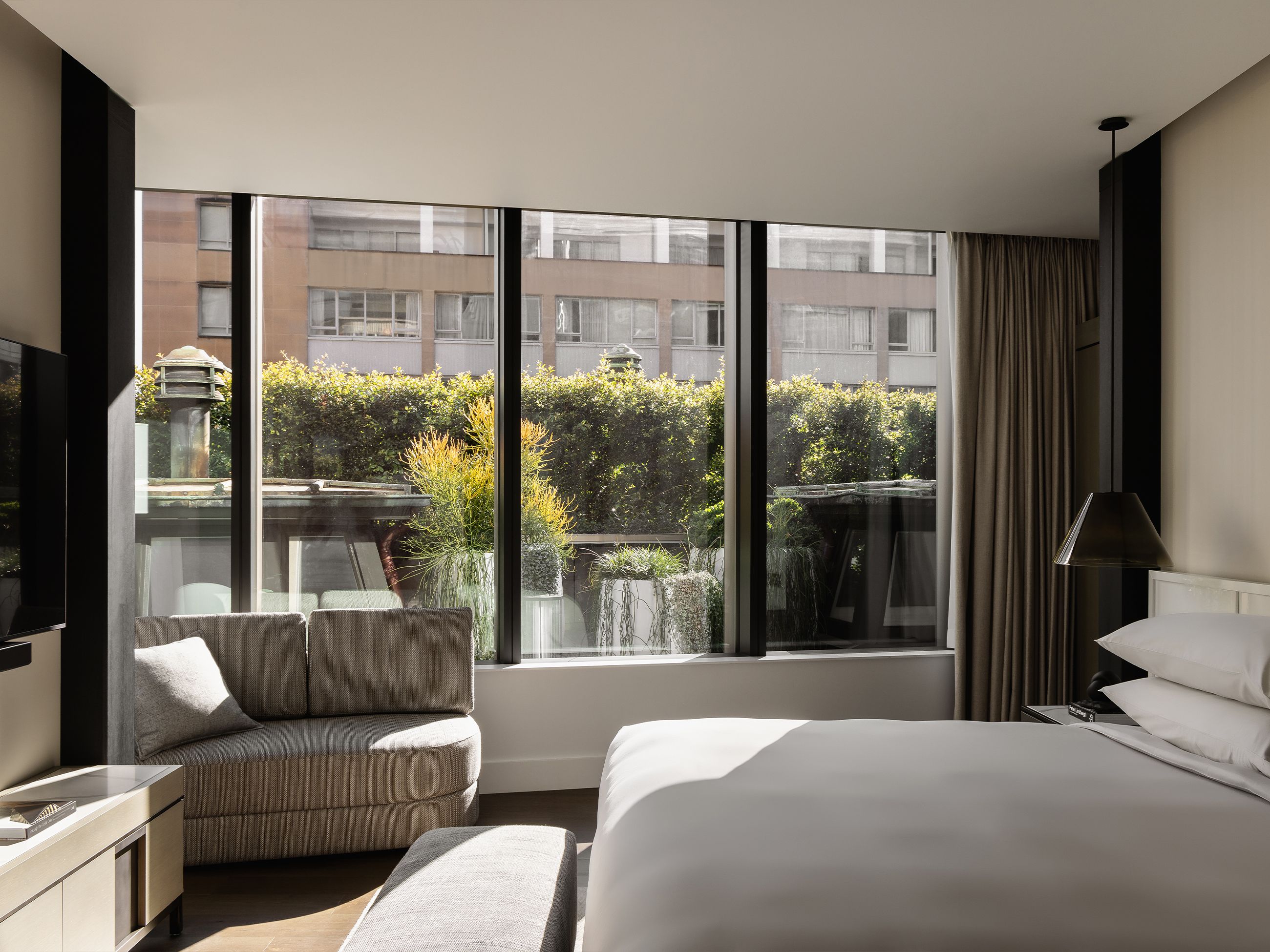
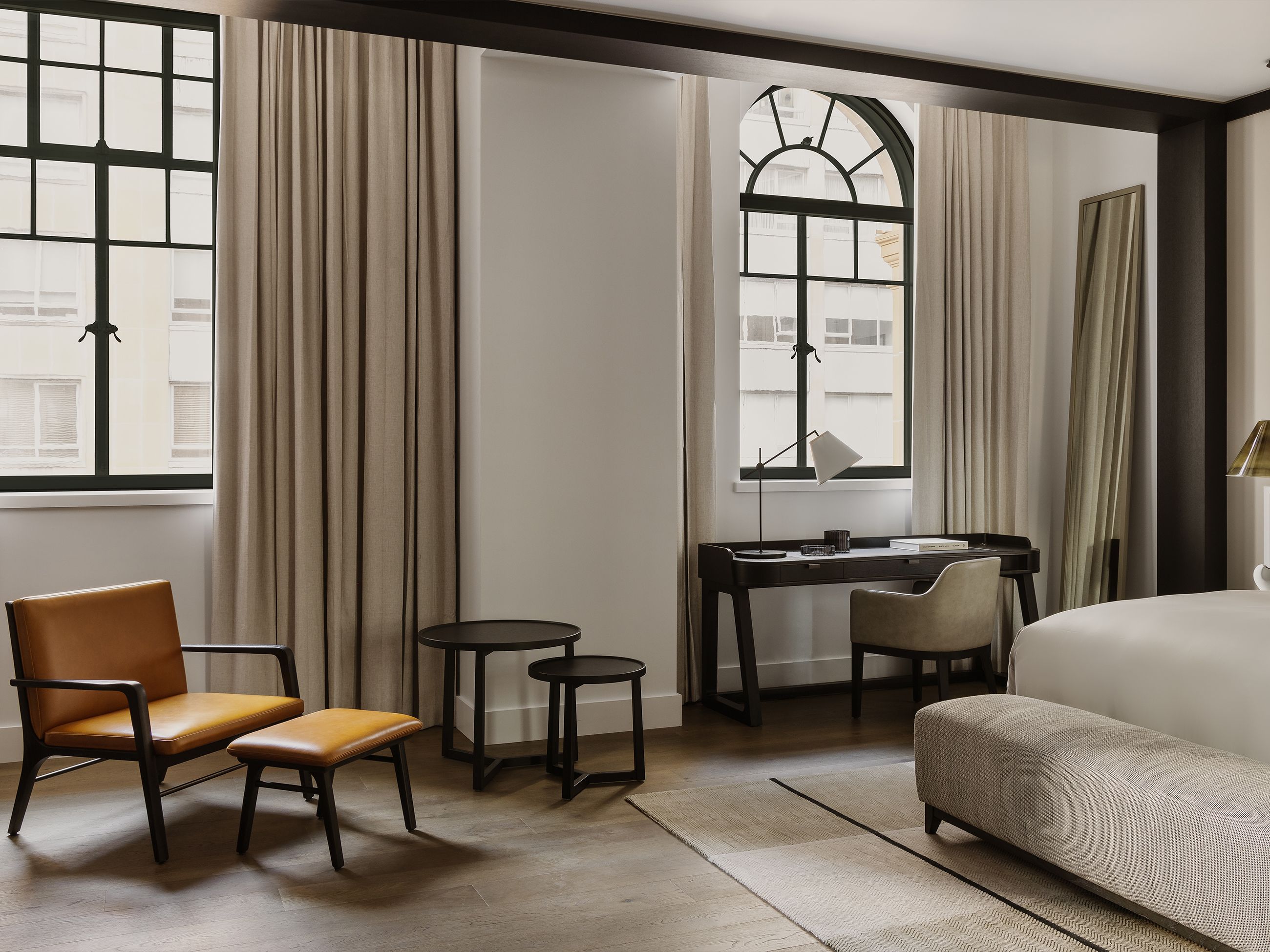
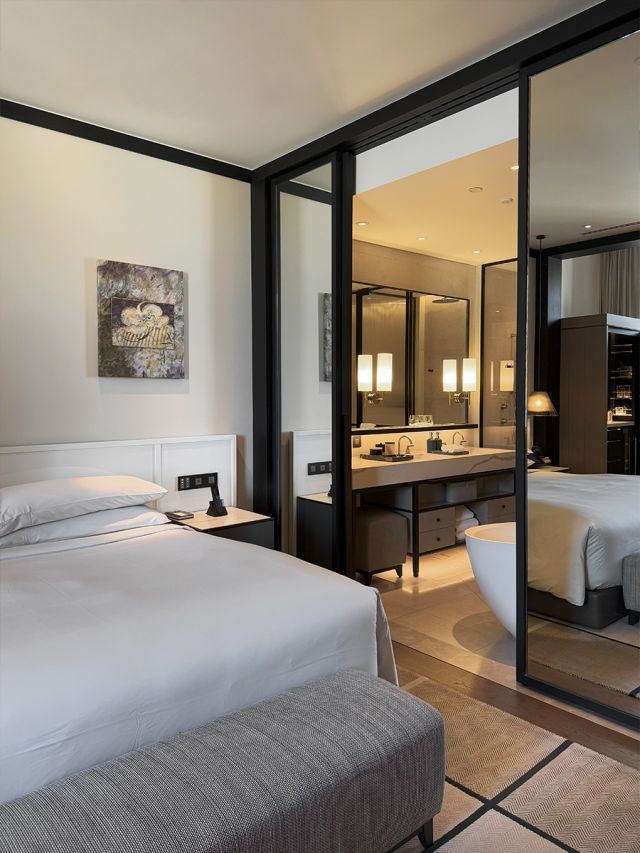
I’m escorted to my room, drunk on relaxation, but I make sure to take note of how noisy the hallways are – answer: dead quiet. My room is 50 square metres, which is huge by hotel standards, but particularly for one in the CBD. It feels like a high-end apartment with floorboards, a freestanding bath and a seating/dining area. My eyes are immediately drawn to the line-up of macarons waiting for me on the dining table.
Need tips, more detail or itinerary ideas tailored to you? Ask AT.
AI Prompt
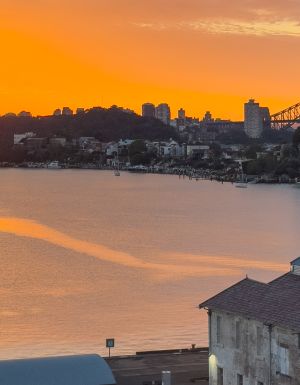
The Liberty Suite looks out to the Sydney Harbour Bridge.
Premier Rooms feature freestanding baths.
Skyline Rooms are a generous 65 metres squared.
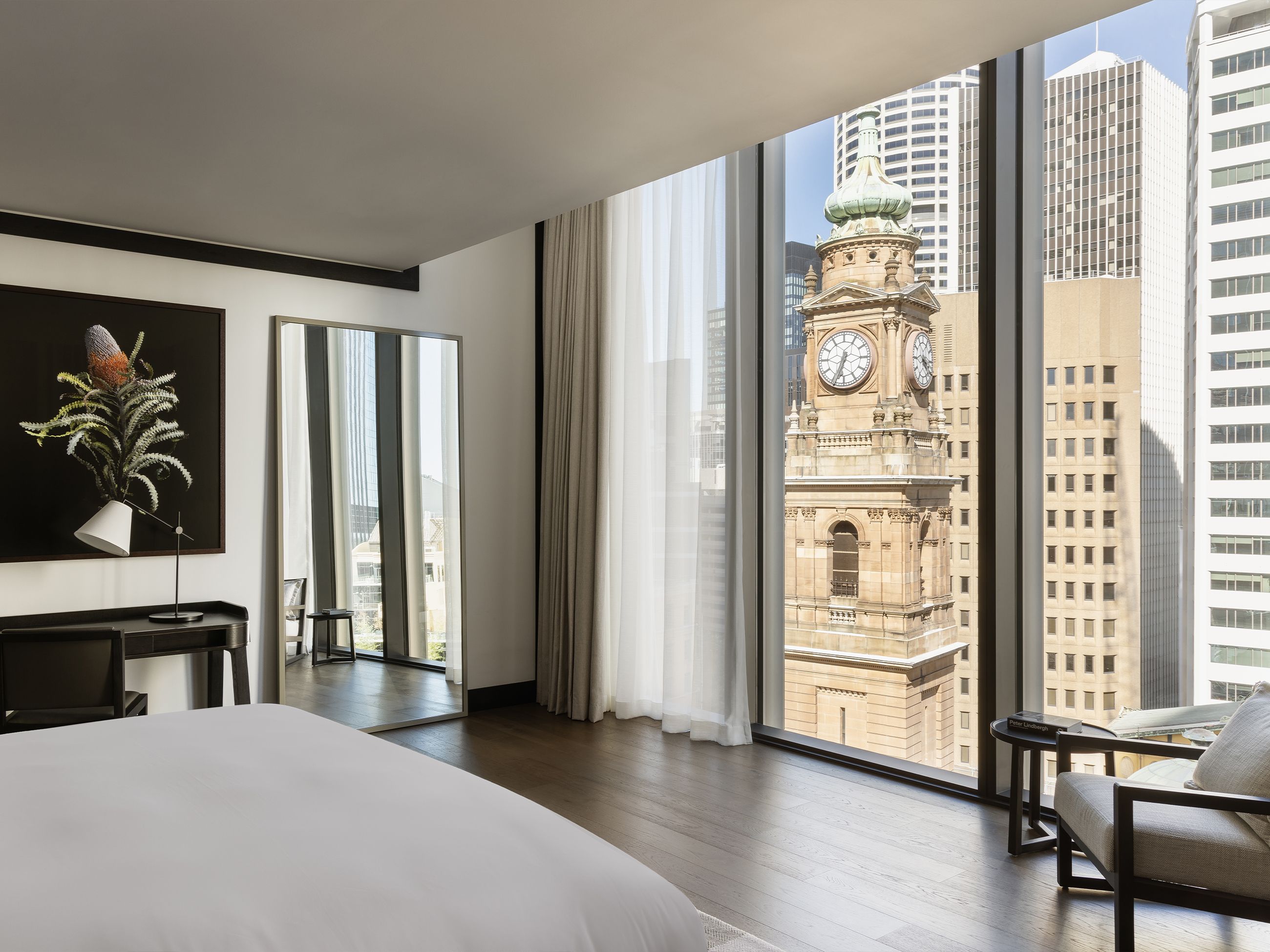
Clock tower views from the Liberty Suite.
Rooms are spacious and feel like high-end apartments.
I’m thrilled to see the mini bar armoire includes a small wine fridge stocked with Minuty Prestige Côtes de Provence, Cloudy Bay Sauvignon Blanc, Handpicked Wines Pinot Noir, and Moët Grand Vintage. Not that I plan on using it (I simply could not justify the prices) – but it’s a nice extra that makes the room feel that much more luxurious. The drinks lineup reads like a who’s-who of local favourites – Young Henrys, Maybe Sammy cocktails, Four Pillars gin and Archie Rose gin. Snacks include Tyrell’s chips, Pringles, Natural Confectionery lollies, and a Carman’s oat bar.
Some small touches I appreciate that some hotels don’t offer: the option to choose your housekeeping time, an iron that actually works well, a Bluetooth speaker, the beloved wine fridge, aluminium water bottles and a bathroom without a glass door or screen that awkwardly exposes you. The one downside is that some of these rooms don’t offer much in the way of a view.
I stayed in a Premier Room which was elegant and relaxing. (Image: Rachael Thompson)
4:30pm is Swill Hour – a daily tradition that nods to the historical “six o’clock swill" in Australia. This one-hour event takes place in the Living Room and invites guests to gather and enjoy each other’s company with a signature cocktail in hand. This afternoon’s tipple is a Eucalyptus Gimlet, a clever, herbaceous little cocktail, by the multi-award-winning Maybe Sammy Team, served on coasters depicting drawings of the historic building. The canapé of the day is a tomato and stracciatella tart. I noticed several staff members chatting with guests like old friends, asking how their adventures earlier in the day went – clearly remembering previous conversations from earlier visits.
Dinner is booked for 6:30pm in Aperture – arguably the most beautiful area of the accommodation. It’s decorated with Australian flora and features a kinetic sculpture hanging from the roof that opens like flowers, with softly changing lights. Tyler, who is serving us, clearly admires the Capella brand, speaking enthusiastically about the other international properties he’s been to and sharing how he sometimes brings his five-year-old daughter here to use the pool.
The scale of Aperture gives it an international feel.
I kick things off with a basil melon margarita – a winning recommendation – before tucking into the best prawn toast I’ve ever had. For mains it’s crispy Ōra King salmon and spaghetti with mud crab.
When I arrive back at my room, there’s a vegan leather journal on my bed with a note that says: “The ritual of journaling allows us to pause, reflect and focus." This is part of the turndown service, and my slippers are neatly lined up next to my bed. Will I journal? No. Do I think it’s a nice touch? Yes.
Brasserie 1930 boasts Art Deco elegance.
The next morning, I make the predictable choice of smashed avo for breakfast at the on-site restaurant, Brasserie 1930. There’s also a buffet brimming with all the usual suspects.
Afterwards, I head to the pool to relax for a few hours before the 11am checkout. Despite my earlier resolve not to journal, I find myself reflecting nonetheless – an irony not lost on me – on my 21st hotel stay in Sydney. I write this with growing assurance that great hotels don’t just provide a place to stay; they create memorable moments, thanks in large part to fantastic staff. Kudos to the hiring manager.
Housed in a heritage sandstone beauty, Capella Sydney blends history with modern luxury – soaring ceilings, native blooms, glowing artworks and a spa that’s pure bliss.
Tick the box next to "Australian Traveller". That's it.
Rachael Thompson is a freelance travel journalist. With a background in design and travel media, Rachael is dedicated to curating content that is as much informational as it is beautiful. She began her career at Belle magazine, before taking up editorial roles at Homes to Love, Bed Threads and Australian Traveller/International Traveller. When she's not writing, editing or optimising content, Rachael enjoys exploring the city's newest restaurants, bars and hotels. Next on her Aussie travel wish list is Lord Howe Island.
Bate Bay’s sweep of beaches has been crowned Australia’s best for 2026, placing Sutherland Shire in the spotlight as a top coastal destination just south of Sydney’s CBD.
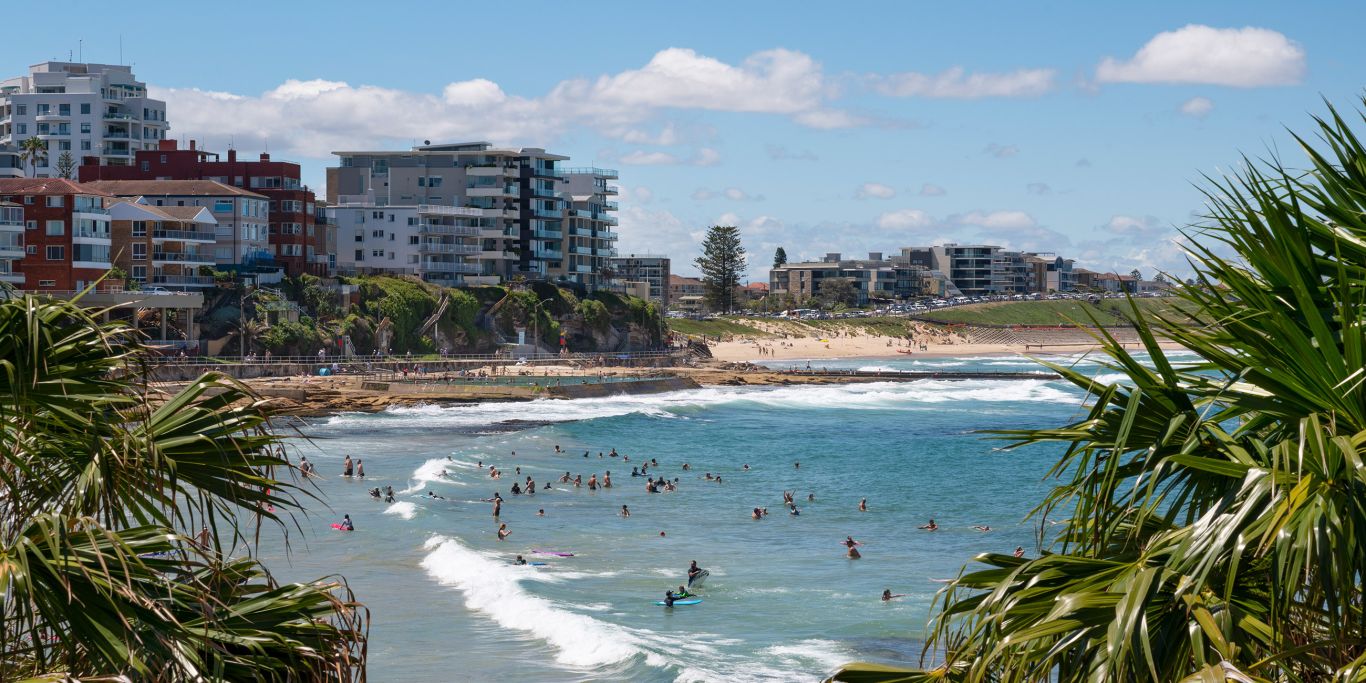
The beaches fringing Bate Bay – Cronulla, North Cronulla, Wanda, Elouera and Greenhills – have topped Tourism Australia’s 2026 list of best Australian beaches (as curated by Beach Ambassador Brad Farmer). For locals, it’s less revelation, more recognition.
The mood shifts from the moment you step off the T4 train service from Central to Cronulla and catch a glimpse of the ocean. At dawn, the Esplanade is already buzzing with regulars, and by mid-morning, parents have staked out a toasty spot on Cronulla Beach where excited toddlers clamber over rocks, and the Jellybean swim squad at Oak Park have donned their bright pink caps while singing Oh, What a Beautiful Mornin’.
By the afternoon, towels are being collected from across the sand as visitors wander back to Cronulla in loose formation.
Dive into the world’s best beaches.
That’s the thing about Bate Bay beaches. This isn’t a story about a single beach. This long, uninterrupted sweep of sand and sea, where you can walk for kilometres without breaking stride, is not just enjoyed over summer; it’s a year-round destination. Here, Cronulla’s buzz gives way to Wanda’s wild edges, before stretching out to the quieter reaches of Greenhills.
But while Bate Bay’s beaches may have taken top honours in the 2026 Best Australian Beaches list, they’re only part of the drawcard. Sutherland Shire stacks up as a full-spectrum coastal escape, where good food, national park adventures and on-the-water experiences sit within easy reach of the shoreline. Whether you’re planning a long weekend or stretching out a stay, here’s how to make the most of Cronulla beyond the sand, sea and surf.
Beyond the beaches
Dining
Enjoy a sundowner by the sea at Pippis Cronulla.
The Sutherland Shire dining scene delivers from early morning to late at night with a mix of vibrant cafes, bars and pubs. Start your day at Grind Espresso, where the coffee comes strong and fast. From there, drift towards HAM for pastries, best eaten buttery warm.
By midday, locals linger across sun-lit tables. Loaf and Next Door appeal to the surfers who come in for snacks after chasing waves. Blackwood’s Pantry and The Press are also popular for breakfast and lunch, while Pilgrim’s continues to hold a special place in the hearts of vegans.
Newer arrivals signal where Cronulla is heading: Homer Rogue Taverna is being hailed as one of the best restaurants in Cronulla, with the confidence that comes from understanding what locals want. Ask a local to reveal their favourite restaurant for a special occasion, and it’ll likely be Pino’s Vino e Cucina al Mare, Yalla Sawa or Alphabet Street. Summer Salt, Sealevel, Benny’s, Bobbys and Pippis are a few of the best waterfront restaurants in the Shire.
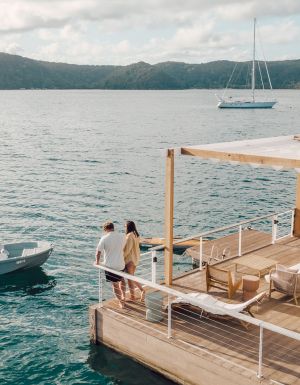
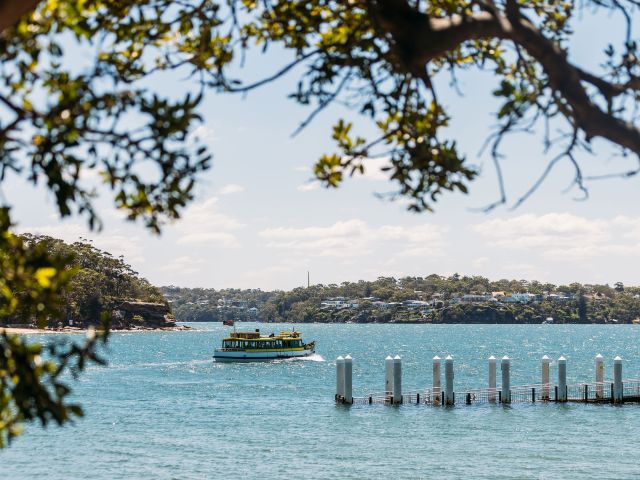
A short ferry ride from Cronulla, Bundeena offers a counterpoint to Cronulla’s mighty surf beaches. If Cronulla is the Shire’s social heart, Bundeena – or Bundenesia, as it’s affectionately known – is the place to go to exhale and unwind.
Hop on the ferry from Cronulla, and within 30 minutes, you’ll be inhaling the eucalyptus-scented air. Check the creative pulse of the local community by timing your visit with the Bundeena Maianbar Art Trail on the first Sunday of every month.
One of the best things to do in Bundeena is paddle into Cabbage Tree Basin with Bundeena Kayaks. Follow the five-kilometre Jibbon Beach Loop Track that leads past quiet coves to ancient Indigenous rock art, or simply find a stretch of pearl-white sand to relax on.
Pristine walking trails
Cool off with a coastal stroll.
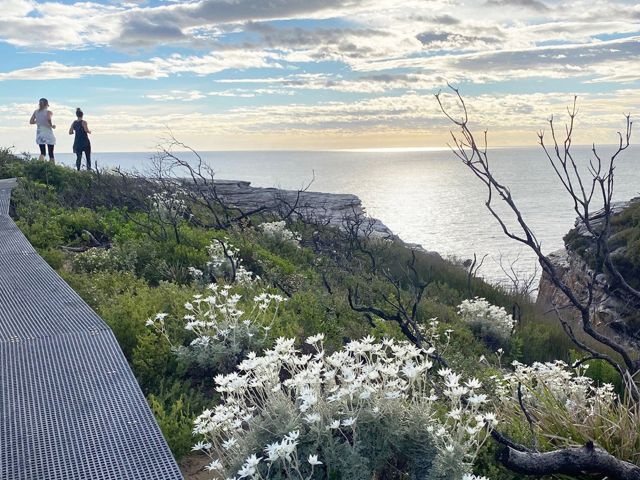
Beyond the coastline, Sutherland Shire offers myriad ways to shift gears. Royal National Park – the oldest national park in Australia – sits just minutes from the surf. Clifftop walks trace the edge of the continent, the rugged bushland is threaded with creeks and hidden waterfalls, and a network of tracks rewards those willing to go a little further.
Take the Coast Track, where the land drops cleanly into the ocean over sheer cliffs that have been stacked together like giant Jenga. Or veer inland, where pockets of forest cool the air and filter the light. It’s a reminder of how close nature sits to the bustle of suburbs in the Sutherland Shire.
Enjoy whale watching
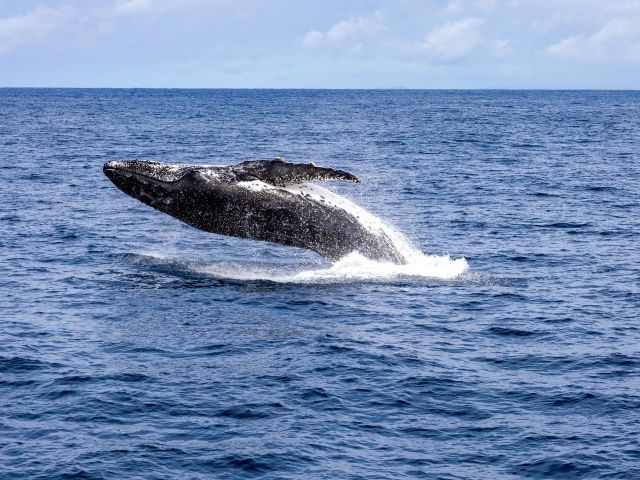
Spot whales from May to October. (Credit: The Edit Suite)
Twist your binoculars until the ocean is in focus, stretched like a creased blue sheet all around.Come May, the East Coast becomes the humpback highway. Thousands of whales migrate along this stretch of coastline each year, their movements tracked by keen eyes from vantage points like the Cape Solander platform in Kamay Botany Bay National Park, one of the best places for whale watching in Australia. There’s something quietly thrilling about seeing that first telltale spout or the arc of a breaching body against the vastness of the sea. From June to October, whale-watching cruises depart from Cronulla, offering a closer look at the migration.
Awards come and go. But places like Cronulla endure because they belong as much to the visitors as they do the early-morning swimmers, walkers and surfers.