Camping Adventure at West Alligator Head

hero media
Australian Traveller looks at the remote camping outpost of West Alligator Head in NT’s Kakadu National Park.

When it comes to camping, we’ve tried to find one site that’s as off-the-beaten-track as possible. Hardy travellers Steve and Alison Kruger reckon it’s hard to go past this remote area of Kakadu.

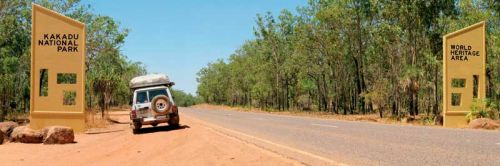
West Alligator Head is a fishing and birdwatching paradise. Getting there is a short but challenging 4WD trek on the Waldak Irrmbal Track southeast of Darwin. The track leaves the Arnhem Highway just 2km inside the North Western Entrance to the World Heritage-Listed Kakadu National Park. This area has limited access, as the track crosses the dark soils of the Wildman and West Alligator River flood plains, which remain water saturated months after the end of the wet season.

The 81km drive into West Alligator takes you past two good camping spots on the Wildman River: 2 Mile and 4 Mile Waterholes, named for their length, not their distance from the turnoff. These are both fresh waterholes with their own bush camping areas. But, frankly, once you’ve experienced the paradise ahead, you’ll decide to stop at the waterholes for a spot of morning tea or a quick overnight camp only. Take care after the turnoff to 4 Mile Waterhole, as the track becomes more narrow, winding and corrugated.

Engage 4WD to tread lightly and to ensure you don’t damage the track. Additionally, decreasing your speed will ensure you don’t flick up one of the many sticks on the edge of the track that can easily stake a tire or damage your undercarriage. The track can become impassable after wet weather for months at a time, so be sure to keep one eye on the skies during your visit or you’ll end up staying a lot longer than you’d planned.

As the track winds its way through the dry savannah woodlands for which the area is famous – and through various fire-scorched sections – you’ll encounter groves of screw top palms; these have the appearance of a giant screw, which becomes very obvious when the old foliage has been burnt from their tops.

Finally the woodlands yield to the flood plains of the local rivers and are replaced by tall grasses. When this vegetation is burnt out by one of the many fires common to the area, it quickly sprouts anew, becoming as green as the grass on a well-watered suburban front lawn. This lends a hint as to the moisture that exists just a few centimetres below the surface. It’s always a striking contrast between the charred and blackened remains of the burnt grass and the verdant green of new growth. Once you cross the plains, you quickly find yourself 4WDriving along the edges of sand dunes towards the beach, once again surrounded by savannah woodlands.

Camping is only permitted in three areas at West Alligator Head, on a first-come first-served basis. The smallest area will accommodate only two vehicles and the largest some 30 or so. The pick of the camping areas isn’t Pocock Beach, but a small private secluded beach on the eastern side of the headland. This site accommodates about five vehicles. The 4WD across the headland to this beach takes you through a monsoon forest in which kangaroos, wallabies, bush turkeys, birdlife and flying foxes are plentiful.

Upon reaching this secluded cove, you’ll find that the high tide mark is so close to your campsite that you’ll be able to cast a line to catch that barra or salmon and still be only a few metres from your esky, fireplace and sleeping bag. Keep in mind: when you’re beaching your boat, there’s a huge difference between the high and low tide marks in this area, and once the tide retreats all you’re left with is soft mud.

From October to December is turtle nesting season; they use the beach dunes for nesting, so 4WDs aren’t allowed on the sand except to launch boats. If you take your torch and you’re careful, you just might find a nesting site. But please remember that they’re protected and easily frightened. Something else to keep in mind is that these are crocodile-infested waters; sightings along the beach are common, including reports of a 4.5m croc in the area, so swimming is far from recommended.

Birdlife abounds in this area, with the blue-winged kookaburras being particularly friendly. These cheeky devils have the ability to hold a hermit crab in their beaks, which they then smack onto a branch until the borrowed shell is broken. The unprotected crab then falls to the ground and the kookaburra swoops down to eat its waiting meal.

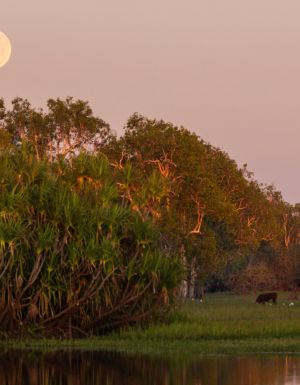
If your visit happens to coincide with a rising full moon, you’ll be treated to the visually spectacular scene of a huge, red, glowing orb lighting up your private cove and beach. The colours are strong and reflect from the calm ocean as though set on fire.

You never know who you might bump into in this idyllic paradise. During our last stopover, our camp was visited by the guys from HEMA (map-makers extraordinaire) in their Map Patrol vehicle. Over a cup of coffee, Charles and Keith told of their work. Surely they must have one of the best jobs in the world! They were replotting the route into West Alligator Head with GPS units for the next series of maps of the area. So make sure you visit before this secret is out and paradise is lost.

DETAILS // West Alligator Head

Getting There // The track leaves the Arnhem Highway 2km inside the North Western Entrance to Kakadu National Park, 170km southeast of Darwin.
Best Time To Visit // August to October – but be sure to check if the track has re-opened following the end of the wet season.
Permits // No permits are required as long as you camp within designated camp areas.
Camping // Camping is free and in designated areas only. Fires are allowed only in the cement rings provided. Be aware of any fire bans that may be in place.
Amenities // Basic in the main camping area at West Alligator Head, limited or none in the Pocock Beach, 2 and 4 Mile Waterhole areas. No drinking water available, and no rubbish disposal provided – so please take all your rubbish out with you.

Australian Traveller

Australian Traveller

View profile and articles
hero media

Untouched wilderness & unexpected pub crawls: 8 experiences you’ll only find in the NT

(Credit: Tourism & Events NT/ Sean Scott)

    Kassia Byrnes Kassia Byrnes
    The Northern Territory isn’t just different – it’s a whole new world. From the friendly locals and varied landscapes to its cultural layers, there’s nowhere else in Australia quite like it.

    The Northern Territory has to be experienced to be believed. The majesty of Uluṟu doesn’t quite hit until you’re standing before it. The untouched beauty of Arnhem Land strikes the heart in a way you can’t imagine. The quirky and friendly locals and the festivals they throw impart stories that won’t be forgotten. And that’s just the beginning. From natural hot springs and local larrikins to deep cultural ties and ancient stories, these are the experiences to be discovered only in the NT.

    1. Swim in pristine natural hot springs

    woman swimming in Katherine Hot Springs only in the nt
    Dive into Katherine’s crystal clear thermal springs. (Credit: Tourism & Events NT/ Backyard Bandits)

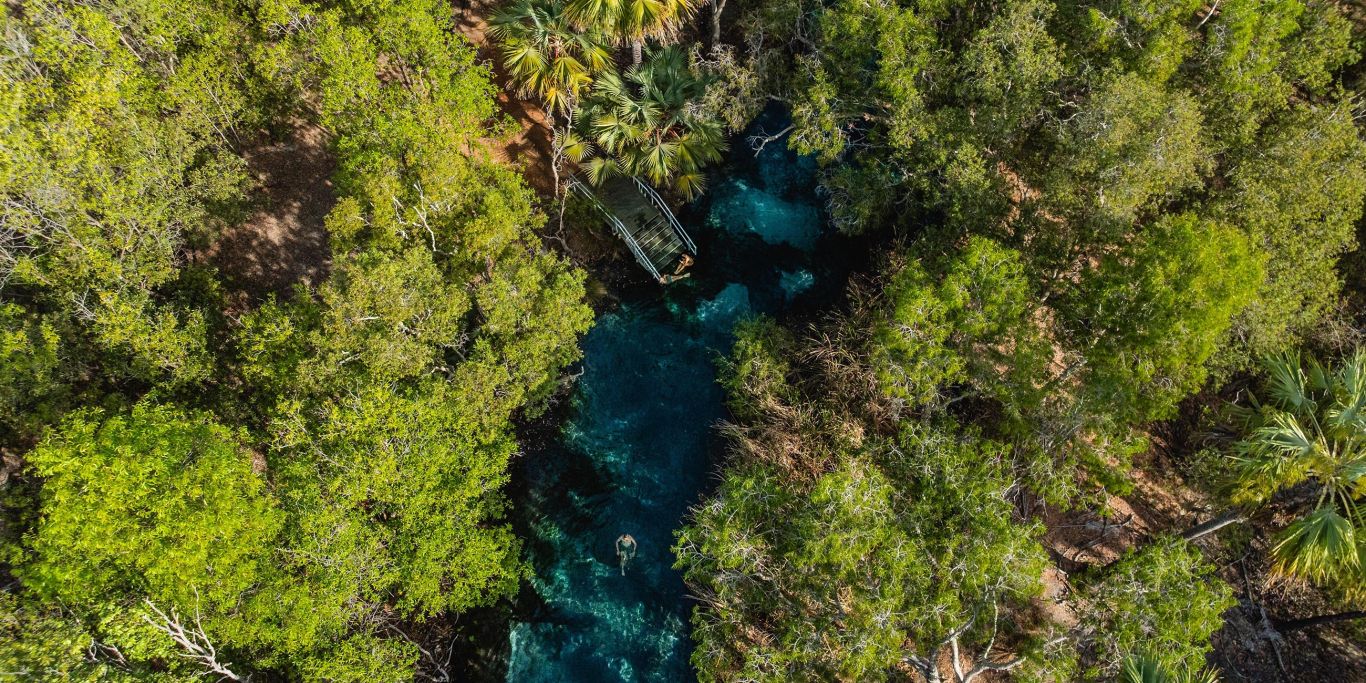
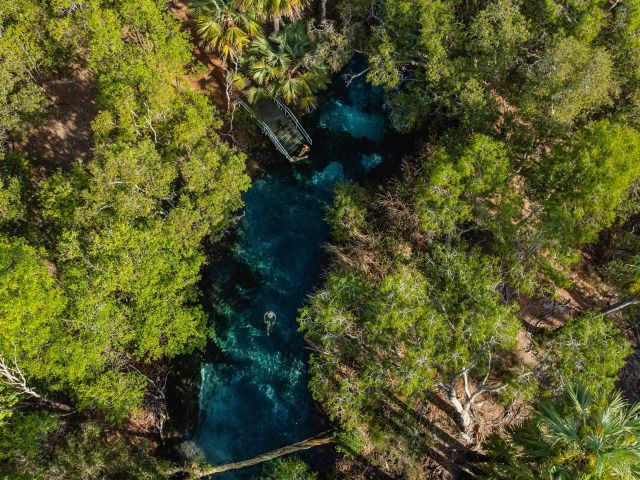
    The NT’s natural hot springs are truly picturesque. Katherine’s crystal clear thermal springs sit on the banks of the Katherine River, framed by nature. Picnic grounds and scenic walking tracks make it easy to linger.

    In Elsey National Park, the teal waters of Bitter Springs have long been popular with locals. It’s not uncommon to spot turtles as you drift with the gentle current, palm trees waving on the banks. The park also contains Mataranka Thermal Pool, a sandy-bottomed swimming hole sitting at a cosy 34°C year-round.

    2. Explore the Red Centre Light Trail

    Light Towers Kings Canyon
    Head to Kings Canyon to see the Light Towers. (Credit: Tourism & Events NT)

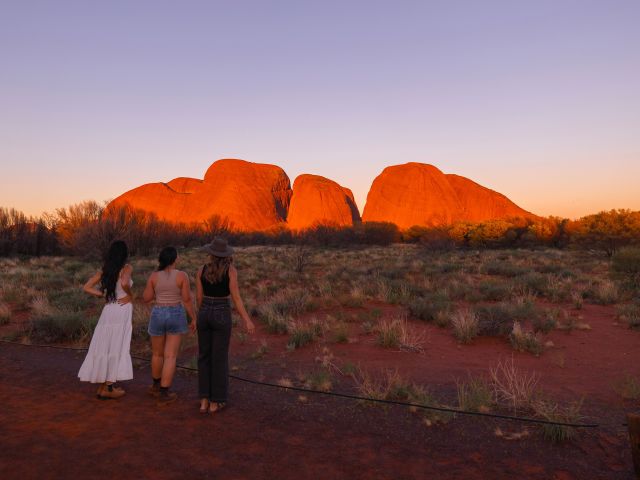
    Uluṟu-Kata Tjuṯa National Park is more than just a place; it’s earned its name as Australia’s cultural heart. Here, a wealth of stories is held by its Traditional Owners, the Aṉangu. And while there are many ways to connect, in more recent years, the Red Centre Light Trail has offered visitors one more way to interpret all this landscape holds.

    Wander the Light Towers at Kings Canyon and watch the Field of Light transform the land before Uluṟu as day turns to night. Also, be sure to take in Wintjiri Wiṟu by light artist Bruce Ramus, sharing the Aṉangu’s Mala story.

    Arrive in April to experience Parrtjima, a free annual 10-night festival of light, featuring installations, workshops and more.

    3. See unrivalled views from a helicopter

    helicopter ride over kakadu only in the nt
    See Kakadu from the air. (Credit: Tourism & Events NT/ Sean Scott)

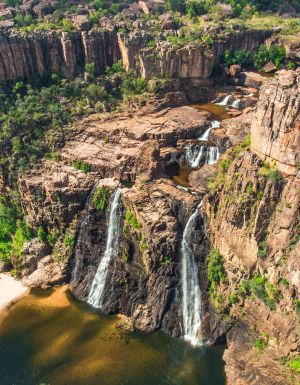
    There’s no better place in the world to hit the skies in a helicopter. Soar over thundering waterfalls, world-famous wetlands and the floodplains of Kakadu National Park. A bird’s-eye view brings a special type of magic to this one-of-a-kind landscape.

    You can also meet local characters on the pub crawl of a lifetime as you fly between some of the NT’s best and most remote pubs.

    4. Discover the start of Western Arrarnta art

    Hermannsburg Potters only in the nt
    Book ahead to visit Hermannsburg Potters. (Credit: Tourism & Events NT/ Felix Baker)

    Hermannsburg is one of the most unique towns in Australia. This historic mission town holds several claims to fame, including being the birthplace of Western Arrarnta art – a renowned style of Indigenous art using vibrant, naturalistic watercolours to depict Central Australian desert landscapes. Book ahead from April to September to visit Hermannsburg Potters, a collective of dedicated Western Arrarnta artists.

    Other options to see this art style near Alice Springs include the Araluen Arts Centre, Iltja Ntjarra (Many Hands) Art Centre and Standley Chasm (Angkerle Atwatye).

    5. Spot crocs on a cruise

    Crocodile being fed on a cruise on the Adelaide River nt
    Spot wild crocs up close. (Credit: Tourism Australia)

    The NT is the only territory that feeds wild crocs, putting the ‘wild’ in wildlife spotting experience. Join a cruise along the Adelaide River, just an hour from Darwin, to see these not-so-gentle prehistoric giants in their natural habitat.

    Be sure to stop into Humpty Doo or Noonamah for lunch on your way back to Darwin. Here, you’ll experience a real NT roadhouse.

    6. Experience local Indigenous cultures

    young participant at the Garma Festival Nhulunbuy arnhem land
    Time a trip to Nhulunbuy for the Garma Festival. (Credit: Tourism & Events NT)

    The NT offers some of the best opportunities to experience the world’s most ancient living culture. Head to Nhulunbuy in East Arnhem mid-year for the Garma Festival, Australia’s largest Indigenous gathering, with four days of song, dance and art sharing Yolngu culture. Stop into Buku-Larrnggay Mulka Centre in nearby Yirrkala while you’re there, current home of the Yirrkala Church Panels. Painted in 1963, they form one of the first ‘title deeds’ to Country.

    Join a celebration of Indigenous music, art, culture and sport at the Barunga Festival, 80 kilometres from Katherine, every June. And year-round, book an Indigenous-led tour through Ubirr, one of the oldest rock art sites in Australia.

    7. Meet the larrikins of Alice Springs

    competitors in Henley on Todd Regatta
    Henley on Todd Regatta might be one of the NT’s whackiest events. (Credit: Tourism & Events NT/

    Head to Alice Springs at any time of year and you’ll be guaranteed to meet some colourful locals. But to really get to the heart of the eccentricities, mark a few dates on your calendar.

    March brings one of the best Pride events in the world, fabAlice. Inspired by the iconic Aussie movie The Adventures of Priscilla, Queen of the Desert, which was filmed in Alice Springs over 25 years ago, the festival has a strong focus on the art of drag and celebrates LGBTQI+ communities, as well as self-expression in general.

    Come August, Todd River’s typically dry, sandy bed comes alive with the world’s only dry river boating event, the Henley on Todd Regatta.

    8. Swim in a waterfall with no one else around

    Upper Cascades in Litchfield National Park
    Swim in the Upper Cascades with no one else around.

    So few of Australia’s most beautiful places remain untouched, but that’s not true in the NT. Take a short hike through monsoon forest in Litchfield National Park (just over an hour’s drive outside of Darwin) to reach the secluded Cascades swimming area. Here, take a dip in the lower or upper cascade pools, both surrounded by rugged bushland. And you’ll probably have it all to yourself.

    Plan your Northern Territory trip of a lifetime at northernterritory.com.