Kakadu photography: A professional shares where to get the best shots

Editor Editor
hero media
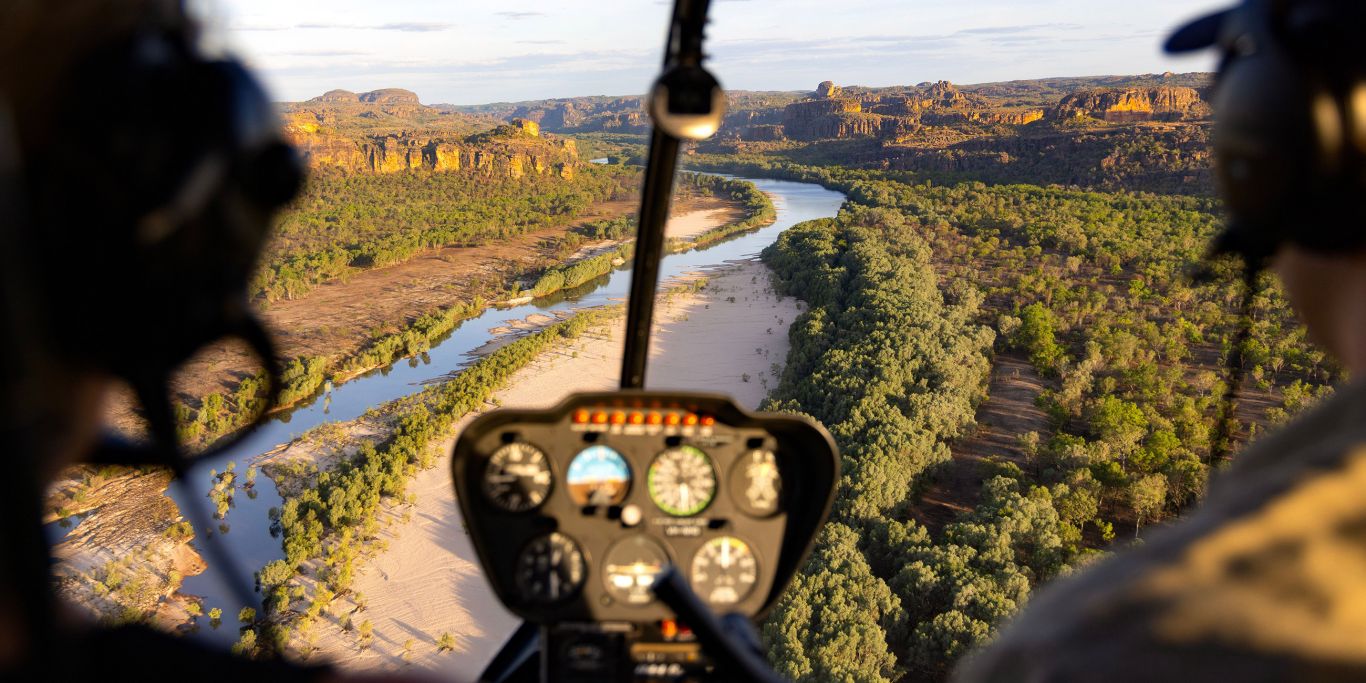
Northern Territory photographer Tracy Ryan has a knack of capturing the majesty of Kakadu, in all its seasons and moods. Here are her top photography spots in the 20,000 square kilometre national park.

Kakadu’s ancient wetlands, escarpment, outliers, woodlands, and monsoon rainforests – home to our earliest Australians for more than 50,000 years – are a photographic and cultural adventure.

The national park recognises the local indigenous calendar of six seasons, where throughout the year the landscapes undergo spectacular changes.

The favourite time of year for photography enthusiasts to visit the park is ‘Wurreng’, in June and July (height of the dry season and its coolest time of year).

Yet, all year round, in all of the seasons, there is always somewhere spectacular to photograph.

Here are my favourite spots and the best time to photograph them. Enjoy!

1. South Alligator Region: Mamukala Wetlands (Sunrise)
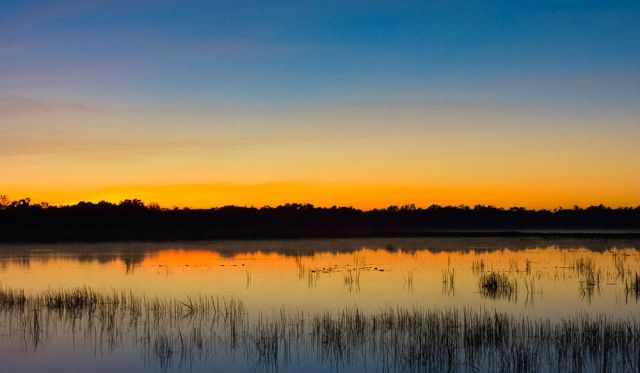
Dawn over the Mamukala Wetlands, Kakadu
Dawn Mamukala Wetlands, Kakadu (Photo: Tracy Ryan).

Make sure you get here early to photograph sunrise while waterbirds fly in for their first meal of the day. With the sun rising in a perfect spot opposite the well-covered observation platform, you will definitely be able to get that perfect shot.

The sun rises very fast in the Top End, so make sure you arrive before first light. Oh, and, cover up; the mosquitoes are huge, plentiful and are there for a morning meal as well.

Tips: Carry a tripod to keep your camera steady, set your ISO very high and use no flash. Also, a polarising filter can help to create vivid colours.

2. Nourlangie Region: Nawurlandja Lookout (Mid Morning)
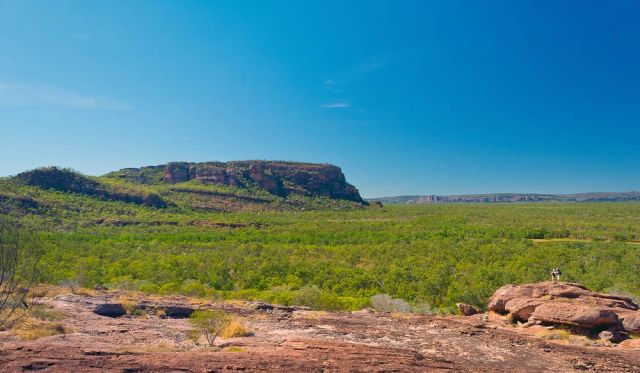
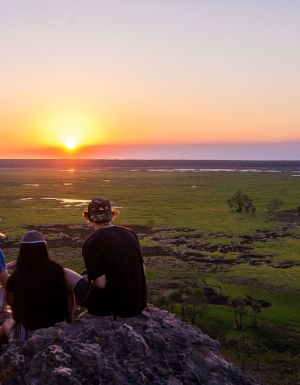
Nawurlandja Lookout, Kakadu
Look carefully and see the couple – that will give you a better sense of the Nawurlandja Lookout, Kakadu (Photo: Tracy Ryan).

Nawurlandja Lookout is a sensational spot, very easy to access yet still quite a secret. Not many people venture past the well known spot at Nourlangie – it’s only about a 500m walk up a slope.

The well signposted spot affords spectacular, expansive views, taking in Anbangbang Billabong, Nourlangie and an escarpment in the distance. On a clear day, you can see forever!

Tips: Use a good wide angle lens and a polarising filter to help create vivid blues and greens. Even with a ‘point and shoot’ camera on automatic you’ll get a sensational shot.

Need tips, more detail or itinerary ideas tailored to you? Ask AT.

AI Prompt

3. Nourlangie Region: Anbangbang Billabong (Early Afternoon to Late Afternoon)
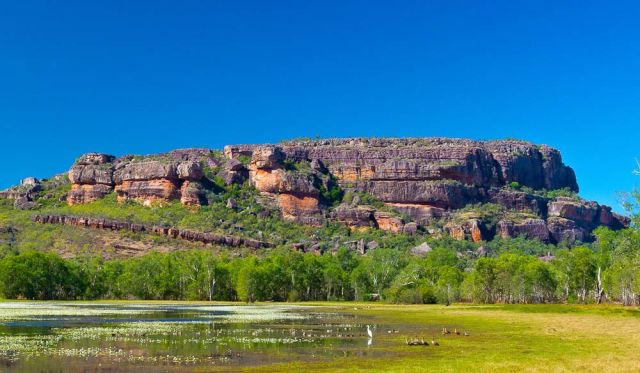
Anbangbang Billabong, Kakadu (Photo: Tracy Ryan).

If you can get into Anbangbang Billabong (check access) it is well worth visiting after Nawurlandja Lookout.

In Wurreng, it is more likely that you will be able to access the circular walk around the billabong.

If not, access is open along the entrance and down near the picnic areas. Head towards the end, look back, and you will see Nourlangie forming a spectacular backdrop to the billabong, which teems with birdlife and lilies. Beware of crocodiles! As the day progresses, the colours here change dramatically; the later you stay the more spectacular.

Tips: A wide angle lens and tripod are recommended.

4. Jim Jim Falls & Twin Falls Region (Midday & Later)
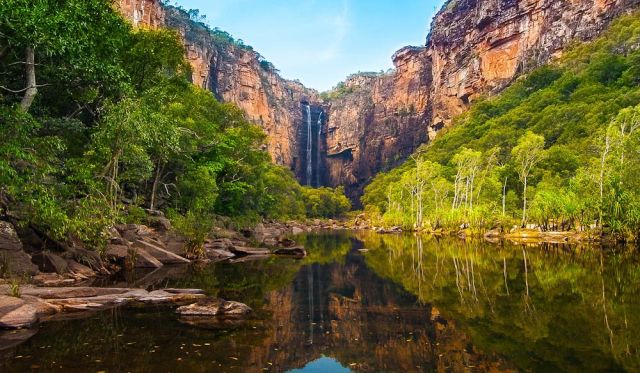
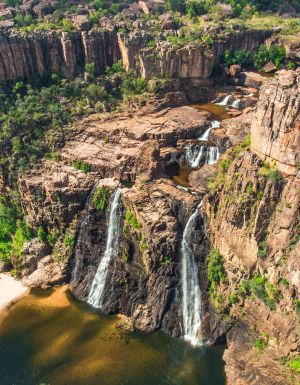
Jim Jim Falls, Kakadu (Photo: Tracy Ryan).

Spectacular Jim Jim Falls is accessible only by 4WD (check access) and takes two hours one way, with soft sand prevalent in the last 10km of the track.

Then there is a 2km return walk to the falls through monsoon rainforest and over boulders (make sure you are fit, wear good shoes and take plenty of water!), taking you to a deep plunge pool where silica sand rests on the bottom, leftover from the ancient inland sea that once covered much of inland Australia.

Ensure you allow a day for this trip if you want to take your time to get some good shots. Crocodiles have been sighted in this area, so heed the information at the start of the walk. You will be able to capture amazing shots all along this walk, but the best opportunities are not too far from the car park, where you can capture the immensity of this ancient landscape and reflections in the water of the towering gorge.

Tips: Use a high ISO in low light, but a standard lens will suffice.

Weekly travel news, experiences
insider tips, offers, and more.

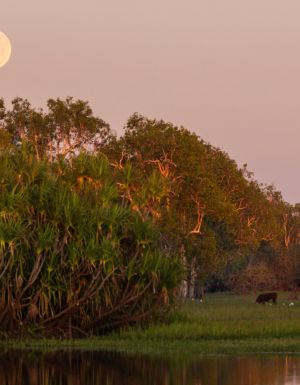
5. Yellow Water Region: Kakadu Animal Tracks Safari (Sunset)
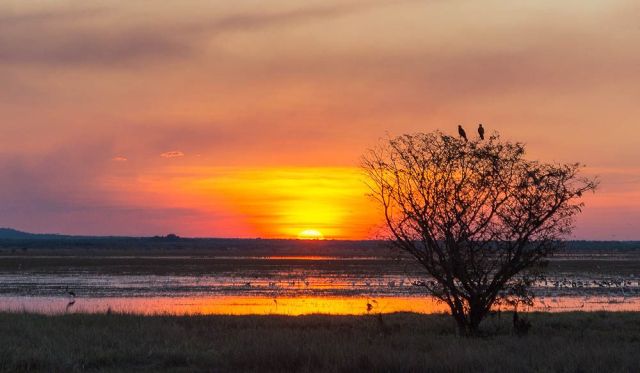
Goose Camp, Kakadu
Animal Tracks Safari’s Goose Camp, Kakadu at sunset (Photo: Tracy Ryan).


To capture the most spectacular sunset shots in Kakadu, head to my favourite place, Goose Camp – only accessible on a half day, Kakadu Animal Tracks Safari.

This safari has access to wildlife-rich wetlands and tropical savannah woodland and includes an unforgettable, awe-inspiring bird gathering spectacle, where magpie geese, ducks, pelicans, kites, black-necked stork and brolga can be seen feeding and settling down for the night. Buffalo and crocodile may also feature.

Tips: Make sure you take your long lenses if you want to capture intimate shots of the birdlife and a wide angle lens for sunset shots. Under exposure and a high ISO will make colours more vivid.

Tracy Ryan photography tours

Tracy Ryan is an award-winning landscape and nature photographer from Darwin.  Aside from bespoke photography tours Tracy also offers a one-off  aerial photography tours. See tracyryanphotography.com for more information.

For more information on Kakadu & things to do in the NT, visit the official Northern Territory website at northernterritory.com

hero media

Discovering East Arnhem: Australia’s most unique and rewarding corner

    Joanne Millares Joanne Millares

    Hard to reach and harder to forget, East Arnhem offers something rare in modern travel: the chance to slow down and experience Country on its own terms.

    The sky feels bigger in East Arnhem. It stretches wide and uninterrupted above rouged earth, stringybark woodland and beaches so empty they seem to belong to another era. The coastline curves for kilometres without a footprint and the horizon runs on forever.

    For comedian Lou Wall, the scale of the place was the first thing that hit them.

    “The sheer openness,” they say. “The sky feels infinite and the land stretches out endlessly. It’s pretty breathtaking visually.”

    But the physical landscape is only part of the story. The real reward isn’t only the scenery but the shift in perspective the journey brings. Visitors stop trying to tick off the destination and a real engagement takes over.

    “It made me never want to travel again,” Wall jokes. “In that I never wanted to leave East Arnhem.”

    Getting there

    Aerial shot of East Arnhem’s coastline as cars trace the curve of the shore.
    Sail along the remote coastline on an expedition cruise.

    Reaching East Arnhem is part of the adventure. Travellers typically fly into Gove Airport near Nhulunbuy via Darwin or Cairns, or arrive by expedition cruise along the remote coastline. Others make the journey overland along rutted dirt roads that cut through East Arnhem’s small pockets of monsoon forest.

    However you arrive, there’s a distinct feeling of crossing into somewhere different. Permits are required to visit the region, reflecting the fact that this is Yolŋu land where communities and traditional owners maintain deep cultural connections to Country.

    The extra planning becomes part of the experience. By the time visitors arrive, they understand they’re entering a place not just of respect, but also patience and curiosity.

    At one with nature

    East Arnhem’s  landscapes leave a strong imprint. For Wall, one place in particular still lingers in their memory: Ngalarrkpuy, also known as Lonely Beach, near Bawaka Homeland.

    “I genuinely felt like I was living inside an Instagram filter,” they say. “One of the most stunning feats of nature I’ve ever seen. The water was so clear I swear I could see even the fish smiling.”

    Across the region, natural experiences unfold at a slower pace. Fishing, beachcombing and island hopping reveal the rhythm of the coastline. The tides shape daily life and the vastness of the landscape makes even simple moments feel downright cinematic.

    For visitors with limited time, Wall says the Bawaka Homeland experience is unmissable.

    “I just left and I’m already planning when I can get back there.”

    The sense of remoteness is part of the appeal. In a country where many beaches are crowded and well-trodden, East Arnhem’s coastline still feels wonderfully wild.

    Immersing in local culture

    A visitor spends a meaningful moment alongside Yolŋu guides, gaining insight into their deep cultural knowledge and connection to the land.
    Experience authentic moments with the locals.

    Culture is woven through every experience in East Arnhem. Visitors have the opportunity to spend time on Country with Yolŋu guides and knowledge holders who share stories and traditions that have been passed down for generations.

    For Wall, one of the most powerful moments came during a conversation with a Yolŋu elder.

    “I got to meet a traditional elder, Mayalil, in Nhulunbuy,” they say. “Listening to her talk about her home made the land feel alive in ways I couldn’t have imagined.”

    The region is also home to internationally recognised Aboriginal art centres where artists shape works deeply connected to land and family knowledge.

    Music carries the same cultural energy. East Arnhem has produced globally recognised artists such as King Stingray and Baker Boy, blending Yolŋu language, storytelling and contemporary sound.

    Wall experienced this musical spirit first-hand.

    “A jam session around the fire was it for me,” they say. “Letting the deep joy and history of their music wash over me…  and meeting a few of the King Stingray musicians was unreal.”

    These moments of human connection often become the most memorable part of a visit.

    Spotting local wildlife

    An aerial view of the beach shows tiny figures lined up across the white sand, moving as if in a rhythmic dance.
    Step into a world where nature reigns.

    The wildlife of East Arnhem adds another layer to the experience. The region is home to an extraordinary range of animals, from waterbirds and turtles to dugongs, dolphins and the formidable saltwater crocodile.

    Wall admits they didn’t actually spot a croc during their visit.

    “Devastatingly, I didn’t see one,” they laugh. “But with all the stories from the locals I definitely gained a healthy respect for caution.”

    Some of the most memorable wildlife encounters can be surprisingly small., At Banubanu Beach Retreat on Bremer Island, Wall remembers walking along the beach one morning and watching it come alive.

    “As you walk through the sand you see hundreds of crabs scurrying into their holes as you pass by,” they say. “Such a small thing, but it was completely magical.”

    Moments like this reveal the quieter rhythms of East Arnhem, where even the smallest creatures seem to play a part in the landscape.

    Visitors who make the journey soon learn the most important travel tip of all.

    “Go in open-minded with a sense of curiosity,” Wall says. “Be prepared to ditch your plans. The land and the locals will guide you on an adventure no spreadsheets could ever compete with.”

    And most importantly, they add, don’t rush.

    “The land and people deserve your time and attention. You’ll be all the better for slowing down.”

    For more information on visiting East Arnhem, head to eastarnhem.com.au.