A lazy road trip through the small towns of Queensland’s remote south-west throws up more than a few surprises, as Nathan Dyer discovers
A warm evening breeze rattles the awnings along Cunnamulla’s sleepy main street as we step from our car onto the wide pavement opposite the town’s historic post office. A few shopfronts up, talk floats like music from the public bar where a line of plumbers’ cracks peer out over the backs of stubby shorts.
Depending on who you speak to, Cunnamulla is either famous or notorious. For country and western folk, the outback Queensland town – 800 kilometres west of Brisbane – is synonymous with Slim Dusty’s bush ballad Cunnamulla Fella about a wild cowboy who “lives on damper and wallaby stew".
But for Australian film buffs, mention of the town is likely to bring smirks, as they recall Dennis O’Rourke’s controversial documentary focused on more contemporary themes of welfare dependency and underage sex.
This evening, neither cowboys nor promiscuous teenagers are in sight out by the river, where proprietor Judy Roberts is watering her roses at the Warrego Riverside Tourist Park.
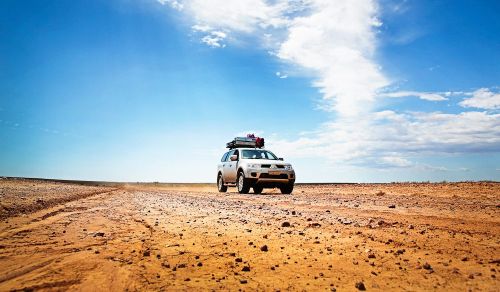
A beer by the water, with the swag rolled out in the back of our 4WD, is the perfect place to plan our 600-kilometre journey west to the Burke and Wills Dig Tree and the South Australian border.
Cunnamulla fella
The next morning we start with a coffee by the river before roaming the town’s quiet streets and checking out the small museum with its stories of sheep barons who made their millions when wool was a pound a pound and of the local bank robber who was hanged in 1880, despite a petition for leniency from the townspeople from whom he stole.
Established as a Cobb and Co stop in 1879, and once the centre of a booming wool industry, the town of about 1250 people is slowly building tourist appeal with its laconic outback vibe. Local tourism boss and station owner Carmel Meurant tells us visitor numbers jumped by 25 per cent last year. “I think what people love about coming out here is the authenticity of the experience," says Carmel.
Before leaving, we take the obligatory ‘selfie’ with the Cunnamulla Fella statue on the main street and treat ourselves to a homemade iced-coffee at the funky Boulders café. It’s a big call in a state that worships the flavoured milk drink, but our IC at Boulders is one of the best we’ve ever tasted.
The queen of Eulo
Just 60 clicks up the road from Cunnamulla, fame and notoriety again rub shoulders at the Eulo Queen Hotel. By the time we roll into town, it’s mid-afternoon. After a lazy stroll among the gums on the Paroo River, running strong after recent rains, we venture back to ‘town’: a single street with a pub, general store, opal shop and Tom and Helen Rosenow’s leather and craft shop, the Paroo Patch.
A former station manager, Tom now turns out fashionable leather belts and pocket knife pouches, while Helen produces handbags. The small shop’s offerings are surprisingly stylish and we purchase new belts before venturing across the road to the hotel.
Sitting at the bar drinking ice-cold beer, we learn about the hotel’s namesake, 1880’s publican Isabel ‘The Queen of Eulo’ Gray, who used opals as currency and her bedroom as a gambling den. Although things are less rowdy these days, we’re told the hotel can still lift its roof when the local station hands hit the booze. Tonight, though, it’s just us, the publican and local grazier Graham Pfizer, from nearby Werewilka Station.
Like everyone around here, Graham’s talking about the rain. “You could keep coming back here every week for 40 years and you wouldn’t see the country looking this good," he tells us. We decide to settle in at the bar to hear more of Graham’s tales of life on the land. When it’s time for bed, we talk briefly about taking one of the hotel’s comfortable ensuite cabins, but decide to roll the swag in the backyard and enjoy the cool country air.
Need tips, more detail or itinerary ideas tailored to you? Ask AT.
AI Prompt
What lies beneath
The next day, there’s not a cloud in the sky as we continue west for Thargomindah. Just off the road, low clay mounds rise through the scrub. Release valves for the Great Artesian Basin, these mud springs are spread all through this country and create permanent wetlands in an otherwise arid landscape.
From a roadside sign we learn that at 1.7 million square-kilometres, the Great Artesian Basin flows beneath one-fifth of Australia’s landmass and is one of the largest aquifers in the world. Its waters take about two million years to bubble to the surface.
The sign also warns although the spring tops are usually soft and jelly-like, “occasionally they do explode with a report audible for kilometres." We climb back into the car; half expecting to come under fire, before heading west across a red gibber landscape made lush by rain and dotted with dancing emus.
Let there be light
When we arrive at Thargomindah, 130 kilometres west of Eulo, the Bulloo River is running a banker and we discover one of the outback’s quirkier logistical solutions. Spray-painted on the side of a truck ramp on the edge of town is the mobile phone number for the ‘Thargo flood truck’.
We call the number and soon after a flatbed truck arrives to carry us, and our vehicle, across the floodwaters into town. School kids wave and laugh before leaping onto tractor tubes and disappearing down the river as the truck edges across the low bitumen crossing.
Water’s a big deal in this town, the first in Australia to run its streetlights using hydro-electricity. Using water pressure from the Great Artesian Basin, Thargo ran on hydropower from 1898 to 1951. Nowadays the town of 250 locals is a thriving regional hub to the outlying sheep and cattle stations.
Along with the groovy Coffee on Dowling café, a new $4.5-million administration centre, $900,000 information centre and library, and five new council houses are all recent additions to the town’s real estate holdings. According to the local mayor, John ‘Tractor’ Ferguson, the joint’s in the middle of a ‘building boom’.
Kidman’s surprise
West of Thargomindah, the road cuts across open plains before rising over the Grey Range taking us from the Murray–Darling Basin into the Lake Eyre Basin. Further west, the country is flooded with lily-covered swamps. Flocks of waterbirds rise into the blue sky as we pass by.
Turning off the Adventure Way, 120 kilometres from Thargomindah, it’s a 19-kilometre skip to the historic sandstone Noccundra Hotel, established in 1882. Legend has it when Sir Sidney Kidman purchased nearby Nockatunga Station he couldn’t work out why the grog bill was so high. It wasn’t until he actually visited the place he realised Noccundra Hotel was part of his new lease.
Although no longer technically part of the station, we’re told many of the property’s cowboys still treat the pub like a second home. When we arrive, however, the only guests are a couple of retired Sydney executives propping up the bar with a bottle of red wine.
Leaving them to chew on the barman’s ear, we retreat to the cool verandah and listen to the crickets as a golden outback sun sinks below the western horizon. We rejoin our fellow travellers in the quaint dining room for dinner and more wine. Later, we bid our new friends goodnight as they retire to the hotel’s demountable accommodation – known as ‘dongas’ out this way – and we head across the road to spend the night camped by the Wilson River beneath a chandelier of stars.
Weekly travel news, experiences
insider tips, offers, and more.
Explorers’ demise
From Noccundra, we head back to the Adventure Way and west for the South Australian border, rolling through some of Australia’s most lucrative gas and oil fields where the nodding heads of oil wells form rocking silhouettes on the horizon.
Travelling through this rugged, windswept country, it’s easy to understand how Australia’s two most famous explorers came to perish here. Just before we reach the border, a sign to the Burke and Wills Dig Tree takes us to the pair’s lonely resting place on the banks of the Cooper Creek.
It’s 44°C as we step from our 4WD. Flies move in clouds along the wide brown stretch of the Cooper where the men came to grief in 1861 after missing a rendezvous with their supply party by nine hours. With a hot desert wind whispering through the 200-year-old coolabah that stands as a silent tribute to the explorers, we can almost hear them taking their final breaths as a crow gurgles an eerie cry from across the creek.
Where to from here?
Although this was the end of the road for Burke and Wills, these days it’s just the beginning of many more. Just across the border, the Innamincka Hotel, established in 1888, is the ideal place to wet your whistle before continuing further into the back of beyond.
Head north-west 350 kilometres and you’ll end up in Birdsville, home to Australia’s most famous outback horse race and local baker Dusty Miller’s almost-as-famous curried camel pies. Go south, however, and you’ll bump into Cameron Corner where you can run around three states in three seconds.
Whichever path you choose, the outback is sure to surprise.
The details
Getting there: Qantas flies daily from Brisbane to Charleville and Skytrans flies twice weekly. Budget and Avis hire 4WDs from Charleville. From there it’s a 200-kilometre drive south to Cunnamulla. The route from Cunnamulla to Eulo to Thargomindah to Noccundra to Nappa Merrie Station (Burke and Wills Dig Tree) is 600 kilometres (see map); it is mostly sealed, but if you want to take this exact route you will need a 4WD.
Where to stay: There’s plenty of camping available if you’re up for it – otherwise try the following: Warrego Riverside Tourist Park (cunnamullatouristpark.com.au), Eulo Queen Hotel (euloqueenhotel.com.au) and Noccundra Hotel (07 4655 4317)
For more info paroo.info and thargotourism.com.au
Want to see more stories from Australian Traveller in your Google search results?
- Click here to set Australian Traveller as a preferred source.
- Tick the box next to "Australian Traveller". That's it.

Editor
View profile and articles