5 state-of-the-art Australian libraries to visit

hero media

The wave of state-of-the-art public libraries – less academic bolthole, more social hub – being designed by architecture firms shows no signs of stopping. Elegant, impressive, in tune with their environments, here are five of our favourites.

1. Craigieburn Library by Francis-Jones Morehen Thorp

In 2014, Craigieburn Library, in outer north Melbourne, won the inaugural international Public Library of the Year Award. its modern construction is characterised by open, flexible space, with rammed earth and timbers helping it blend with the natural landscape. It was designed by Francis-Jones Morehen Thorp (FJMT), an architectural practice that has become something of a trailblazer in terms of game-changing library design. FJMT’s CV also includes the award-winning Surry Hills Library in Sydney and the Library at the Dock in Melbourne, which looks more like a modern art gallery than a library.

2. Geelong Library and Heritage Centre (GLHC), by ARM Architecture

Nicknamed ‘The Dome’, the GLHC is in fact a sphere; partially buried with its surface cut away to fit in between the Geelong Gallery and the Geelong peace memorial. Designed by ARM Architecture, the cubistic and colourful library was the ALIA Members’ Choice Winner at the 2017 Australian Library Design Awards.

3. The Helensvale Branch Library and CCYC by Complete Urban in association with Lahz Nimmo Architects

Designed by Complete Urban in association with Lahz Nimmo Architects, the Helensvale Branch Library and CCYC responds to the climate of south-east Queensland. Clever fixtures include rooftop solar panels to supply hot water, rainwater collected in underground tanks to be reused, and a naturally ventilated and lit indoor plaza that offers reprieve from the hot Queensland sun.

4. City of Perth Library by Kerry Hill Architects

Design-wise, the redevelopment of Perth’s historic centre – the Cathedral and Treasury Precinct – was led by Kerry Hill Architects. The jewel in its crown is the gleaming new public library that opened in March last year and scooped the top prize at the 2017 ALIA Library Design Awards. Seven storeys high and based around a pure circular form, with a striated effect that emulates the pages of a book, the contemporary design includes a ceiling artwork by a local artist depicting WA native flora, fauna and history.

5. Woollahra Library by BVN

You’ll find a sky-high atrium lined with creepers upon entering the new Woollahra Library in Sydney’s Double Bay. Architecture firm BVN took cues from the local library’s previous location in nearby Blackburn Gardens and has now brought the garden inside. Located in a shopping strip with plenty of good cafes on its periphery, visitors are invited to wander in with their coffee and browse like they would its neighbouring boutique stores. BVN’s design of the new Marrickville Library, also in Sydney and slated to open in 2020, will be given a similarly stylish and community-focused treatment.


Want to find out more about Australia’s Libraries? Check out

– 5 unmissable National Library treasures

– Canberra’s ‘classic 5’ museum and gallery A-list

Want to see more stories from Australian Traveller in your Google search results?

  1. Click here to set Australian Traveller as a preferred source.
  2. Tick the box next to "Australian Traveller". That's it.
hero media

This geological wonder is hiding in the heart of Victoria

    Michael Turtle Michael Turtle
    Mythical, historical and most of all, spectacularly beautiful, Buchan Caves demands you take your time – and a tour. 

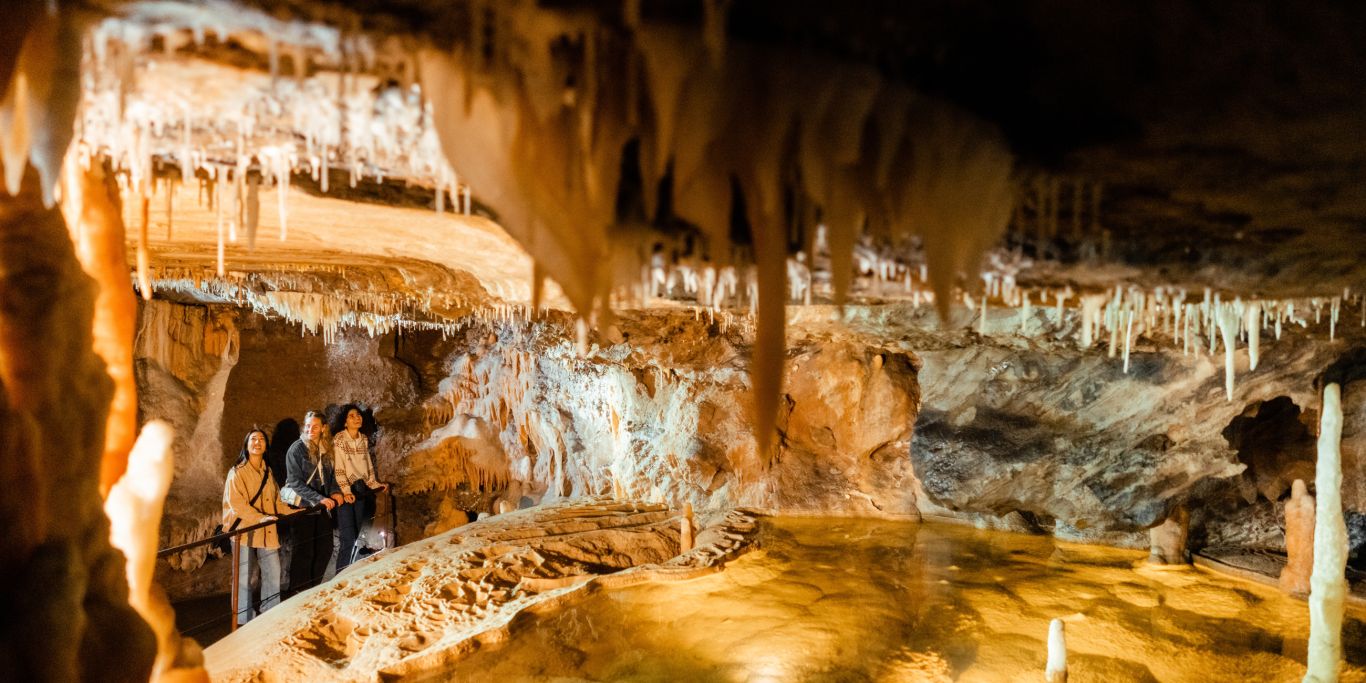
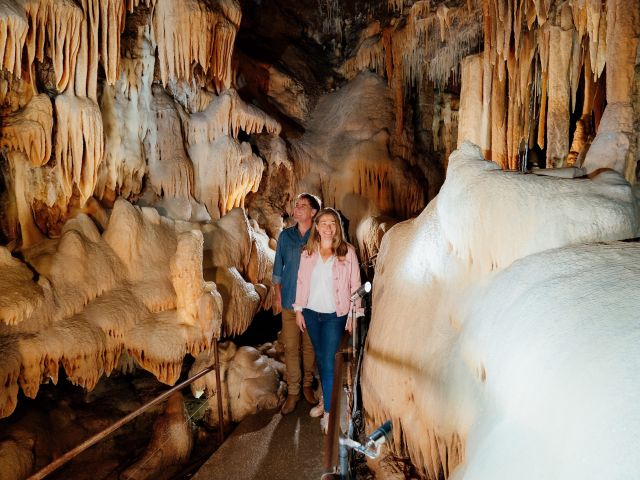
    In the pools of water, so still they could be mirrors, the reflections of the stalactites make these limestone towers seem even taller. Almost 400 million years ago, an underground river carved through the rock to create the Buchan Caves. Now, artworks created by dripping water adorn these subterranean galleries: stalactites hanging from the ceiling, pillars connecting some to the ground, even curtain-like wave formations clinging to the stone.

    Caves House
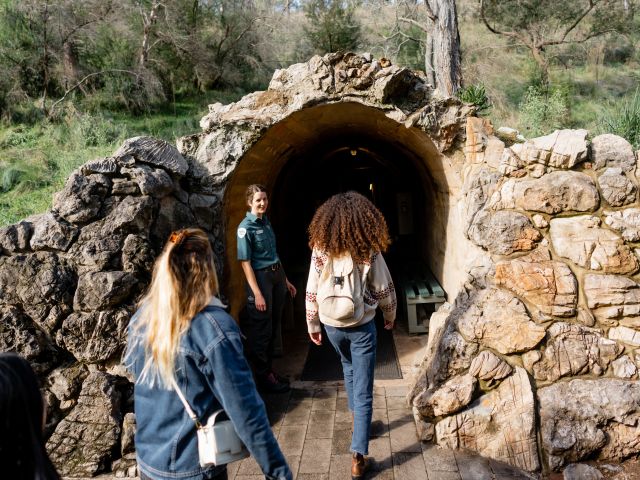
    Visit the caves for the day or stay onsite in the campground or at the self-contained Caves House. (Image: Ben Savage)

    “This is called the Fairy Cave because it’s full of fairy dust,” a guide tells visitors as they enter a cavern glittering with “calcite that’s solidified into thousands of tiny little diamond shapes”.  Buchan Caves is Victoria’s largest cave system, but Fairy Cave is a highlight and, along with nearby Royal Cave, is accessible only by tour. Naturally cold, naturally dark, these caverns deep below the surface light up as the local experts tell their stories. 

    couple walking in cave
    You’ll need to book a guided tour to see the caves. (Image: Tourism Australia)

    Among the hundreds of caves, some can be easily accessed from the surface. For instance, a casual stroll along the FJ Wilson Interpreted Walk, as kangaroos watch on from beneath acacia trees, leads into the 400-metre-long Federal Cave and its natural steps of white limestone. A slightly longer track, the Granite Pools Walk heads through soaring forest down into moss-covered gullies where the calls of lyrebirds trill through the leaves. 

    A quick history lesson on Buchan Caves 

    Buchan Caves
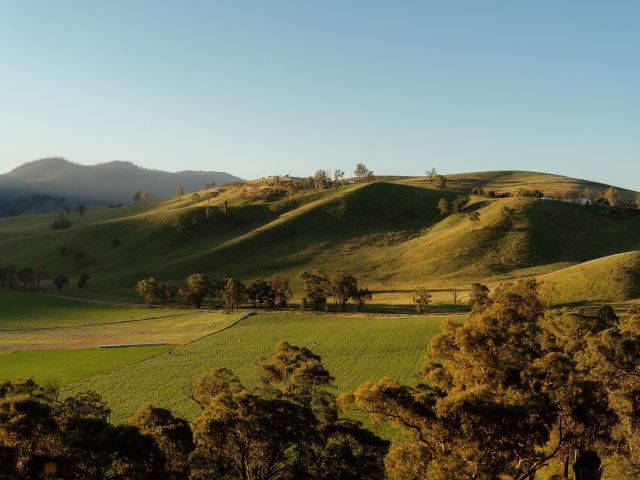
    Buchan Caves are a must-visit attraction in Gippsland. (Image: Tourism Australia)

    Among the geology and the nature are millennia of history. This part of East Gippsland connects the high country to the coast and was long a place of refuge for the local Gunaikurnai people on seasonal migrations to the mountains. Archaeological studies show humans lived here up to 18,000 years ago, with artefacts such as small stone tools found around the site. But not too far into the caverns – oh no! The Gunaikurnai didn’t dare venture deep into the dark at Buchan Caves, telling stories they were inhabited by gnome-like nyols (small grey-skinned creatures that could steal memories). 

    Buchan Caves Hotel
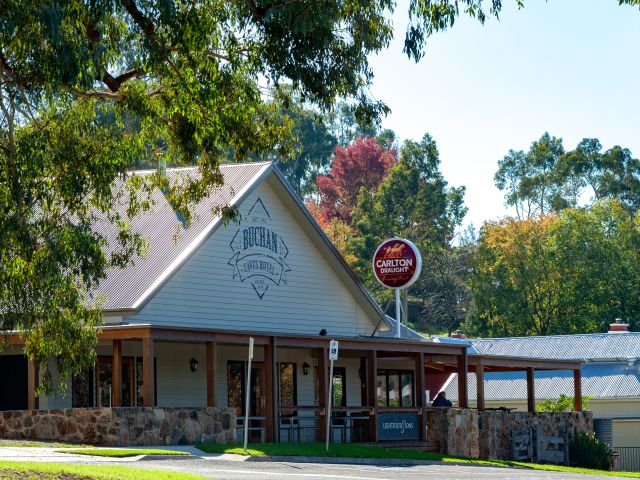
    The Buchan Caves Hotel was rebuilt after burning down in 2014. (Image: Jess Shapiro)

    By the early 1900s, more people had started to hear about these incredible caves and so the Moon family set up home at the site and started to run tours below ground for intrepid visitors. More than a century later, their historic residence is available as accommodation, with the three-bedroom house sleeping up to eight people and now equipped with modern amenities the Moons could only have dreamt of. 

    But whether you stay overnight or just spend the day here, it’s worth taking your time to explore more than just the main caves, to get a deeper understanding of one of Victoria’s fascinating geological attractions.