7 of Australia’s quirkiest towns

hero media
From underground houses to UFO hotspots, here are Australia’s quirkiest towns.

1. Coober Pedy, SA

Laying its claim to being the Opal Capital of the World, the Hollywood of the Outback and a place of extreme temperatures, the reason for which most of its locals live underground, the tiny outback town of Coober Pedy is indeed one of the country’s most unusual places.


The reason behind the town’s moniker – an Aboriginal term for ‘white man in a hole’ – the famous Coober Pedy dugouts were introduced by opal mining pioneers in the early 20th century to escape the heat. More than half of the town’s homes are found underground, as well as the four-star Desert Cave Hotel , a campsite and a Siberian Orthodox church.


With the majority of the world’s opals found in Coober Pedy’s 70 opal fields, visitors can try their hand at ‘noodling’ – digging for opal by hand – or tour a working mine. The town is also home to a desert golf course that is open at night, one of the country’s last surviving drive-in movie theatres , and has been the setting for many a movie including Mad Max Beyond the Thunderdome and Priscilla Queen of the Desert.
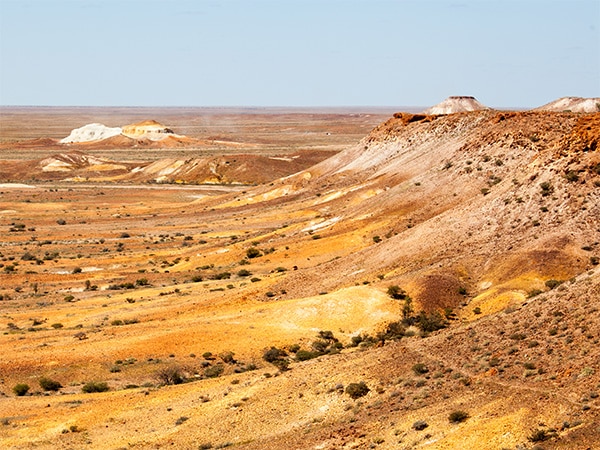
Coober Pedy is indeed one of the country’s most unusual places

2. Nimbin, NSW

This sleepy village 70 kilometres west of Byron Bay is infamous for its, er, liberal lifestyle. The psychedelic town was thrown into the spotlight when it hosted the 1973 Aquarius Festival, Australia’s version of Woodstock, and it hasn’t shaken this carefree, counter-culture, peace-loving guise ever since.


A wander down the main street is like stepping into an alternate universe. You’ll find myriad wellbeing services from yoga and acupuncture to shamans and psychics ; a thriving arts and culture scene of art galleries, street art and buskers; a host of organic/vegan/vegetarian/sustainable food options; and some businesses that specialise in… let’s just say alternative medicinal products.

3. Wycliffe Well, NT

Who knew a remote town located 380 kilometres north of Alice Springs was considered the UFO Capital of Australia? After reading about sightings during World War 2, one man by the name of Lew Farkas purchased the local roadhouse and, after dropping a cool $4 million, created a gimmicky tourist attraction complete with kitsch UFO murals, spaceships, plastic green aliens and even (a now defunct) toy train.


There is a journal on display where visitors have recorded sightings such as colourful lights that move and change shape, descend behind trees and quickly disappear; even some of which have followed cars.


Sceptics put it all down to aircraft and weather phenomena (or a few too many schooners at the pub), while believers think it’s Wycliffe Well’s geographical location and intense energy that draws these unique visitors in. Others think there’s a link to the nearby US military intelligence base Pine Gap. Whatever the reason, there have been no abductions… as yet.
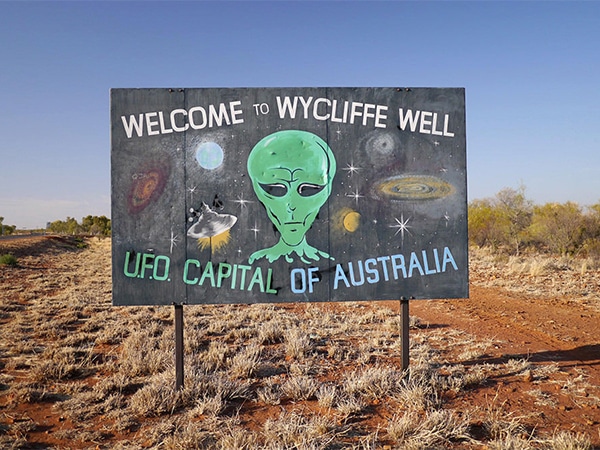
Have you considered the UFO capital of Australia?

Need tips, more detail or itinerary ideas tailored to you? Ask AT.

AI Prompt

4. Grindelwald, Tas

The locals in this Swiss-style settlement, 15 minutes north of Launceston, do not speak any Swiss-German nor do they have any Swiss heritage. In fact, this unique little town has no ties to Switzerland at all. The man who built it in 1989 simply did so for his wife who enjoyed a recent holiday to the scenic European country so much she wanted to relocate there. Next best thing? Build her a mini Switzerland closer to home… naturally.


The town possesses Swiss chalets and wooden farmhouses, and is surrounded by a lake and the rolling green hillsides of the Tamar Valley. There’s also the Tamar Valley Resort for those who want to stay in this little slice of Switzerland a little longer.

5. Birdsville, Queensland

Located more than 1500 kilometres west of Brisbane, the tiny town of Birdsville (Population: 115) bursts at the seams with visitors twice a year during two of the country’s most iconic events: The Birdsville Races and The Big Red Bash. Dubbed as the Melbourne Cup of the outback, the Birdsville Races is the second race meet of the Simpson Desert Racing Carnival, while the Big Red Bash is one of the world’s most remote music festivals.


While these extraordinary events have put Birdsville on the map, the red, dusty township has been a welcome respite for intrepid outback travellers for decades, many of whom stop in at the charming 1884-built Birdsville Hotel for an ice-cold beer and some pub grub. The pub’s sandstone walls are graced with memorabilia including the hats of locals, cloth insignia, stickers, road signs and flags. Visitors can also try a camel pie at the bakery and tackle the 40-metre Big Red Dune in the Simpson Desert while passing through.
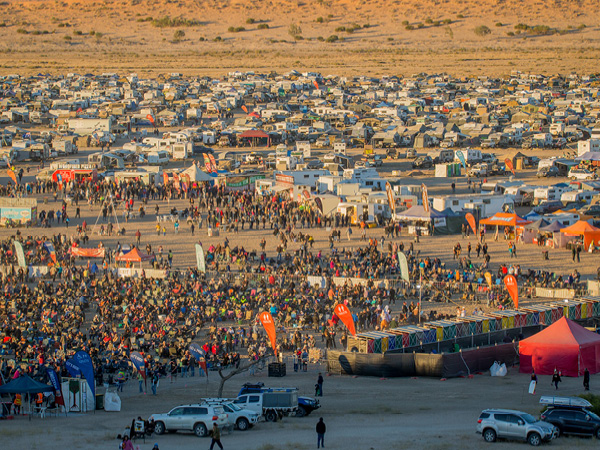
A birds eye view of the Big Red Bash Festival, Birdsville

6. Hahndorf, SA

Tucked in the Adelaide Hills, just a 30-minute drive from the city, Hahndorf is Australia’s oldest surviving German settlement. Its German history dates back to 1838, when 187 German Lutheran immigrants arrived after escaping persecution by the King of Prussia. Many of the 19th-century German farmhouses and timber frame buildings they constructed still stand today.


The charming European-style village boasts a number of specialty shops, including a leathersmith, knife shop, confectionary, cheese cellar, butcher, baker, and candlestick maker (for real). There are also many eateries where you can sample traditional German fare, including the German Arms Hotel : order a stein of German beer to enjoy with a schnitzel or trio of German wursts.
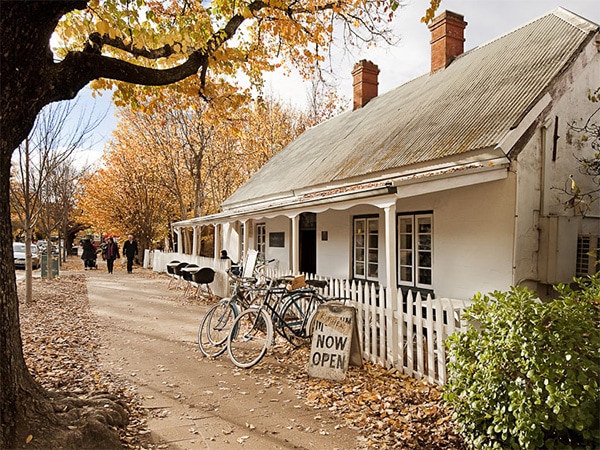
Hahndorf is Australia’s oldest surviving German settlement

Weekly travel news, experiences
insider tips, offers, and more.

7. Nain, WA

Located in Western Australia, 516 kilometres north of Perth, relatively unknown Nain is not actually an Australian town – it’s the capital of the Principality of Hutt River , Australia’s only Independent Sovereign State.


In 1970, the 7500-hectare wheat farm was seceded from Australia after its owner, the late Leonard George Casley (AKA His Royal Highness Prince Leonard the First), had disputes with the then state government over wheat quotas.


The Principality of Hutt River has its own currency, postage stamps and national anthem, and was – until January 2020 – open to tourists who would come to visit the museum, see the ‘royal art collection’, have their passport stamped, and to meet members of the royal family. The current monarch and son of Leonard, Prince Graeme Casley, made the decision to temporarily close its borders for financial reasons. Watch this space.

Megan Arkinstall
Megan Arkinstall is a freelance travel writer who you’ll often find at the beach, bushwalking or boating with her young family. She loves reliving travel memories through writing, whether that be sipping limoncello in a sun-drenched courtyard of Monterosso or swimming with green turtles in the aquamarine waters of Tropical North Queensland.
View profile and articles
hero media

8 ways to discover a new side of Port Stephens

    Kate Bettes Kate Bettes
    Aussies might think they know what Port Stephens is all about – but it’s time to take another look.

    You might’ve driven through this NSW coast town. Maybe even stopped for fish and chips or a quick dip. But spend a long weekend in the new Port Stephens , and you’ll seriously regret not doing it sooner. We’re talking treks across beaches, reef dives and up-close time with rescued koalas.

    All in all? It only takes a day before you see Port Stephens in a whole new light, and not much longer until it’s locked in as your favourite family destination.

    1. Stockton Sand Dunes

    Port Stephens incredible Stockton Sand Dunes are the largest moving sand mass in the Southern Hemisphere. They shift like an endless magic trick across the Worimi Conservation Lands , a 4200-hectare coastal co-managed by the Traditional Owners.

    Tear over them in a 4WD. Rev through valleys soft as melting ice cream on a quad. Carve down 30-metre slopes on a sandboard. However you choose to cross them, you’re guaranteed a seriously wild ride.

    Four rugged 4WDs kick up trails of golden dust as they charge across the sweeping desert landscape.
    Chase thrills across shifting sands. (Image: Destination NSW)

    2. Scale Tomaree Head Summit Walk

    A short climb through bushland opens up to the coastal drama of Tomaree Head . Spot Zenith, Wreck and Box Beaches. See the Fingal Island lighthouse and offshore rookeries where Australia’s rarest seabird, the Gould’s petrel, nests.

    History buffs can’t miss the WWII gun emplacements. And if you’re hiking between May and November, bring binoculars. Travelling whales might just be breaching below.

    Friends enjoying a scenic walk along the Tomaree Head Summit Walk in Tomaree National Park, Port Stephens.
    Climb Tomaree Head for jaw-dropping coastal views. (Image: Destination NSW)

    3. Watch out for whales

    You’ve seen the spouts of migrating humpbacks and southern right whales from shore. Set sail from Nelson Bay to see them up close. Cruise straight into the action, with tail-slaps, barrel rolls and all.

    And they’ve got competition from the local show-offs. Port Stephens bottlenose dolphins leap and play. Some tours even spot pudgy fur seals, spending lazy days soaking up the sun on Cabbage Tree Island.

    A whale’s tail on the sea’s surface.
    Watch for ocean tails. (Image: Destination NSW)

    4. Port Stephens Koala Sanctuary

    Pop into the Port Stephens Koala Sanctuary  to learn about the rescued koalas who climb, nap, snack and heal in this natural patch of bushland. Wander the immersive Sanctuary Story Walk to discover more about their habits, then head to the SKYwalk – a treetop platform constructed for spotting these eucalyptus-loving locals. Peek into the hospital’s viewing window, where sick or injured koalas may be resting in their recovery enclosures.

    Not enough time around these adorable marsupials? Stay overnight in silk-lined glamping tents.

    Koala sleeping in a tree at Port Stephens Koala Sanctuary, One Mile
    See koalas in their natural habitat. (Image: Destination NSW)

    5. Diving Port Stephens

    Port Stephens has some of NSW’s best dive spots. At Fly Point, float through sponge gardens and coral castles thick with nudibranchs (AKA sea slugs). Halifax Park has blue gropers and crimson-banded wrasse, while Shoal Bay’s seagrass meadows hide pipefish, cuttlefish and octopus.

    Accessible only by boat, Broughton Island is home to a vast array of marine (and bird) life. Snorkel with blue devilfish and stingrays at sites like The Looking Glass and North Rock. More experienced divers can head out with one of the many PADI-certified operators.

    At nearby Cabbage Tree Island, expect to see shaggy-faced wobbegongs cruising along.

    A couple suited up and ready to dive into adventure.
    Suit up and dive into Port Stephens’ vibrant marine life. (Image: Destination NSW)

    6. Irukandji Shark and Ray Encounters

    Not quite ready to dive in? Irukandji Shark and Ray Encounters is the perfect way to spot local marine life without getting too deep. But there’s no obnoxious glass tank tapping here. Instead, this interactive aquarium allows guests to wade into natural-style lagoons that mimic the real thing.

    Gently pat Port Jackson and bamboo sharks, hand-feed rays, and feel their sandpapery skin with your fingertips. It is all under expert guidance. If you want to go deeper, pop on a wetsuit and swim alongside tawny nurse sharks, white-tipped reef sharks and zebra sharks in the lagoon.

    Family enjoying an animal feeding experience at Irukandji Shark and Ray Encounters, Anna Bay.
    Meet the ocean’s friendliest faces at Irukandji. (Image: Destination NSW)

    7. Fish the estuaries

    Fishing fanatics will fall for Port Stephens hook, line and sinker. Here, one of the largest estuary systems in the whole state sees tidal rivers and mangrove ecosystems. Waterfronts are thick with oysters, and residential fish that might include anything from bream, whiting and flathead, to blue swimmer crabs, kingfish and longtail tuna.

    If you prefer to choose your own adventure and fish offshore, you can hire a boat from one of the marinas and set your own course.

    three men fishing on a boat in port stephens
    Join a tour or chart your own fishing trip. (Image: Destination NSW)

    8. Taste new Port Stephens flavours

    With plenty of activity to fill your days, refuelling on delectable cuisine becomes equally important. And Port Stephens answers the call.

    Pop into Holbert’s Oyster Farm for fresh-farmed Port Stephens rock oysters and Pacific oysters, Australian king and tiger prawns, as well as a variety of tasty sauces to try them with.

    Take a group to Atmos for an authentic Greek experience over large shared dishes and Greek-inspired cocktails. Or feast on sea-to-plate, modern Australian dishes at the pet-friendly Restaurant 2317.

    A plate of fresh oysters.
    Slurp your way through the region’s best oysters. (Image: Destination NSW)

    Start planning your Port Stephens getaway at portstephens.org.au .