There’s camping and there are the most beautiful places to camp in Australia. You can thank us later.
Personal butlers. Five-star dining. Drink umbrellas. There are a trillion-and-one ways to define luxury, but sometimes the best things in life are the simplest. Like when you find yourself alone on a beautiful beach. Or accidentally falling asleep in a hammock. Or when you’re so far into holiday mode, that you find yourself wandering around with no shoes on. And no make-up on. And maybe even no pants on.
With all that in mind, we’ve scoured the country for nature’s most luxurious spots: hidden hideaways and picture-perfect retreats just begging for you to pitch a tent in, boil the billy and get away from it all… hammock not included.
1. Lucky Bay, WA
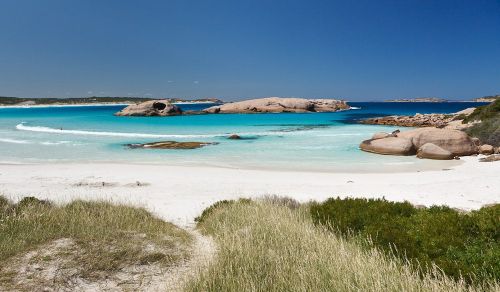
Forget paying top dollar to sit around an overcrowded resort: your own personal paradise awaits at Lucky Bay.
Situated almost on top of the beach, the campsite itself couldn’t offer more luxurious views: lush, turquoise waters lapping at gloriously white sand, a dramatic framing of rocky outcrops and beach-going kangaroos lazing about in the sunshine (yes, really)…
Swim, fish or bushwalk one of the many trails that wind through the park past freshwater pools, admire the dazzling blanket of wildflowers (if you happen to be there in spring), or just sit and wonder at the beauty of the natural world. Lucky Bay is just past Esperance in WA’s far south.
Contact: 08 9083 2100, dpaw.wa.gov.au
2. Mt Field National Park, TAS
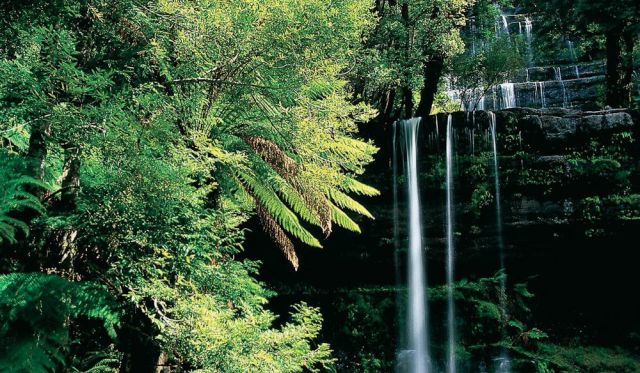
Tucked amongst the lush greenery of Tasmania’s oldest national park is a once-in-a-lifetime opportunity: to sleep outdoors under the careful watch of the ancient, elegant trees nearby.
Wake to the gentle sounds of nearby Tyenna River, wander through the giant fern forests (via the many walking trails), and take the time to walk to the magnificent Russell Falls – Tasmania’s most spectacular waterfall of all, and the perfect place to sit in quiet contemplation.
This pristine area is also home to an array of native species like yellow-tailed black cockatoos, crescent honey-eaters and green rosellas, so keep an eye out.
Found 65km northwest of Hobart, the tiny camp area has just 14 sites, so take your partner, some candles and enjoy the serenity. Electric barbecues and wheelchair access are available here, too.
Contact: 03 6288 1149, parks.tas.gov.au
3. Pondalowie Bay, SA
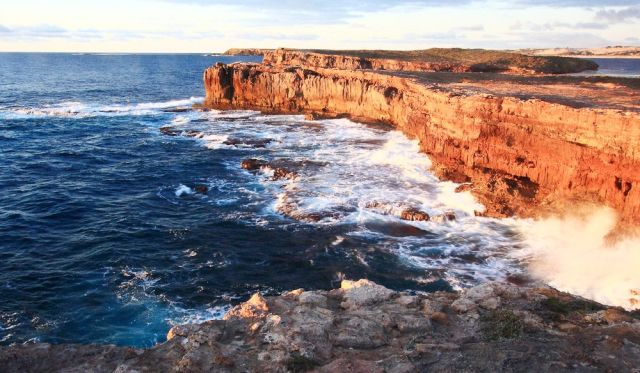
Sandwiched between rugged coastal views and mallee bushland on the southern tip of Yorke Peninsula in Innes National Park (four hours from Adelaide), this is a beachside playground for the whole family.
Pitch your tent, wander to the beach and jump in for a surf – the bay is especially renowned for its waves. There are also many good fishing spots and a shipwreck to check out, at nearby Ethel Beach.
Contact: 08 8854 3200, environment.sa.gov.au/parks
4. Green Patch, NSW
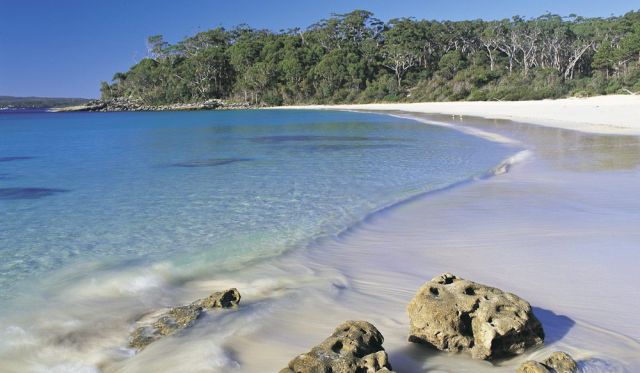
White sandy beaches, crystal clear water, kangaroos bounding in the distance… and you.
Situated in Booderee National Park in Jervis Bay on the New South Wales South Coast, Green Patch campsite is so beautiful that those in-the-know will book the place out months in advance – so get in early.
Once you’re there, the neighbouring beaches are perfect for swimming and sun-worshipping, while nearby bushwalking trails are perfect for discovering little picnic spots in the shade.
Bathrooms, hot showers and fresh water are all in ready supply, as are barbecues and wood fireplaces – so bring plenty of supplies for a barbie under the stars and a night time bonfire. And don’t forget the wine…
Contact: 02 4443 0977, environment.gov.au/parks/booderee
Need tips, more detail or itinerary ideas tailored to you? Ask AT.
AI Prompt
5. 1770, QLD
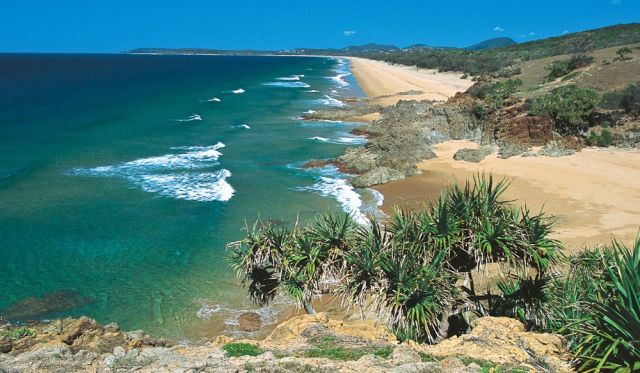
Tucked away in a secluded bay between sub-tropical forest and sparkling blue ocean, is Queensland’s best kept camping secret: 1770.
Soft sand meets lazy palm trees on the doorstep of the Great Barrier Reef here, and you can actually sleep right on the beachfront.
Diving, snorkelling, reef trips, beach walks, kayaking, canoeing, fishing and boat hire are all available options (especially good if you’ve brought the kids along!) – or just grab a rug, find a secluded spot, and spend your days enjoying the gentle breeze while you read a good book.
1770 is about 125 kilometres north of Bundaberg.
Contact: 07 4974 9286, 1770campingground.com.au
6. Johanna Beach, VIC
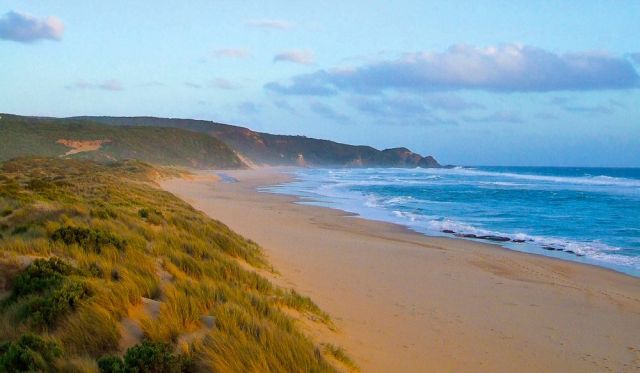
If you fantasise about falling asleep each night to the soundtrack of waves, then this is the place for you.
Camping at Johanna Beach isn’t just picturesque, it’s world-class-stunning: just as you’d expect of a spot that’s part of the Great Ocean Road coastline.
Literally right on the beachfront, this little secret is tucked away just past Apollo Bay in Victoria’s Great Otway National Park – a relatively easy (and scenic) drive from Melbourne.
Pack your cozzies, toss in a sarong and don’t forget the drinking water – there isn’t easy access to any here.
Kids and doggies are welcome – and if you do bring them along, there are several nearby trails meandering past heathland, wildflowers and awesome sea views that they can burn their energy on. Fishing and surfing are also good here.
Contact: 03 8627 4700, parkweb.vic.gov.au
7. Red Cliff, NSW
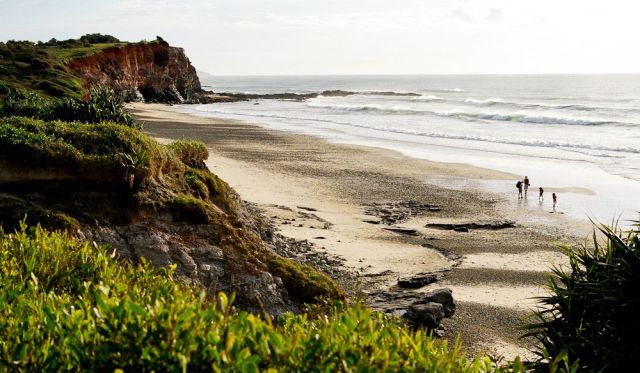
True to its name, Red Cliff campground takes in panoramic views of isolated beaches bordered by rich red cliffs, rocky outcrops and surf.
Perched on the northern coastline of Yuraygir National Park, about 150 kilometres south of Byron Bay near Brooms Head, this private pocket of paradise attracts many birds and kangaroos – but not so many people.
Take in views like this one (below) on one of many nearby walks, head to the beach for a swim, or wander on over to neighbouring Lake Arragan: it’s a great spot for canoeing, swimming, fishing and bird-watching… What more do you need?
Contact: 02 6641 1500, nationalparks.nsw.gov.au
8. Younghusband, SA
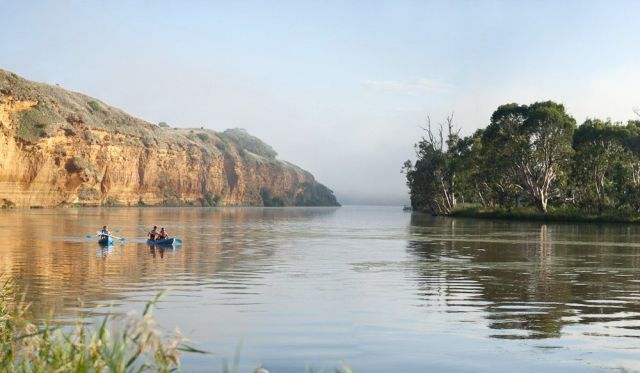
Amidst a scattered of gum trees and scenic bushland you’ll find Younghusband: a tiny, picturesque area offering serene and beautiful spots to sleep under the stars along the grassy stretches that border the Murray River.
Mild weather, classic Australian scenery and spectacular sunsets are three reasons to come camp here – but they’re not the only ones.
You can kayak along the river and nearby creeks, go fishing for your dinner, and spend your arvos snoozing in the afternoon shade while listening to the prolific birdlife.
There’s no caravan access or amenities, but that’s part of the charm.
Pitch a tent or roll out a swag anywhere that isn’t marked as private property and snuggle up under the silence of the stars with a crackling fire for company. Ahh, serenity…
Contact: 08 8363 6244, murrayriver.com.au/younghusband
Weekly travel news, experiences
insider tips, offers, and more.
9. Ormiston Gorge, NT
Rugged scenery, gumtree-lined river banks and dramatic rocky cliffs: that’s what this camping area offers, located close to its renowned namesake (that’d be the Ormiston Gorge) in the West MacDonnell Ranges. Wander the area on foot with many nearby hiking trails – like the easy 40-minute Ghost Gum Lookout walk, which finishes at a breathtaking viewing platform, or the four-hour Ormiston Pound Walk – part of the Larapinta Trail.
Then cool off at the campground’s fresh waterhole, which is ideal for swimming and attracts plenty of wildlife year-round. You can also expect bathrooms and barbecues, although there’s limited drinking water – so come prepared!
Contact: 1800 645 199, or find more info on Ormiston Gorge here
10. Kurrajong camping area, WA
Situated in the Kimberley’s spectacular Bungle Bungle Range in Purnululu National Park, Kurrajong is surrounded by the area’s trademark orange and black beehive-like mounds.
Soak up jaw-dropping views of this dramatic outback landscape and check out many picturesque walks and waterholes such as Echidna Chasm and Mini Palms Gorge.
And although the camp ground features its own sunset lookout, we suggest taking a helicopter flight across the park for the best views (flights run regularly).
However Kurrajong’s impossibly stunning and remote location comes at a price – it can only be accessed by 4WD and although there are some basic facilities, be sure to carry all food and drinking water.
You can also stay further north at the Walardi Campground.
Contact: 08 9168 4200, parkstay.dpaw.wa.gov.au/
11. Karlu Karlu / Devils Marbles Conservation Reserve, NT
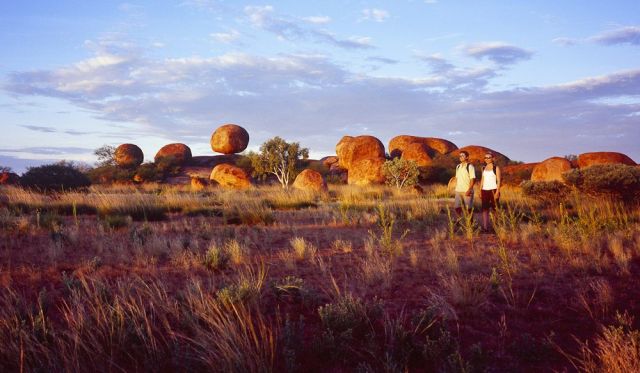
Spend a night or three here, and you’ll enjoy unparalleled views of one of Australia’s most extraordinary natural attraction: the Devils Marbles.
These huge, granite boulders scattered across a dramatic ocre landscape set the scene for the ultimate desert romance. You’re almost guaranteed to fall in love with the colours, sights and gentle solitude of the area.
You’ll need to bring your own drinking water, as well as firewood to kindle evening flames – the area cools down at night.
Don’t forget a camera to catch the extraordinary beauty of sunrise and sunset, too.
The camping area is situated at the southern end of the Karlu Karlu Reserve.
Contact: 08 8999 5511, nretas.nt.gov.au/national-parks-and-reserves
Want to see more stories from Australian Traveller in your Google search results?
- Click here to set Australian Traveller as a preferred source.
- Tick the box next to "Australian Traveller". That's it.

Editor
View profile and articles