The incredible story behind the tiny Broken Hill Mosque

hero media
The astonishing story of Broken Hill’s tiny cameleer mosque spans the outback, oceans and generations, as Steve Madgwick discovers.

You won’t see fleets of grey nomads parked outside the curious brown corrugated shed at the end of a palm-flanked gravel driveway on the petering northern fringes of Broken Hill. Perhaps because the outback-spanning sagas that radiated from Broken Hill Mosque mostly fell outside the white-settler ‘Aussie’ narrative, lucky to receive even a cursory mention in our highschool history lessons. 

The Broken Hill Mosque Museum is located on the corner of Williams and Buck streets. To see inside the museum, you have to contact 82-year-old curator and caretaker Amanullah Shamroze. Bobby, as he’s been called for as long as he can remember, unlocks the door and, in doing so, unshackles the story of Broken Hill’s ‘Afghan’ cameleers. 
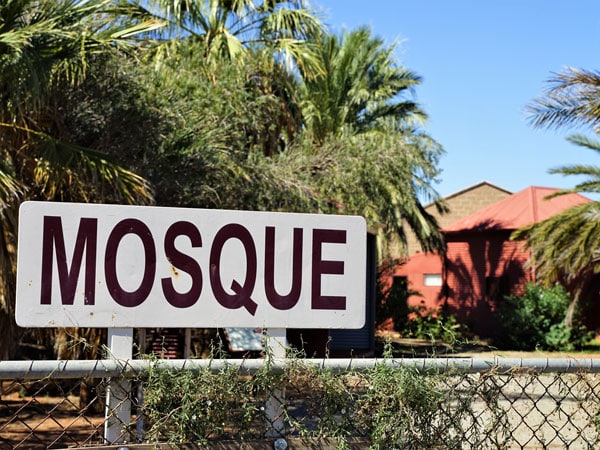
the outside signage of the Broken Hill Mosque
The mosque was built in 1891. (Image: Steve Madgwick)

The son and grandson of outback-building camel drivers, Bobby’s insight is rare and precious indeed. From the 1860s, the cameleers and their camels were shipped into Australia’s interior from India, Afghanistan and beyond. They became the backbone of the pre-railway outback transportation network, playing under-rewarded roles in building continent-traversing projects such as the Trans-Australian Railway and the Adelaide to Darwin Overland Telegraph Line.
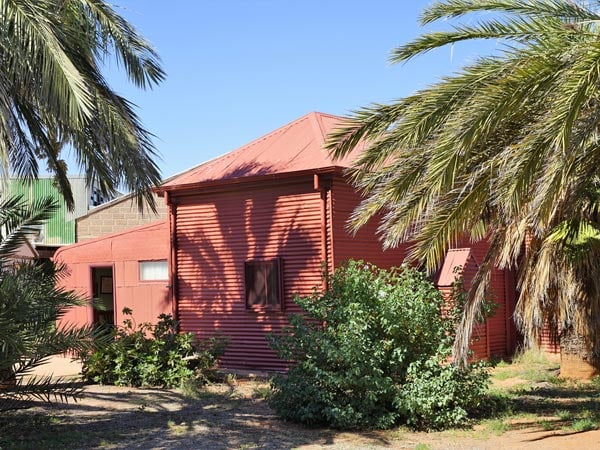
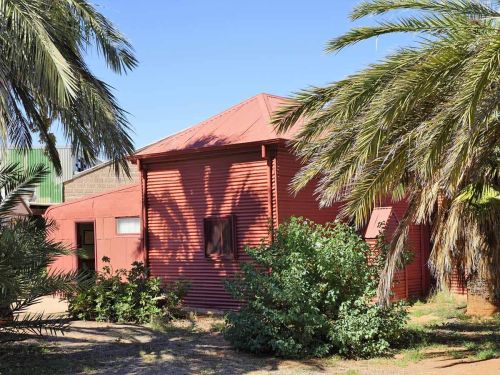
the exterior of Broken Hill Mosque
The mosque functions as a museum. (Image: Steve Madgwick)

The story behind the ‘Afghan Mosque’

The ‘Afghan Mosque’ was considered the spiritual hub of the cameleer camp that mushroomed on Broken Hill’s peripheries, just as the frontier town in far-western NSW was establishing itself as a key outpost in the crossroads of outback Australia. Because the cameleers lived on the fringes of society, however, the facts of their stories have been bent and stretched by time. 

“Some say the mosque was built in 1883, others say 1887, and I’ve also heard 1891, too," says Bobby of Australia’s oldest surviving ‘Ghan-town’ mosque. “I’m not quite sure, but it’s somewhere between those figures." 

Outside stands a vintage camel-drawn wagon, the semitrailer of its day, which may have even hauled the mosque’s corrugated iron inland from the coast. Past a small channel for ceremonial feet washing, a memorabilia-rich antechamber leads into the prayer room, with its faded mint-green pressed-metal walls, two rows of prayer mats and pair of Qurans resting on ornate wooden stands.
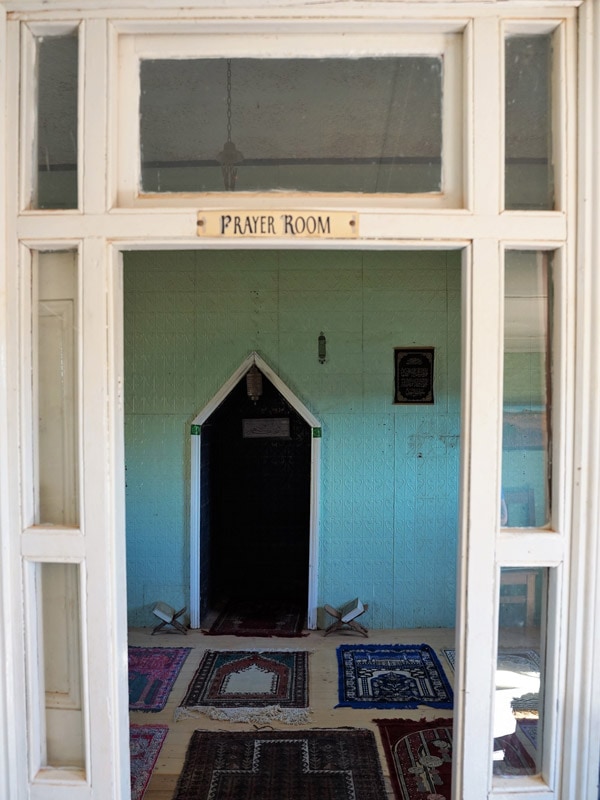
the door leading to the prayer room inside Broken Hill Mosque
The Prayer Room offers insights into Broken Hill history. (Image: Steve Madgwick)

Pioneer worshippers

Bobby’s father, Shamroze Khan, and grandfather, Fazulla Ziadulla, worshipped here. But the rest of their wayfaring lives are hard to pin down. “Strangely, Dad never ever said where he actually came from, never mentioned any family. Even my grandfather said nothing about him really." 

Bobby knows more about Grandpa’s story. Among surviving black-and-white photographs is one showing Fazulla outside his old house in the Punjab city of (then) Campbellpur, India (which became Attock, Pakistan, after the 1947 partition). He has been told that his father and grandpa came out together to Australia, but Bobby believes they arrived on different ships. 
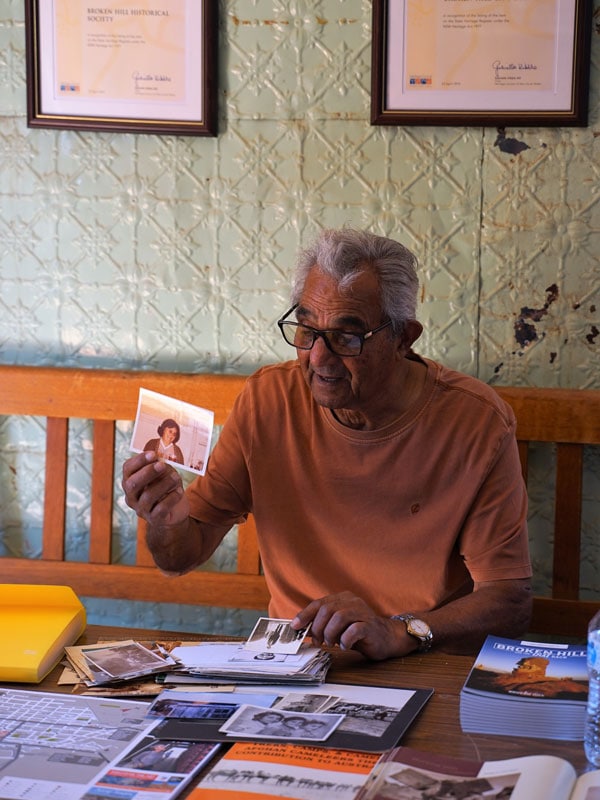
Bobby (Amanullah) Shamroze sharing the photos of his life
Bobby (Amanullah) Shamroze shares snapshots of his storied life. (Image: Steve Madgwick)

Grandpa’s boat apparently docked in Fremantle, while his father’s first stop was either Port Pirie, South Australia, or Port Albert, Victoria. “It must have been [Dad’s] first stop because he [met] his first woman down there. She was a governess, apparently, at some property. They must have got on together and took off together." 

Bobby’s father would buy camels “off the boat" in Port Augusta and then walk them 400 kilometres east to Broken Hill. “There was no other way to get them there. When they were building the railway line between Port Augusta and Marree [SA], he and a team carted all the water and shifted the camps."
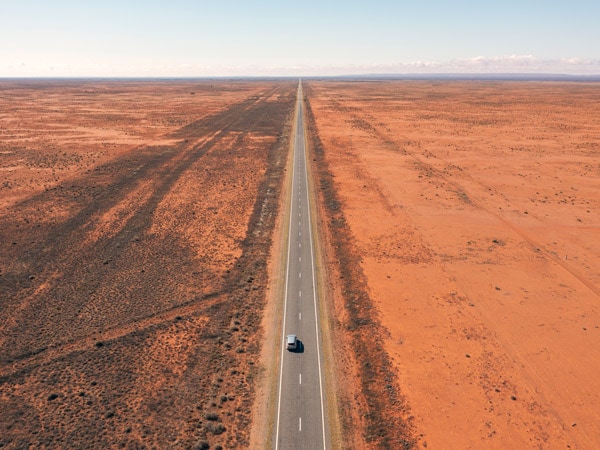
an aerial shot of a vehicle driving in the outback near Broken Hill
Broken Hill is home to some of Australia’s toughest terrain. (Image: Destination NSW)

His dad apparently stashed enough cash as a camel dealer to buy “seven or eight houses" in Broken Hill “back when you could get one for 200 pounds." But Bobby didn’t fare so well, especially after his mum left when he was just four. He blames his parents’ split on the age difference: 62 (dad) versus 24 (mum) when Bobby was born.

“It was a bit rough after Mum went. I ran away a few times. When I was seven or eight, I jumped on the train to Adelaide to look for Mum. I’d been down there with my father visiting the Adelaide Mosque. You could go for a month and no one would worry about you. Not like today. And I’d always have a couple of bob on me, to buy a pie or something."
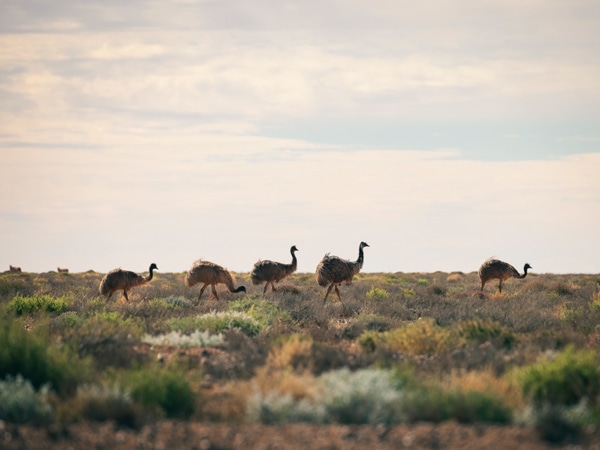
a parade of emus in Broken Hill
Emus on parade in Broken Hill. (Image: Destination NSW)

The rise of cameleers in town 

Bobby bounced around for a while, sporadically staying with his mum (who he found working in a pub) and going to school in Adelaide. When his dad died in 1950, “welfare grabbed him", before a relative eventually helped Bobby return to Broken Hill.

He lived with his grandfather briefly, before becoming a shearer and wool-presser out on a remote station, settling back into ‘the Hill’ in the mid-1960s with life partner Janet, lured by work in the mines.
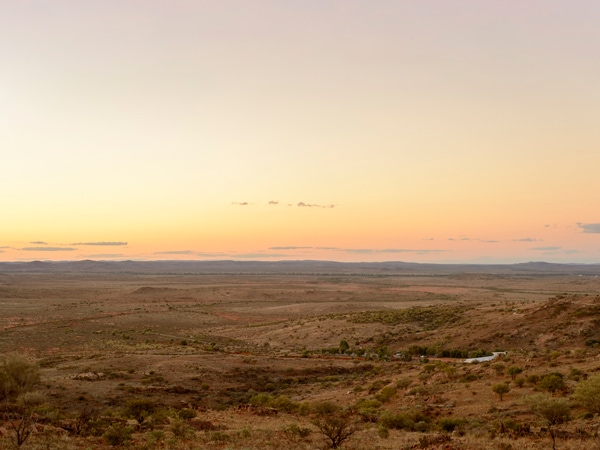
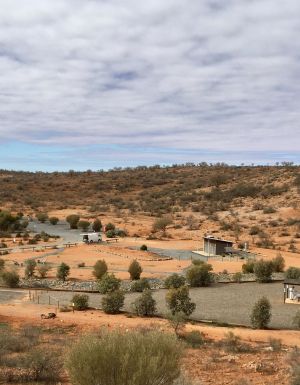
views across the outback desert, Broken Hill
There were about 400 cameleers living in Broken Hill in the early 1900s. (Image: Destination NSW)

After four decades as a place of worship, the mosque began to lose its worshippers in the late 1920s, as trains and trucks made camel transport redundant. Of the estimated 100 cameleers in town, many returned to the subcontinent, while others found work on stations, as tradesmen or in the mines (as Bobby’s dad and grandpa also did). 

After Broken Hill’s last practicing Muslim passed away, the mosque became little more than a cubbyhouse for local kids, eventually “rescued" by the Broken Hill Historical Society in and made into a museum a year later. Bobby agreed to be its custodian 12 years ago, under the condition that “they do a few things", such as putting up fences around the property.
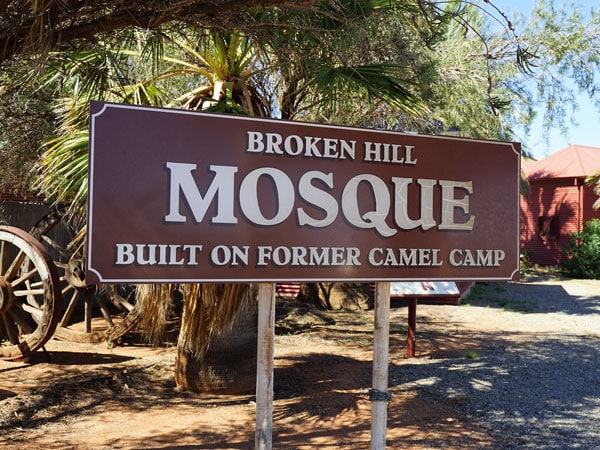
a signage saying Broken Hill Mosque was a former camel camp
The Broken Hill Mosque is built on a former camel camp. (Image: Steve Madgwick)

A familial connection with the mosque 

“There was no one left to do it, and I’d collected a lot of information. But since then, I’ve had three operations so they’re worrying about me dying." Bobby’s connection with the mosque has always been more familial than spiritual. “I’m a ‘bush Baptist’. When I was in the boys’ home, I went to a different church every week. I don’t even follow the language, but I’m here to keep the history and try to get a bit of a name for the old camel drivers who worked this country." 

Bobby’s brother and sister are gone now, and he’s “outlived" his mum’s family, too. He’s willing to pass on the mosque responsibilities to any of his three children or seven grandchildren but “only if they want to do it". 

For now, every time Bobby gets a call from a visitor or occasionally someone wanting to pray, the octogenarian travels the couple of kilometres from home to retell his stories, to the best of his recollection. He holds the photo of Grandpa close to him; a window into the indistinct past, and a tactile memory that might just help “keep the cameleer legacy alive for another generation." 

hero media

8 Thredbo hiking experiences you can only have in summer

Thredbo in summer is a nature lover’s dream of show-stopping alpine beauty, cool mountain air and magical moonlit adventure.

For many of us, Thredbo calls to mind shimmering slopes and snow-dusted gums, but come summer, this Alpine resort transforms into a playground of an entirely different kind. A cool mountain retreat despite the season, Thredbo summer hikes are astonishingly beautiful, criss-crossing over dramatic peaks, pristine glacial lakes and abundant flora and fauna.

From approachable tracks for novice walkers to more challenging hikes across the Main Range and even journeys under moonlight, Thredbo puts on an unforgettable show of natural splendour all summer. Lace up your walking boots and take the chairlift from Thredbo village to embark on a self-guided exploration or a tour of the Snowy Mountains’ most compelling landscapes.

These eight unforgettable hiking experiences are only available in summer and offer an alpine adventure like you’ve never experienced before.

1. Full Moon Hike to Mt Kosciuszko

Full Moon Hike to Mt Kosciuszko
Stand atop Mt Kosciuszko at full moon.

There’s something almost mystical about hiking by the light of a full moon. This guided experience begins with a 15-minute chairlift ride, where you’ll admire the Thredbo Valley below, bathed in the fading sun.

Once at the top, you’ll pass rivers, alpine lakes and spot nocturnal wildlife on your way to the Kosciuszko Lookout and Lake Cootapatamba. By the time you reach the summit, sunset is well underway as you watch day give way to night and the alpine landscape magically illuminated by the lunar glow. Enjoy a hot chocolate here before following the path back to Eagles Nest, brightened by the night sky.

This 13-kilometre hike will take place on 3 January, 2 February, and 2 April in 2026.

2. Super Full Moon Hike

Super Full Moon Hike in thredbo
Take in the might of a super full moon.

The only thing that could level up the celestial beauty of a full moon hike would be a super full moon hike . Following the same route, you’ll meet the moon when it is largest and closest to Earth by ascending to the summit of Mount Kosciuszko at an elevation of 2228 metres. From such a height, it almost feels as though you could reach out and touch its glowing surface.

Given the rarity and splendour of the super full moon, limited spots fill up fast for this awe-inspiring hike, so be sure to book the 5 December in advance.

3. Lunar Eclipse Hike

Thredbo Lunar Eclipse Hike
See dazzling celestial displays.

What could be more extraordinary than witnessing a lunar eclipse from Australia’s highest peak? Whether you’re a keen astronomer or simply revel in nature’s beauty, this guided 13-kilometre hike will place you on top of Mount Kosciuszko just as Earth passes between the sun and moon, throwing shade over the lunar surface before transforming it with a deep-red hue.

It’s an epic place to witness one of our galaxy’s most spectacular and rare light shows. Apart from the dazzling celestial display, you’ll also enjoy walking through the moon-bathed landscape, an evening chairlift ride, and a hot chocolate at the summit.

Book now for 3 March.

4. New Moon Hike

New Moon Hike Mt Kosciuszko
Catch the changing skies of a new moon.

A stargazer’s delight, the darkness of a new moon gives the Milky Way full permission to dazzle with its shimmering display. Both astronomers and photographers will relish this opportunity to observe and capture the starry skyscape from the lofty height of Australia’s highest peak, Mount Kosciuszko. Departing Thredbo Village at dusk and leaving its twinkling lights far below, you’ll arrive at the summit in time to see the sun slip away and the stars appear.

Catch this hike during the new moon lunar phase on 20 December, 19 January, 17 February, 19 March or 17 April.

5. Thredbo River Track

Thredbo River Track
Take yourself along the Thredbo River Track.

Embark on a gentle entry into the Snowy Mountain scenery with an amble along the Thredbo River. This self-guided hike hugs the river and wanders along the valley floor, revealing snow gum forests, swimming holes and little waterfalls that make for revitalising cold plunges in the summer heat.

6. Merritts Nature Track

Merritts Nature Track thredbo summer hikes
Stop at swimming holes along the way.

On warm summer days, venturing into the cooler air of Thredbo’s alpine tracks offers relief from the heat. Particularly if you set course for the four-kilometre Merritts Nature Track , where there are opportunities to take a refreshing dip in swimming holes along the way.

The two-to-three-hour self-guided hike meanders through towering ancient trees (dubbed the ‘Pixie Forest’ by locals), takes in stunning mountain vistas and is soundtracked by the melody of birdsong. Stop for a picnic and discover a hidden natural infinity pool, the location of which is given away by the roar of a cascading waterfall.

7. Mt Kosciuszko Summit Tour

Follow a guide along Mt Kosciuszko's summit.
Follow a guide along Mt Kosciuszko’s summit.

While you can easily steer yourself to Australia’s most iconic peak without a guide, following an expert guide to the summit of Mount Kosciuszko will colour your experience with a deeper knowledge of the landscape and its wild inhabitants. The 13-kilometre return trail puts the alpine scenery on display with 360-degree views from the highest spot in the country.

The walk begins at the top of the Kosciuszko Chairlift and takes around four to six hours to complete, but is gentle enough to be embarked upon by all ages.

8. Snowies Alpine Walk Experience

Snowies Alpine Walk Experience
Join a two- or three-day experience along Snowies Alpine Walk.

If you’re looking to truly untether from daily life and embark on a real immersion in Thredbo’s stunning alpine scenery, pack your hiking boots for the newest multi-day walk in the mountains. The Snowies Alpine Walk can be tackled over two or three days and includes nightly accommodation in the iconic Thredbo Alpine Hotel, daily buffet breakfast, packed lunch and dinner vouchers, plus daily transfers to and from trail heads in a brand-new Defender.

The two-day experience covers 24 kilometres, while the three-day experience almost doubles that at 44 kilometres. Along the way, explore barely trod landscapes, vast high-country plains and uplifting mountain horizons.

Discover the full offering of summer hikes in Thredbo at thredbo.com.au.