hero media

The best beaches and swimming spots in Wollongong and the Illawarra

Credit: Destination NSW

There are a lot of great places to swim in Wollongong, making it one of NSW’s greatest seaside cities

From sun-drenched sea pools to long, sandy beaches where you can surf or swim under a wide-open sky, here is the ultimate guide to the best beaches and swimming spots in Wollongong and the Illawarra.

In short

Choose Windang Beach for the win if you are in Wollongong with the family. Set at the entrance to Lake Illawarra, this gentle curve of sand is backed by a large grassy foreshore with playgrounds, barbecues and shaded picnic areas. Families can also pitch their tent at Windang Beach Tourist Park, one of the best places to camp in Wollongong.

Austinmer Beach
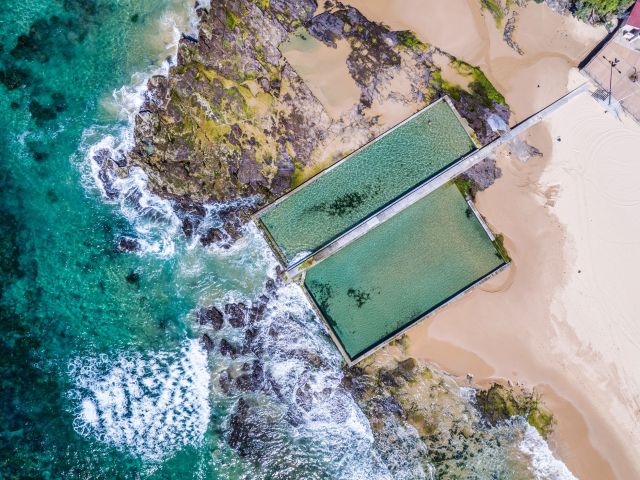
twin pools at Austinmer Beach
Two rock pools sit at the end of Austinmer Beach. (Credit: Destination NSW)

Best for: Families looking for patrolled beaches and dog owners drawn to the off-leash Little Austinmer Beach

This compact stretch of sand is bracketed between two headlands, giving it a sheltered, village-like feel. The beach is patrolled during summer, and there are two rock pools for those looking for a chill swim. When you’re done, wander up to the Headlands Austinmer Beach hotel for a well-earned brew with a view. It’s a great local pub and one we’ve featured in our best bars and pubs in Wollongong guide.

Coledale Beach
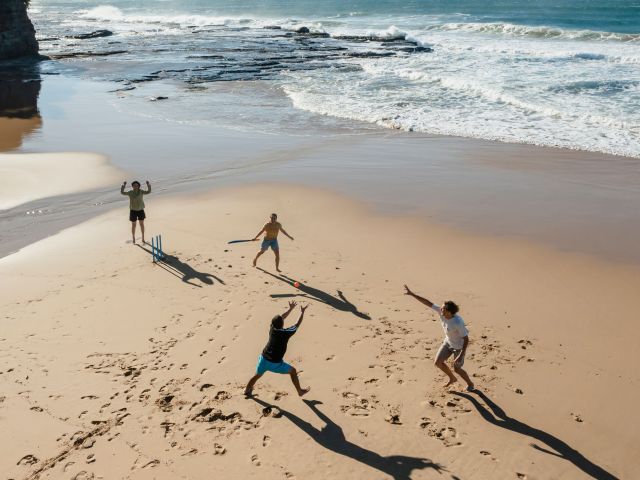
beach cricket on Coledale Beach
Coledale Beach is a popular spot with families. (Credit: Destination NSW)

Best for: Families who want the option to pull the pin if things go pear-shaped

Patrolled year-round, Coledale Beach ranks as one of the most versatile Wollongong swim spots. Families set up here to play Frisbee and French cricket. The small campground at the southern end of the beach has views of the crashing waves, which adds to the holiday feel. The beach is a popular spot for surfers as it offers consistent right and left-hand breaks. It’s also home to Rosie’s one of the best places for fish and chips in Australia.

Thirroul Beach
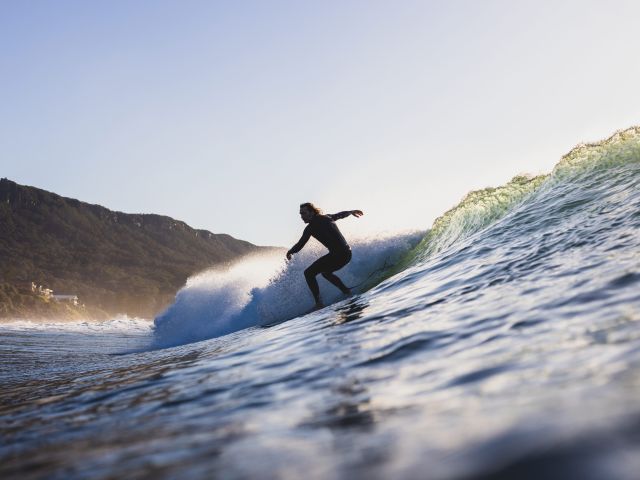
surfing at Thirroul
Hit the waves at Thirroul Beach. (Credit: Destination NSW)

Best for: Surfers, lap swimmers and holidaymakers flitting between the beach and the local cafes

The wind-whipped one-kilometre-long Thirroul Beach picks up swell from most directions. It’s a popular spot for surfers and day-trippers from Sydney who set up camp near the sandy seafront and make the most of a day dipping in and out of the sea. Swimmers gravitate to the Art Deco Olympic Pool, built in the 1930s, where backstroke laps come with uninterrupted views of the Illawarra Escarpment.

Need tips, more detail or itinerary ideas tailored to you? Ask AT.

AI Prompt

Windang Beach

Best for: Young families and picnickers

Windang Beach is where Lake Illawarra meets the sea. This gentle curve of sand at the entrance to Lake Illawarra, some 15 kilometres south of Wollongong’s CBD, is a popular spot with families. There is a large foreshore park with a playground, barbecues, and covered picnic areas. The beach also has great views over the famous Five Islands off the Wollongong coastline. It’s one of the best places to swim in Wollongong on a sunny day.

Stanwell Park Beach
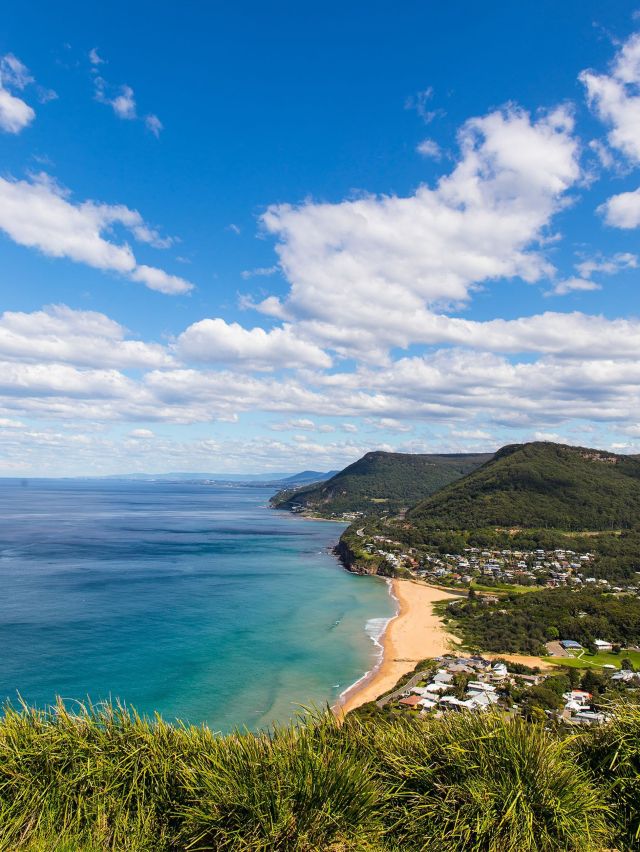
the Stanwell Park Beach from above
Sweeping views over Stanwell Park Beach. (Credit: Destination NSW)

Best for: Families who want space and seasoned surfers

Stanwell Tops is well known as a place for hang-gliding and paragliding. Take in the views from Lawrence Hargrave Lookout, which offers panoramic views of the coastline, before corkscrewing down to the base of the cliffs. That’s where you will find Stanwell Park Beach, a sheltered cove popular with families who cluster near the barbecues in the park. The scenic Wollongong swim spot is also popular with surfers due to the shifting beach break that works best in an east or northeast swell.

Sandon Point
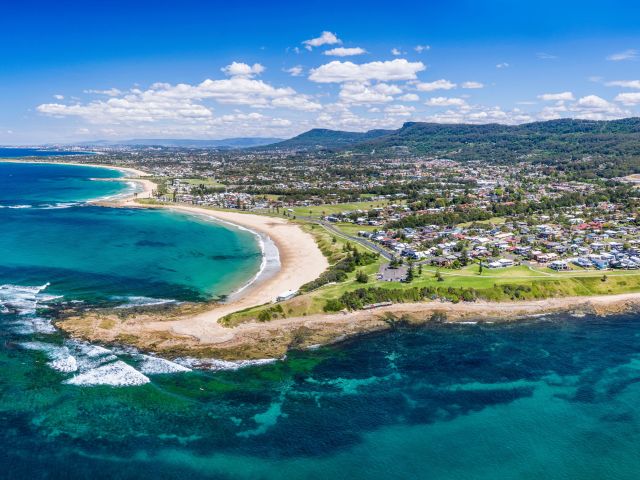
Sandon Point, Bulli from above
This surf haven stretches 900 metres between Bulli and Waniora points. (Credit: Destination NSW)

Best for:  Surfers – both first-timers learning to surf and experienced swell chasers

Sandon Point is an exposed point break prized for its clean, consistent waves, particularly through winter. When the swell eases, micro grommets beeline into the shallows at Sandon, often guided onto their first waves by the instructors at Happy Days Surf School or Pines Surfing Academy. It’s one of the best things to do in Wollongong. The beach sweeps for 900 metres between Bulli and Waniora points, so there’s plenty of space for swimmers to spread out on busy days.

Wollongong City Beach
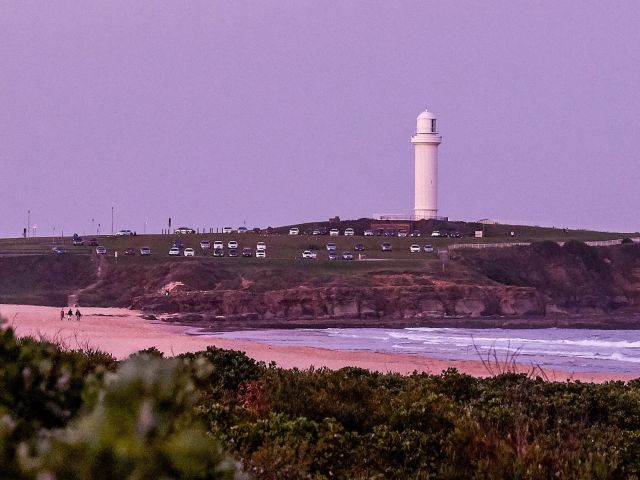
the Wollongong Head Flagstaff Lighthouse
The majestic Wollongong Head Flagstaff Lighthouse overlooks the Tasman Sea. (Credit: Destination NSW)

Best for: Families who want an easy day at the beach with playgrounds, rock pools and cafes close by

Wollongong City Beach is one of the city’s most popular beaches. The broad beach that fronts the city curls 3.1 kilometres from Flagstaff Point to the Port Kembla seawall. It’s the city’s most central swimming spot and it’s backed by a foreshore reserve stubbled with coastal grasses. Head to the northern end of the beach in low tide to check for treasures in the rock pools. The beach is adjacent to a park with a playground and picnic tables.

Weekly travel news, experiences
insider tips, offers, and more.

Woonona Beach

Best for: Cyclists, surfers and lap swimmers

Ride your bike along the Wollongong shared cycleway to check the surf, which works best at the northen end on a northeast swell. Woonona Beach also has a handsome 50-metre pool with diving blocks and a historic Art Deco pavilion. BYO goggles and hedge your bets between a calm lap swim or open-water adventure, before refuelling at one of the local restaurants.

Coalcliff Beach

Best for: Families and those in need of a protected swimming spot

Coalcliff Beach is another coveted spot for families. Whether you’re looking for a calm stretch of sand to build a castle or a sheltered place to swim, the small beach feels protected and intimate. The beach in the northern suburbs of Wollongong is surrounded by craggy cliffs and rock platforms, which make it a popular fishing spot. Swimmers also seek out the beautiful ocean pool tucked beneath the cliffs where dense emerald-green bushland spills down to the sea.

Port Kembla Beach

Best for: Lap swimmers and families with small children

Port Kembla Beach stretches for about 6.6 kilometres, making it popular with joggers who love to run barefoot. We love this beach for its dinky dressing sheds, which were constructed in 1912, and its Olympic-sized pool carved into the northern corner of the cliff face. All up, there are three pools: a toddler’s pool, paddling pool and slightly deeper kiddies pool.  The beach is one of the best places to swim in Wollongong with kids. it is only 11 kilometres from Wollongong’s CBD.

Bulli Rock Pool
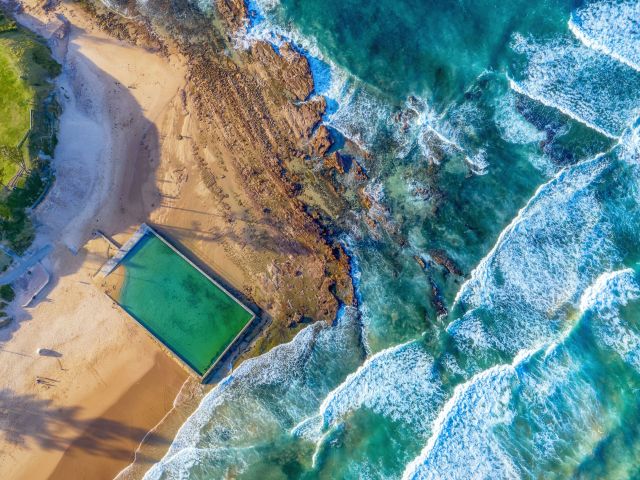
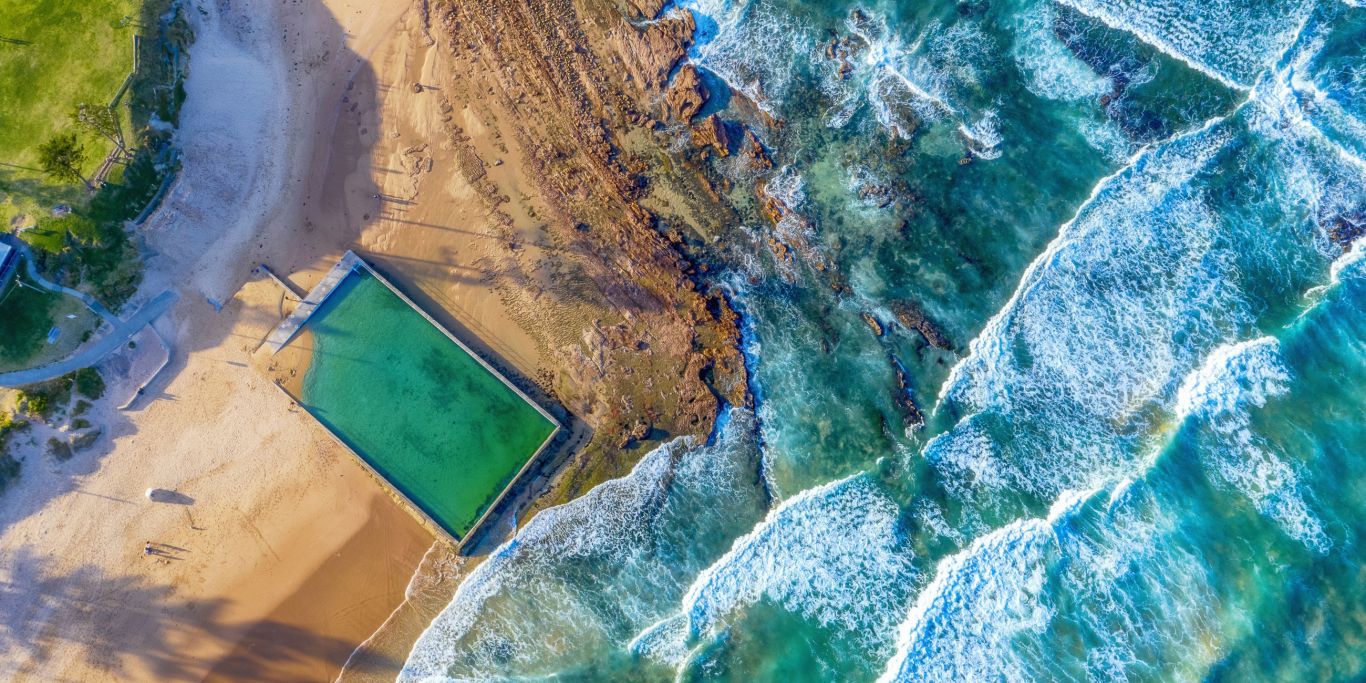
the Bulli Rock Pool from above
The 50-metre Bulli Rock Pool dates back to the 1930s. (Credit: Destination NSW)

Best for: Lap swimmers partial to a sunrise dip

Word has well and truly spread about just how good the lifestyle is in Wollongong and the Illawarra. Kick off your day with a few laps at the Bulli Rock Pool where you are bound to meet smug sea-changers. Ask them about their new lifestyle and they will happily tell you they haven’t looked back since shrugging off their big-city stresses. You will want to join them after a few lazy laps in the 50-metre pool, which dates back to the 1930s.

Bellambi Beach

Best for: Early risers and swimmers of mixed ability

Bellambi has a rock pool set into the southern rock shelf of the two-kilometre-long beach, which is a popular spot for swimming, surfing and fishing off the boat ramp. Hire a bike and cycle along the shared pathway, which makes the beach accessible from Wollongong. A small creek runs along the back of the beach and there are a few cafes nearby. Come to the beach early when there is zero swell to see the sunrise and start the day with a refreshing dip.

Want to see more stories from Australian Traveller in your Google search results?

  1. Click here to set Australian Traveller as a preferred source.
  2. Tick the box next to "Australian Traveller". That's it.
Carla Grossetti
Carla Grossetti has written across print and digital for Australian Traveller and International Traveller for more than a decade and has spent more than two decades finding excuses to eat well and travel far. A prestigious News Corp cadetship launched her career at The Cairns Post, before a stint at The Canberra Times and The Sydney Morning Herald gave way to extended wanders through Canada, the US, Mexico, Central America, Asia and Europe. Carla was chief sub editor at delicious and has contributed to Good Food, Travel & Luxury, Explore Travel, Escape. While living in London, Carla was on staff at Condé Nast Traveller and The Sunday Times Travel desk and was part of the pioneering digital team at The Guardian UK.
View profile and articles
hero media

This surprising regional town is making its mark on the culinary world

(Image: Visit Griffith)

    Carla Grossetti Carla Grossetti
    With more than 60 nationalities calling it home and a century of Italian influence shaping its paddocks and plates, Griffith is a regional Australian town with serious culinary cred.

    It might feel surprising to learn that Griffith is one of Australia’s leading food destinations. In-the-know Italians have understood this for generations, drawn to the Riverina region’s fertile soils that reminded them of the terrain they’d left behind more than a century ago. These days, Griffith supplies much of the nation’s pantry: 95 per cent of Australia’s prunes come from the region, it’s the country’s largest citrus-growing area, and it’s a leading producer of almonds and walnuts. Even the pickles in every McDonald’s burger nationwide are produced in Griffith. This is not just a farming town; the Griffith food scene is leading the way.

    Here, culinary confidence is rooted in migration. Italian families began arriving from 1913, with a second wave settling after the Second World War. Today, Griffith has the highest proportion of Italian ancestry of any Local Government Area in Australia. Add to that more than 60 nationalities represented across the community and you have a town where food is driven not by trends, but by tradition. Griffith’s motto, ‘Taste our culture’, isn’t marketing spin; it’s the reality.

    Where the vines tell a story

    A hand pouring wine into a glass, with a table filled with food.
    Uncover the stories behind every glass. (Image: Destination NSW)

    The Riverina has long been dubbed the food bowl of Australia, but it’s also a wine region that remains largely under the radar. What sets Griffith apart is that every one of its wineries is family-owned, many spanning generations.

    Calabria Family Wines is one of the region’s standard-bearers. The Calabria story began in 1945 when Francesco Calabria planted his first vines; today, the family continues to shape the region’s identity while also stewarding the historic McWilliam’s Wines brand. McWilliam’s was the first winery to plant vines in the area, and its barrel-shaped cellar door – complete with a soaring stained-glass window – remains one of the most distinctive in regional NSW.

    Yarran Wines, run by the Brewer family, showcases estate-grown fruit across Mediterranean varietals that thrive in the warm climate. Expect bold reds and textured whites that reflect both heritage and innovation.

    Set inside the old ambulance station, Harvest HQ is owned and operated by the Riverina Winemakers Association and pours a rotating selection of local wines under one roof. It also features spirits from The Aisling Distillery, reinforcing the region’s collaborative approach to craft.

    At the table

    A flat lay of a steak.
    Dine where tradition meets a bold new generation. (Image: Visit Griffith)

    If the vineyards tell one story, the dining rooms tell another. Griffith’s restaurants are where tradition and next-gen confidence meet.

    Zecca Handmade Italian occupies the former Rural Bank building, an imposing Art Deco landmark from the late 1930s. ‘Zecca’ means money print, and the name is a nod to the Zecca di Venezia in Venice. Here, find the Riverina’s only producer of dried artisan pasta and traditional Italian recipes. Importantly, the growers and producers supplying the kitchen are listed on the menu as a transparent expression of the region’s farm-to-table ethos.

    Established in 1977 and still run by the Vico family, La Scala puts authentic Italian cuisine on centre stage. Expect handmade pasta, traditional wood-fired pizzas, slow-cooked sauces and dishes that follow recipes guarded like family heirlooms. For something more contemporary, Bull & Bell in Gem Hotel is a shrine to the Euro-style steakhouse that works closely with local farmers and artisans to showcase Riverina produce.

    And then there are the institutions. Bertoldo’s Pasticceria, now in its third generation, draws locals daily for cannoli, biscotti, crostoli and house-made gelato, alongside classic sausage rolls and potato pies. La Piccola Grosseria feels like stepping into an Italian alimentari, its shelves lined with continental goods that wouldn’t feel out of place in Puglia.

    Meanwhile, Limone celebrates local and seasonal produce across breakfast and lunch menus, enriched by the produce and stories of Piccolo Family Farm. Find pastries and sourdough baked daily, and pop into the onsite retail pantry for products from regional producers – including the Piccolo family’s own wine range, Caro Piccolo.

    From the source

    A plated Aquna Sustainable Murray Cod dish.
    Taste world-renowned Aquna Sustainable Murray Cod, straight from its source. (Image: Visit Griffith)

    Behind every menu is a producer. Aquna Sustainable Murray Cod is perhaps Griffith’s most high-profile export; the brand’s Murray cod and Aquna Gold Murray Cod Caviar have achieved global recognition. In October 2024, Aquna presented its products to King Charles III and Queen Camilla at the NSW Premier’s Community BBQ in Parramatta. Impressed by the producer’s sustainable farming practices, the King requested the cod be sent to Buckingham Palace – not bad for a fish farm in regional NSW.

    Mandolé Orchard champions almonds grown on a family-run farm, transforming them into almond milk and value-added products. At Morella Grove, olives are pressed into premium olive oil and pantry staples that speak to Griffith’s Mediterranean heart. These producers are not peripheral; they are central to the town’s culinary ecosystem. Learn about local sustainable farming practices during a farm tour.

    Mark your calendar

    A woman walking past a food mural, something you can spot during A Taste of Italy Griffith.
    Plan your visit around A Taste of Italy Griffith. (Image: Visit Griffith)

    For a town that helps stock Australia’s supermarkets, Griffith has remained curiously absent from the national dining conversation. That’s beginning to change. If you’ve been searching for a regional food destination with substance, heritage and a clear sense of identity, you’ll find it here in the Riverina, right under your nose.

    Time your visit to the Riverina region to coincide with A Taste of Italy Griffith, held every August. This week-long celebration of Italian heritage and culture offers a wide range of Italian-inspired events and experiences to enjoy. Expect long-table lunches, wine tasting experiences, cooking classes and a Makers in the Piazza market. The headline event is a ticketed long lunch – Festa delle Salsicce (Salami Festival) – where winners of the best salami are announced.

    Start planning your foodie getaway at visitgriffith.com.au.