Catching the hatching: Mon Repos’s ‘turtle dance of life’

hero media
Bundaberg’s Mon Repos Beach is home to half the South Pacific’s nesting loggerhead turtles – and one of nature’s most ancient rituals of life.

How like a celebrity to keep you waiting? Herded together on the moonlit sand out of turtle sight, we watch Mon Repos’s rangers mill about like a diva’s PR team, phoning in updates.


“No, she’s not ready," ranger Cathy Gatley tells her walkie-talkie. “She’s still body-pitting." We’re here for the stars of a 100 million-year-old show. Every November to March, some 360 female turtles heave themselves ashore at 1.6-kilometre Mon Repos beach – the biggest turtle rookery on Australia’s east coast – to lay and bury their eggs, repeating a cycle of nature dating back to dinosaur days.


Body-pitting (flippering a shallow depression) is the prelude to egg-chambering (digging a laying hole with back flippers). Watching is verboten as turtles spook easily and often return to the sea before laying. When she’s finished we’re ushered into her moonlit presence – no lights allowed until the eggs are about to drop, and then sparingly.

Loggerhead turtle central

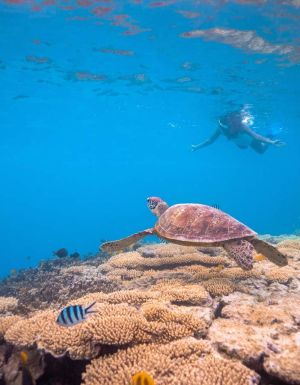
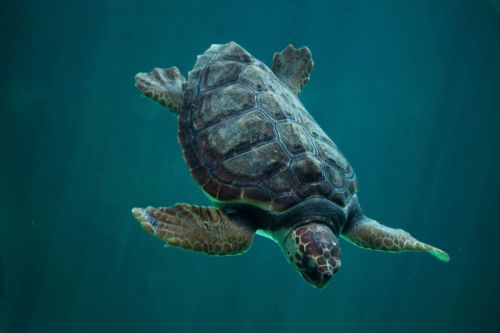
Like 95 per cent of local nesters, she’s a loggerhead, a huge-headed beast with a barnacled browny-yellow shell. A quick check of her tagged flipper – she swings her beak sideways in passing irritation – confirms she was first tagged in 1998, making her at least 50 years old (they first nest at about 30).


This is her second clutch (of four, on average) this season but it’s in serious trouble: she’s laid below high-tide and saltwater dunkings are lethal. “They’re creatures of instinct," explains Cathy. “Their behaviour isn’t learned and sometimes they just get it wrong."


On prehistoric automatic pilot, the turtle’s indifference to us is astounding. Bereft of fight or flight instinct, she starts to lay, and we each have a close-up view of the wet, white eggs slipping from leathery hindquarters into the sand-pit. A below-tide nest would be doomed on another beach, but already rangers and trained volunteers are egg-chambering up in the tussocked dunes, scooping out a safe house beyond the waves.


Finished, the turtle covers up and, puffing and flailing, readies to aim seaward. The rangers waste no time digging up the 101 eggs. There’s a literal deadline – after two hours, handling will tear newly formed embryonic membranes, with fatal consequences.

Need tips, more detail or itinerary ideas tailored to you? Ask AT.

AI Prompt

Helping to move the eggs

“Who wants to help relocate the eggs?" Cathy asks. Uh, that’d be everyone. We’re handed two eggs each, soft leather ping-pong balls, which we reverently carry to the alternative nest, then follow Mama Turtle rowing herself down the beach. When she hits the waves, everyone breaks into spontaneous, heartfelt applause.


It’s 9.30pm and most people are satisfied, but the show goes on for rangers, scientists and diehard sightseers. Later, walking along the sand with ranger Shane O’Connor, we spy a noticeably different turtle track.


“Looks like we’ve got a flatback," he says, tracing it to a dark-coloured turtle with a shell less domed than the loggerhead’s, and with an upturned rim. Largely tropical in range, flatback turtles are very rare arrivals here.


Shane gets on the radio to turtle expert Dr Col Limpus, somewhere along the beach. “He won’t wanna miss this."

Mon Repos turtles guy

Indeed, Col doesn’t miss anything on Mon Repos. He hasn’t missed a season since 1956 and began scientific research here in 1968. He’s behind many a famous turtle fact, such as the discovery that they return to their birthplace (or nearby) to nest.


He’s also worked tirelessly to save Mon Repos’s turtles from offshore shrimp trawling, feral foxes and even more feral property developers. Suddenly looming from the dark, portable ultrasound in hand, Col is delighted to find this isn’t just any flatback. It’s K10534.


“One of my superstars," he says; a source of much data. “She’s got one more clutch," he says, after examining the egg follicles. With laying done, 10 eggs are borrowed for weighing and measuring.


For all Mon Repos’s conservation triumphs, its loggerheads are at high risk of becoming fishing bycatch in South American waters, where they spend years before returning to nest. “Recruitment of youngsters is dropping off," Col points out. First-time nesters are rarely seen – most arrive already tagged – which suggests the species’ future remains precarious.


Meanwhile, 70 centimetres below the sand, 101 embryonic loggerheads are alive and well – thanks to us, which feels damn good. In a couple of months, they’ll pop up to scurry desperately seawards.


And maybe – just maybe – one will be that one-in-a-thousand survivor that hauls herself from Mon Repos’s gentle breakers three decades from now, drawn irresistibly across the Pacific to her birthplace to continue the prehistoric turtle dance of life.

Weekly travel news, experiences
insider tips, offers, and more.

Details: Mon Repos turtles, Bundaberg

Getting there: Mon Repos is a 15-minute drive east of Bundaberg, Queensland, or 10 minutes from the coastal town of Bargara.


Playing there: Turtle viewing at Mon Repos Regional Park runs between November and March each year during the hours of 7pm and 1am, by ranger-led, pre-booked tour. Hatching starts January.


Staying there: Offering one, two and three bedroom apartments, the luxury 4.5-star resort Manta Bargara is one of several beach-side bliss-out options along the Esplanade at Bargara.

Want to see more stories from Australian Traveller in your Google search results?

  1. Click here to set Australian Traveller as a preferred source.
  2. Tick the box next to "Australian Traveller". That's it.
hero media

Exploding supernovas & gold fever: discover the past at this outback Qld town

    Kassia Byrnes Kassia Byrnes
    Under wide-open outback skies, discover a fossicking gem that’s managed to slip under the radar.

    While the name Clermont may feel new to even the most intrepid traveller, its gilded history stretches back centuries. You’ll find it just off the highway, humming quietly under the hazy veil of Queensland’s outback sun. It’s here, hemmed in by mountains and perched atop soil heavy with the earth’s treasures, that one of Australia’s most accessible outback adventures awaits.

    Thanks to deposits of gold, copper and gemstones – souvenirs left by exploding supernovas and the heave of tectonic plates – Clermont became a centre point of Queensland’s Gold Rush. And now? Australia’s fossicking capital is yours to discover.

    Getting there

    car driving along Capricorn Way in queensland
    Take a drive through Queensland’s Mackay Isaac region. (Image: Sean Scott/ TEQ)

    You’ll find Clermont in Queensland’s Mackay Isaac region. To get here, it’s an easy three-hour drive over sealed roads from Mackay. Or, if you’re heading from the Sapphire Fields of Emerald, the drive will carve out just over an hour from your day.

    Whether you’re road-tripping through outback Queensland or just tracing your way through all that Australia has to offer, Clermont is remote but easily accessible.

    Best accommodation in Clermont

    Theresa CreekDam in clermont
    Camp by Theresa Creek Dam. (Image: Riptide Creative/ TEQ)

    All accommodation comes with a generous helping of country hospitality here. The choice is yours between modern hotels, parking up the camper or pitching a tent.

    Theresa Creek Dam lies just outside town. Begin each day with crisp country air and bright outback sunrises. Spend the night under the sparkling country stars and your days out on the dam fishing or kayaking. Even if you aren’t camping, be sure to save space in your itinerary for an afternoon on the red dirt shore.

    To stay closer to town, opt for a central hotel to base yourself between exploring and fossicking, like Smart Stayzzz Inn and Clermont Country Motor Inn.

    Things to do in Clermont

    three people on a tour with Golden Prospecting
    Join a tour with Golden Prospecting.

    One does not visit Clermont without trying their hand at fossicking. There are strict rules when it comes to fossicking, so stick to areas dedicated for general permission and make sure you obtain your license beforehand. Try your luck at McMasters, Four Mile, Town Desert, McDonald Flat and Flat Diggings. To increase your odds, sign on for a tour with the expert team at Golden Prospecting. They’ll give you access to exclusive plots and expert advice along the way.

    Once you’ve tried your luck on the gold fields, head to the Clermont Township and Historical Museum. Each exhibit works like an archaeologist’s brush to dust away the layers of Clermont’s history. Like the steam engine that painstakingly relocated the entire town inch by inch to higher ground after it was decimated by flooding in 1916. See the tools that helped build the Blair Athol mine, historic fire engines, shearing sheds and all sorts of relics that make up Clermont’s story.

    The historic Copperfield Chimney offers a change of pace. Legend has it that fossickers found a solid wall of copper here, over three metres high, kick-starting Queensland’s first-ever copper mine.

    Bush Heli Services flying over clermont queensland
    See Clermont from above with Bush Heli Services. (Image: Riptide Creative/ TEQ)

    For hiking, nearby Dysart is the best place to access Peak Range National Park. Here, mountainous horizons stretch across the outback as if plucked from another world. Set off for a scenic drive along the Peak Downs Highway for access to countless geological wonders. Like the slanting rockface of Wolfang Peak. Summit it, and you’ll find yourself looking out across a scene surely conjured up by Banjo Paterson. Dry scrub dancing in the warm breeze, grazing cattle, eucalypts and the gentle creak of windmills. Don’t miss visiting Gemini Peaks, either, for one of the park’s best vistas, and a blanket of wild flowers after rain.

    Then, take to the skies with a scenic helicopter tour with Bush Heli-Services. Shift your perspective and cruise above all the sights from your trip. Spots like Lords Table Mountain and Campbell’s Peak are best viewed from the skies.

    Before you head home, be sure to explore the neighbouring townships. Spend a lazy afternoon in the shade of Nebo Hotel’s wrap-around verandahs. The hotel’s 1900s dance hall has since been replaced with one of the area’s biggest rodeo arenas, so consider timing your trip to line up with a boot scootin’ rodeo. Or, stop by a ghost town. Mount Britton was once a thriving town during the 1880s Gold Rush. It’s been totally abandoned and now lies untouched, a perfect relic of the Gold Rush.

    Best restaurants and cafes in Clermont

    meal at Commercial Hotel
    Stop into the Commercial Hotel Clermont.

    Days spent fossicking, bushwalking and cramming on history call for excellent coffee and hearty country meals. Luckily, Clermont delivers in spades.

    Lotta Lattes Cafe is beloved by locals for a reason. Start your days here for the best caffeine fix in town and an impeccable brunch menu.

    For a real country meal, an icy cold beer and that famed country hospitality, head straight to the town’s iconic hotel: the Commercial Hotel (known endearingly to locals as ‘The Commie’). It’s been a staple in Clermont since 1877. The hotel even survived the flood of 1916 when it was sawn in two and moved to higher ground.

    Naturally, time spent in the outback must include calling into the local bakery. For delicious pies and a tantalising array of sweet treats, make Bluemac Bakehouse your go-to while in town.

    Discover more of The Mackay Isaac region, and start planning your trip at mackayisaac.com.