In search of Tasmania’s disappearing wild ocean forests

hero media
Tasmania’s amazing giant kelp forests may be all but gone, but there’s still endless life among the weeds. Snorkels at the ready, here’s how you can experience it.

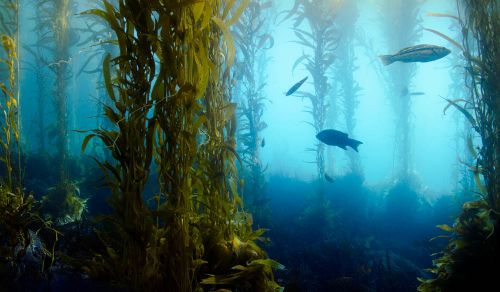
Imagine yourself flying through a forest, like in Avatar, and that’s exactly what scuba diving among the giant kelp off Tasmania is like. Or, at least, what it was like before the forests died, says Tasman Peninsula dive operator Mick Baron.


“Looking up and the sun [is] reflecting through, the light is dissipating through the leaves; it’s really, cool," Mick says softly, momentarily transporting himself back to the underwater world he calls home. Mick is co-owner of Eaglehawk Dive Centre , and diving among the giant kelp (Macrocystis pyrifera) has, until recently, been a large part of his business and a major draw for ocean-lovers to Tasmania.

The kelp demise

“The forest was the canary in the mine – an indicator that something was wrong," says Mick, who has been banging on about the kelp’s demise for years. He, and others, blame climate change and, more specifically, warmer, nutrient-poor waters travelling down the East Australian Current into Tassie’s cold-water environment.
tasmania kelp forest snorkelling
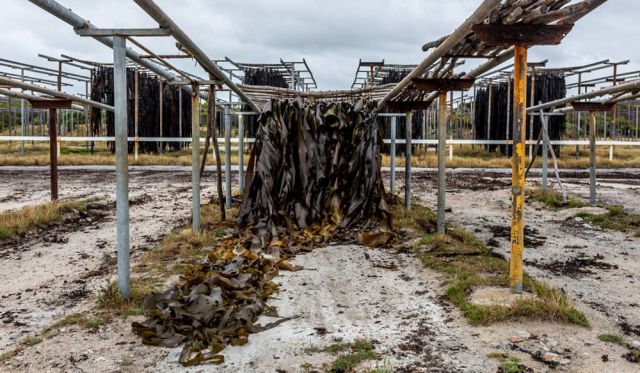
Drying bull kelp; harvested mostly for use in fertilisers and food (photo: Andrew Wilson).

Combine this with an influx of sea urchins, which now have warm enough temperatures to survive and thrive, and there is little hope for the seaweed beds. As is often the case, climate change has a ripple effect, impacting other marine species as well as the tourism industry. But the kelp isn’t the death warrant for Tassie’s ocean operators; there’s still plenty to see, they say.

Simple pleasures: meet the Australian fur seals

Being among kelp is a special experience, even if it’s not Macrocystis. Waltzing with the ocean’s undercurrent, I find golden bull kelp mesmerising as I snorkel beside the sea cliffs near Cape Hauy on a Wild Ocean Tasmania  expedition. Above the water, thick strands nest together in what look like sea beds for barking seal calves.


Below, the seaweed dances this way and that as tiny invertebrates brush aimlessly past. A long-nosed fur seal pokes its face toward the kelp, as if searching for food behind the shimmering curtains.


An Australian fur seal steals my attention as it torpedoes through the cool water, leaving a ‘soda’ stream in its wake. A peaceful, beautiful experience, this surely has to be just as special as diving among the forests, I think as I lie on a semi-submerged platform, ensconced in a drysuit.
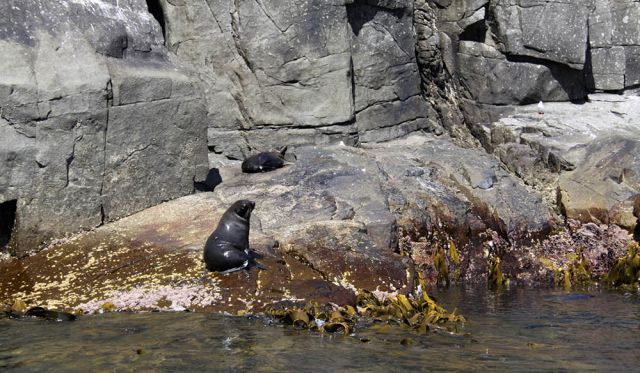
Long-nosed Australian fur seals Tasmania kelp forests
Long-nosed fur seals among bull kelp, Tasman Peninsula (photo: Jennifer Ennion).

Also based out of Eaglehawk Neck, Wild Ocean Tasmania offers the chance to meet the seals, with little intrusion. Although founder Damian Connor insists he’s no scientist, he’s a strong advocate for the environment and has witnessed the demise of the giant kelp.


“For us, it wasn’t a big focus business-wise but it’s definitely going to play a major role in the changing of this environment, which is super sad," he says.

Down to business: in search of weedy sea dragons

When Damian started tours in 2014, he would take guests snorkelling among the kelp as an extra when the seals were frightened off by a predator. Still, he receives frequent enquiries from tourists wanting to swim through the ethereal forests. When Eaglehawk Dive Centre fields such queries they point visitors toward other underwater opportunities, such as diving with weedy sea dragons.


“There’s no doubt about it, our dragons are really unique. They’re very big compared to ones on the mainland and the colours are really intense – strong reds, yellows and blues," says Mick.


Although Eaglehawk Dive Centre no longer offers the kelp diving, there are still small patches of forest around South Bruny and off the West Coast, but no tourism operations there. On remote King Island, seaweed is harvested mostly for use in fertilisers and food, but this is bull kelp.


The future of kelp, in general, appears to be in the hospitality and health-care sectors – it’s slowly gaining momentum as a great source of vitamins and minerals. But that’s another story.

How to experience kelp

What to do: Wild Ocean Tasmania’s Seal & Ocean Expedition charter includes snorkelling with fur seals and bull kelp. At Eaglehawk Dive Centre, you can still get a kelp experience when searching for weedy sea dragons.


Where to stay: The best base is Tasman Peninsula, where all the action is. Accommodation is primarily holiday homes and camping.


How to get there: Tasmania is a great self-drive state and you can get the Spirit of Tasmania ferry from Melbourne to Devonport, or fly to Hobart and hire a vehicle.


Jennifer Ennion
Jennifer Ennion is a freelance travel and ski journalist who loves encouraging people to spend more time outdoors. From snorkelling with belugas in sub-Arctic Canada to hiking the Himalayas, Jennifer is constantly searching for stories that inspire readers to push their boundaries.
See all articles
hero media

I checked into Hobart’s most delicious hotel and didn’t want to leave

Welcome to Hotel Addict, a monthly column where I check into Australia’s best hotels, exploring not just the rooms, but the stories, service and settings that make each stay unforgettable and worth adding to your wishlist.

I arrive at The Tasman in Hobart at 10pm. Two McLaren 620Rs are parked out front, and a welcome cup of mulled wine made from local chardonnay, not red wine lands in my hand. It’s already clear this isn’t your average hotel stay. The last time I was in the Tassie capital was in 2022, when my family stayed at MACq 01 and cheered on my brother-in-law who raced in the Sydney to Hobart. This time, I’m moving away from one of my favourite Australian hotels and checking into this award-winning stay. 

What I love most about Tasmania is the dedication to good produce. Farmers, chefs and locals alike create and grow some of the country’s finest offerings – plump oysters, world-class gins, irresistible cheese and fresh berries. And much of it can be savoured from the comfort of the unique accommodations peppered across the island, each impressing with its attention to detail. Perhaps none do it as well as this month’s chosen hotel, though. 

Having opened its doors in December 2021, The Tasman was named in The World’s 50 Best Hotels list for 2024, putting Hobart firmly on the map for international travellers. Visitors and locals are also drawn to its onsite restaurant Peppina, an Italian eatery helmed by Tassie-born and Napoli-raised chef Massimo Mele, whose food philosophy centres on using the best produce, simply.

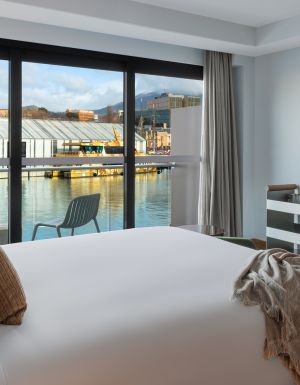
The view from the The Aurora Suite at The Tasman
The hotel is a short walk from Salamanca Place, the waterfront and Battery Point.

The building is located in the heart of Hobart CBD in the Parliament Square precinct – a short walk from the waterfront – making it a convenient base for exploring the city. Designed by Sydney-based architects fjcstudio with heritage guidance from Design 5 and interior design practice JPDC, the project involved melding and restoring three distinct architectural styles 1840s Georgian, 1940s Art Deco and the new Contemporary Pavilion while celebrating the city’s maritime heritage. The result is an elegant fusion of heritage character and modern sophistication. 

There are 152 rooms and suites divided into Heritage, Art Deco, and Pavilion. My room is in the Heritage part of the building and features dramatic ceilings, a mini bar stocked with local treats and a huge marble-swathed bathroom with an enticing freestanding bath and Tasmanian dairy cream and leatherwood honey soap. 

I decide to order room service since the onsite speakeasy, Mary Mary, is closed and I don’t have a dinner reservation. The late-night menu tempts with seafood chowder served with crusty bread and a ham and cheese toastie but whenever I see a cheese plate, I can’t resist. Have I ever had a truly great one in a hotel? Not even in Bordeaux. But this time, it’s different: the spread is beautifully presented with thinly sliced apple and pear, three local cheeses, honey and an assortment of crackers made onsite. I pair this with a gin and tonic made with Forty Spotted Classic Tassie Gin and Tasmanian Tonic Company gin it’s my perfect night in.

Forty Spotted Gin and Tasmania Tonic Company tonic at The Tasman
The minibar is stocked with local treats. (Image: Rachael Thompson)

The next morning, I opt for the buffet breakfast. Hotel buffets can be hit or miss, and I generally see them as a waste of money, but my sister claimed the offering at Peppina was her favourite she’s ever had. Coincidentally, one of her closest friends is in town for a conference and, having stayed here before, chose The Tasman and breakfast at Peppina again; more assurance of its deliciousness.

The space is light and bright with two productive olive trees boosting the mood. I load up a plate of chickpeas, roasted tomatoes, mushrooms and spinach, pickles, the world’s creamiest mushroom quiche and slices of cheddar. A bit unconventional, but it’s all perfect, and I’m convinced this is the best breakfast I’ve ever had. I finish with a pear and lemon pastry, which is on par with the baked goods I savoured on a recent trip to France. 

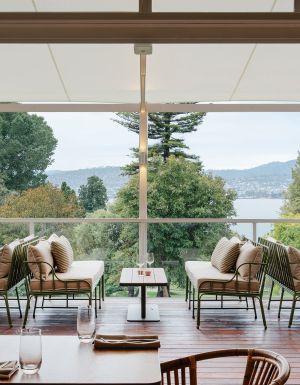
Peppina restaurant at The Tasman
Peppina celebrates seasonal Tasmanian produce.

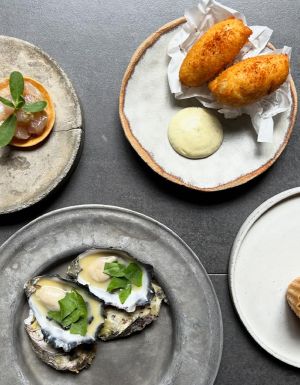
I spend the rest of the morning and afternoon walking around Salamanca Markets and the waterfront areas in the historic Sullivans Cove precinct, enjoying 12 Bruny Island oysters for just $20 a steal! Back at the hotel, I squeeze in a quick gym session. It’s small, but the preserved sandstone walls give it a unique charm that makes the workout feel more like a novelty rather than a chore. 

There’s no spa or swimming pool onsite a disappointment I have to admit but what it does have is a wine cellar and that might excite me even more. The cellar is stocked with Tassie drops as well as notable international bottles. During my tasting I decide to stick with local sips, which will be paired with a charcuterie plate, and to my delight, another cheese plate. Our sommelier Adrian guides us through eight different wines, including a very tasty 2023 Syrah, Bubb + Pooley and a 2024 Pinot Noir, Stoney Rise. The region is known for its cool-climate wines, especially sparkling wine and Pinot Noir, and Adrian’s animated commentary on each pour transforms the tasting into a performance. That or the wine is just working its magic…

A cheese plate and wine glasses lined up in a wine cellar at The Tasman
Sample Tassie drops in the wine cellar. (Image: Rachael Thompson)

I make the tipsy pilgrimage back to Peppina to try their dinner offering. I dive into a memorable line-up of kingfish ceviche, Bruschetta al Tonno, and gnocchi with pink oyster, nameko mushrooms, mushroom-celeriac broth and parmesan cream. Retreating to my ultra-comfy bed and almost eerily quiet room, the blend of character and comfort makes me feel like there’s nowhere I’d rather be after a full day of eating and exploring.

Although part of the Marriott family, The Tasman’s respect and celebration of its location allows it to exude personality and charm, making it feel worlds away from the impersonal atmosphere often found in large hotels. Where many hotel kitchens are fine but forgettable, The Tasman stands out for its dedication to great produce. And with rooms starting from $300 per night, it offers luxury at a more attainable price.

Details

Address: 12 Murray St, Hobart TAS 7000

Best for: Couples, foodies and design-savvy travellers.

Family-friendly?: Yes

Accessibility: The Tasman has a number of accessible rooms for each room type.

Parking: Paid parking is available.