Ten Aussie caravanning tips everyone needs to know

hero media
Thinking of joining the ever-increasing number of Aussies hitting the open road with a caravan in tow? Here, then, are the Top Ten things you should know before pulling into your first tourist park.

1. There’s no such thing as sleeping in

People in caravan parks like to rise early. They have places to be and they need to get there ASAP. I know, I know, they’re on holidays – but there’s no rest for the wicked and the early bird gets the best site at the next van park.


Plus, many caravanners are older retirees and they’ll be the first to tell you they usually wake by 5am anyway. So expect a lot of clatter and banging, car engines starting and loud morning greetings before the sun is even in the sky.

2. Privacy is a thing of the past

You may dream of quiet nights in a tranquil bush setting with a book and a folding chair, but while that can happen if you head off the beaten track, most of the time you’re on a small site (grassed, if you’re lucky) with another caravan a few feet either side of you.


Quite possibly one behind as well. Most have flimsy walls and lots of open screens, so sound travels a long way. Your own conversations, and those of people around you, will bounce around your not-so-quiet oasis for all to hear.
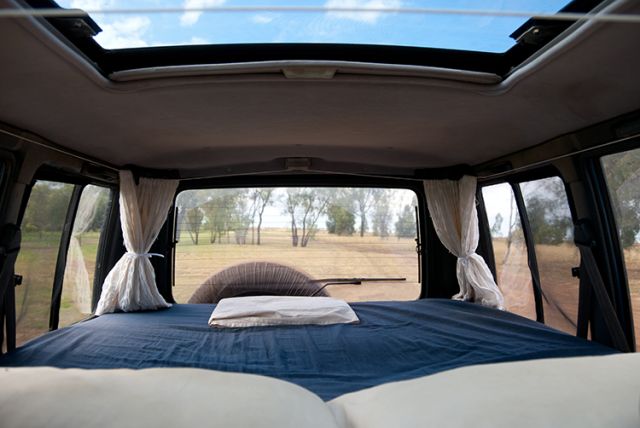
Build in bed in 4WD. Backpacking Australia with camper van.

And that’s before the lights go out and the snoring starts. You can hit your own husband (or, to be fair, wife) when they start to grunt and snort, but you can’t do much about the foghorn five caravans down.

3. People like to watch

Caravan parks are like mini theatres, with an ever-changing cast and crew watched by an openly curious, often downright nosy, audience. New arrivals are like a new set of actors taking the stage.


Oldies sit at their outdoor tables and stare as the latest travellers struggle to reverse their vans, maybe exchanging a few harsh words to each other in the process. A good domestic during the treacherous setting-up-of the-van process can brighten any caravan park afternoon.


If you’re young and appear inexperienced, so much the better. If, like my husband and I, you’re still in your 30s and on your first long-haul caravan journey, you’ll draw plenty of attention. Try not to show fear.

Need tips, more detail or itinerary ideas tailored to you? Ask AT.

AI Prompt

4. The toilets stink in the morning

We humans often follow a fairly set routine when it comes to eating and, um, expelling our waste. The post-breakfast trip to the amenities block is, therefore, never a pleasant experience. Often there’s a queue and the toilets invariably stink.


There are also all those embarrassing bodily function noises emanating from the cubicles while those in line cringe and await their turn.

5. Someone will always know better than you

There are tens of thousands of people currently on the road around Australia. Many of them have lapped the country more than once and, let me tell you, they know a thing or two (or three or four) about caravan travel.


They know where the cheapest petrol is, where the best views are, and which places not to bother with. And they won’t be backwards in coming forwards when it comes to telling you the things you should be doing or shouldn’t have done. There’s no solution to this. Just nod politely and agree.

6. The honeymoon is over

Living in a confined space for an extended period will test the strongest of relationships, no matter how much you love your partner. Especially if your chosen mode of transport is lean (in our case a 12ft, 26-year-old caravan).


Being with someone 24/7 can be tough, especially when you can’t move from one side of the van to the other without crashing into each other. Tension between couples on the road is the subject of many jokes.


Expect it and do your best to create space when it’s needed. The other alternative is to have a good old fight and add to that afternoon’s caravan park entertainment (refer to Point No. 03).

7. Things go wrong

No matter how well laid your plans, things will invariably come undone from time to time. The caravan park you want might be booked. Your warm tropical week in northern Australia might be windy and rainy. You might blow a tire or your vehicle might suffer some other type of mechanical problem. Be prepared and stay flexible. Throwing the odd tantrum sometimes helps, too.

Weekly travel news, experiences
insider tips, offers, and more.

8. The washing lines are always full

Washing and drying clothes when on the road can be a difficult chore to complete, especially when the limited number of clotheslines and driers seem always to be full.
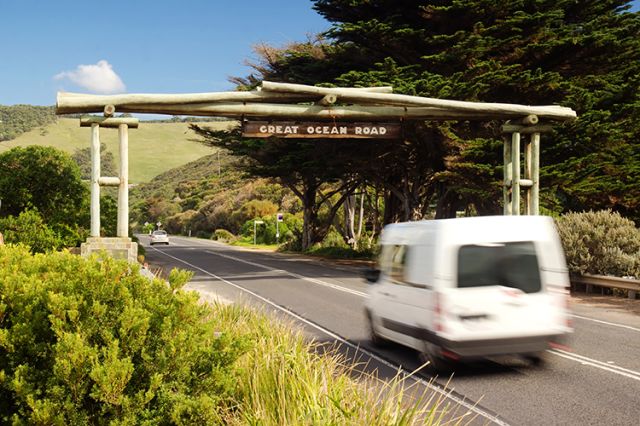
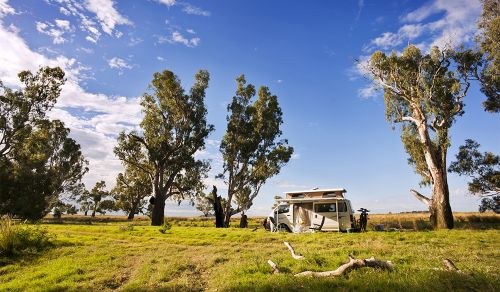
A campervan passes beneath the memorial arch on the Great Ocean Road in Victoria. The scenic road winds down the coast of Victoria and is popular with tourists.

Unless you’re one of the aforementioned early birds, my advice is to wash at night. Get in and hang your clothes up way before the sun has come up.

9. You instantly become a slow driver

Before we began caravanning, my husband and I complained about caravans driving below the speed limit and holding up long lines of cars. “Bloody caravanners," we’d been known to mutter. Now we are one of those moving roadblocks.


We drive carefully and usually sit just under the speed limit, not because we have to, but because we get better fuel consumption that way. And with petrol one of the biggest on-road expenses, I guarantee your hooning days are over once you start towing a caravan.


Of course, some people do take this concept to new levels, crawling along at a snail’s pace . . . bloody caravanners.

10. Caravanning is one of the best things you’ll ever do

Despite points one to nine, nothing beats the freedom of the open road; the sense of adventure and fun as you explore new places and the flexibility that comes from taking your accommodation with you.


Australia is a fantastic country full of beauty and diversity and there are lots of great people to meet. Don’t put it off. Hook up that caravan and hit the road.

Want to see more stories from Australian Traveller in your Google search results?

  1. Click here to set Australian Traveller as a preferred source.
  2. Tick the box next to "Australian Traveller". That's it.
hero media

Discovering East Arnhem: Australia’s most unique and rewarding corner

    Joanne Millares Joanne Millares

    Hard to reach and harder to forget, East Arnhem offers something rare in modern travel: the chance to slow down and experience Country on its own terms.

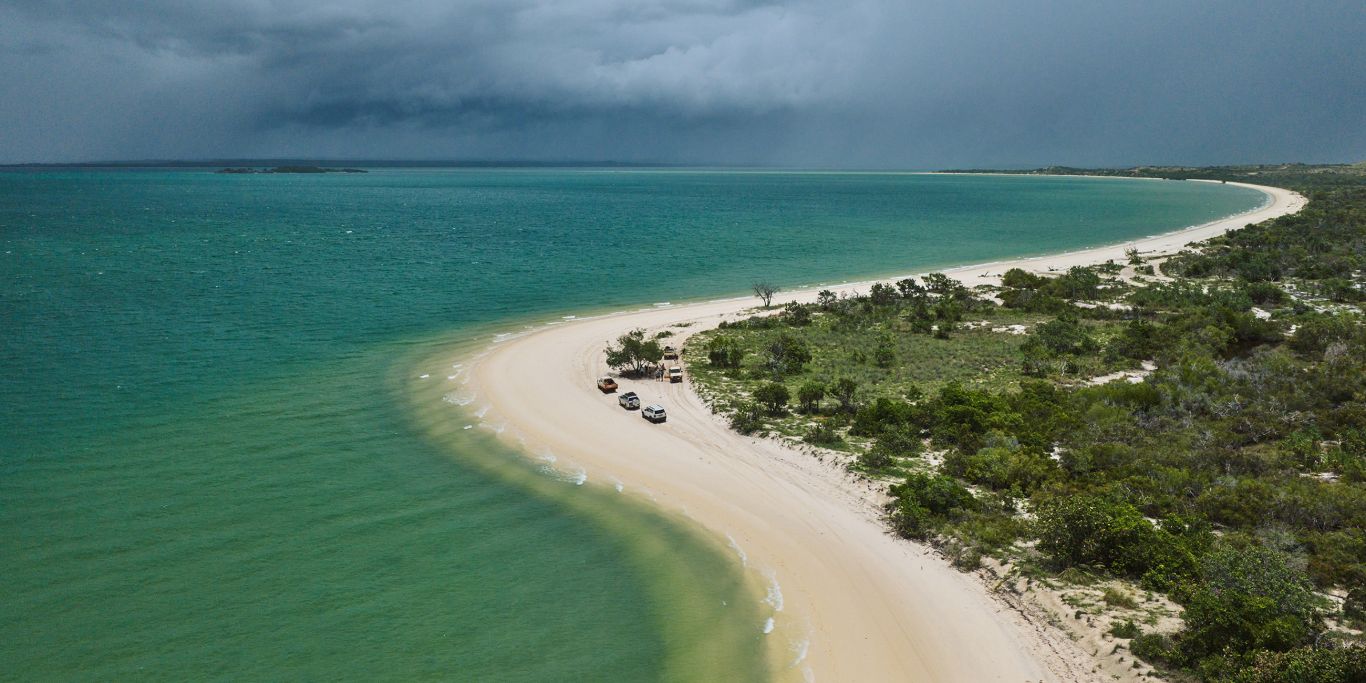
    The sky feels bigger in East Arnhem. It stretches wide and uninterrupted above rouged earth, stringybark woodland and beaches so empty they seem to belong to another era. The coastline curves for kilometres without a footprint and the horizon runs on forever.

    For comedian Lou Wall, the scale of the place was the first thing that hit them.

    “The sheer openness,” they say. “The sky feels infinite and the land stretches out endlessly. It’s pretty breathtaking visually.”

    But the physical landscape is only part of the story. The real reward isn’t only the scenery but the shift in perspective the journey brings. Visitors stop trying to tick off the destination and a real engagement takes over.

    “It made me never want to travel again,” Wall jokes. “In that I never wanted to leave East Arnhem.”

    Getting there

    Aerial shot of East Arnhem’s coastline as cars trace the curve of the shore.
    Sail along the remote coastline on an expedition cruise.

    Reaching East Arnhem is part of the adventure. Travellers typically fly into Gove Airport near Nhulunbuy via Darwin or Cairns, or arrive by expedition cruise along the remote coastline. Others make the journey overland along rutted dirt roads that cut through East Arnhem’s small pockets of monsoon forest.

    However you arrive, there’s a distinct feeling of crossing into somewhere different. Permits are required to visit the region, reflecting the fact that this is Yolŋu land where communities and traditional owners maintain deep cultural connections to Country.

    The extra planning becomes part of the experience. By the time visitors arrive, they understand they’re entering a place not just of respect, but also patience and curiosity.

    At one with nature

    East Arnhem’s  landscapes leave a strong imprint. For Wall, one place in particular still lingers in their memory: Ngalarrkpuy, also known as Lonely Beach, near Bawaka Homeland.

    “I genuinely felt like I was living inside an Instagram filter,” they say. “One of the most stunning feats of nature I’ve ever seen. The water was so clear I swear I could see even the fish smiling.”

    Across the region, natural experiences unfold at a slower pace. Fishing, beachcombing and island hopping reveal the rhythm of the coastline. The tides shape daily life and the vastness of the landscape makes even simple moments feel downright cinematic.

    For visitors with limited time, Wall says the Bawaka Homeland experience is unmissable.

    “I just left and I’m already planning when I can get back there.”

    The sense of remoteness is part of the appeal. In a country where many beaches are crowded and well-trodden, East Arnhem’s coastline still feels wonderfully wild.

    Immersing in local culture

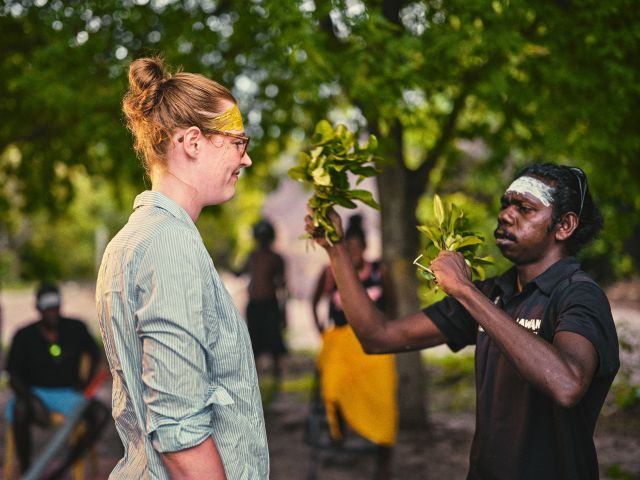
    A visitor spends a meaningful moment alongside Yolŋu guides, gaining insight into their deep cultural knowledge and connection to the land.
    Experience authentic moments with the locals.

    Culture is woven through every experience in East Arnhem. Visitors have the opportunity to spend time on Country with Yolŋu guides and knowledge holders who share stories and traditions that have been passed down for generations.

    For Wall, one of the most powerful moments came during a conversation with a Yolŋu elder.

    “I got to meet a traditional elder, Mayalil, in Nhulunbuy,” they say. “Listening to her talk about her home made the land feel alive in ways I couldn’t have imagined.”

    The region is also home to internationally recognised Aboriginal art centres where artists shape works deeply connected to land and family knowledge.

    Music carries the same cultural energy. East Arnhem has produced globally recognised artists such as King Stingray and Baker Boy, blending Yolŋu language, storytelling and contemporary sound.

    Wall experienced this musical spirit first-hand.

    “A jam session around the fire was it for me,” they say. “Letting the deep joy and history of their music wash over me…  and meeting a few of the King Stingray musicians was unreal.”

    These moments of human connection often become the most memorable part of a visit.

    Spotting local wildlife

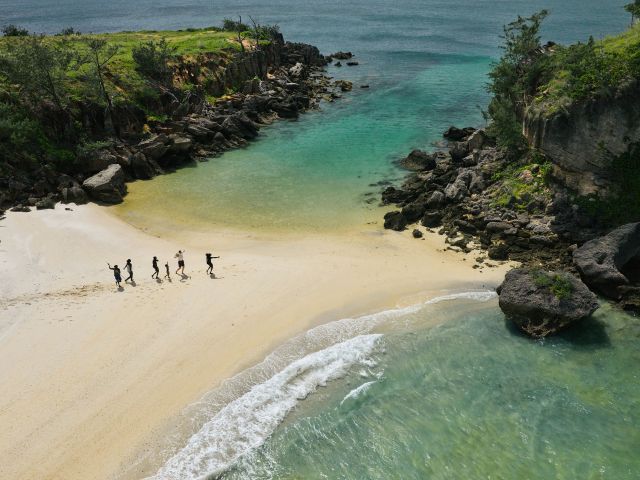
    An aerial view of the beach shows tiny figures lined up across the white sand, moving as if in a rhythmic dance.
    Step into a world where nature reigns.

    The wildlife of East Arnhem adds another layer to the experience. The region is home to an extraordinary range of animals, from waterbirds and turtles to dugongs, dolphins and the formidable saltwater crocodile.

    Wall admits they didn’t actually spot a croc during their visit.

    “Devastatingly, I didn’t see one,” they laugh. “But with all the stories from the locals I definitely gained a healthy respect for caution.”

    Some of the most memorable wildlife encounters can be surprisingly small., At Banubanu Beach Retreat on Bremer Island, Wall remembers walking along the beach one morning and watching it come alive.

    “As you walk through the sand you see hundreds of crabs scurrying into their holes as you pass by,” they say. “Such a small thing, but it was completely magical.”

    Moments like this reveal the quieter rhythms of East Arnhem, where even the smallest creatures seem to play a part in the landscape.

    Visitors who make the journey soon learn the most important travel tip of all.

    “Go in open-minded with a sense of curiosity,” Wall says. “Be prepared to ditch your plans. The land and the locals will guide you on an adventure no spreadsheets could ever compete with.”

    And most importantly, they add, don’t rush.

    “The land and people deserve your time and attention. You’ll be all the better for slowing down.”

    For more information on visiting East Arnhem, head to eastarnhem.com.au.