Ready to disappear for a few days? These epic weekend getaways in Tasmania deliver jaw-dropping landscapes along with premium food and wine.
From moody coastlines to world-class culture, this island destination dances to its own beat. With just a few days to explore, you can cast away to remote islands, uncover wild landscapes in comfort or linger over exceptional food and art. Keep reading to discover the top weekend trips in Tasmania/Lutruwita.
Steam trains on Tassie’s West Coast
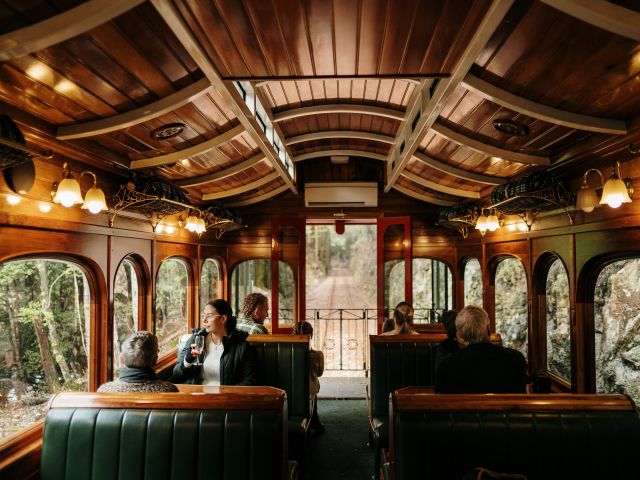
Hop aboard the heritage West Coast Wilderness Railway. (Credit: Tourism Australia)
What? Pair a heritage train ride with a superb stay at Strahan’s most polished waterfront address.
Tell me more: Ride the West Coast Wilderness Railway’s Rinadeena, Rack & Rainforest journey return from Queenstown, with stops at Lynchford and Rinadeena. Then unwind at Risby Cove, a tranquil sanctuary where bespoke suites sit a stone’s throw from the water’s edge on Macquarie Harbour, with an excellent waterside restaurant to match.
A design-led Hobart base for art and wine
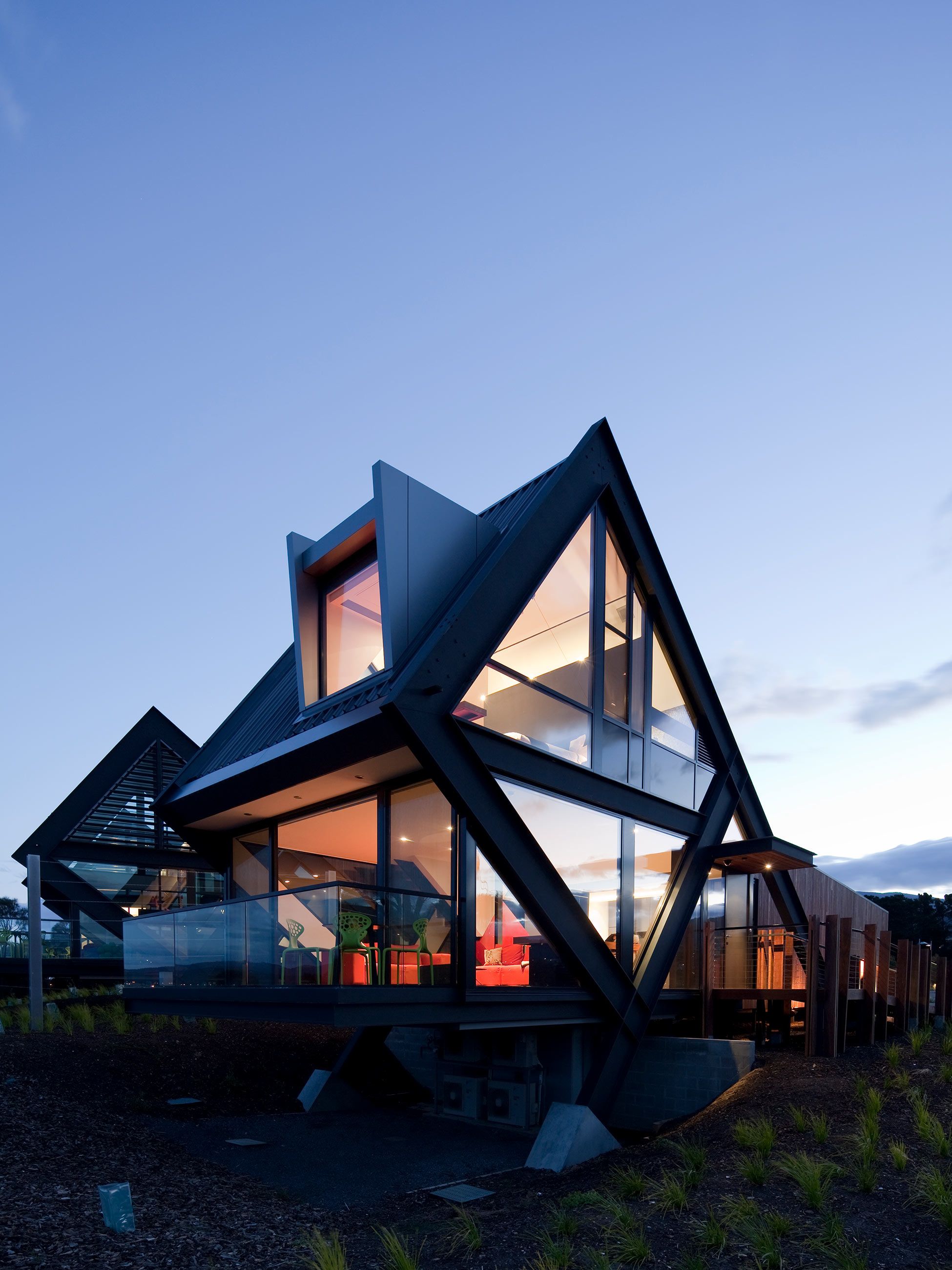
Mona Pavilions makes for a stylish Hobart/Nipaluna base. (Credit: Brett Boardman)
What?Mona Pavilions puts you on the Derwent with priority access to Australia’s wildest museum. Pair a stay with Hobart/Nipaluna discoveries and an easy day trip into Coal River Valley.
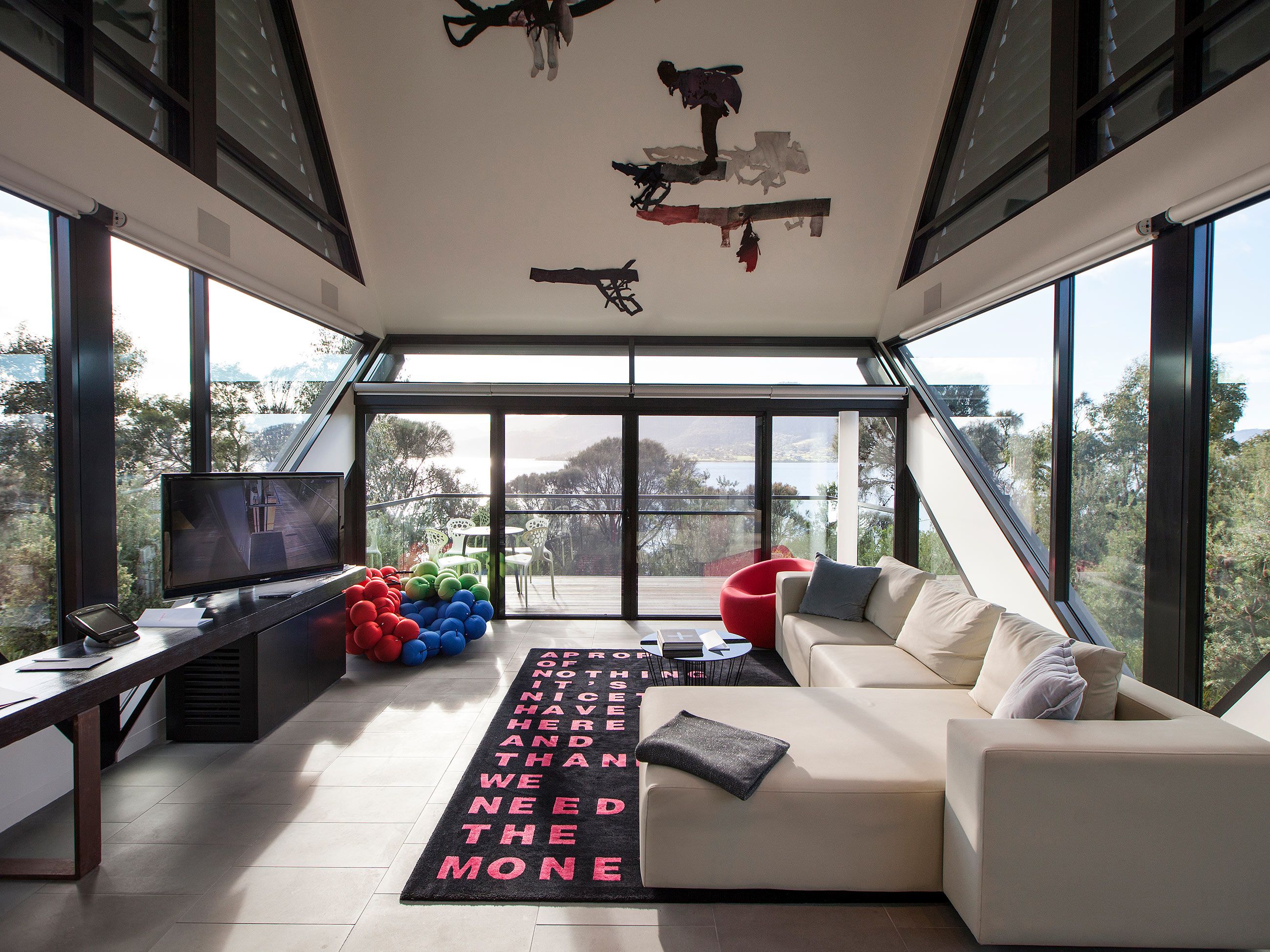
Tell me more: Secluded in private waterfront bushland, the eight pavilions are uniquely adorned with artworks from Mona’s private collection and Tasmanian designer furnishings. In town, Peppina brings big-hearted Italian cooking to Salamanca Place, while Tolpuddle Vineyard and Caledon Estate reward the short drive out to Richmond with some of Tasmania’s finest cool-climate pours.
A charming escape to Richmond
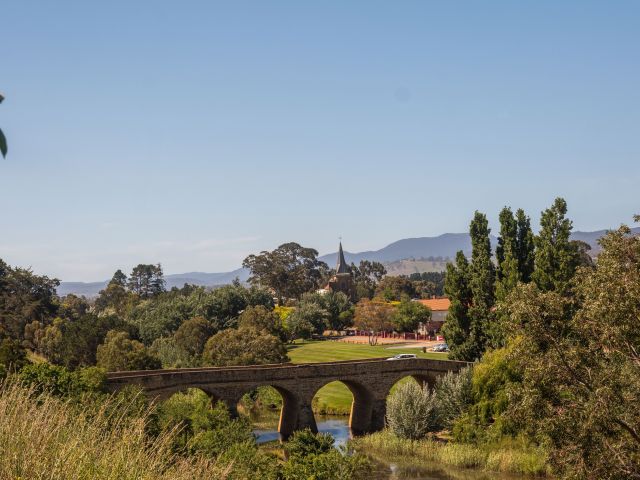
Richmond Bridge is Australia’s oldest stone bridge built by convicts in 1825. (Credit: Alastair Bett)
What? A quick 25-minute drive north-east of Hobart delivers you to this historic town, situated in the heart of the Coal River Valley wine region.
Tell me more: With its impossibly cute sandstone buildings, many dating from the 1820s, and its landmark bridge (the oldest in the country), you could almost convince yourself that you are in the Cotswolds. Spend your time in the galleries, shops and cafes now housed in the town’s historic buildings or buy a bottle of local wine and cosy up next to an open fire. You’ll quickly see that Richmond is one of the top weekend getaways in Tasmania for history buffs.
A King Island weekend with wallabies aplenty
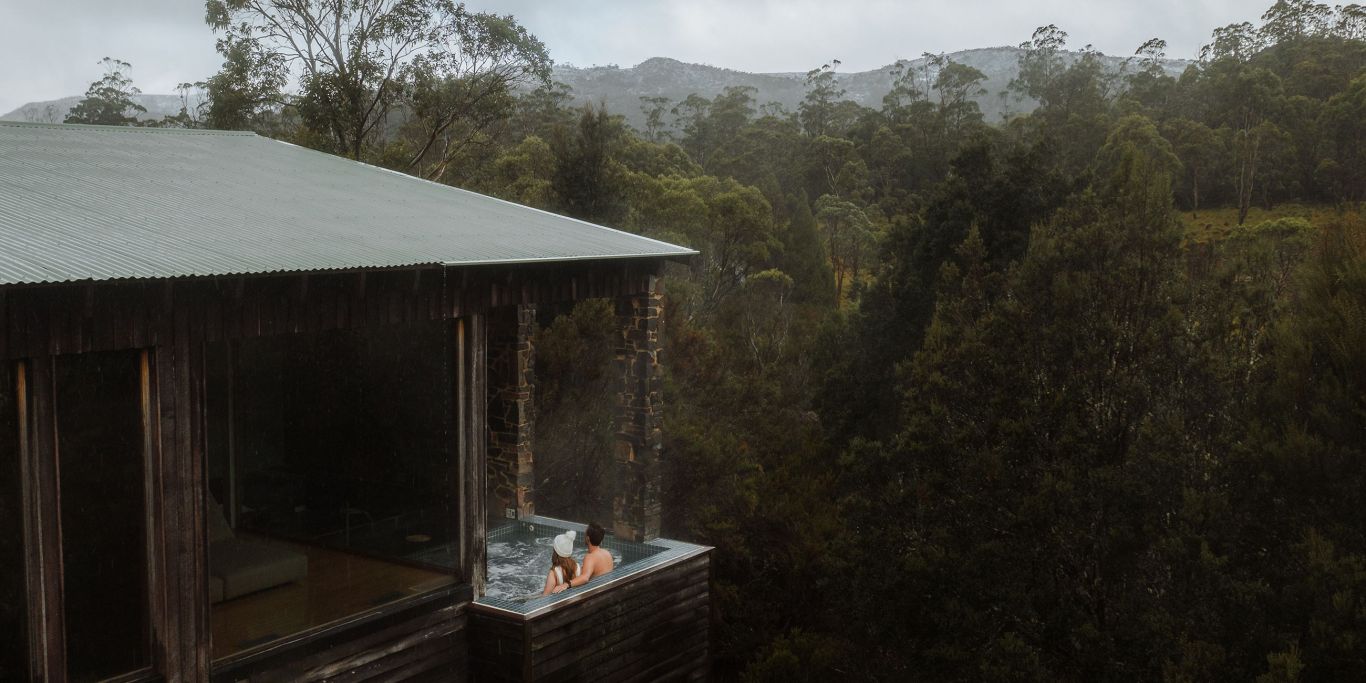
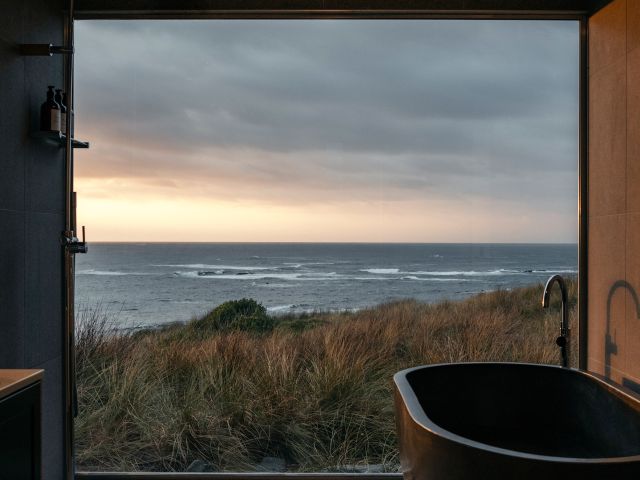
Soak in a private bath with stunning views of the Southern Ocean at Kittawa Lodge.
What? Out in Bass Strait, King Island has more wallabies than people, a reputation for very good cheese and a complete disregard for your usual sense of urgency.
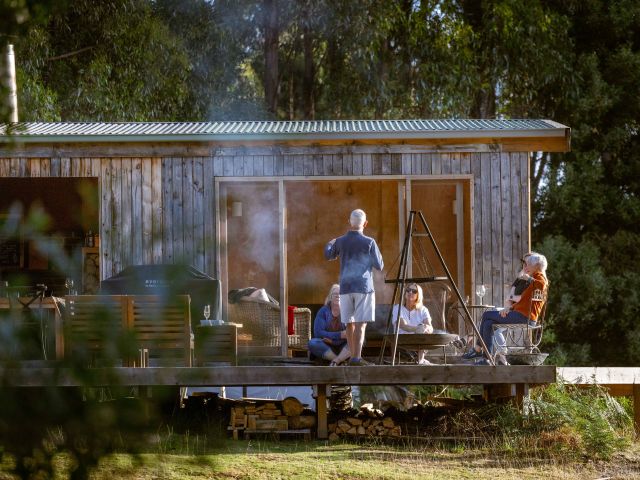
Tell me more: At Kittawa Lodge (and two-bedder Kittawa Retreat, its latest luxury addition), everything feels far away in the best way. Glass-walled lodges open onto raw scenery, and days move slowly, regularly interrupted by wallabies outside the window. Your usual sense of productivity doesn’t stand a chance here.
Need tips, more detail or itinerary ideas tailored to you? Ask AT.
AI Prompt
Discover Bruny Island on foot
Rest tired legs at communal cabins when hiking Bruny Island with Tasmanian Walking Company. (Credit: Tasmanian Walking Company)
What? The scenic Bruny Island Long Weekend walk balances wellness and indulgence in equal measure.
Tell me more: Designed for a long weekend, this three-day walking tour on Bruny Island with Tasmanian Walking Company follows tracks through bush and rainforest, along cliffsides and up rocky headlands, with stunning views as well as flora and fauna to be marvelled at along the way. Nighttimes are spent in a secluded and cosy camp, where guides replenish your kilojoules burned with delicious homemade meals. Take the entire family on one of the family-friendly departures.
A quiet night suspended over Lake St Clair
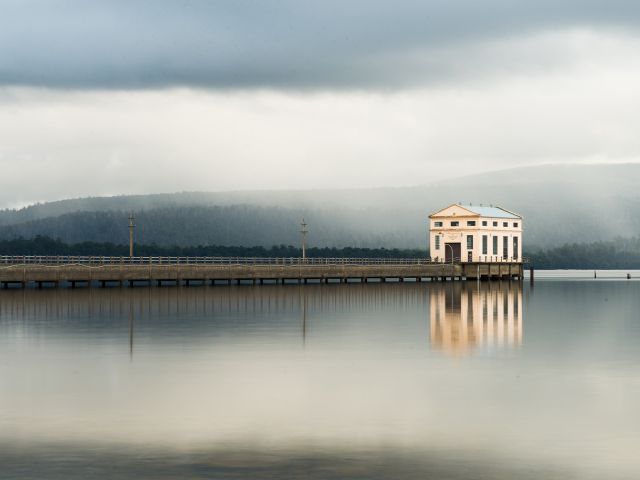
Pumphouse Point is the ultimate cosy lakefront accommodation. (Credit: Adam Gibson)
What? Tasmania’s most talked-about luxury stay, poised on a jetty over the southern hemisphere’s deepest lake.
Tell me more:Pumphouse Point is an industrial relic reborn as a wilderness retreat, set within a 1930s-built hydro pumphouse at the edge of Cradle Mountain-Lake St Clair National Park. Sleep suspended over the water, thaw fireside over a Sullivans Cove whisky tasting, then wake to mist rolling across the glacial lake.
Wineries and wildlife in the Tamar Valley
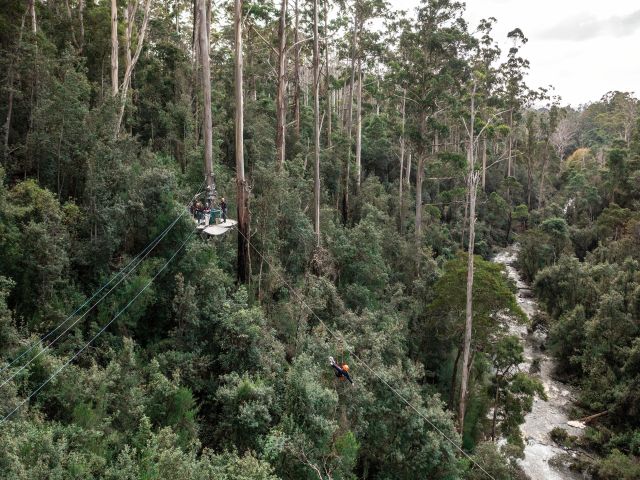
Soar through verdant tree canopy at Treetops Adventure Hollybank. (Credit: Tourism Australia)
What? A northern Tasmanian itinerary to ignite the senses and restore the soul.
Tell me more: Around 30 minutes from Launceston, the Tamar Valley is Tassie’s largest wine region and renowned for its paddock-to-plate culture. Hop between cellar doors (make sure to pop in for a tasting flight at Josef Chromy Wines), zipline at Treetops Adventure Hollybank, explore maritime museums and don’t miss the penguin parade at Low Head.
An expedition cruise through Tasmania’s south-west wilderness
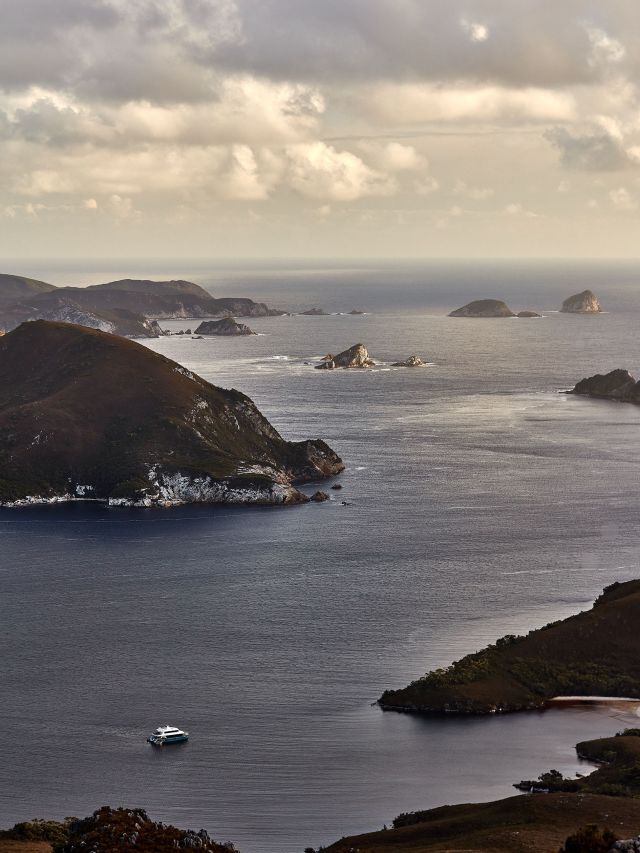
Explore the wild side of Tassie’s south-west with On Board expeditions. (Credit: Tim Grey)
What?On Board offers two-night Port Davey expeditions blending luxury and remote adventure.
Tell me more: From Hobart, soar over Tassie’s untamed coast via sea-plane and board your luxe floating base, a member of Luxury Lodges of Australia, from which you’ll explore UNESCO-listed Port Davey and Bathurst Harbour. Huon pine forests, mirror-like waters, quartzite peaks and rocky coves promise endless awe; deepen the experience with guided walks and tender excursions. Comprising just a couple days, the cruise is one of the best weekend getaways in Tasmania for seeing dramatic scenery when short on time.
A short tour of Tassie’s East Coast
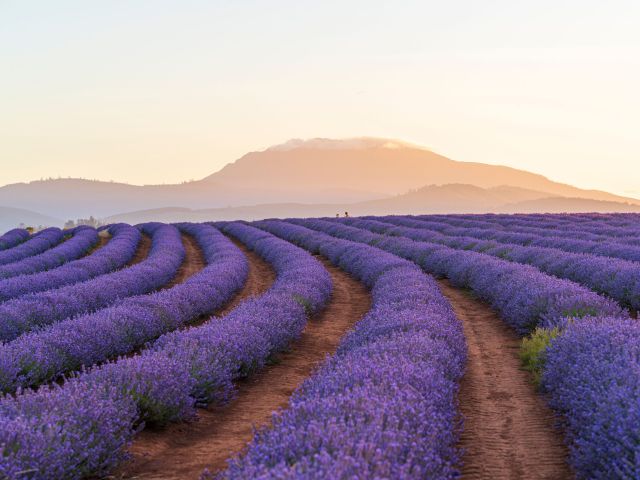
Stroll through floral fields at Bridestowe Lavender Estate. (Credit: Luke Tscharke)
What? An immersive five-day tour showcasing the best of Tasmania’s East Coast, packed with scenery, gastronomy and history.
Tell me more: Starting in Launceston and culminating in Hobart, the Tassie’s East Coast Highlights itinerary with AAT Kings will take you from the purple fields of Bridestowe Lavender Estate to the pink granite boulders of Freycinet National Park, with the chance to witness little penguins in Bicheno and delve into the history of Port Arthur along the way – a fabulous taster for first-timers to Tassie.
Weekly travel news, experiences insider tips, offers, and more.
Adventure and wellness at Cradle Mountain
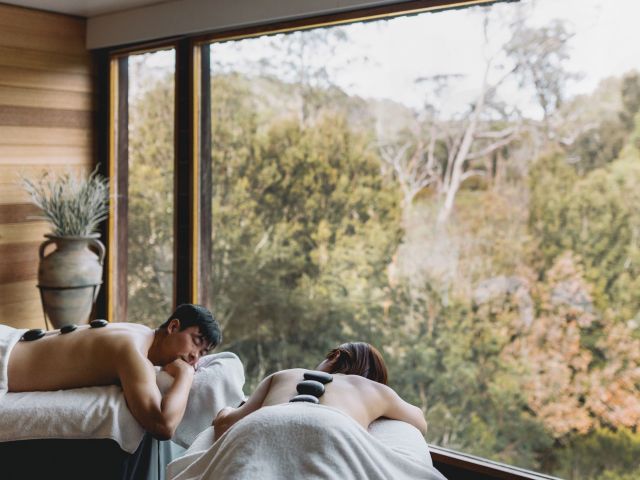
Waldheim Alpine Spa in Cradle Mountain offers tranquil wellness experience. (Credit: Laura Helle)
What? When it comes to mind and body, the power of nature is undeniable – and Tasmania’s wilderness is a force to be reckoned with.
Tell me more: Cradle Mountain is widely known as an adventure capital – a playground primed for hiking, biking, kayaking and canyoning. Balance is key, and that’s where Waldheim Alpine Spa plays its part. Located in Peppers Cradle Mountain Lodge, this sanctuary comprises a sauna, steam room, hot and cold plunges, and full body treatments. Over at Cradle Mountain Village, the pine-built saunas are submersed in the wilderness.
A wild nature break on the Tasman Peninsula
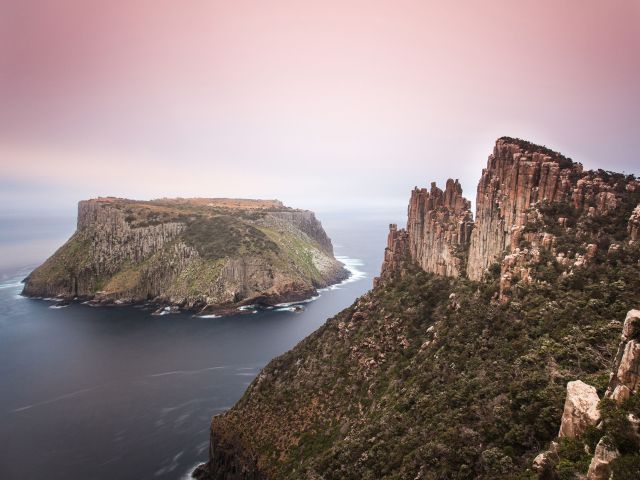
See the popular Three Capes Walk under the soft glow of sunrise. (Credit: Tasmania Parks and Wildlife Service)
What? An hour’s drive from Hobart on the southeast coast, the Tasman Peninsula blends brutal penal history and dramatic scenery.
Tell me more: The Tasman Peninsula makes for one of the best weekend getaways in Tasmania as it’s home to two of the island’s headlining attractions: the Port Arthur Historic Site and the breathtaking Three Capes Track. There is no better way to invest three days in this part of the state than by tackling the Three Capes Walk, taking in the edge-of-forever scenery and swathes of unspoilt wilderness.
A quaint historic sojourn in Stanley
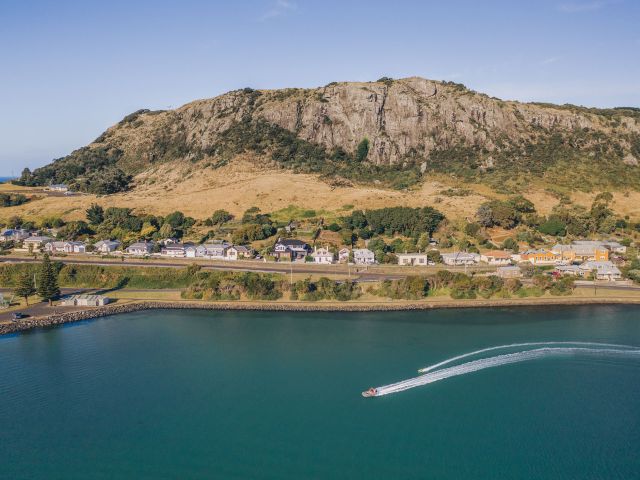
Discovering the rugged coastlines and rich maritime history of Stanley. (Credit: Jess Bonde)
What? Sitting in the shadow of the Nut, a flat-topped volcanic plug, and allowing access to the untamed takayna/Tarkine wilderness, Stanley is the kind of remote town that mainlanders dream of finding in Tassie.
Tell me more: Base yourself at the wonderfully atmospheric Ship Inn and indulge in the blissful remove from the modern day-to-day. If you’re feeling energetic, you can walk to the top of 13-million-year-old The Nut, or take the chairlift; look out at the 360-degree views, and hopefully catch sight of seals and penguins below is a must.
A laid-back recharge in Cygnet
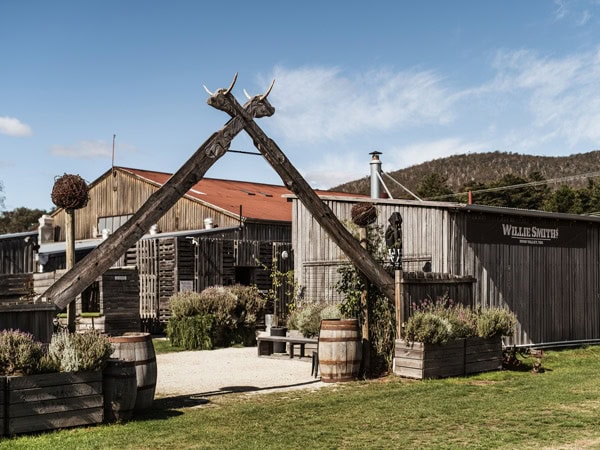
Willie Smith’s Apple Shed is nestled in the bountiful Huon Valley. (Credit: Stu Gibson)
What? Bordered by the D’Entrecasteaux Channel and the Huon River, Cygnet is where Hobart locals escape for the weekend, with holiday ‘shacks’ scattered throughout the picturesque region.
Tell me more:Like many other locations in Tasmania, the area is known for its fruit production including apples, berries and cherries, but it also possesses a laid-back alternative lifestyle.The hamlet boasts craft stores, art studios and galleries to browse; follow the Huon Valley Studio Art Trail to find something to take home in addition to a sense of peace.
Want to see more stories from Australian Traveller in your Google search results?
Tick the box next to "Australian Traveller". That's it.
Emily Murphy is Australian Traveller's Email & Social Editor, and in her 4+ years at the company she has been instrumental in shaping its social media and email presence, and crafting compelling narratives that inspire others to explore...
Megan Arkinstall is a freelance travel writer who you’ll often find at the beach, bushwalking or boating with her young family. She loves reliving travel memories through writing, whether that be sipping limoncello in a sun-drenched courtyard of...
Eleanor Edström is Australian Traveller’s Associate Editor. Previously a staff writer at Signature Luxury Travel & Style and Vacations & Travel magazines, she's a curious wordsmith with a penchant for conservation, adventure, the arts and...
Natasha Bazika has spent over a decade collecting a global perspective, from living through the relentless energy of New York to slowing way down on the salty shores of Puglia. With a culinary track record spanning over 150 Michelin-starred...
Hobart has quietly become our coolest capital, but the real wonder lies just beyond the city limits.
In the cool shade of Kunyani/ Mt Wellington, Hobart has earned a reputation. Home to culture-defining Dark MOFO, the city blends rugged, raw wilderness and rule-breaking galleries. But, step beyond the thrumming capital’s border and you’ll find a new perspective: historic towns, Jurassic-era cliffs and a UNESCO City of Gastronomy. Fill your days with epicurean odysseys and wild scenery on the best day trips from Hobart.
Where to stay
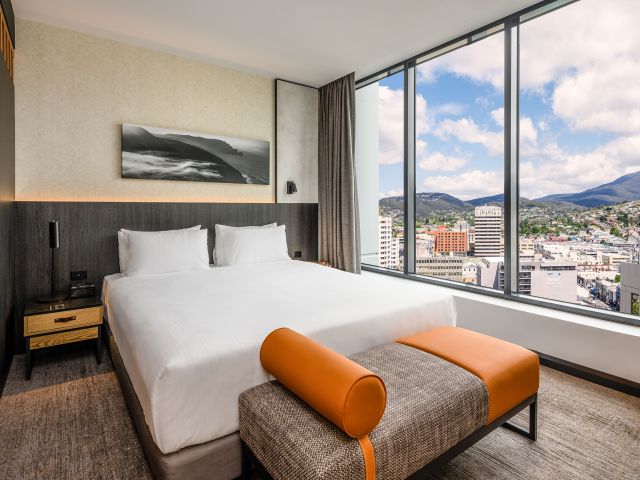
Elevate your Hobart stay with sleek style at Mövenpick.
Behind every good road trip is the perfect home base. Somewhere central to review your camera roll, make the most of Hobart’s dining scene and relax before setting off again.
For modern, Tasmanian-inspired design, book a stay at the Movenpick Hotel Hobart. Standing at the Salamanca Markets, look to the Hobart skyline, and the award-winning hotel will catch your eye. As the third-tallest building in the CBD, the views across the harbour toward Antarctica are totally unique from your room. Here, end each day at the daily free chocolate hour (plus a free Movenpick ice cream for the little ones).
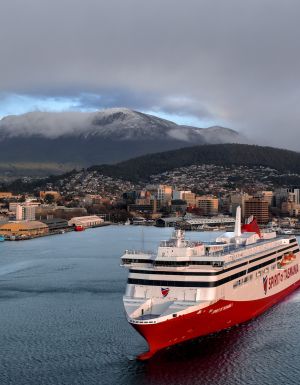
For a more budget-conscious option, head to the picture book, sandstone buildings of Macquarie Street. Nestled along the buzzing, historic streetscape, you’ll find Tasmania’s biggest hotel: the Ibis Styles. Return home each day to defrost in one of the hotel’s two saunas. Make use of the proximity to MONA, or take an easy stroll to the candy-coloured cottages of Battery Point between your adventures.
1. Bruny Island
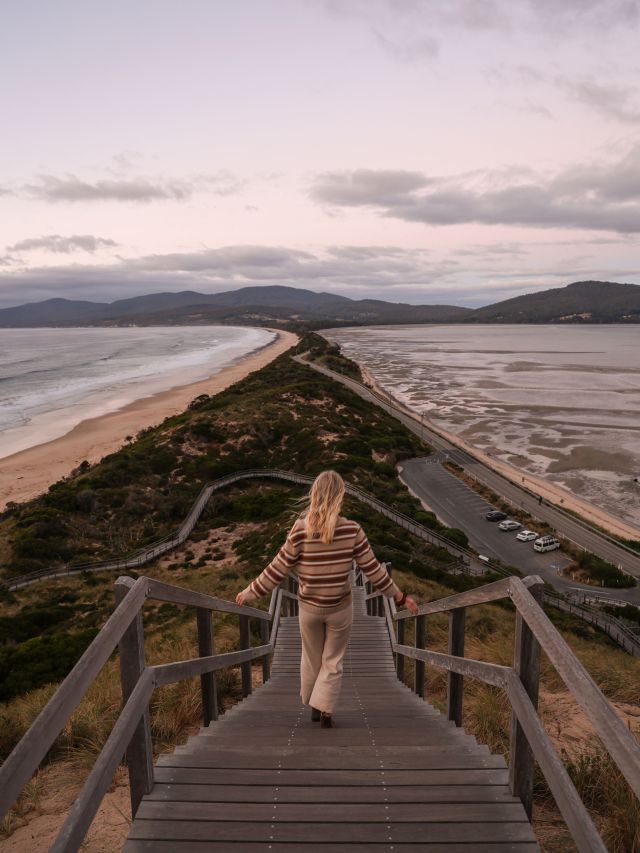
Begin your adventure with a climb and a view. (Credit: Elise Weaver)
Craggy cliffs and tropical-hued, white sand beaches signal your arrival to Bruny Island/ Lunawanna-Alonnah.
Start your day trip at the island’s most iconic spot, the Neck Game Reserve. Scale the Trunganini steps to gaze out over the teensy stretch of land that juts through the sea connecting the two ends of the island.
Catch a rare glimpse of the white-furred wallabies that call Bruny Island home at Adventure Bay. Then, for ocean-fresh oysters, pull into the drive-thru window at Get Shucked. Sample Bruny Island cheese at the cellar door before catching the ferry home with an esky full of local produce.
2. Mount Wellington
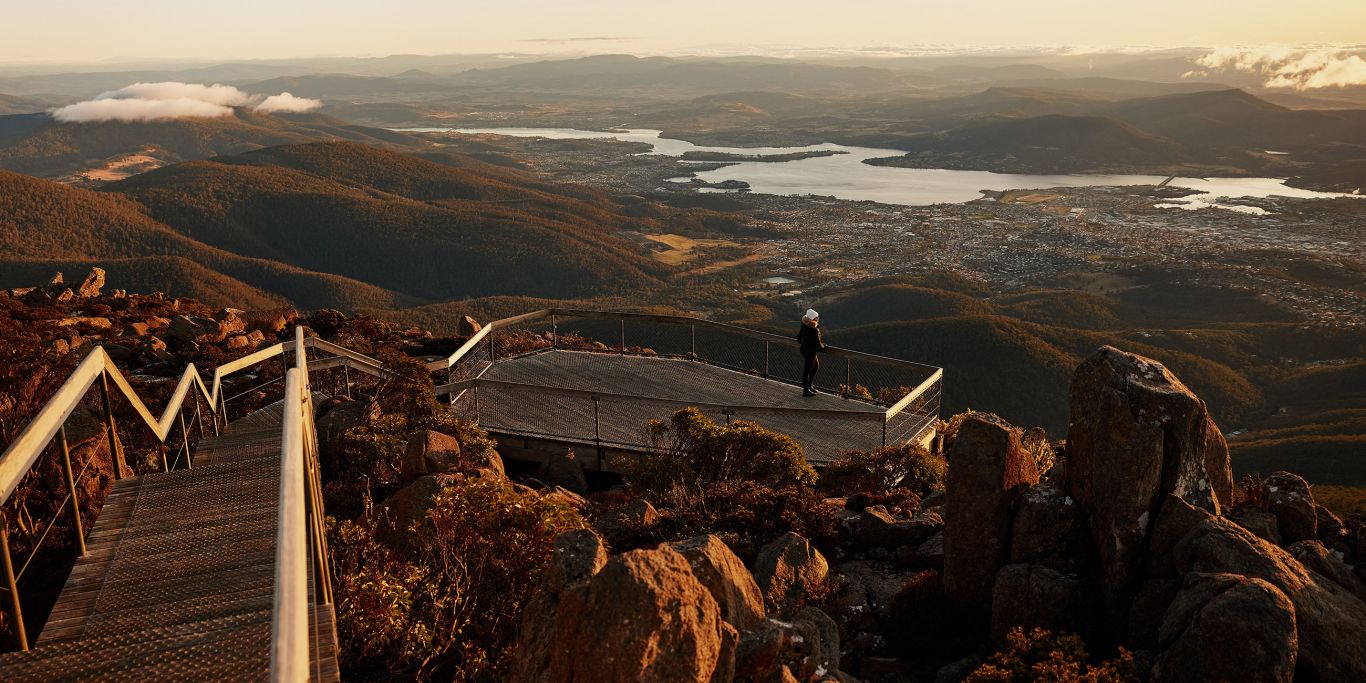
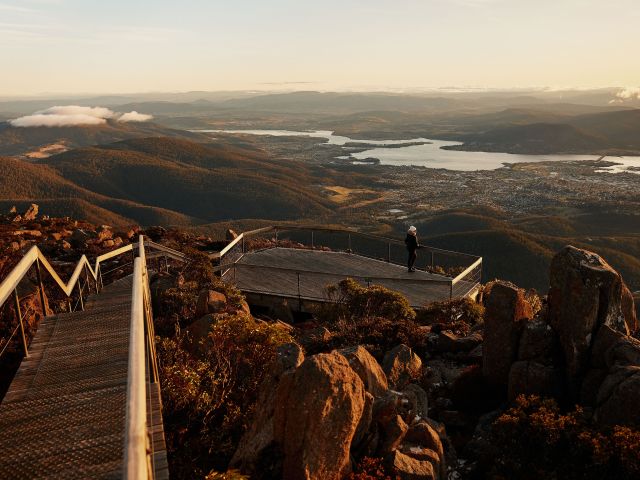
Climb through alpine forest to the summit. (Credit: Samuel Shelley)
At 1271 metres, Mount Wellington watches protectively over Hobart. Follow the winding road to climb through alpine forest and tufts of snow to reach the summit. Gaze down over Hobart and out to sea, or over your shoulder to the southwestern wilderness.
Reset your adrenaline with a mountain bike ride back down. Or, make like the locals and head into the mountain on foot. Try the hike to the Jurassic-period Organ Pipes, which slips under the mountain’s magnificent dolerite cliffs (perfect for families thanks to the trail’s minimal incline).
For a view of Mount Wellington itself, hike nearby Cathedral Rock.
2. Port Arthur
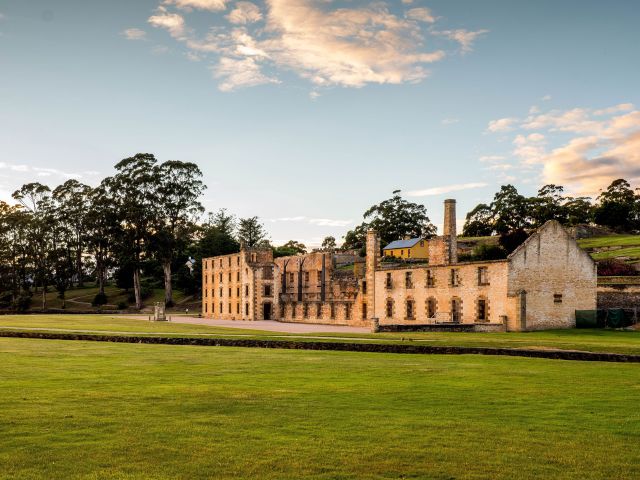
Wander through convict-built grounds and gardens. (Credit: Alastair Bett)
Constructed entirely by convicts, the manicured gardens and penal buildings of Port Arthur offer a day trip that practically hums with history.
The rugged, seagirt location was chosen for its difficult escape conditions. Now, you can cruise the coast below the towering, jagged cliffs of the Tasman National Park or wander the sloping fields of fragrant lavender.
Tickets to Port Arthur include a walking tour and harbour cruise. See the Isle of the Dead where 1000 men are buried in marked and unmarked graves. And Point Puer, Britain’s first prison for children.
3. Launceston
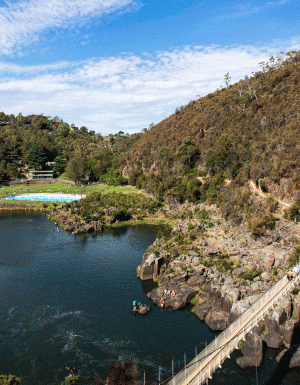
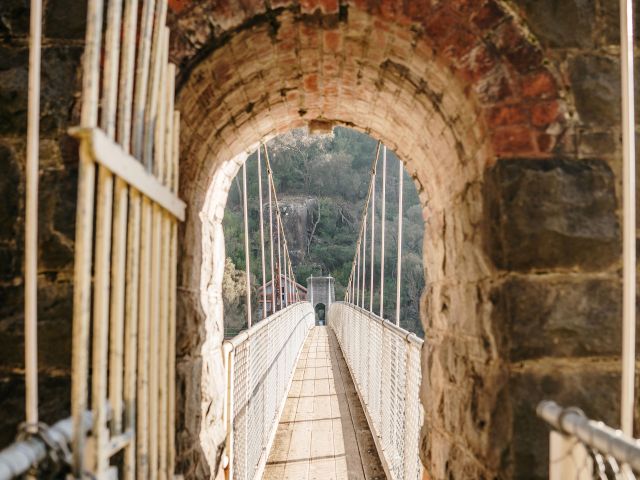
Walk the sunlit paths of Cataract Gorge. (Credit: Nick H Visuals)
You’ll find Launceston at the confluence of three rivers after an easy 2.5-hour drive from Hobart. Launceston is a patchwork of old and new. Here, heritage streetscapes meet modern architecture.
Visit Cataract Gorge, the green, sun-dappled heart of the town and sacred meeting point for Tasmania’s indigenous communities. Pull up at roadside produce stalls that dot the Tamar Valley, or dine out. Launceston is, after all, a UNESCO City of Gastronomy.
Should the local wine scene persuade you, simply extend your time in Launceston at Peppers Silo (but definitely at least stop by the onsite restaurant, Grain of the Silo, for a farm fresh menu) or Mercure Launceston before heading back to Hobart.
4. Bonorong Wildlife Sanctuary
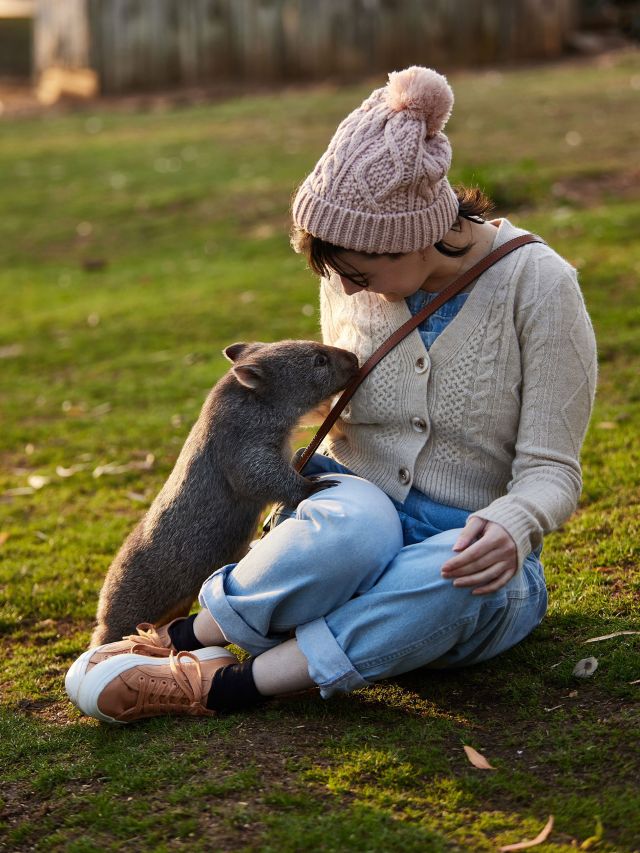
Snap a cuddle-worthy encounter. (Credit: Tourism Australia)
Take a 35-minute drive from your hotel and you’ll find Bonorong Wildlife Sanctuary. This social enterprise is run by a team of extremely passionate Tasmanians with a mission to look after critically endangered species who have found sanctuary here after facing extinction on the mainland.
Choose to wander the sanctuary at your own pace or join a guided tour (free with your ticket) to come face to face with Tassie’s most iconic species. Tasmanian Devils, wombats and echidnas are part of the free tour. You can book up close encounters with your favourite animals, too.
5. Richmond Village & Coal River Valley
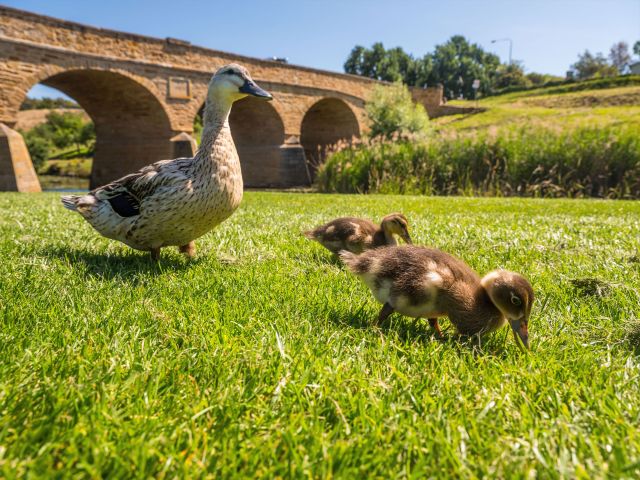
Trace the river through history and wine country. (Credit: Alastair Bett)
Richmond is a town that belongs in a snow globe. Fifty colonial-era, Georgian buildings have been painstakingly restored and turned into cafes, cosy restaurants and galleries. Visit Richmond Gaol, said to be the home of a prisoner so vile he inspired Charles Dickens to pen Oliver Twist’s Fagin.
Then, follow the Coal River as it flows past grassy, duckling-dotted knolls and under the iconic Richmond Bridge, the oldest bridge in Australia. From the crest of the bridge, see the oldest Catholic Church in Australia. The river crawls past many cellar doors, perfect for a day of wine tasting.