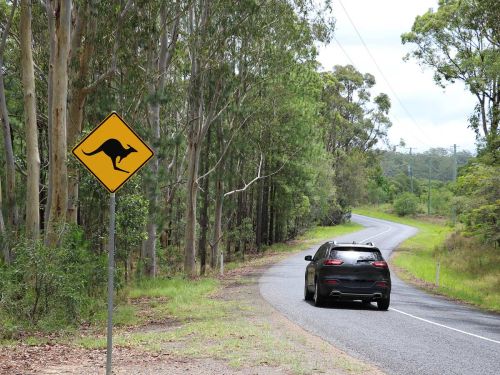
We take a deep dive into the world of electric vehicles for those ready to make the switch and embark on a great Aussie EV road trip.
More and more Australians are making conscious, sustainable, ethical and responsible travel choices. Travellers are concerned about choosing eco-certified accommodations, tours and destinations and even carbon offsets for flights, but what about your hire car?
The simplest way to cut emissions is to make the switch to an electric vehicle (EV) for your next road trip. EVs are the future of motoring and rental car companies are starting to embrace the change to eco-friendly and sustainable driving.
We took a test drive to discover what’s involved in hiring an EV to answer all your questions. Here’s everything you need to know before you go.
Hiring an EV
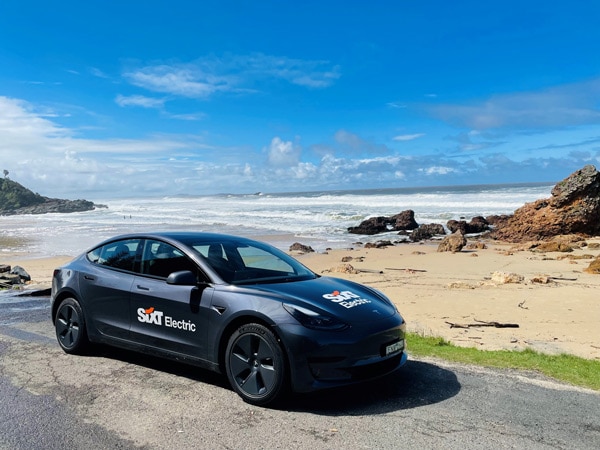
If you’ve searched for the best car rental deals online recently, you may have noticed a new player entering the market offering a range of EVs. Owned by NRMA, SIXT launched here in 2021 with the largest fleet of electric vehicles in Australia. According to Matt Beattie, managing director of SIXT Australia the company has plans to convert half of its 16,000 nationwide rental fleet to electric in the coming years to help deliver on the nation’s net zero emissions target.
Europcar also has a growing number of EVs, and at this stage the most popular location to hire an EV is from major capital city airports, but that is likely to change as car rental companies continue to expand their EV fleets.
Pro tip: If you usually fly business class or book luxury or boutique hotels, consider matching your holiday experience by upgrading your rental to a prestige or premium vehicle for your next road trip journey. We took the new BMW iX3 from SIXT for a spin on a mini road trip from Sydney to the Blue Mountains and it was a dream to drive!
The cost of hiring an EV
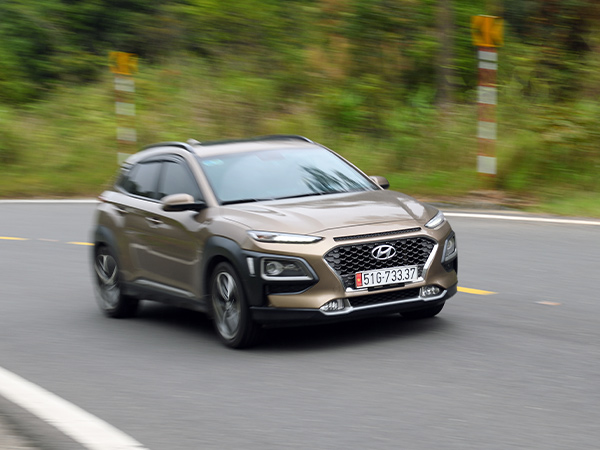
It’s easy to make a sustainable switch to an electric vehicle with the cost of renting an EV only around $10 more per day than an equivalent petrol vehicle, the benefit is that you save on the cost of fuel and can recharge for free at several EV charging stations. The other bonus is EVs don’t need to be recharged before returning, saving time and money. It takes the stress out of finding a petrol station before returning a hire car or paying a premium if you return it half empty.
SIXT customers are provided with a Chargefox token for use across the Chargefox network during their hire period and customers driving in NSW can also benefit from the NRMA charging network, which is currently free. Tesla chargers are free to use for customers who have hired a Tesla vehicle.
Pro tip: Hire car prices usually rise as you get closer to your travel dates, so it’s recommended to book a hire car in advance to secure the best prices. If you’re a member of one of the nation’s auto clubs such as NRMA, you’ll also receive a 20 per cent discount with SIXT.
Need tips, more detail or itinerary ideas tailored to you? Ask AT.
AI Prompt
Planning your EV road trip
There is a range of websites and apps available to plan your EV road trip including the free PlugShare app, which provides comprehensive coverage of charging stations across Australia. You can enter your trip destination and set the make/model to locate the most suitable charging points for your vehicle along the way. PlugShare also has review capabilities with user-generated content including uploading images of charging stations to help plan your journey.
Depending on how far you’re travelling, you may only need to charge at the end of the day, much like plugging in your phone at night. On average, new vehicles have a range capacity of approximately 480 kilometres, and more expensive vehicles go further, therefore “range anxiety" should not be a problem for the average road trip along popular routes. Range anxiety refers to a driver’s concern they won’t have enough charge to get to the next charging station. With more quality batteries and increased range, this is becoming less of a concern.
Pro tip: Range anxiety is real the first time you hire an EV, but use this guide and choose accommodation with an EV charging station, that way there is no dwell time on your journey. Our BMW iX3 had around 350 kilometres of charge when we left Sydney Airport, so there was no need to stop on our road trip to the Blue Mountains.
Where to charge an EV
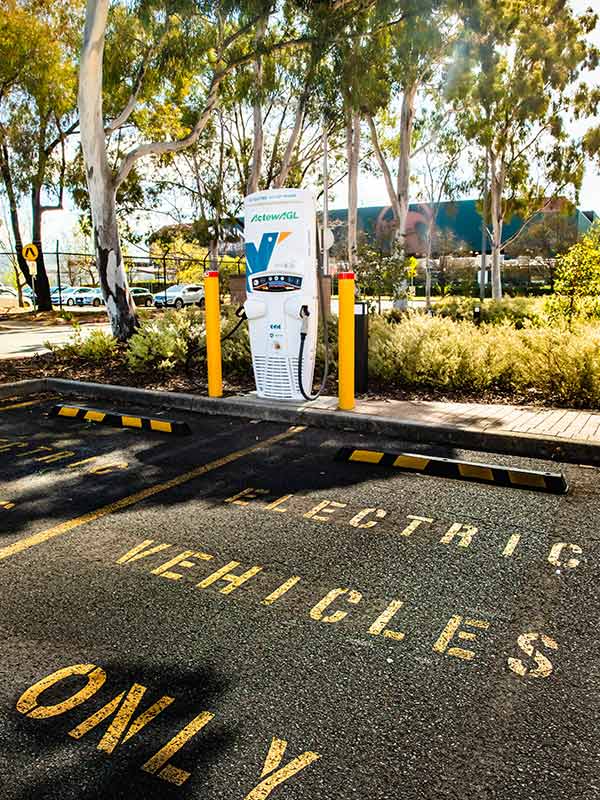
We are here to myth bust that there aren’t enough charging stations across the country for an EV road trip. A quick search of the PlugShare app confirms there is plenty of charging stations in key locations across Australia and Governments have started to recognise the growing need to provide funding for chargers in regional locations to ensure drivers can confidently travel long distances in Australia.
The NSW Government intends to have ultra-fast chargers installed at five-kilometre intervals along major roads in Sydney and 100-kilometre intervals along major NSW highways in the near future. Likewise, the Queensland Government funded the installation of fast EV chargers between Coolangatta and Cairns and between Brisbane and Toowoomba to create an Electric Super Highway.
How to charge an EV
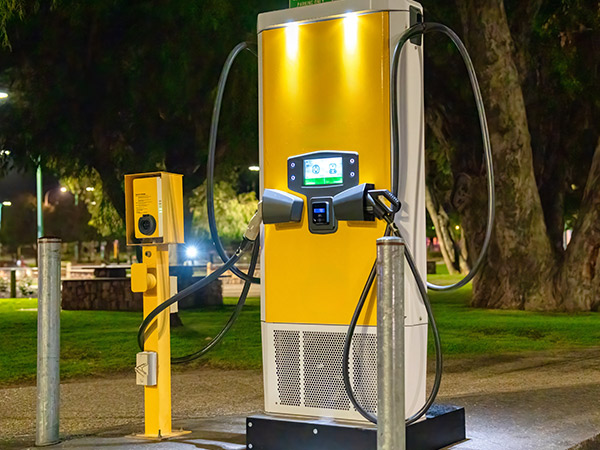
It couldn’t be simpler to charge an EV. Everything you need to charge your EV rental is included such as cables to charge domestically or by the roadside.
Pro Tip: When we hired the BMW iX3 from SIXT the friendly team member provided a full tutorial before leaving the branch, it was like a concierge service. Charging cables were located in the boot and it was a simple task to plug in.
Weekly travel news, experiences
insider tips, offers, and more.
How long does it take to charge an EV?
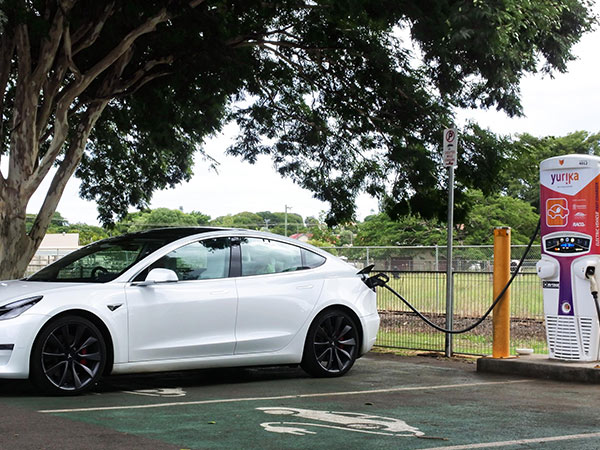
The time it takes to charge an EV depends on the type of car and charger used. A DC fast charge station is the fastest charging option ranging from 25-350kw with the ability to add a 150-kilometre range per hour at the lower end and a full charge at the highest charging speeds in 15 minutes. Compared with AC fast charging (7-22kw) which typically adds 40 kilometres to 100 kilometres of range per hour. Plugging into a regular power point or AC slow charging (1.4-2.4kw) provides about a 10-20-kilometre range added per hour plugged in, which is why it is usually only done overnight to recharge the vehicle by 100-300 kilometres.
Pro tip: Depending on how far you’re driving, you might not even need to charge every day. If your chosen hotel doesn’t yet have an EV charging station, you can just plug it into a standard power socket using the charging equipment provided with your hire vehicle.
How much does it cost to charge an EV?
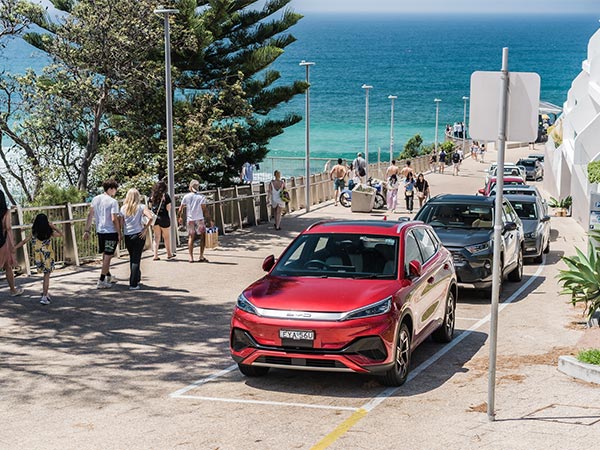
Use the PlugShare app to identify the best free options for your journey and vehicle type. Check the PlugShare app for any other network options compatible with your hire car vehicle type and costs may vary for example Kyah Hotel Blackheath has just installed an EVBox providing four fast charging stations at around 33.5 cents per KW. Check with your rental car company, as some may reimburse you for any charging costs incurred.
Pro tip: We charged for free everywhere during our road trip and had no trouble identifying where and how to charge, making a significant saving compared to having to refuel a standard petrol hire car. We were offered free charging via the Chargefox and NRMA charging stations with SIXT.
Now you’ve mastered EVs and overcome range anxiety, check out some of Australia’s most popular road trips.
Want to see more stories from Australian Traveller in your Google search results?
- Click here to set Australian Traveller as a preferred source.
- Tick the box next to "Australian Traveller". That's it.